Tiếng Việt
 日本語
日本語
In early 2025, Twelve South — a US accessories brand sold through Apple retail channels — chose SHDC Electronics in Hai Duong, Vietnam to manufacture PlugBug: a 120W GaN multi-port charger built to Apple supply chain standards. It ships to the US market today. That program is one data point in a broader shift. With Section 301 tariffs on Chinese-made chargers (HTS 8504.40) now at 145%, the landed cost math for China sourcing has broken. This guide covers what GaN charger manufacturing in Vietnam actually looks like in 2026 — capability, certifications, cost model, and how to qualify the right supplier.
1. What Makes GaN Charger Manufacturing Technically Demanding
Before evaluating any supplier, it’s worth being precise about what GaN charger manufacturing actually requires at the process level. Most sourcing evaluations go wrong by treating a GaN charger like a standard power adapter and applying generic EMS criteria.
GaN Is Not Standard Charger Assembly
The core difference is switching frequency. GaN FETs operate at 1–3 MHz, compared to 50–200 kHz for silicon MOSFETs. That higher frequency enables the compact form factor — but it creates process demands that standard PCB assembly lines are not equipped to handle.
Three technical constraints define whether a factory can actually produce a reliable GaN charger:
Thermal pad void control. GaN transistors are typically packaged in QFN format, with a large exposed thermal pad on the underside. IPC-7093 requires void area below 25% of the pad. Above that threshold, thermal resistance increases, junction temperature rises, and the device fails prematurely. The only way to verify void percentage is 3D X-ray inspection — it cannot be measured optically or with a multimeter.
Power loop inductance. GaN gate drive loops must be kept below approximately 1 nH of parasitic inductance. This is a PCB layout decision — but it requires the factory’s engineering team to review and often revise incoming Gerber files. A layout that works fine with silicon MOSFETs will cause ringing, overvoltage spikes, and EMI failures with GaN.
Primary-secondary isolation. UL 62368-1 requires a minimum creepage distance of 6.4mm between primary and secondary circuits on the PCB. This is a layout-level requirement — it cannot be corrected after the board is fabricated. Factories that don’t catch this in DFM review will produce boards that fail UL certification, with no fix available short of a PCB respin.
The Equipment Benchmark for GaN Production
These technical constraints translate directly into equipment requirements. The table below is a hard filter — not a wish list. A supplier missing any of these items cannot reliably produce GaN chargers to US market standards.
| Equipment | Why Required for GaN | Consequence if Missing |
|---|---|---|
| Nitrogen reflow oven | Reduces GaN thermal pad void | Void >25% → thermal failure in field |
| 3D X-ray (CT preferred) | IPC-7093 void inspection | Cannot verify GaN joint quality |
| Hi-pot tester (3000VAC) | IEC/UL 62368-1 isolation test | Certification failure, safety risk |
| 3D AOI post-reflow | Solder joint quality verification | Field return risk |
| Automated functional tester | Output accuracy, efficiency, PD protocol | Shipping defective units |
| Pre-compliance EMC scanner | FCC Part 15 pre-screening | Costly full-lab re-test cycles |
A supplier with ISO 9001 certification but no nitrogen reflow oven and no 3D X-ray is not qualified to manufacture GaN chargers. This is a binary criterion, not a negotiable gap.
For a deeper look at how these equipment requirements translate into SMT line specifications, see our Power PCB Assembly for Fast Chargers: GaN & USB-C Guide.
2. Vietnam’s GaN Charger Manufacturing Capability — The Real Picture
The honest answer to “can Vietnam manufacture GaN chargers?” is: yes, at 30W–140W, with certified production proof. But that answer comes with important qualifications about which factories, which wattage ranges, and what the current ceiling looks like.
What Vietnam Produces Today
| Product Category | Wattage Range | Vietnam Capability | Production Evidence |
|---|---|---|---|
| GaN USB-C single port | 30–65W | Full production | Winsler 70W Ultra Slim |
| GaN multi-port charger | 65–140W | Full production | PlugBug 120W (Twelve South) |
| GaN laptop adapter | 45–140W | Full production | Winsler series |
| GaN travel adapter | 30–65W | High volume | Active programs |
| GaN desktop charger | 100–200W | Selective | Requires factory audit |
| Automotive GaN (AEC-Q101) | Any | Not at scale | Not current Vietnam strength |
| Server PSU (80+ Titanium) | 500W+ | Limited | Not current Vietnam strength |
The Winsler 70W: Technical Proof in a Consumer Product
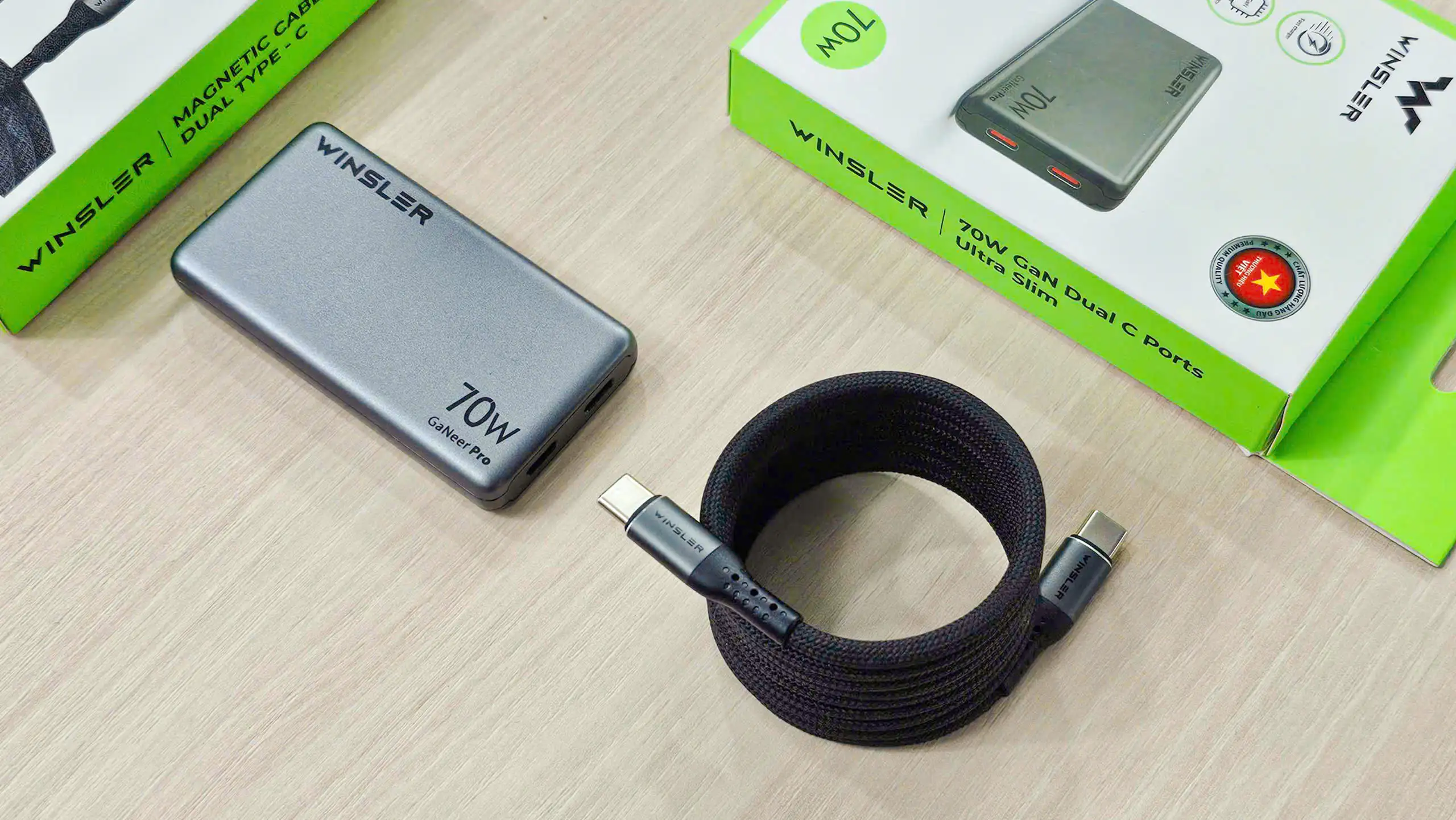
The Winsler 70W Ultra Slim is SHDC’s own-brand product — and the clearest technical proof point available for Vietnam GaN charger manufacturing capability.
The device measures 12.8mm thick — placing it among the thinnest 70W GaN chargers globally, a category where Anker and Belkin compete. Achieving that form factor requires precise thermal management, tight PCB layout, and controlled void percentage in the GaN thermal pad. It cannot be achieved with standard assembly processes.
Key verified specifications:
- Power output: 70W maximum, dual USB-C
- Charging performance: 80% smartphone + 70% laptop in 60 minutes (simultaneous)
- Thermal monitoring: Automated system performing 7,200 temperature checks per hour
- Thickness: 12.8mm
- Certification: ETL (Intertek) — accepted by US AHJs, equivalent to UL listing
- Press coverage: Thanh Nien, VnExpress
Note on ETL vs UL: Both ETL (Intertek) and UL marks are accepted by the same Authorities Having Jurisdiction across US states. For most US retail and commercial channels, ETL is fully equivalent to UL. Verify your specific channel’s requirements — some big-box retailers have internal policies specifying one mark over the other.
The PlugBug Program: Apple Supply Chain Standard
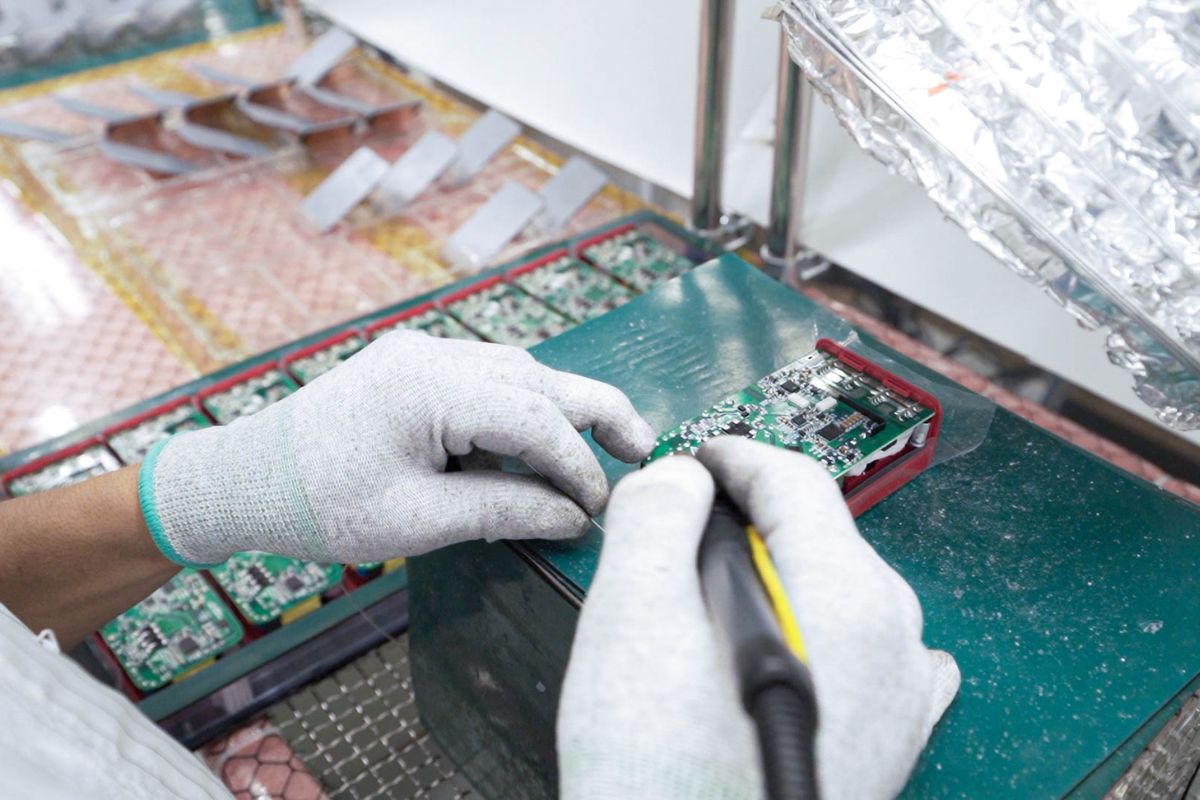
If the Winsler 70W demonstrates GaN manufacturing capability, the PlugBug program for Twelve South demonstrates supply chain credibility at international brand standard.
Twelve South is a US accessories brand whose products are sold through Apple retail channels. Their supply chain requirements reflect Apple’s vendor qualification expectations — among the most stringent in consumer electronics. SHDC was selected as manufacturing partner for PlugBug, comprising:
- PlugBug 4-port: 120W, 4× USB-C, GaN technology
- PlugBug 2-port: 50W, 2× USB-C, GaN technology
Both products are manufactured at SHDC’s Hai Duong facility and exported to the US market. The implication for US OEMs: a factory that has passed Apple ecosystem supply chain qualification has already cleared a higher bar than most US consumer electronics brands require.
Source: VietnamNet, February 2025
What Vietnam Cannot Yet Do at Scale
- Automotive GaN (AEC-Q101): Not at production scale in Vietnam
- Server-grade PSU (80 Plus Titanium, 500W+): Limited capability
- Custom GaN IC design: Vietnam has no meaningful fabless semiconductor ecosystem — GaN controller ICs are sourced from Navitas, GaN Systems, Infineon
- Very high volume (>1M units/month): Requires 6–12 month ramp planning
3. The Tariff Case — Why the Cost Math Changed in 2025

The strategic case for Vietnam GaN charger sourcing is not primarily about labor cost arbitrage. It’s about a specific tariff classification that has made China-sourced chargers economically unviable for most US OEM programs.
HTS 8504.40: The Classification That Changes Everything
GaN chargers — along with all static converters and power adapters — are classified under HTS 8504.40. Under the current Section 301 tariff schedule, products in this classification imported from China carry a 145% tariff rate. Vietnam imports under 0% MFN rate for this classification.
This is not a marginal cost difference. It is a structural cost inversion.
Landed Cost Comparison: 70W GaN Charger at 30,000 Units/Month
| Cost Element | China Source | Vietnam Source |
|---|---|---|
| Factory unit cost | $9.50 | $10.00 |
| Section 301 tariff (145% / 0%) | $13.78 | $0.00 |
| Ocean freight (FOB → US port) | $0.85 | $0.95 |
| Customs documentation | $0.20 | $0.30 |
| Total landed cost | $24.33 | $11.25 |
| Saving per unit | — | $13.08 |
At 30,000 units/month, that differential is $392,400 in monthly savings on a single SKU. The Vietnam factory cost premium of $0.50/unit is recovered in the first 1,000 units shipped.
For a full breakdown across multiple SKUs and wattage tiers, see Tariff Impact: China vs Vietnam Electronics Manufacturing.
UFLPA Compliance: The Second Structural Advantage
Beyond tariff cost, US importers face increasing enforcement risk under the Uyghur Forced Labor Prevention Act (UFLPA). Products with supply chain exposure to Xinjiang-region components face CBP detention and rebuttable presumption of forced labor.
Vietnam sourcing eliminates this risk vector entirely:
- Zero UFLPA geographic exposure — Vietnam is not a UFLPA-designated region
- SHDC: 100% Vietnamese-owned — no China-based parent entity, no Xinjiang supply chain exposure
- Full origin documentation: Certificate of Origin Form AV (ASEAN-Vietnam), tier-2 BOM traceability available on request
4. GaN Charger Certifications — What Your Vietnam Supplier Must Handle
Certification is a go/no-go criterion for US market entry. A GaN charger that cannot pass UL 62368-1 and FCC Part 15 cannot be sold through major US retail channels or to enterprise customers.
The US Market Certification Stack
| Certification | Issuing Body | Scope | Critical Requirement |
|---|---|---|---|
| UL 62368-1 or ETL | UL Solutions / Intertek | Electrical safety | Creepage ≥6.4mm, UL94 V-0 PCB |
| FCC Part 15 Class B | FCC via accredited lab | EMC — conducted + radiated | GaN harmonic management at 1MHz+ |
| USB-IF TID | USB Implementers Forum | USB Power Delivery protocol | CC pin ESD, voltage transition timing |
| CE Mark (if EU scope) | Notified Body | Safety + EMC + RoHS | EN 62368-1, EN 55032 |
Three Tiers of Certification Support
Tier 1 — Sample supply only. Supplier builds samples; customer manages all certification independently. Suitable only if you have an in-house compliance engineering team.
Tier 2 — Documentation support. Supplier provides test reports, BOM, construction drawings, and supports lab queries. Customer manages lab relationship and submission.
Tier 3 — Full pre-compliance + engineering support. Supplier runs pre-compliance EMC scans, conducts internal hi-pot testing, reviews layout for certification risk before submission, and coordinates with third-party lab. This is the minimum viable tier for US OEM programs without dedicated compliance staff.
SHDC operates at Tier 3 — evidenced by the ETL certification on Winsler 70W and Apple supply chain qualification on the Twelve South PlugBug program.
The Four Most Common GaN Charger Certification Failure Modes
1. Creepage violation (<6.4mm). The most common UL 62368-1 failure. A PCB layout decision — cannot be corrected without a board respin. Costs $15,000–$40,000 in re-test fees if caught at the lab.
2. FCC EMI failure — GaN harmonics. GaN switching at 1–3 MHz generates harmonics extending into the FCC Part 15 measurement range. Power loop area on the PCB directly controls radiated emissions.
3. USB-IF PD non-compliance. CC pin ESD protection placement and voltage transition timing are the most common USB Power Delivery failures — requires both correct component selection and correct layout.
4. Flammability non-compliance. UL 62368-1 requires UL94 V-0 rated PCB material. Some PCB fabricators default to V-1 unless explicitly specified. No fix short of a complete PCB re-order.
See how SHDC’s quality control process addresses these failure modes: PCB Assembly Quality Control at SHDC.
5. How to Qualify a Vietnam GaN Charger Manufacturer — Practical Checklist
The 3-Question Pre-Qualification Filter
Ask these three questions before RFQ, NDA, or factory visit. The answers eliminate approximately 80% of Vietnam EMS suppliers from consideration for GaN charger programs:
Question 1: “Can you share X-ray images showing GaN QFN thermal pad void percentage from a recent production run, with the void measurement annotated?”
A supplier that has done real GaN production will have this data immediately. A supplier that cannot produce it has not done real GaN production.
Question 2: “What is your hi-pot test voltage, and what percentage of finished units are tested — 100% in-line, or sampling?”
Correct answer: 3000VAC minimum, 100% in-line. Any answer other than 100% in-line is disqualifying.
Question 3: “Has any charger you’ve manufactured passed UL 62368-1, ETL, or FCC Part 15? Can you provide the certificate?”
SHDC’s answer: Winsler 70W — ETL certified, FCC compliant, US market. PlugBug for Twelve South — Apple supply chain qualified. Certificates on file.
Factory Audit Checklist
| Audit Item | What to Look For | Disqualifying Red Flag |
|---|---|---|
| Reflow oven | Nitrogen atmosphere, profile logging | Air-only reflow for GaN |
| X-ray equipment | 3D CT preferred; 2D minimum | No X-ray capability |
| Hi-pot test station | In-line, 100% coverage, logged | Sampling-only |
| Functional test jig | Automated, covers PD protocol | Manual multimeter only |
| IPC certification | Class 2 minimum | No IPC-certified inspectors |
| Reference products | Actual GaN boards with X-ray records | Capability deck only |
| Certification records | ETL/UL/FCC certificates on file | “We can support” without evidence |
| ESD control | Wrist strap stations, ESD flooring | No visible ESD program |
DFM Review as a Capability Test
Submit a Gerber package + BOM and evaluate the quality of DFM feedback:
Green flag: Report returned in 3–5 business days with specific comments on creepage distances, GaN power loop area, thermal via density, PCB material (UL94 V-0), and isolation boundaries.
Red flag: Report returned in under 4 hours with no issues found. The review was not performed.
NPI Timeline for GaN Charger Programs
| Phase | Duration | Key Deliverable |
|---|---|---|
| DFM review & BOM validation | Week 1–2 | DFM report, approved BOM |
| Prototype build (EVT) | Week 3–6 | 10–20 units, FAI report |
| Reliability & safety testing | Week 6–10 | Thermal, humidity, drop, hi-pot data |
| Certification lab submission | Week 8–16 | UL/ETL + FCC + USB-IF TID |
| Production qualification (DVT) | Week 16–20 | Control plan, PPAP-lite, yield data |
| Production ramp | Week 20+ | 500–1,000 unit initial run |
For programs using an existing certified platform, timeline compresses to 12–16 weeks.
For prototype and EVT build services, see Prototype PCBA Manufacturing at SHDC.
6. SHDC — Vietnam’s GaN Charger Manufacturer with International Production Proof
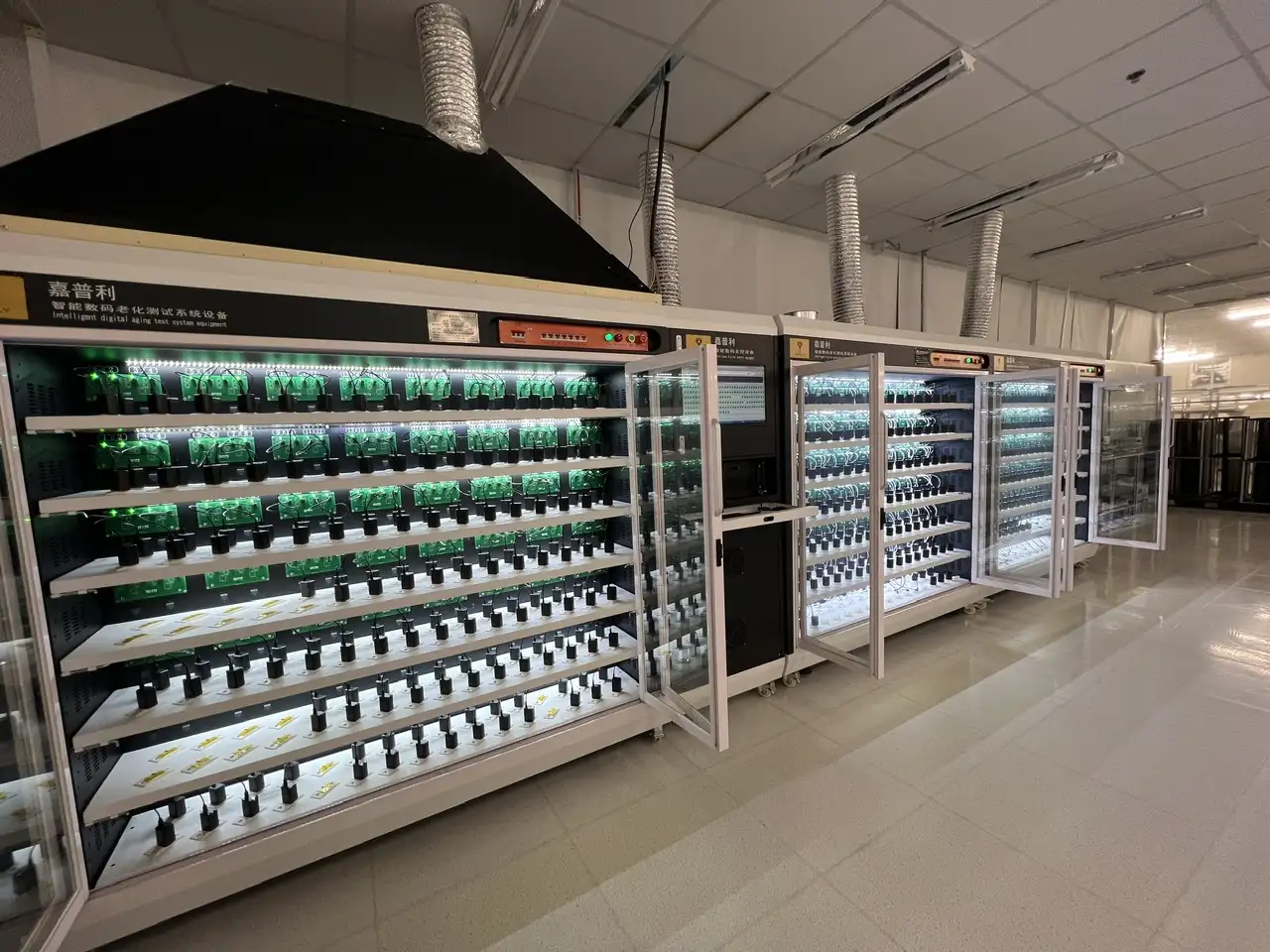
Company Background
- Founded: 2022, Hai Duong Province — VSIP Hai Duong Industrial Zone, 60km from Hanoi
- Ownership: 100% Vietnamese — NAHACO Group, zero China-based entity
- Technical recognition: Evaluated highly by Japanese technical experts (VietnamNet, 2025)
- CEO: Le Song Hao — stated mission to build Winsler as an internationally competitive technology brand
Production Credentials
| Credential | Detail | Source |
|---|---|---|
| Winsler 70W GaN | ETL certified, 12.8mm, dual USB-C, US export | Thanh Nien, VnExpress |
| PlugBug for Twelve South | 120W GaN 4-port + 50W GaN 2-port, Apple supply chain standard | VietnamNet |
| Active GaN range | 50W–140W in production | SHDC factory |
| Certifications | ETL, CE, FCC Part 15 | Product certification records |
| Quality standards | ISO 9001:2015, IPC-A-610 Class 2/3 | SHDC |
Why This Matters for Your Program
SHDC has already navigated the full production-to-certification cycle on their own products, at their own cost. The Winsler 70W ETL certification and the Twelve South PlugBug Apple supply chain qualification were not achieved on a customer’s program — they were achieved on SHDC’s own products.
When you bring a new GaN charger program to SHDC, you are not funding their learning curve. The engineers who review your Gerber files for creepage violations and GaN loop area have already solved those problems on certified production products.
Learn more about SHDC’s GaN charger manufacturing capabilities: GaN Charger Manufacturer Vietnam
FAQs
What wattage range can Vietnam GaN charger manufacturers produce in 2026?
The proven production range for GaN charger manufacturing in Vietnam is 30W–140W, covering single-port USB-C chargers, multi-port desktop chargers, and laptop adapters. SHDC’s active production range is 50W–140W, with the Winsler 70W and PlugBug 120W as documented reference products.
Has any Vietnam manufacturer actually produced GaN chargers for US brands?
Yes — with documented evidence. SHDC manufactured the PlugBug GaN charger line for Twelve South, a US brand distributed through Apple retail channels. The program includes a 120W 4-port and 50W 2-port GaN charger, both exported to the US market. Independently reported by VietnamNet (February 2025).
What certifications does SHDC support for US market GaN charger programs?
SHDC supports the full US market certification stack: ETL (Intertek), FCC Part 15 Class B, and USB-IF TID. For programs requiring UL listing specifically, SHDC supports UL 62368-1 submission through accredited US labs.
How does GaN charger manufacturing cost compare between Vietnam and China in 2026?
For a 70W dual-port GaN charger at 30,000 units/month, the total landed cost differential is approximately $13.08 per unit in favor of Vietnam — driven by the 145% Section 301 tariff on HTS 8504.40 products from China versus 0% MFN for Vietnam. At scale, annual tariff savings on a single SKU can exceed $4.7M.
What is the MOQ for GaN charger manufacturing at SHDC?
For standard programs using established certified platforms: 500–1,000 units for initial production runs. For fully custom designs requiring new PCB layout and certification: 3,000–5,000 units minimum recommended. Contact SHDC directly for program-specific MOQ.
Conclusion
GaN charger manufacturing in Vietnam is not an emerging capability. It is a present reality, documented by ETL-certified products on the US market and Apple-standard supply chain programs with international brands.
The qualifier — and it matters — is that not every Vietnam EMS can do this. The technical demands of GaN assembly create a meaningful capability gap between general electronics manufacturers and specialized GaN charger producers. The three pre-qualification questions in this guide identify that gap in a single conversation, before you invest time in RFQ or factory visits.
For US OEM teams that need to move charger production out of China in 2026 — whether driven by tariff economics, UFLPA compliance risk, or supply chain diversification — Vietnam has a credible answer at 30W–140W. The production proof exists. The certifications exist. The international brand references exist.