
 Tiếng Việt
 日本語
日本語
For most of the last two decades, “where should we build our PCBA” had an easy answer. That question is far more complicated today. Rising Section 301 tariffs, tighter export controls, and a series of supply chain shocks since 2020 have pushed OEMs to actively diversify production outside mainland China — a shift widely known as the China+1 strategy.
The follow-up question is harder: if not China, then where? Vietnam, Thailand, and Malaysia have each become serious PCBA manufacturing hubs, but they are not interchangeable. Each country built its strength around a different part of the electronics supply chain, which is exactly why there’s no single best country for PCBA manufacturing outside China — the right answer depends heavily on what you’re building. This guide compares all three head-to-head so you can shortlist the right region before you start qualifying individual factories. For a deeper look at what’s pushing buyers to make this move in the first place, see our breakdown of the hidden risks of manufacturing electronics in China.
Quick comparison: Vietnam vs Thailand vs Malaysia at a glance
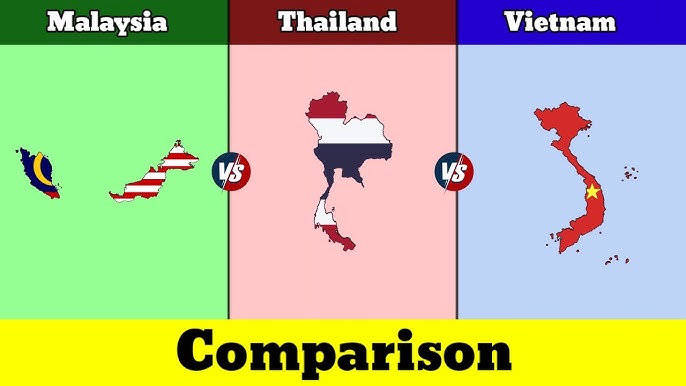
If you need a fast answer before reading the full breakdown, here’s how the three leading candidates for best country for PCBA manufacturing outside China stack up on the factors buyers ask about most:
| Vietnam | Thailand | Malaysia | |
|---|---|---|---|
| Cost level | Lowest labor cost of the three | Moderate | Highest of the three |
| Ecosystem strength | Consumer electronics, chargers, general SMT/PCBA | Automotive electronics, established PCB fabrication | Semiconductor backend (assembly, test, packaging) |
| Best suited for | Consumer electronics, power electronics, mid-to-high volume PCBA | Automotive-grade and industrial electronics | Products with heavy semiconductor/IC content |
| US tariff exposure | Non-China origin — avoids Section 301 China-specific duties | Non-China origin — avoids Section 301 China-specific duties | Non-China origin — avoids Section 301 China-specific duties |
Labor cost is only one input, not the full answer — Vietnam’s manufacturing labor cost runs roughly 50% below China’s, but ecosystem depth, certifications, and product fit usually matter more once you get past the first RFQ. We break each of those down country by country below.
Vietnam for PCBA manufacturing
Cost & labor advantages
Vietnam remains the most cost-competitive of the three for labor-intensive SMT and PCBA assembly. According to Boston Consulting Group data cited by Vietnam Briefing, Vietnam’s manufacturing labor cost sits around 50% lower than China’s, and meaningfully below both Thailand and Malaysia. For a full cost breakdown by category — labor, energy, materials, and logistics — see our detailed electronics manufacturing cost comparison between Vietnam and China.
A fast-growing electronics manufacturing ecosystem
Electronics has become Vietnam’s largest FDI-driven export category. Vietnam’s electronics exports to the US recently overtook garments for the first time, and manufacturing FDI disbursement hit a five-year high in 2025, with electronics attracting the single largest share of new manufacturing capital. That inflow has built out a dense supplier and industrial-park network — including hubs like VSIP — that makes sourcing components and qualifying new SMT lines faster than it was even three years ago.
Best suited for
Consumer electronics, power electronics and fast chargers, computer peripherals, and mid-to-high volume PCBA programs where cost efficiency and scalable SMT capacity matter most. If your product falls in this category, our alternatives to China PCB assembly guide walks through how Vietnam stacks up against other non-China options in more detail.
Thailand for PCBA manufacturing
Strengths: decades of automotive electronics experience
Thailand’s PCB and PCBA industry grew up around its automotive sector — often called the “Detroit of Asia” for its deep ties to Japanese and global automakers. That history shows up directly in the supply base: Thailand’s KCE Group is the largest PCB manufacturer in Southeast Asia and one of the top five global PCB suppliers to the automotive industry, and sixteen of the world’s top 100 PCB suppliers now have a manufacturing presence in the country, according to Prismark’s analysis of PCB supply chain regionalization. Thailand’s Board of Investment also backs the sector with tax incentives and full foreign ownership in targeted electronics categories.
Cost & capacity
Labor costs in Thailand sit between Vietnam and Malaysia — higher than Vietnam, but paired with a more mature, higher-precision manufacturing base built over 40 years of automotive and electronics investment. Thailand is also positioning itself in higher-value semiconductor-adjacent activity: Cushman & Wakefield’s analysis of the region points to growing investment in PCB manufacturing, IC testing, and power semiconductor equipment tied to EV growth.
Best suited for
Automotive-grade PCBA, industrial electronics, and products that require IATF 16949-aligned quality systems or long-established supplier networks. For a country-by-country breakdown specific to automotive programs, see our comparison of automotive electronics suppliers across Vietnam, Thailand, and Malaysia.
Malaysia for PCBA manufacturing
Strengths: the world’s back-end semiconductor hub
Malaysia’s specialty sits one layer deeper than PCB assembly — in semiconductor packaging, assembly, and test (the “back end” of the chip supply chain). Malaysia is the world’s sixth-largest semiconductor exporter, and Penang alone accounts for roughly 5% of global semiconductor sales, built on decades of investment from Intel, Infineon, Texas Instruments, and ASE. Nationally, Malaysia controls about 13% of the global chip assembly-test-packaging market and more than 50% of the global chip testing trade, and continues attracting new backend investment such as Chipbond’s roughly US$200 million advanced packaging facility in Penang, confirmed by Malaysia’s national investment authority, MIDA.
Cost & capacity
Malaysia carries the highest labor and operating cost of the three countries in this comparison — a trade-off for its deeper semiconductor ecosystem, more mature supplier base, and stronger positioning for IC-heavy products.
Best suited for
Products with significant semiconductor content, complex power electronics, or programs that benefit from proximity to chip packaging and test capacity. Our GaN charger manufacturer comparison across Southeast Asia covers this trade-off in more detail for power electronics specifically.
Side-by-side comparison table
| Factor | Vietnam | Thailand | Malaysia |
|---|---|---|---|
| Relative labor cost | Lowest | Mid-range | Highest |
| Core strength | Consumer electronics & SMT/PCBA assembly | Automotive electronics & PCB fabrication | Semiconductor packaging, assembly & test |
| Ecosystem maturity | Fast-growing, FDI-driven | Established (40+ years in automotive) | Established (50+ years in semiconductors) |
| Typical certifications available | ISO 9001, ISO 14001, IATF 16949 | IATF 16949, IPC standards | ISO, IATF 16949, semiconductor-grade QMS |
| English/US buyer experience | Strong and growing | Strong, long automotive OEM history | Strong, decades of multinational presence |
How to choose the best country for PCBA manufacturing outside China
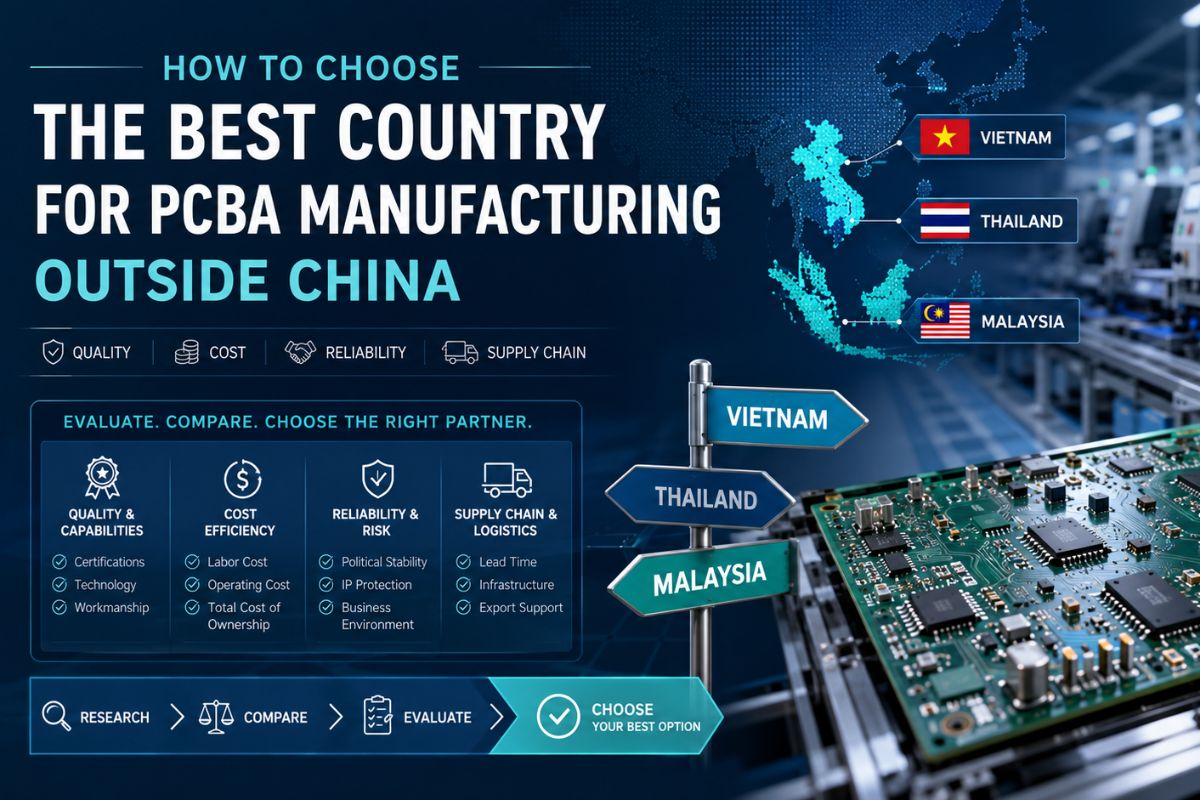
Start with what dominates your bill of materials and your quality requirements, not just landed cost:
- Mostly passive components, connectors, and general SMT work at mid-to-high volume → Vietnam is usually the most cost-efficient starting point.
- Automotive-grade or safety-critical electronics requiring IATF 16949 and long-run reliability data → Thailand’s automotive supply base is hard to match.
- IC-heavy, power-dense, or semiconductor-driven designs → Malaysia’s back-end ecosystem reduces sourcing risk for chip packaging and test.
Once you’ve narrowed down a country, the next decision — which specific factory to qualify — matters just as much. Our guides on EMS provider selection and the 9 criteria US buyers use to qualify Vietnam electronics suppliers walk through that next step in detail.
Why Vietnam is the strongest choice for most PCBA buyers
For the majority of OEMs reading this guide — consumer electronics, computer peripherals, power adapters, and general industrial PCBA — Vietnam offers the best combination of cost, speed, and manufacturing depth without requiring the semiconductor-specific infrastructure that pushes buyers toward Malaysia, or the automotive-specific certifications that define Thailand’s supply base.
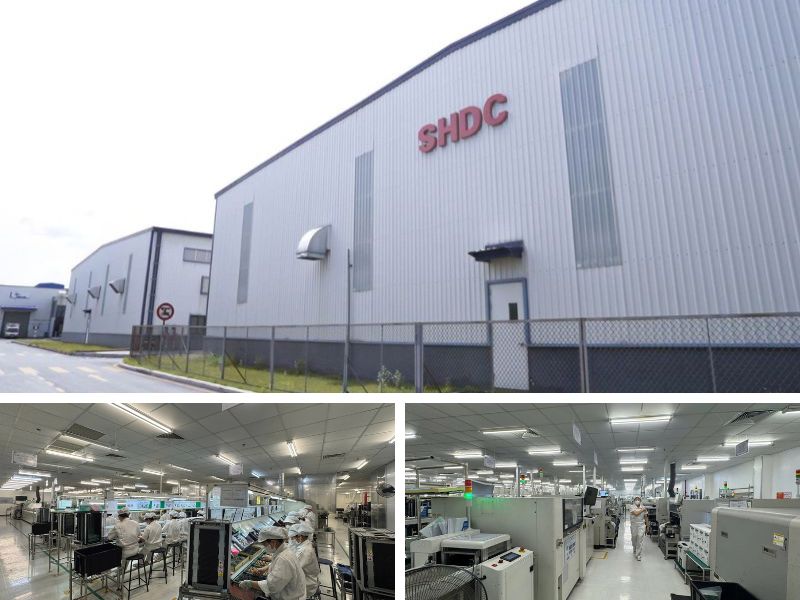
SHDC Electronics Company is one example of what a trusted non-China PCBA manufacturer looks like in practice. Based at VSIP Hai Duong Industrial Park — roughly 40 km from Hanoi and 55 km from the deep-water port at Haiphong — SHDC operates as a member of NAHACO Group with 100% Vietnamese capital.
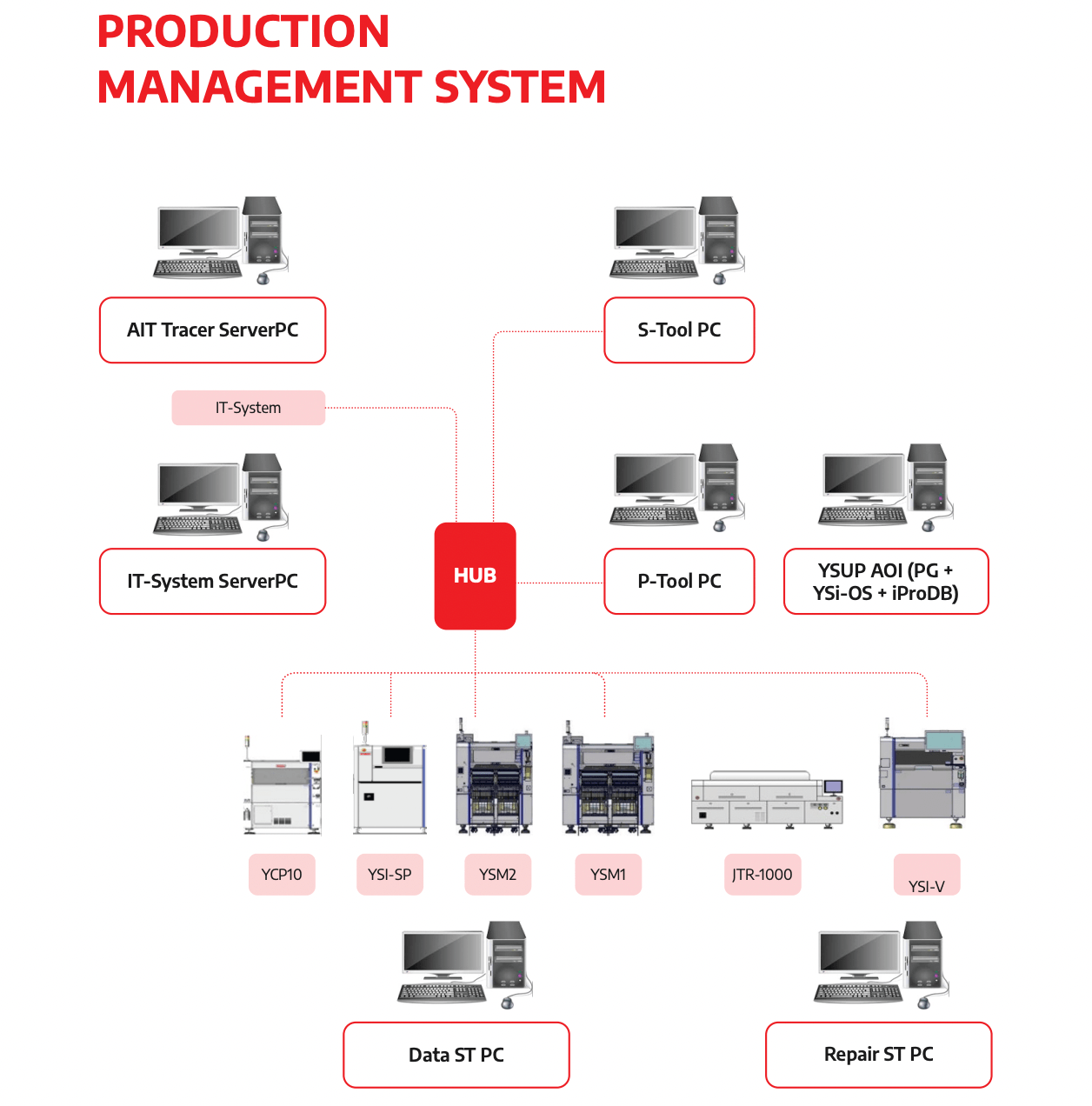
The current facility runs four high-speed SMT lines with a combined capacity of around 140 million placement points per month, alongside dedicated DIP, assembly, testing, and packaging lines, and is certified to ISO 9001:2015 and ISO 14001:2015, with individual product lines carrying CE, UL, ETL, PSE, CB, and RoHS marks depending on the target market.
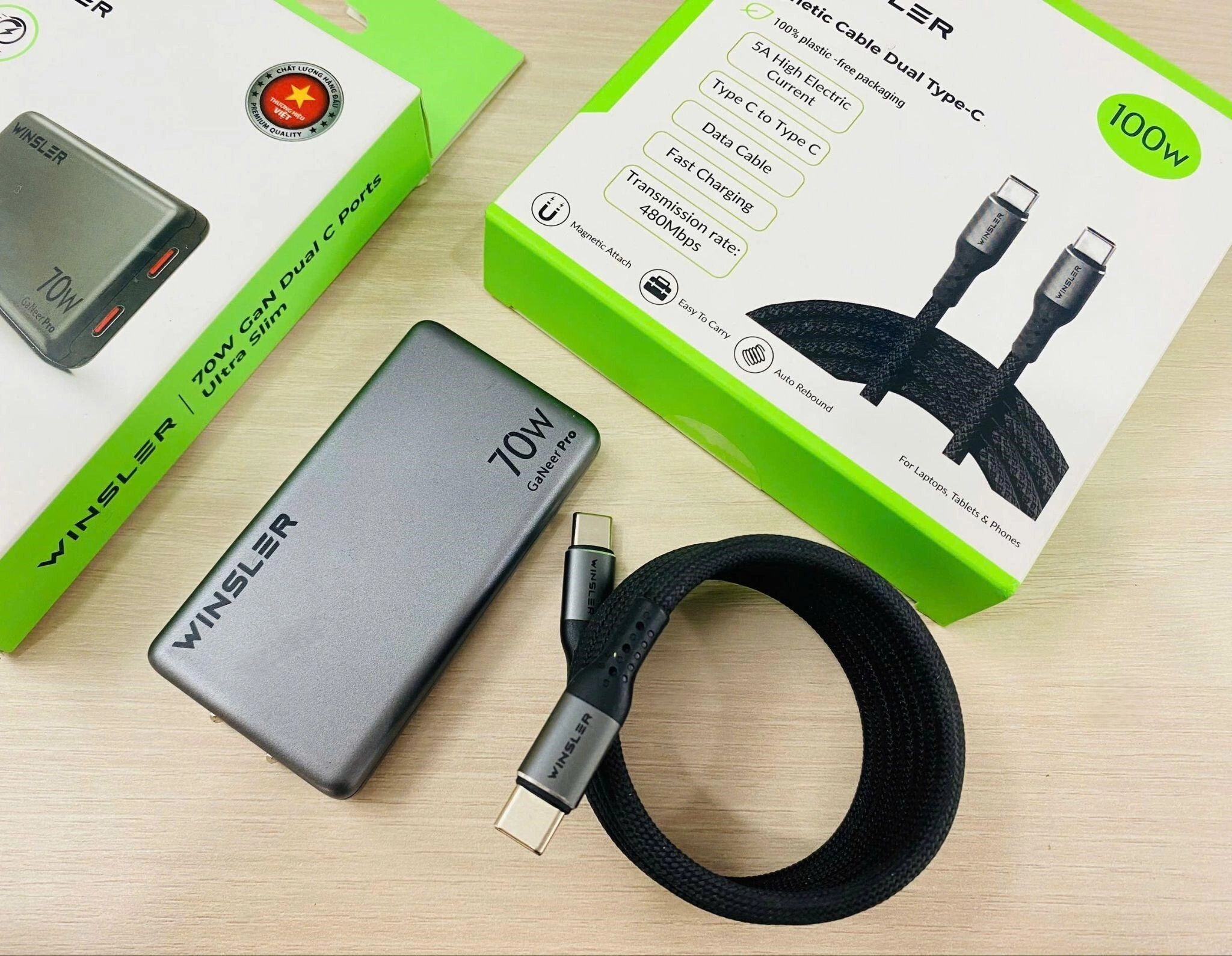
Two things matter for buyers evaluating long-term supply chain moves specifically: track record and scalability. On track record, SHDC’s production spans automotive PCBA for Thaco — one of Vietnam’s largest automotive groups — alongside PCBA for fuel-dispenser electronics (Petrolimex/PECO), water purifier control boards, computer peripherals, and its own Winsler-branded GaN fast-charger line.
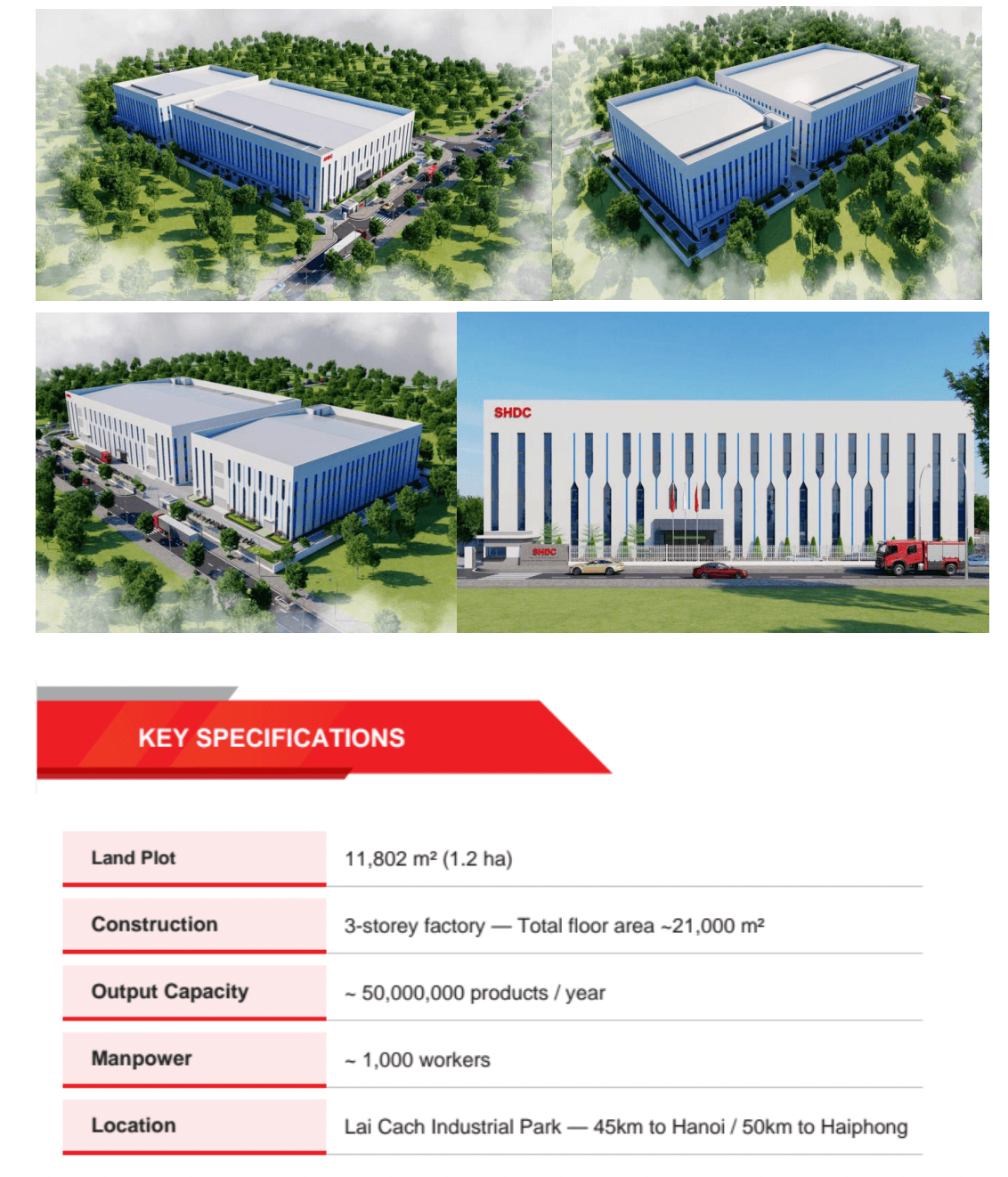
On scalability, SHDC’s Phase 2 facility at Lai Cach Industrial Park, coming online in March 2027, will add roughly 21,000 m² across three floors, 28 additional production lines, and capacity for approximately 50 million units per year — the kind of expansion that lets a buyer start with a prototype run and scale into high-volume production without switching manufacturers.
You can see the full production capability breakdown on our turnkey PCBA manufacturer in Vietnam page, and our overview of the top EMS companies in Vietnam for how SHDC compares to other options in the market.
Ready to evaluate Vietnam for your next PCBA program? Get in touch with SHDC’s engineering team for a capability review and quote.
Frequently asked questions
Is Vietnam cheaper than Thailand for PCBA manufacturing? Generally yes. Vietnam’s manufacturing labor cost runs below both Thailand and Malaysia, though Thailand’s more mature automotive-grade supply base can offset the cost gap for products that need that specific certification depth.
Which Southeast Asian country has the most mature electronics supply chain? It depends on the product category. Thailand has the longest track record in automotive electronics and PCB fabrication; Malaysia has the deepest semiconductor packaging and test ecosystem; Vietnam has the fastest-growing base for consumer electronics and general PCBA/SMT assembly.
Do Vietnam-made PCBAs avoid US tariffs on Chinese electronics? PCBAs manufactured in Vietnam are not subject to the Section 301 tariffs that apply specifically to Chinese-origin goods, since those duties are tied to country of origin. Note that broader, non-country-specific US tariffs can still apply, and rules around country-of-origin determination can be strict — for a full breakdown, see our guide to the tariff impact comparison between China and Vietnam for electronics manufacturing. Tariff policy changes frequently, so buyers should confirm current rates with a licensed customs broker before finalizing sourcing decisions.
How do I choose between Vietnam, Thailand, and Malaysia for my product? Match the country to what dominates your product: general SMT/PCBA and consumer electronics favor Vietnam, automotive-grade electronics favor Thailand, and semiconductor-heavy designs favor Malaysia. From there, qualify specific factories using a structured framework — see our EMS provider selection guide for the criteria that matter most.
