
 Tiếng Việt
 日本語
日本語
As global electronics brands continue diversifying supply chains beyond China, Southeast Asia has become one of the fastest-growing regions for USB-C and GaN charger manufacturing. Driven by rising demand for high-power USB-C PD chargers, supply chain resilience concerns, and ongoing tariff pressures, OEM companies are increasingly evaluating alternative manufacturing hubs across Vietnam, Thailand, and Malaysia. However, choosing the right GaN charger manufacturer in Southeast Asia involves much more than comparing labor cost alone. For modern OEM programs, engineering capability, SMT infrastructure, EMI optimization, testing systems, and scalable production control often matter far more than country selection itself. This guide compares Vietnam, Thailand, and Malaysia from the perspective of U.S. OEM buyers evaluating long-term USB-C GaN charger manufacturing partners.
Why OEM Brands Are Expanding GaN Charger Manufacturing Beyond China
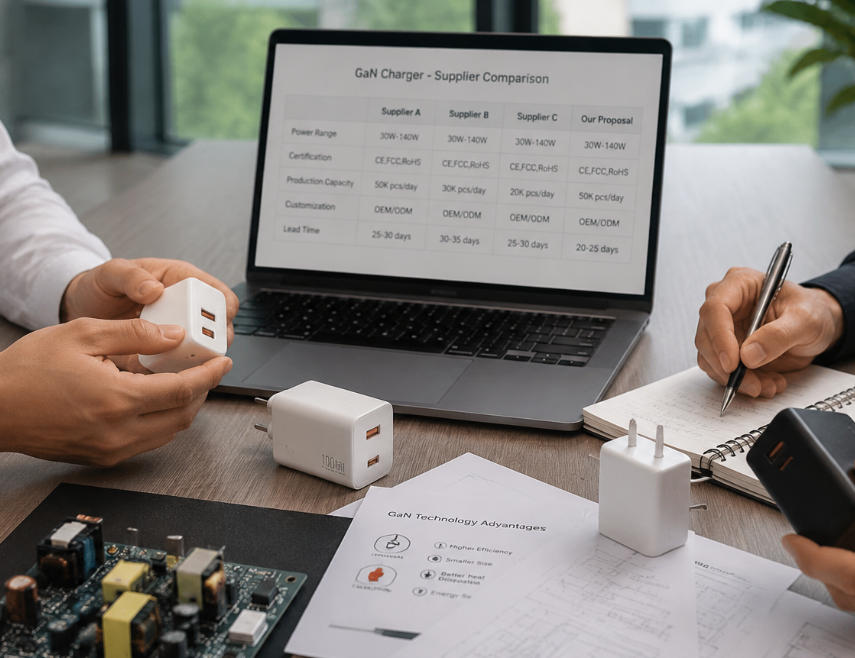
Tariffs and Geopolitical Risks Changed Sourcing Priorities
Over the past several years, global electronics companies have accelerated efforts to reduce dependence on single-country manufacturing strategies.
Ongoing U.S.-China tariffs, geopolitical uncertainty, and supply chain disruptions pushed many OEM brands to adopt a China+1 manufacturing strategy for electronics production.
As a result, Southeast Asia has emerged as a major destination for:
- consumer electronics manufacturing
- USB-C charger production
- EMS outsourcing
- power electronics assembly
- OEM supply chain diversification
Companies evaluating alternatives to China often begin by researching non-China electronics manufacturing options across Southeast Asia.
USB-C and GaN Charger Demand Continues Growing Globally
The transition toward USB-C fast charging continues accelerating across smartphones, laptops, gaming devices, consumer electronics, and industrial portable devices.
GaN technology enables higher power density, smaller charger form factors, improved efficiency, and multi-port charging capability.
However, manufacturing reliable GaN chargers requires significantly greater engineering and process capability than traditional charger assembly.
OEM brands increasingly prioritize suppliers with experience in power electronics manufacturing and high-density USB-C PD charger production.
Southeast Asia Has Become a Strategic Electronics Manufacturing Region
Vietnam, Thailand, and Malaysia now play increasingly important roles in global electronics manufacturing.
Each country offers different strengths in EMS infrastructure, engineering capability, supply chain maturity, production scalability, and cost structure.
For OEM brands, understanding these differences is essential when selecting a long-term GaN charger manufacturing partner.
What OEM Brands Evaluate in a GaN Charger Manufacturer
Engineering Capability
Reliable GaN charger manufacturing requires much more than basic PCB assembly.
OEM brands increasingly evaluate whether a manufacturer can support:
- DFM optimization
- thermal analysis
- PCB layout feedback
- EMI suppression
- USB-C PD validation
- EVT, DVT, and PVT coordination
These capabilities become especially important in compact 65W, 100W, and 140W USB-C charger programs.
OEM teams evaluating early-stage and production-ready charger programs often compare GaN charger PCB assembly, prototype PCBA manufacturing, and full turnkey electronics manufacturing capabilities before choosing a supplier.
SMT and Production Capability
Modern GaN chargers use compact multilayer PCB layouts with tightly integrated power electronics.
As a result, OEM buyers often evaluate:
- SMT automation level
- AOI inspection systems
- SPI systems
- ICT capability
- functional testing systems
- MES/QMS integration
Manufacturers with stronger SMT manufacturing capability generally achieve higher production consistency and lower defect rates.
Compliance and Testing Support
For products entering the U.S. market, compliance support is critical.
OEM brands often evaluate whether manufacturers understand UL safety standards, FCC EMI requirements, DOE efficiency regulations, and USB-IF interoperability requirements.
Useful official references include the UL 62368-1 safety standard, FCC Part 15 regulations, DOE external power supply requirements, and USB-IF Power Delivery specifications.
Vietnam: The Fastest-Growing GaN Charger Manufacturing Hub in Southeast Asia
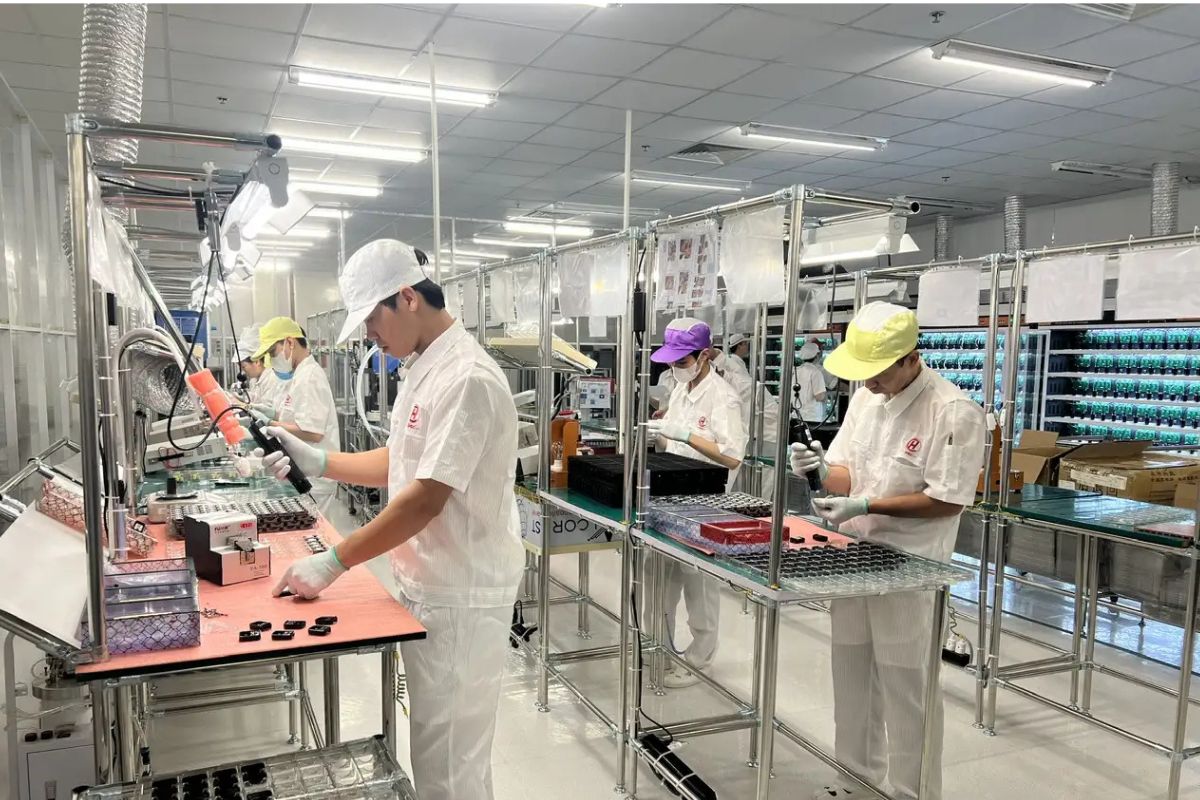
Why Vietnam Attracts OEM Charger Production
Vietnam has become one of the fastest-growing EMS manufacturing regions in Asia.
Major drivers include China+1 supply chain migration, competitive manufacturing cost, rapid SMT expansion, a growing EMS ecosystem, and strong export infrastructure.
Many OEM companies evaluating charger manufacturing in Vietnam are seeking greater sourcing flexibility outside China.
Strengths of Vietnam for GaN Charger Manufacturing
Vietnam offers several advantages for USB-C and GaN charger production, including rapid EMS expansion, competitive manufacturing cost, flexible OEM support, growing engineering capability, and improving SMT infrastructure.
Vietnam is particularly attractive for consumer electronics brands, Amazon electronics sellers, fast-scaling OEM projects, and mid-to-high volume production.
For OEM buyers, Vietnam is increasingly relevant for GaN charger manufacturing in Vietnam, EMS Vietnam, and SMT manufacturing in Vietnam.
Vietnam’s Limitations and Challenges
Despite rapid growth, Vietnam still faces several challenges, including dependence on imported electronic components, competition for engineering talent, supply chain maturity gaps in some sectors, and variation in EMS capability between factories.
Not all Vietnamese factories possess advanced GaN charger manufacturing capability, making supplier qualification especially important.
Best Fit for OEM Brands
Vietnam is often a strong fit for U.S. OEM brands seeking flexible production, non-China sourcing, competitive cost, and scalable EMS support for USB-C and GaN charger programs.
Thailand: Automotive and Industrial Manufacturing Strength
Thailand’s Manufacturing Advantages
Thailand has long been recognized for its mature automotive and industrial manufacturing ecosystem.
Its electronics sector benefits from stable industrial infrastructure, an experienced manufacturing workforce, strong process discipline, and established industrial supply chains.
Strengths for GaN Charger Manufacturing
Thailand’s strengths for charger manufacturing often include strong manufacturing discipline, stable industrial operations, consistent process management, and reliable infrastructure.
This environment can benefit OEM programs requiring higher process stability and long-term industrial production planning.
Potential Limitations
Compared with Vietnam, Thailand may present higher manufacturing cost, reduced flexibility for smaller OEM programs, and fewer charger-specialized EMS providers.
As a result, Thailand may be more attractive for larger industrial or enterprise-focused manufacturing programs rather than cost-sensitive consumer charger projects.
Best Fit for OEM Brands
Thailand may be a good fit for industrial electronics, automotive-adjacent power products, enterprise manufacturing programs, and OEMs that prioritize manufacturing stability over lowest-cost production.
Malaysia: Advanced Semiconductor and Electronics Manufacturing
Malaysia’s Position in Electronics Manufacturing
Malaysia is widely recognized for its strong semiconductor and advanced electronics manufacturing ecosystem.
The country supports semiconductor packaging, high-end electronics manufacturing, industrial electronics, and engineering-intensive production.
Strengths for GaN Charger Manufacturing
Malaysia offers several advantages for advanced GaN charger manufacturing, including strong engineering capability, high process quality, mature electronics infrastructure, and advanced industrial manufacturing experience.
These strengths may benefit premium USB-C charger programs requiring higher technical sophistication.
Potential Limitations
Malaysia also presents several limitations for some OEM programs, including higher production cost, labor availability constraints, and less competitiveness for lower-cost charger programs.
As a result, Malaysia is often more attractive for premium electronics manufacturing rather than highly cost-sensitive consumer charger production.
Best Fit for OEM Brands
Malaysia may be a strong fit for premium electronics brands, engineering-intensive products, semiconductor-adjacent supply chains, and advanced power electronics programs.
Comparing Vietnam, Thailand, and Malaysia for GaN Charger Manufacturing
Manufacturing Cost
Vietnam generally offers the most competitive cost structure for high-volume consumer electronics manufacturing.
Thailand and Malaysia often operate at higher manufacturing cost levels, especially for labor-intensive production.
However, total manufacturing cost should also include yield stability, engineering support, compliance capability, quality consistency, and supply chain efficiency.
OEM teams often compare electronics manufacturing cost structures before finalizing sourcing strategy.
Engineering Capability
Malaysia generally offers the strongest semiconductor-related engineering ecosystem.
Thailand provides strong industrial manufacturing discipline.
Vietnam continues improving rapidly, especially in EMS and consumer electronics manufacturing.
For GaN charger programs, the best choice depends less on country reputation and more on the individual supplier’s charger-specific engineering capability.
SMT and EMS Infrastructure
All three countries support modern SMT manufacturing capability, but factory-level variation remains significant.
OEM brands should evaluate SMT automation, AOI systems, ICT capability, MES/QMS systems, charger testing infrastructure, and high-volume production experience.
Topics such as SMT manufacturing, AOI inspection, and ICT testing have become increasingly important in modern charger production.
Compliance and Testing Capability
For U.S. OEM brands, compliance capability can be a deciding factor.
A qualified GaN charger manufacturer should understand testing and documentation requirements related to UL, FCC, DOE, USB-C PD, PPS, burn-in testing, and functional validation.
Factories without strong testing infrastructure may be able to produce working samples but struggle to maintain stable compliance during mass production.
Supply Chain Flexibility
Vietnam often provides strong flexibility for fast-moving OEM programs and consumer electronics brands.
Thailand may offer more mature industrial infrastructure, while Malaysia provides stronger semiconductor and advanced electronics depth.
However, all three countries still depend on broader regional and global supply chains for many electronic components used in GaN charger production.
Best Fit by Product Type
Vietnam is often attractive for consumer electronics, Amazon charger brands, fast-scaling OEM programs, and cost-sensitive USB-C charger projects.
Thailand may fit industrial electronics, enterprise manufacturing programs, and automotive-adjacent products.
Malaysia may fit premium electronics, engineering-intensive products, and advanced power electronics manufacturing.
Why Manufacturing Capability Matters More Than Country Alone
Not All EMS Factories Are Equal
One of the biggest sourcing mistakes OEM brands make is assuming country selection alone determines manufacturing quality.
In reality, capability variation between factories inside the same country can be enormous.
Factors such as engineering depth, SMT process control, testing systems, quality management, and charger specialization often matter more than geography itself.
Charger Specialization Matters
Reliable USB-C GaN charger manufacturing requires expertise in thermal engineering, EMI suppression, USB-C PD validation, burn-in testing, and high-density power electronics.
Factories lacking charger-specific experience may struggle during high-volume scaling.
This is especially true for compact, high-wattage chargers where thermal behavior, PCB layout, transformer consistency, firmware stability, and EMI control are closely connected.
Process Control Separates Reliable Manufacturers
Experienced EMS providers often implement MES/QMS systems, AOI inspection, ICT testing, yield management systems, and traceability infrastructure.
These systems improve production consistency, quality stability, defect reduction, and OEM scalability.
For high-power GaN charger production, process control is not only a quality issue. It directly affects reliability, safety, compliance, and customer satisfaction.
SHDC’s Experience in GaN Charger Manufacturing
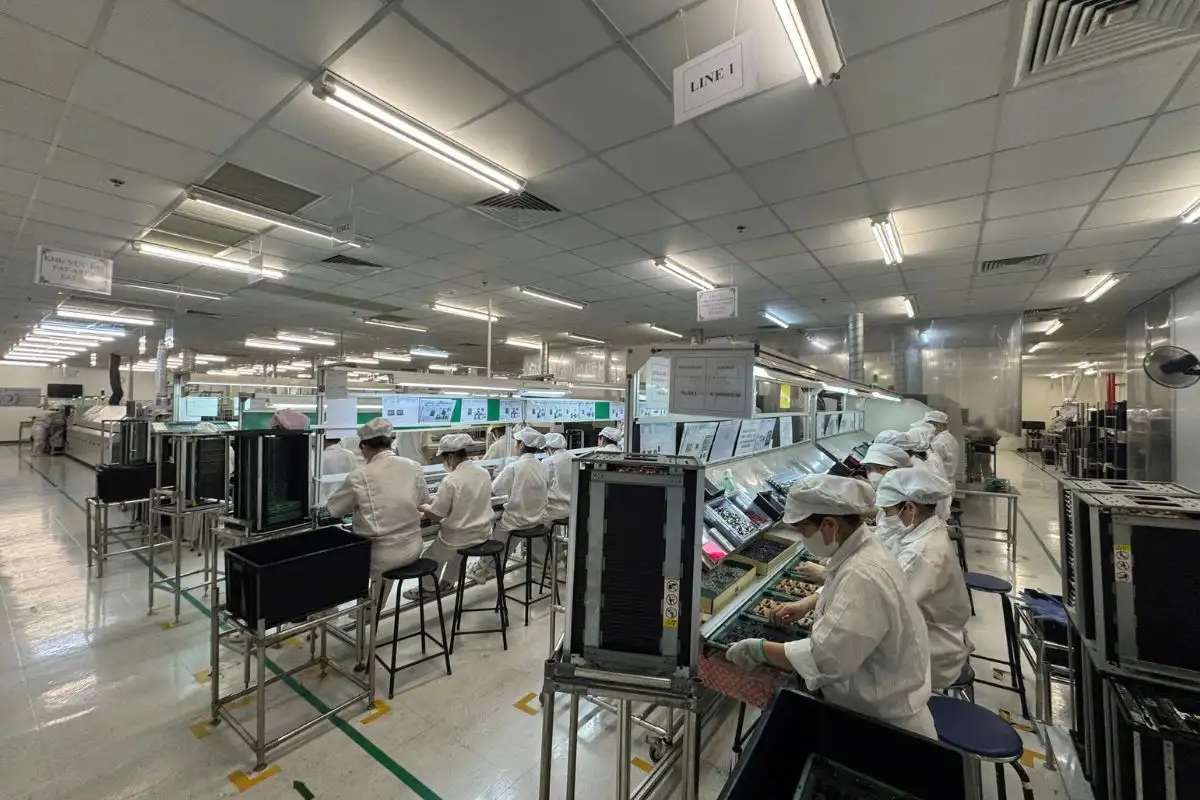
SHDC is a Vietnam-based EMS and power electronics manufacturing company supporting OEM programs across SMT assembly, testing, and charger production.
The company’s manufacturing infrastructure includes Yamaha SMT systems, AOI inspection, ICT testing, functional testing, aging tests, high-voltage testing systems, and MES/QMS integration.
SHDC also manufactures multiple high-power charger platforms, including 65W GaN chargers, 67W USB-C chargers, 100W USB-C PD chargers, and 150W multi-port GaN chargers.
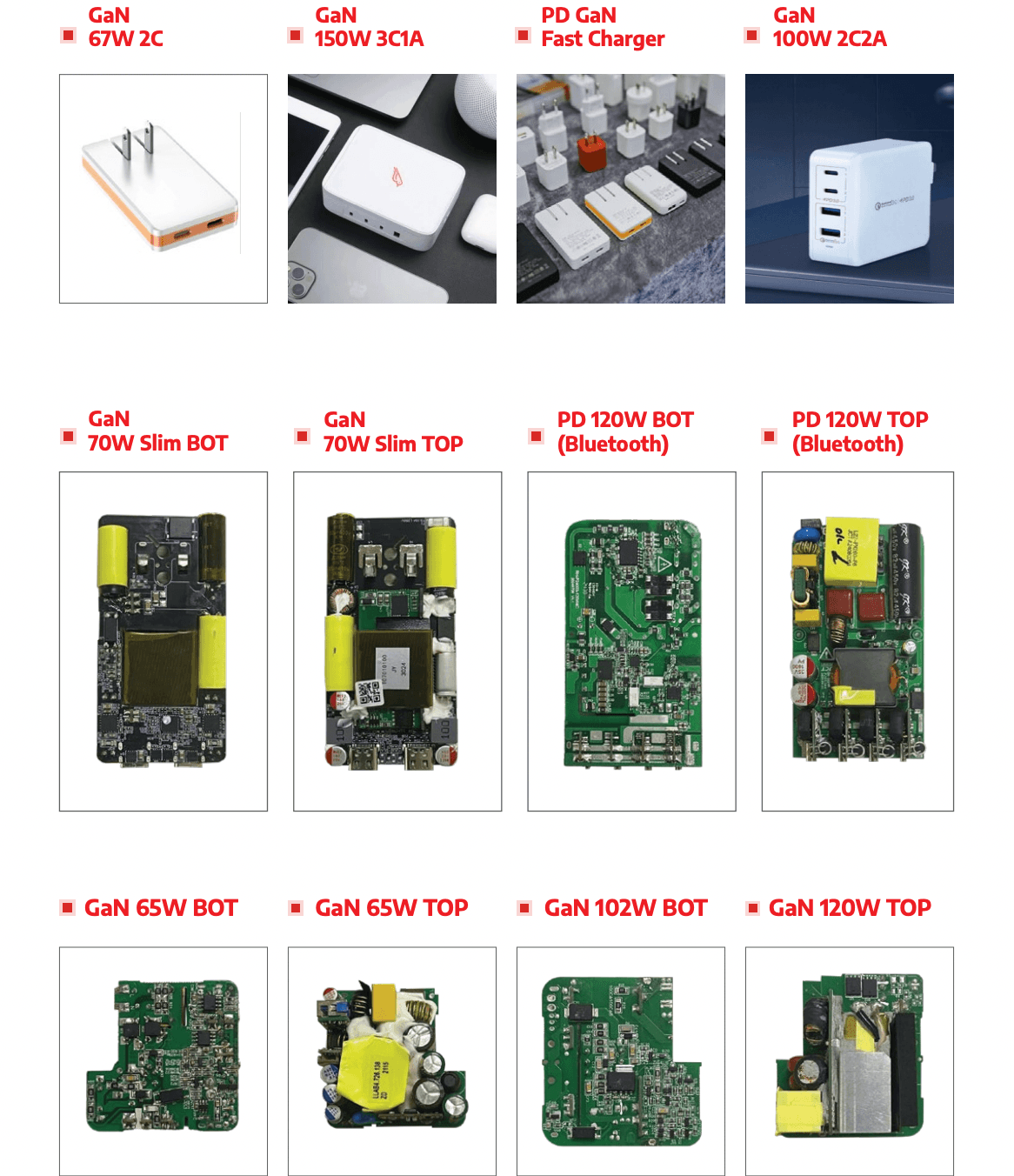
OEM brands evaluating non-China GaN charger manufacturing partners increasingly prioritize suppliers with advanced EMS infrastructure and scalable power electronics capability.
SHDC has additionally participated in advanced charger-related product programs highlighted in Vietnamese technology media, including products integrating Apple Find My functionality into charging solutions.
Reference: SHDC and Apple Find My charger development
Final Thoughts
Choosing a GaN charger manufacturer in Southeast Asia requires evaluating far more than labor cost or country-level reputation.
For modern OEM programs, the most important factors often include engineering capability, SMT infrastructure, EMI optimization, thermal management, testing systems, process control, and scalable EMS capability.
Vietnam, Thailand, and Malaysia each offer valuable strengths for electronics manufacturing, but selecting the right supplier ultimately depends on product requirements, scaling strategy, compliance needs, and long-term manufacturing goals.
For U.S. OEM brands, the best manufacturing partner is not simply the lowest-cost supplier. It is the factory that can combine charger-specific engineering knowledge, reliable testing infrastructure, supply chain discipline, and scalable production execution.
FAQs
Which Southeast Asian country is best for GaN charger manufacturing?
There is no single best country for every OEM program. Vietnam is often attractive for flexible and cost-competitive consumer electronics manufacturing. Thailand offers strong industrial manufacturing discipline. Malaysia provides advanced electronics and semiconductor-related engineering depth. The best choice depends on product complexity, target cost, compliance needs, and required production volume.
Why are OEM brands moving charger manufacturing to Southeast Asia?
OEM brands are expanding charger manufacturing into Southeast Asia to reduce dependence on China, improve supply chain resilience, manage tariff exposure, and access growing EMS ecosystems in Vietnam, Thailand, and Malaysia.
Is Vietnam good for USB-C GaN charger manufacturing?
Vietnam is becoming increasingly attractive for USB-C and GaN charger manufacturing due to its competitive cost structure, growing EMS ecosystem, expanding SMT capability, and strong relevance for China+1 sourcing strategies.
How do Thailand and Malaysia compare for electronics manufacturing?
Thailand is strong in automotive and industrial manufacturing, while Malaysia has deeper semiconductor and advanced electronics manufacturing experience. Both countries can be suitable for electronics manufacturing, but may involve higher cost or less flexibility for some consumer charger programs.
What should OEM brands evaluate in a GaN charger manufacturer?
OEM brands should evaluate engineering support, SMT capability, AOI and ICT testing, functional testing, burn-in systems, EMI optimization, USB-C PD validation, component sourcing control, and scalable production management.
Why does testing capability matter in charger manufacturing?
Testing capability helps identify solder defects, electrical instability, overheating risks, USB-C PD negotiation problems, and early-life failures before products reach customers. For GaN chargers, advanced testing is essential because compact high-power designs operate with tighter thermal and electrical margins.
>>>Read more: What Separates a Reliable USB-C GaN Charger Manufacturer From a Standard Charger Factory
