
 Tiếng Việt
 日本語
日本語
Choosing a new electronics manufacturing supplier is not simply a matter of comparing quotations. A supplier may offer competitive pricing and impressive capabilities on paper, but that does not necessarily mean it can consistently meet your technical, quality, delivery, compliance, and production requirements. That is why a structured supplier qualification process matters. For U.S. OEMs, the goal is not just to identify suppliers that look promising. The goal is to move qualified candidates through a controlled workflow—from initial screening and technical assessment to factory verification, pilot production, final approval, and ongoing monitoring. This guide breaks down the 12 steps in the supplier qualification process, including what to evaluate at each stage, what documents to collect, and what decision should be made before moving forward.
What Is the Supplier Qualification Process?
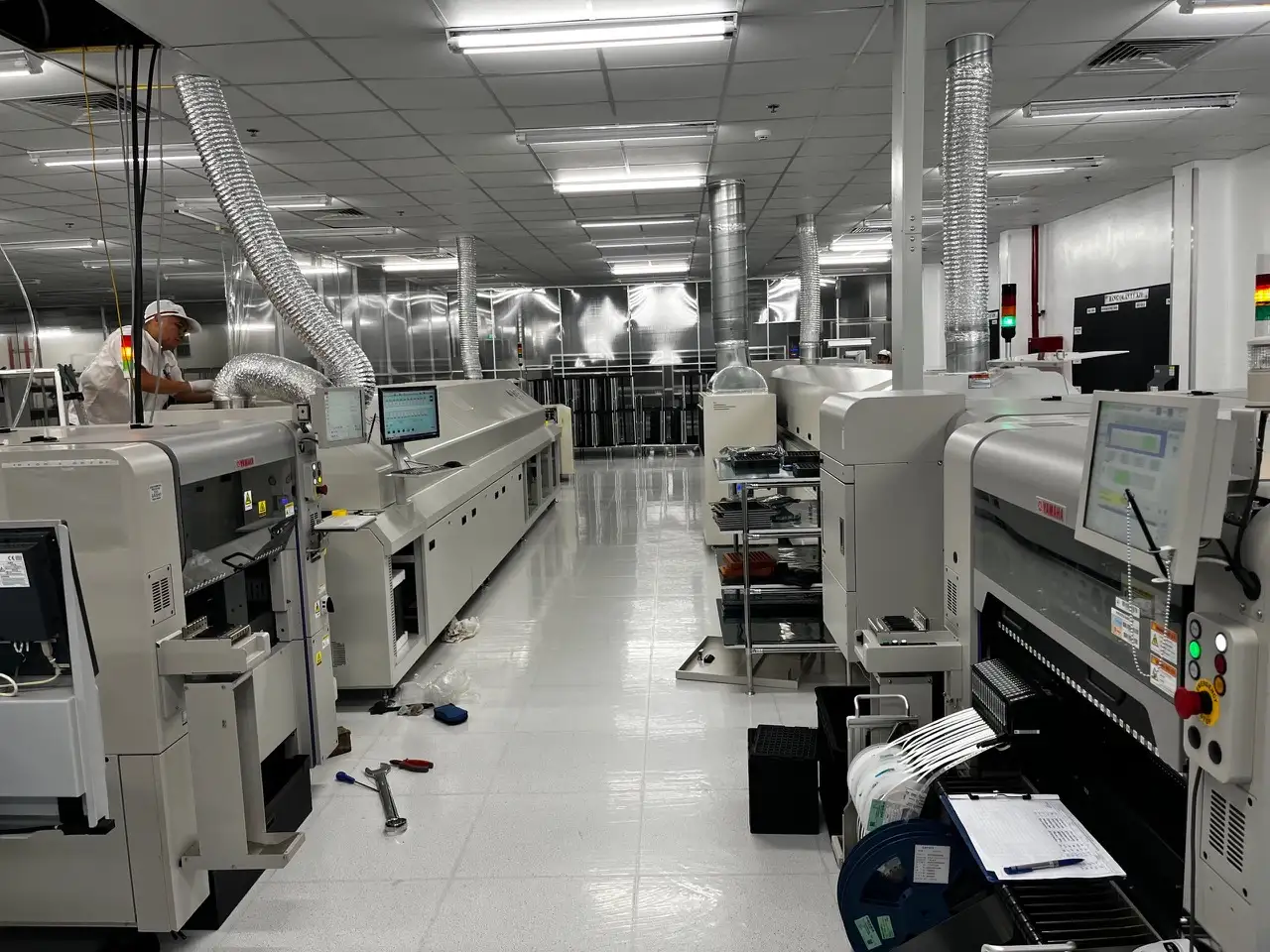
The supplier qualification process is a structured workflow used to determine whether a supplier has the capabilities, systems, resources, and risk profile required to meet a company’s purchasing and manufacturing requirements.
For electronics manufacturing, qualification may cover:
- Technical and manufacturing capability
- Quality management
- Production capacity
- Testing capability
- Compliance
- Supply chain risk
- Engineering support
- Delivery performance
- Cost competitiveness
- Long-term scalability
The important distinction is that supplier qualification is a process, not a single audit or questionnaire.
A typical workflow looks like this:
Requirements → Supplier Screening → RFI → Capability Assessment → Quality Review → Risk Assessment → Audit → Sample/FAI → Pilot Production → Approval → ASL → Monitoring
For electronics projects, the process should also account for product-specific requirements such as SMT capability, testing, traceability, engineering support, and production scalability.
Supplier Qualification vs. Supplier Selection
These two activities are closely related but serve different purposes.
Supplier selection asks:
Which supplier should we choose?
Supplier qualification asks:
Can this supplier reliably meet our requirements and be approved for production?
For example, an OEM may shortlist three EMS providers based on price, location, capabilities, and experience. Supplier qualification then determines whether those candidates can actually meet the project’s technical and quality requirements.
This distinction is particularly important when sourcing contract electronics manufacturing in Vietnam.
What Is the Final Output?
A well-managed qualification process should produce more than a supplier score.
Typical outputs include:
- Supplier qualification scorecard
- Risk classification
- Technical assessment
- Quality assessment
- Audit report
- Corrective action records
- Sample or First Article results
- Pilot production results
- Final qualification decision
- Approved Supplier List (ASL)
- Ongoing supplier performance record
The 12-Step Supplier Qualification Process
Step 1. Define Supplier Qualification Requirements
The first step happens before you start searching for suppliers.
You need to establish exactly what the supplier must be capable of delivering.
For an electronics manufacturing project, requirements may include:
- Product specifications
- PCB/PCBA requirements
- Manufacturing processes
- Expected annual volume
- Quality requirements
- Testing requirements
- Certifications or compliance requirements
- Target lead time
- Packaging requirements
- Traceability requirements
- Engineering support
- Geographic or logistics requirements
- Cost expectations
For products still moving from design into manufacturing, supplier requirements should also consider DFM, testability, and NPI support.
For example, an OEM may require an EMS partner to provide DFM feedback before production rather than simply manufacture an existing design. This makes DFM for electronics manufacturing part of the qualification criteria.
Output: Supplier Qualification Requirement Document
This document becomes the reference point for the rest of the qualification process.
Step 2. Build a Supplier Longlist
Once requirements are defined, build a broad list of potential suppliers.
Sources may include:
- Industry directories
- Trade shows
- Referrals
- Existing supplier networks
- Regional sourcing research
- Direct manufacturer outreach
- Industry associations
- Existing manufacturing relationships
At this stage, avoid spending significant engineering or quality resources on each candidate.
The objective is simply to answer:
Which suppliers could potentially meet our requirements?
For a U.S. OEM looking for an electronics manufacturing partner in Asia, the longlist might include suppliers in Vietnam, China, Thailand, Malaysia, Mexico, or other manufacturing hubs.
Output: Supplier Longlist
Step 3. Conduct Initial Supplier Screening

The longlist should then be narrowed into a manageable shortlist.
Initial screening typically reviews high-level information such as:
- Company profile
- Manufacturing location
- Product categories
- Basic manufacturing capabilities
- Factory size
- Production scale
- Target industries
- Export experience
- Basic certifications
- Approximate capacity
This stage should be relatively fast.
There is no reason to conduct a full factory audit on a supplier that cannot manufacture the required product in the first place.
Decision Gate #1
Pass → Shortlist
Fail → Remove from qualification process
A key principle is:
Screening is not qualification.
Screening eliminates obvious mismatches. Qualification provides evidence that the remaining candidates can actually meet the requirements.
Step 4. Send a Supplier Questionnaire or RFI
After initial screening, send the shortlisted suppliers a structured RFI (Request for Information) or supplier qualification questionnaire.
The questionnaire should request evidence rather than generic yes/no answers.
Typical information includes:
Company information
- Legal entity
- Factory location
- Ownership
- Years in operation
- Main markets
Manufacturing information
- Production processes
- Equipment
- Production capacity
- Number of production lines
- Workforce
- Manufacturing shifts
Quality information
- Quality management system
- Inspection processes
- Testing capability
- Traceability
- Non-conformance handling
- Corrective actions
Commercial information
- MOQ
- Lead time
- Payment terms
- Production capacity
- Supply chain dependencies
For U.S. OEMs sourcing overseas, this stage can be supported by a structured electronics supplier due diligence checklist.
The important difference is that the RFI is part of the workflow, whereas due diligence is one of the evidence-gathering activities within that workflow.
Output: Completed Supplier Qualification Questionnaire
A useful rule is:
Don’t ask only, “Can you manufacture this product?” Ask the supplier to demonstrate how it manufactures products like it.
Step 5. Review Technical and Manufacturing Capability
Now move from basic company information to technical qualification.
For electronics manufacturing, evaluate whether the supplier’s actual equipment and processes match the requirements of your product.
Depending on the project, this may include:
- SMT capability
- THT/DIP capability
- Assembly
- Testing
- Inspection
- Rework
- Production capacity
- Engineering support
- DFM capability
- NPI support
- Automation
- Product complexity
- Process scalability
For PCBA projects, you may also need to review:
- Component size capability
- PCB dimensions
- SMT placement capability
- SPI
- AOI
- ICT
- FCT
- Traceability
- Test coverage
The objective is not to find the supplier with the longest equipment list.
It is to determine:
Can this supplier’s actual manufacturing system support our product and expected production volume?
For example, an OEM moving from prototype to volume production should evaluate both current manufacturing capability and the supplier’s ability to support NPI in electronics manufacturing.
Output: Technical Capability Assessment
Step 6. Evaluate Quality Management and Compliance
Technical capability alone does not qualify a supplier.
The next step is to evaluate how the supplier controls quality.
Areas to review include:
- Incoming inspection
- Process inspection
- Final inspection
- Electrical testing
- Functional testing
- Traceability
- Non-conforming product control
- Corrective and preventive action
- Calibration
- Document control
- Change management
- Quality records
You should also verify relevant certifications and compliance requirements for the specific product and industry.
For example, ISO 9001 is a quality management system standard that establishes requirements for organizations to consistently provide products and services that meet customer and applicable requirements and to continually improve their QMS. ISO notes that ISO 9001:2015 remains the current published edition while a revised 2026 edition is under development/publication.
For electronics assembly, applicable IPC standards may also form part of the supplier’s quality requirements. IPC-A-610 addresses acceptability criteria for electronic assemblies, while IPC J-STD-001 addresses requirements for soldered electrical and electronic assemblies. The current IPC document revision table lists IPC-A-610J and J-STD-001J as current revisions.
IPC Standards official resource
Output: Quality & Compliance Assessment
One important qualification principle is:
Certification is evidence of a management system—not proof that a supplier is automatically suitable for your product.
The supplier still needs to demonstrate product-specific capability.
Step 7. Assess Supplier Risk
After technical and quality assessments, classify the supplier’s risk.
Supplier risk should be evaluated across several dimensions.
Business Risk
- Financial stability
- Ownership structure
- Business continuity
- Customer concentration
- Dependency on major customers
Supply Chain Risk
- Single-source components
- Critical material dependencies
- Geographic concentration
- Logistics exposure
- Long-lead components
Manufacturing Risk
- Production capacity
- Equipment dependency
- Workforce availability
- Process maturity
- Scalability
Quality Risk
- Historical defect rates
- Customer complaints
- CAPA performance
- Audit findings
- Certification status
For U.S. OEMs, supplier qualification should be connected to broader supply-chain planning. Your electronics supply chain resilience strategy should influence how much evidence is required before approving a supplier.
Output: Supplier Risk Rating
A simple model could classify suppliers as:
| Risk Level | Qualification Approach |
|---|---|
| Low | Standard qualification |
| Medium | Additional verification |
| High | Enhanced audit and validation |
| Critical | Do not approve without major risk reduction |
The exact scoring model should be adapted to the product and industry.
Step 8. Conduct a Supplier or Factory Audit

A supplier should not normally go straight from questionnaire to approval.
Once the candidate has passed initial screening, technical assessment, quality review, and risk assessment, an on-site or remote audit can verify whether the supplier’s claims match actual operations.
Audit areas can include:
- Production
- Quality
- Material storage
- ESD controls
- Equipment
- Process control
- Testing
- Traceability
- Documentation
- Maintenance
- Workforce
- Production planning
The audit should be evidence-based.
For example, instead of simply asking whether a supplier has traceability, verify whether production records can actually connect materials, processes, inspection, and finished products.
A detailed electronics factory audit checklist can be used when conducting the factory-level assessment.
Possible Audit Outcomes
- Pass: The supplier meets requirements.
- Pass with Corrective Actions: The supplier is acceptable but must close specific findings.
- Conditional: Additional evidence or validation is required.
- Fail: The supplier does not meet minimum requirements.
Output: Supplier Audit Report
The audit is a verification step, not the entire qualification process.
Step 9. Request Samples, Prototype, or First Article
Passing an audit does not prove that a supplier can manufacture your specific product.
The next step is product-level validation.
Depending on the project, this may involve:
- Prototype
- Engineering sample
- First Article
- Initial production build
- Functional sample
The evaluation should cover:
- Manufacturing quality
- Dimensional requirements
- Assembly quality
- Electrical performance
- Functional performance
- Test results
- Documentation
- Workmanship
- Yield where applicable
For more complex electronics projects, First Article Inspection for Electronics Manufacturing can provide a structured approach to validating the initial build.
Output: Sample / First Article Evaluation
The key question is:
Can the supplier build our product correctly—not just someone else’s product?
Step 10. Run Pilot Production and Validate the Process
A successful sample is a positive signal, but it is not enough for high-volume production.
A supplier that can produce one good prototype may still struggle to produce thousands of consistent units.
That is why pilot production is an important qualification stage.
The pilot run can reveal:
- Process instability
- Yield problems
- High rework
- Test failures
- Production bottlenecks
- Material handling issues
- Operator-dependent processes
- Inconsistent assembly
- Insufficient test coverage
Key metrics may include:
- First Pass Yield (FPY)
- Defect rate
- Rework rate
- Scrap rate
- Cycle time
- Test pass rate
- Production consistency
A structured pilot production process helps demonstrate whether a supplier can transition from prototype manufacturing to repeatable production.
Output: Pilot Production Report
At this point, the question changes from:
“Can they make it?”
to:
“Can they make it repeatedly, at the required quality and volume?”
Step 11. Make the Qualification Decision
After screening, technical assessment, quality review, risk evaluation, audit, sample validation, and pilot production, the cross-functional team can make the final qualification decision.
A practical framework has three outcomes.
- Approved: The supplier meets the defined requirements and can be approved for the intended scope.
- Conditionally Approved: The supplier is acceptable, but specific corrective actions or limitations remain.
- Rejected: The supplier fails critical requirements or presents unacceptable risk.
Example Supplier Scorecard
| Qualification Category | Example Weight |
|---|---|
| Quality | 25% |
| Technical capability | 20% |
| Manufacturing capacity | 15% |
| Delivery performance | 15% |
| Compliance | 10% |
| Cost competitiveness | 10% |
| Communication & support | 5% |
These weights are illustrative rather than universal. A medical, automotive, industrial, or consumer electronics project may assign very different priorities.
More importantly, a weighted score should not override a critical failure.
For example, a supplier might achieve a strong overall score but still be rejected if it fails a mandatory regulatory or quality requirement.
Output: Supplier Qualification Decision
Step 12. Add the Supplier to the Approved Supplier List and Start Monitoring
Qualification does not end when the supplier receives approval.
Once approved, the supplier should be added to the company’s Approved Supplier List (ASL) for the relevant product, process, or commodity.
Then establish ongoing performance monitoring.
Typical metrics include:
- Defect rate
- PPM
- First Pass Yield
- On-time delivery
- Lead time
- Response time
- Corrective action closure
- Cost changes
- Capacity
- Customer complaints
The supplier should also be re-evaluated when significant changes occur.
When Should a Supplier Be Requalified?
Possible triggers include:
- Major manufacturing process changes
- Factory relocation
- Significant quality problems
- Major ownership changes
- Certification expiration
- Major product changes
- Long periods of inactivity
- Significant changes in production capacity
This turns supplier qualification into a closed-loop process rather than a one-time approval exercise.
Output: Approved Supplier + Ongoing Supplier Performance Record
Supplier Qualification Process: Decision Gates at a Glance
The complete workflow can be summarized as:
1. Define requirements
↓
2. Build supplier longlist
↓
3. Initial screening
↓
4. RFI / questionnaire
↓
5. Technical capability assessment
↓
6. Quality & compliance review
↓
7. Risk assessment
↓
8. Factory audit
↓
9. Sample / First Article
↓
10. Pilot production
↓
11. Final qualification decision
↓
12. ASL + ongoing monitoring
| Stage | Primary Decision |
|---|---|
| Screening | Shortlist / Reject |
| Capability | Proceed / Reject |
| Quality | Proceed / Corrective Action |
| Risk | Standard / Enhanced Qualification |
| Audit | Pass / Conditional / Fail |
| Sample | Accept / Rework / Reject |
| Pilot | Validate / Improve / Reject |
| Final | Approved / Conditional / Rejected |
| Post-approval | Monitor / Requalify |
This structure gives procurement, engineering, quality, and operations teams a shared decision framework.
What Documents Should Be Collected During Supplier Qualification?
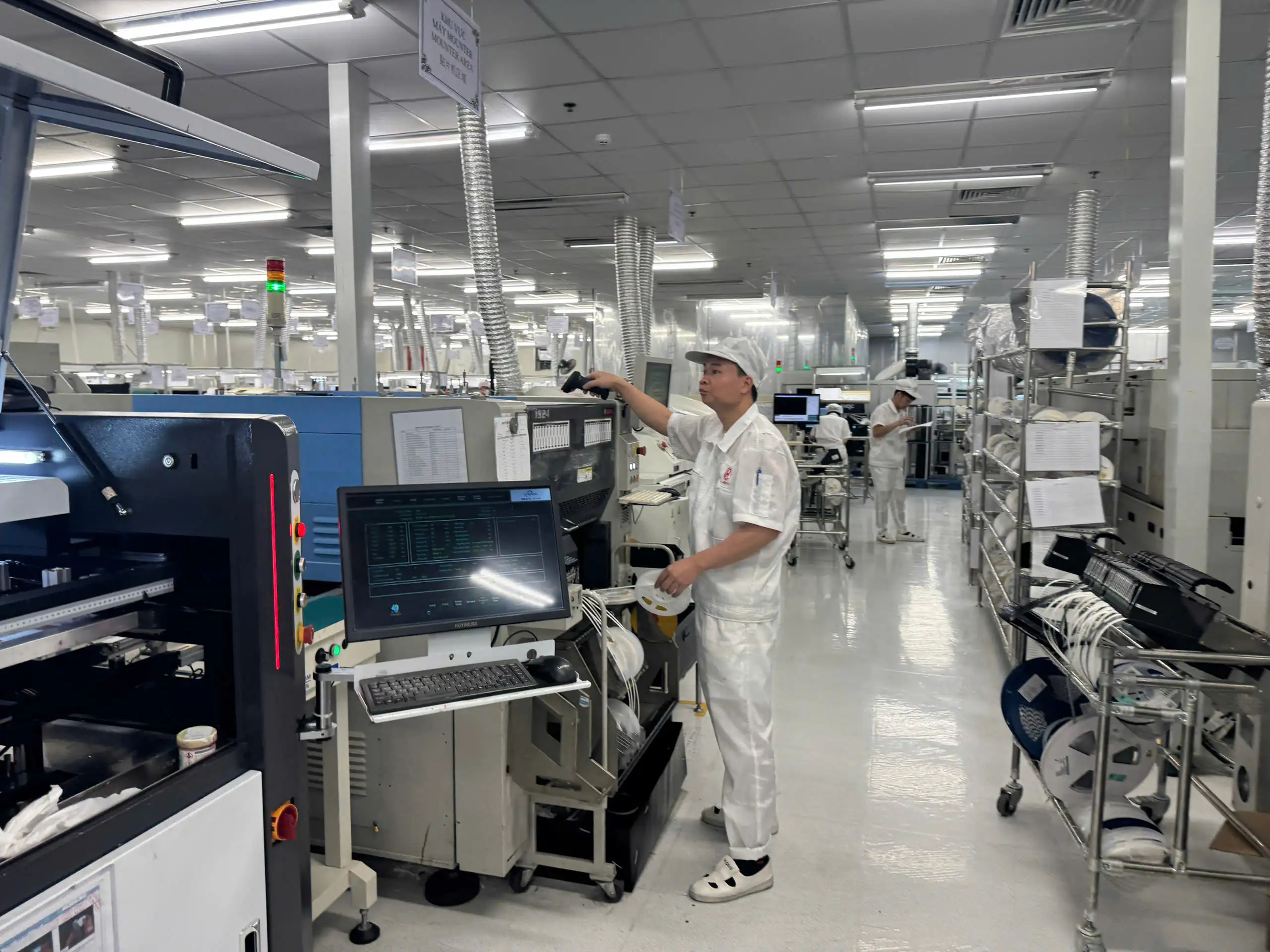
The exact documentation varies by industry and product, but a practical supplier qualification process usually collects evidence in stages.
Before Qualification
- Company profile
- Capability statement
- Factory information
- Relevant certifications
During Assessment
- Equipment list
- Process flow
- Quality procedures
- Testing capability
- Capacity information
- Manufacturing process information
During Validation
- Sample reports
- First Article records
- Test reports
- Pilot production results
- Corrective action records
Before Approval
- Audit report
- Qualification scorecard
- Open corrective actions
- Final approval record
After Approval
- Supplier performance reports
- Quality data
- Delivery performance
- CAPA records
- Requalification records
The goal is to build an evidence trail showing why a supplier was approved—not simply a folder of certificates.
Who Should Be Involved in Supplier Qualification?
Supplier qualification should not be treated as a procurement-only activity.
Different teams see different risks.
Procurement / Sourcing
Typically evaluates:
- Commercial terms
- Cost
- Lead time
- Delivery
- Supply risk
- Contract conditions
Engineering
Focuses on:
- Technical capability
- DFM
- NPI
- Product requirements
- Manufacturing feasibility
- Engineering support
Quality / Supplier Quality
Reviews:
- QMS
- Inspection
- Testing
- CAPA
- Traceability
- Audit results
- Quality performance
Operations / Manufacturing
Evaluates:
- Capacity
- Production planning
- Process stability
- Scalability
- Manufacturing resources
Compliance / Regulatory
Depending on the product, this team may verify:
- Certifications
- Regulatory requirements
- Industry standards
- Environmental requirements
- Customer-specific requirements
The most effective approach is therefore cross-functional qualification, with clear ownership at each decision gate.
Common Mistakes in the Supplier Qualification Process
1. Starting With Price Instead of Requirements
If cost becomes the first filter, a supplier may look attractive before the OEM understands whether it can meet technical or quality requirements.
2. Auditing Before Initial Screening
Factory audits consume time and resources. Screen candidates first so audits are reserved for suppliers with genuine potential.
3. Treating Certifications as Proof of Capability
Certification can provide useful evidence of a management system, but it does not demonstrate that a supplier can manufacture your specific product.
4. Skipping Sample or First Article Validation
A strong factory profile does not guarantee that your first production build will meet requirements.
5. Approving a Supplier Based Only on a Successful Prototype
Prototype success and mass-production capability are not the same thing.
6. Failing to Define Decision Gates
Without clear pass/fail criteria, supplier qualification can become subjective and inconsistent.
7. Not Documenting Corrective Actions
Audit findings and sample problems should have owners, deadlines, and closure evidence.
8. Treating Qualification as a One-Time Event
Supplier performance can change after approval. Qualification should connect directly to ongoing supplier performance management.
How Long Does Supplier Qualification Take?
There is no universal supplier qualification timeline.
The duration depends on:
- Product complexity
- Industry
- Supplier risk
- Required certifications
- Factory audit requirements
- Sample requirements
- First Article requirements
- Pilot production
- Supplier responsiveness
- Customer approval requirements
A low-risk supplier providing a relatively straightforward product may move through qualification relatively quickly.
A supplier supporting automotive, medical, industrial, or other high-reliability products may require considerably more validation.
The key principle is:
Do not shorten qualification simply to meet a sourcing deadline if doing so removes evidence needed to control manufacturing risk.
A few additional days or weeks spent validating a supplier can be far less expensive than discovering a major capability problem after production has started.
Supplier Qualification for Electronics Manufacturing: What U.S. OEMs Should Prioritize
Electronics manufacturing introduces several qualification issues that may be less important in other industries.
For example, an OEM should look beyond general factory capability and evaluate whether the supplier can control:
- BOM and revision changes
- Component sourcing
- SMT processes
- THT/DIP assembly
- Soldering
- Inspection
- Electrical testing
- Functional testing
- Traceability
- DFM
- NPI
- Production scalability
This is where a supplier’s engineering capability becomes especially important.
A manufacturing partner should not simply wait for the OEM to provide a finished design. During qualification, U.S. OEMs should assess whether the supplier can identify manufacturability issues early and support the transition from design to production.
For example, a supplier with strong SMT manufacturing services may be suitable for a high-volume PCBA project only if its process capability, testing strategy, quality controls, and production capacity align with the actual product requirements.
How SHDC Fits Into a Supplier Qualification Process
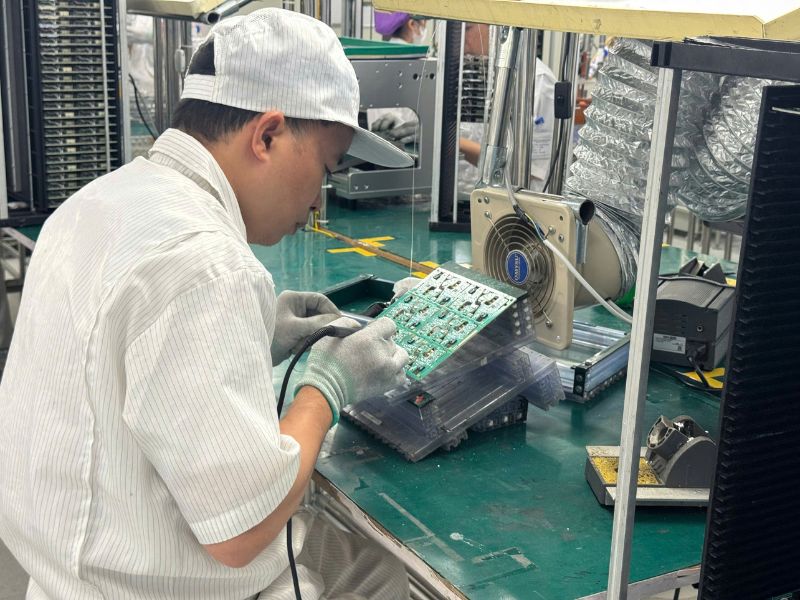
For U.S. OEMs evaluating SHDC, the same qualification framework can be applied to the company’s documented manufacturing capabilities.
SHDC’s current company profile describes an electronics manufacturing operation of approximately 2,600 m² with 150 employees, including four high-speed SMT lines, three DIP lines, one assembly line, one test line, and one packaging line. The profile also documents SMT, DIP, assembly, testing, and packaging capabilities.
The documented production process includes IQC, AOI, ICT, FCT, visual inspection, OQC, and packaging, while the listed production equipment includes 3D SPI, 3D AOI, ICT, functional testing, high-voltage testing, A/V testing, and aging testing.
SHDC’s profile also identifies ERP, PLM, SCM, MES/QMS, and production-management systems as part of its manufacturing infrastructure.
For a U.S. OEM, however, these capabilities should be treated as qualification inputs—not automatic proof of qualification. The buyer should still verify the specific product requirements, testing needs, quality criteria, capacity, documentation, and validation results before approval.
That is exactly why a structured supplier qualification process matters.
>>>Read more: SHDC SMT Vietnam: A Leading SMT Assembly Partner for Global OEM Electronics
Supplier Qualification Process Checklist
Use this checklist as a practical starting point.
Phase 1 — Screening
- Define supplier requirements
- Build supplier longlist
- Conduct initial screening
- Create supplier shortlist
Phase 2 — Assessment
- Send RFI / supplier questionnaire
- Review technical capability
- Review manufacturing capacity
- Evaluate quality system
- Verify compliance
- Assess supplier risk
Phase 3 — Verification
- Conduct supplier/factory audit
- Review audit findings
- Request corrective actions
- Build prototype/sample
- Complete First Article evaluation
- Run pilot production
Phase 4 — Approval
- Complete supplier scorecard
- Close critical corrective actions
- Make qualification decision
- Define approved scope
- Add supplier to ASL
Phase 5 — Monitoring
- Track quality KPIs
- Track delivery performance
- Review supplier performance
- Monitor changes
- Requalify when required
Final Takeaway: Supplier Qualification Is a Workflow, Not a Single Audit
A reliable supplier qualification process should take a supplier from initial screening through evidence-based assessment, verification, product validation, approval, and ongoing monitoring.
The 12-step workflow is:
Requirements → Screening → RFI → Technical Assessment → Quality Review → Risk Assessment → Audit → Sample/FAI → Pilot Production → Final Decision → ASL → Monitoring
For U.S. OEMs, this approach creates a more defensible supplier approval decision because procurement, engineering, quality, and operations are evaluating the same supplier against defined requirements.
The most important principle is simple:
Do not qualify a supplier based on what it says it can do. Qualify it based on evidence that it can repeatedly do what your product requires.
That evidence may come from capability assessments, quality records, factory audits, sample builds, First Article results, pilot production, and ongoing performance data.
For electronics manufacturing, this process is especially valuable because a supplier’s true capability is determined not only by its equipment, but by how effectively it controls materials, processes, testing, engineering changes, traceability, quality, and production scale.
Frequently Asked Questions
What is a supplier qualification process?
A supplier qualification process is a structured workflow for determining whether a supplier can meet defined technical, quality, capacity, compliance, delivery, and commercial requirements before being approved for production or purchasing.
What are the 12 steps in supplier qualification?
The 12 steps are: define requirements, build a supplier longlist, conduct initial screening, send an RFI/questionnaire, assess technical capability, review quality and compliance, assess supplier risk, conduct a factory audit, validate samples or First Article, run pilot production, make the final qualification decision, and add the supplier to the Approved Supplier List with ongoing monitoring.
What documents are required for supplier qualification?
Typical documents include company information, capability statements, certifications, equipment lists, process information, quality documentation, test reports, sample or First Article records, audit reports, corrective actions, qualification scorecards, and post-approval performance records.
Who should be involved in supplier qualification?
Supplier qualification should generally involve procurement or sourcing, engineering, quality/supplier quality, operations/manufacturing, and compliance or regulatory teams when applicable. Each function evaluates different aspects of supplier risk.
What is the difference between supplier qualification and supplier selection?
Supplier selection focuses on deciding which supplier is the best choice. Supplier qualification focuses on determining whether a supplier meets the defined requirements and can be approved for a specific product, process, or purchasing scope.
When should a qualified supplier be re-evaluated?
Requalification may be appropriate after major process changes, factory relocation, significant quality problems, certification changes, ownership changes, major product changes, extended inactivity, or other events that materially change supplier risk.
>>>Read more: SHDC – Trusted Non-China PCBA Manufacturer in Vietnam for U.S. OEMs
