
 Tiếng Việt
 日本語
日本語
In 2025, the Section 301 tariff on Chinese-made chargers (HTS 8504.40) hit 145%. On a $9.50 factory-cost GaN charger, that adds $13.78 per unit before it clears US customs — and at 30,000 units/month, that is $4.7M in annual tariff exposure on a single SKU. Finding a reliable GaN charger manufacturer outside China has gone from a contingency plan to an operational priority for US hardware teams. This guide evaluates five locations — Vietnam, Malaysia, Thailand, India, and Mexico — across five criteria: GaN technical capability, certification support, US tariff rate, supply chain maturity, and production proof. The goal is not to declare a winner — it is to give your team the data to make the right call for your specific program.
Why US Hardware Teams Are Moving GaN Charger Production Outside China
Before comparing countries, it is worth being precise about what is driving this shift — because the pressure is coming from two directions simultaneously, and both have structural implications for sourcing strategy.
The Tariff Math: HTS 8504.40 at 145%
GaN chargers — along with all static converters and AC/DC power adapters — are classified under HTS 8504.40. Under the current Section 301 tariff schedule, this classification carries a 145% tariff rate on goods manufactured in China.
This is not a marginal cost difference. It is a structural cost inversion that eliminates the economics of China sourcing for most US OEM programs.
| Cost Element | China Source | Vietnam Source |
|---|---|---|
| Factory unit cost | $9.50 | $10.00 |
| Section 301 tariff (145% / 0%) | $13.78 | $0.00 |
| Ocean freight + customs | $1.05 | $1.25 |
| Total landed cost | $24.33 | $11.25 |
| Saving per unit | — | $13.08 |
The Vietnam factory cost premium of $0.50/unit is recovered in the first 1,000 units shipped. Everything after that is margin recovery.
For a full cost model across multiple wattage tiers, see: Tariff Impact: China vs Vietnam Electronics Manufacturing.
UFLPA: The Second Pressure Point
Beyond tariff cost, US importers face increasing enforcement risk under the Uyghur Forced Labor Prevention Act (UFLPA). Products with supply chain exposure to Xinjiang-region components face CBP detention under a rebuttable presumption of forced labor — meaning the burden of proof falls on the importer, not CBP.
For charger supply chains with China-based component sourcing, this creates documentation risk that compounds the tariff problem. A shipment detained at the port of entry costs time, legal fees, and customer relationships — regardless of whether the presumption is ultimately rebutted.
For a broader analysis of China sourcing risk beyond tariffs, see: Risks of Manufacturing Electronics in China.
What “Outside China” Actually Requires
One critical point before evaluating countries: final assembly location is not sufficient. US Customs and Border Protection applies rules of origin requiring substantial transformation — the product must be meaningfully manufactured in the claimed country of origin, not merely assembled from Chinese-made subassemblies.
For GaN chargers, this means the PCB must be assembled — not just kitted — in the origin country. A factory that imports fully assembled GaN PCBs from China and installs them in a housing in Vietnam does not qualify for Vietnam origin. CBP Form 28/29 documentation requirements are increasingly enforced.
This rules of origin requirement is one reason why choosing a qualified PCBA manufacturer in Vietnam — not just a final assembly house — matters for origin compliance.
The Evaluation Framework: 5 Criteria That Matter for GaN Charger Sourcing
Every country in this guide is evaluated against the same five criteria. Understanding what each criterion measures — and why it matters — is more useful than any ranking.
| Criterion | Why It Matters | How to Evaluate |
|---|---|---|
| GaN technical capability | GaN assembly requires nitrogen reflow, 3D X-ray, hi-pot testing — standard EMS lines cannot do this | Request X-ray void images from production runs |
| Certification support | UL/ETL + FCC Part 15 = US market entry requirement | Ask for ETL/UL certificate numbers, not capability claims |
| US tariff rate 2026 | Determines landed cost — the primary driver of this shift | Check HTS 8504.40 MFN rate for each country |
| Supply chain maturity | Component lead time and tier-2 risk affect NPI timeline and production stability | Assess local PCB fab, component distribution ecosystem |
| Production proof | Reduces NPI risk — a factory that has shipped certified GaN chargers to US brands has already solved the hard problems | Ask for reference products with certification records |
No country scores perfectly on all five. The framework is designed to surface trade-offs, not produce a single answer. A program at NPI stage with a 3,000-unit MOQ has different priorities than a program scaling to 500,000 units per year.
Vietnam
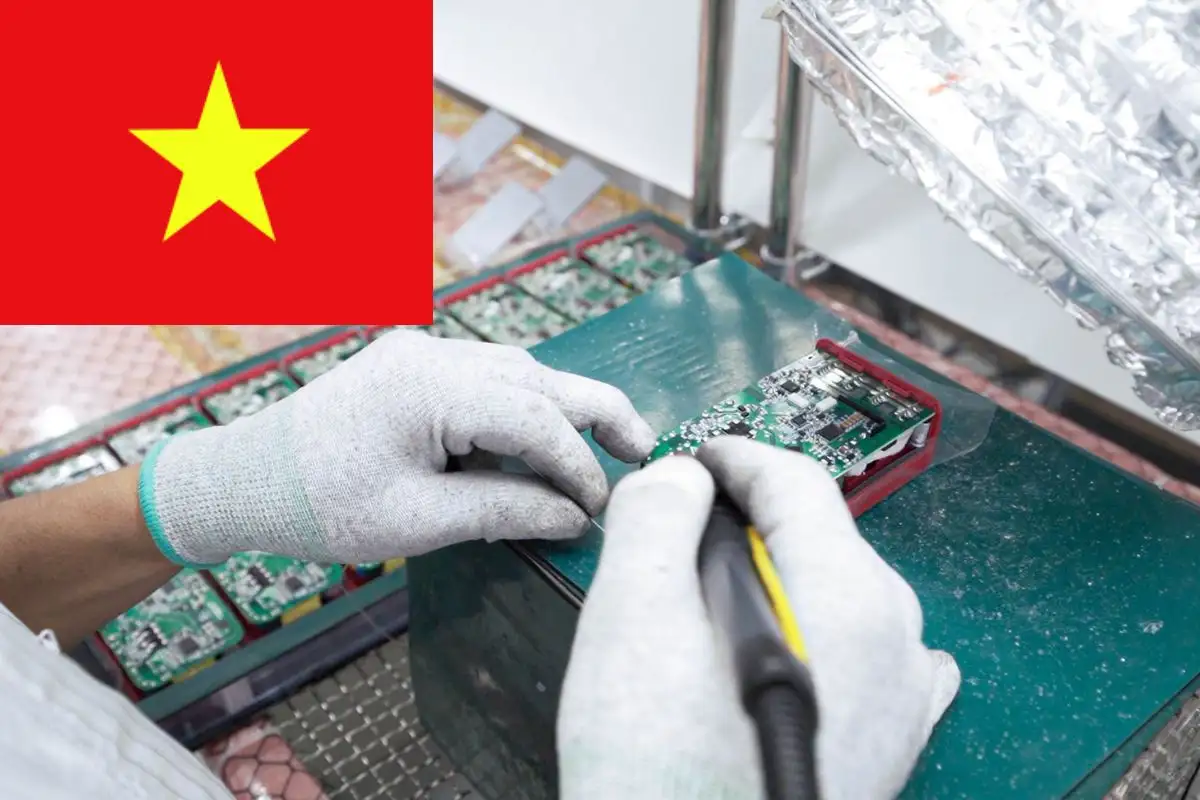
Vietnam is the most documented GaN charger manufacturing location outside China for US market programs in 2026. The evidence is not marketing claims — it is certified products on the US market and Apple-standard supply chain qualification.
Tariff Position
- HTS 8504.40 MFN rate: 0% — no Section 301 exposure
- UFLPA: Zero geographic risk — Vietnam is not a designated UFLPA region
- Rules of origin: Vietnam PCB assembly qualifies as substantial transformation under CBP guidelines
- Trade framework: ASEAN member, Certificate of Origin Form AV available
GaN Technical Capability
Vietnam’s GaN charger manufacturing capability is proven at 30W–140W — covering single-port USB-C chargers, multi-port desktop chargers, and laptop adapters.
The technical benchmark for GaN production requires equipment that most general EMS factories do not have:
- Nitrogen reflow oven — reduces GaN QFN thermal pad void below the IPC-7093 25% threshold
- 3D X-ray inspection — the only way to verify void percentage; cannot be measured optically
- Hi-pot tester at 3000VAC, 100% in-line — required for UL 62368-1 isolation verification
- Pre-compliance EMC scanner — FCC Part 15 pre-screening before lab submission
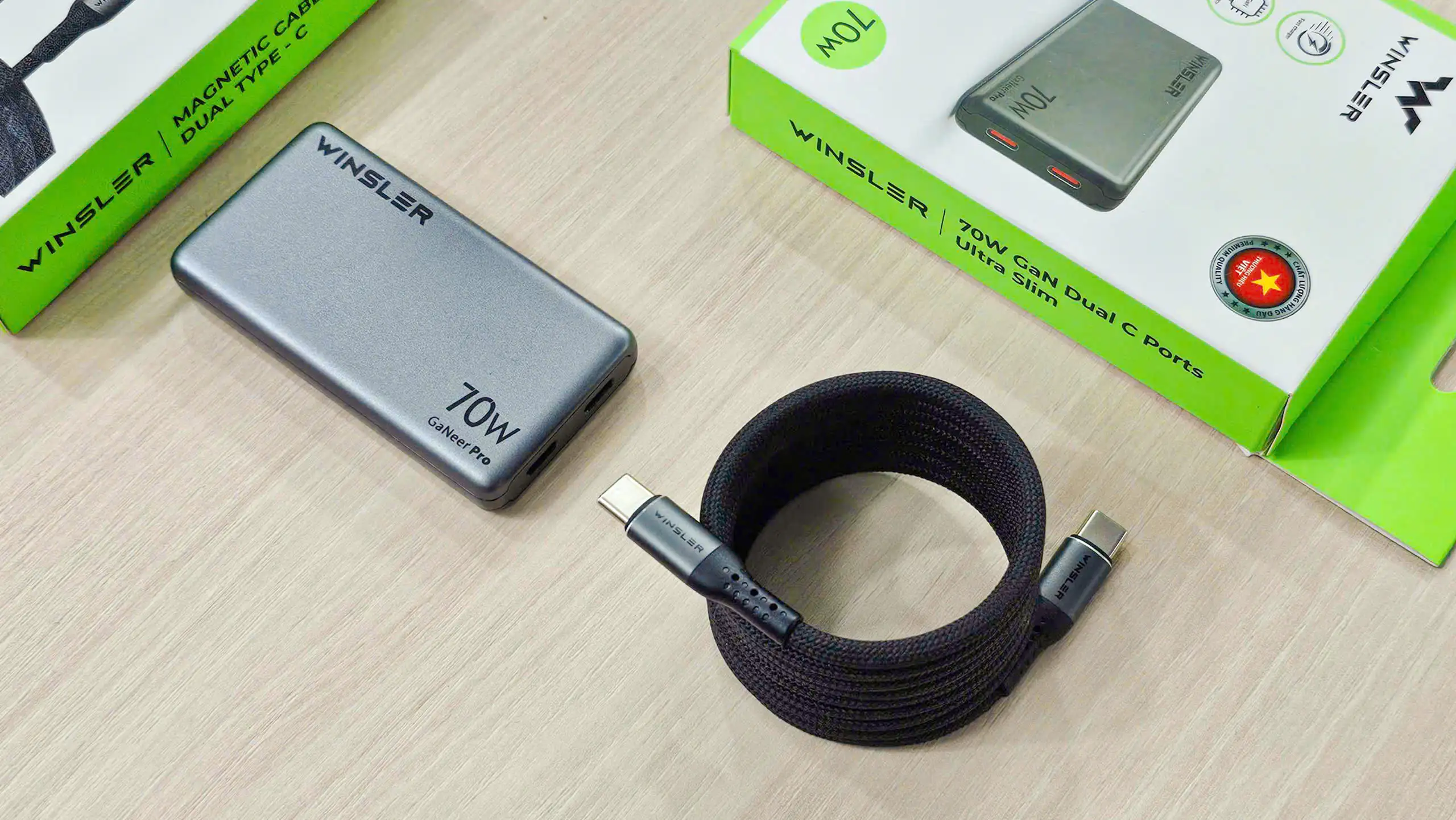
SHDC Electronics in Hai Duong operates this full equipment stack. The Winsler 70W Ultra Slim — measuring 12.8mm thick, among the thinnest 70W GaN chargers globally — was produced on this line and carries ETL certification (Intertek), accepted by US Authorities Having Jurisdiction equivalent to UL listing.
For the full technical breakdown of GaN PCB assembly requirements, see: Electronics Manufacturing Vietnam.
Certification Support
Vietnam — specifically SHDC — supports the full US market certification stack:
| Certification | Status |
|---|---|
| ETL (Intertek) | Active — Winsler 70W |
| FCC Part 15 Class B | Active |
| USB-IF TID | Supported |
| UL 62368-1 | Supported via accredited labs |
| CE Mark | Supported for EU scope |
Certification support at Tier 3 means SHDC runs pre-compliance EMC scans, conducts internal hi-pot testing, reviews PCB layout for creepage violations and GaN loop area before lab submission, and coordinates with third-party labs. This is the minimum viable tier for US OEM programs without dedicated in-house compliance engineering.
Supply Chain
- GaN controller ICs: Sourced from Navitas, GaN Systems, Infineon — imported, not locally fabricated
- PCB fabrication: Mature local ecosystem; VSIP Hai Duong industrial zone provides logistics infrastructure
- Component distribution: Import-dependent for GaN ICs — lead time comparable to China-sourced programs, without tariff delay risk
- Labor: Competitive cost structure; skilled SMT workforce available in Hai Duong and Hanoi corridor
For a detailed cost comparison of PCB assembly in Vietnam vs China, see: Vietnam vs China PCB Assembly Cost.
Production Proof
This is where Vietnam separates from every other country on this list.
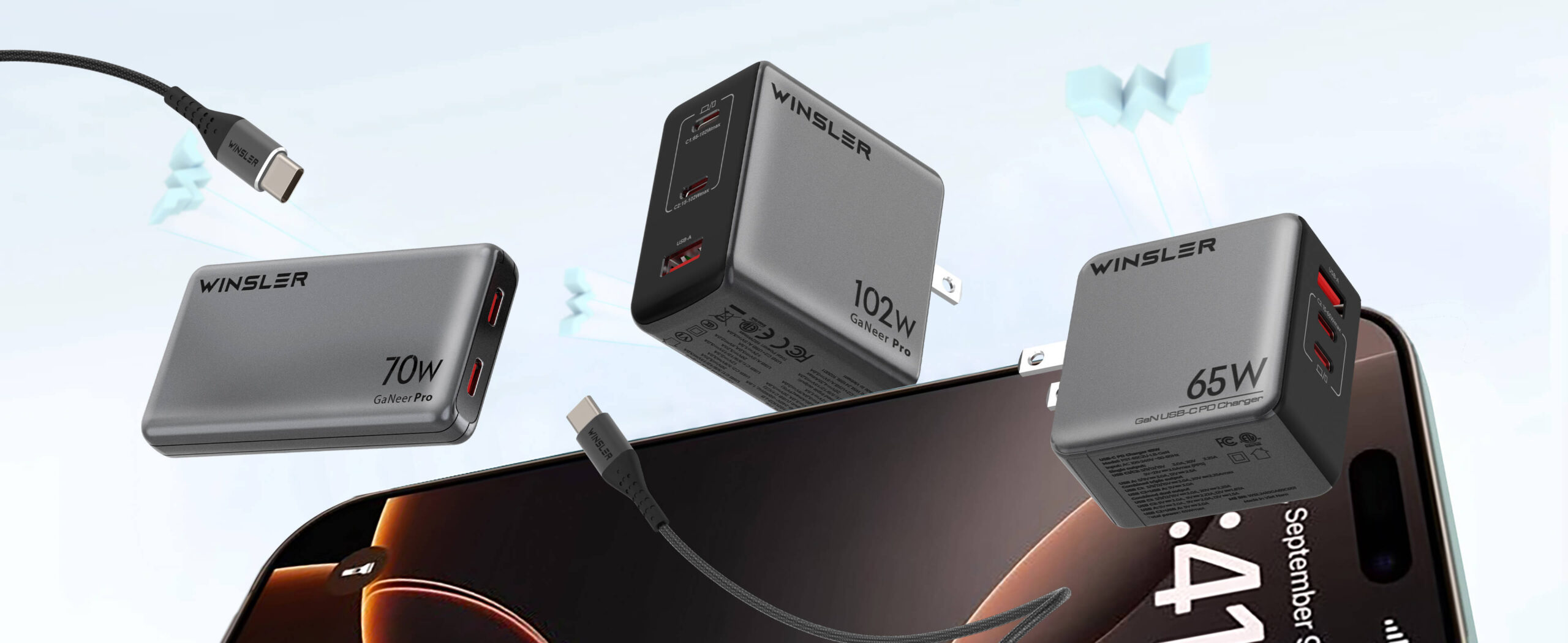
Winsler 70W Ultra Slim — SHDC’s own-brand product. ETL certified, FCC compliant, 12.8mm thickness, dual USB-C, 80% smartphone + 70% laptop simultaneous in 60 minutes. Shipped to US market. Covered by Thanh Nien and VnExpress.
PlugBug for Twelve South — SHDC manufactured the PlugBug GaN charger line for Twelve South, a US accessories brand sold through Apple retail channels. The program includes a 120W 4-port and 50W 2-port GaN charger, both exported to the US market. Apple supply chain qualification standards are among the most stringent in consumer electronics. Source: VietnamNet, February 2025.
When you bring a GaN charger program to a factory that has already shipped ETL-certified products to Apple retail channels, you are not funding their learning curve.
Vietnam Scorecard:
| Criterion | Score | Notes |
|---|---|---|
| GaN capability | ⭐⭐⭐⭐⭐ | Proven 30W–140W, nitrogen reflow + 3D X-ray |
| Certification support | ⭐⭐⭐⭐⭐ | ETL active, FCC active, Tier 3 support |
| Tariff rate 2026 | ⭐⭐⭐⭐⭐ | 0% MFN, zero UFLPA exposure |
| Supply chain maturity | ⭐⭐⭐⭐ | PCB fab mature; GaN IC import-dependent |
| Production proof | ⭐⭐⭐⭐⭐ | ETL cert + Apple supply chain reference |
| Total | 24/25 |
Malaysia
Malaysia has a legitimate electronics manufacturing ecosystem — anchored by the Penang semiconductor cluster and a long history of multinational EMS investment. For GaN charger programs, however, the picture is more nuanced.
Tariff Position
- HTS 8504.40 MFN rate: 0% — equivalent to Vietnam on tariff
- UFLPA: No exposure
- Malaysia is a strong ASEAN manufacturing base with established US trade relationships
GaN Technical Capability
Malaysia’s electronics strength is in semiconductor packaging and testing — Intel, Infineon, and Texas Instruments operate significant facilities in Penang. This creates a strong component ecosystem but does not directly translate to finished GaN charger assembly capability.
For consumer GaN charger manufacturing at US certification standard, no public production proof exists at the level documented in Vietnam. Large EMS players — Jabil, Flex — have Malaysia facilities, but their programs are typically high-volume, long-lead-time engagements not suited to NPI-stage OEM programs.
For context on how EMS company selection affects program outcomes, see: Top EMS Companies in Vietnam — the evaluation criteria apply across geographies.
Supply Chain
Malaysia’s supply chain advantage is real: proximity to semiconductor fabs, mature component distribution, and a large pool of electronics engineering talent. For programs that need GaN IC sourcing flexibility, Malaysia’s ecosystem is stronger than Vietnam’s.
Labor cost, however, is higher than Vietnam — partially offsetting the tariff advantage relative to China.
Reality for US OEM Programs
Malaysia is a credible option for large-scale programs with existing EMS relationships and volume commitments above 500,000 units per year. For NPI-stage programs, low-MOQ custom designs, or programs requiring hands-on certification engineering support, Malaysia’s ecosystem does not offer the same accessibility as Vietnam.
Malaysia Scorecard:
| Criterion | Score | Notes |
|---|---|---|
| GaN capability | ⭐⭐⭐ | Semiconductor strong; finished charger assembly limited proof |
| Certification support | ⭐⭐⭐ | Capability exists; less documented for US cert |
| Tariff rate 2026 | ⭐⭐⭐⭐⭐ | 0% MFN |
| Supply chain maturity | ⭐⭐⭐⭐⭐ | Penang semiconductor ecosystem |
| Production proof | ⭐⭐ | No public US-certified GaN charger reference |
| Total | 18/25 |
Thailand
Thailand’s electronics manufacturing history is built on hard disk drive production — Western Digital and Seagate have operated major facilities there for decades. That legacy creates precision assembly culture and mature industrial infrastructure, but it does not map directly onto GaN charger manufacturing requirements.
Tariff Position
- HTS 8504.40 MFN rate: 0% — same tariff advantage as Vietnam and Malaysia
- UFLPA: No exposure
- Strong US trade relationship; BOI investment incentives available
GaN Technical Capability
Thailand has no documented production capability for consumer GaN chargers at US certification standard. The HDD manufacturing ecosystem — while technically sophisticated — focuses on mechanical precision and magnetic media, not high-frequency power electronics assembly.
For automotive power electronics (AEC-Q101 qualified components), Thailand’s precision manufacturing culture and proximity to Japanese automotive OEMs makes it a more relevant option. But for 30W–140W consumer/commercial GaN chargers targeting US retail and enterprise channels, Thailand is not a current option.
Reality for US OEM Programs
Thailand is worth monitoring for automotive GaN programs as the EV supply chain develops in Southeast Asia. For consumer and commercial GaN charger programs in 2026, it is not a viable primary manufacturing location.
Thailand Scorecard:
| Criterion | Score | Notes |
|---|---|---|
| GaN capability | ⭐⭐ | No documented consumer GaN charger production |
| Certification support | ⭐⭐ | Limited US cert engineering support |
| Tariff rate 2026 | ⭐⭐⭐⭐⭐ | 0% MFN |
| Supply chain maturity | ⭐⭐⭐ | HDD-focused; not charger-optimized |
| Production proof | ⭐ | Not available |
| Total | 13/25 |
For automotive electronics manufacturing options in Southeast Asia, see: Automotive Electronics Suppliers Southeast Asia.
India
India is the most complex entry on this list — a manufacturing location with genuine momentum, real government investment, and a tariff position that is better than China but worse than ASEAN alternatives.
Tariff Position
- HTS 8504.40 rate: 26% reciprocal tariff (2025 US tariff regime) — not 0%
- India does not benefit from ASEAN MFN rates
- PLI (Production Linked Incentive) scheme provides domestic subsidies — but these do not reduce US import tariff
The 26% rate is dramatically better than China’s 145%, but it represents a meaningful landed cost disadvantage versus Vietnam, Malaysia, or Thailand at 0%.
GaN Technical Capability
India has a growing consumer electronics manufacturing ecosystem — driven by Apple’s iPhone production shift to Foxconn and Tata facilities in Tamil Nadu and Karnataka. Local GaN charger brands (Ambrane, Syska, boAt accessories) have introduced GaN products, demonstrating that domestic manufacturing capability exists.
However, US certification support — ETL, FCC Part 15, USB-IF TID — is not well-developed in India’s EMS ecosystem. Most Indian GaN charger production targets the domestic BIS certification framework, not US market requirements.
Supply Chain
India’s domestic market scale — 1.4 billion consumers — creates a large component distribution ecosystem. For high-volume programs that can absorb the 26% tariff and do not require US certification engineering support, India offers competitive labor costs and improving infrastructure.
Reality for US OEM Programs
India is a viable option for price-sensitive, high-volume programs (>1M units/year) where the 26% tariff is acceptable and the buyer has in-house US compliance engineering capability. It is not suitable for NPI-stage programs or programs requiring hands-on ETL/FCC support from the manufacturer.
India Scorecard:
| Criterion | Score | Notes |
|---|---|---|
| GaN capability | ⭐⭐⭐ | Growing; not proven at US cert level |
| Certification support | ⭐⭐ | BIS-focused; limited US cert support |
| Tariff rate 2026 | ⭐⭐⭐ | 26% — better than China, worse than ASEAN |
| Supply chain maturity | ⭐⭐⭐⭐ | Large domestic market; improving |
| Production proof | ⭐⭐ | Local brands only; no US OEM reference |
| Total | 14/25 |
Mexico
Mexico’s appeal for US hardware teams is straightforward: USMCA 0% tariff, nearshore logistics, and same-timezone communication. For certain program types, these advantages are decisive. For GaN charger manufacturing specifically, the picture is more limited.
Tariff Position
- USMCA rate: 0% — if rules of origin are satisfied
- Nearshore logistics: 3–5 day truck freight vs 25–35 day ocean freight from Asia
- No UFLPA exposure
The USMCA advantage is real — but rules of origin require that GaN PCB assembly, not just final housing assembly, occurs in Mexico. Most Mexico EMS facilities are not equipped for GaN PCB assembly.
GaN Technical Capability
Mexico’s EMS ecosystem — anchored by Foxconn, Jabil, Flex, and Celestica facilities in Monterrey, Juárez, and Tijuana — is strong in final assembly, box build, and cable harness. GaN PCB assembly capability at the level required for US-certified charger production is not documented in Mexico’s manufacturing base.
For context on what box build and full turnkey assembly entail, see: Box Build Assembly Services and Full Turnkey Electronics Manufacturing.
A Hybrid Model Worth Considering
For programs where nearshore presence is a strategic requirement, a Vietnam + Mexico hybrid is worth evaluating:
- GaN PCB assembly: Vietnam (SHDC) — where the technical capability and certification support exist
- Final assembly + kitting + distribution: Mexico — leveraging nearshore logistics and USMCA
This model satisfies USMCA rules of origin only if the PCB is the product of substantial transformation in Vietnam and the Mexico operation adds genuine value beyond simple assembly. Legal review of the specific program structure is required.
Reality for US OEM Programs
Mexico is not a standalone GaN charger manufacturing solution in 2026. As a nearshore final assembly complement to an Asia-based PCB manufacturing program, it has merit for specific supply chain architectures.
Mexico Scorecard:
| Criterion | Score | Notes |
|---|---|---|
| GaN capability | ⭐⭐ | Final assembly only; no GaN PCB capability |
| Certification support | ⭐⭐⭐ | UL labs accessible; limited mfg support |
| Tariff rate 2026 | ⭐⭐⭐⭐⭐ | 0% USMCA |
| Supply chain maturity | ⭐⭐⭐ | Import-dependent for GaN components |
| Production proof | ⭐ | No GaN charger manufacturing reference |
| Total | 13/25 |
Country Comparison: The Full Scorecard
Here is the consolidated view across all five countries and five criteria. This is the reference table for your sourcing decision framework.
| Country | GaN Capability | Certification | Tariff 2026 | Supply Chain | Production Proof | Total |
|---|---|---|---|---|---|---|
| 🇻🇳 Vietnam | ⭐⭐⭐⭐⭐ | ⭐⭐⭐⭐⭐ | ⭐⭐⭐⭐⭐ | ⭐⭐⭐⭐ | ⭐⭐⭐⭐⭐ | 🥇 24/25 |
| 🇲🇾 Malaysia | ⭐⭐⭐ | ⭐⭐⭐ | ⭐⭐⭐⭐⭐ | ⭐⭐⭐⭐⭐ | ⭐⭐ | 🥈 18/25 |
| 🇮🇳 India | ⭐⭐⭐ | ⭐⭐ | ⭐⭐⭐ | ⭐⭐⭐⭐ | ⭐⭐ | 14/25 |
| 🇹🇭 Thailand | ⭐⭐ | ⭐⭐ | ⭐⭐⭐⭐⭐ | ⭐⭐⭐ | ⭐ | 13/25 |
| 🇲🇽 Mexico | ⭐⭐ | ⭐⭐⭐ | ⭐⭐⭐⭐⭐ | ⭐⭐⭐ | ⭐ | 13/25 |
The key insight from this table: Vietnam’s lead is not built on tariff rate alone — Malaysia, Thailand, and Mexico all offer 0% tariff. Vietnam leads because it is the only country with all five criteria satisfied, anchored by production proof at international brand standard. That combination — 0% tariff + ETL certification + Apple supply chain reference — does not exist anywhere else in this comparison.
Decision Framework: Which Country Is Right for Your Program?
The scorecard above is a starting point, not a final answer. Program-specific factors — volume, timeline, certification requirements, MOQ, and in-house engineering capability — determine which country is actually the right fit.
| If Your Program… | Best Fit | Why |
|---|---|---|
| NPI stage, needs ETL/FCC support, MOQ < 5,000 units | Vietnam | Only country with Tier 3 cert support + low MOQ capability |
| Volume > 500K/year, existing Malaysia EMS relationship | Malaysia | Scale + component ecosystem; worth investing in capability audit |
| Nearshore is a hard requirement, final assembly only | Mexico | USMCA + logistics; pair with Vietnam PCB supply |
| Price-sensitive, volume > 1M/year, in-house compliance team | India | Labor cost + scale; buyer absorbs 26% tariff |
| Automotive GaN (AEC-Q101) required | Thailand or Malaysia | Precision manufacturing culture; automotive ecosystem |
| Full program: PCB + certification + US export, fastest path | Vietnam | Production proof exists today; no ramp-up uncertainty |
For programs evaluating Vietnam as a primary option, the qualification process starts with PCBA manufacturers in Vietnam — specifically those with documented GaN charger production history.
How to Pre-Qualify a GaN Charger Manufacturer Outside China
Regardless of which country you select, the pre-qualification process for GaN charger manufacturing follows the same three-question filter. These questions eliminate approximately 80% of EMS suppliers from consideration before you invest time in RFQ or factory visits.
Question 1: “Can you share X-ray images showing GaN QFN thermal pad void percentage from a recent production run, with the void measurement annotated?”
A supplier with real GaN production history has this data immediately. A supplier that cannot produce it has not done real GaN production. This is a binary filter.
Question 2: “What is your hi-pot test voltage, and what percentage of finished units are tested — 100% in-line, or sampling?”
Correct answer: 3000VAC minimum, 100% in-line. Sampling-only hi-pot testing is disqualifying for US market programs.
Question 3: “Has any charger you’ve manufactured passed UL 62368-1, ETL, or FCC Part 15? Can you provide the certificate number?”
SHDC’s answer: Winsler 70W — ETL certified, FCC compliant. PlugBug for Twelve South — Apple supply chain qualified. Certificate numbers on file.
The DFM Review as a Capability Test
Submit a Gerber package and BOM before committing to any supplier. Evaluate the quality of DFM feedback:
Green flag: Report returned in 3–5 business days with specific comments on creepage distances (≥6.4mm for UL 62368-1), GaN power loop area, thermal via density, PCB material (UL94 V-0 required), and isolation boundaries.
Red flag: Report returned in under 4 hours with no issues found. The review was not performed.
For a detailed walkthrough of what a rigorous DFM review covers, see: How to Evaluate a PCB Fabrication Factory and Prototype PCBA Manufacturing.
FAQs
Which countries outside China can manufacture GaN chargers for the US market in 2026?
Vietnam is the only country with documented production proof at US certification standard (ETL/FCC) in 2026. Malaysia has the supply chain ecosystem but lacks public GaN charger production references. Thailand, India, and Mexico have tariff advantages but not GaN charger manufacturing capability at US cert level.
What is the US tariff rate on GaN chargers from Vietnam?
GaN chargers classified under HTS 8504.40 imported from Vietnam carry a 0% MFN tariff rate — compared to 145% from China under Section 301. This differential is the primary driver of the current sourcing shift.
Does Vietnam qualify for USMCA or other preferential trade agreements with the US?
Vietnam does not qualify for USMCA (which covers US-Mexico-Canada only). Vietnam benefits from 0% MFN tariff under the standard US tariff schedule for HTS 8504.40 — no preferential agreement required. Vietnam is also an ASEAN member, enabling Certificate of Origin Form AV for customs documentation.
How long does it take to qualify a new GaN charger manufacturer outside China?
For a custom design requiring new PCB layout and full certification: 20–24 weeks from DFM review to production qualification. For programs using an existing certified platform: 12–16 weeks. Timeline is dominated by certification lab submission (UL/ETL: 6–10 weeks; FCC: 4–6 weeks).
What is the minimum order quantity for GaN charger manufacturing in Vietnam?
For standard programs using established certified platforms: 500–1,000 units for initial production runs. For fully custom designs: 3,000–5,000 units recommended minimum. Contact SHDC for program-specific MOQ based on wattage, form factor, and certification scope.
Is ETL certification equivalent to UL for US market GaN chargers?
Yes. Both ETL (Intertek) and UL marks are issued by OSHA-recognized Nationally Recognized Testing Laboratories (NRTLs) and are accepted by the same Authorities Having Jurisdiction across US states. Some big-box retailers have internal policies specifying one mark — verify your specific channel requirement before lab submission.
Conclusion
The question “who can manufacture GaN chargers outside China?” has a clear answer in 2026: Vietnam, with production proof. Malaysia has the ecosystem but not the charger-specific track record. Thailand and Mexico have tariff advantages but not GaN assembly capability. India has scale potential but a tariff disadvantage and limited US certification support.
For US hardware teams that need to move charger production out of China — whether driven by the 145% tariff, UFLPA compliance risk, or supply chain diversification — Vietnam offers the only combination of 0% tariff, ETL certification, and documented production at Apple supply chain standard.
The factory that manufactured the Winsler 70W ETL-certified GaN charger and the PlugBug 120W for Twelve South’s Apple retail channel is available for OEM programs. The learning curve has already been paid for — on their own products, at their own cost.
