
 Tiếng Việt
 日本語
日本語
In 2026, sourcing automotive electronics from China costs a US OEM 145% in import tariffs before the product clears customs. The same assembly sourced from an automotive electronics supplier in Southeast Asia enters at 0–15%. For a $25 automotive PCBA module at 10,000 units/month, that differential is $325,000 — every single month. This guide compares the three leading automotive electronics suppliers in Southeast Asia — Vietnam, Thailand, and Malaysia — across five procurement criteria so your sourcing team can make a data-driven decision, not a marketing-driven one.
Why Every US OEM Is Evaluating Automotive Electronics Suppliers in Southeast Asia
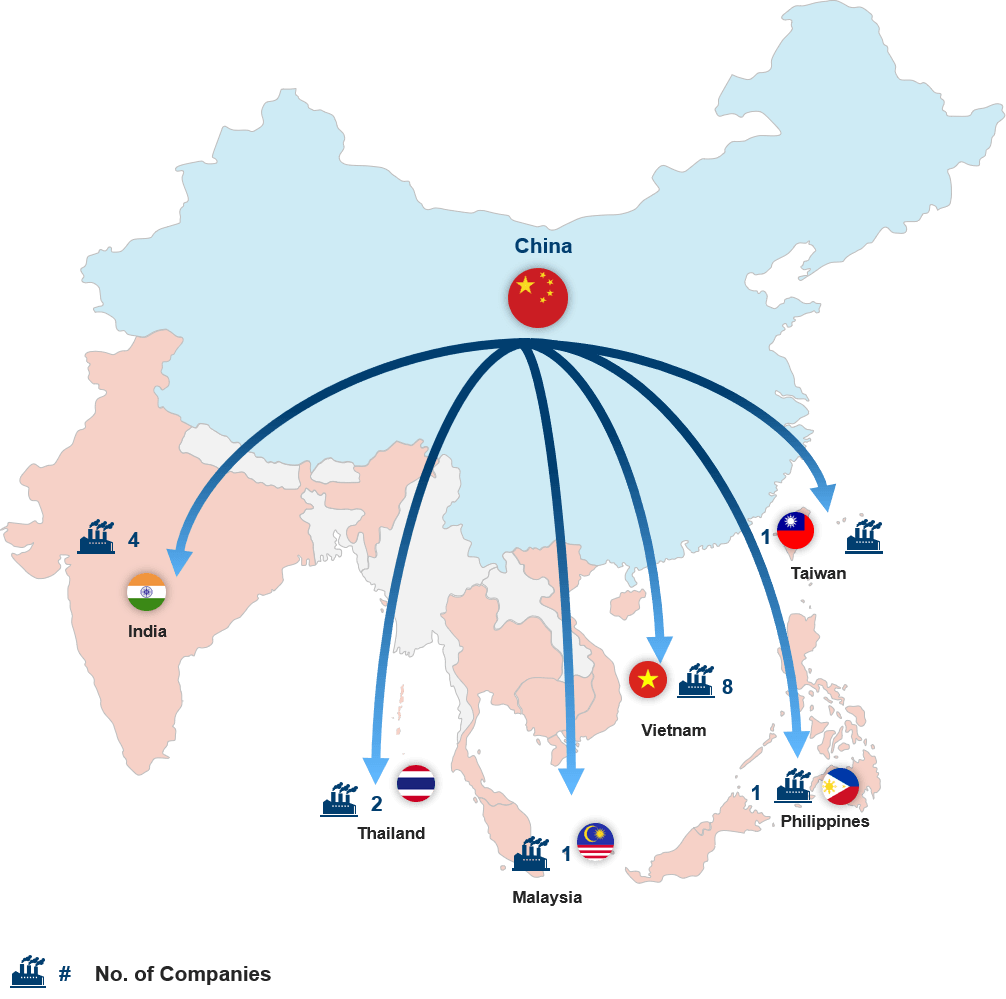
The shift away from China-only automotive electronics sourcing is no longer a strategic discussion — it is an operational reality for any US OEM that needs to remain cost-competitive in the American market. Three structural forces are driving this simultaneously, and none of them are reversing.
The Tariff Equation Has Changed Everything
Section 301 tariffs on Chinese electronics currently stand at 145% — a bipartisan policy with a multi-year implementation history and no credible reversal pathway. Every automotive electronics supplier in Southeast Asia operates outside this tariff structure entirely:
- Vietnam MFN rate: 0–15% depending on HTS classification
- Thailand MFN rate: 5–15% for automotive electronics
- Malaysia MFN rate: 0–15% with strong FTA positioning
At a $25 factory unit price, the tariff alone adds $36.25 per unit from China. From Vietnam, that same unit carries $1.50–$3.75 in tariff. At 10,000 units per month, the monthly tariff differential is $325,000 minimum. Annualized, that is $3.9M — on a single part number. Procurement teams still framing this as a “labor cost” decision are measuring the wrong variable.
UFLPA — The Compliance Risk China Cannot Escape
The Uyghur Forced Labor Prevention Act (UFLPA) creates a rebuttable presumption that any goods with Xinjiang-origin inputs are inadmissible to the US market. The compliance overhead for China-sourced supply chains runs $1–3 per unit in documentation, audit, and legal costs. CBP port holds add unpredictable lead time risk. Every qualified automotive electronics supplier in Southeast Asia — Vietnam, Thailand, or Malaysia — carries zero UFLPA geographic exposure. The risk simply does not exist for SEA-origin production.
SEA’s Automotive Electronics Ecosystem — The Hard Numbers
The base of automotive electronics suppliers across Southeast Asia is no longer emerging — it is established:
- $18B+ in combined SEA automotive electronics exports annually (2025)
- 300+ IATF 16949-certified manufacturers across Vietnam, Thailand, and Malaysia
- 60+ global automotive Tier-1 suppliers operating across SEA: Bosch, Denso, Sumitomo Electric, Yazaki, TE Connectivity
- Vietnam’s IATF 16949-certified supplier base tripled between 2020 and 2025
- SEA-to-US West Coast ocean transit: 18–22 days vs 25–30 days from China
According to a Deloitte Global Automotive Supply Chain Survey (2024), 67% of US automotive OEMs are actively diversifying away from China-only sourcing. The China+1 strategy has moved from boardroom discussion to active supplier qualification programs — and Southeast Asia automotive electronics suppliers are the primary beneficiary.
Vietnam vs Thailand vs Malaysia: Choosing the Right Automotive Electronics Supplier in Southeast Asia
No single SEA market is right for every program. The correct choice of automotive electronics supplier in Southeast Asia depends on your product type, volume, certification requirements, and supply chain architecture. Here is an honest comparison — not a tourism brochure.
Overview: Five Procurement Criteria
| Criteria | 🇻🇳 Vietnam | 🇹🇭 Thailand | 🇲🇾 Malaysia |
|---|---|---|---|
| IATF 16949 certified suppliers | 200+ | 300+ | 150+ |
| US tariff rate (MFN) | 0–15% | 5–15% | 0–15% |
| Labor cost (fully loaded/hr) | $2.50–$4.00 | $4.50–$7.00 | $5.00–$8.00 |
| Automotive ecosystem maturity | ⚠️ Growing fast | ✅ Established (50+ years) | ✅ Established |
| UFLPA exposure | None | None | None |
| English proficiency (engineering) | Moderate–High | Moderate | High |
| EV electronics capability | ⚠️ Emerging fast | ✅ Growing | ✅ Strong |
| Semiconductor supply chain | Limited | Moderate | ✅ Strong (Intel, NXP, Infineon) |
| Best fit | PCBA, power electronics, EV charging | Full automotive systems, Tier-1 | Semiconductor-intensive, high-complexity |
Vietnam — The Cost-Leading Automotive Electronics Supplier in Southeast Asia for PCBA Programs
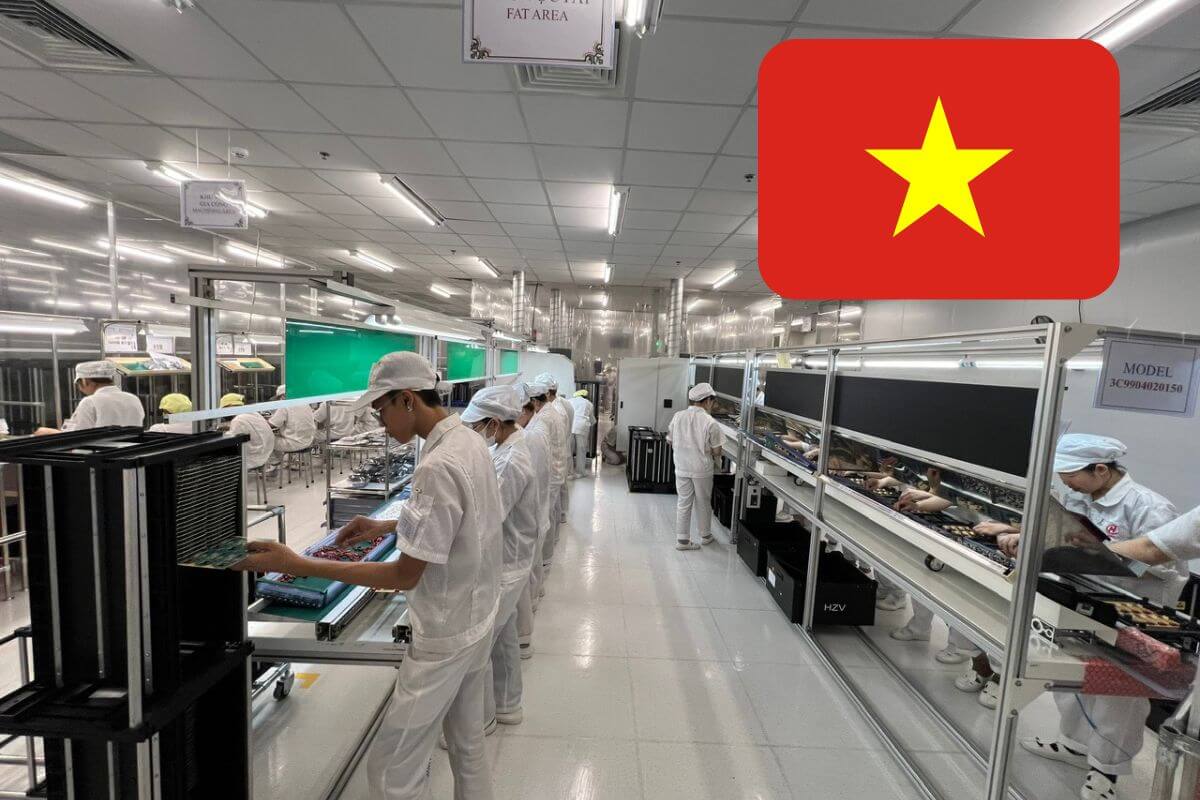
Vietnam is the cost leader among automotive electronics suppliers in Southeast Asia for PCBA specifically — and the fastest-growing market for automotive subassembly. The combination of lowest fully-loaded labor cost, rapidly expanding IATF certification base, and purpose-built industrial infrastructure makes Vietnam the default first evaluation for US OEMs sourcing automotive PCBA subassemblies.
Strengths:
- Lowest fully-loaded labor cost in SEA: $2.50–$4.00/hour
- IATF 16949 certified supplier base tripled since 2020 — now 200+
- VSIP, DEEP C, and Amata industrial zones: purpose-built for electronics export with bonded warehouse access
- Direct technology transfer from Samsung Vietnam, LG Electronics Vietnam, and Intel Vietnam
- 55km from Hai Phong deep-water port — efficient, reliable US export logistics
- Zero UFLPA exposure + full UFLPA-compliant supply chain documentation available
Limitations:
- Automotive ecosystem less mature than Thailand — fewer domestic Tier-1 integrators
- Semiconductor wafer fabrication: minimal domestic capability
- Full ECU integration: limited to multinational Tier-1 operations only
Best fit programs:
- Automotive PCBA subassemblies (Tier-2/Tier-3 supply chain)
- EV onboard charger (OBC) and DC-DC converter electronics
- Infotainment and interior control electronics
- Power management subassemblies for EV and hybrid platforms
“SHDC Electronics, operating from VSIP Hai Duong, is a representative example of Vietnam’s PCBA capability profile as an automotive electronics supplier in Southeast Asia — Yamaha SMT infrastructure at ±0.03mm placement accuracy, AIT Tracer board-level traceability, and demonstrated automotive production for Thaco, Vietnam’s largest automotive manufacturer.” Learn more about SHDC’s automotive capabilities →
Thailand — The Tier-1 Automotive Electronics Supplier Ecosystem in Southeast Asia
Thailand is the “Detroit of Asia” — a title earned over 50 years of continuous automotive manufacturing investment. For US OEMs requiring full automotive system integration or proximity to vehicle assembly, Thailand’s depth as an automotive electronics supplier hub in Southeast Asia is unmatched.
Strengths:
- 300+ IATF 16949-certified suppliers — deepest automotive certification base in SEA
- Full vehicle assembly: Toyota, Honda, Isuzu, Mitsubishi, Ford all manufacture in Thailand
- Established Tier-1 network: Denso Thailand, Bosch Thailand, Aisin Thailand, Yazaki Thailand
- Strong domestic automotive component supply chain — stamping, casting, wiring harnesses, electronics
- Thailand Board of Investment (BOI) incentives: tax holidays, import duty exemptions for automotive electronics investment
Limitations:
- Higher labor cost than Vietnam: $4.50–$7.00/hour fully loaded
- Less competitive on pure PCBA unit economics vs Vietnam
- Political risk history: periodic instability — supply chain continuity consideration
Best fit programs:
- Full automotive system integration requiring proximity to vehicle assembly
- Programs where Tier-1 supplier qualification is required at the integrator level
- High-complexity mixed mechanical/electronic assemblies
Malaysia — The Semiconductor-Intensive Automotive Electronics Supplier in Southeast Asia
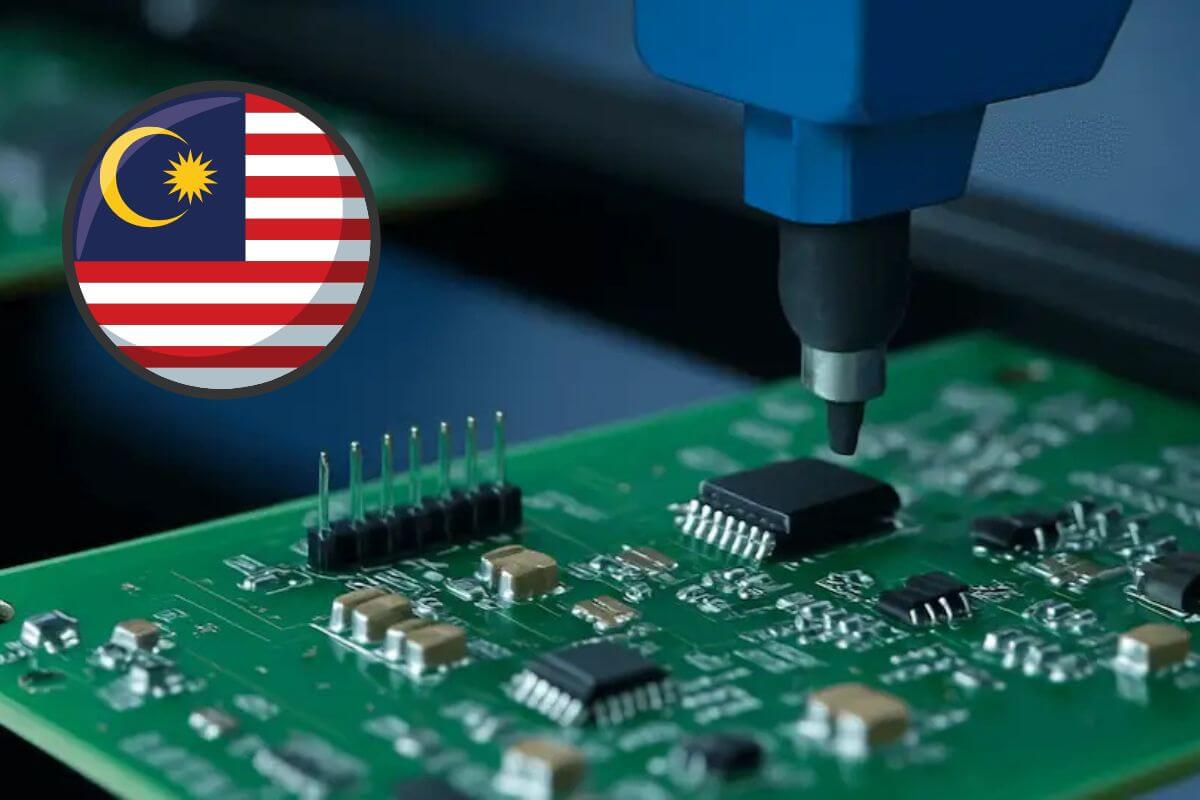
Malaysia’s electronics manufacturing heritage dates to 1972 — when Intel opened its first overseas assembly plant in Penang. Today, Penang’s “Silicon Island” makes Malaysia the most technically sophisticated automotive electronics supplier location in Southeast Asia for semiconductor-intensive programs.
Strengths:
- Intel, Infineon, NXP Semiconductors, STMicroelectronics — all have major Malaysia operations
- Strongest semiconductor packaging and test (OSAT) ecosystem in SEA
- Highest English proficiency in SEA engineering workforce
- Malaysia Investment Development Authority (MIDA) actively recruiting automotive electronics investment
- Strong IP protection framework — important for programs with significant design IP
Limitations:
- Highest labor cost in SEA: $5–$8/hour fully loaded
- Less cost-competitive for standard PCBA vs Vietnam
- Smaller domestic automotive market vs Thailand
Best fit programs:
- Semiconductor-intensive automotive modules: MCUs, power ICs, ADAS sensors
- High-complexity mixed-signal PCBAs requiring semiconductor packaging in-region
- Programs requiring wafer-level testing or advanced IC packaging close to assembly
The Sourcing Decision Matrix for Automotive Electronics Suppliers in Southeast Asia
| Your Program Type | Recommended Market | Rationale |
|---|---|---|
| Automotive PCBA subassembly | 🇻🇳 Vietnam | Lowest cost, fastest-growing IATF base |
| EV charging electronics (OBC/DC-DC) | 🇻🇳 Vietnam | GaN/power electronics capability |
| Full automotive system integration | 🇹🇭 Thailand | Deepest Tier-1 ecosystem in SEA |
| Semiconductor-intensive module | 🇲🇾 Malaysia | NXP/Infineon/Intel proximity |
| Infotainment / interior electronics | 🇻🇳 Vietnam | Consumer electronics overlap, cost advantage |
| Dual-source strategy | 🇻🇳 + 🇹🇭 Vietnam + Thailand | Cost leadership + ecosystem depth |
Technical Standards Every US OEM Must Verify in Any Automotive Electronics Supplier in Southeast Asia
Supplier selection is a technical qualification process, not a marketing exercise. These are the standards your engineering team must verify before any purchase order is issued to an automotive electronics supplier in Southeast Asia.
IATF 16949 — The Baseline, Not the Ceiling
IATF 16949 is the automotive quality management system standard — the minimum entry requirement for any supplier in the automotive supply chain. How to verify: Check the IATF Global Oversight database directly — enter the certificate number and verify scope, site address, and expiry date. Do not accept a certificate copy without database verification. Certificates can be outdated, out-of-scope, or misrepresented.
IPC-A-610 Class 3 — The Assembly Quality Standard
IPC-A-610 Class 3 defines acceptability criteria for high-reliability electronic assemblies — zero tolerance for safety-critical solder joint defects, stricter cosmetic acceptance criteria, 100% inspection at every stage. Verify that the supplier’s operators hold current IPC-A-610 CIS certification — ask for the certification records, not just a claim.
AEC-Q Component Qualification
Automotive-grade components must be qualified to AEC-Q standards: AEC-Q100 for ICs, AEC-Q200 for passives, AEC-Q101 for discrete semiconductors. A supplier without a formal AEC-Q incoming inspection process and documented AVL is not equipped for automotive work — regardless of their SMT line quality.
PPAP — The Automotive Qualification Language
PPAP Level 3 is the standard Tier-1 requirement — 18 documentation elements including Control Plan, PFMEA, MSA, and initial process capability studies (Cpk ≥ 1.67 for safety-critical). Timeline: 3–9 months for straightforward assemblies. A supplier unfamiliar with PPAP terminology without explanation is not an automotive supplier.
UFLPA Supply Chain Compliance
Verify: full BOM traceability to component origin country, documented supplier declarations confirming no Xinjiang-origin materials, and ability to produce origin documentation on demand for CBP. UFLPA compliance for electronics supply chains is a documentation discipline, not just a geography question — even SEA-based suppliers using China-origin components must maintain origin records.
SHDC Electronics: A Proven Automotive Electronics Supplier in Southeast Asia
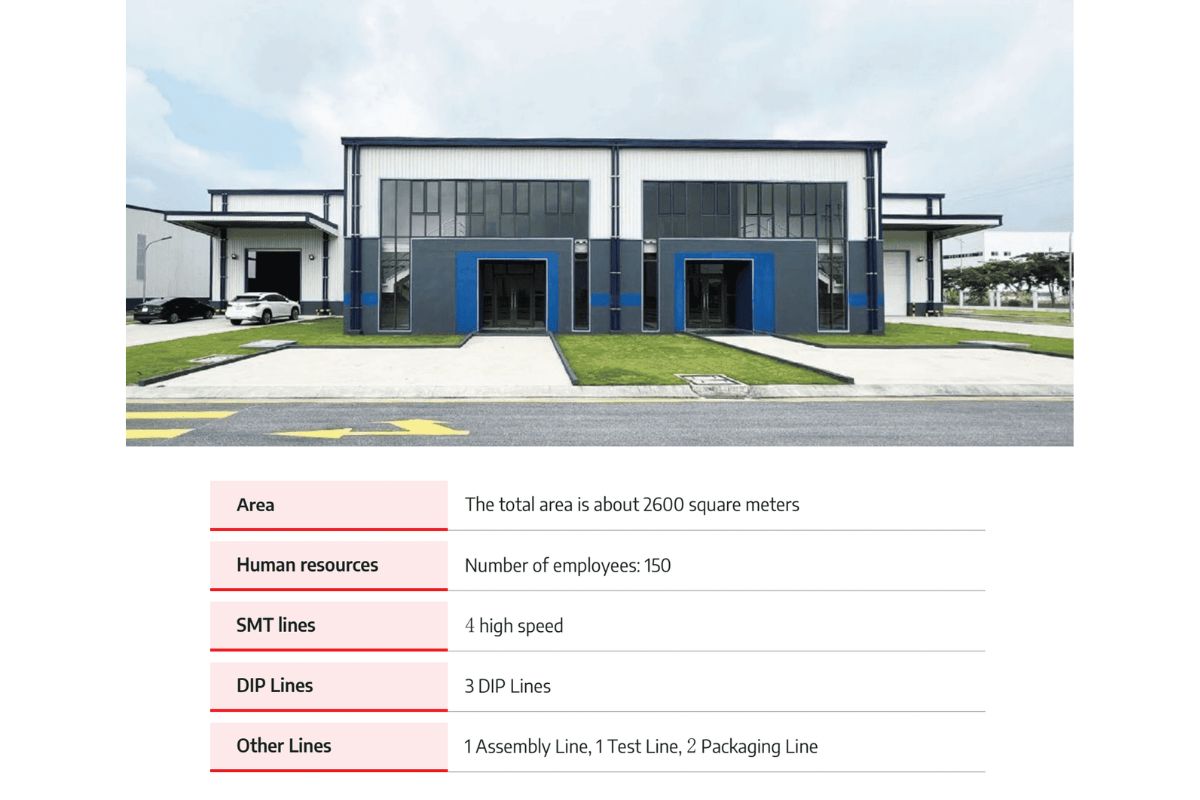
SHDC Electronics is a 100% Vietnamese-owned EMS provider and member of NAHACO Group — operating from VSIP Hai Duong, 45km from Hanoi and 55km from Hai Phong deep-water port. As an automotive electronics supplier in Southeast Asia focused on US OEM export programs, SHDC combines Yamaha SMT infrastructure, board-level traceability, and full UFLPA compliance in a single, export-ready facility.
Production Infrastructure
| Capability | Specification | Automotive Relevance |
|---|---|---|
| SMT lines | 4 lines, Yamaha YSM20R/YSM10, ±0.03mm | Fine-pitch automotive ICs, 01005 passives |
| SMT capacity | 98M placements/month | High-volume Tier-2/3 subassembly programs |
| DIP/Wave lines | 3 lines, N₂ atmosphere, JT Wave | THT connectors, power components |
| Production output | 1.7M PCS/month | Scalable for growing OEM programs |
| 3D SPI | Yamaha YSI-SP | 100% solder paste inspection |
| 3D AOI | Yamaha YSI-V | 100% post-reflow, Class 3 criteria |
| ICT | Kyoritsu F-2000 Plus | Full electrical net coverage |
| Traceability | AIT Tracer + MES/QMS | Board-level records, OEM-compatible export |
| Digital systems | ERP + PLM + SCM + MES | 30% reduction in decision time, 30% reduction in defective inventory |
Automotive Credentials — Specific, Not Generic
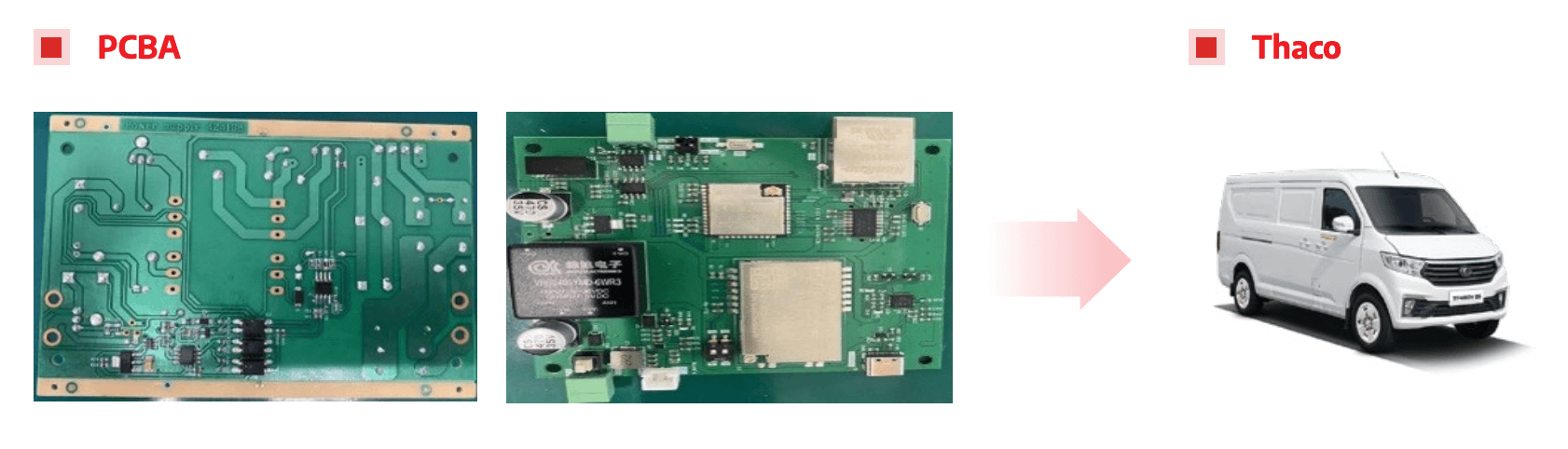
Thaco automotive production: SHDC supplies PCBA subassemblies to Thaco — Vietnam’s largest automotive manufacturer assembling Kia, Peugeot, and Mazda vehicles. Real supply chain execution with documented production history.
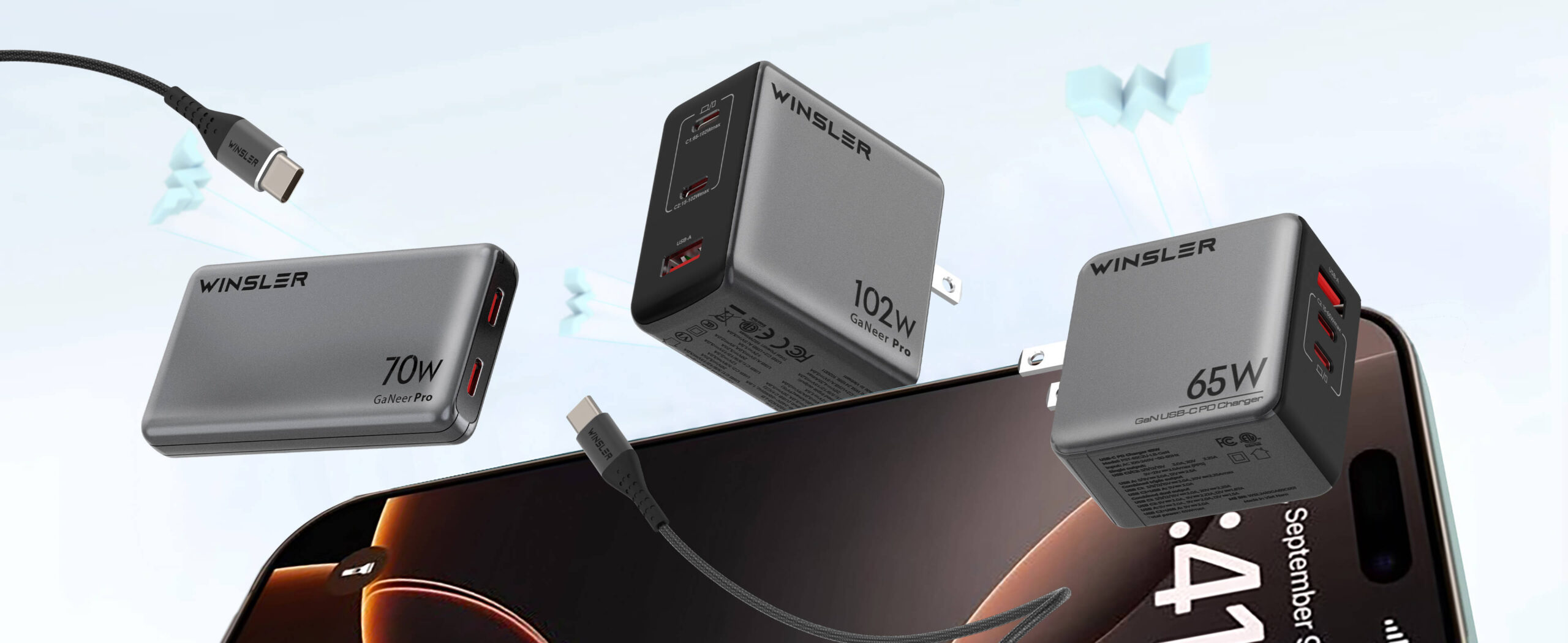
GaN power electronics: SHDC’s 65W–150W GaN fast charger series demonstrates direct technical relevance to EV OBC electronics, DC-DC converters, and power management subassemblies — the fastest-growing automotive electronics segment in 2026.
Winsler brand: SHDC develops and manufactures the Winsler consumer electronics brand — evidence of full-stack engineering capability beyond job-shop execution.
Honest Positioning
SHDC operates as a Tier-2/Tier-3 PCBA supplier — the right fit for:
- Automotive PCBA subassemblies feeding into IATF 16949-certified Tier-1 integrators
- Non-safety-critical automotive electronics: infotainment, interior control, accessory systems
- EV charging equipment: OBC subassemblies, GaN charging electronics, DC-DC converter boards
- High-reliability PCBA programs where IPC-A-610 Class 3 is the applicable standard
For safety-critical Tier-1 applications requiring full IATF 16949 at the assembly level, SHDC is transparent about its current positioning. That transparency is itself a trust signal — suppliers who overclaim certification status without verification represent higher qualification risk than suppliers who are honest about their tier.
How to Qualify an Automotive Electronics Supplier in Southeast Asia: 5-Step Framework
Step 1 — Minimum Requirements Checklist (Weeks 1–2) Define non-negotiables before issuing any RFQ: SMT placement accuracy ±0.03mm or better, in-house X-ray for BGA/QFN boards, MES with board-level traceability export, English-speaking engineering contact. Verify IATF 16949 on the IATF Global Oversight database. Eliminate non-qualifying suppliers before investing time in RFQ evaluation.
Step 2 — RFQ with Complete Technical Package (Weeks 2–4) Include: Gerber files, full BOM with manufacturer part numbers, assembly drawings, test specification, target annual volume. Evaluate response quality as carefully as unit price. A supplier who returns detailed DFM feedback is demonstrating engineering capability. How to evaluate a PCB fabrication factory provides a structured assessment framework.
Step 3 — Factory Audit: On-Site or Structured Remote (Weeks 3–6) Audit checklist: ESD controls, component storage conditions, operator IPC certification records, calibration records, live MES demonstration. For UFLPA: request BOM origin documentation and supplier declarations on-site.
Step 4 — Prototype / First Article Build (Weeks 6–14) Conduct formal FAI against complete technical specification. Expect 1–3 DFM iteration cycles for complex automotive boards. Document all deviations formally — this feeds your PPAP package. Prototype PCBA manufacturing details SHDC’s quick-turn prototype process.
Step 5 — PPAP Submission and Volume Ramp (Months 3–9+) Start MSA and SPC data collection at prototype stage. Run pilot of 100–500 units under full production conditions. Maintain existing source as backup during 3–6 month ramp. Progressive volume transfer reduces transition risk while building confidence in your new automotive electronics supplier in Southeast Asia.
FAQs
Which Southeast Asian country has the most automotive electronics suppliers?
Thailand leads in total IATF 16949-certified automotive electronics suppliers in Southeast Asia (300+) and ecosystem depth. Vietnam leads in growth rate and PCBA cost competitiveness — its certified supplier base tripled between 2020 and 2025. For electronics contract manufacturers in Vietnam focused on PCBA, Vietnam is the most active and cost-competitive market for US OEM programs.
What US tariff rate applies to automotive electronics from Southeast Asia?
All three major SEA markets qualify for US MFN rates of 0–15% depending on HTS code — versus 145% Section 301 on China-origin electronics. The tariff impact comparison between China and Vietnam provides a detailed breakdown. Confirm your specific HTS code rate with a licensed customs broker before finalizing your cost model.
Can automotive electronics suppliers in Southeast Asia handle AEC-Q qualified components?
Yes — capable suppliers in all three markets maintain AEC-Q AVLs and formal incoming inspection processes. Not all EMS companies in SEA have this formalized — verify during Step 1 screening, not after prototype builds have started.
How does SHDC compare to Thailand or Malaysia automotive electronics suppliers?
SHDC is optimized for PCBA subassemblies and power electronics — Vietnam’s cost advantage plus Yamaha SMT infrastructure makes it highly competitive for Tier-2/3 programs. For full automotive system integration, Thailand’s Tier-1 ecosystem is more appropriate. For semiconductor-intensive modules, Malaysia’s NXP/Infineon/Intel proximity is the relevant differentiator.
What is the realistic lead time from automotive electronics suppliers in Southeast Asia?
Standard production: 3–5 weeks. Quick-turn PCB assembly: 1–2 weeks. Full PPAP Level 3 qualification: 3–9 months for standard assemblies. SEA-to-US West Coast ocean transit: 18–22 days — plan accordingly in your inventory model.
How do I request a quote from SHDC?
Submit your technical package — Gerber files, BOM with manufacturer part numbers, assembly drawing, test specification, and target annual volume. SHDC’s engineering team responds within 24–48 hours with a DFM review and cost estimate. Request a quote here →
Final Takeaway
Southeast Asia is the structurally correct sourcing decision for US automotive OEMs in 2026 and beyond. Vietnam leads on cost and PCBA capability, Thailand on full-system integration, Malaysia on semiconductor complexity. For Tier-2/Tier-3 automotive PCBA, EV charging electronics, and power electronics subassemblies, SHDC Electronics is a proven, UFLPA-compliant automotive electronics supplier in Southeast Asia — ready to support your US export program from VSIP Hai Duong.
