
 Tiếng Việt
 日本語
日本語
In the first half of 2025, U.S. imports from China dropped nearly 17% compared to the same period in 2024 — a number that would have seemed unthinkable a decade ago, when “made in China” was the default setting for virtually every electronics supply chain on the planet. That 17% isn’t a blip. It’s the visible surface of a structural shift that has been building since the first Section 301 tariffs landed in 2018, accelerated through COVID-19 disruptions, and reached a tipping point when tariff rates on Chinese goods hit 145% in 2025.
Today, 43% of U.S. companies with operations in China are actively developing plans to reduce or exit their China dependency — not because China stopped being capable, but because the risk-reward equation has fundamentally changed. This guide is written for U.S. OEM procurement managers, supply chain directors, and engineering leads who are past the “should we diversify?” question and are now asking: where do we go, how do we get there, and what does a successful transition actually look like?
Here’s what we’ll cover:
- Why electronics supply chain diversification has become urgent — not optional
- The five core drivers pushing OEMs out of China
- Where manufacturers are moving — and why Vietnam leads
- A practical 4-step framework to execute your diversification strategy
- What to look for in a full-process EMS partner
What Is Electronics Supply Chain Diversification — And Why It’s Urgent Now
Defining the Term
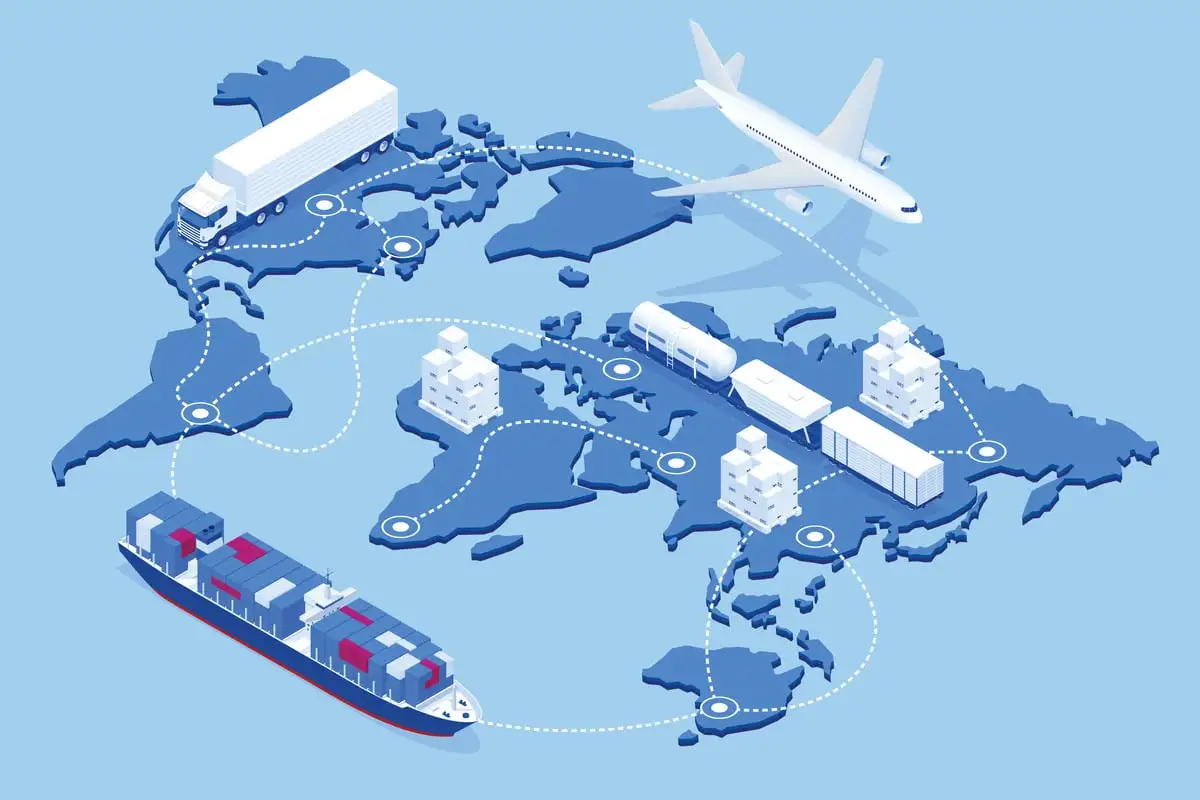
Electronics supply chain diversification is the strategic process of distributing manufacturing operations, component sourcing, and production capacity across multiple geographies — reducing dependency on any single country, supplier, or logistics corridor.
It’s often confused with two related but distinct strategies:
- Reshoring — bringing manufacturing back to the United States entirely
- Nearshoring — relocating to geographically proximate countries (Mexico, Eastern Europe)
Diversification is broader. It doesn’t require abandoning existing capacity — it means building redundancy and optionality into your supply chain architecture so that no single geopolitical event, tariff policy change, or natural disaster can bring your production to a halt.
For electronics specifically, the stakes are higher than in most industries. Electronics supply chains are characterized by long component lead times, high IP sensitivity, complex multi-tier supplier networks, and extreme concentration in a handful of Asian manufacturing corridors. When one node fails, the entire chain feels it.
The Numbers That Changed Everything
The data from 2025 tells a clear story:
- U.S. imports from China fell ~17% in H1 2025 vs. H1 2024
- Over one-third of all U.S. imports still flow through Chinese supply chains — meaning the exposure remains enormous even as diversification accelerates
- Only 80% of U.S. companies operating in China reported profitability in the past year — a historically low figure for what was once the world’s most reliable low-cost manufacturing base
- 43% of respondents are actively building exit or reduction plans for their China operations
These aren’t projections. They’re the present reality that U.S. OEMs are navigating right now.
Related reading: Risks of Manufacturing Electronics in China | Tariff Impact: China vs. Vietnam Electronics Manufacturing
Why U.S. OEMs Are Leaving China: The 5 Core Drivers
Understanding why this shift is happening is essential before deciding how to respond. The drivers aren’t isolated — they’re compounding, and they’re accelerating.
1. Tariff & Trade Policy Uncertainty
The tariff story began with Section 301 in 2018, escalated through multiple rounds of trade negotiations, and reached a new peak in 2025 when the effective tariff rate on many Chinese electronics categories hit 145%.
For an OEM sourcing $10M in PCB assemblies annually from China, a 145% tariff rate doesn’t just compress margin — it makes the entire cost model non-viable. But more damaging than the current rate is the uncertainty about future rates. Supply chain decisions are 3–5 year commitments. No CFO can approve a capital investment in tooling, fixtures, and supplier qualification when the regulatory environment can shift by executive order in 90 days.
Related reading: China Tariff Charger Alternative
2. Geopolitical & Regulatory Risk
The Taiwan Strait remains the most consequential single point of failure in global electronics supply chains. Taiwan produces over 90% of the world’s most advanced semiconductors — and any disruption to that corridor would cascade through every electronics OEM on the planet within weeks.
Beyond Taiwan, U.S. Congressional pressure on supply chain transparency has intensified significantly. Defense contractors, medical device manufacturers, and critical infrastructure OEMs now face explicit requirements to document and reduce Chinese content in their supply chains.
The regulatory trajectory is clear: Chinese-origin content is becoming a liability, not just a cost variable.
Related reading: Offshore Manufacturing Risks
3. Rising China Manufacturing Costs

The “cheap China” narrative is increasingly outdated. Labor costs in Shenzhen and Dongguan — the traditional heartland of electronics manufacturing — have risen dramatically over the past decade. When you add RMB appreciation risk, rising utility costs, increasingly complex environmental compliance requirements, and the overhead of managing a China-based operation from the U.S., the cost advantage that originally justified the China strategy has eroded significantly.
Related reading: Electronics Manufacturing Cost in Vietnam vs. China | Vietnam vs. China PCB Assembly Cost
4. Intellectual Property & Data Security Concerns
IP protection in Chinese manufacturing environments remains a persistent concern — particularly for OEMs with proprietary circuit designs, firmware, or product architectures. The risk isn’t hypothetical: it manifests in counterfeit products appearing in grey markets, design files being replicated by local competitors, and firmware being reverse-engineered.
For defense, medical, and industrial OEMs, this concern has crossed from “risk to manage” to “regulatory requirement to address.” U.S. government contractors are increasingly required to demonstrate that their manufacturing partners operate in environments with documented IP protection protocols.
5. Supply Chain Concentration Risk
COVID-19 was the stress test that exposed the fragility of single-geography supply chains. When Chinese factories went dark in Q1 2020, OEMs discovered that their entire production capacity — not just a portion of it — was dependent on a single country’s ability to operate normally.
The lesson was expensive. The response has been structural: OEM customers (Tier 1 brands, defense primes, medical device companies) are now explicitly requiring their suppliers to demonstrate geographic diversification as a condition of long-term contracts.
🔗 Related reading: Electronics Manufacturing Outsourcing
Electronics Supply Chain Diversification: Where Are OEMs Moving?
The “beyond China” question immediately raises a follow-up: beyond China to where? The answer depends on your product type, volume, technical complexity, and target markets — but the data points clearly to a leading destination.
Comparing the Main Alternatives
| Destination | Key Strengths | Key Weaknesses | Best Fit |
|---|---|---|---|
| Vietnam ⭐ | Mature EMS ecosystem, FTA network (EVFTA, RCEP, CPTPP), strong technical workforce, competitive cost | Component supply chain still developing domestically | PCB assembly, EMS, power electronics, industrial |
| Mexico | USMCA benefits, nearshore to U.S., fast logistics | Limited electronics ecosystem depth, security concerns in some regions | Automotive, simple assembly |
| India | Large labor pool, PLI government incentives, growing mobile manufacturing | Infrastructure gaps, bureaucratic complexity, logistics cost | High-volume consumer electronics |
| Malaysia | Established semiconductor packaging base, English-speaking workforce | Higher cost than Vietnam, limited EMS depth | Semiconductor packaging, test & assembly |
| Thailand | Strong automotive electronics base, stable infrastructure | Less focused on broader electronics EMS | Automotive electronics |
Why Vietnam Leads for U.S. Electronics OEMs
Vietnam has earned its position as the #1 destination for electronics supply chain diversification from China — and the evidence is in the investment flows, not just the marketing claims.
The investment story: Multinational electronics corporations — Samsung, Intel, LG, Foxconn — have collectively poured billions into Vietnam’s electronics manufacturing infrastructure over the past decade. Samsung alone manufactures over 50% of its global smartphone output in Vietnam. These investments didn’t just bring capital — they built a technical workforce, a supplier ecosystem, and a quality culture that now supports the broader EMS industry. _RMIT
The trade agreement advantage: Vietnam holds one of the most favorable trade agreement portfolios of any manufacturing destination:
- EVFTA (EU-Vietnam Free Trade Agreement) — 0% tariff on most electronics exports to EU
- RCEP — Regional Comprehensive Economic Partnership covering ASEAN + China + Japan + Korea + Australia
- CPTPP — Comprehensive and Progressive Agreement for Trans-Pacific Partnership
- U.S.-Vietnam Bilateral Trade Agreement — foundational framework for U.S. OEM sourcing
The growth trajectory: Vietnam’s electronics manufacturing services (EMS) market is growing at a CAGR of 5% between 2020 and 2026, with FDI commitments projected to reach $35–40 billion in registered commitments for 2025 alone. _CP _YT
The infrastructure reality: Modern industrial zones — particularly VSIP (Vietnam Singapore Industrial Park) developments — offer Singapore-standard infrastructure: reliable power, fiber connectivity, bonded warehousing, and direct logistics corridors to major container ports. _BCOMPANY
Related reading: Alternatives to China PCB Assembly | China Alternative Electronics Manufacturing — Why Vietnam Is the Top Choice in 2026 | Top EMS Companies in Vietnam
External reference: Counterpoint Research: Vietnam Soars in Global Supply Chains | RMIT: Vietnam’s Electronics FDI — Growth Without Spillovers?
How to Execute Electronics Supply Chain Diversification: A Practical OEM Framework
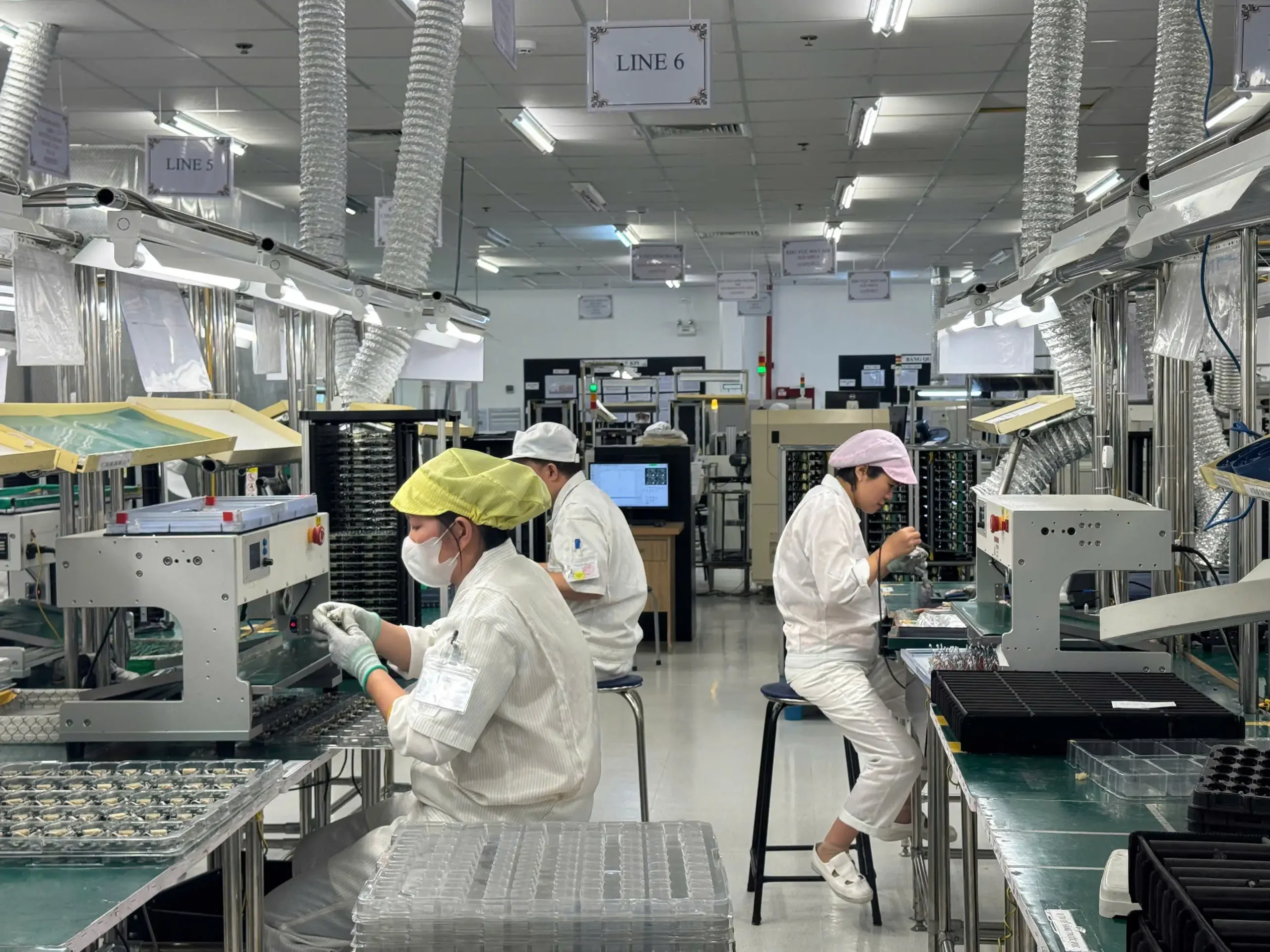
Knowing why and where is necessary — but it’s not sufficient. The OEMs that successfully diversify are the ones that approach the transition with a structured methodology, not a reactive scramble. Here’s a proven 4-step framework.
Step 1 — Audit Your Current China Exposure
Before you can diversify, you need to know exactly what you’re diversifying from. This means a rigorous BOM-level audit:
- Map every component in your active BOMs by country of origin — not just the assembly location, but the component origin
- Identify concentration risk: flag any component category where China-origin content exceeds 60% of your sourcing
- Calculate tariff exposure: model your current annual tariff cost AND your worst-case exposure if rates escalate further
- Prioritize by revenue impact: rank your product lines by the financial consequence of a China supply disruption
The output of this audit is your diversification priority matrix — the roadmap that tells you which product lines to move first, which components to dual-source immediately, and where your most critical single points of failure are.
Related reading: Risks of Manufacturing Electronics in China
Step 2 — Define Your Diversification Model
There is no single right answer for how to diversify — the model depends on your volume, your timeline, and your risk tolerance. The three most common approaches:
Model A — China+1 (Recommended for most OEMs) Maintain existing China capacity while establishing a secondary production source in Vietnam or another ASEAN country. This approach minimizes disruption to current operations while building redundancy. It’s the most common starting point and the lowest-risk entry into supply chain diversification.
Model B — Gradual Migration Systematically transfer product lines from China to Vietnam over a 12–24 month timeline, starting with the highest-tariff-exposure or highest-risk SKUs. Each transfer is treated as a formal NPI (New Product Introduction) process with full qualification.
Model C — Full Relocation Complete exit from China manufacturing. Appropriate only for OEMs with extreme tariff exposure, defense/government contract requirements for non-China sourcing, or strong strategic reasons to eliminate Chinese content entirely. Requires the most planning and the longest transition timeline.
Related reading: China+1 Strategy
Step 3 — Evaluate EMS Partners in Target Markets
The quality of your EMS partner will determine whether your diversification succeeds or fails. A low-cost assembler that can’t support your quality requirements, can’t scale with your volume, or can’t manage the documentation your customers require will cost you far more than the savings justify.
Use this 8-point evaluation checklist when assessing Vietnam EMS partners:
□ Full-process capability

(SMT + DIP + Testing + Packaging — under one roof, not subcontracted)(ISO 9001 minimum; ISO 13485 for medical; IATF 16949 for automotive)
(ERP + MES + QMS integration — not paper-based processes)
(Component-level tracking through full production history)
(Experience across sectors signals process maturity)
(Proximity to major container ports — critical for lead time reliability)
(DFM feedback, test fixture development, NPI support)
(Can they scale with you? Do they have the financial depth to invest?)
Related reading: How to Evaluate a PCB Fabrication Factory | 10 Reasons to Choose Contract Electronics Manufacturing in Vietnam | Top Vietnam PCB Manufacturers for U.S. Buyers in 2026
Step 4 — Manage the Transition
The transition itself is where most diversification efforts succeed or fail. A structured approach:
Design Transfer (Weeks 1–4)
- Transfer complete BOM, Gerber files, assembly drawings, and test specifications
- Conduct DFM (Design for Manufacturability) review with new EMS partner
- Identify and resolve any component sourcing gaps in the new geography
Pilot Run & Qualification (Weeks 4–12)
- Run NPI (New Product Introduction) with low-volume pilot build
- Conduct first article inspection against full acceptance criteria
- Validate test coverage and yield rates against China baseline
Dual-Source Period (Months 3–6)
- Run China and Vietnam sources in parallel during ramp
- Use this period to validate logistics, lead times, and quality consistency
- Gradually shift volume percentage toward Vietnam as confidence builds
Full Ramp & Optimization (Month 6+)
- Transition to target volume allocation
- Optimize component sourcing for Vietnam geography
- Establish ongoing supplier development and cost reduction programs
🔗Related reading: Prototype PCBA Vietnam | PCB Assembly Lead Time | Low Volume PCB Assembly
SHDC: A Full-Process EMS Partner for U.S. OEMs Diversifying to Vietnam
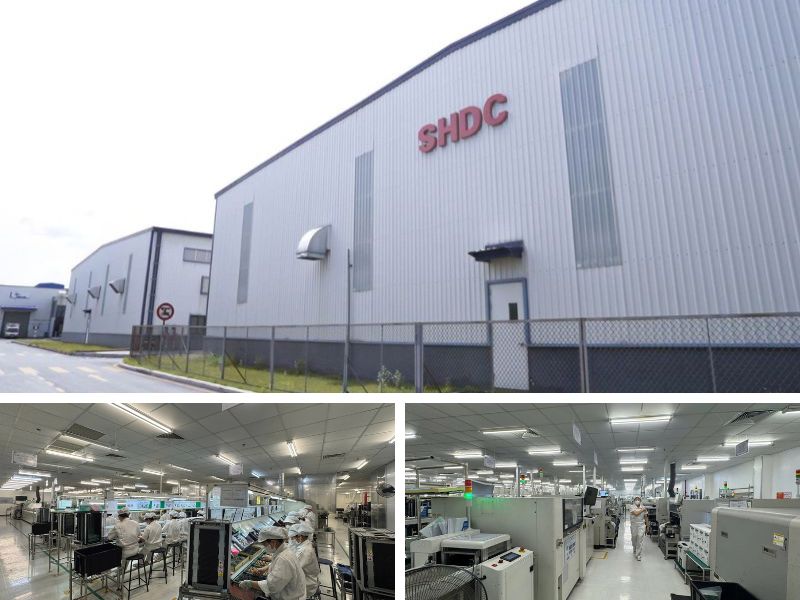
For U.S. OEMs executing an electronics supply chain diversification strategy, the EMS partner you choose in Vietnam is the most consequential decision in the entire process. SHDC Electronics was built specifically to serve the requirements of international OEMs who need more than a low-cost assembler — they need a full-process manufacturing partner with documented quality systems, digital factory infrastructure, and the engineering depth to support complex products.
What “Full-Process” Actually Means at SHDC
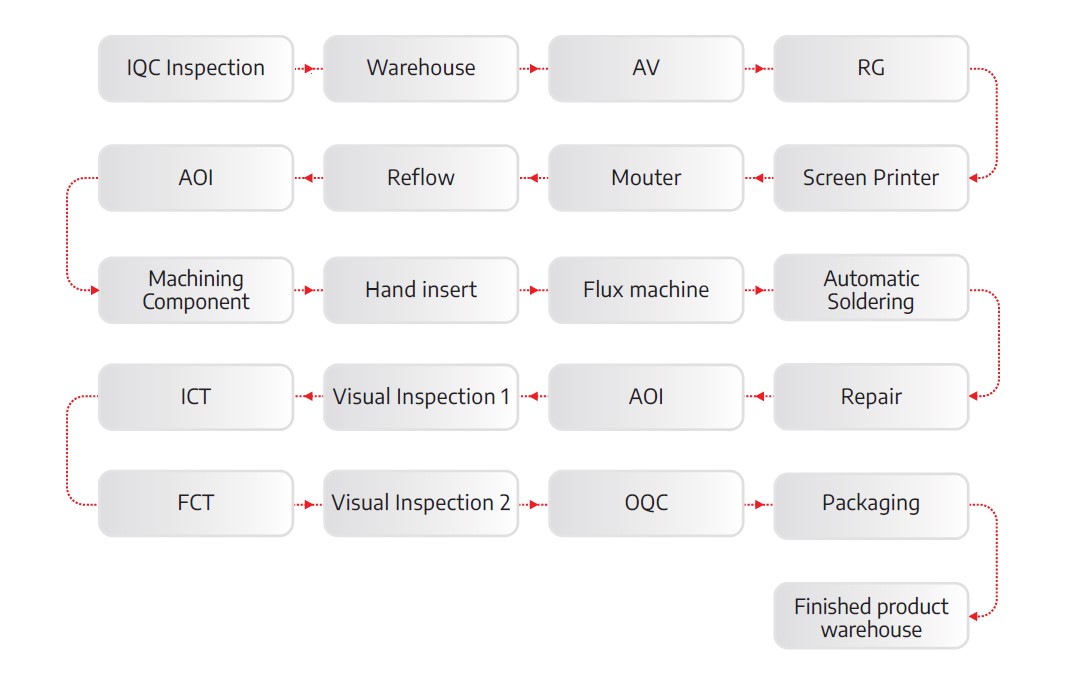
Many Vietnam EMS providers offer assembly services. Fewer offer a genuinely integrated full-process capability. At SHDC, every product moves through a single facility under a unified quality management system:
IQC (Incoming Quality Control) → SMT Assembly (Yamaha ecosystem, 4 lines, 98M points/month) → DIP/Through-Hole → Functional Testing → OQC (Outgoing Quality Control) → Packaging & Logistics
No subcontracting. No quality handoffs between facilities. One chain of custody, one set of records, one accountable partner.
Digital Factory Infrastructure
SHDC operates an integrated digital manufacturing environment:
- ERP for production planning and materials management
- PLM for product lifecycle and engineering change management
- SCM for supplier management and component traceability
- MES/QMS for real-time production monitoring and quality data capture
This infrastructure means that when a U.S. OEM customer needs production records, traceability data, or quality reports — they’re available digitally, not reconstructed from paper logs. _RMIT _BCOMPANY
Location & Logistics
SHDC’s facility is located in VSIP Hai Duong — a Vietnam Singapore Industrial Park development that provides:
- 40km from Hanoi — access to the capital’s engineering and logistics ecosystem
- 55km from Haiphong Port — one of Vietnam’s primary container export terminals
- Singapore-standard industrial infrastructure: reliable power, fiber connectivity, bonded warehousing
For U.S. OEMs, this means competitive ocean freight transit times to U.S. West Coast ports, with reliable logistics infrastructure that doesn’t introduce variability into your supply chain.
Industries & Capabilities
| Industry | SHDC Capability | Learn More |
|---|---|---|
| Power Electronics | GaN chargers 65W–150W, power adapters, industrial PSU | Power Electronics Manufacturing Vietnam |
| Automotive | PCBA for Thaco automotive systems | Automotive PCBA Vietnam |
| Medical Devices | Full traceability, QMS documentation, ISO 13485 alignment | Medical Device Electronics Manufacturing |
| Consumer Electronics | High-volume PCBA, FPC assembly, complex multi-layer boards | Consumer Electronics Assembly Vietnam |
| Industrial Electronics | Ruggedized PCBA, industrial control systems | Industrial Electronics Manufacturing Vietnam |
🔗 Related reading: SHDC: Trusted Non-China PCBA Manufacturer | SHDC Full-Service EMS in Vietnam
Frequently Asked Questions
What is electronics supply chain diversification?
Electronics supply chain diversification is the strategic process of distributing manufacturing operations and component sourcing across multiple geographies to reduce dependency on any single country — most commonly China. It differs from reshoring (returning to the U.S.) and nearshoring (moving to proximate countries) in that it focuses on building redundancy and optionality rather than a complete relocation.
Why are U.S. OEMs moving away from China manufacturing?
The primary drivers are: tariff escalation (145% rates in 2025), geopolitical risk (Taiwan Strait, export controls), rising China manufacturing costs, IP protection concerns, and supply chain concentration risk exposed by COVID-19.
What is the China+1 strategy in electronics?
China+1 means maintaining existing China production capacity while establishing a secondary manufacturing source — typically in Vietnam or another ASEAN country. It’s the most common first step in electronics supply chain diversification because it builds redundancy without disrupting current operations.
Why is Vietnam the top destination for supply chain diversification?
Vietnam combines a mature EMS ecosystem (built by Samsung, Intel, LG investments), an extensive FTA network (EVFTA, RCEP, CPTPP), competitive manufacturing costs, and modern industrial infrastructure. Its EMS market is growing at 5% CAGR through 2026. _CP _RMIT
How long does it take to diversify electronics manufacturing to Vietnam?
A typical China+1 transition — from initial partner evaluation to full production ramp — takes 6–12 months. This includes design transfer (4 weeks), NPI and qualification (8 weeks), dual-source parallel running (3–6 months), and full ramp. Complex products with extensive test requirements may take longer.
What should I look for in a Vietnam EMS partner?
Prioritize: full-process capability under one roof, certified quality systems (ISO 9001/13485/IATF 16949), digital factory infrastructure (ERP + MES + QMS), board-level traceability, multi-industry portfolio, proximity to major ports, engineering support capability, and financial stability.
How does supply chain diversification affect PCB assembly costs?
Initial costs typically increase slightly during the transition period due to qualification overhead, dual-sourcing, and new tooling. However, the elimination of tariff exposure (saving up to 145% on China-origin goods) typically produces a net cost reduction of 15–35% for OEMs currently absorbing full tariff rates on Chinese assemblies.
🔗 Related reading: PCB Assembly Cost | PCB Assembly Quote
Conclusion
The data is unambiguous: electronics supply chain diversification has moved from strategic option to operational necessity for U.S. OEMs. A 17% drop in U.S.-China trade in a single half-year, 43% of companies actively building China exit plans, and tariff rates that have fundamentally broken the economics of China-only sourcing — these aren’t warning signs. They’re the present reality.
Vietnam has emerged as the leading destination for this transition — not because of marketing claims, but because of two decades of electronics FDI from Samsung, Intel, and LG that built a genuine manufacturing ecosystem capable of supporting complex OEM requirements. _RMIT _BCOMPANY
The OEMs that move decisively — with a structured framework, the right EMS partner, and a clear transition plan — will emerge with supply chains that are more resilient, more cost-competitive, and better positioned for the regulatory environment of 2026 and beyond.
The ones that wait are absorbing tariff costs, accumulating geopolitical risk, and falling behind competitors who have already made the move.
