
 Tiếng Việt
 日本語
日本語
For US companies sourcing electronics in Asia, Vietnam has become more than a backup plan. A few years ago, many buyers looked at the country as a secondary option—useful for diversification, but not always the first choice for serious production. That has changed. In 2026, Vietnam is firmly on the map for electronics manufacturing, and that is why searches for Vietnam PCB manufacturers keep growing among procurement teams, OEMs, and contract manufacturing buyers in the US.
What makes this topic interesting is that the phrase itself can be misleading. In many cases, buyers searching for a PCB manufacturer are not only looking for a factory that can fabricate bare boards. They are often trying to find a partner that can handle assembly, testing, quality control, and final packaging as well. In other words, they may start with the keyword “PCB manufacturer,” but what they really need is a reliable PCBA or EMS supplier in Vietnam.
That distinction matters, especially in a market like Vietnam, where the strongest opportunities for overseas buyers are often found not just in board fabrication, but in export-oriented electronics assembly. The right supplier is not simply the one with the lowest price. It is the one that can keep quality stable, respond clearly when engineering changes happen, and deliver product without turning every PO into a supply chain exercise in damage control.
Why US Buyers Are Paying More Attention to Vietnam
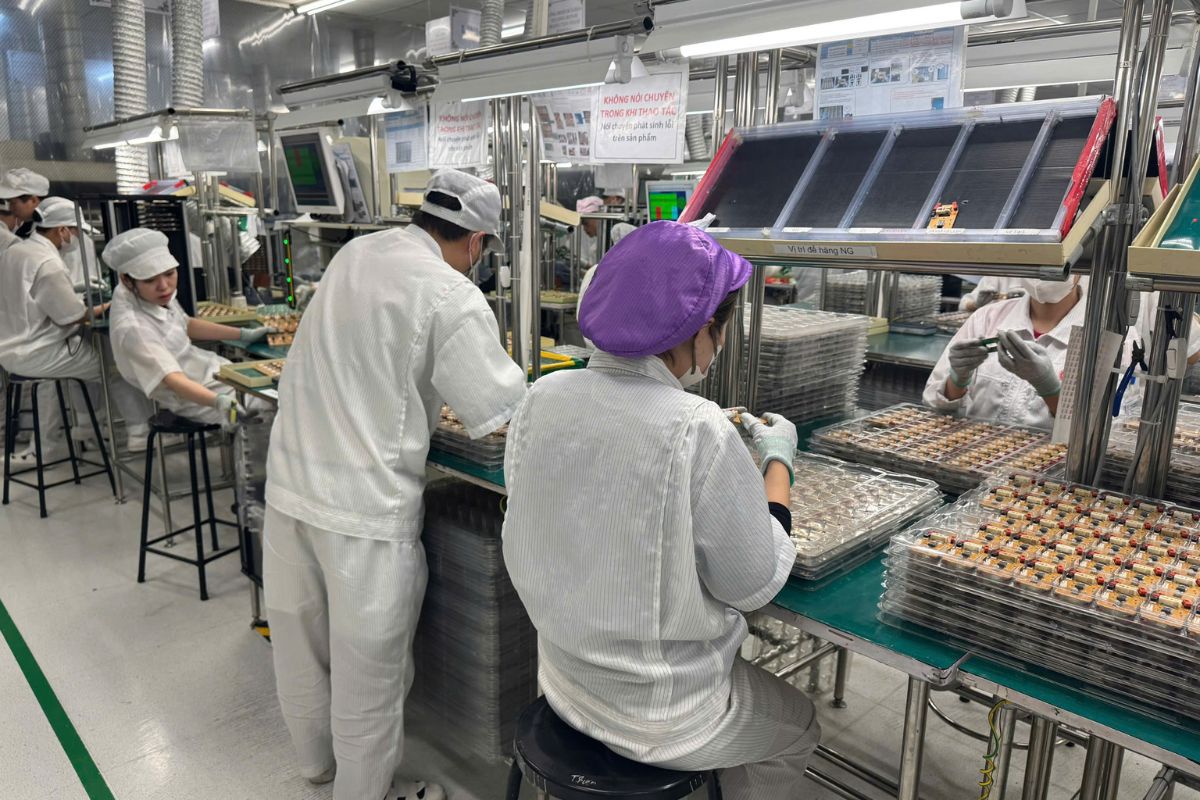
There are a few reasons Vietnam continues to attract more attention from American buyers, and most of them are practical rather than theoretical.
-The first is diversification. A lot of companies are still working through supply chain strategies designed to reduce over-reliance on a single country. Vietnam fits naturally into that shift because it offers a combination of manufacturing capacity, competitive cost, and improving industrial infrastructure.
– The second reason is that the electronics ecosystem in Vietnam has matured. In the past, buyers sometimes worried that a supplier could assemble a product, but not manage it well once volumes increased or quality issues appeared.
Today, that concern has not disappeared entirely—this is manufacturing, after all, and chaos is always waiting around the corner—but the overall capability level in Vietnam is stronger than it used to be. Northern Vietnam in particular has become a serious cluster for electronics production, with better access to labor, supplier networks, and logistics through Hanoi and Hai Phong.
For US buyers, that changes the conversation. Vietnam is no longer only about finding a cheaper source. It is increasingly about finding a more balanced and resilient one.
The Problem with the Term “Vietnam PCB Manufacturers”
One thing I have seen repeatedly in sourcing is that buyers and suppliers often use the same words while talking about completely different needs. “PCB manufacturer” is a good example of that.
Strictly speaking, a PCB manufacturer produces the bare board. That includes fabrication processes such as drilling, plating, solder mask, and surface finishing. But many buyers typing Vietnam PCB manufacturers into Google are not looking for bare boards alone. They need populated boards, mixed SMT and through-hole assembly, test coverage, and often final packaging before the product goes out the door.
That is why it makes more sense to evaluate suppliers based on manufacturing scope rather than on the label they use on their website. If the project requires a finished electronic assembly, then a factory’s ability to manage SMT, DIP, AOI, ICT, functional testing, and packaging is often more important than whether it calls itself a PCB company or an EMS company.
This is also where a lot of supplier comparisons go wrong. A buyer gets three quotes, sees different pricing, and assumes they are comparing the same thing. In reality, one supplier may be quoting bare boards, another may be quoting assembly without functional test, and a third may be pricing a more controlled process with inspection and packaging included. On paper, they look comparable. On the production floor, they are not even in the same conversation.
What US Buyers Usually Care About More Than Price
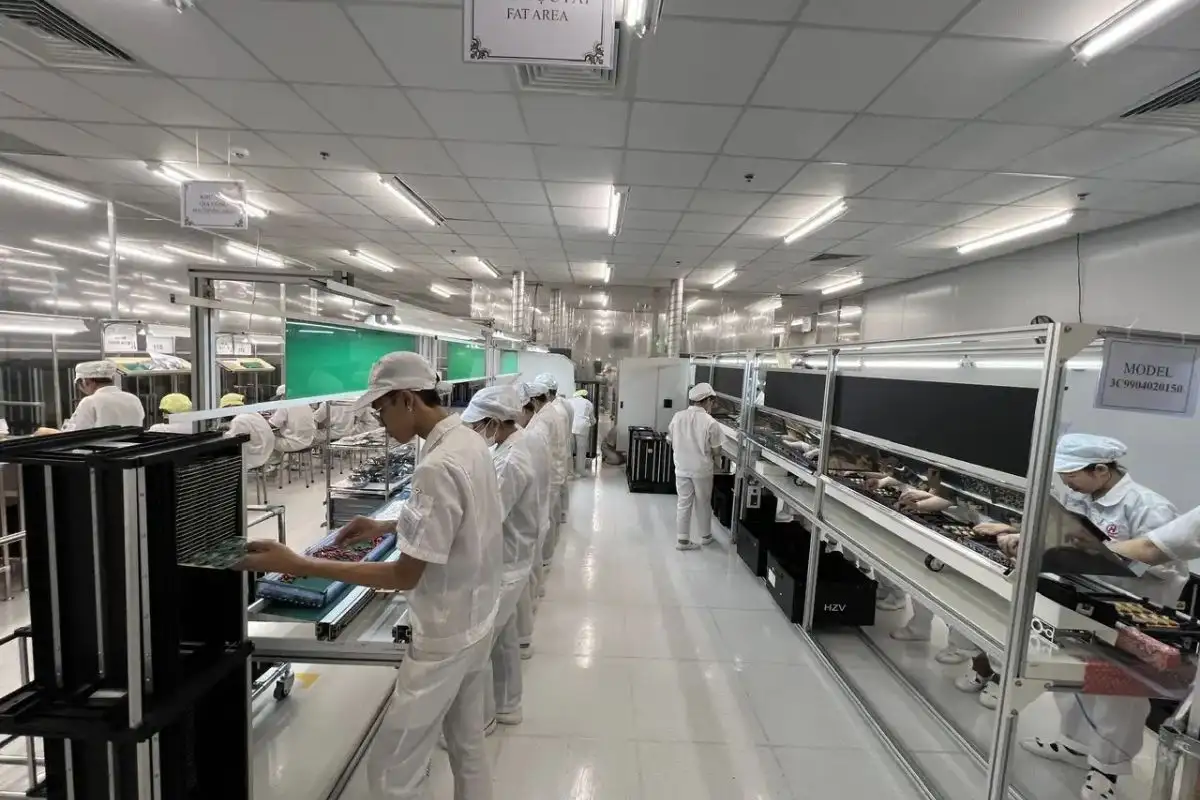
Price gets attention first, but it is rarely the reason a supplier relationship succeeds. In my experience, what matters more is whether the factory can run consistently once the first clean sample has come and gone. It is easy to look good during quoting. It is much harder to stay reliable when material shortages hit, revisions change, or yield starts drifting.
That is why serious US buyers tend to look past the front-end sales pitch and into the operating structure behind it. They want to know how incoming materials are checked, how defects are caught in process, whether there is real test capability, and how the factory handles traceability. They also pay attention to communication. A supplier that answers quickly but vaguely can be more dangerous than one that takes a bit longer and responds with clear, technically grounded information.
Location also carries more weight than people sometimes think. A factory in Northern Vietnam with practical access to Hanoi and Hai Phong has real advantages when it comes to logistics, supplier support, and export coordination. These are not flashy talking points, but they matter when shipments need to move on schedule.
In other words, buyers are not only evaluating manufacturing capability. They are evaluating whether the supplier is set up to be manageable.
Where SHDC Fits into This Picture
This is where SHDC Electronics becomes relevant. Based on the company profile, SHDC is best understood not as a bare PCB fabricator, but as an EMS and PCBA manufacturing partner. That may sound like a technical distinction, but for many buyers it is exactly the right one.
SHDC’s offering centers on the part of the process that many overseas customers care about most: taking a board through soldering, assembly, testing, and packaging with a structured production flow. In practical terms, that puts the company in a useful position for projects where the buyer needs more than just a board supplier. It makes SHDC more relevant for customers looking for a manufacturing partner that can support working electronics assemblies ready for downstream integration or shipment.
The company’s location in Hai Duong, with stated proximity to both Hanoi and Hai Phong, is another meaningful strength. In Northern Vietnam, that geography matters. It supports access to industrial infrastructure while keeping logistics relatively convenient for export activity. For a US buyer, that is not just a map detail. It affects lead times, movement of materials, and how efficiently the factory can operate within the regional supply chain.
>>>Read more: SHDC – EMS electronics manufacturing services in Vietnam for US companies
A Closer Look at SHDC’s Manufacturing Capability
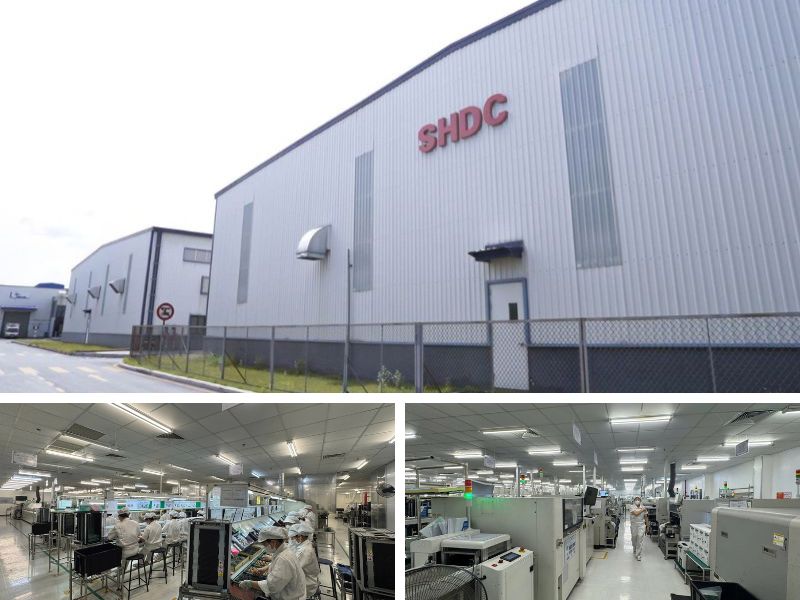
What stands out in SHDC’s profile is that the company has put together a fairly complete assembly environment rather than a single isolated process. The factory operates with 4 high-speed SMT lines, 3 DIP lines, along with separate lines for assembly, testing, and packaging. That kind of structure suggests a manufacturing setup designed for controlled flow, not just for pushing boards through placement.
The production scope described in the profile covers the areas most buyers would expect from a capable EMS partner: SMT, DIP, backend welding, testing, assembly, and final packaging. That matters because in real-world production, value is created at the handoff points between processes just as much as within the processes themselves. A supplier that can control those handoffs tends to create fewer surprises.
SHDC also appears to have invested in equipment that supports not only output, but inspection and process control. The profile references Yamaha placement and printing systems, 3D SPI, 3D AOI, wave soldering, reflow, and ICT capability. None of this should be treated as decoration for a brochure. In electronics manufacturing, equipment choices shape what kind of process discipline is realistically possible. A factory with decent inspection infrastructure is generally in a much better position to prevent small issues from becoming recurring field problems.
Just as important is the workflow shown in the production process. SHDC’s sequence includes IQC, AOI, ICT, FCT, visual inspection, OQC, packaging, and finished goods warehousing. For experienced buyers, that tells you the company is thinking in terms of control points rather than just output. And that is usually a healthier sign than any sales slogan.
>>>Read more: SHDC Full Service EMS in Vietnam: End-to-End Electronics Manufacturing for US Companies
Why SHDC Is Relevant for US Buyers
From a US sourcing perspective, SHDC looks most relevant for buyers who need a supplier in Vietnam that can support PCBA and EMS work with structured assembly and test processes. The company profile also shows experience in products such as GaN chargers, PD fast chargers, water purifier electronics, and computer mouse assemblies, which suggests familiarity with consumer and power-related applications.
That product range is helpful because factories tend to perform better when they are working in categories that resemble what they have already built. It does not guarantee success, of course. Manufacturing has a healthy respect for humility. But prior exposure to similar products usually shortens the learning curve and improves the quality of early communication.
Another point in SHDC’s favor is its use of systems such as ERP, PLM, SCM, and MES/QMS. These are not magic words, and anyone who has spent enough time around manufacturing knows that software does not fix bad discipline. But when those systems are implemented properly, they support planning, traceability, inventory control, and production visibility—all things US buyers care about once orders begin to scale.
So if the question is whether SHDC belongs in a conversation about Vietnam PCB manufacturers, the fair answer is yes—but specifically in the context of buyers who are really looking for a Vietnam PCBA manufacturer or an EMS partner, not just a raw board supplier.
>>>Read more: Turnkey PCB Assembly Services in Vietnam – Why Choose SHDC?
Choosing the Right Supplier in Vietnam
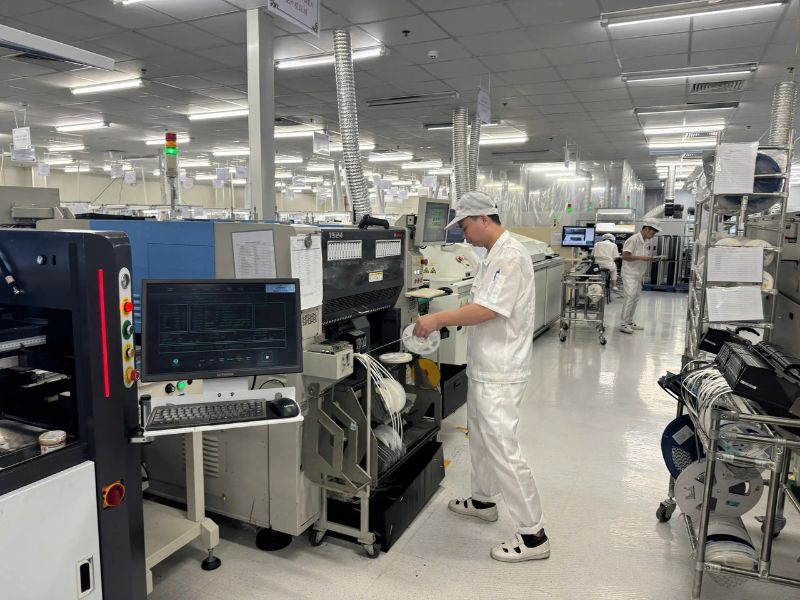
The smartest way to evaluate suppliers in Vietnam is to start by being brutally clear about what you need. If the product requires only fabricated boards, then focus on bare PCB capability. But if you need component sourcing, SMT, through-hole assembly, test coverage, and shipment-ready packaging, then it is far more useful to assess the supplier as a PCBA or EMS partner.
Once that is clear, the evaluation becomes more grounded. You can look at whether the factory’s equipment matches your product type, whether the inspection flow is built into production, whether the team communicates clearly, and whether the location makes sense for export logistics. These are the factors that tend to matter six months into the relationship, long after the excitement of the first quote has faded.
Vietnam offers real opportunity for US buyers in 2026, especially in electronics assembly and related manufacturing services. But like any sourcing market, it rewards buyers who ask better questions early.
Final Thoughts
The search for Vietnam PCB manufacturers is really a search for manufacturing fit. Sometimes that means bare board fabrication. More often, especially for export-driven electronics programs, it means finding a supplier that can handle assembly, inspection, testing, and packaging with enough discipline to support real production.
That is why companies like SHDC Electronics deserve attention. Not because they fit a broad marketing label, but because their profile suggests something more useful: a practical manufacturing partner in Northern Vietnam with structured SMT and DIP capability, integrated testing flow, and experience in product categories that matter to international buyers.
For US companies looking at Vietnam in 2026, that kind of fit is often worth more than a lower quote that looks good only until production begins.
>>>Read more: SHDC Contract Electronics Manufacturing Services for OEM Companies in Vietnam
FAQs
What is the difference between a Vietnam PCB manufacturer and a PCBA supplier?
A PCB manufacturer typically produces the bare printed circuit board, while a PCBA supplier handles component assembly, soldering, inspection, testing, and sometimes final packaging. Many buyers searching for Vietnam PCB manufacturers actually need PCBA or EMS support.
Why are US buyers sourcing PCB and PCBA from Vietnam?
US buyers are increasingly sourcing from Vietnam to diversify supply chains, reduce dependence on a single country, access competitive manufacturing costs, and work with export-oriented factories in established industrial zones.
What should buyers check when choosing Vietnam PCB manufacturers?
Key factors include manufacturing scope, SMT and DIP capability, testing systems, quality control workflow, process management systems, factory location, and export readiness.
Is SHDC a bare PCB manufacturer?
Based on the company profile provided, SHDC is best positioned as an EMS and PCBA manufacturing partner rather than a bare PCB fabrication company. Its strengths are in assembly, testing, packaging, and process management.
What industries can SHDC support?
According to the company profile, SHDC has experience with charger products, GaN fast charging devices, water purifier electronics, computer mouse assemblies, and other functional electronic products.
>>>Read more: PCB Assembly Vietnam: 7 Questions Every OEM Should Ask Before Sending an RFQ
