
 Tiếng Việt
 日本語
日本語
The rapid growth of USB-C fast charging has transformed the consumer electronics industry. Compact 65W, 100W, and even 150W chargers are now expected to deliver high efficiency, stable thermal performance, and multi-device compatibility in increasingly smaller form factors. As a result, choosing a reliable USB-C GaN charger manufacturer has become far more complex than selecting a standard charger assembly supplier. While many factories can assemble charger PCBs, far fewer can consistently manufacture high-power GaN chargers with stable quality, strong EMI performance, long-term reliability, and scalable production control. For OEM brands entering the U.S. market, manufacturing capability now plays a major role in product success, compliance stability, and long-term supply chain reliability.
Why USB-C GaN Chargers Are More Difficult to Manufacture Than Traditional Chargers
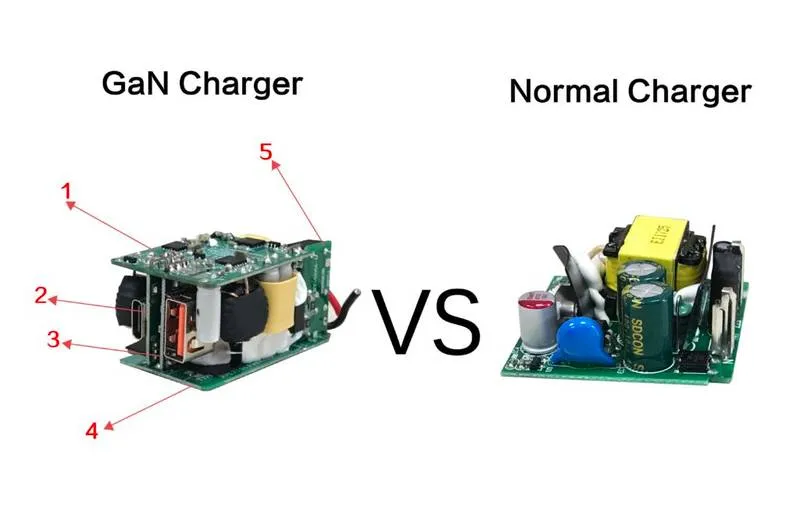
Higher Power Density Changes Manufacturing Complexity
Compared with traditional silicon chargers, GaN chargers operate at significantly higher switching frequencies and power density.
This enables:
- smaller charger size
- higher wattage output
- multi-port USB-C fast charging
- improved energy efficiency
However, these advantages also increase manufacturing complexity.
Compact internal layouts create tighter thermal constraints, smaller electrical margins, and greater sensitivity to SMT assembly variation. Even minor inconsistencies in solder quality, transformer positioning, or PCB layout can affect long-term reliability.
This is one reason many OEM brands now evaluate manufacturers with specialized power electronics manufacturing capability rather than relying on standard charger assembly suppliers.
USB-C PD and PPS Introduce Additional Engineering Challenges
Modern USB-C chargers must support:
- USB-C Power Delivery (PD)
- PPS (Programmable Power Supply)
- multi-device compatibility
- dynamic voltage negotiation
Unlike legacy adapters, USB-C PD chargers require stable communication between charger firmware and connected devices.
Poor manufacturing consistency can lead to:
- PD handshake instability
- intermittent charging
- overheating during fast charging
- device compatibility issues
- reduced charging efficiency
OEM engineering teams can review the official USB-IF USB-C Power Delivery specifications for technical reference.
Small Manufacturing Defects Can Cause Major Reliability Problems
High-power USB-C GaN chargers operate with tighter thermal and electrical tolerances than conventional chargers.
As a result, seemingly small production defects may create significant reliability problems, including:
- thermal hotspots
- coil noise
- EMI failures
- unstable output voltage
- reduced component lifespan
This is why experienced OEM brands increasingly evaluate GaN charger PCB assembly capability instead of focusing only on unit pricing.
Engineering Capability Is the Biggest Difference Between Manufacturers
Standard Charger Factories Often Focus on Assembly Only
Many standard charger factories operate using a simple build-to-print model.
In these environments, the factory mainly follows customer files without providing deeper engineering feedback related to:
- thermal optimization
- PCB layout improvement
- EMI reduction
- DFM optimization
- USB-C PD validation
This approach may work for low-power chargers, but it becomes risky for high-density GaN products.
Reliable GaN Charger Manufacturers Support Engineering Collaboration
Reliable USB-C GaN charger manufacturers typically participate much earlier in the product development process.
Advanced EMS partners often support:
- DFM analysis
- PCB layout feedback
- thermal simulation review
- EVT/DVT/PVT coordination
- firmware validation
- manufacturing optimization
For OEM brands scaling production, engineering collaboration often reduces:
- production instability
- EMI risk
- thermal failures
- yield loss
- compliance delays
Related topics:
Power Electronics Expertise Matters in GaN Charger Production
Manufacturing high-power USB-C chargers requires more than standard SMT assembly knowledge.
Reliable manufacturers must understand:
- high-frequency switching behavior
- transformer consistency
- thermal balancing
- EMI suppression
- high-density power conversion
This is one reason OEM sourcing teams increasingly prefer experienced EMS electronics manufacturing providers with power electronics specialization.
Advanced SMT and Production Systems Matter
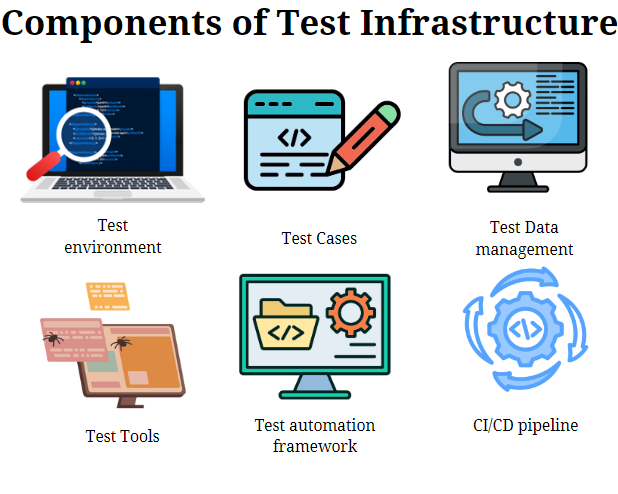
High-Density PCB Assembly Requires Advanced SMT Capability
Modern GaN chargers use compact multilayer PCB layouts with densely packed power components.
These designs demand:
- high SMT placement accuracy
- stable solder paste control
- consistent reflow profiling
- tight process repeatability
Without advanced SMT systems, manufacturers may encounter:
- solder bridging
- tombstoning
- misalignment
- thermal stress damage
- yield instability
OEM buyers evaluating suppliers should carefully review available SMT manufacturing services and overall SMT process capability.
Process Repeatability Is Critical for Mass Production
Prototype success does not automatically guarantee stable mass production.
Reliable manufacturers typically implement:
- SPI systems
- AOI inspection
- reflow profile control
- machine calibration procedures
- yield monitoring systems
Modern SMT production lines rely heavily on automation and process data to maintain consistency across high-volume manufacturing programs.
MES and QMS Systems Improve Traceability
Reliable USB-C GaN charger manufacturers often use integrated MES/QMS systems to improve:
- traceability
- production visibility
- operator control
- quality consistency
- defect analysis
These systems become especially important during high-volume OEM production where even small process drift can create significant quality issues.
Thermal Management Separates Real GaN Manufacturers From Basic Charger Factories
Thermal Performance Determines Long-Term Reliability
Heat management is one of the most important factors in GaN charger reliability.
Compact charger enclosures create concentrated thermal zones around:
- GaN power devices
- transformers
- MOSFETs
- high-current traces
Without proper thermal management, chargers may experience:
- overheating
- efficiency loss
- component degradation
- reduced lifespan
PCB Layout and Thermal Design Are Critical
Reliable manufacturers often work closely with OEM engineering teams to optimize:
- thermal vias
- copper balancing
- layer stackup
- hotspot distribution
- transformer spacing
These factors directly affect:
- thermal stability
- EMI performance
- power efficiency
- charger lifespan
Related reading:
EMI Optimization and Compliance Capability
Why GaN Chargers Are Difficult for EMI Control
Because GaN devices switch at very high frequencies, USB-C GaN chargers are more vulnerable to EMI problems than traditional chargers.
Potential issues include:
- conducted emissions
- radiated emissions
- switching noise
- unstable grounding
OEM brands targeting the U.S. market must comply with FCC Part 15 regulations.
Reliable Manufacturers Support EMI Optimization Early
Experienced manufacturers typically support:
- grounding optimization
- PCB layout review
- shielding recommendations
- transformer placement optimization
- EMI troubleshooting
This reduces the risk of expensive redesign cycles later in production.
Compliance Capability Matters for OEM Brands
Reliable USB-C GaN charger manufacturers should understand:
- UL safety standards
- FCC EMI requirements
- DOE efficiency regulations
- USB-IF interoperability requirements
OEM teams can review:
Testing Infrastructure Is a Major Differentiator
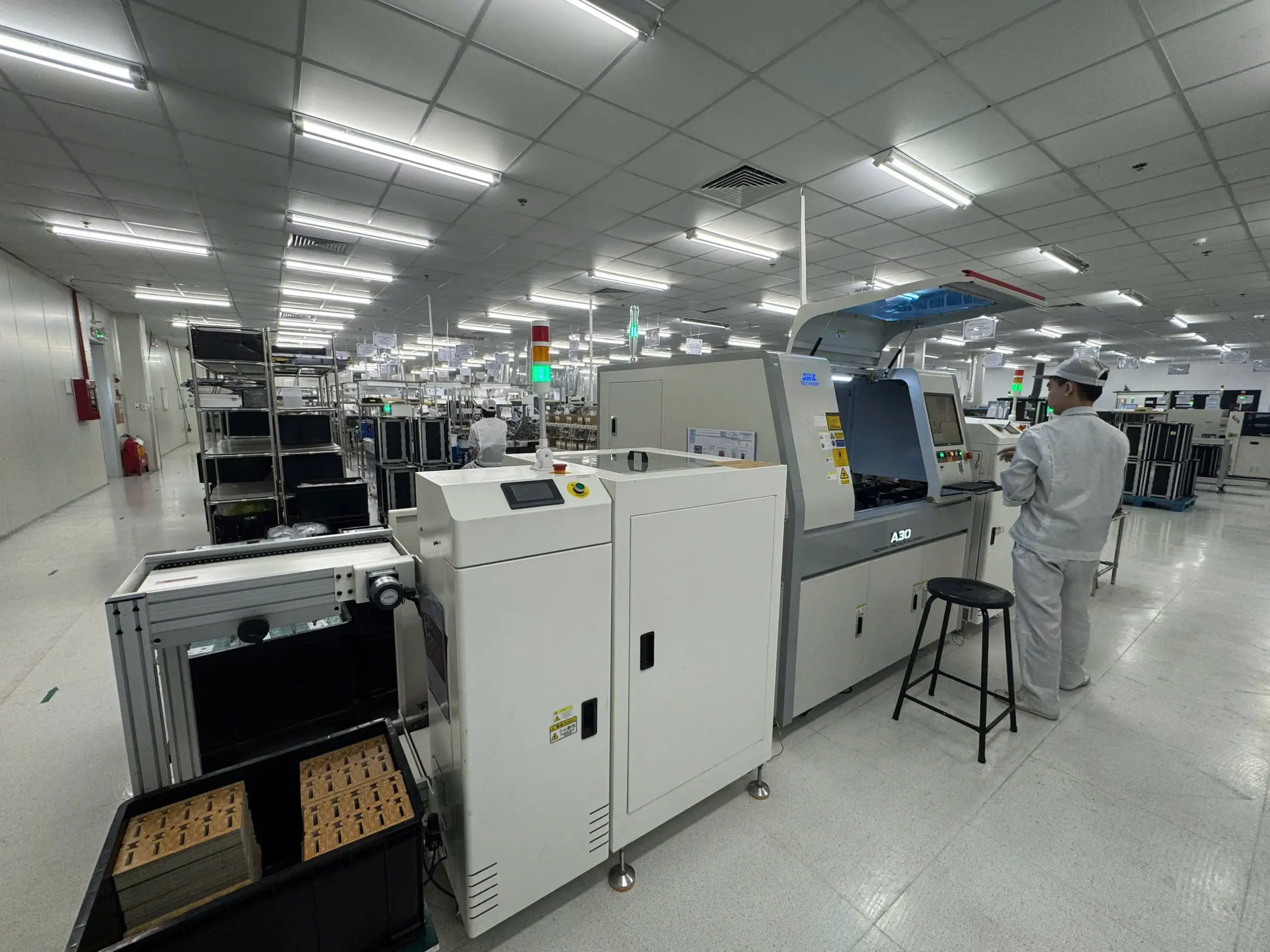
AOI and SPI Systems Improve SMT Quality
Advanced manufacturers rely on automated inspection systems to detect:
- missing components
- polarity errors
- solder bridges
- alignment problems
Technologies such as AOI inspection systems significantly improve production consistency in high-density charger assembly.
ICT and Functional Testing Verify Electrical Performance
Reliable charger manufacturers also perform:
- ICT testing
- functional testing
- USB-C PD validation
- PPS compatibility verification
These tests help verify:
- electrical continuity
- voltage stability
- charging performance
- PD negotiation accuracy
Related topics:
Aging Tests Help Identify Long-Term Reliability Risks
High-quality manufacturers typically implement aging and burn-in testing to identify:
- thermal instability
- early component failure
- power fluctuation problems
- long-duration reliability risks
Standard charger factories often lack these advanced validation systems.
Supply Chain and Component Control Matter More Than Many OEMs Realize
GaN Device Consistency Is Critical
Reliable charger performance depends heavily on consistent GaN device sourcing.
Component variation may affect:
- thermal behavior
- switching stability
- EMI performance
- charger lifespan
Transformer Quality Strongly Affects Reliability
Transformer inconsistency is one of the most common causes of:
- coil noise
- overheating
- unstable voltage output
- EMI failure
Reliable manufacturers typically implement stronger supplier qualification and incoming quality control systems.
Why Many Charger Factories Fail During Production Scaling
Prototype Success Does Not Guarantee Scalable Manufacturing
Many factories can produce working engineering samples.
However, maintaining:
- yield stability
- thermal consistency
- EMI performance
- quality repeatability
during high-volume production is far more difficult.
This is why many OEMs increasingly evaluate manufacturers based on process capability rather than prototype performance alone.
Process Discipline Becomes Critical During High-Volume Production
During production scaling, manufacturers must control:
- operator variation
- firmware revision management
- component substitutions
- SMT process drift
- production documentation
Related reading:
SHDC’s Experience in USB-C GaN Charger Manufacturing
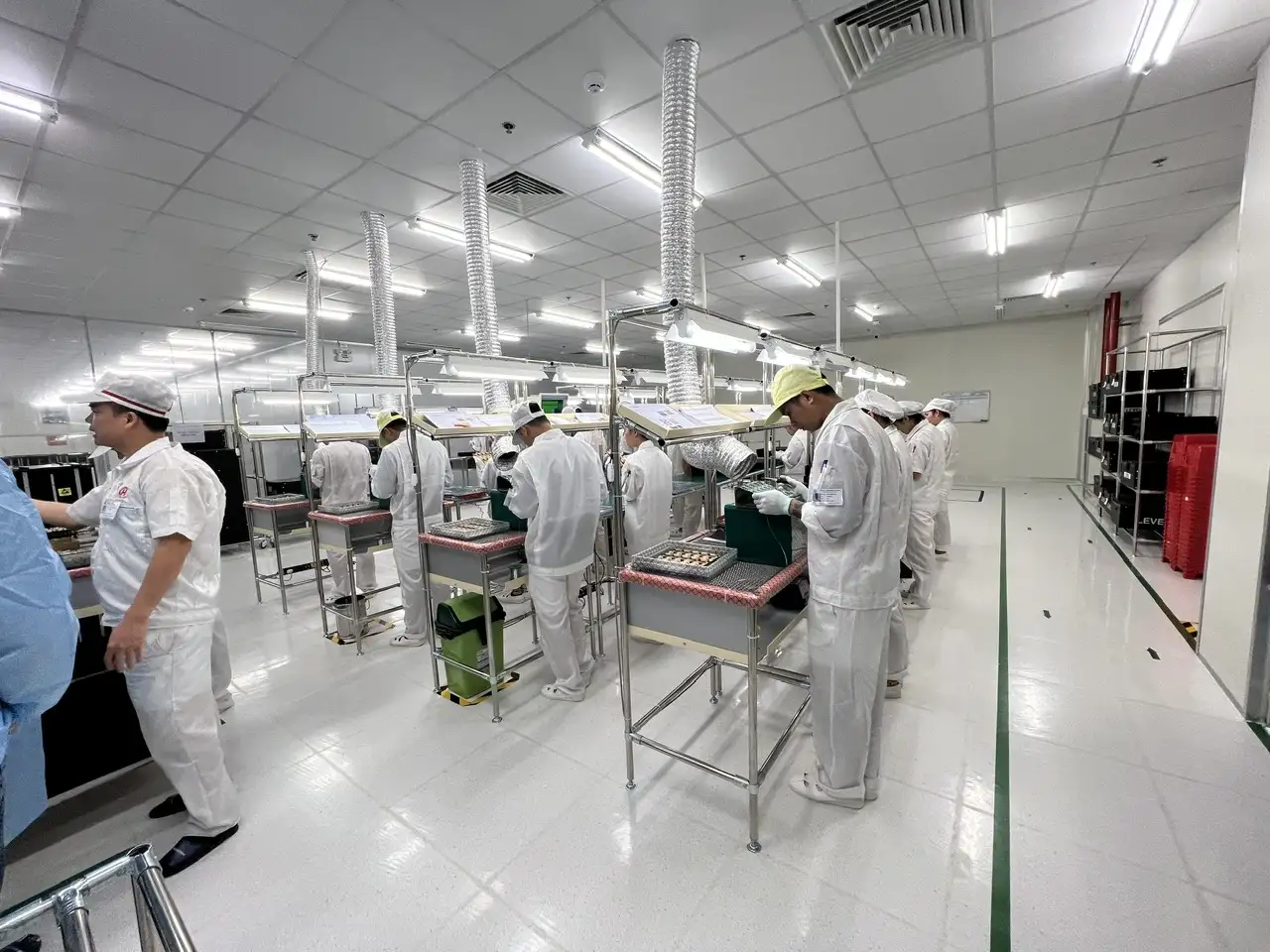
SHDC is a Vietnam-based EMS and power electronics manufacturing company supporting OEM programs across SMT assembly, testing, and charger production.
The company’s manufacturing infrastructure includes:
- Yamaha SMT systems
- AOI inspection
- ICT testing
- functional testing
- aging tests
- high-voltage testing systems
- MES/QMS integration
These systems support scalable EMS manufacturing and charger production programs. :contentReference[oaicite:1]{index=1} :contentReference[oaicite:2]{index=2}
SHDC also manufactures multiple high-power charger platforms, including:
- 65W GaN chargers
- 67W USB-C chargers
- 100W USB-C PD chargers
- 150W multi-port GaN chargers
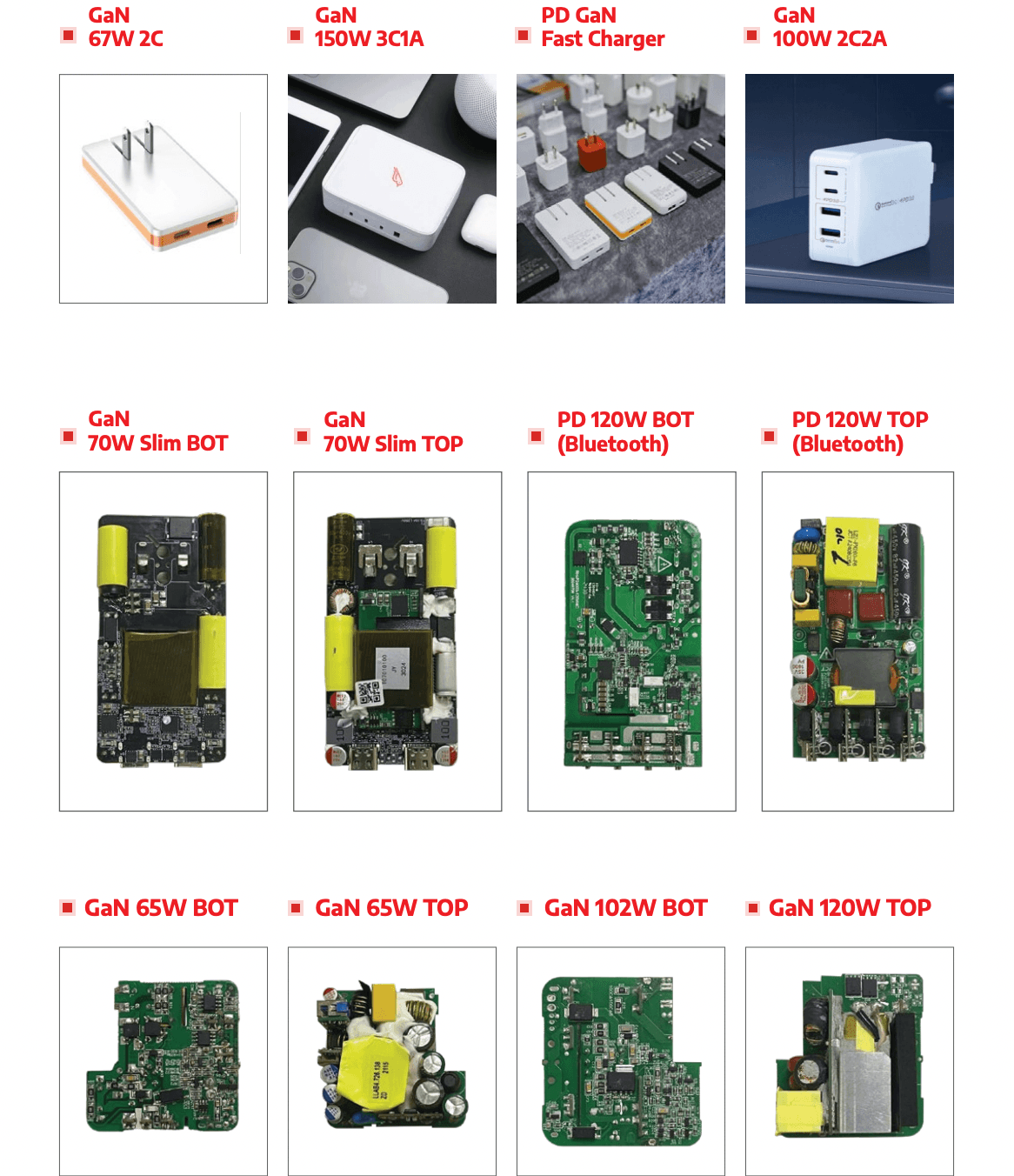
OEM brands evaluating GaN charger manufacturing in Vietnam or seeking a non-China GaN charger manufacturing partner increasingly prioritize suppliers with advanced EMS infrastructure and power electronics experience.
SHDC has additionally participated in advanced charger-related product programs highlighted in Vietnamese technology media, including products integrating Apple Find My functionality into charging solutions.
Reference: SHDC and Apple Find My charger development
Final Thoughts
A reliable USB-C GaN charger manufacturer is defined not only by assembly capacity, but by engineering depth, SMT capability, thermal management, EMI optimization, testing infrastructure, and scalable EMS execution.
As USB-C fast charging products continue evolving toward higher wattage and smaller form factors, manufacturing capability will increasingly determine long-term product reliability and OEM success.
For U.S. electronics brands, selecting the right manufacturing partner now requires evaluating much more than production cost alone.
