
 Tiếng Việt
 日本語
日本語
In modern electronics manufacturing, speed, precision, and consistency are no longer optional—they are essential. Whether you’re developing a new IoT device, consumer product, or industrial system, the performance of your product depends heavily on how well it is manufactured at the PCB level. At the center of this process is the SMT production line—a highly automated system that places, solders, inspects, and tests components with exceptional accuracy. But what actually happens inside a modern SMT production line? And more importantly, how does it impact your product’s cost, quality, and time to market?
What Is an SMT Production Line?
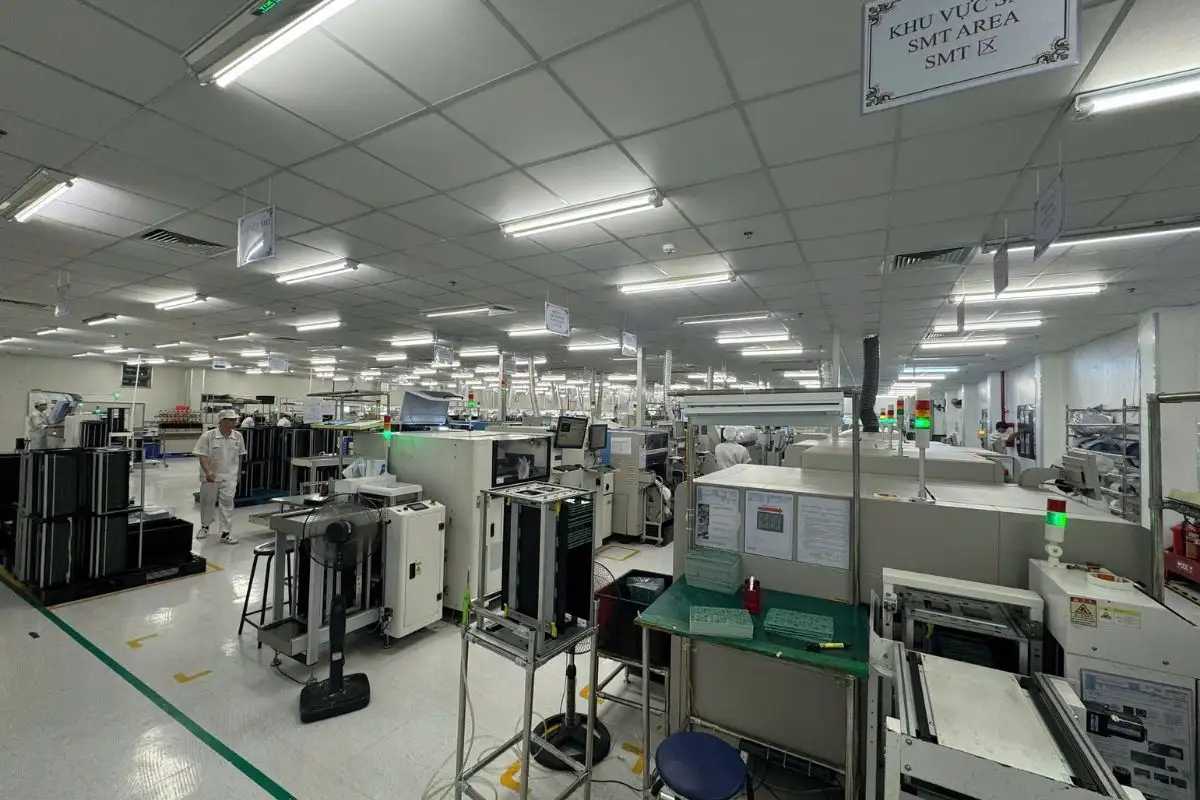
An SMT production line is a series of interconnected machines and inspection systems used to assemble electronic components directly onto the surface of a printed circuit board (PCB).
Compared to traditional through-hole assembly, SMT offers:
- Higher component density
- Faster production speeds
- Improved electrical performance
- Better scalability for mass production
Today, nearly all high-volume electronics rely on SMT technology, making the SMT production line the backbone of modern PCB assembly.
Inside a Modern SMT Production Line (Step-by-Step)
A high-performance SMT production line is defined not just by speed, but by process control at every stage. Here’s how a typical board moves through the system.
Solder Paste Printing
The process begins with applying solder paste to the PCB using a stencil printer.
- Ensures accurate paste deposition
- Directly impacts solder joint quality
- Requires tight alignment control
Even small inconsistencies at this stage can lead to defects later in the SMT production line.
Pick and Place (Component Mounting)
Next, components are placed onto the PCB using high-speed pick-and-place machines.
- Capable of placing tens of thousands of components per hour
- High precision for fine-pitch components
- Supports a wide range of component sizes
This is the core of the SMT production line, where both speed and accuracy are critical.
Reflow Soldering
After placement, the PCB passes through a reflow oven where solder paste melts and solidifies.
- Controlled thermal profiles ensure proper soldering
- Nitrogen environments reduce oxidation
- Critical for long-term reliability
A stable reflow process is essential for maintaining consistent quality across the SMT production line.
Inspection (SPI & AOI)
Modern SMT production lines integrate inspection systems to detect defects early:
- SPI (Solder Paste Inspection): verifies paste volume and alignment
- AOI (Automated Optical Inspection): detects missing or misaligned components
Early-stage inspection significantly reduces rework and improves yield.
Through-Hole Assembly (DIP)
For components that cannot be surface-mounted:
- Manual or automated insertion is used
- Followed by wave soldering
This hybrid approach allows a single SMT production line to support diverse product designs.
Testing and Quality Control
Before final delivery, boards undergo multiple testing stages:
- In-Circuit Testing (ICT)
- Functional Testing (FCT)
- High-voltage and aging tests
These processes ensure that every PCB meets performance and reliability requirements.
Key Equipment in a High-Performance SMT Production Line
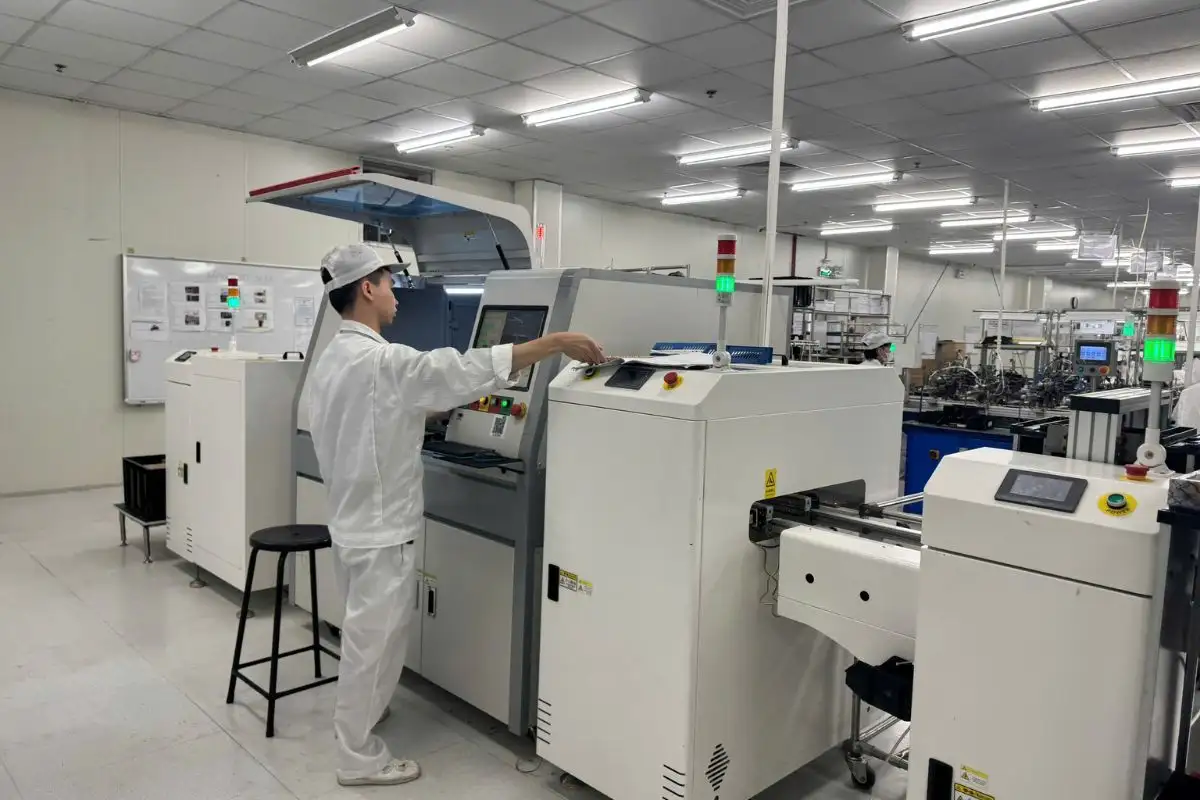
The efficiency of an SMT production line depends heavily on its equipment.
- High-Speed Pick and Place Machines: These define production speed and flexibility, handling a wide range of components with high accuracy.
- Precision Solder Paste Printers: Ensure consistent paste application, which directly impacts yield and reliability.
- Advanced Inspection Systems: SPI and AOI systems provide real-time defect detection and process control.
- Reflow Ovens: Multi-zone ovens with precise temperature control ensure reliable solder joints.
- Wave Soldering Systems: Support through-hole components and complete the assembly process.
What Defines a High-Performance SMT Production Line?
Not all SMT production lines deliver the same results. A high-performance line is defined by:
- Speed and Throughput: Measured in components per hour (CPH), this determines production capacity.
- Placement Accuracy: Essential for high-density and fine-pitch PCB designs.
- Automation Level: Higher automation reduces human error and improves consistency.
- Flexibility: The ability to handle both prototypes and large-scale production.
- Integrated Quality Control: Built-in inspection and testing systems ensure defects are caught early.
SMT Production Line in Practice: Inside SHDC’s Manufacturing Facility
While many SMT production lines follow similar principles, real performance depends on how the system is implemented in an actual factory environment.
At SHDC, the SMT production line is designed to support both rapid prototyping and scalable mass production, with a strong focus on efficiency, flexibility, and quality.
High-Speed SMT Capabilities
SHDC operates multiple high-speed SMT production lines with:
- Up to 98 million component placements per month
- Advanced Yamaha pick-and-place systems
- High-precision placement for both small and complex components
This enables consistent performance across different product types and production volumes.
Integrated Manufacturing Workflow
The SMT production line at SHDC is part of a fully integrated system:
- 4 SMT production lines
- 3 DIP lines for through-hole assembly
- Dedicated assembly, testing, and packaging lines
This structure ensures a seamless transition from PCB assembly to finished product.
>>>Read more: SHDC – Reliable PCBA Assembly Vietnam for Global Electronics Brands
Advanced Inspection and Testing
Quality control is embedded throughout the SMT production line:
- SPI and AOI systems for early defect detection
- ICT for electrical validation
- Functional testing for real-world performance
- Aging tests for long-term reliability
This multi-layer approach improves yield and reduces failure rates.
Data-Driven Production and Traceability
SHDC integrates advanced systems such as:
- MES (Manufacturing Execution System)
- ERP and supply chain platforms
- Quality management systems
These tools enable:
- Real-time production monitoring
- Full traceability for each PCB
- Faster and more accurate decision-making
Flexible and Scalable Production
The SMT production line is optimized for:
- High-mix, low-volume prototyping
- Efficient scaling to mass production
- Rapid adaptation to design changes
This flexibility is essential for OEMs developing and launching new products.
How an SMT Production Line Impacts Cost, Quality, and Lead Time
The performance of an SMT production line directly affects key business outcomes.
Cost Efficiency
- Faster throughput reduces labor cost per unit
- Automation minimizes errors and rework
Product Quality
- Precision placement improves reliability
- Inspection systems reduce defect rates
Lead Time
- Optimized workflows shorten production cycles
- High-speed lines enable faster turnaround
A well-designed SMT production line helps manufacturers deliver better products, faster and more cost-effectively.
From Prototype to Mass Production
A modern SMT production line must support the full product lifecycle.
This includes:
- Rapid prototyping
- Design iteration
- Scaling to high-volume production
Manufacturers with flexible SMT production lines can reduce time to market and improve overall product success.
>>>Read more: PCB Prototyping Services Cost: What Affects Your Prototype Price?
FAQs
What is an SMT production line?
An SMT production line is a system of machines used to assemble electronic components onto PCBs using surface mount technology.
How fast is a modern SMT production line?
High-speed lines can place tens of thousands of components per hour, depending on the equipment and design.
What affects SMT production line efficiency?
Machine speed, setup time, component availability, and process optimization all play a role.
Can one SMT production line handle multiple products?
Yes. Modern SMT production lines are designed for high-mix manufacturing and can switch between products efficiently.
Build Better Electronics with the Right SMT Production Line
Choosing the right SMT production line—and the right manufacturing partner—can significantly impact your product’s success. With advanced equipment, integrated testing systems, and a data-driven approach, SHDC provides the manufacturing capabilities needed to move from prototype to production with speed, precision, and confidence. If you’re planning your next PCB assembly project, working with a modern SMT production line is the first step toward building reliable, scalable electronics.
>>>Read more: SHDC SMT Vietnam: A Leading SMT Assembly Partner for Global OEM Electronics
