
 Tiếng Việt
 日本語
日本語
When engineers compare SMT vs Through-Hole, the real question isn’t which technology is better—it’s which one fits the specific requirements of a PCB design. In modern electronics, both surface mount technology (SMT) and through-hole technology (THT) play important roles. While SMT dominates high-volume production, through-hole remains essential for strength, durability, and certain component types. This guide breaks down SMT vs Through-Hole PCB assembly from a practical, manufacturing-focused perspective—helping you choose the right approach for performance, cost, and scalability.
Main content
ToggleWhat Is Surface Mount Technology (SMT)?
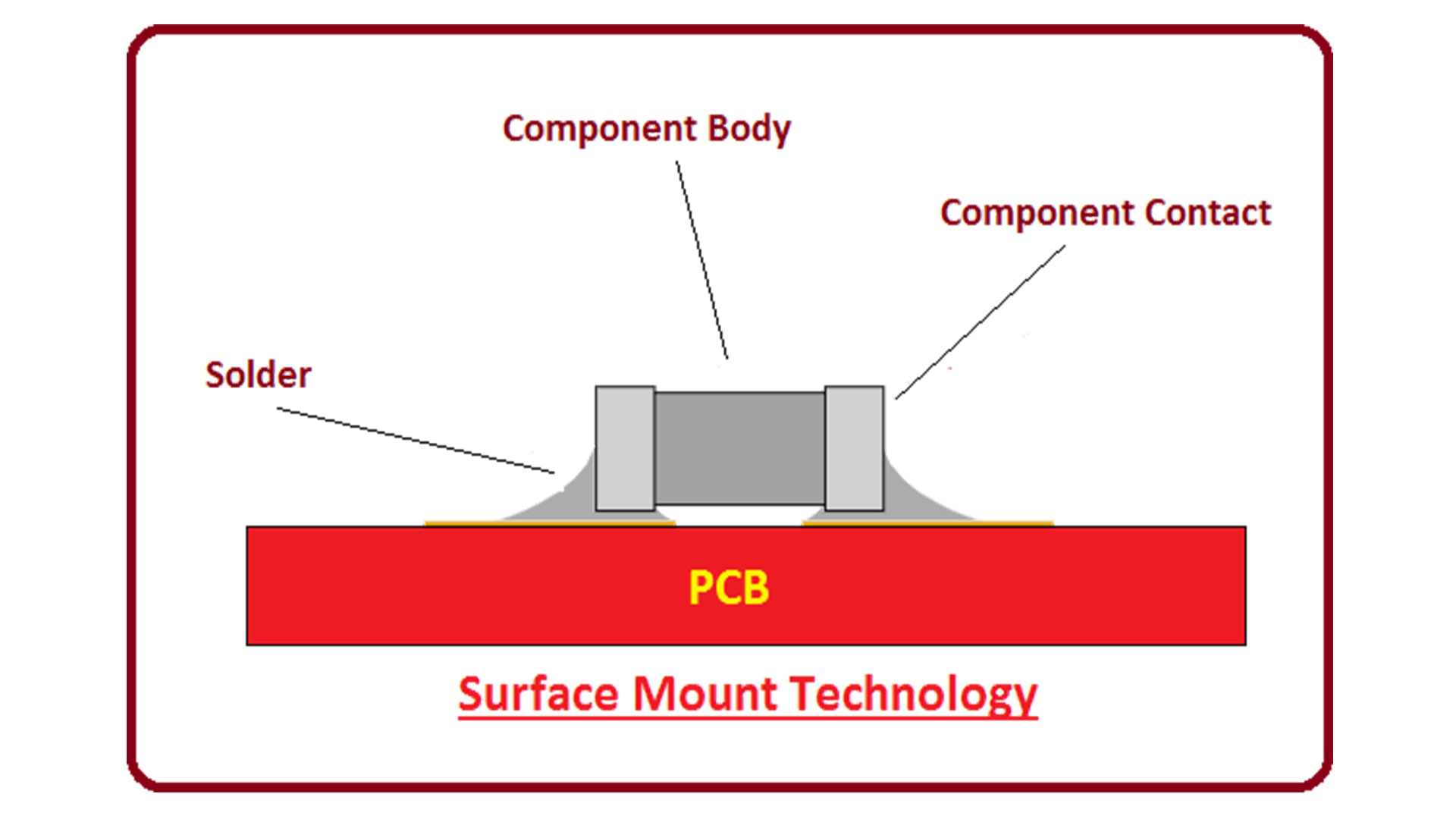
Surface mount technology (SMT) is the most widely used method in today’s electronics manufacturing. Instead of inserting leads through holes, components are mounted directly onto the PCB surface.
How SMT works
- Solder paste is applied to pads
- Pick-and-place machines position components
- Reflow soldering forms electrical connections
- Inspection ensures quality (AOI, X-ray)
Compared to traditional methods, surface mount vs through hole assembly shows a clear advantage in automation and efficiency.
Why SMT is widely used
- Supports high-density PCB layouts
- Enables automated mass production
- Reduces cost per unit at scale
- Allows double-sided assembly
For most consumer and industrial electronics, SMT is the default choice.
>>>Read more: SMT Assembly Process Explained: Step-by-Step Guide to Electronics Assembly 2026
What Is Through-Hole Technology (THT)?
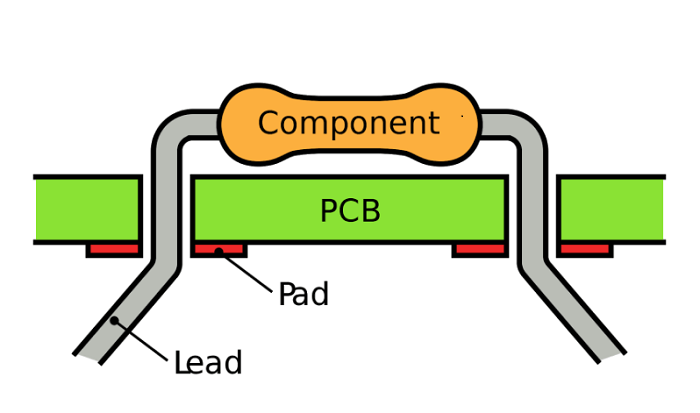
Through-hole technology (THT) involves inserting component leads into drilled holes on the PCB and soldering them on the opposite side.
How through-hole assembly works
- Holes are drilled into the PCB
- Components are inserted manually or automatically
- Soldering is done via wave or hand soldering
When comparing SMT vs THT, this method stands out for its mechanical strength.
Where through-hole is still used
- High-reliability applications
- Products exposed to vibration or stress
- Large components such as connectors or transformers
Although less common in mass production, through-hole remains critical in many industries.
SMT vs Through-Hole: Key Differences
Understanding the differences between SMT vs Through-Hole PCB assembly is essential for making the right design decision.
Assembly Process
- SMT: Fully automated, high-speed
- THT: Manual or semi-automated
In the through hole vs surface mount comparison, SMT clearly leads in efficiency.
Cost Comparison
- SMT:
- Higher setup cost
- Lower cost at volume
- THT:
- Higher labor cost
- Additional drilling increases expenses
For production scale, SMT is more cost-effective.
Component Density and PCB Design
- SMT:
- Smaller components
- Higher density layouts
- Better routing flexibility
- THT:
- Larger components
- Limits board space
In surface mount vs through hole, SMT enables modern compact designs.
Reliability and Mechanical Strength
- SMT:
- Good electrical performance
- Less resistant to mechanical stress
- THT:
- Strong solder joints
- Better for harsh environments
When durability matters, THT has the advantage.
Production Speed
- SMT: Fast, automated lines
- THT: Slower, labor-dependent
SMT supports faster time-to-market.
>>>Read more: SMT Assembly Techniques for High-Volume Electronics Manufacturing
Advantages and Disadvantages
SMT Pros and Cons
Advantages:
- High density
- Lower cost in large production
- Faster assembly
- Ideal for modern electronics
Disadvantages:
- More complex rework
- Lower mechanical strength compared to THT
Through-Hole Pros and Cons
Advantages:
- Strong physical connections
- Better for high-power components
- Suitable for demanding environments
Disadvantages:
- Larger PCB size
- Higher manufacturing cost
- Slower production
SMT vs Through-Hole: When to Use Each

Choosing between SMT vs Through-Hole depends on your product requirements.
Use SMT when:
- You need high-volume production
- Your design requires compact size
- Cost optimization is critical
- You are building consumer or IoT devices
Use Through-Hole when:
- Your product faces mechanical stress or vibration
- You are using large or heavy components
- Reliability is a top priority
- You are working on industrial or automotive applications
In simple terms:
- SMT = efficiency, scalability, cost
- THT = strength, durability, reliability
SMT vs THT in Modern Electronics
Today, most electronics rely on SMT due to its efficiency and scalability. However, the SMT vs THT discussion is still relevant because many products require both technologies.
Instead of choosing one over the other, engineers increasingly combine them.
Mixed PCB Assembly: Combining SMT and Through-Hole
In real-world applications, mixed assembly is common.
Why combine SMT and THT?
- SMT handles small, high-density components
- THT supports connectors and structural parts
Typical use cases
- Industrial equipment
- Automotive systems
- Power electronics
This hybrid approach balances performance and durability.
How to Choose the Right PCB Assembly Method
When evaluating SMT vs Through-Hole PCB assembly, consider:
- Production volume
- Cost targets
- Environmental conditions (heat, vibration)
- Product size constraints
- Component availability
In many cases, design decisions benefit from early collaboration with a manufacturer.
>>>Read more: Prototype PCBA Vietnam: Fast, Cost-Effective PCB Assembly for OEM Projects
Why the Right Manufacturing Partner Matters
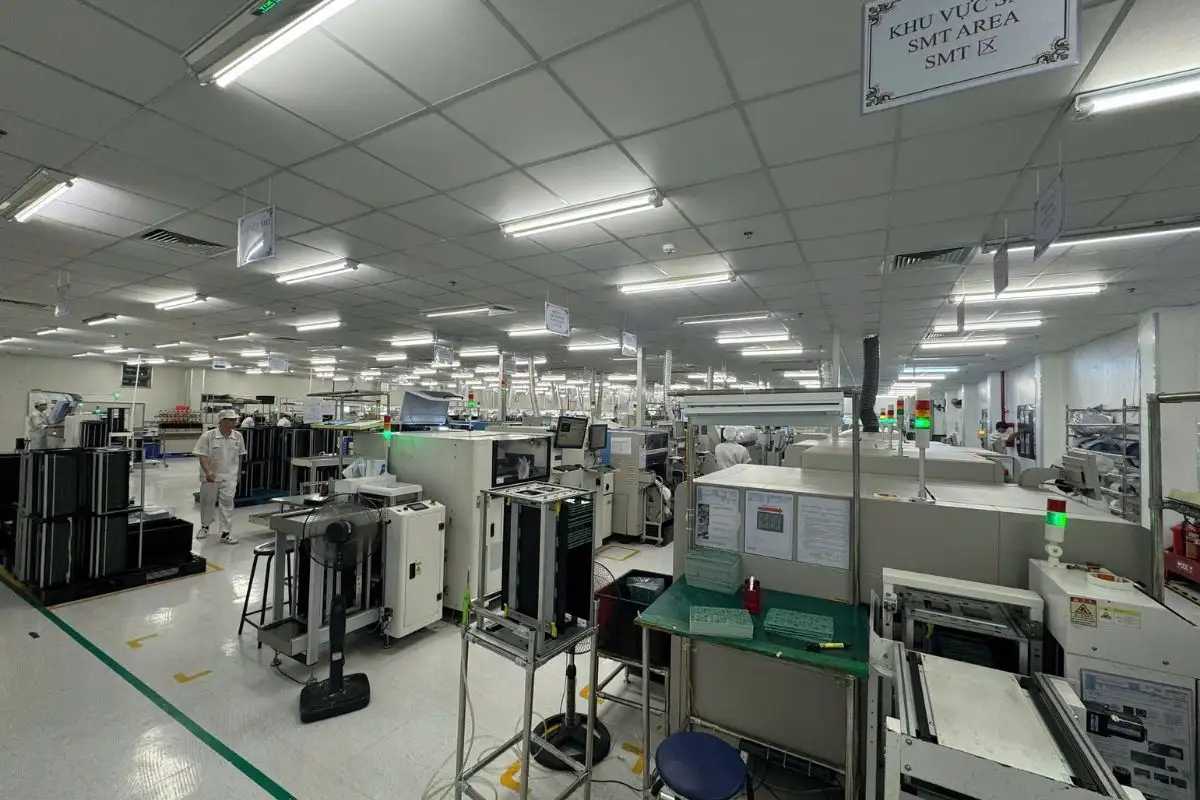
Selecting between surface mount vs through hole is not just a design decision—it affects your entire production process.
An experienced PCB assembly partner can:
- Optimize design for manufacturability
- Recommend SMT, THT, or mixed assembly
- Reduce cost and production risks
- Ensure consistent quality
For OEMs, this support can significantly impact time-to-market and product reliability.
FAQs
Is SMT better than through-hole?
SMT is better for cost and density, while through-hole is better for strength and durability.
What is the difference between SMT and THT?
The main difference in SMT vs THT is how components are mounted—surface placement vs hole insertion.
Why is SMT more common?
SMT supports automation, making it faster and more cost-effective for large-scale production.
Can SMT replace through-hole?
Not entirely. Through-hole is still needed for mechanical strength and certain components.
What is SMT vs Through-Hole PCB assembly?
It refers to the comparison between two PCB assembly methods used in electronics manufacturing.
Final Thoughts
The choice between SMT vs Through-Hole is not about picking a winner—it’s about selecting the right tool for your design. For most modern electronics, SMT will handle the majority of components. But when strength, durability, or specific components are required, through-hole remains essential. In many cases, the best solution is not choosing one—but combining both.
>>>Read more: IPC J-STD-001 vs IPC-A-610: Key Differences in PCB Assembly Standards
