
 Tiếng Việt
 日本語
日本語
The automotive PCBA market is exploding—growing from 12% to 20% market share by 2026. But here’s the problem: China suppliers can’t keep up with quality demands, tariffs are crushing margins, and geopolitical risks are real. Vietnam has emerged as the game-changer. SHDC proves it’s possible to deliver 99.5% quality, zero field failures, and 20-30% cost savings compared to China. If you’re currently sourcing from China, explore why automotive PCBA Vietnam manufacturers are becoming the preferred choice for US automotive companies.
The automotive PCBA market: growth & opportunity
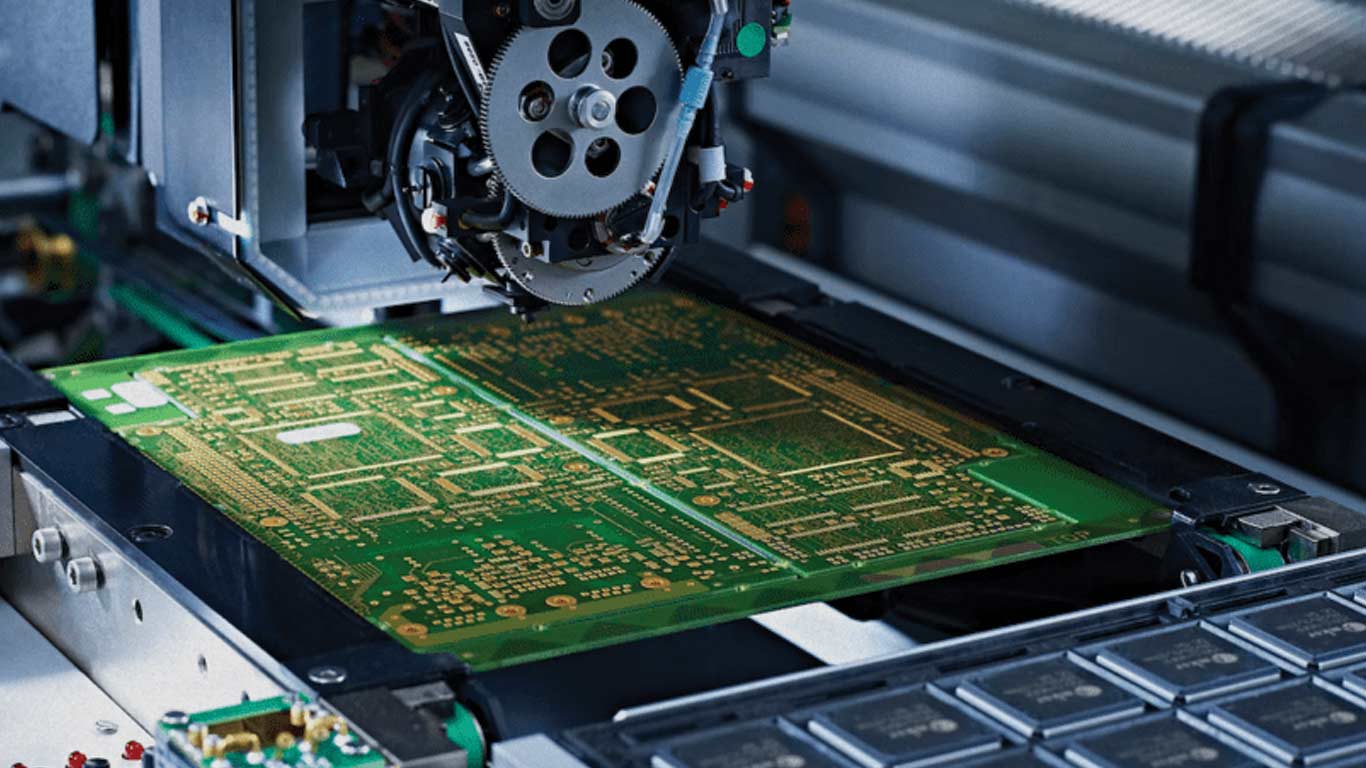
Automotive PCBA market growth: 12% to 20% by 2026
The numbers tell a compelling story. In 2025, automotive PCBA represented about 12% of the total PCB market. By 2026, that’s projected to jump to 15-16%. By 2030, we’re looking at 20% market share—a market worth $15-20 billion annually.
That’s an 8-10% compound annual growth rate. For context, that’s nearly double the growth rate of the overall PCB market.
What’s driving this explosion?
Electric vehicles are rewriting the rules
EV adoption isn’t coming—it’s here. Global EV sales hit 14 million units in 2023. By 2030, that number is projected to exceed 30 million units annually. Here’s what matters for PCBA manufacturers: EVs require 2-3 times more PCBA than traditional internal combustion engine vehicles.
Why? Because EVs are essentially computers on wheels. You’ve got battery management systems (BMS) that need sophisticated PCBA to monitor thousands of cells. You’ve got power electronics that convert DC power from the battery into usable electricity for motors. You’ve got thermal management systems that keep everything running at optimal temperatures. Each of these systems demands high-reliability PCBA.
Autonomous driving technology is exploding
Self-driving cars aren’t science fiction anymore. They’re in development labs and on test roads. And they’re PCBA-intensive.
Think about what autonomous vehicles need: LIDAR systems scanning the environment, radar detecting obstacles, multiple cameras providing 360-degree vision, advanced processors running AI algorithms in real-time. That’s not one PCBA—that’s multiple complex boards working in concert.
Advanced Driver Assistance Systems (ADAS) are already mainstream. Lane-keeping assistance, collision avoidance, adaptive cruise control, automated parking—all of these require sophisticated PCBA. And as these systems evolve toward full autonomy, the PCBA complexity multiplies.
Connected vehicles are standard now
Modern vehicles are rolling Wi-Fi hotspots. They need PCBA for in-vehicle connectivity, over-the-air (OTA) software updates, infotainment systems, telematics, and real-time diagnostics. A decade ago, this was luxury-car territory. Today, it’s table stakes.
The opportunity for SHDC
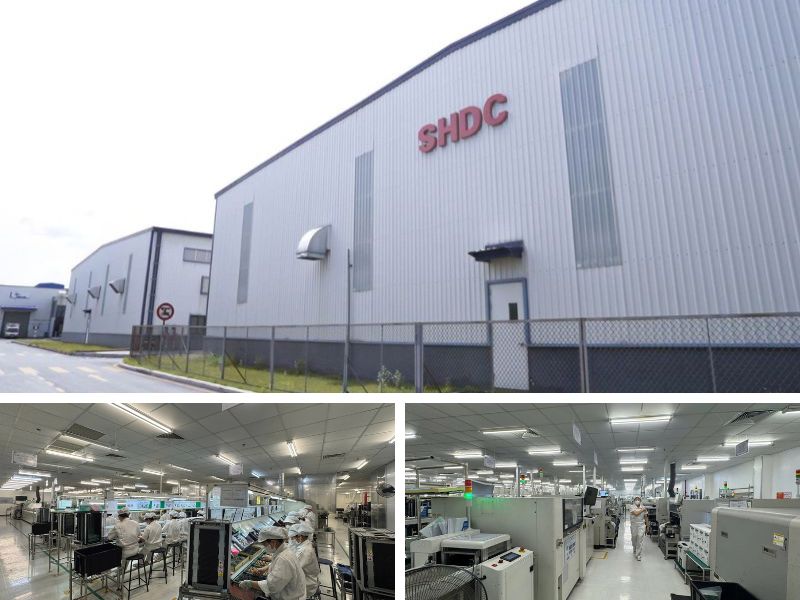
This growth creates a massive opportunity for manufacturers who can deliver high-reliability PCBA at scale. And here’s the thing: most Chinese suppliers aren’t positioned to capture this market. They’re too focused on cost-cutting to invest in the quality infrastructure that automotive demands.
SHDC, by contrast, has spent years building the exact capabilities the automotive industry needs. Four high-speed SMT lines. Comprehensive testing equipment. ISO 9001 + IPC-A-610 Level 3 certifications. A proven track record with Thaco.
Why automotive PCBA requires high-reliability manufacturing
Automotive PCBA: the highest reliability standards
Here’s something people outside the automotive industry don’t fully appreciate: PCBA failure in a vehicle isn’t just a product defect. It’s a potential tragedy.
The operating environment is brutal
Automotive PCBA operates under conditions that would destroy consumer electronics in minutes. We’re talking about temperature swings from -40°C in arctic climates to +125°C in underhood environments near the engine. That’s a 165-degree range.
And it’s not just a one-time swing. A vehicle experiences thousands of thermal cycles over its lifetime. Every cold start in winter, every highway drive on a hot summer day, every trip through a temperature-controlled garage—that’s a cycle. Each cycle stresses the solder joints, the components, the PCB substrate itself.
Then add mechanical stress. Constant vibration from the engine, transmission, and road. Shock loads from bumps and potholes. G-forces from acceleration and braking. The vibration spectrum ranges from 10 Hz to 2,000 Hz. That’s a lot of different frequencies trying to shake your PCBA apart.
Environmental exposure compounds the problem. Road salt corrodes components. Oil and fuel seep into crevices. Moisture and humidity attack solder joints. Electromagnetic interference from the vehicle’s electrical system tries to disrupt signals.
The reliability requirement is unforgiving
Automotive PCBA must operate reliably for 10+ years and 150,000+ miles. Some systems operate 24/7. And here’s the kicker: failure isn’t just inconvenient. It’s dangerous.
If an engine control unit fails, the engine stops. If a brake system PCBA fails, the brakes don’t work. If an autonomous driving system fails, you’ve got a vehicle that can’t navigate safely. These aren’t theoretical risks—they’re real consequences.
That’s why the regulatory environment is so strict. ISO 26262 defines functional safety requirements. AEC-Q100 specifies automotive component reliability standards. AEC-Q200 covers automotive PCB requirements. IPC-A-610 Level 3 defines the highest workmanship standards.
The cost of failure is astronomical
A single PCBA defect that causes a field failure can trigger a recall. Automotive recalls cost $1-5 million per defect. That’s not including warranty claims, brand damage, regulatory penalties, or potential litigation.
Consider the Takata airbag recall—one of the largest automotive recalls in history. It affected 100+ million vehicles and cost billions. That’s an extreme example, but it illustrates what’s at stake.
Even a “minor” PCBA defect affecting 1% of vehicles can cost a manufacturer $10-50 million in warranty claims alone. That’s why automotive manufacturers don’t mess around with PCBA quality.
Why China manufacturers struggle
Chinese PCBA suppliers compete primarily on cost. To hit aggressive price targets, they cut corners. They minimize testing. They use cheaper components. They accept higher defect rates because they’re betting that most defects won’t be discovered until after the warranty period.
This strategy works fine for consumer electronics where a 1-2% defect rate is “acceptable.” It’s a disaster for automotive where 0.1% defect rates are still considered too high.
Why SHDC excels
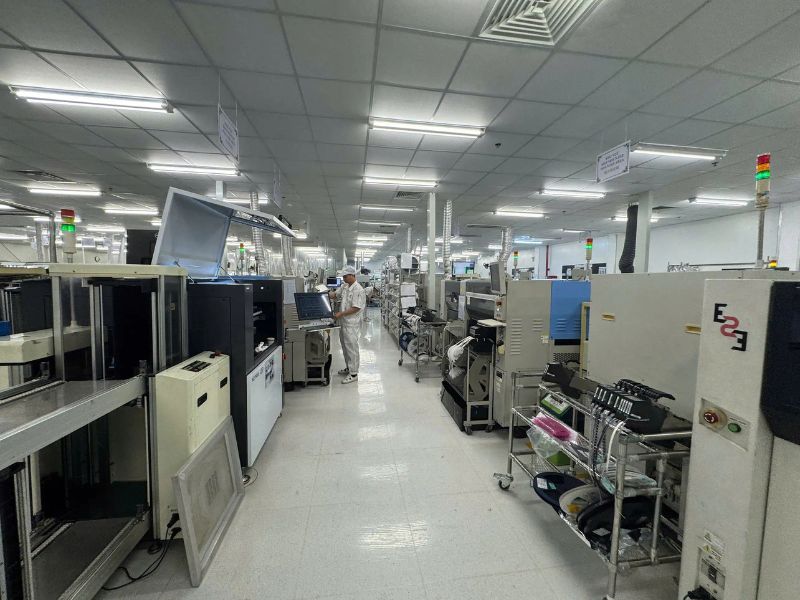
SHDC operates under a completely different philosophy. Quality isn’t an afterthought—it’s the foundation.
They maintain IPC-A-610 Level 3 compliance, which means every solder joint meets the highest workmanship standards. They perform comprehensive testing: 3D AOI (Automated Optical Inspection) catches defects as small as 0.1mm. ICT (In-Circuit Testing) verifies electrical functionality. FCT (Functional Testing) simulates real-world operating conditions. Thermal cycling testing subjects PCBA to -40°C to +125°C temperature swings. Aging tests identify early-life failures.
The result? A 99.5% quality rate and zero field failures in Thaco vehicles over five+ years of partnership.
China automotive PCBA risks: why diversification is critical
China automotive PCBA risks: tariffs, quality, & geopolitical uncertainty
Let’s be direct: sourcing automotive PCBA from China carries real, quantifiable risks. Some are financial. Some are operational. Some are existential. Learn more about risks of manufacturing electronics in China.
The tariff trap
The current tariff situation is straightforward: 25% baseline tariffs on Chinese electronics. That’s not a small number. On a $1 million annual PCBA spend, that’s $250,000 in tariffs.
But here’s what keeps supply chain managers up at night: tariff uncertainty. These rates don’t exist in a vacuum. They’re political tools. A change in administration, a trade negotiation breakdown, a geopolitical escalation—any of these can trigger additional tariffs.
During the Trump administration, tariffs on Chinese electronics reached 25%. The Biden administration has maintained these rates. What happens if the next administration decides to go higher? What if tariffs jump to 35% or 50%?
When you’re locked into a multi-year contract with a Chinese supplier, you’re exposed to this risk. You can’t adjust your pricing. Your margins get squeezed. Your competitive advantage evaporates.
Understand the tariff impact: China vs Vietnam electronics manufacturing.
The geopolitical minefield
US-China relations have been deteriorating for years. Trade wars, technology restrictions, export controls on semiconductors—the list goes on.
But the real wildcard is Taiwan. Taiwan produces the majority of the world’s advanced semiconductors. If China-Taiwan tensions escalate into conflict, the global semiconductor supply chain collapses overnight. Suddenly, Chinese PCBA manufacturers can’t source components. Your supply chain grinds to a halt.
This isn’t paranoia. It’s a scenario that defense analysts, supply chain experts, and corporate strategists take seriously. Some companies are already building Taiwan-risk into their supply chain planning.
Supply chain disruption risks
COVID-19 taught us painful lessons about Chinese manufacturing concentration. When China locked down, factories stopped. Ports became congested. Shipping delays stretched from weeks to months.
The Shanghai port—the world’s busiest container port—regularly experiences congestion. Shenzhen port has seasonal bottlenecks. When you’re shipping from China, you’re at the mercy of these logistics chokepoints.
Even without a pandemic, Chinese PCBA suppliers struggle with lead times. A 30-45 day turnaround is standard. That’s not because manufacturing takes that long—it’s because factories are backlogged, orders get consolidated, and shipping takes forever.
Quality inconsistency
Here’s the uncomfortable truth: not all Chinese PCBA suppliers maintain consistent quality standards. Some have ISO 9001 certification, but enforcement is inconsistent. Many lack IPC-A-610 Level 3 compliance.
The result? Defect rates vary wildly. Some suppliers deliver 95% quality. Others hit 98%. But 99.5%? That’s rare in China.
And then there’s the counterfeit component problem. Estimates suggest 7-10% of components sourced in China are counterfeit. Fake semiconductors, resistors, capacitors—they flood the market. These components fail prematurely, causing field failures that destroy your reputation.
Communication & support challenges
Language barriers aren’t just inconvenient—they cause real problems. Technical discussions get lost in translation. Design collaboration becomes difficult. Problem resolution slows to a crawl.
The 12+ hour time zone difference compounds the issue. When you discover a problem at 8 AM in New York, it’s 8 PM in Shanghai. By the time your Chinese supplier responds the next morning, you’ve lost a full day.
The financial impact
Add it up:
- Tariffs: $250K+ annually on $1M spend
- Lead time costs: $100-200K (inventory carrying costs)
- Quality issues: $200-500K (warranty claims and recalls)
- Supply chain disruptions: Unpredictable costs
Total annual risk on $1M spend: $550K-950K
That’s not a rounding error. That’s a material business problem.
Vietnam: the ideal automotive PCBA manufacturing hub

Vietnam: the strategic non-China alternative for automotive PCBA
Vietnam isn’t just another option. It’s the strategic answer to China’s limitations. Explore alternatives to China PCB assembly.
Geographic advantages that matter
Vietnam’s location is a competitive moat. Hải Phòng—where SHDC operates—is 55km from a major port. Shipping from Vietnam to US ports takes 15-20 days. From China, you’re looking at 30-45 days.
That’s a 2x speed advantage. For an automotive manufacturer managing just-in-time inventory, that’s game-changing. It means lower inventory carrying costs. It means faster product launches. It means better cash flow.
The component sourcing advantage is equally important. Vietnam sits right next to China, so SHDC can access Chinese component suppliers. But Vietnam is also close to Taiwan, the semiconductor hub. This geographic position gives SHDC flexibility that purely domestic US suppliers can’t match.
The CPTPP trade agreement changes everything
Here’s where Vietnam gets a massive advantage: the Comprehensive and Progressive Agreement for Trans-Pacific Partnership (CPTPP).
Vietnam is a signatory. The US isn’t (though it was negotiating when the Trump administration withdrew). But Vietnam’s membership means Vietnamese-made products get preferential tariff treatment.
Let’s do the math:
- Vietnam PCBA: 0-5% tariffs (CPTPP benefits)
- China PCBA: 25% tariffs (baseline)
- Difference: 20-25% cost advantage
On a $1 million annual PCBA spend, that’s $200-250K in tariff savings. That’s real money.
And unlike China tariffs, which are politically volatile, CPTPP tariffs are locked in by international agreement. They’re stable. Predictable. You can build a long-term business plan around them.
Compare the Vietnam vs China PCB assembly cost.
No geopolitical risk
Vietnam isn’t subject to US sanctions. There’s no US-Vietnam trade war. Vietnam isn’t involved in the Taiwan dispute. There’s no existential supply chain risk.
The US-Vietnam relationship is actually improving. Vietnam is a strategic partner in Southeast Asia. The US government actively encourages manufacturing diversification to Vietnam. Some US government programs even offer tax incentives for companies moving from China to Vietnam.
The workforce advantage
Vietnam has a young, educated workforce. SHDC employs 150+ skilled technicians with an average age of 28-35. They’re not aging out like some manufacturing regions. They’re hungry, capable, and continuously improving.
Labor costs are lower than the US ($8-12/hour vs $25-35) but higher than China ($8-12/hour vs $5-8). That higher wage reflects quality focus. SHDC isn’t competing on rock-bottom labor costs. They’re competing on skilled, reliable manufacturing.
Speed & flexibility
SHDC’s standard turnaround is 7-14 days. That’s 3-4x faster than China. Rush orders? 48-72 hours. No minimum order quantities. Small batches welcome.
For automotive manufacturers, this flexibility is invaluable. You can prototype faster. You can iterate designs without massive inventory commitments. You can respond to market changes quickly.
Quality & certification
Vietnam’s manufacturing infrastructure is modern. SHDC’s 2,600 m² facility features state-of-the-art equipment. Yamaha SMT lines with ±0.03mm placement accuracy. Comprehensive testing equipment. ISO 9001:2015 certification. IPC-A-610 Level 3 compliance.
These aren’t nice-to-haves. They’re essential for automotive manufacturing.
Introducing SHDC: Vietnam’s premier automotive PCBA manufacturer
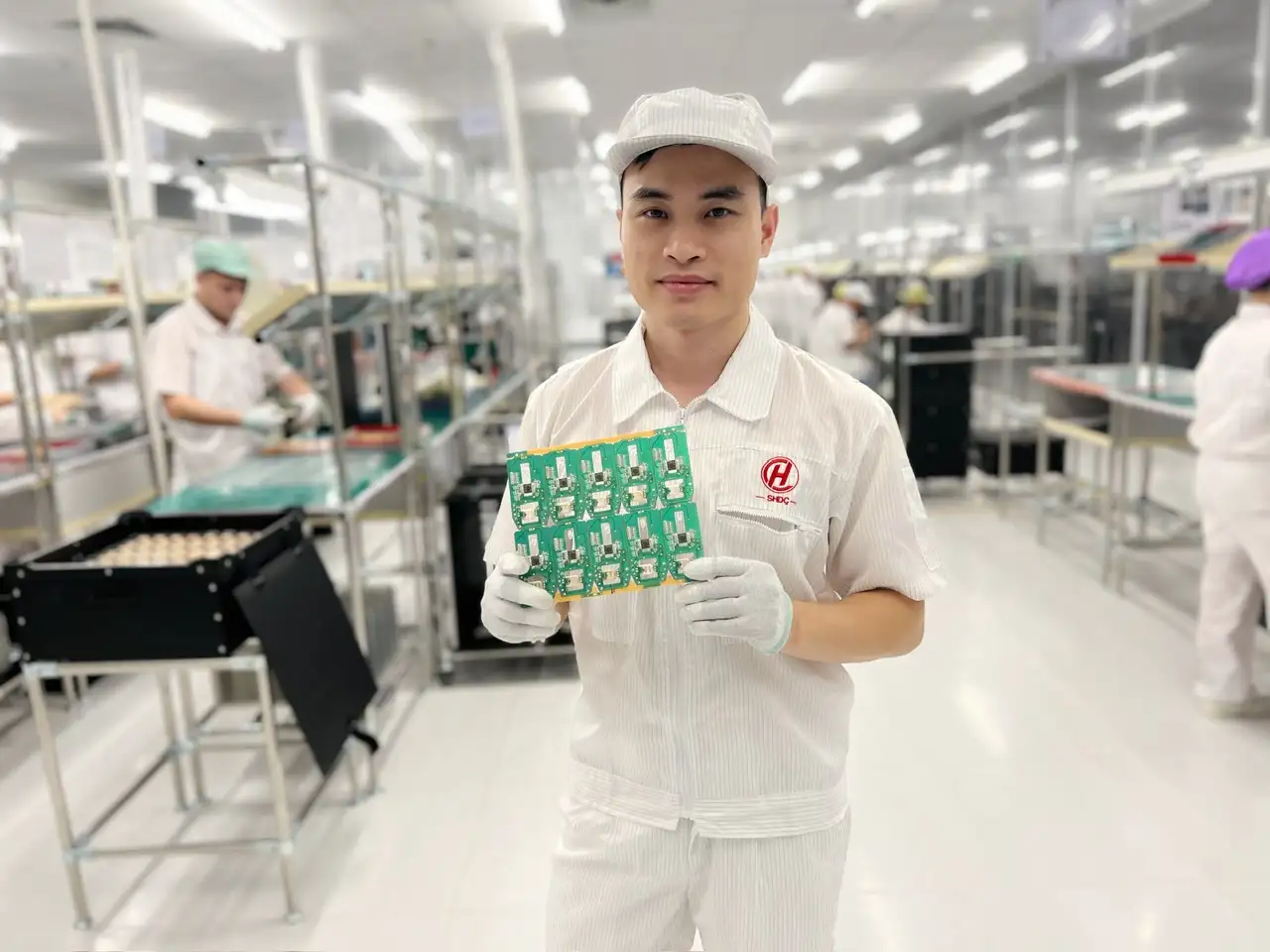
SHDC: Vietnam’s premier automotive PCBA manufacturer
SHDC Electronics Co., Ltd isn’t a startup trying to figure out manufacturing. They’re a company with 20+ years of experience, a proven track record with Vietnam’s leading automaker, and the infrastructure to support automotive growth. Learn more about SHDC trusted non-China PCBA manufacturer.
The company
SHDC operates in Vietnam Singapore Industrial Park in Hải Dương Province. That’s 55km from Hải Phòng port and 40km from Hanoi. The facility spans 2,600 square meters of modern manufacturing space. They employ 150+ skilled technicians.
But the real story isn’t the facility size—it’s the specialization. SHDC focuses on high-reliability PCBA assembly and Electronics Manufacturing Services (EMS). They’re not trying to be everything to everyone. They’re experts in what automotive manufacturers need.
The automotive expertise
SHDC’s automotive credentials are solid. They’ve been manufacturing PCBA for Thaco—Vietnam’s leading automotive manufacturer and exporter—for over five years. Thaco manufactures vehicles for domestic and international markets. They export to 60+ countries. They demand the highest quality standards.
And SHDC delivers. Zero field failures in Thaco vehicles over five+ years. That’s not luck. That’s systematic excellence.
The manufacturing capability
SHDC operates four high-speed SMT (Surface Mount Technology) lines. The Yamaha YSM20R achieves 95,000 chips per hour with ±0.03mm placement accuracy. The Yamaha YSM10 hits 46,000 CPH with ±0.035mm accuracy. Combined, they can handle 98 million points per month.
They’ve got three DIP (Dual In-line Package) lines with 1.7 million pieces per month capacity. They can handle PCBs ranging from 50×50mm (tiny sensor modules) to 460×550mm (large power distribution boards).
For automotive applications, this means they can manufacture everything from small control modules to complex power electronics boards. Single-layer to multilayer. Standard PCB to flexible PCB for automotive displays.
Explore PCBA manufacturers in Vietnam and top PCBA manufacturers in Vietnam.
The quality infrastructure
Here’s where SHDC separates from typical contract manufacturers:
They maintain ISO 9001:2015 certification, which means documented procedures for every manufacturing step. Regular audits. Continuous improvement processes.
They comply with IPC-A-610 Level 3, the highest workmanship standard. Every solder joint meets strict criteria. Component placement is verified. Cleanliness standards are enforced.
They perform automotive-specific testing:
- Thermal cycling from -40°C to +125°C (the automotive temperature range)
- Vibration resistance testing (10-2,000 Hz frequency range)
- High voltage testing for electrical safety
- Functional testing under automotive operating conditions
- Aging tests to identify early-life failures
The testing equipment is professional-grade: Yamaha AOI 3D for automated optical inspection, Yamaha 3D SPI for solder paste inspection, Kyoritsu ICT F-2000 Plus for in-circuit testing, JT N2 reflow oven for IPC-J-STD-001 compliant solder profiles.
The Thaco partnership
This is the proof point. Thaco chose SHDC for a reason. They evaluated options. They ran trials. They verified quality. And they’ve been partnering for 5+ years.
Why? Because SHDC delivers:
- 99.5% quality rate (vs 95-98% industry average)
- Zero field failures in deployed vehicles
- 7-14 day turnaround (vs 30-45 from China)
- 20% cost reduction through tariff benefits
- Responsive technical support
- Full traceability for regulatory compliance
That’s the kind of partnership that matters in automotive manufacturing.
Automotive PCBA applications: SHDC’s diverse portfolio
Automotive PCBA applications: SHDC’s diverse portfolio
SHDC doesn’t manufacture generic PCBA. They manufacture PCBA for specific automotive applications, each with unique requirements.
Electric vehicle (EV) PCBA
EVs are fundamentally different from traditional vehicles. They need Battery Management System (BMS) PCBA to monitor thousands of battery cells, balance charge, and protect against overcharge or overdischarge. They need power electronics PCBA for inverters and converters that transform DC power from the battery into usable electricity. They need thermal management systems to keep everything running at optimal temperatures. They need high-voltage safety systems.
Each of these systems demands sophisticated PCBA. SHDC has invested in the expertise to handle EV-specific requirements: thermal management design for high-power applications, high-voltage isolation and safety protocols, precision component placement for complex boards, comprehensive testing for EV reliability.
The market opportunity is massive. Global EV sales are projected to exceed 30 million units annually by 2030. Each EV requires 2-3x more PCBA than traditional vehicles. SHDC is positioned to capture significant market share.
Automotive control modules
Engine Control Units (ECUs), Transmission Control Modules (TCMs), Body Control Modules (BCMs)—these are the brains of modern vehicles. They process sensor data, make real-time decisions, and control vehicle systems.
Manufacturing these requires complex multi-layer PCB design, high-density component placement, thermal management for underhood conditions, and comprehensive testing for safety-critical functions. SHDC has the expertise and equipment to handle this complexity.
Automotive connectors & power distribution
High-current connectors carrying 100+ amps require robust solder joints that won’t fail under thermal cycling or vibration. Power distribution modules need voltage regulation, current distribution, and safety protection circuits. SHDC manufactures these with precision and reliability.
ADAS (Advanced Driver Assistance Systems) PCBA
Radar signal processing, camera image processing, sensor fusion modules, decision-making processors—ADAS systems are computationally intensive. They require high-speed signal processing, electromagnetic shielding to prevent interference, thermal management for processors, and reliability testing to ensure safety.
Infotainment & connectivity systems
Modern vehicles are rolling Wi-Fi hotspots. They need infotainment PCBA for entertainment systems, navigation systems, telematics modules, and over-the-air update systems. SHDC manufactures these with high-frequency signal integrity, wireless module integration, and reliability testing.
Thermal management systems
Temperature sensors, cooling system controllers, thermal management modules, battery thermal management—all require PCBA. SHDC brings thermal simulation expertise, high-temperature component selection, thermal cycling testing, and reliability in extreme conditions.
SHDC’s automotive PCBA quality process: 10-step excellence
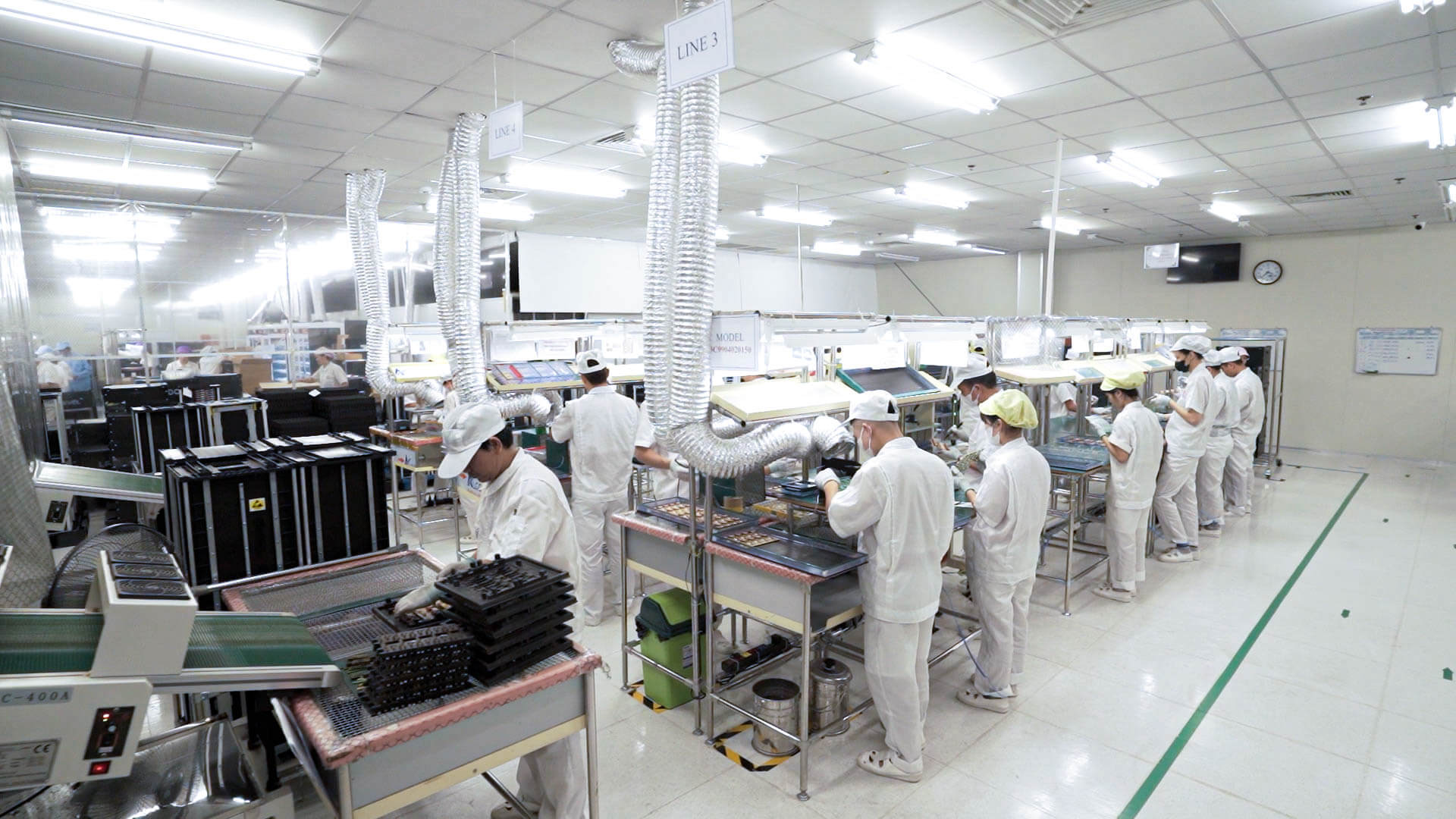
How SHDC ensures automotive PCBA reliability: our 10-step quality process
The difference between average PCBA and high-reliability automotive PCBA is process discipline. SHDC’s 10-step quality assurance process is the backbone of their 99.5% quality rate.
Step 1: IQC (Incoming Quality Control)
Every component arriving at SHDC undergoes 100% inspection. They verify against the Bill of Materials. They check dimensions, weight, and markings. They test electrical properties. They scan for counterfeit components. They document traceability with lot codes and date codes.
Result: 99.8% acceptance rate. Defective or counterfeit components are rejected before they ever reach the production floor.
Step 2: Screen printing
Solder paste must be applied with precision. The Yamaha YCP10 screen printer applies paste with ±5% volume accuracy. 3D SPI (Solder Paste Inspection) verifies paste height, volume, and alignment. Defects—insufficient paste that will cause weak joints, excessive paste that will cause bridges—are caught immediately.
Result: 99% paste application accuracy.
Step 3: Component placement
Yamaha SMT machines place components with ±0.03mm accuracy. Vision systems verify component orientation. Placement accuracy is monitored in real-time. Defects like missing components or wrong orientation are flagged.
Result: 99.9% correct placement (1 error per 1,000 components).
Step 4: Reflow oven
The JT N2 reflow oven heats PCBA through multiple temperature zones, following IPC-J-STD-001 standards. Temperature profiles are monitored and logged. Solder joints form correctly. Thermal stress is minimized. Controlled cooling prevents damage.
Result: 99.5% acceptable reflow joints.
Step 5: AOI (Automated Optical Inspection)
The Yamaha AOI 3D system uses 3D vision to detect defects as small as 0.1mm. It catches bridges (solder connecting two pads), insufficient solder, excessive solder, component misalignment, missing components, wrong components, solder balls, and lifted components. Defective boards are flagged for repair.
Result: 99% defect detection rate.
Step 6: Hand insert
Large components that can’t be automated—connectors, transformers, capacitors—are placed manually by trained technicians. Visual verification ensures correct placement and orientation.
Result: 99.8% correct placement.
Step 7: Wave soldering
The JT wave soldering system handles through-hole components. Flux is applied. The PCB passes through molten solder. Solder joints form on component leads. Flux residue is cleaned.
Result: 99% acceptable solder joints.
Step 8: ICT (In-Circuit Testing)
The Kyoritsu ICT F-2000 Plus performs electrical testing on populated PCBs. It measures resistance values, capacitance values, verifies continuity, detects short circuits, tests diodes, and verifies power supply regulation.
Result: 99% test pass rate.
Step 9: FCT (Functional Testing)
Custom test fixtures simulate real-world operating conditions. Power-on tests verify system startup. Voltage regulation is checked. Current draw is measured. Signal generation is verified. Communication protocols are tested. Thermal performance is evaluated. Load testing verifies performance under stress.
Result: 99% functional test pass rate.
Step 10: OQC (Outgoing Quality Control)
Final inspection verifies all test results, checks for cosmetic defects, verifies traceability markings, confirms packaging integrity, and reviews documentation. Only boards that pass all criteria ship to customers.
Result: 99.9% outgoing quality.
Combined quality result
When you multiply these individual quality metrics together, you get SHDC’s overall 99.5% quality rate. That’s industry-leading for automotive PCBA.
SHDC vs China: Automotive PCBA comparison
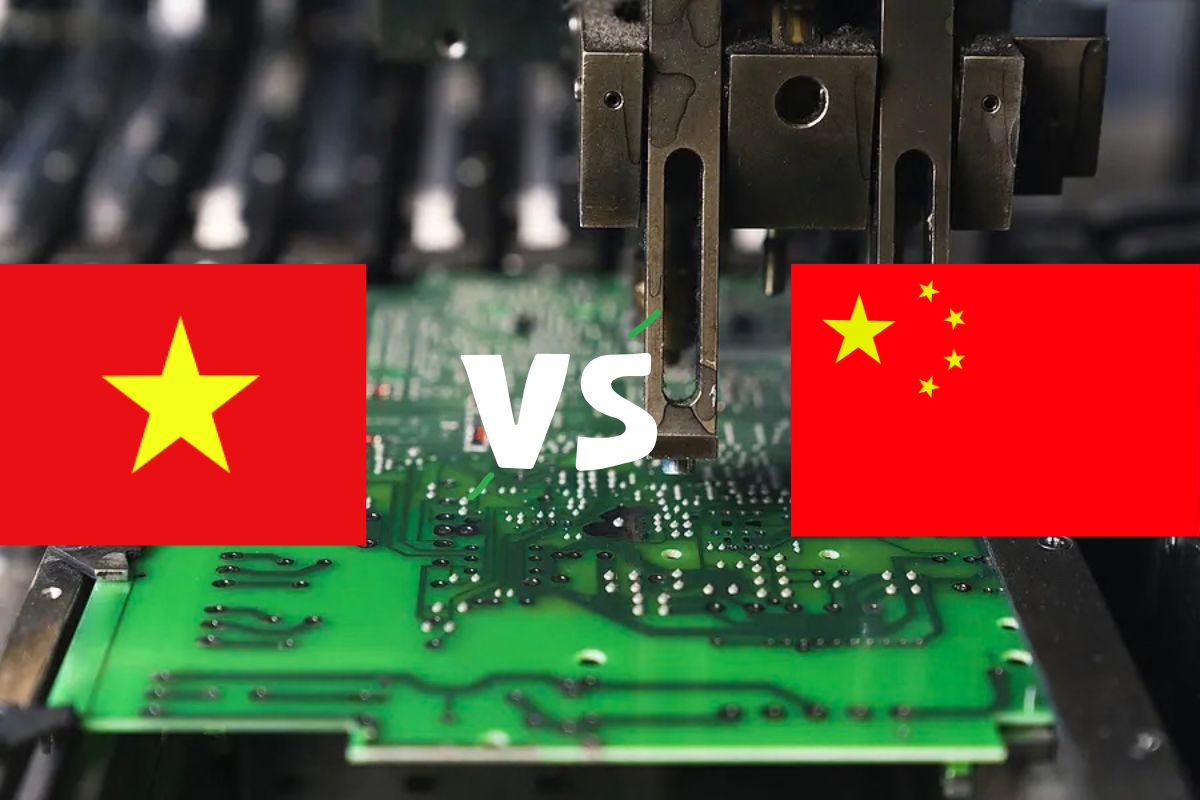
SHDC vs China: Why automotive manufacturers choose Vietnam
Let’s do a direct comparison across the factors that matter most to automotive manufacturers.
Quality consistency
SHDC: 99.5% quality rate with <0.5% defect rate, ISO 9001 + IPC-A-610 Level 3 certified.
China: 95-98% quality rate with 1-2% defect rate, variable standards, basic certification.
On 100,000 automotive units: SHDC = 500 defects, China = 1,000-2,000 defects. That’s a massive difference.
Lead time
SHDC: 7-14 days standard, 48-72 hours for rush orders.
China: 30-45 days standard, longer for rush orders.
SHDC is 3-4x faster. For automotive manufacturers managing product launches and market changes, this is game-changing.
Shipping speed to USA
SHDC: 15-20 days from Vietnam.
China: 30-45 days from Shanghai/Shenzhen.
SHDC is 2x faster. Combined with faster production, SHDC cuts total delivery time in half.
Supply chain risk
SHDC: Low risk. CPTPP partner, geopolitically stable, no trade tensions, no export controls.
China: High risk. 25% tariffs, geopolitical tensions, potential additional tariffs, Taiwan risk, export controls.
SHDC enables long-term planning. China creates uncertainty.
Communication
SHDC: English-speaking team, direct contact with decision-makers, responsive support, cultural alignment with Western business practices.
China: Language barriers, slow response times, 12+ hour time zone difference, cultural differences.
SHDC enables real collaboration. China creates friction.
Flexibility
SHDC: No minimum order quantities, small batch support, responsive to custom requirements.
China: 10,000+ unit minimums typical, limited customization.
SHDC supports agile manufacturing. China forces bulk production.
Testing capability
SHDC: 3D AOI, ICT, FCT, thermal cycling, vibration testing, high voltage testing, aging tests.
China: Basic visual inspection, maybe ICT, minimal functional testing.
SHDC catches defects before they reach customers. China discovers defects in the field.
Traceability
SHDC: 100% traceability via ERP/MES integration, serial number coding, full documentation.
China: Limited documentation, difficult to trace components, no batch-level tracking.
SHDC enables regulatory compliance and root cause analysis. China makes recalls impossible to manage.
Tariff treatment
SHDC: CPTPP benefits, 0-5% tariffs, stable and predictable.
China: 25% baseline tariffs, risk of additional tariffs, politically volatile.
On $1M annual spend: SHDC saves $200-250K in tariffs.
Automotive certifications
SHDC: ISO 9001, IPC-A-610 Level 3, AEC-Q100 ready, RoHS/REACH compliant.
China: Limited certifications, often not enforced.
SHDC can serve regulated markets. China is limited to consumer electronics.
Defect rate
SHDC: <0.5%
China: 1-2%
SHDC is 4x better.
First-pass yield
SHDC: >99%
China: 90-95%
SHDC is significantly better.
Field failures
SHDC: Zero (Thaco partnership proof).
China: 0.5-1% typical.
SHDC has a proven track record. China is a gamble.
Warranty claims
SHDC: <0.5%
China: 2-5%
SHDC is 4-10x better.
The financial reality
When you add up tariffs, lead time costs, quality issues, and supply chain disruptions, SHDC delivers 20-30% total cost advantage over China. On a $1M annual PCBA spend, that’s $200-300K in savings. That’s not a rounding error—that’s a material business impact.
Thaco partnership: case study in automotive excellence

Thaco partnership: SHDC’s automotive success story
The best way to understand SHDC’s automotive capabilities is to look at their most important partnership: Thaco.
Who is Thaco?
Thaco is Vietnam’s leading automotive manufacturer and exporter. They manufacture vehicles for domestic markets and export to 60+ countries worldwide. They’re quality-focused. They’re growth-oriented. They demand the highest reliability standards.
The challenge
Thaco needed high-reliability PCBA for vehicle control systems. These systems must operate reliably for 10+ years. They must withstand extreme temperatures (-40°C to +125°C), constant vibration, thermal cycling, and harsh environmental exposure. They must meet zero-defect manufacturing standards. They must provide full traceability for regulatory compliance.
Thaco was sourcing from multiple Chinese suppliers. The results were inconsistent. Quality varied between batches. Field failures occurred at 0.5-1% rates—unacceptable for automotive. Long lead times (30-45 days) disrupted production schedules. Communication barriers slowed problem resolution. Tariff uncertainty made cost forecasting impossible.
The SHDC solution
SHDC proposed a dedicated automotive partnership. They would establish a dedicated production line for Thaco PCBA. They would maintain ISO 9001 + IPC-A-610 Level 3 compliance. They would perform comprehensive testing including thermal cycling, vibration resistance, and aging tests. They would deliver 7-14 day turnaround. They would provide English-speaking technical support. They would maintain full traceability and documentation.
The results
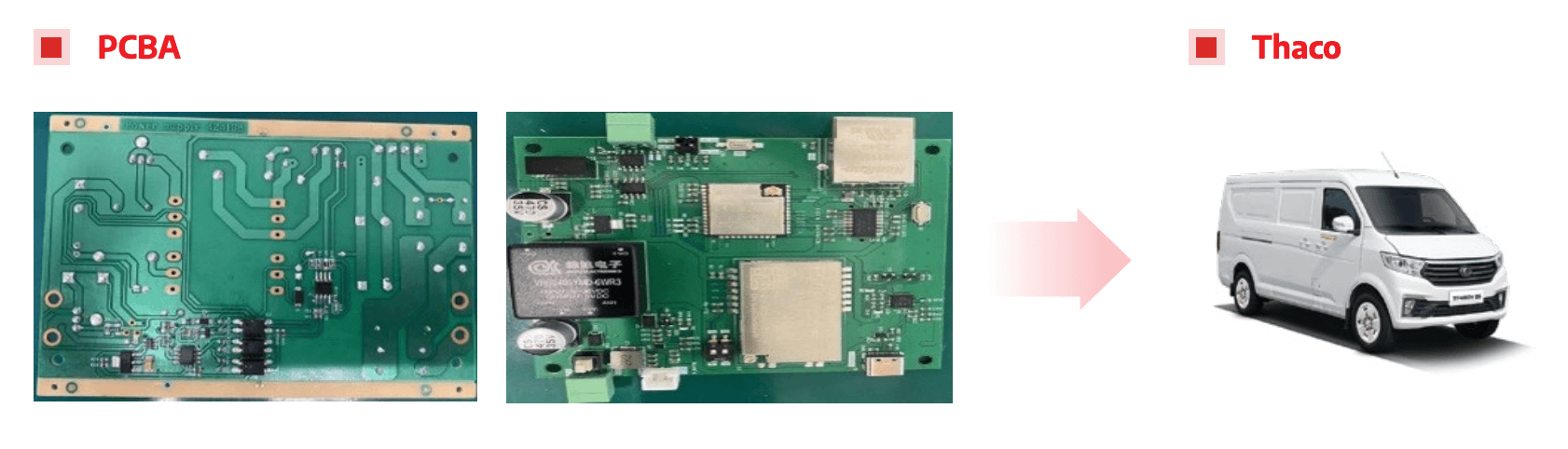
The partnership has been running for 5+ years. Here’s what happened:
Quality improved dramatically. Defect rate dropped to 0.5%. More importantly, field failures dropped to zero. Not 0.1%. Not 0.01%. Zero. Over five years of production, zero field failures in Thaco vehicles.
Lead times collapsed. Production turnaround dropped from 30-45 days to 7-14 days. Shipping time from China (30-45 days) to Vietnam (15-20 days). Total delivery time cut in half.
Costs dropped 20%. Tariff benefits contributed. Manufacturing efficiency contributed. Reduced warranty costs contributed.
The partnership evolved. What started as a supplier relationship became a strategic partnership. SHDC and Thaco collaborate on design optimization. They work together on new product launches. They share improvement initiatives.
>>>Read more: Profile’s SHDC Electronics Company
The quote
When asked about the partnership, Thaco said: “SHDC’s high-reliability PCBA has transformed our manufacturing. We’ve eliminated field failures, reduced lead times, and improved our supply chain resilience. They’re not just a supplier—they’re a strategic partner in our success.”
Why this matters
The Thaco partnership isn’t marketing hype. It’s proof. It demonstrates that SHDC can deliver automotive-grade quality at scale. It shows that Vietnam-based manufacturing can outperform China-based suppliers. It proves that the non-China alternative works.
How to choose an automotive PCBA manufacturer: 5 critical criteria
How to choose an automotive PCBA manufacturer: 5 critical criteria
If you’re evaluating automotive PCBA manufacturers, don’t just look at price. Here are the five criteria that actually matter.
Criterion 1: Certification & standards compliance
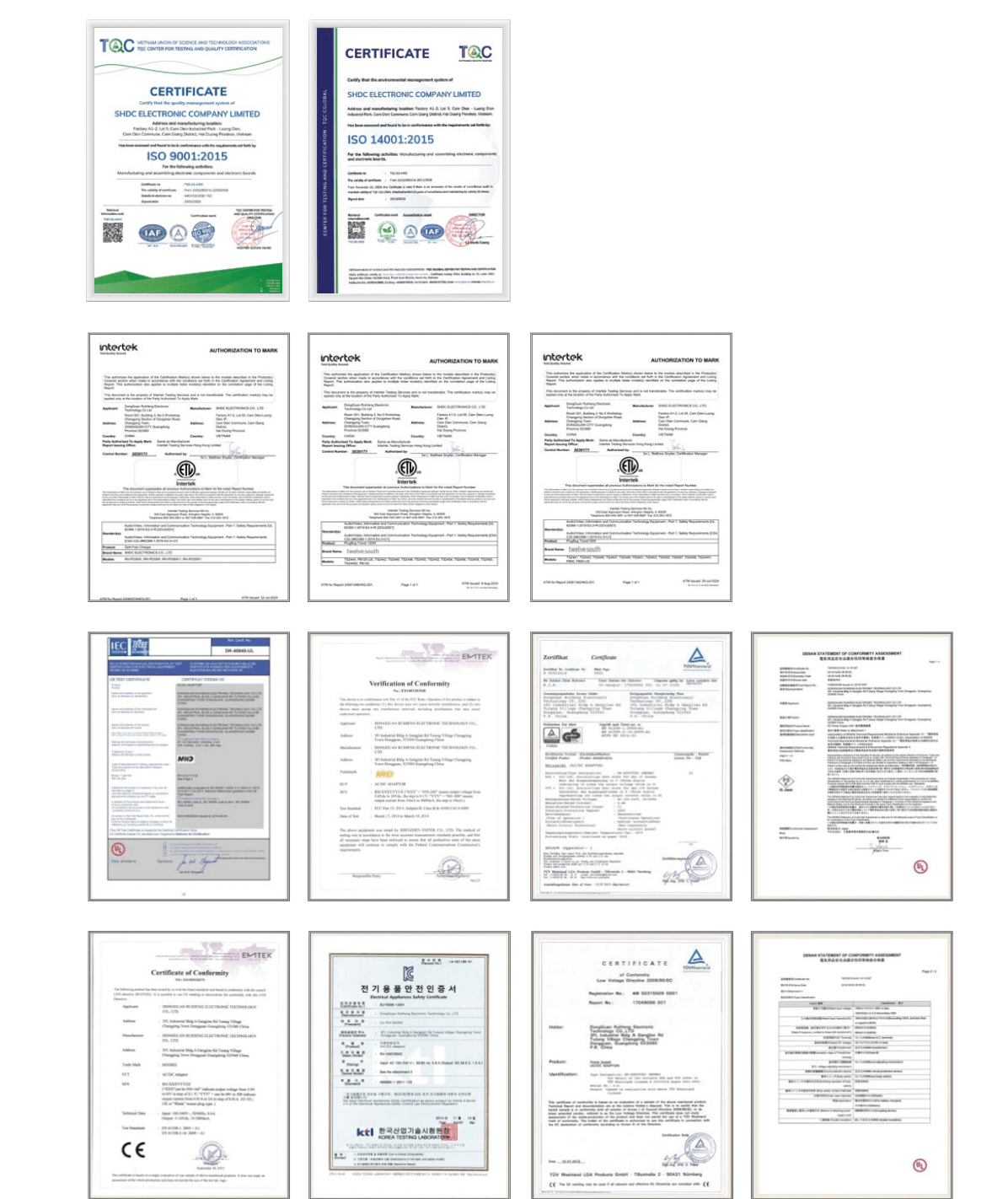
Certifications aren’t just badges on a website. They’re proof of systematic quality.
Look for ISO 9001:2015 (Quality Management System). This means documented procedures for every manufacturing step, regular audits, and continuous improvement.
Look for IPC-A-610 Level 3 (Workmanship Standards). This is the highest standard for solder joint quality, component placement, and cleanliness.
Look for AEC-Q100 (Automotive Component Reliability) and AEC-Q200 (Automotive Printed Circuit Board). These are automotive-specific standards that prove the manufacturer understands automotive requirements.
SHDC has all of these. ISO 9001:2015 certified. IPC-A-610 Level 3 compliant. AEC-Q100 ready. RoHS and REACH compliant. FDA-ready for medical-grade applications.
Criterion 2: Quality track record & testing capabilities
Don’t just ask about quality metrics. Ask for proof.
What’s their defect rate? (Target: <0.5%) What’s their first-pass yield? (Target: >99%) What’s their field failure rate? (Target: <0.1%) What’s their warranty claim rate? (Target: <1%)
And what testing do they actually perform?
- 3D AOI (Automated Optical Inspection)?
- ICT (In-Circuit Testing)?
- FCT (Functional Testing)?
- Thermal cycling testing?
- Vibration resistance testing?
- High voltage testing?
- Aging tests?
SHDC performs all of this. Their defect rate is <0.5%. First-pass yield is >99%. Field failures are zero (Thaco partnership). Warranty claims are <0.5%.
Criterion 3: Lead time & production capacity
Automotive manufacturers need speed. Standard turnaround should be 7-14 days, not 30-45 days. Rush orders should be available with 48-72 hour delivery.
Production capacity matters too. Can they scale from prototypes to high volume? Do they have multiple production lines for flexibility? Can they support your growth?
SHDC delivers 7-14 day standard turnaround and 48-72 hour rush orders. They operate four high-speed SMT lines (98M points/month capacity) and three DIP lines (1.7M PCS/month capacity). They support 1M+ units annually.
Criterion 4: Cost efficiency & tariff advantages
Price matters, but total cost matters more. Look at:
- Per-unit manufacturing cost
- Tariff implications
- Shipping costs and speed
- Lead time efficiency (inventory carrying costs)
- Warranty and quality costs
SHDC offers competitive per-unit pricing plus CPTPP tariff benefits (15-25% savings vs China). Shipping costs are lower (Vietnam vs China). Lead times are faster (lower inventory costs). Quality is higher (lower warranty costs).
Total cost advantage: 20-30% vs China.
Criterion 5: Customer support & communication
You need an English-speaking technical team. You need quick response times. You need design collaboration capability. You need problem-solving responsiveness. You need a long-term partnership focus.
SHDC provides all of this. English-speaking sales and engineering team. Direct contact with decision-makers. 24/7 availability. Real-time video conferencing. Automotive-specific technical support. Dedicated account managers.
Automotive PCBA market trends 2026: Why now is the time
Automotive PCBA market trends 2026: Strategic opportunities
The automotive PCBA market is at an inflection point. Here’s what’s driving growth and why now is the time to establish Vietnam partnerships.
Trend 1: Electric vehicle explosion
EV adoption is accelerating. Global EV sales are projected to exceed 30 million units annually by 2030. That’s a 2x increase from 2023 levels.
EVs require 2-3x more PCBA than traditional vehicles. Battery management systems, power electronics, thermal management, high-voltage safety systems—each demands sophisticated PCBA.
EV manufacturers are actively seeking reliable PCBA suppliers. SHDC’s thermal management expertise and high-volume production capability position them perfectly for this market.
Trend 2: Autonomous driving technology
Self-driving cars aren’t coming—they’re here. LIDAR, radar, cameras, advanced processors—autonomous systems are PCBA-intensive.
ADAS (Advanced Driver Assistance Systems) are already mainstream. Lane-keeping, collision avoidance, adaptive cruise control—all require sophisticated PCBA.
As these systems evolve toward full autonomy, PCBA complexity multiplies. Manufacturers need partners who can handle complex boards reliably.
Trend 3: Supply chain diversification
COVID-19 taught manufacturers a painful lesson: single-source risk is unacceptable. Companies are actively diversifying away from China.
The US government is encouraging this shift. The CHIPS Act provides subsidies for non-China manufacturing. Defense contractors are required to use non-China PCBA. Tax incentives exist for companies moving from China to Vietnam.
Vietnam is the obvious choice for diversification. Geopolitically stable. CPTPP trade benefits. No US-Vietnam tensions. Ideal non-China alternative.
Trend 4: Tariff avoidance & cost optimization
Tariff uncertainty creates business risk. Companies want predictable costs. CPTPP tariff benefits are locked in by international agreement. They’re stable. Predictable.
Vietnam PCBA offers 15-25% tariff savings vs China. That’s material. On a $1M annual spend, that’s $200-250K in savings.
Trend 5: Sustainability & environmental compliance
Automotive manufacturers are increasingly focused on sustainability. Shorter shipping routes mean lower carbon footprint. Vietnam’s proximity to US markets reduces environmental impact.
RoHS and REACH compliance are table stakes. SHDC is compliant.
Closing: The future of automotive PCBA is Vietnam
The automotive PCBA landscape is shifting. The era of “China as the default choice” is ending. Forward-thinking manufacturers are recognizing that high-reliability automotive electronics require more than cost savings. They require geopolitical stability, consistent quality, and responsive partnerships.
Vietnam, and SHDC specifically, represents the future. ISO 9001 + IPC-A-610 Level 3 certifications. Zero field failures in Thaco vehicles. 20-30% total cost advantages over China. 7-14 day turnaround. English-speaking technical support. Strategic location. CPTPP tariff benefits.
The automotive PCBA market is growing at 8-10% annually. EV adoption is accelerating. Autonomous driving is becoming reality. Supply chain diversification is no longer optional—it’s strategic.
Companies that establish Vietnam PCBA partnerships today will have competitive advantages tomorrow. Faster time-to-market. Lower costs. Better quality. Geopolitical resilience.
Your next step
Don’t wait for competitors to discover Vietnam’s automotive PCBA advantages. Contact SHDC today for a free consultation. Discover how they can transform your automotive manufacturing.
Explore top Vietnam PCB manufacturers for US buyers in 2026.
Contact SHDC now
SHDC Electronics Co., Ltd
- Address: Factory A1-2, Lot 5, Cam Dien-Luong Dien IP, Cam Giang, Hải Phòng, Vietnam
- Email: hao@shdc.com.vn, cuongvd@shdc.com.vn
- Phone: +84-903-443-300, +84-906-166-997
- WhatsApp/Zalo: +84-903-443-300
- Website: shdc.com.vn
