
 Tiếng Việt
 日本語
日本語
For OEMs, sourcing teams, and global buyers looking at PCBA manufacturers in Vietnam, one of the most important decisions is not simply which supplier to contact, but what type of supplier model fits the project. On paper, many factories may appear similar. In practice, they can differ significantly in scope, coordination responsibility, testing support, and supply chain involvement.
That distinction matters. Some suppliers focus mainly on PCB assembly at the board level. Others provide a broader manufacturing scope that may include component coordination, testing, final assembly, packaging, and system-based production control. For buyers comparing Vietnam as a sourcing base, understanding that difference is essential.
Choosing the wrong model does not always create problems immediately. Often, the first quote looks acceptable, the sample run seems manageable, and communication appears smooth. The complications show up later, when component availability changes, product testing expands, packaging requirements grow, or production has to scale. At that stage, a supplier that is strong in board assembly only may no longer be enough. Below is a structured look at the difference between PCB assembly-only suppliers and full turnkey-oriented PCBA partners in Vietnam.
Why This Decision Matters More Than Many Buyers Expect
When buyers search for Vietnam PCBA manufacturers, they often begin with familiar comparison points such as unit price, machine list, and lead time. Those are important, but they do not tell the full story.
What matters just as much is how much of the manufacturing burden remains with the buyer after the order is placed.
In practice, this decision affects:
- Who manages component sourcing and shortages
- How many vendors must be coordinated
- Whether testing is handled as part of production or as a separate challenge
- How quality responsibility is divided across the process
- Whether packaging and final handling are integrated or outsourced
- How smoothly a project moves from prototype to repeat production
A supplier that quotes only board assembly may still be the right choice in some cases. But for buyers who need broader support, fewer handoffs, and more centralized accountability, a more turnkey-capable partner can reduce hidden cost and operational friction.
>>>Read more: Contract Manufacturers Vietnam Electronics: 9 Criteria US Buyers Use to Qualify Suppliers
What Is a PCB Assembly-Only Manufacturer?
A PCB assembly-only manufacturer usually focuses on board-level production. Its role is centered on assembling electronic components onto the printed circuit board using processes such as SMT, DIP, or through-hole insertion, followed by a defined level of inspection.
This model can work well, especially for buyers with a mature sourcing structure.
A PCB assembly-only supplier typically provides
- SMT placement
- DIP or through-hole assembly
- Soldering processes
- Board-level inspection
- Basic testing, depending on scope
- Delivery of assembled boards
In this model, the buyer often remains responsible for
- Component sourcing or BOM coordination
- Approved vendor management
- Inventory planning
- External testing strategy beyond basic checks
- Final product assembly
- Packaging requirements
- Logistics coordination across multiple parties
This setup is often suitable when the customer wants strong control over procurement or already has an established supply chain network.
Typical strengths of assembly-only suppliers
- Clear and narrow production scope
- Straightforward quoting for board assembly
- Useful for experienced OEMs with in-house sourcing and technical teams
- Potentially efficient for stable, repeat board programs
Typical limitations
- More coordination work for the buyer
- Less ownership beyond PCBA execution
- Greater handoff risk between vendors
- Higher chance of misalignment if testing, assembly, or packaging are managed elsewhere
A board assembly-only supplier is not necessarily less capable. It is simply narrower in scope.
What Is a Full Turnkey PCBA Partner?
A full turnkey PCBA partner supports a broader part of the manufacturing process. Depending on the supplier, this may include not just assembly, but also component coordination, production planning, testing, final assembly, packaging, and cross-functional manufacturing support.
In many cases, this model overlaps with a broader EMS-oriented approach.
A turnkey-oriented supplier may support
- BOM and component sourcing coordination
- SMT and DIP assembly
- In-process and final testing
- Engineering collaboration during NPI
- Final assembly or sub-assembly
- Packaging and shipment preparation
- Systems-based traceability and quality reporting
This broader structure can reduce the number of interfaces the buyer has to manage. Instead of coordinating separate parties for procurement, assembly, testing, and backend handling, the buyer works with a supplier that can support more of the production chain.
But a note of caution matters here
Not every supplier that uses the term turnkey provides the same depth of service.
Some may offer sourcing assistance but limited testing. Others may support board build and packaging but not more advanced engineering coordination. That is why buyers should not evaluate the label alone. They should review the actual in-house process scope, systems, and execution capability.
>>>Read more: PCB Assembly Vietnam: 7 Questions Every OEM Should Ask Before Sending an RFQ
PCB Assembly-Only vs Full Turnkey: What Is the Real Difference?
The easiest way to understand the distinction is to compare how each model handles scope, coordination, and accountability.
| Factor | PCB Assembly-Only | Full Turnkey Partner |
|---|---|---|
| Core scope | Board assembly only | Broader manufacturing support |
| Component sourcing | Often buyer-managed | Often supplier-supported or coordinated |
| Testing integration | Limited to defined PCBA scope | More likely to be integrated into production flow |
| Final assembly | Usually outside scope | Often available |
| Packaging | Often external or customer-managed | More often handled in-house |
| Coordination burden | Higher for buyer | Lower if supplier has strong systems |
| Risk ownership | More fragmented | More centralized |
| Best fit | Experienced buyers with internal control | Buyers seeking fewer handoffs and broader support |
The key takeaway here is simple: the real difference is not the marketing label, but how much responsibility the supplier can absorb across the workflow.
When an Assembly-Only PCBA Manufacturer Is the Right Choice
Assembly-only is still a valid model. In fact, for some OEMs, it may be the most efficient option.
This model often works best when:
- The buyer already has a strong procurement team
- Approved component vendors are locked in
- The BOM is stable and well controlled
- Testing is handled by the customer or another partner
- The project is limited to board-level assembly
- Final product integration happens elsewhere
- The customer wants direct control over material sourcing and logistics
For a sophisticated buyer with established internal systems, a narrower-scope supplier can be perfectly suitable.
In this scenario, the goal is not to outsource more work. The goal is to outsource a specific board assembly function while keeping the rest under internal control.
When a Full Turnkey Partner Makes More Sense
For many global buyers, especially those expanding manufacturing in Asia or trying to simplify supplier management, a broader turnkey-capable supplier makes more sense.
This model is often better when:
- The buyer wants fewer suppliers to coordinate
- Internal sourcing resources are limited
- The BOM is complex or subject to supply variability
- Testing requirements go beyond basic inspection
- Final assembly and packaging matter
- The program must scale from prototype to production
- There is value in clearer single-point accountability
In these situations, total execution quality matters more than the lowest isolated PCBA quote.
A supplier with broader manufacturing support can often reduce:
- hidden coordination cost
- planning delays
- communication gaps
- ownership confusion during quality issues
- inefficiency during engineering changes or demand shifts
This is especially relevant for US and global OEMs that do not want to manage every detail across multiple vendors in-country.
>>>Read more: PCB Assembly Services USA: When to Choose Domestic vs Offshore Manufacturing
What Buyers Should Check Before Choosing Between the Two Models
The choice between assembly-only and full turnkey should be based on actual project requirements, not assumptions.
Buyers should review at least these eight areas:
1. In-house process scope
- Does the supplier only assemble boards?
- Are assembly, testing, and packaging also done internally?
2. Component sourcing responsibility
- Will the buyer source all parts?
- Can the supplier coordinate sourcing or support shortages?
3. Quality control structure
- Is quality checked only at final inspection?
- Are there control gates from incoming materials through outgoing shipment?
4. Testing capability
- Does the factory support AOI, ICT, FCT, or specialized electrical tests?
- Is testing integrated into normal production flow?
5. Production capacity
- Can the supplier handle both current demand and future scale?
- Are line count and staffing aligned with projected volume?
6. Traceability and systems
- Are ERP, MES, or QMS tools in place?
- Can the supplier provide usable production and lot data?
7. Engineering support
- Is there support for NPI, process changes, troubleshooting, and yield improvement?
8. Communication and ownership
- Who owns the issue when something changes?
- Does the supplier communicate clearly across purchasing, engineering, production, and quality?
These points help buyers determine whether a supplier is truly operating as an assembly vendor, a manufacturing partner, or something in between.
How SHDC Fits into This Comparison
When this framework is applied to a real supplier profile, the distinctions become clearer. Based on the company information available, SHDC Electronics appears to align more closely with a broader EMS-oriented manufacturing model than with a simple board assembly-only setup.
That does not mean every project should automatically classify SHDC as a full turnkey provider in all respects. Buyers should still confirm project-specific scope. But from an operational standpoint, SHDC shows several characteristics associated with a supplier that supports more than PCBA placement alone.
SHDC’s Manufacturing Scope: Beyond Board Assembly
According to the available company profile, SHDC provides Electronics Manufacturing Services (EMS) covering:
- component soldering
- assembly
- testing
- final packaging
This is an important distinction.
A supplier that only performs board assembly would typically emphasize SMT and DIP execution, then stop there. SHDC’s stated service scope extends further downstream into backend manufacturing activities that matter to OEM buyers, especially those looking for fewer handoffs between vendors.
In practical terms, this broader scope suggests:
- support beyond PCB population
- a more integrated production flow
- stronger fit for customers needing testing and packaging included
- better alignment with turnkey-support expectations than with assembly-only outsourcing
This matters because broader scope can reduce friction during program management. Instead of treating testing and packaging as separate vendor tasks, the buyer may be able to manage more of the process through one manufacturing partner.
>>>Read more: SHDC SMT Vietnam: A Leading SMT Assembly Partner for Global OEM Electronics
SHDC’s Production Footprint and Capacity
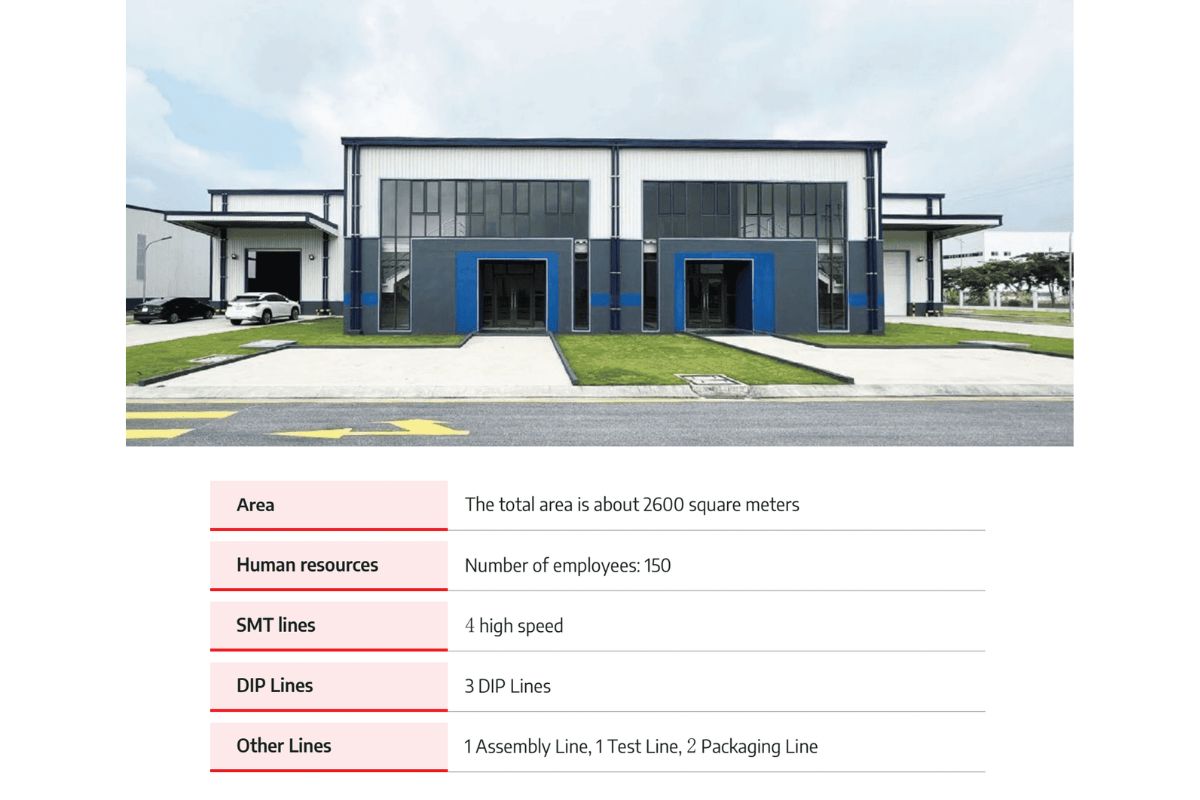
SHDC’s production profile also supports the view that it is positioned beyond a narrow PCBA-only role.
Based on the company profile, SHDC has:
- A production area of about 2,600 square meters
- Approximately 150 employees
- 4 high-speed SMT lines
- 3 DIP lines
- 1 assembly line
- 1 test line
- 2 packaging lines
This line configuration is one of the most useful indicators in the assembly-only vs turnkey comparison.
If a factory were positioned only around board-level assembly, the production layout might focus primarily on SMT and DIP resources. SHDC’s inclusion of dedicated assembly, testing, and packaging lines points to a broader manufacturing workflow.
For buyers, that indicates potential strength in:
- handling multiple process stages within one facility
- reducing transfer points between board build and final output
- supporting more complete manufacturing programs
- offering better operational continuity from assembly through shipment preparation
Capacity alone does not prove turnkey depth, of course. But when capacity structure includes backend support functions, it becomes much more relevant to buyers seeking integrated manufacturing support.
SHDC’s Equipment and Process Technology
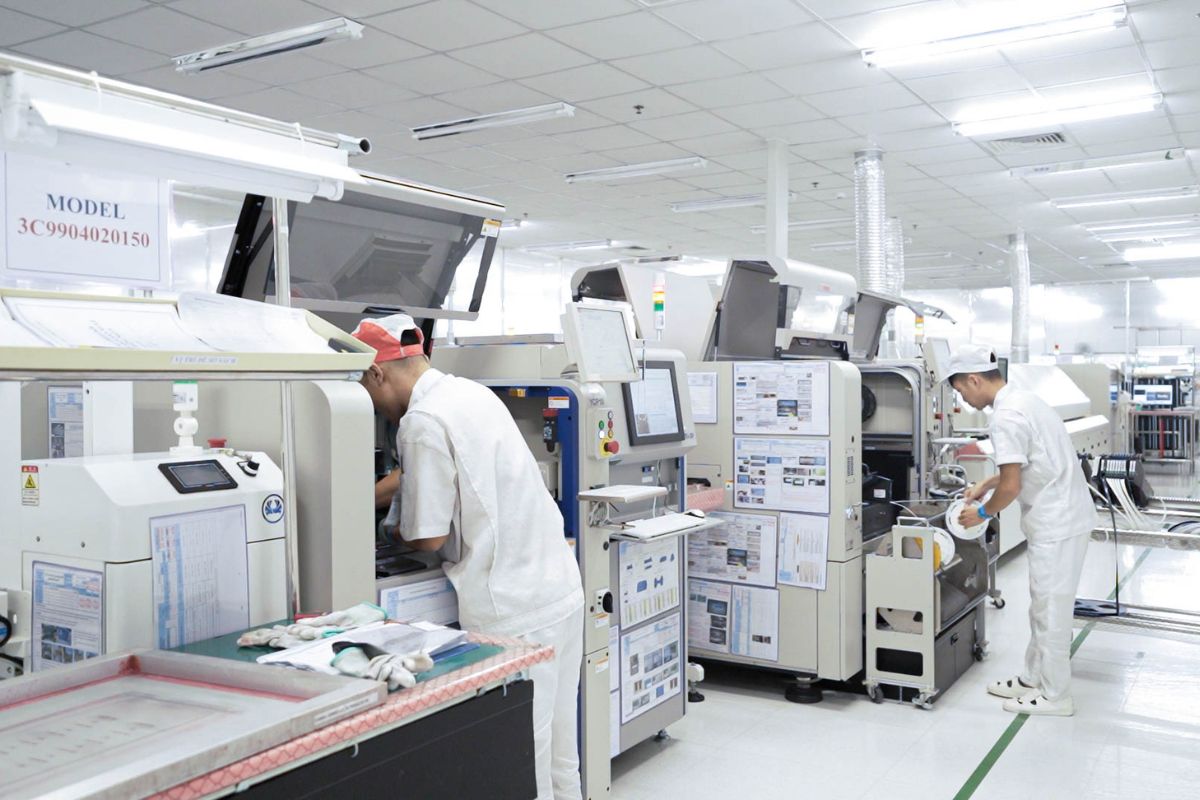
Equipment quality is another area where SHDC’s profile provides meaningful detail.
Listed equipment includes:
- Yamaha YSM20R
- Yamaha YSM10
- Yamaha YCP10
- Yamaha 3D SPI
- Yamaha AOI 3D YSI-V
- Kyoritsu ICT F-2000 Plus
- JT wave soldering equipment
- JT N2 reflow oven
Additional capabilities mentioned include:
- functional testing
- high-voltage testing
- aging test support
- laser marking
- component insertion equipment
- LED forming equipment
- ultrasound equipment
For buyers, these details matter because they show SHDC is not relying only on placement capability. The profile indicates support across inspection, soldering, electrical verification, and additional manufacturing processes that contribute to broader execution stability.
Why this is relevant in supplier model selection
A factory can call itself a turnkey partner, but if its real capability stops at component placement and basic inspection, the value of that label is limited. In SHDC’s case, the available equipment list points to a more developed manufacturing environment with:
- process control tools
- inspection depth
- electrical test options
- backend support potential
That is more consistent with an integrated manufacturing partner than a shop limited to basic board assembly.
SHDC’s Process Flow and Quality Control Structure
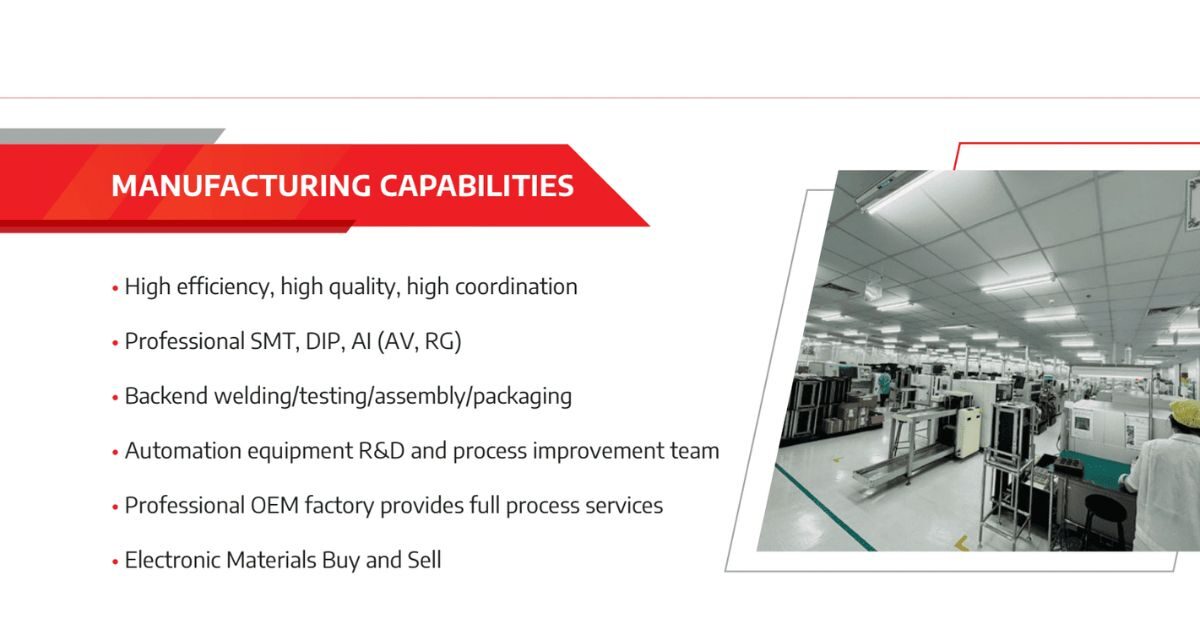
One of the strongest signs of operational maturity is not the machine list alone, but the process flow behind it.
Based on the profile provided, SHDC’s production flow includes:
- IQC Inspection
- Warehouse
- Screen printing
- Mounter
- Reflow
- AOI
- Machining
- Component handling
- Hand insert
- Flux process
- Automatic soldering
- ICT
- Visual Inspection 1
- AOI
- Repair
- FCT
- Visual Inspection 2
- OQC
- Packaging
- Finished product warehouse
This structure is important because it shows multiple checkpoints across the manufacturing sequence, rather than a simple build-and-ship model.
What this suggests to buyers
- Incoming quality is recognized as a defined gate
- Inspection happens during the process, not only at the end
- Electrical test steps are part of the production structure
- Rework and repair are built into the process logic
- Outgoing quality control and packaging are integrated
- Finished goods handling is formalized
For global OEMs, that kind of layered workflow often signals a supplier better prepared to support repeat production and issue investigation.
It also supports the case that SHDC is not just populating boards, but managing a broader production chain with quality control distributed throughout the flow.
SHDC’s Systems and Operational Management
For many buyers, especially US companies, machine capability is only one part of the qualification process. Operational systems are just as important.
SHDC states the use of:
- ERP
- PLM
- SCM
- MES/QMS
The profile also references efforts around:
- data literacy
- systematization of processes
- reducing decision-making time by 30%
- reducing defective inventory by 30%
These are useful signals because they suggest SHDC is trying to manage production with digital systems rather than relying solely on manual coordination.
Why this matters in the turnkey discussion
A broader-scope manufacturing partner typically needs stronger systems than an assembly-only supplier.
That is because once a supplier handles more functions, it also has to coordinate:
- materials
- work orders
- traceability
- quality status
- inspection records
- production planning
- issue response
If the systems are weak, broader scope can create chaos instead of efficiency. A supplier’s real ability to act as a manufacturing partner depends heavily on how well these systems support control and visibility.
In SHDC’s case, the stated ERP, PLM, SCM, and MES/QMS structure adds weight to the view that the company is positioned for more integrated production management.
SHDC’s Organizational Support for OEM Programs
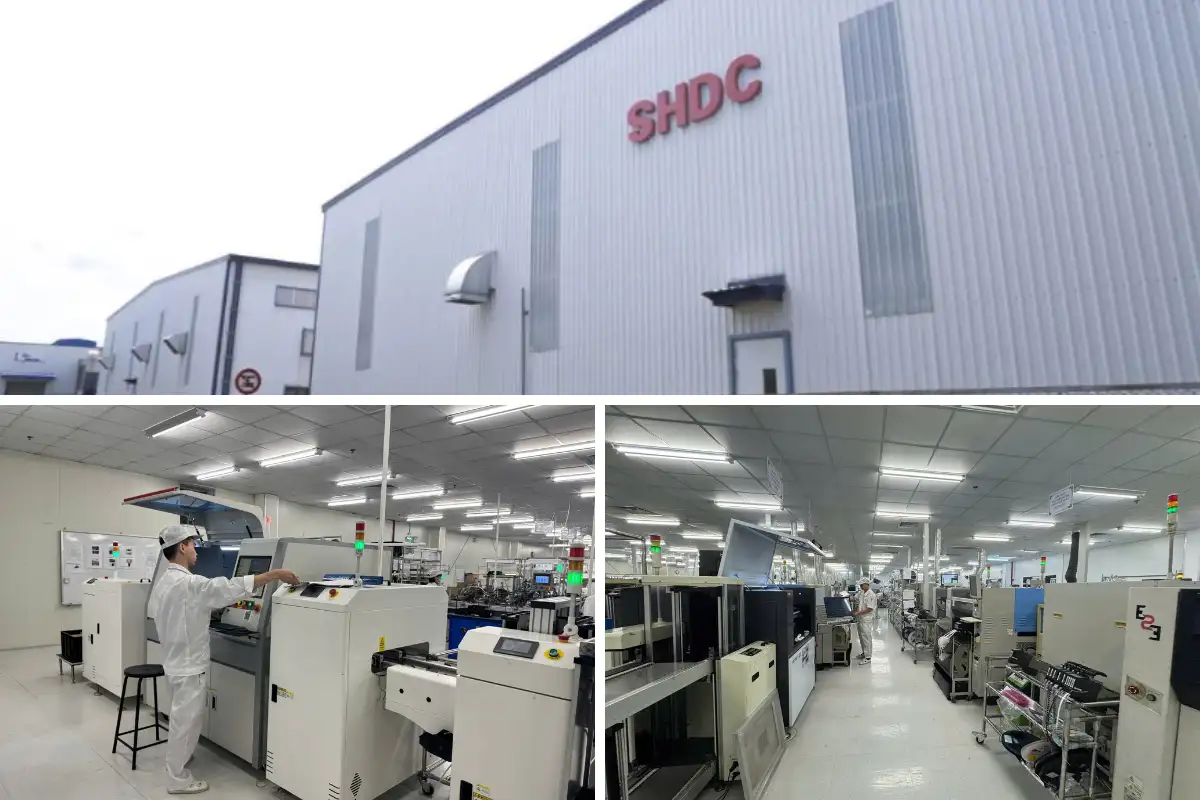
Another factor that often gets overlooked is organizational readiness. Equipment is visible. Structure is quieter, but just as important.
Based on the organizational information provided, SHDC includes functions such as:
- PMC
- QC
- Sales
- Production
- Engineering
- Purchasing
- Financial
- QA / IQC / QC
- Logistics
- Product technical support
- leadership roles including factory management
This kind of cross-functional setup matters because OEM manufacturing programs rarely run on production alone.
Buyers often need support across:
- purchasing coordination
- engineering clarifications
- quality review
- logistics planning
- schedule management
- corrective action follow-up
A supplier that has these functions visibly structured is usually better positioned to respond when production becomes more complex.
This is one reason SHDC appears more aligned with a broader partner model. The profile does not present a factory limited to line operation only. It suggests a business structure capable of supporting multiple functions around the production process.
Where SHDC Appears Strongest in the Assembly-Only vs Turnkey Comparison
When comparing SHDC against the two supplier models discussed above, the company appears strongest in areas associated with broader manufacturing support.
Based on the available information, SHDC shows strength in:
- EMS-oriented process scope
- SMT and DIP manufacturing
- assembly beyond board population
- testing capability beyond visual inspection
- final packaging support
- multiple quality gates across the process
- digital systems for production and quality management
- cross-functional coordination structure
In practical buyer terms, this means:
SHDC appears better positioned as a supplier for customers who need more than isolated board assembly. It may be a stronger fit for programs that benefit from:
- integrated testing
- backend assembly support
- reduced supplier handoff
- more structured production control
- closer coordination between manufacturing functions
A careful buyer should still validate the scope against the exact BOM, product type, and production stage. But based on the profile alone, SHDC aligns more closely with a broader electronics manufacturing partner than with a simple PCB assembly-only vendor.
Questions Buyers Should Ask SHDC to Confirm Project Fit
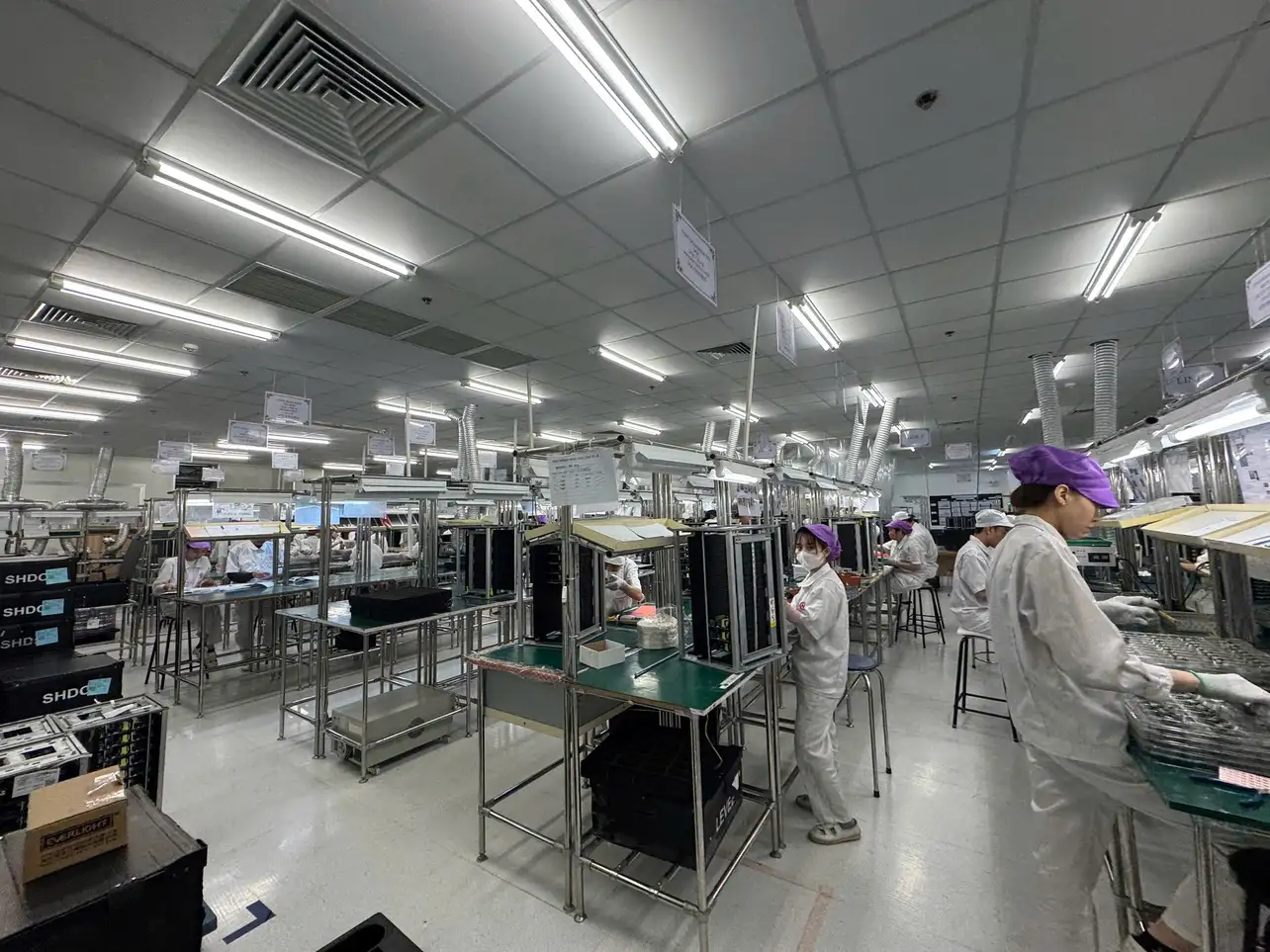
Even when a supplier profile looks promising, project fit should still be confirmed directly. This is especially true when buyers are deciding how much scope they want the supplier to own.
Useful questions to ask SHDC include:
- Does SHDC support component sourcing for this specific BOM, or is the service mainly customer-supplied material?
- What level of turnkey support is available for prototype, pilot, and mass production stages?
- Which testing methods can be applied to this product: AOI, ICT, FCT, high-voltage test, aging test, or other options?
- Can SHDC support final assembly and packaging based on the product’s commercial requirements?
- What traceability data is available by lot, batch, or production run?
- How does SHDC manage engineering changes during active production?
- What are the current active certifications and audit documents available for customer review?
- How are planning, purchasing, quality, and engineering coordinated during schedule changes or shortages?
These questions do two things at once:
- They help the buyer qualify SHDC properly
- They also clarify whether SHDC is the right model for the project, not just whether it can produce the board
That is a much more useful sourcing decision.
Final Thoughts: Choosing the Right PCBA Manufacturers in Vietnam
For companies evaluating PCBA manufacturers in Vietnam, the most important distinction is often not who has the most impressive machine list or the cheapest quote. It is whether the supplier’s operating model matches the project.
A PCB assembly-only manufacturer can be the right choice when the buyer wants tight internal control and already has strong sourcing, testing, and backend support in place.
A full turnkey-oriented partner makes more sense when the buyer needs broader scope, fewer handoffs, clearer accountability, and stronger production coordination across multiple stages.
That is why supplier model matters. It shapes execution long before the first shipment leaves the factory.
Based on the available company profile, SHDC Electronics appears to align more closely with the second model. Its stated EMS scope, multi-line production structure, testing capability, packaging support, quality control flow, digital systems, and cross-functional organization all suggest a supplier positioned beyond board assembly alone.
For OEMs and sourcing teams looking at Vietnam, that makes SHDC a supplier worth evaluating carefully, especially for programs where integrated manufacturing support is more valuable than a narrow assembly quote.
>>>Read more: Top Vietnam PCB Manufacturers for US Buyers in 2026
