
 Tiếng Việt
 日本語
日本語
Printed circuit board assembly (PCBA) is the backbone of modern electronics manufacturing. Whether producing consumer devices, industrial control systems, or high-reliability aerospace equipment, manufacturers typically rely on two primary assembly methods: SMT processing (Surface Mount Technology) and Through-Hole assembly (THT).
Understanding the differences between SMT processing and through-hole assembly is critical for engineers, product developers, and procurement teams. The right choice directly impacts production speed, cost efficiency, mechanical durability, and long-term scalability.
This guide provides a detailed technical comparison to help you determine which method best fits your application.
What Is SMT Processing?
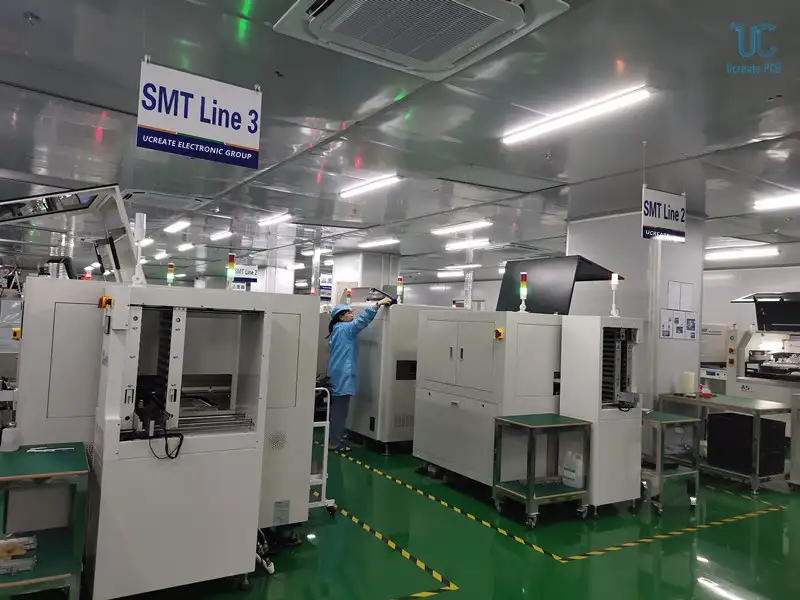
SMT processing (Surface Mount Technology processing) is a method where electronic components are mounted directly onto the surface of a printed circuit board (PCB), rather than inserted through holes.
SMT has become the dominant assembly method in modern electronics due to its speed, automation capability, and support for miniaturized designs.
Typical SMT Processing Flow
A standard SMT production line includes:
-
Solder Paste Printing
A stencil printer applies solder paste to PCB pads. -
Pick and Place
Automated machines precisely place SMD components onto the board. -
Reflow Soldering
The board passes through a reflow oven, melting solder paste to create electrical and mechanical connections. -
Inspection (AOI / SPI / X-ray)
Automated Optical Inspection verifies placement accuracy and solder joint quality. -
Functional Testing
Ensures electrical performance meets specifications.
Key Characteristics of SMT Processing
-
Highly automated production
-
High component density
-
Compact PCB layouts
-
Fast cycle times
-
Optimized for mass production
Today, over 80% of electronic components used globally are surface-mount devices (SMDs).
>>>Read more: SMT department process: Managing SMT lines, people, and quality control
What Is Through-Hole Assembly?
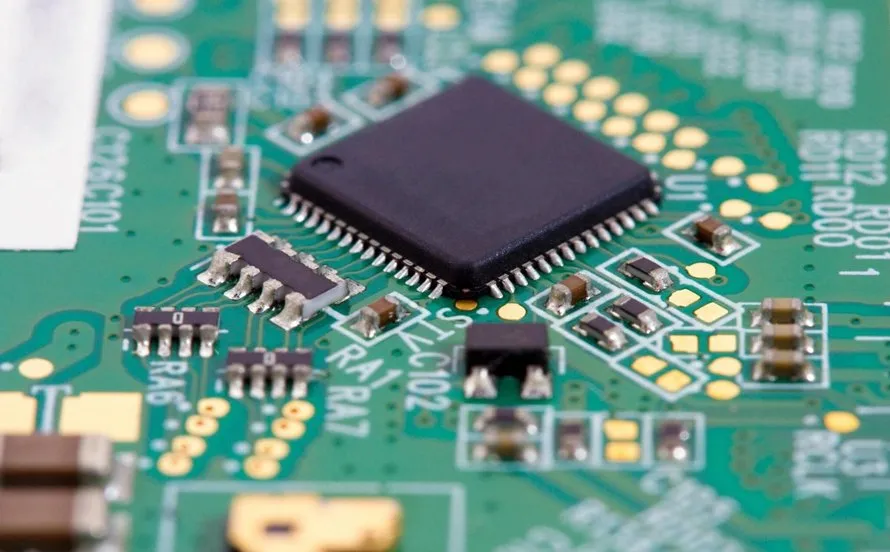
Through-Hole Technology (THT) involves inserting component leads into drilled holes in the PCB and soldering them on the opposite side.
Before SMT became mainstream, through-hole assembly was the industry standard. While less common today, it remains essential for applications requiring strong mechanical bonds and high durability.
Typical Through-Hole Assembly Process
-
PCB Drilling
Holes are drilled for component leads. -
Component Insertion
Components are manually or automatically inserted into holes. -
Wave Soldering or Hand Soldering
Boards pass over a wave of molten solder, or technicians solder manually. -
Lead Trimming
-
Inspection and Testing
Key Characteristics of Through-Hole Assembly
-
Strong mechanical bonding
-
Better performance in high-vibration environments
-
Higher labor involvement
-
Lower component density
SMT Processing vs Through-Hole Assembly: Side-by-Side Comparison
| Criteria | SMT Processing | Through-Hole Assembly |
|---|---|---|
| Automation Level | Very high | Moderate to low |
| Production Speed | Fast | Slower |
| Cost Efficiency (High Volume) | More cost-effective | Higher labor cost |
| Mechanical Strength | Moderate | Very strong |
| PCB Size | Smaller and compact | Larger board required |
| Repairability | More complex | Easier manual repair |
| Component Density | High | Lower |
| Best For | Mass production, miniaturized electronics | Power components, heavy connectors |
Advantages and Limitations of SMT Processing
Advantages
-
Faster production cycles
-
Lower per-unit cost in volume production
-
Supports miniaturization
-
Improved electrical performance due to shorter lead lengths
-
Reduced material usage
Limitations
-
Lower mechanical strength compared to through-hole
-
Complex inspection for hidden joints (e.g., BGA requires X-ray)
-
Higher upfront investment in automated equipment
SMT is ideal for high-volume production environments where speed and efficiency are critical.
>>>Read more: SMT Line Process Explained: How an SMT Production Line Works
Advantages and Limitations of Through-Hole Assembly
Advantages
-
Superior mechanical strength
-
Excellent for high-current and high-stress components
-
Easier to repair and modify manually
-
More durable in extreme environments
Limitations
-
Larger PCB footprint
-
Higher manual labor cost
-
Slower production throughput
-
Not optimized for miniaturized designs
Through-hole assembly remains common in aerospace, military, industrial power systems, and heavy-duty equipment.
When to Choose SMT Processing
SMT processing is the preferred method when:
-
Producing consumer electronics
-
Designing compact IoT devices
-
Manufacturing medical devices
-
Scaling mass production
-
Reducing cost per unit
-
Increasing manufacturing efficiency
If your priority is scalability and cost optimization in large volumes, SMT is typically the best choice.
When to Choose Through-Hole Assembly
Through-hole assembly is recommended when:
-
Components experience mechanical stress
-
Products operate in high-vibration environments
-
High-power components are used
-
Large connectors or transformers are required
-
Long-term durability is critical
For industrial-grade electronics, THT may provide greater reliability.
Hybrid Assembly: The Modern Manufacturing Standard
In practice, most modern PCBs use a hybrid approach, combining SMT processing and through-hole assembly.
Typical sequence:
-
Complete SMT processing first.
-
Insert through-hole components.
-
Perform wave soldering or selective soldering.
This hybrid method balances cost efficiency and mechanical durability. For example:
-
SMT for ICs, resistors, capacitors
-
Through-hole for connectors, large capacitors, transformers
Hybrid assembly maximizes performance without compromising production efficiency.
Cost and Scalability Considerations
When comparing SMT vs through-hole, decision-makers should evaluate:
-
Tooling and setup cost
-
Labor intensity
-
Production volume
-
Yield rates
-
Rework and defect rates
-
Long-term scalability
While SMT requires significant capital investment in equipment, it delivers lower cost per unit in medium to high volumes. Through-hole assembly may be more suitable for low-volume or specialty applications.
>>>Read more: SMT Assembly Process Explained: Step-by-Step Guide to Electronics Assembly 2026
Industry Applications Comparison
| Industry | Preferred Method |
|---|---|
| Consumer Electronics | SMT |
| Automotive Electronics | Mostly SMT + Hybrid |
| Aerospace | Hybrid / Through-Hole |
| Industrial Control | Hybrid |
| Power Supply Systems | Through-Hole |
Conclusion
SMT processing has become the dominant technology in electronics manufacturing due to its automation, speed, and cost efficiency. However, through-hole assembly remains essential in applications requiring superior mechanical strength and durability.
The best choice depends on:
-
Product design requirements
-
Reliability expectations
-
Production volume
-
Cost targets
-
Environmental conditions
For many OEMs and EMS providers, a hybrid strategy offers the optimal balance between performance and efficiency.
Understanding these differences enables engineering and procurement teams to make informed, strategic manufacturing decisions.
FAQs
1. Is SMT stronger than through-hole assembly?
No. Through-hole assembly typically provides stronger mechanical bonding because component leads pass through the PCB and are soldered on the opposite side. SMT is mechanically sufficient for most consumer applications but not as robust under heavy stress.
2. Why is SMT processing more cost-effective?
SMT processing supports high automation, faster production cycles, and higher component density. These factors reduce labor costs and lower cost per unit in medium-to-large production volumes.
3. Can SMT completely replace through-hole technology?
Not entirely. While SMT dominates modern electronics, through-hole remains necessary for high-power components, large connectors, and applications requiring strong mechanical durability.
4. Which method is better for high-power circuits?
Through-hole assembly is generally preferred for high-power circuits because it provides stronger mechanical stability and better handling of thermal and electrical stress.
5. Why do many PCBs use both SMT and through-hole components?
A hybrid approach combines the cost efficiency and miniaturization benefits of SMT with the mechanical strength of through-hole components, delivering optimal overall performance.
6. Is SMT suitable for aerospace or military applications?
Yes, but often as part of a hybrid assembly strategy. Critical components subject to vibration or extreme conditions may still use through-hole mounting for additional reliability.
