
 Tiếng Việt
 日本語
日本語
As GaN chargers become smaller, faster, and more powerful, compliance has become one of the biggest challenges for electronics brands entering the U.S. market. A modern GaN charger contract manufacturer is no longer judged only by assembly capacity or price. Today, OEMs must evaluate whether a manufacturing partner can support safety certification, EMI control, energy efficiency requirements, and USB-C interoperability at production scale. For U.S. brands, compliance failures can lead to delayed launches, customs issues, Amazon listing restrictions, product recalls, or long-term reputational damage. That is why choosing the right manufacturing partner is now as important as the charger design itself.
Why Compliance Matters More in GaN Charger Manufacturing
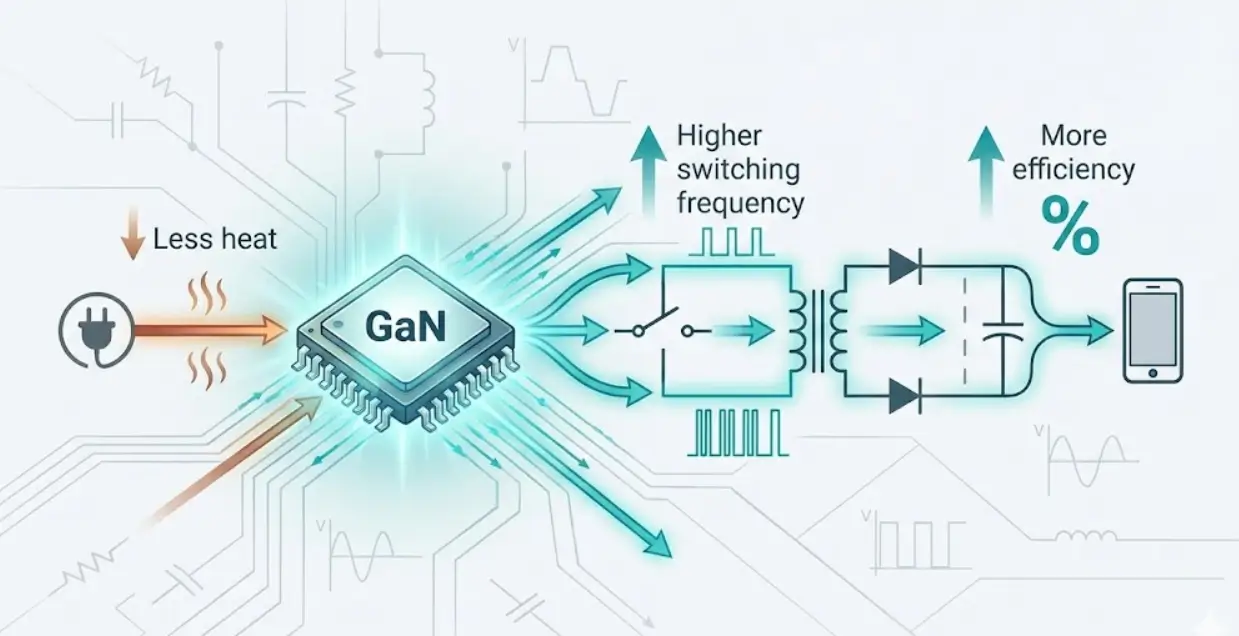
Compared with traditional silicon chargers, GaN chargers operate at much higher power density and switching frequency. This enables compact 65W, 100W, and even 150W USB-C chargers, but it also creates greater engineering and manufacturing complexity.
Thermal management, EMI suppression, insulation spacing, transformer consistency, and firmware stability all become more critical in GaN charger production.
For this reason, many U.S. OEMs sourcing outside China now look for manufacturers with deep experience in:
- power electronics manufacturing
- SMT process control
- automated testing systems
- USB-C PD validation
- high-volume EMS execution
Companies evaluating a non-China sourcing strategy often begin by researching the China+1 manufacturing strategy and comparing China alternative electronics manufacturing locations across Southeast Asia.
UL Requirements for GaN Charger Manufacturing
What Is UL Certification for GaN Chargers?
For most USB-C and GaN charger products entering the U.S. market, UL compliance is centered around electrical safety and consumer protection.
One of the most important standards is UL 62368-1, which applies to:
- audio/video equipment
- IT equipment
- consumer electronics power supplies
- USB-C chargers
UL certification evaluates:
- electrical insulation
- thermal safety
- fire risk
- abnormal operation protection
- mechanical reliability
U.S. OEM teams can review the official UL 62368-1 safety standard overview for more technical details.
What OEM Brands Should Expect From a Contract Manufacturer
A reliable GaN charger contract manufacturer should support more than basic PCB assembly.
U.S. OEMs should expect:
- traceable BOM management
- approved component sourcing
- high-voltage testing
- thermal validation
- burn-in testing
- production process control
- documentation for certification preparation
Manufacturers lacking these capabilities often struggle when moving from EVT/DVT samples to stable mass production.
This is especially important in high-density USB-C PD charger designs where small process inconsistencies can create overheating or safety failures.
Companies evaluating suppliers should also understand how PCBA contract manufacturing differs from simple assembly outsourcing.
Manufacturing Processes That Directly Affect UL Compliance
Many UL-related failures originate from manufacturing execution rather than circuit design itself.
Critical production areas include:
- SMT solder quality
- creepage and clearance control
- transformer assembly consistency
- insulation verification
- AOI inspection accuracy
- functional testing stability
Modern EMS factories typically use integrated SMT and testing systems to reduce variation and improve traceability.
For example, SHDC’s EMS production infrastructure includes Yamaha SMT systems, AOI inspection, ICT testing, aging test systems, high-voltage testing equipment, and MES/QMS process management. :contentReference[oaicite:0]{index=0} :contentReference[oaicite:1]{index=1}
OEM sourcing teams comparing suppliers should also review:
- IPC standards in electronics manufacturing
- IPC J-STD-001 vs IPC-A-610
- AOI inspection systems in PCB assembly
FCC Requirements and EMI Control
Why FCC Compliance Matters for GaN Chargers
GaN chargers are high-frequency switching power supplies. This makes EMI management significantly more difficult than in conventional adapters.
In the U.S., most chargers must comply with FCC Part 15 regulations covering conducted and radiated emissions.
Why GaN Chargers Are More Challenging for EMI Performance
The compact form factor of GaN chargers creates several engineering challenges:
- tighter PCB layouts
- higher switching frequency
- increased thermal density
- grounding sensitivity
- transformer noise
As wattage increases to 100W, 140W, or 150W USB-C PD chargers, EMI optimization becomes even more critical.
Poor EMI performance can result in:
- FCC test failures
- unstable charging
- compatibility issues
- excessive heat generation
Manufacturers specializing in power electronics manufacturing generally have more experience handling these challenges than generic SMT assembly suppliers.
What a Capable Manufacturer Should Support
A qualified GaN charger contract manufacturer should provide:
- EMI pre-compliance testing
- PCB layout feedback
- grounding optimization
- shielding recommendations
- engineering troubleshooting support
This is one reason why many OEMs now prefer specialized GaN charger PCB assembly manufacturers rather than standard SMT factories with limited power electronics experience.
Additional insight:
DOE Efficiency Standards and Energy Regulations
What Is DOE Level VI?
DOE Level VI is a U.S. energy efficiency regulation for external power supplies.
It evaluates:
- no-load power consumption
- active efficiency
- energy conversion performance
OEM engineering teams can review the official DOE external power supply requirements for regulatory guidance.
For USB-C and GaN chargers, efficiency performance is now a major competitive factor.
Why DOE Compliance Affects Manufacturing Decisions
DOE compliance is not determined only by circuit design.
Manufacturing consistency also affects:
- switching efficiency
- thermal behavior
- standby power consumption
- transformer performance
Critical variables include:
- GaN device selection
- transformer winding consistency
- SMT process quality
- solder joint integrity
- firmware optimization
This is why OEMs increasingly evaluate both engineering capability and production discipline before selecting a charger manufacturing partner.
Brands comparing production regions often analyze:
USB-C PD and PPS Requirements
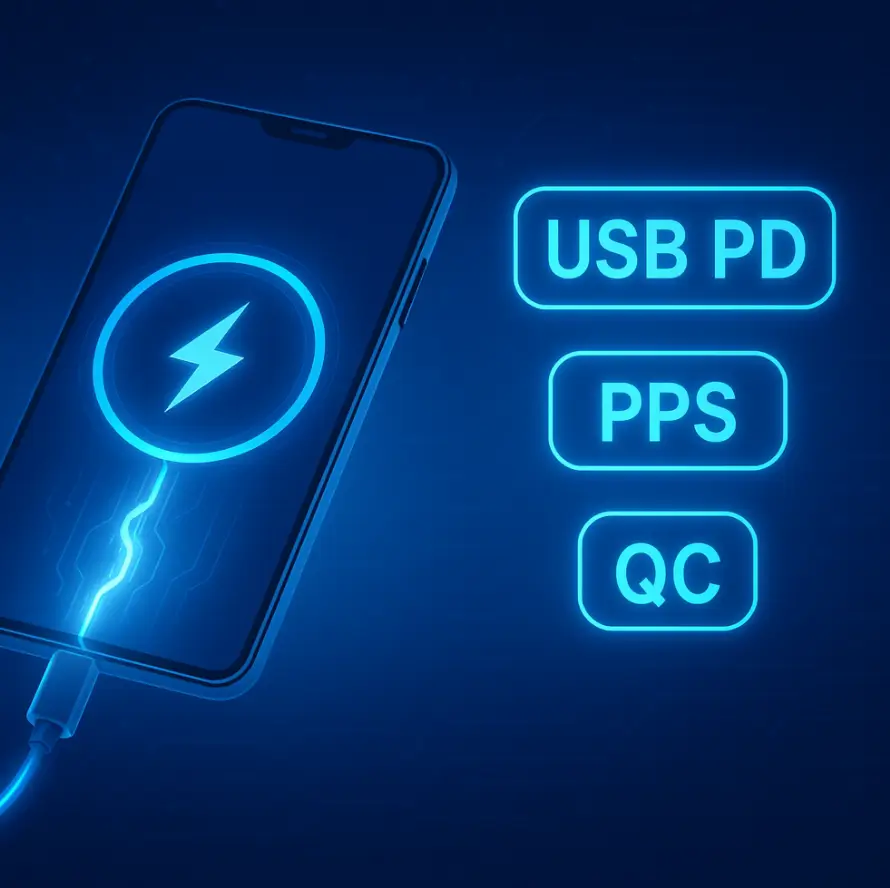
Why USB-C PD Validation Matters
USB-C Power Delivery has become the global standard for fast charging.
However, interoperability failures are still common in mass production.
Problems may include:
- unstable voltage negotiation
- handshake failures
- overheating during fast charging
- inconsistent compatibility across devices
OEM teams can review the official USB-IF USB-C Power Delivery specifications for protocol requirements.
PPS Support Is Increasingly Important
Modern smartphones from Apple, Samsung, Google, and other brands increasingly depend on PPS (Programmable Power Supply) for optimized fast charging performance.
PPS enables:
- improved thermal efficiency
- adaptive voltage control
- faster charging optimization
Manufacturers without strong firmware validation capability may struggle to maintain compatibility across device ecosystems.
Why Firmware and Validation Matter in Manufacturing
USB-C PD reliability depends heavily on:
- firmware control
- protocol testing
- cable validation
- production consistency
A reliable GaN charger contract manufacturer should support:
- compatibility testing
- firmware revision tracking
- production validation procedures
- engineering change control
This becomes especially important for OEM programs targeting Amazon retail, consumer electronics brands, Apple ecosystem accessories, and premium fast-charging products.
Companies launching new charger products often combine prototype PCBA services with full turnkey electronics manufacturing to accelerate development and scaling.
What U.S. OEMs Should Evaluate in a GaN Charger Contract Manufacturer
Engineering Support Capability
Modern OEM programs require more than assembly services.
Manufacturers should support:
- DFM analysis
- thermal optimization
- PCB layout review
- EVT/DVT/PVT coordination
- power electronics engineering feedback
Relevant sourcing topics include:
Production and Testing Infrastructure
U.S. OEM buyers increasingly prioritize factories with:
- automated SMT systems
- AOI inspection
- ICT testing
- functional testing
- aging systems
- MES/QMS integration
SHDC’s EMS infrastructure includes 4 SMT production lines, AOI systems, ICT capability, functional testing, aging test systems, and high-speed Yamaha SMT equipment.
Manufacturing teams evaluating suppliers may also review:
Scalability From Prototype to Mass Production
Many charger suppliers can build prototypes. Far fewer can maintain yield stability, compliance consistency, supply chain control, and thermal reliability during high-volume production.
OEMs should evaluate:
- pilot production capability
- process standardization
- quality systems
- supply chain traceability
- engineering responsiveness
High-volume scaling considerations are discussed in:
Why Many Charger Factories Struggle With Compliance at Scale
Passing certification during initial testing is only the beginning.
Many factories encounter problems during volume production due to:
- uncontrolled component substitutions
- inconsistent transformer sourcing
- unstable SMT quality
- poor firmware management
- inadequate burn-in testing
This is why process discipline is critical in charger manufacturing.
The difference between a true EMS manufacturing partner and a trading-oriented supplier often becomes visible only after production scaling begins.
OEMs concerned about production risk should also understand:
SHDC’s Experience in GaN Charger Manufacturing
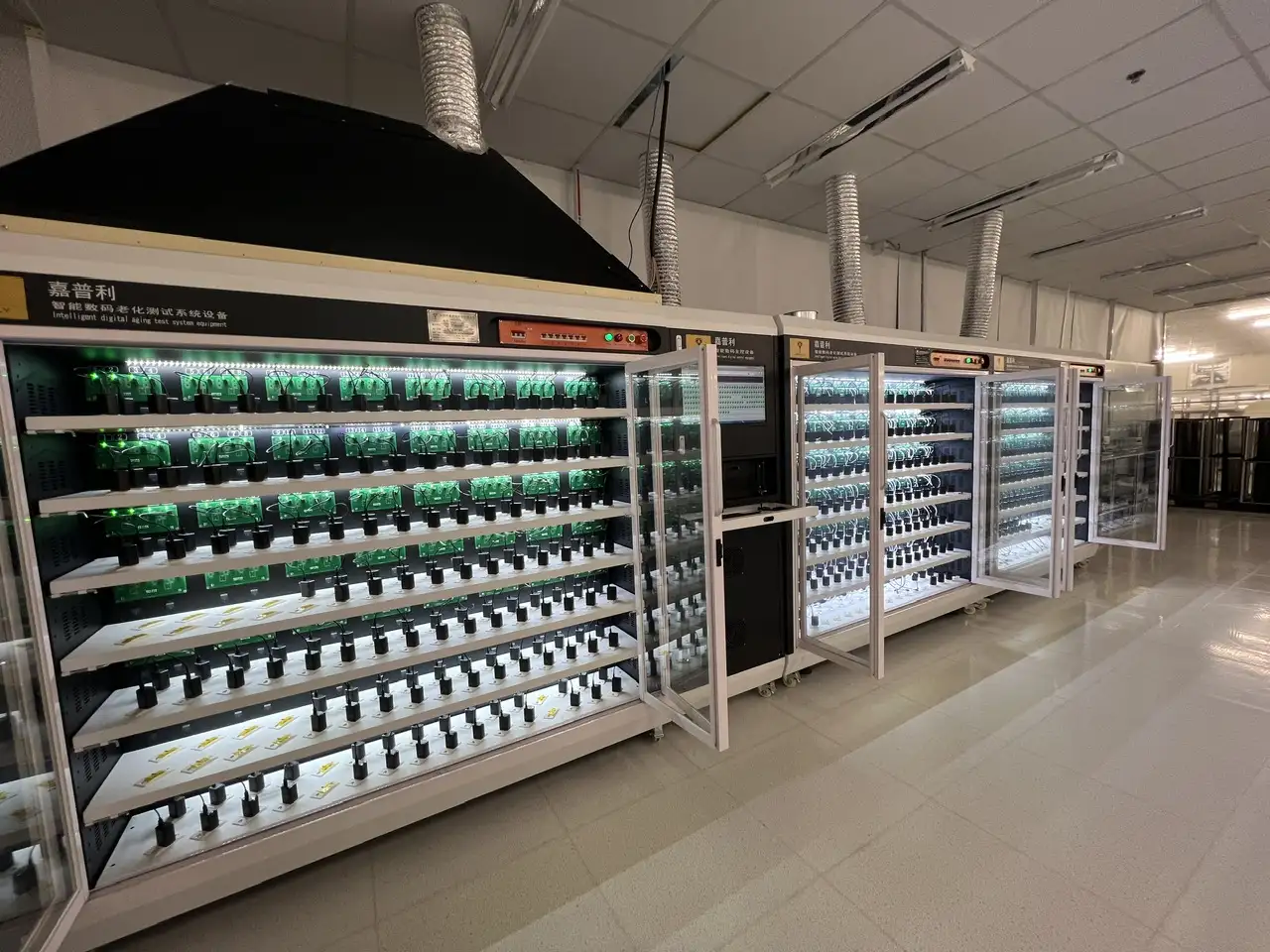
SHDC is a Vietnam-based EMS and power electronics manufacturing company supporting OEM production programs across SMT assembly, testing, and charger manufacturing. :contentReference[oaicite:4]{index=4}
Its manufacturing capabilities include:
- SMT and DIP production
- AOI inspection
- ICT and functional testing
- aging test systems
- high-voltage testing
- power electronics assembly
The company also manufactures multiple GaN charger platforms, including 65W, 67W, 100W, and 150W USB-C PD chargers.
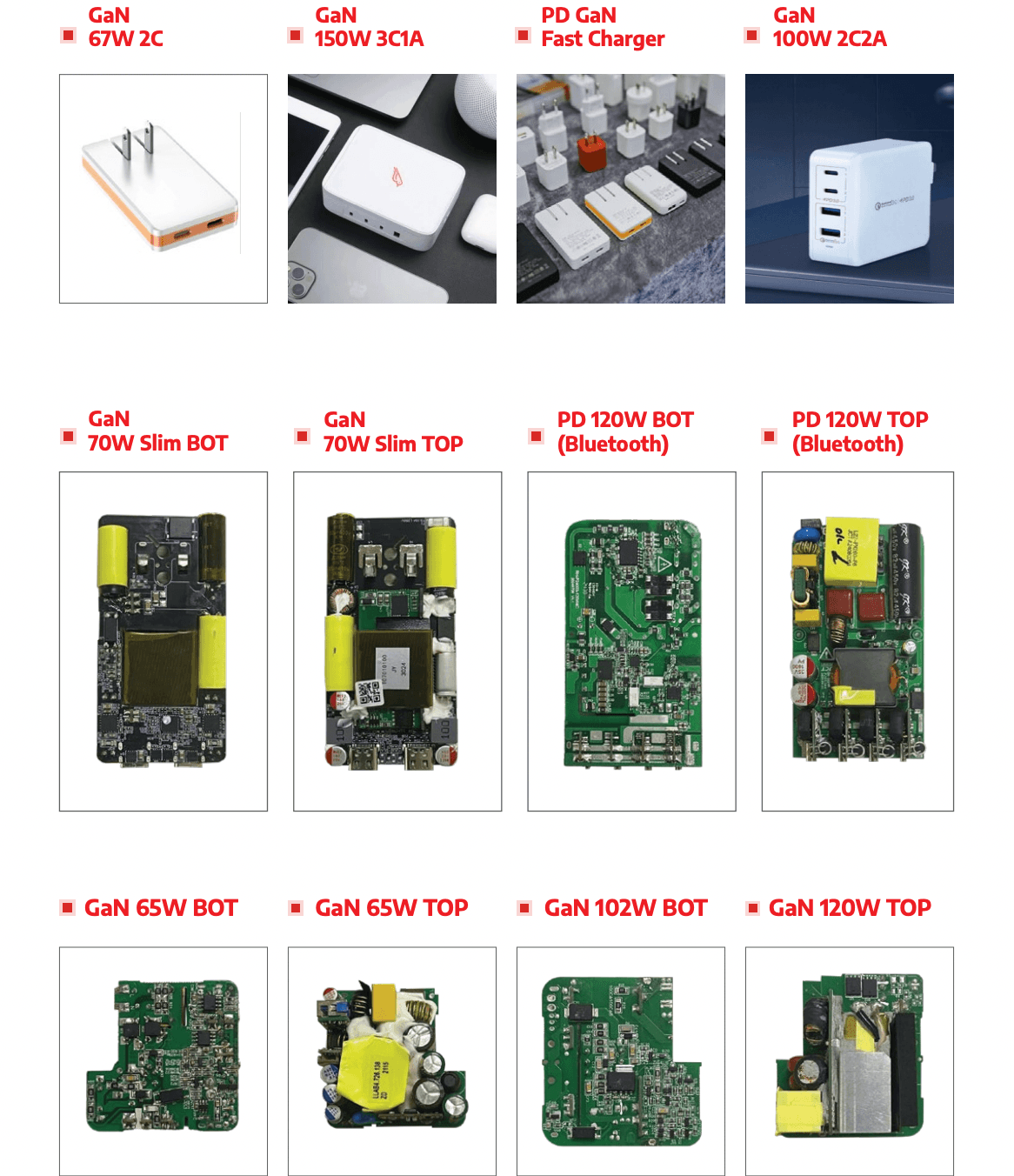
OEM teams evaluating GaN charger manufacturing in Vietnam or searching for a GaN charger manufacturer outside China increasingly prioritize suppliers with proven EMS infrastructure and power electronics experience.
SHDC has additionally participated in advanced charger-related product programs highlighted in Vietnamese technology media, including products integrating Apple Find My functionality into charging solutions.
Reference: SHDC and Apple Find My charger development
Final Thoughts
Choosing a GaN charger contract manufacturer is no longer only about assembly cost or production capacity.
For U.S. OEMs, the right manufacturing partner must support:
- UL safety requirements
- FCC EMI compliance
- DOE efficiency standards
- USB-C PD interoperability
- scalable quality systems
- engineering collaboration
As USB-C fast charging products become more advanced, compliance and manufacturing execution will increasingly determine which brands succeed in the U.S. market.
Companies evaluating long-term charger manufacturing programs should prioritize partners with proven EMS capability, testing infrastructure, and experience in high-density power electronics manufacturing.
FAQs
What certifications are required for GaN chargers in the U.S.?
Most GaN chargers entering the U.S. market require support for UL safety standards, FCC EMI regulations, DOE energy efficiency requirements, and USB-C PD interoperability validation.
Do GaN chargers require UL certification?
While not always legally mandatory, UL certification is strongly recommended for consumer electronics products sold through major retailers and marketplaces in the United States.
What is DOE Level VI compliance?
DOE Level VI is a U.S. energy efficiency standard for external power supplies that regulates active efficiency and no-load power consumption.
Why is EMI testing important for GaN chargers?
GaN chargers operate at high switching frequencies, making them more susceptible to conducted and radiated electromagnetic interference issues.
What should OEMs evaluate in a GaN charger contract manufacturer?
OEMs should evaluate:
- engineering support
- SMT capability
- testing infrastructure
- compliance experience
- supply chain control
- scalability
- process consistency
- firmware validation capability
