
 Tiếng Việt
 日本語
日本語
For U.S. companies developing and manufacturing electronic products, PCBA contract manufacturing is no longer just a cost-saving tactic—it is a strategic decision that directly affects product quality, scalability, and long-term reliability.
While outsourcing PCBA assembly can accelerate time-to-market and reduce capital investment, many projects fail not because of design flaws, but because of misaligned expectations, weak process control, and underestimated risks at the manufacturing stage.
This article explains how U.S. companies evaluate PCBA contract manufacturing partners, the real risks involved, and what truly matters beyond price and assembly capability.
When PCBA Contract Manufacturing Makes Sense
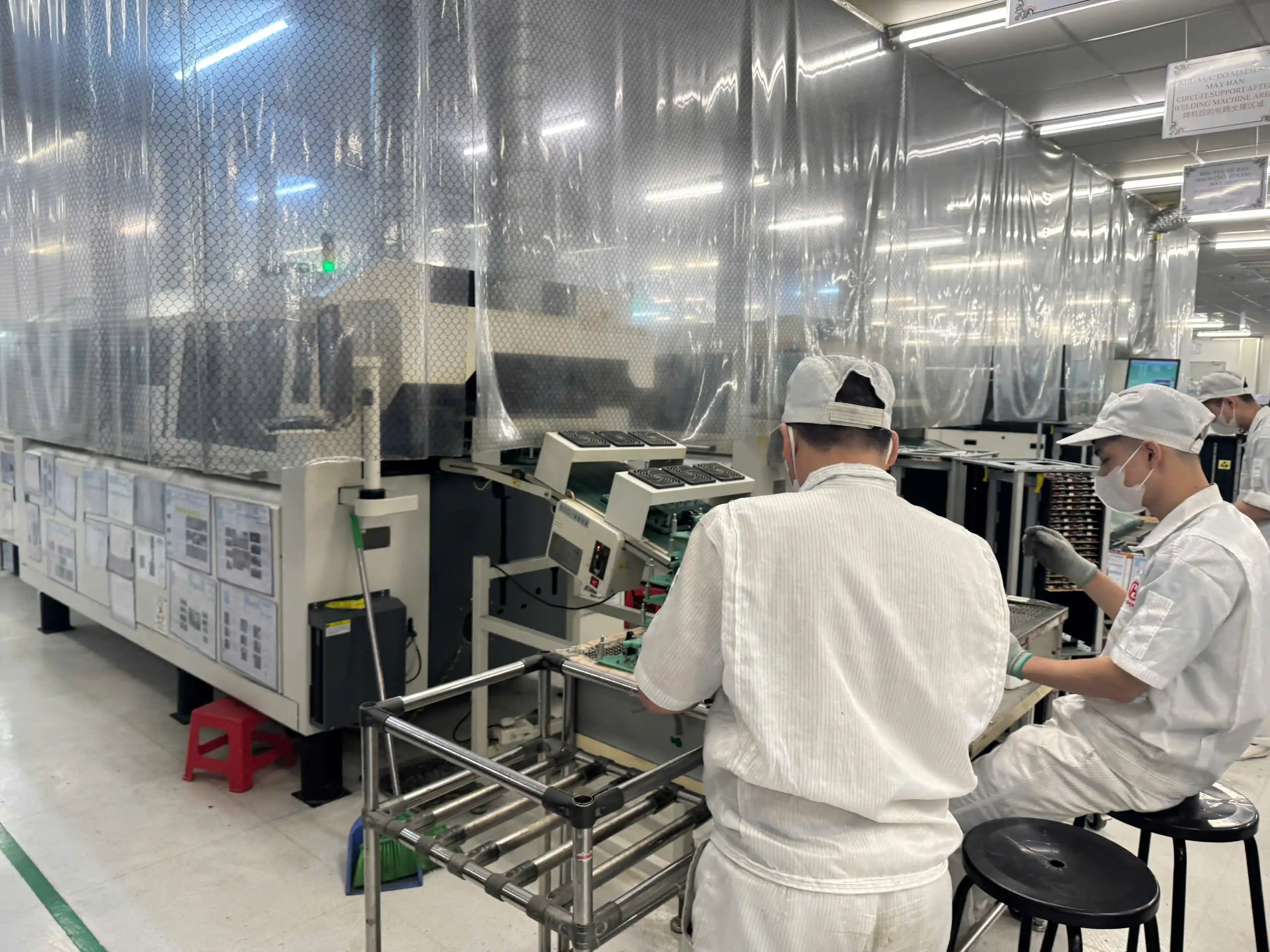
In-House Manufacturing vs. Contract Manufacturing
Not every company benefits from building PCBA in-house. For most U.S. businesses, especially startups and OEMs, maintaining internal SMT lines often leads to high fixed costs, limited scalability, and operational complexity.
PCBA contract manufacturing makes sense when:
- Production volume fluctuates
- Speed to market is critical
- Advanced process control and testing are required
Internal resources should remain focused on design and system integration
Typical Use Cases for U.S. Companies
Common scenarios include:
- Hardware startups moving from prototype to mass production
- OEMs scaling production without expanding factories
- Companies launching multiple SKUs with varying volumes
In these cases, outsourcing PCBA allows organizations to leverage mature manufacturing systems without long-term capital commitments.
Signs Your Organization Is Ready to Outsource PCBA
U.S. buyers typically succeed with outsourcing when:
- The design is reasonably stable
- BOM and documentation are well-defined
- Test requirements are clearly specified
- Engineering and sourcing teams are aligned
How U.S. Companies Evaluate PCBA Contract Manufacturers
For experienced U.S. buyers, assembly capability alone is not a differentiator. Evaluation focuses on process maturity, data transparency, and risk management.
Engineering Capability Beyond Assembly
A reliable PCBA contract manufacturer should offer:
- Design for Manufacturability (DFM) and Design for Test (DFT) feedback
- New Product Introduction (NPI) experience
- Early identification of yield and reliability risks
Manufacturers who simply “build to print” without engineering input often become bottlenecks during scaling.
Quality Systems and Standards
- U.S. companies expect:
- Compliance with IPC standards (e.g., IPC-A-610)
- Certified quality management systems (ISO-based)
- Statistical process control (SPC) and yield tracking
- Documented corrective and preventive actions
Quality is judged by process stability, not one-time inspection results.
Supply Chain and Component Control
Component sourcing is a major risk area in PCBA contract manufacturing. Key evaluation criteria include:
- Approved Vendor List (AVL) management
- Component traceability and lot tracking
- Obsolescence and lifecycle risk control
- Clear policies for substitutions and PCN handling
Communication, Transparency, and Documentation
U.S. companies prioritize manufacturers who provide:
- Clear production and quality reports
- Structured change management processes
- Fast and transparent communication channels
- Full documentation for audits and compliance
The Real Risks in PCBA Contract Manufacturing
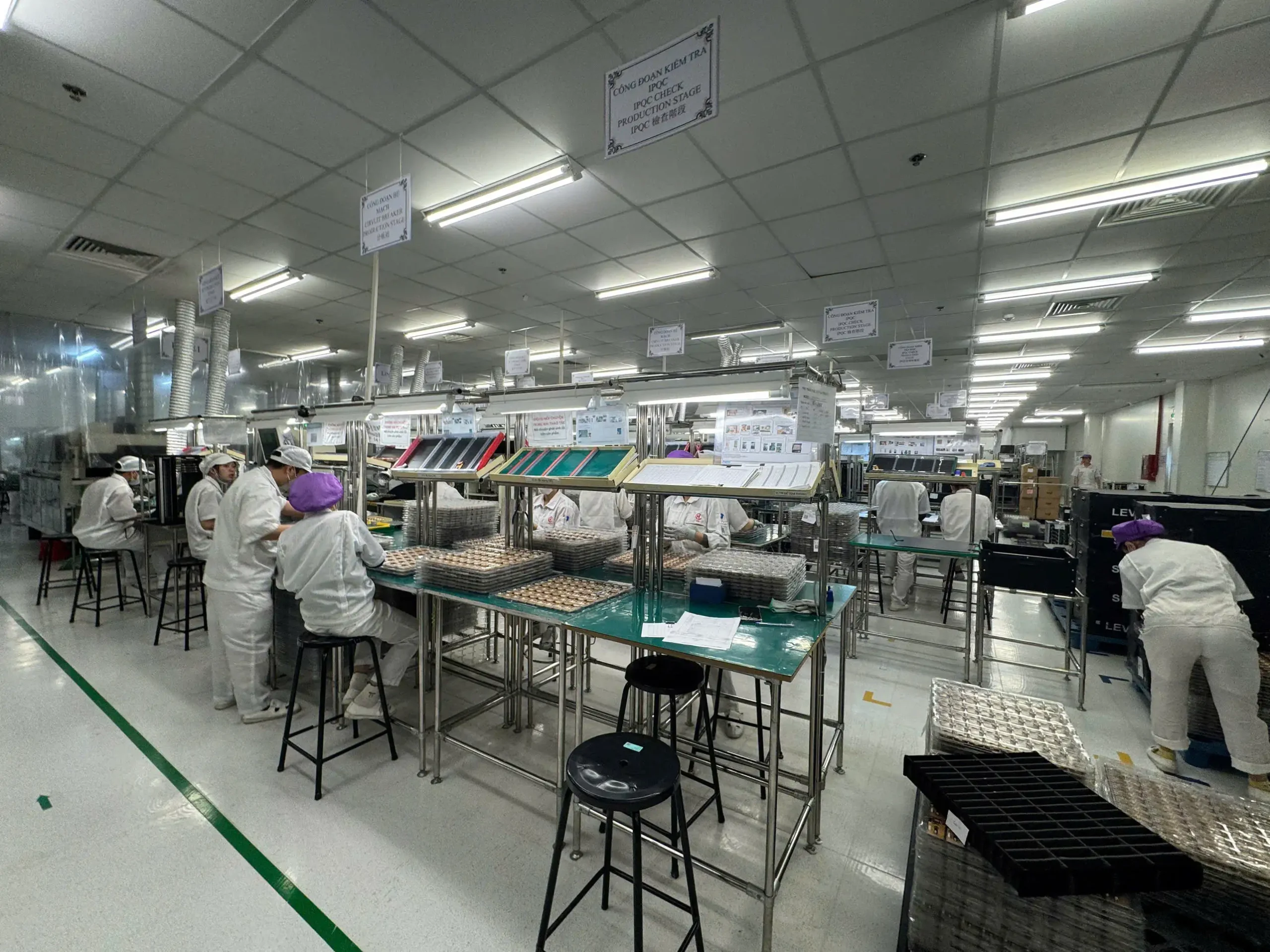
Process Control and Hidden Quality Risks
Many factories advertise identical “process steps”—SMT, THT, reflow, AOI—but outcomes vary widely.
The difference lies in:
- Process control methods
- Decision points during production
- Data-driven adjustments vs. manual judgment
- Poorly controlled processes often result in latent defects that only appear after deployment.
Scaling Risks from Prototype to Production
Prototype builds often tolerate shortcuts that become serious risks at scale:
- Manual rework
- Limited testing
- Inconsistent materials
Without a scalable process framework, quality degrades rapidly as volume increases.
Supply Chain and Substitution Risks
Uncontrolled component substitutions can lead to:
- Electrical performance issues
- Reliability failures
- Regulatory non-compliance
For U.S. companies, these risks translate into recalls, warranty costs, and reputational damage.
Compliance and Documentation Gaps
Lack of traceability and incomplete records can create:
- Audit failures
- Customer disputes
- Legal and contractual exposure
>>>Read more: PCBA Manufacturing Process: How US Companies Evaluate Quality, Cost, and Risk
Cost & Pricing Considerations in PCBA Contract Manufacturing
How PCBA Manufacturing Costs Are Structured
Total cost typically includes:
- Component sourcing
- Assembly and soldering
- Testing and inspection
- NRE costs (stencils, fixtures, setup)
Why Quotes Vary Between Suppliers
Price differences often reflect:
- Depth of testing
- Process maturity
- Quality assurance rigor
- Labor content vs. automation
Hidden Costs U.S. Buyers Often Overlook
Focusing solely on unit price ignores:
- Rework and scrap rates
- Field failures
- Warranty claims
- Supply chain disruptions
For U.S. companies, total cost of ownership matters far more than initial quotation.
Common Mistakes and Red Flags
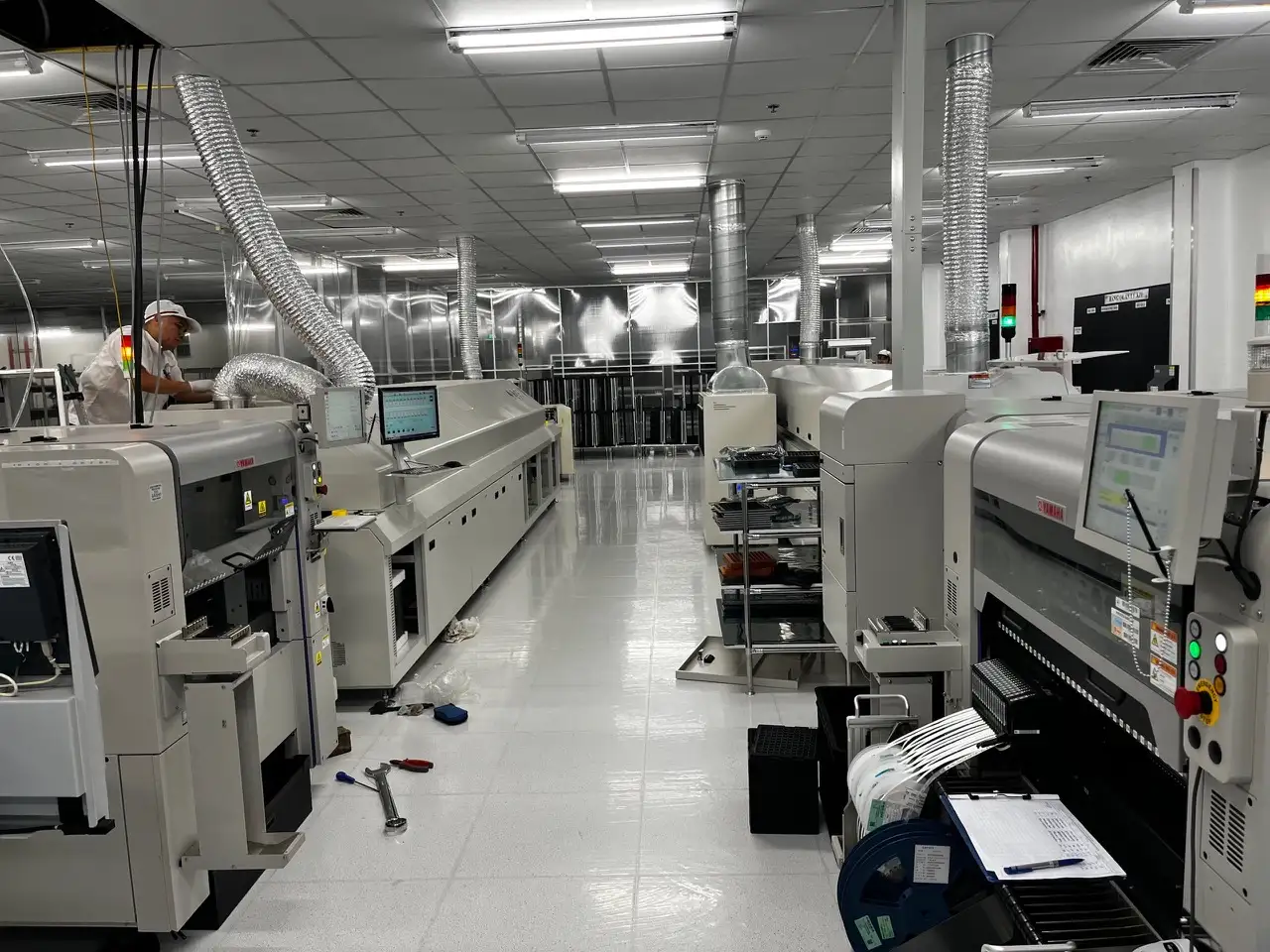
Choosing Based on Price Alone
Low-cost providers often sacrifice:
- Process control
- Documentation
- Component traceability
This leads to higher downstream costs.
Lack of a Clear Test Strategy
Relying only on AOI without functional testing increases the risk of field failures.
Poor Change Management
Uncontrolled ECNs, undocumented substitutions, and weak version control are major warning signs.
Weak Communication and Escalation Paths
Delayed responses during quality incidents often indicate deeper operational issues.
SHDC – A High-Quality PCBA Contract Manufacturing Partner
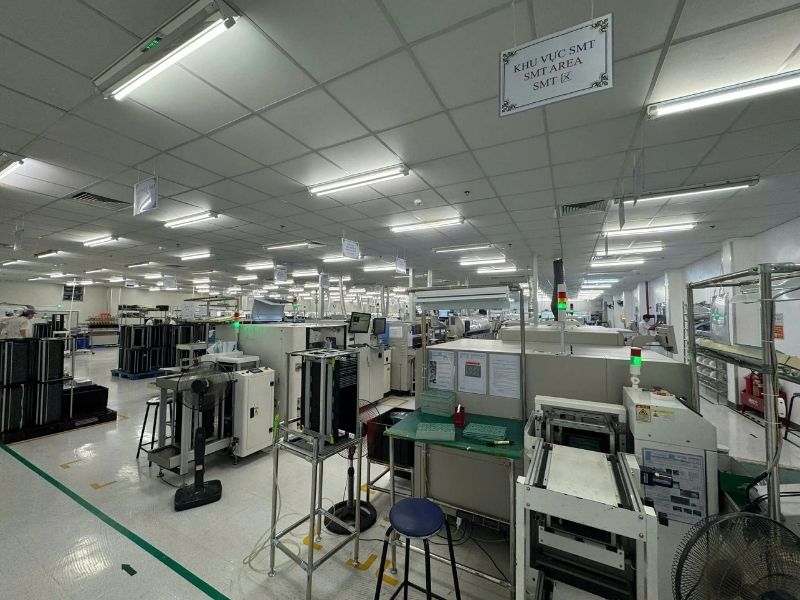
Pioneering PCBA Contract Manufacturing in Vietnam
Founded in 2022, SHDC is one of the few Vietnamese companies that entered the PCBA contract manufacturing sector with a clear focus on high-quality electronic assembly. From the outset, SHDC has specialized in PCB and PCBA manufacturing for products such as printers, fax machines, computers, consumer electronics, and home appliances, serving both domestic and international markets.
Experienced Management and Engineering Leadership
One of SHDC’s key strengths is its management and engineering team, whose members bring extensive industry experience and have previously held senior technical and leadership positions at major global corporations. This background enables SHDC to operate PCBA manufacturing processes with strong emphasis on process discipline, quality control, and international manufacturing standards—all critical for contract manufacturing projects serving US and global customers.
Comprehensive PCBA Manufacturing Capabilities
From a technical standpoint, SHDC supports a wide range of PCBA requirements, including:
- PCB sizes from 50 × 50 mm to 460 × 550 mm
- Component sizes from 0201, 0402, 0603 up to 100 mm
- Assembly of both rigid PCBs and flexible printed circuits (FPCs)
These capabilities allow SHDC to handle products with varying levels of complexity, from compact consumer devices to larger electronic systems.
Participation in Export-Oriented, High-Quality Electronics Projects
SHDC has demonstrated its ability to participate in export-oriented electronics manufacturing projects. Notably, the company has been involved in the production stages of PlugBug, a charger product distributed through Apple retail stores in the US and Europe. This project reflects SHDC’s capability to meet stringent quality and compliance requirements for international markets.
Prior to PlugBug, SHDC also assembled computer peripherals for leading global brands, further reinforcing its experience in quality-focused PCBA contract manufacturing.
End-to-End Electronic Manufacturing for Global Markets
Unlike many local suppliers that focus solely on packaging, plastics, mechanical parts, or individual components, SHDC is among the few companies in Vietnam capable of delivering complete electronic products for export. This end-to-end capability positions SHDC as a reliable PCBA contract manufacturing partner for companies seeking not only assembly services, but also consistency, scalability, and long-term manufacturing support.
Final Thoughts
These mistakes rarely cause immediate failure, but they compound risk over time. Successful PCBA outsourcing requires evaluating partners based on:
-
Process control and manufacturing discipline
-
Testing strategy and quality systems
-
Change management and documentation rigor
-
Transparency, accountability, and communication
These factors distinguish a commodity PCBA assembler from a true long-term manufacturing partner.
