
 Tiếng Việt
 日本語
日本語
For US companies reevaluating their supply chain strategy, Vietnam has become a serious destination for electronics manufacturing. But identifying potential suppliers is only the first step. The harder question is how to qualify them properly. When buyers search for contract manufacturers Vietnam electronics, they are rarely looking for a generic overview of the market. More often, they are trying to shortlist suppliers that can support quality, delivery, technical requirements, and long-term program stability. In other words, they are not just looking for a factory. They are looking for a supplier they can trust with production.
This is where a clear qualification framework matters. The right supplier can help reduce hidden costs, improve consistency, and support future growth. The wrong one may still submit a competitive quote, but create delays, quality escapes, or communication problems later. Below are the 9 criteria US buyers commonly use to qualify electronics contract manufacturers in Vietnam.
Why US Buyers Are Looking at Vietnam Electronics Contract Manufacturers
Vietnam has become a stronger option in global electronics manufacturing for several reasons. US buyers are increasingly looking for alternatives that support cost efficiency, supply chain diversification, and lower concentration risk. As part of that shift, Vietnam is often evaluated alongside China, Mexico, Thailand, and other regional manufacturing bases.
In most cases, interest in Vietnam is driven by a mix of factors:
- A broader China+1 sourcing strategy
- Growing maturity in electronics assembly and EMS capability
- Competitive manufacturing costs in selected categories
- Better supply chain diversification for OEMs and sourcing teams
- Stronger appeal for buyers seeking a long-term manufacturing base in Asia
That said, interest in Vietnam alone does not solve the sourcing problem. Buyers still need to determine which supplier has the right manufacturing setup, process discipline, and operational fit for their project.
>>>Read more: PCBA Supplier Vietnam: Why Many OEMs Choose the Wrong Partner
What Supplier Qualification Means in Electronics Manufacturing
In electronics manufacturing, supplier qualification is the process of determining whether a factory can reliably support your product, not just whether it can quote it.
This distinction matters. A supplier may offer an attractive price on paper, but still create avoidable problems if it lacks process control, testing capability, engineering support, or stable communication. That is why experienced buyers do not evaluate contract manufacturers based on cost alone.
A typical qualification review looks at:
- Manufacturing scope
- Production capacity
- Equipment and technical capability
- Quality systems
- Testing coverage
- Engineering support
- Traceability and systems
- Compliance readiness
- Communication and partnership fit
The practical goal is simple: reduce risk before it shows up in production.
>>>Read more: Electronics Manufacturing Outsourcing: Hidden Costs That Impact Your Total Cost
The 9 Criteria US Buyers Use to Qualify Contract Manufacturers in Vietnam for Electronics
This framework is especially useful for sourcing teams comparing multiple Vietnam electronics contract manufacturers. It helps shift the conversation from “Who is cheapest?” to “Who is best qualified for this project?”
1. Manufacturing Capability and Process Scope
The first thing buyers need to understand is what the supplier can actually do in-house. Some contract manufacturers only handle PCB assembly. Others provide a broader EMS scope that includes through-hole assembly, testing, sub-assembly, and final packaging.
That difference affects lead time, coordination, quality responsibility, and overall project complexity.
Buyers usually ask:
- Does the supplier support SMT?
- Is DIP or hand insertion available?
- Can the factory handle assembly beyond the PCB level?
- Are testing and packaging done in-house?
- Is the supplier set up for prototype, pilot, and volume production?
A supplier with broader process coverage can often reduce handoff risk and simplify project management, especially for OEMs that want fewer manufacturing touchpoints.
2. Production Capacity and Scalability
A supplier that performs well during sampling may not always perform well during volume ramp-up. That is why capacity should be evaluated in practical terms, not just with broad claims.
Buyers want to know whether the supplier can support current demand, absorb growth, and maintain output stability without creating new bottlenecks.
Important questions include:
- How many SMT and DIP lines are active?
- What is the monthly throughput or placement capacity?
- How much labor is available to support assembly, testing, and packaging?
- Can the supplier scale from low volume to higher volume smoothly?
- What happens if demand rises faster than forecast?
Scalability is not only about size. It is about whether the operation can grow without losing control of quality, planning, or delivery.
3. Equipment Quality and Process Technology
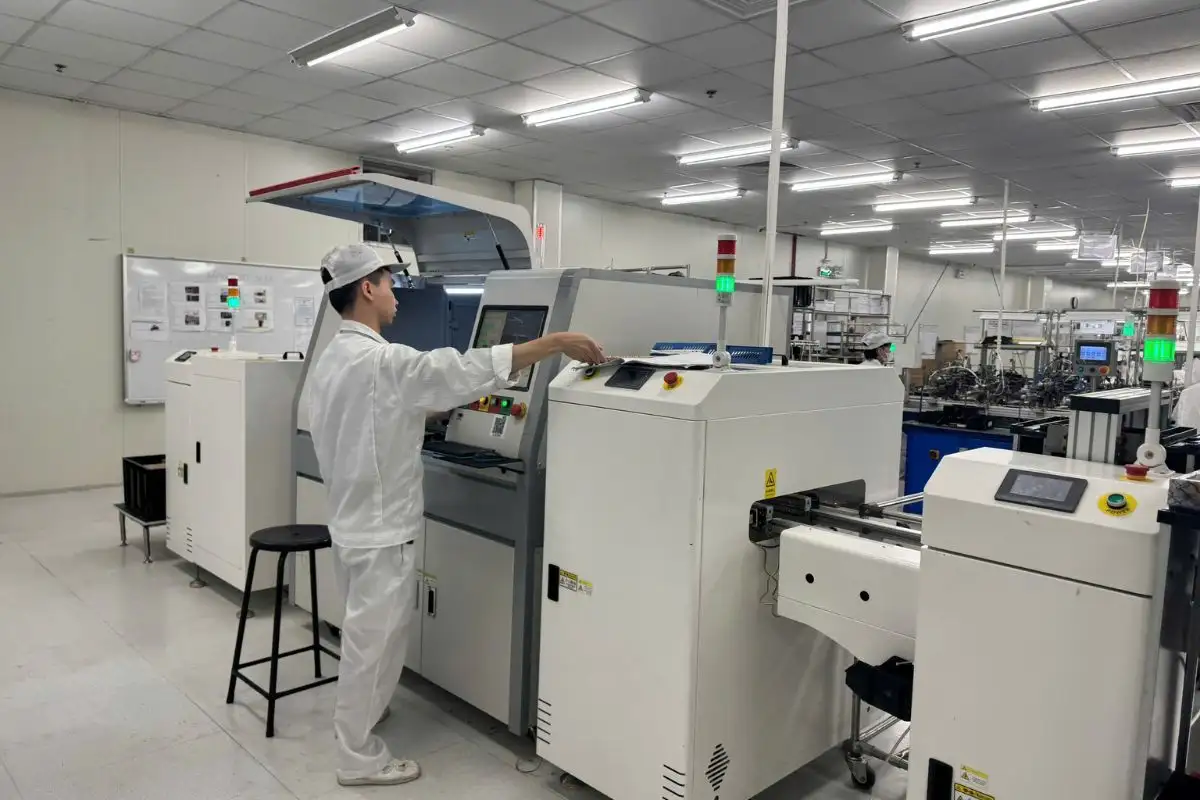
Equipment matters because process capability depends on more than operator effort. Buyers often look closely at the supplier’s machinery, automation level, and inspection setup to judge whether the factory can support stable and repeatable output.
The evaluation usually includes:
- Placement machine brands and models
- Solder paste printing capability
- SPI and AOI usage
- Reflow and wave soldering equipment
- ICT or other electrical test systems
- Maintenance and process stability
A supplier does not need the newest machine in every position to be competitive. But it should be able to demonstrate that its process technology is suitable for the product and managed with discipline.
>>>Read more: SMT Assembly Line Equipment: Complete Guide to Machines, Line Setup & Costs
4. Quality Control System and Inspection Discipline
A strong electronics manufacturing supplier does not rely on final inspection alone. Instead, quality should be built into the process through multiple control points.
Buyers generally want to see:
- Incoming quality control for materials and components
- In-process inspection during assembly
- Automated inspection where appropriate
- Repair and defect handling procedures
- Final outgoing inspection before shipment
The key is to understand whether the supplier has a layered quality approach. If inspection happens only at the end, problems are often found too late, after time and cost have already been added.
Process-based quality control is usually a stronger indicator of long-term reliability than defect sorting at the end of production.
5. Testing Capability and Product Reliability Support
Testing is one of the clearest ways to separate a basic assembly provider from a more capable manufacturing partner. Not every project requires the same level of testing, but buyers need to know what options are available and how testing fits the product’s risk profile.
Common evaluation points include:
- AOI capability
- ICT availability
- Functional testing support
- High-voltage or specialized electrical test options
- Burn-in or aging test capability where relevant
- Ability to align testing with product application
A supplier with broader testing support is generally better positioned to reduce field failures, improve product confidence, and support quality assurance beyond visual conformity.
>>>Read more: Is AOI Enough in PCBA Testing?
6. Engineering Support and Process Improvement Capability
Manufacturing projects rarely stay static. Product changes, process transfers, yield issues, and timeline pressure are normal parts of electronics production. That is why engineering support matters during supplier qualification.
Buyers often look for evidence of:
- NPI support
- DFM or DFA feedback
- Process optimization
- Yield improvement capability
- Root-cause analysis
- Coordination between production and engineering teams
A factory that can support engineering problem-solving is often more valuable than one that only follows instructions without offering practical feedback. In many cases, the strength of a supplier shows up not when things are easy, but when a line issue, design challenge, or process variation appears and the team has to respond.
7. Systems, Traceability, and Data Management
As electronics manufacturing becomes more demanding, operational systems have become part of supplier qualification, not an afterthought. Buyers increasingly expect visibility into materials, processes, production status, and quality data.
Areas often reviewed include:
- ERP usage
- MES or QMS systems
- Lot and batch traceability
- Document control
- Planning and materials management
- Defect tracking and reporting
- Response speed when issues need investigation
Traceability is especially important for companies that need audit support, corrective action analysis, or tighter control over production history. Suppliers with stronger systems are often easier to work with when projects scale or when quality documentation becomes more important.
8. Certifications, Compliance, and Export Readiness
For US buyers, supplier qualification often includes a review of formal business readiness as well as factory capability. This includes quality systems, export discipline, and the ability to support documentation required by customers or audits.
Buyers commonly ask:
- What current certifications are in place?
- How standardized are the supplier’s processes?
- Can the supplier support customer audits?
- Is documentation handled consistently?
- Does the supplier have experience supporting export-oriented manufacturing?
This is one area where verification matters. Buyers should request current records directly rather than relying only on broad marketing claims. A qualified supplier should be prepared to share relevant documentation during the sourcing and approval process.
9. Communication, Responsiveness, and Long-Term Partnership Fit
The final criterion is often underestimated, but it can have an outsized impact on project success. A supplier may have good equipment and decent production capability, but if communication is slow, unclear, or inconsistent, execution will suffer.
Buyers usually evaluate:
- RFQ response speed
- Clarity in technical communication
- Realism in lead times and commitments
- Willingness to flag issues early
- Cross-functional coordination
- General professionalism during the evaluation phase
In practice, the way a supplier communicates before the order is often a preview of how it will communicate after the order. That is useful information. A lot of sourcing pain can be predicted surprisingly early if buyers pay attention to responsiveness and structure.
A Practical Supplier Qualification Checklist for US Buyers
For teams evaluating multiple suppliers, a checklist can make comparisons much more objective. It also helps prevent decisions from being driven too heavily by price alone.
Here is a practical shortlist buyers can use:
- Does the supplier support SMT, DIP, testing, assembly, and packaging in-house?
- What is the factory’s current line count and monthly capacity?
- Can the supplier support prototype, pilot, and mass production?
- What machine platforms and inspection systems are used?
- How is quality controlled from incoming materials to outgoing shipment?
- What electrical and functional testing is available?
- Can the supplier support engineering feedback and process improvement?
- Are ERP, MES, QMS, or traceability systems in place?
- What certifications and documentation can the supplier provide?
- How responsive and structured is communication during RFQ and technical review?
This kind of checklist helps buyers compare suppliers on operational readiness, not just quote competitiveness.
>>>Read more: PCB Assembly Vietnam: 7 Questions Every OEM Should Ask Before Sending an RFQ
How SHDC Aligns with These Qualification Criteria
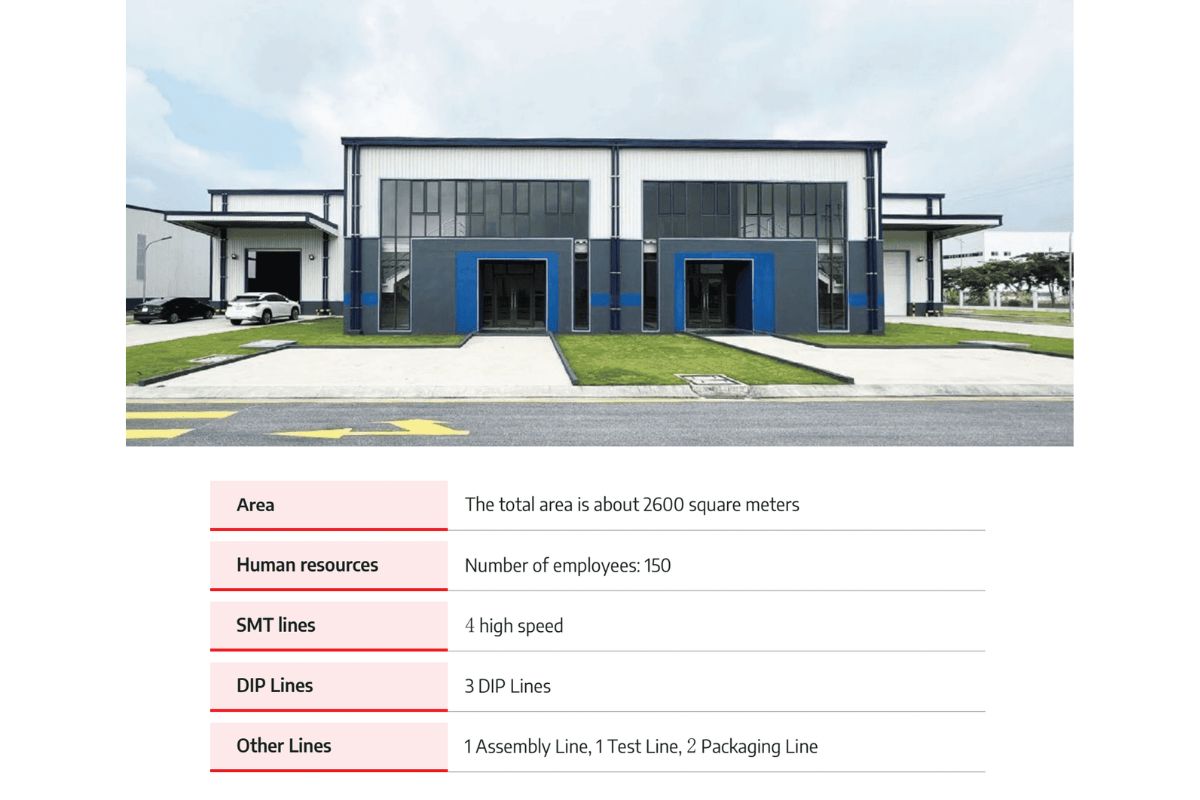
Using the framework above, buyers can evaluate whether a supplier’s published capabilities align with their sourcing requirements. In the case of SHDC Electronics, several points stand out from the company profile.
SHDC is located in Cam Dien-Luong Dien IP, Cam Giang Commune, Hai Phong City, placing it within northern Vietnam’s industrial manufacturing corridor. For US buyers looking at supplier access, regional logistics, and production support in northern Vietnam, that location can be commercially relevant.
Based on the available company profile, SHDC presents:
- A production area of about 2,600 square meters
- Approximately 150 employees
- 4 high-speed SMT lines
- 3 DIP lines
- 1 assembly line
- 1 test line
- 2 packaging lines
- EMS service scope covering component soldering, assembly, testing, and final packaging
- Production flow that includes IQC, AOI, ICT, FCT, visual inspection, OQC, and packaging
- Equipment including Yamaha placement platforms, 3D SPI, AOI, ICT, wave soldering, and reflow
- Additional capabilities such as functional testing, high-voltage testing, aging test support, and laser marking
- Internal use of ERP, PLM, SCM, and MES/QMS systems
- A stated focus on automation and process improvement
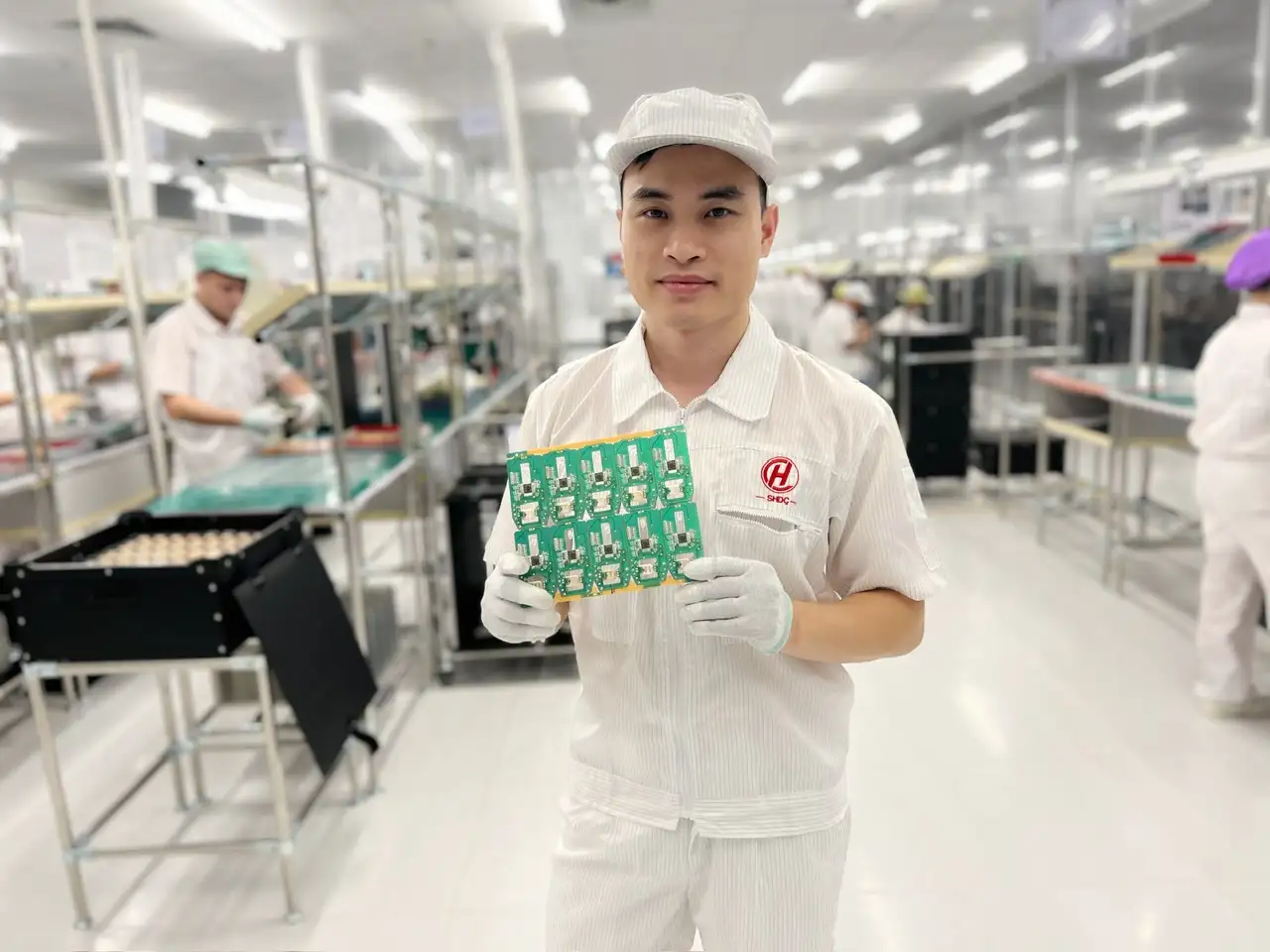
For a buyer screening Vietnam electronics suppliers, this profile suggests that SHDC fits the type of manufacturer that should be reviewed through a detailed technical and commercial qualification process, rather than judged only on headline pricing.
>>>Read more: SHDC SMT Vietnam: A Leading SMT Assembly Partner for Global OEM Electronics
Common Mistakes US Buyers Make When Qualifying Vietnam Electronics Suppliers
Even experienced sourcing teams can make qualification mistakes, especially when a program is under time pressure.
Some of the most common mistakes include:
- Comparing suppliers mainly on unit price
- Failing to check what processes are actually done in-house
- Overlooking testing capability
- Assuming visual inspection is enough
- Not reviewing traceability or systems maturity
- Ignoring engineering support during NPI or transfer
- Skipping certification verification
- Underestimating communication quality during RFQ
These mistakes usually do not appear immediately. They show up later as missed timelines, unstable yield, recurring defects, or unclear accountability.
A more disciplined qualification process helps avoid that.
Final Thoughts
For US companies searching for contract manufacturers Vietnam electronics, the most important step is not building a long supplier list. It is narrowing that list based on the right criteria. Manufacturing scope, scalability, equipment, quality control, testing, engineering support, systems, compliance readiness, and communication all play a role in supplier performance. When buyers evaluate these areas carefully, they are more likely to find a partner that can support not just today’s production, but future growth as well.
Vietnam continues to attract interest as an electronics manufacturing base, but the decision should never stop at country selection. The real question is which supplier is qualified for your program and capable of delivering consistently. For buyers evaluating suppliers in northern Vietnam, SHDC is one example of a company whose published capabilities align with many of the operational factors US sourcing teams typically review during qualification.
>>>Read more: Top Vietnam PCB Manufacturers for US Buyers in 2026
