
 Tiếng Việt
 日本語
日本語
Many U.S. OEMs begin this comparison with a simple question: Is PCB assembly cheaper in Vietnam or China? The honest answer is that it depends — and not in a vague, hand-wavy way. It depends on how you define cost. If you are only comparing the quoted assembly rate, you may get one answer. If you are comparing total landed cost, including sourcing risk, logistics, tariffs, rework, and supplier execution, you may get a very different one. That is why this topic deserves a more serious look. Below is a practical comparison of Vietnam vs China PCB assembly cost from the perspective of U.S. OEM buyers.
Why U.S. OEMs Are Comparing Vietnam and China for PCB Assembly

This comparison is happening more often because China is no longer the unquestioned default for every electronics program. It is still a major manufacturing base, of course. But many sourcing teams now see it as one option among several, not the only realistic choice.
The conversation has shifted from “lowest quote” to “best total outcome”
A few years ago, many buyers were comfortable focusing heavily on direct production cost. Today, that approach feels incomplete.
U.S. OEMs are under pressure from several directions:
- tariff and trade uncertainty
- margin pressure
- geopolitical exposure
- supply chain concentration risk
- customer expectations around resilience and diversification
In practical terms, companies are not just trying to shave pennies off an assembly line item. They are trying to avoid fragile sourcing structures that create larger costs later.
That is why Vietnam has moved into the conversation. Not because it replaces China in every case, but because it gives buyers another serious manufacturing option in Asia.
What PCB Assembly Cost Really Includes
This is where many cost comparisons go wrong. Buyers say they want to compare PCB assembly cost, but what they often end up comparing is only a narrow slice of the real spend.
Direct cost is only the starting point
The quoted assembly price usually covers part of the picture, not the whole thing. A proper cost comparison should include:
- assembly labor
- setup or NRE charges
- tooling and fixtures
- testing and inspection
- component sourcing overhead
- packaging requirements
- yield loss and rework
- freight and customs
- program management overhead
That last point gets overlooked more than it should. If a supplier is difficult to work with, slow to respond, or unclear about engineering changes, the hidden cost shows up in delays, confusion, and internal fire drills.
Low quote does not always mean low total cost
This is one of the oldest traps in electronics sourcing. A quote can look aggressive upfront and still end up expensive once the real-world variables kick in.
For example:
- a supplier with weak incoming inspection may increase defect risk,
- poor documentation can slow approvals,
- unclear substitution control can create BOM surprises,
- and weak testing can push problems downstream into warranty or field returns.
So when U.S. OEMs compare Vietnam vs China PCB assembly cost, the useful question is not Which one has the cheaper labor?
It is Which option gives us the better cost-performance outcome for this specific program?
Vietnam vs China PCB Assembly Cost: Direct Cost Comparison
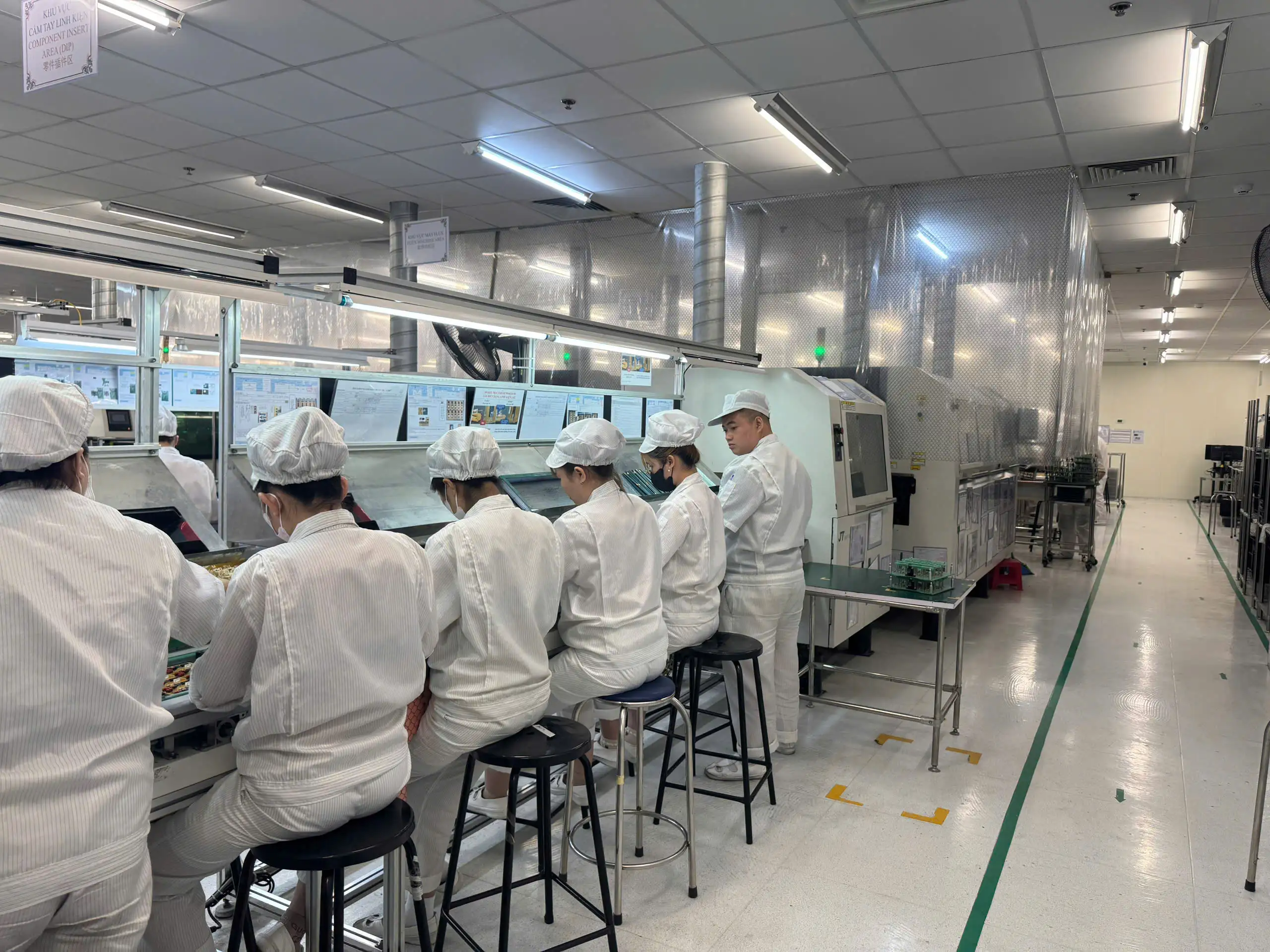
At a direct-cost level, Vietnam is often competitive and in many cases lower than China, especially compared with more expensive Chinese manufacturing hubs. But there is nuance here, and nuance is where most sourcing decisions either get smarter or fall apart gloriously.
Labor and operating cost
Vietnam often has an advantage in labor and operating cost for many assembly programs. That can help reduce pricing pressure, especially on low-to-mid volume work or product lines where manual content still matters.
China, however, still benefits from manufacturing depth and efficiency in many regions. In some cases, that ecosystem maturity offsets higher labor costs through better throughput, stronger local sourcing, or less friction in execution.
Ecosystem maturity and sourcing efficiency
China still has the broader and more mature electronics supply ecosystem overall. That matters because a mature ecosystem can lower cost indirectly through:
- faster part access,
- shorter sourcing cycles,
- fewer material surprises,
- and stronger support for high-mix or high-volume programs.
Vietnam is developing quickly, but the ecosystem is still uneven depending on the type of board, the BOM complexity, and the supplier’s own sourcing capability.
Prototype vs. volume production
For prototypes and early NPI builds, both Vietnam and China can be viable. The better option usually comes down to the supplier, not the flag on the map.
For higher-volume production, China may still hold a cost advantage in certain categories because of scale, sourcing speed, and manufacturing density. Vietnam, on the other hand, can be very attractive for OEMs that are balancing price with diversification and long-term supply strategy.
Direct comparison table
Below is a practical comparison of the main direct cost factors.
| Cost Factor | Vietnam | China | What U.S. OEMs Should Know |
|---|---|---|---|
| Labor cost | Often competitive and lower in many cases | Often higher in major hubs | Region and board complexity matter |
| Operating cost | Generally competitive | Varies by region and supplier | Supplier efficiency matters as much as geography |
| Supplier ecosystem | Growing fast | More mature and deeper | This can affect sourcing speed and flexibility |
| Prototype support | Competitive with the right supplier | Strong overall | Execution varies by factory |
| High-volume efficiency | Improving | Often stronger | China still benefits from scale in many categories |
The short version: Vietnam often looks good on direct cost, but China still has structural strengths that can matter depending on the program.
>>>Read more: Alternatives to China PCB Assembly: How U.S. OEMs Compare Vietnam and Other Options
Hidden Costs U.S. OEMs Often Overlook
If you want the real answer to Vietnam vs China PCB assembly cost, this is where the decision usually gets made.
Tariffs and policy exposure
Even when the assembly quote looks similar, the downstream cost exposure can look very different once tariffs or policy risk are added to the picture.
For many U.S. OEMs, the value of Vietnam is not just what it costs today. It is also what it may help reduce in terms of future concentration risk.
Freight, lead time, and logistics volatility
Logistics is not just a shipping line in a spreadsheet. Delays affect launch schedules, inventory planning, and working capital.
A slightly lower unit cost loses its shine very quickly if it leads to:
- missed delivery windows,
- larger safety stock requirements,
- or more expensive freight decisions later.
Quality escapes, rework, and warranty exposure
This is one of the most expensive hidden-cost categories. A supplier that looks cheap but has weak process control can create problems that do not show up until after production.
Those costs may include:
- extra inspection,
- rework labor,
- scrap,
- delayed shipments,
- customer complaints,
- and field returns.
A lower quote can become a much more expensive program if the supplier creates avoidable quality issues or weak engineering handoff.
Communication friction
This sounds soft until it starts costing real money.
When engineering changes are not tracked well, when quote assumptions are vague, or when the supplier is slow to clarify basic issues, internal teams burn time. Procurement gets frustrated. Engineering loses momentum. Operations starts building buffers around uncertainty.
That cost is real, even if it never appears in a formal quote.
>>>Read more: China+1 Strategy: Why OEMs Are Moving Electronics Manufacturing from China to Vietnam
Where Vietnam May Have an Advantage in Total Landed Cost

Vietnam’s strongest argument is not always that it is the cheapest in every line item. It is that it can offer a strong total landed cost outcome for many OEM programs.
Better fit for China+1 sourcing strategies
For U.S. companies trying to reduce concentration risk, Vietnam often makes sense because it sits close enough to Asian supply networks to remain practical, while still offering diversification value outside China.
That matters more than many people realize. Diversification itself has economic value when it reduces sourcing fragility.
Competitive for low-to-mid volume programs
Vietnam can be particularly attractive for:
- low-to-mid volume production,
- cost-sensitive but quality-conscious OEM programs,
- and companies that want a second manufacturing base without overcomplicating their supply chain.
Strong cost-performance balance
This is the real appeal. For many programs, Vietnam is not the outright winner on every cost input. It is the option that tends to perform well across the categories that matter most:
- cost,
- flexibility,
- supply chain resilience,
- and sourcing strategy alignment.
That is why Vietnam continues to gain traction with U.S. OEM buyers.
Where China May Still Be More Cost-Effective
Any honest comparison needs to say this clearly: China is still the more cost-effective option in some cases.
High-volume production still favors China in many categories
If the program is very high volume, highly standardized, or deeply integrated into a mature China-based ecosystem, China may still deliver the better commercial result.
Its advantages can include:
- stronger supplier density,
- faster component access,
- better scale efficiency,
- and less friction for highly specialized production environments.
Deep BOM ecosystems can reduce total cost
Some products are simply easier to build cost-effectively where the component network and sub-supplier support are already highly concentrated. In those cases, China’s ecosystem maturity can outweigh its higher labor cost.
Specialized clusters still matter
This is especially true for certain consumer electronics, power electronics, and accessory categories where manufacturing specialization is deeply established.
So yes, Vietnam is often competitive. But no, China has not suddenly become irrelevant. That would be a fun headline and a terrible sourcing conclusion.
>>>Read more: Top PCBA Manufacturers in Vietnam: 10 Suppliers Global Buyers Should Know
Vietnam vs China PCB Assembly Cost by OEM Scenario
This is often the most useful way to think about the comparison, because real sourcing decisions are rarely generic.
For prototype and NPI builds
Both countries can work well. The deciding factors are usually:
- engineering responsiveness,
- DFM feedback,
- MOQ flexibility,
- and speed of communication.
A strong supplier in Vietnam can absolutely outperform a weaker one in China here.
For low-to-mid volume production
Vietnam often becomes very compelling in this range. It can offer a better cost-diversification balance, especially for OEMs trying to build a broader Asia sourcing model.
For very high-volume consumer electronics
China may still hold the advantage in many cases because of ecosystem density, sourcing speed, and manufacturing scale.
For cost-sensitive industrial products
This is more balanced. Vietnam may be highly competitive if the supplier has solid process control and the sourcing model is managed well. China may still win where specialized inputs or scale efficiencies are essential.
For China+1 dual-sourcing strategies
Vietnam is one of the strongest fits. This is where its strategic value becomes especially clear, because the benefit is not only cost. It is flexibility and reduced concentration risk.
Best-fit scenario table
| OEM Scenario | Vietnam | China |
|---|---|---|
| Prototype / NPI | Strong option with the right supplier | Strong option overall |
| Low-to-mid volume | Often very competitive | Competitive |
| Very high volume | Possible, but supplier-dependent | Often stronger |
| China+1 sourcing | Excellent fit | Not a diversification option |
| Deep BOM ecosystem needs | Improving | Often stronger |
This kind of scenario-based comparison is usually more useful than broad claims about which country is “cheaper.”
How U.S. OEMs Should Compare PCB Assembly Quotes the Right Way

If there is one part of this article worth bookmarking, it is probably this one.
Compare like for like
Many quote comparisons are flawed because buyers are not comparing the same scope.
Before choosing a supplier, check whether both quotes include the same assumptions around:
- testing,
- tooling,
- inspection,
- packaging,
- labeling,
- documentation,
- and material sourcing.
If one quote looks dramatically cheaper, there is a decent chance something is excluded.
Separate pricing from execution risk
A smart sourcing team does not evaluate cost in isolation. It also asks:
- What is the supplier’s defect response process?
- How do they manage ECO changes?
- What testing is included?
- How transparent is the BOM sourcing model?
- What happens if lead times shift?
These questions reveal whether the quote is commercially stable or only cosmetically attractive.
Ask the right quote-review questions
A good buyer checklist includes:
- Are components consigned or turnkey?
- Is AOI / ICT / FCT included?
- Are fixtures and tooling included or billed separately?
- What quality standard is assumed?
- What yield assumptions are built into the quote?
- What lead time is based on material availability?
- What is excluded?
This is not glamorous work, but it is where expensive mistakes are usually prevented.
Is Vietnam Cheaper Than China for PCB Assembly?
Here is the clearest honest answer:
Sometimes yes, but not always.
Vietnam can absolutely be more cost-effective than China for many OEM programs, especially when you look beyond direct assembly price and consider:
- diversification value,
- risk reduction,
- competitive labor structure,
- and the total landed cost equation.
China may still be cheaper for some very high-volume, ecosystem-intensive, or highly specialized programs.
So if the question is “Is Vietnam always cheaper?” the answer is no.
If the question is “Can Vietnam offer a better total sourcing outcome for many U.S. OEMs?” the answer is very often yes.
The Bottom Line for U.S. OEMs
The most useful way to compare Vietnam vs China PCB assembly cost is not to ask which country has the lower quote. It is to ask which option gives your program the better combination of cost, execution, resilience, and long-term sourcing fit.
Vietnam is increasingly attractive because it offers a practical balance: competitive assembly economics, growing manufacturing capability, and real value in a China+1 strategy.
China still has major strengths, especially in scale, supplier density, and ecosystem maturity.
That is why the smartest OEM teams do not reduce this decision to labor cost. They compare the full picture — quote structure, hidden costs, logistics, testing, supplier discipline, and strategic risk. That is where the real answer lives.
FAQs
Is PCB assembly cheaper in Vietnam than China?
In many cases, yes. Vietnam can be cheaper on direct assembly cost, especially compared with higher-cost regions in China. But the full answer depends on volume, board complexity, testing, logistics, and total landed cost.
Why do PCB assembly quotes vary so much between suppliers?
Because quote scope varies. One supplier may include testing, tooling, inspection, packaging, or sourcing support, while another excludes them. Supplier capability and yield assumptions also affect pricing.
What hidden costs should U.S. OEMs watch for?
Common hidden costs include rework, scrap, freight volatility, tariff exposure, delayed engineering communication, weak testing, and unclear BOM management.
Is Vietnam better for low-volume PCB assembly?
Often, yes. Vietnam can be a very good fit for low-to-mid volume programs, especially for companies pursuing diversification and cost balance rather than only maximum scale.
When is China still the cheaper option?
China may still be more cost-effective for very high-volume production, highly specialized BOMs, or programs that benefit heavily from a dense local supply chain ecosystem.
Should OEMs compare labor cost or total landed cost?
They should compare total landed cost. Labor cost alone is too narrow and often leads to poor sourcing decisio:
>>>Read more: SHDC – Trusted Non-China PCBA Manufacturer in Vietnam for U.S. OEMs
