
 Tiếng Việt
 日本語
日本語
For US MedTech startups and OEMs, finding a reliable contract manufacturer for medical device PCB assembly is one of the most consequential supply chain decisions you’ll make. The stakes are high: regulatory compliance, patient safety, and production timelines all depend on your manufacturing partner’s capabilities. Vietnam has quietly become one of the most compelling destinations for this work — and for good reason. This guide breaks down exactly why US MedTech companies are shifting their PCB assembly operations to Vietnam, what “reliability” actually means in a medical manufacturing context, and what to look for when evaluating a partner.
Why US MedTech Companies Are Turning to Vietnam for PCB Assembly
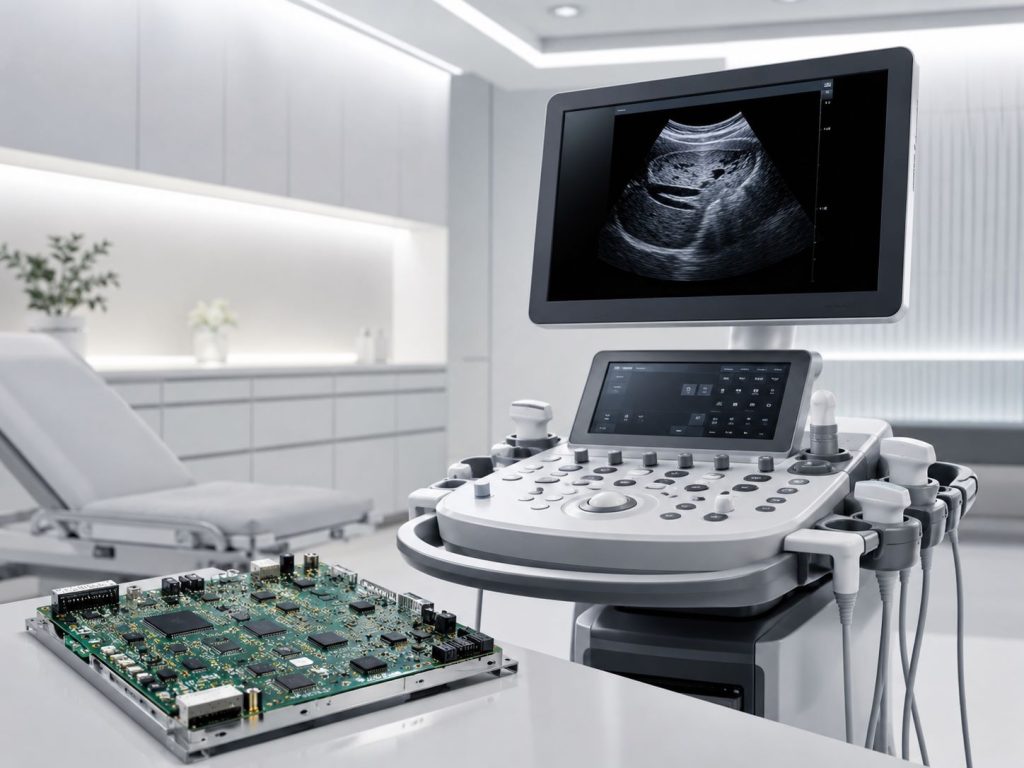
The Shift Away from China — What’s Driving It in 2025–2026
The US–China trade tensions that began in 2018 never fully resolved — they evolved. Section 301 tariffs, export control restrictions, and growing geopolitical uncertainty have pushed supply chain managers to actively diversify away from single-country dependency. For medical device companies, the risk calculus is even sharper: a disrupted supply chain doesn’t just hurt margins — it can delay life-saving products from reaching patients.
Vietnam has emerged as the primary beneficiary of this shift. According to the Vietnam Electronics Industry Association, electronics exports from Vietnam exceeded $120 billion in 2024, with medical and industrial electronics among the fastest-growing segments. Major global EMS providers — including Foxconn, Samsung, and LG — have significantly expanded their Vietnam footprint, bringing with them a mature supplier ecosystem, skilled workforce, and improving infrastructure.
Vietnam’s Rise as a Trusted Electronics Manufacturing Hub
Vietnam’s strengths for medical device electronics manufacturing go beyond cost:
- Skilled workforce: Vietnam produces over 100,000 engineering graduates annually, with a growing concentration in electronics and embedded systems
- Government support: Preferential tax policies for high-tech manufacturing zones (e.g., Saigon Hi-Tech Park, Hanoi’s Hoa Lac Hi-Tech Park)
- Trade agreements: Vietnam’s membership in CPTPP and EVFTA opens preferential tariff access — and critically, goods manufactured in Vietnam are not subject to the same US tariff pressures as Chinese-origin goods
- Improving logistics: Direct freight routes from Ho Chi Minh City and Hanoi to major US ports have shortened lead times considerably
Cost Comparison — Vietnam vs. US vs. China for Medical PCB Assembly
One of the most compelling arguments for Vietnam is the cost differential — without the quality trade-off that once made offshore manufacturing a gamble.
| Cost Factor | United States | China | Vietnam |
|---|---|---|---|
| Labor cost (per hour) | $25–$45 | $6–$10 | $3–$6 |
| PCB assembly cost index | 100% (baseline) | ~45–55% | ~35–45% |
| Tariff risk (US imports) | N/A | High (Section 301) | Low |
| Regulatory alignment | FDA native | Requires verification | ISO 13485 available |
| Lead time to US | N/A | 3–5 weeks | 3–5 weeks |
For a MedTech startup managing tight runway, the difference between US-based and Vietnam-based assembly can represent 40–60% savings on manufacturing costs — capital that can be redirected toward R&D, clinical trials, or FDA submission. The global medical device contract manufacturing market was valued at over $83 billion in 2025 and is projected to reach $140 billion by 2030, reflecting just how fast this outsourcing trend is accelerating.
What Makes a Medical Device PCB Assembly Partner “Reliable”
Reliability in medical device manufacturing is not a vague quality — it is a specific, verifiable set of capabilities and certifications. Before signing any contract with a Vietnam-based EMS provider in Vietnam, US buyers should evaluate partners against the following criteria.
ISO 13485 Certification — Why It’s Non-Negotiable
ISO 13485:2016 is the international quality management standard specifically designed for medical device manufacturers. Unlike ISO 9001 (which covers general quality management), ISO 13485 requires:
- A documented Quality Management System (QMS) tailored to medical device risk
- Strict control of design, production, and post-market processes
- Comprehensive traceability requirements for components and finished assemblies
- Regular internal audits and management reviews
Any Vietnam PCB assembly partner you consider for medical device work must hold a current, third-party-audited ISO 13485 certification. Ask for the certificate number and verify it directly with the certifying body (typically TÜV, SGS, Bureau Veritas, or equivalent). For a deeper understanding of what this standard requires, FDA’s guidance on quality system regulations provides the authoritative reference.
FDA 21 CFR Part 820 Compliance — What US Buyers Need to Verify
While FDA registration is primarily the responsibility of the device manufacturer (you), your contract manufacturer’s processes must align with FDA’s Quality System Regulation under 21 CFR Part 820. Key areas to verify:
- Design controls: Does the manufacturer support design history file (DHF) documentation?
- Production and process controls: Are manufacturing processes validated and documented?
- Corrective and Preventive Action (CAPA): Is there a formal CAPA system in place?
- Records and documentation: Can the manufacturer provide device history records (DHR) for every production lot?
A manufacturer who understands FDA 21 CFR Part 820 requirements — even if they are not themselves FDA-registered — will make your regulatory submission process significantly smoother.
Traceability and Documentation Standards
In medical device manufacturing, traceability is not optional. Every component, every solder joint, every inspection result must be traceable to a specific production lot, operator, and timestamp. Look for PCBA manufacturers in Vietnam who operate:
- MES (Manufacturing Execution System): Real-time production tracking at the component level
- ERP integration: Linking procurement, inventory, and production records
- Lot traceability: Ability to trace any finished assembly back to its raw material lot within hours
Quality Control Processes — AOI, X-Ray, IPC-A-610 Class II/III
A medical-grade SMT assembly line should include multiple inspection stages:
- Automated Optical Inspection (AOI): Post-reflow inspection detecting solder defects, missing components, and misalignment
- 3D AOI: More advanced than 2D, capable of detecting coplanarity issues and solder volume defects
- X-Ray Inspection: Essential for BGA, QFN, and other hidden-joint packages common in medical electronics
- IPC-A-610 Class III compliance: The highest workmanship standard, required for life-sustaining and implantable devices
Quick Reference: What to Ask Your Vietnam PCB Assembly Partner
| Question | What a Strong Answer Looks Like |
|---|---|
| Are you ISO 13485 certified? | Yes — provide certificate number and expiry date |
| Do you have 3D AOI and X-ray inspection? | Yes — on every medical device line |
| Can you provide full lot traceability? | Yes — via MES system, traceable to component level |
| Have you worked with US MedTech companies before? | Yes — provide references or case studies |
| Do you understand FDA 21 CFR Part 820? | Yes — and we support DHR documentation |
SHDC’s Medical Device PCB Assembly Capabilities
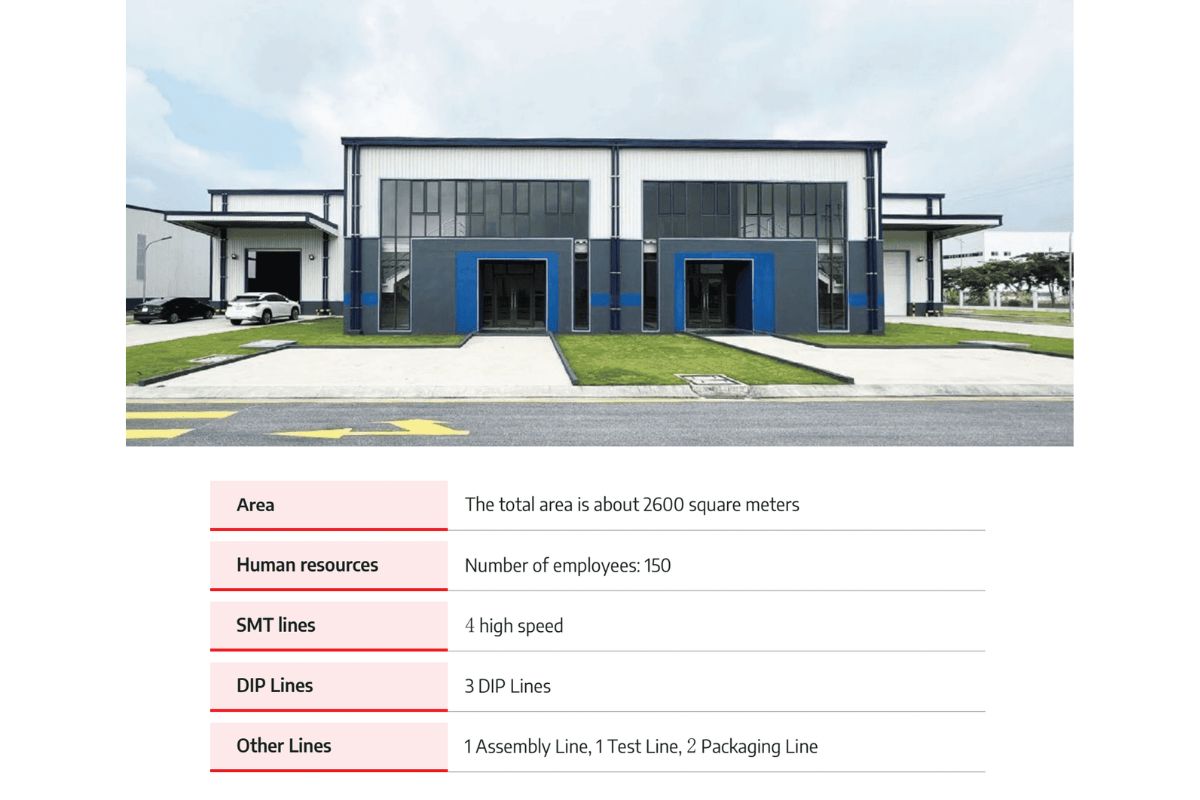
SHDC Electronics Co., Ltd is a Vietnam-based contract electronics manufacturer specializing in medical device PCB assembly and box-build services for international clients, including US MedTech companies. Located within the Vietnam Singapore Industrial Park in Hai Duong — approximately 40km from Hanoi and 55km from Haiphong Port — SHDC operates a 2,600m² ISO 13485-certified facility purpose-built for medical and industrial electronics production.
SMT & Through-Hole Assembly for Medical-Grade Boards
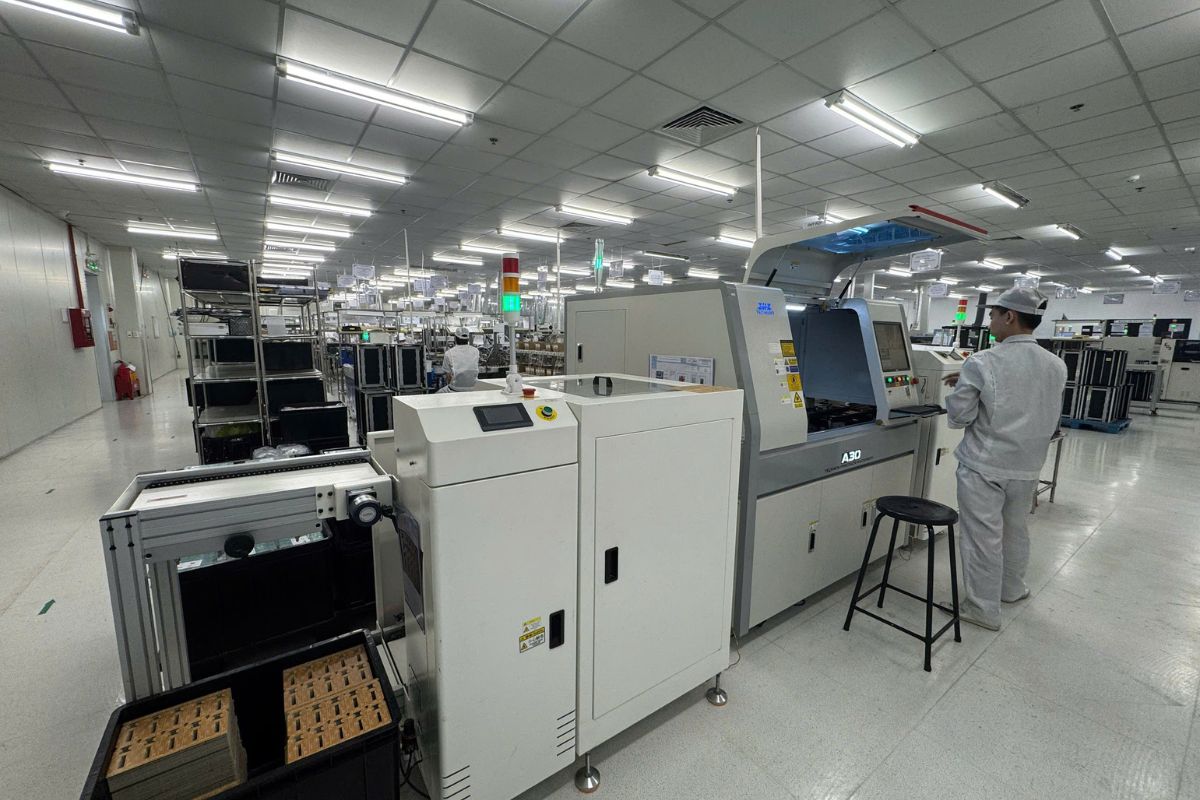
SHDC’s production floor supports the full range of PCB assembly technologies required for modern medical devices:
- Surface Mount Technology (SMT): High-speed, high-precision placement for components down to 0201 and fine-pitch ICs via SMT assembly services
- Through-Hole Assembly: Manual and selective soldering for connectors, transformers, and legacy medical board designs
- Mixed Technology: Combined SMT and through-hole on the same board — common in patient monitoring and diagnostic equipment
- Box Build Assembly: Full system integration from bare board to finished medical device enclosure
Cleanroom Standards and ESD-Controlled Environment
Medical device PCB assembly requires more than standard electronics manufacturing hygiene. SHDC’s facility includes:
- ESD-controlled workstations throughout the production floor
- Controlled humidity and temperature environments to prevent moisture-sensitive component damage
- Proper handling protocols for Class II and Class III medical device assemblies
Production Capacity
- 4 SMT production lines running in parallel with Yamaha YSM1/YSM2 high-speed placers
- 98 million solder joints per month — sufficient for both mid-volume MedTech production and scaling into commercial launch volumes
- Integrated MES/ERP/QMS systems providing real-time production visibility and full lot traceability
From Prototype to Full-Scale Production
One of the most common pain points for MedTech startups is finding a partner who can support both early-stage prototyping and eventual commercial production — without forcing a manufacturer change mid-development. SHDC’s prototype PCB assembly services and turnkey manufacturing solutions support:
- NPI (New Product Introduction): Engineering review, DFM feedback, and first-article inspection
- Pilot production: Small-batch runs (50–500 units) for design validation and regulatory testing
- Full-scale production: Volume ramp with consistent quality and documentation
The Quality Assurance Process at SHDC
Quality in medical device manufacturing is built into the process — not inspected in at the end. SHDC’s QA framework follows a four-stage model aligned with ISO 13485:2016 requirements.
Incoming Quality Control (IQC)
Every component entering the facility is inspected against approved vendor specifications before being released to the production floor. This includes:
- Visual inspection and dimensional verification
- Certificate of Conformance (CoC) review
- Sampling inspection per AQL standards
In-Process Quality Control (IPQC)
During production, quality checkpoints are embedded at every critical stage:
- Post-paste inspection (SPI — Solder Paste Inspection via Yamaha YSI-SP)
- Post-reflow 3D AOI (Yamaha YSI-V) with AI-driven defect detection exceeding 99.9% accuracy
- Functional test points for medical-specific parameters
Final Quality Inspection (OQC/FQC)
Before shipment, every finished assembly undergoes:
- Full visual inspection per IPC-A-610 Class II/III
- Electrical functional testing
- Final documentation review — ensuring DHR completeness before release
Corrective and Preventive Action (CAPA)
When defects are identified — at any stage — SHDC’s CAPA process ensures root cause analysis is completed, corrective actions are implemented, and effectiveness is verified before the process resumes. This closed-loop system is a core FDA 21 CFR Part 820 requirement and a key differentiator between medical-grade and standard EMS providers.
How the Partnership Process Works — From First Contact to Delivery
Many US MedTech buyers hesitate to engage overseas manufacturers because the process feels opaque. Here’s exactly how a new engagement with SHDC works:
| Step | What Happens | Typical Timeline |
|---|---|---|
| Step 1 | Submit BOM, Gerber files, and assembly drawings | Day 1 |
| Step 2 | Engineering review and DFM feedback | Days 2–5 |
| Step 3 | Quotation and NDA signing | Days 5–7 |
| Step 4 | Pilot batch production and first-article inspection | Weeks 2–4 |
| Step 5 | Customer approval and design lock | Week 4–5 |
| Step 6 | Full-scale production and shipping | Weeks 5–8 |
The total time from first contact to receiving your first production-quality assemblies is typically 6–8 weeks — comparable to domestic US lead times for complex medical boards, at a fraction of the cost. Learn more about how PCB assembly lead times are managed at a modern Vietnam EMS facility.
FAQs
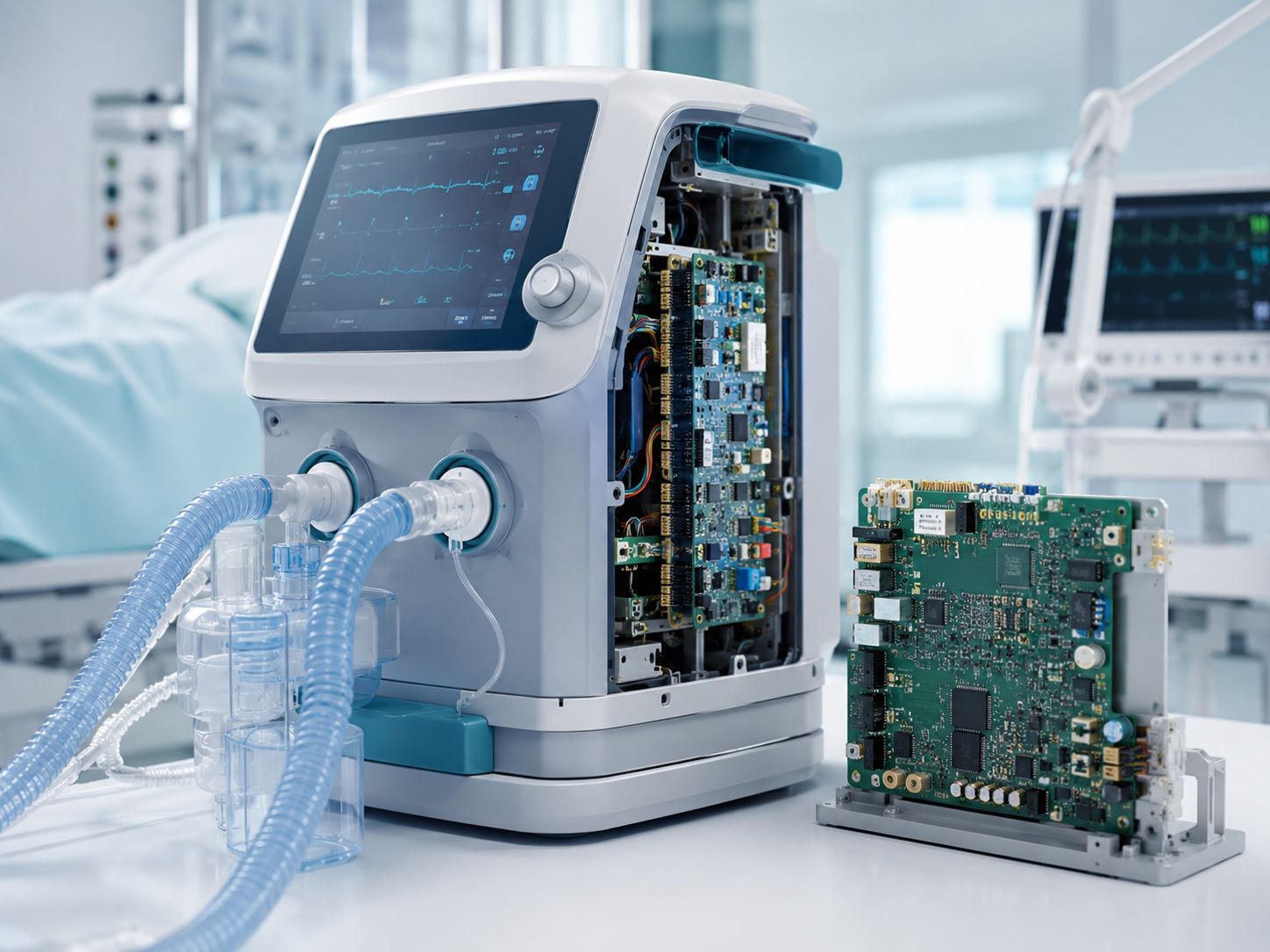
Q1: Is Vietnam capable of producing FDA-compliant medical device PCBs?
Yes — with the right partner. FDA compliance is primarily the device manufacturer’s responsibility, but a Vietnam-based EMS provider with ISO 13485 certification, documented QMS, and CAPA systems can fully support your FDA 510(k) or PMA submission by providing the manufacturing documentation required under 21 CFR Part 820.
Q2: How long does it take to start production with a new partner in Vietnam?
From initial inquiry to first pilot batch, expect 4–6 weeks. This includes engineering review, DFM feedback, material procurement, and first-article inspection. Full-scale production typically begins in week 6–8. SHDC’s prototype and NPI services are specifically designed to compress this timeline for US MedTech startups.
Q3: What certifications should I require from a Vietnam PCB manufacturer for medical devices?
At minimum: ISO 13485:2016 (current, third-party audited). Additionally look for IPC-A-610 Class III capability, RoHS compliance, and UL-recognized component sourcing practices. For Class III devices, ask specifically about IQ/OQ/PQ process validation documentation. The FDA’s quality system guidance provides a comprehensive checklist.
Q4: Can SHDC handle both prototype and mass production?
Yes. SHDC supports the full product lifecycle — from NPI and design validation builds through turnkey commercial production. This continuity is particularly valuable for MedTech startups who need manufacturing consistency across regulatory submissions and commercial launch.
Q5: How does SHDC ensure traceability for medical device components?
SHDC’s integrated MES/ERP system tracks every component from incoming inspection through final assembly, linking each finished board to its specific material lot, production date, operator ID, and inspection results. This data is retained per ISO 13485 requirements and provided as part of the Device History Record (DHR) for your regulatory file.
Conclusion
Medical device PCB assembly in Vietnam is no longer a cost-cutting compromise — it is a strategically sound decision backed by mature manufacturing infrastructure, strong regulatory alignment, and a growing track record with US MedTech companies.
The key is choosing the right partner. Reliability in this context means ISO 13485 certification, FDA-aligned documentation practices, full component traceability, and a quality system that can withstand regulatory scrutiny — not just competitive pricing.
SHDC brings all of these to the table: a certified 2,600m² facility, AI-powered inspection systems, transparent MES-driven traceability, and a team that understands what US MedTech buyers need from a medical device electronics manufacturing partner in Vietnam.
Ready to explore a partnership? Send SHDC your BOM and Gerber files for a no-obligation engineering review and quote.
👉 Contact SHDC — Request a Free Quote
