
 Tiếng Việt
 日本語
日本語
Not every PCBA supplier in Vietnam is equipped to handle medical-grade work — and the difference between one that is and one that isn’t rarely shows up on a company website or sales deck. Vietnam has emerged as one of the most strategically attractive sourcing destinations for US MedTech companies in 2026. The combination of competitive manufacturing costs, improving regulatory infrastructure, and a maturing electronics ecosystem makes medical PCBA supplier Vietnam partnerships genuinely compelling. But the market is fragmented. Dozens of contract manufacturers claim medical capability. A much smaller number can actually back that claim with verified certifications, FDA-aligned documentation systems, and the inspection infrastructure that medical device work demands.
This guide gives US MedTech hardware engineers, supply chain managers, and procurement leads a practical framework for evaluating any medical PCBA supplier in Vietnam — seven criteria, a vetting checklist, and the specific questions to ask before you send your first BOM.
Why Vietnam Has Become a Top Destination for Medical PCBA Sourcing

The Shift Away From China Is Structural, Not Temporary
The China+1 sourcing strategy has moved from boardroom discussion to active procurement policy at most US MedTech OEMs. Section 301 tariffs on Chinese-origin electronics, combined with increasing FDA scrutiny of supply chain documentation and investor pressure to reduce geopolitical concentration risk, have made diversification a business requirement — not just a hedge.
Vietnam is the primary beneficiary of this shift. The country’s participation in CPTPP and EVFTA provides preferential trade access and long-term policy stability. Vietnamese-origin electronics face significantly lower US import tariffs than Chinese-origin equivalents — a direct cost advantage that compounds at commercial production volumes.
The EMS ecosystem in Vietnam now includes over 17 verified tier-1 and tier-2 service providers actively serving US, EU, and Japanese clients across industrial, medical, and defense electronics segments. That ecosystem depth matters — it means component supply chains, engineering talent, and logistics infrastructure are increasingly mature.
Vietnam’s Medical Electronics Capability Is Growing — But Uneven
Here’s the nuance that most sourcing guides miss: Vietnam’s electronics manufacturing sector has grown rapidly, but medical-grade capability has not scaled uniformly across that growth. Many facilities that excel at consumer electronics or industrial PCB assembly have not made the QMS investments — ISO 13485 certification, validated inspection systems, FDA documentation infrastructure — required for medical device work.
This unevenness is precisely why a structured evaluation framework matters. The seven criteria below are designed to separate genuinely medical-capable suppliers from those who are capable of claiming medical capability.
The 7 Criteria for Choosing a Medical PCBA Supplier in Vietnam
These criteria are not a wish list — they are the minimum threshold for a supplier who can support US FDA regulatory submissions without creating documentation gaps that derail your 510(k) timeline.
Criterion #1 — ISO 13485:2016 Certification (Verified, Not Self-Declared)
ISO 13485:2016 is the international quality management standard purpose-built for medical device manufacturing. It is categorically different from ISO 9001 — and that distinction matters enormously for US buyers.
Where ISO 9001 covers general quality management principles applicable to any industry, ISO 13485:2016 requires:
- A QMS specifically structured around medical device risk management
- Documented control of design, production, and post-market surveillance processes
- Strict traceability requirements at the component and lot level
- Formal CAPA systems with documented effectiveness verification
- Regular third-party audits by an accredited certification body
The critical distinction: ISO 13485 must be third-party audited and certified — it cannot be self-declared. Any supplier who describes themselves as “ISO 13485 compliant” without a current certificate from an accredited body (TÜV, SGS, Bureau Veritas, or equivalent) is not ISO 13485 certified.
How to verify independently: Ask for the certificate number and certifying body, then verify directly on the certifying body’s public registry. A legitimate ISO 13485 certificate is publicly verifiable within minutes.
Question to ask directly: “Can you share your current ISO 13485 certificate number, issuing body, and expiry date?”
Red flag: Any hesitation, a certificate “in progress,” or a supplier who offers ISO 9001 as an equivalent.
Criterion #2 — IPC-A-610 Class III Workmanship Capability
IPC-A-610 is the global standard for acceptability of electronic assemblies. It defines three classes of workmanship requirements:
- Class I: General electronics — consumer products where appearance is secondary
- Class II: Dedicated service electronics — where extended life and uninterrupted service are required
- Class III: High-performance electronics — where continued performance is critical and equipment downtime cannot be tolerated
Medical devices are Class III. No exceptions.
The practical implication: Class III workmanship requires tighter solder joint acceptance criteria, stricter inspection protocols, and — critically — certified operators. A supplier who says they “follow IPC standards” without certified CIS (Certified IPC Specialist) or CIT (Certified IPC Trainer) operators on staff cannot reliably produce Class III-compliant assemblies.
Question to ask directly: “Do you have certified CIS or CIT operators performing IPC-A-610 Class III inspection? Can you provide their certification numbers?”
Criterion #3 — Full Traceability Infrastructure (MES-Driven, Not Spreadsheet-Based)
In medical device manufacturing, traceability is a regulatory requirement under FDA 21 CFR Part 820 — not a value-added feature. Every component, every solder joint, every inspection result must be traceable to a specific production lot, operator ID, machine, and timestamp. That data must be retrievable on demand for FDA audit purposes.
There are two fundamentally different approaches to traceability in Vietnam’s PCBA market:
Manual traceability (spreadsheet-based): Operators record component lot numbers and inspection results in spreadsheets or paper traveler documents. This approach is fragile, prone to human error, and cannot reliably support FDA DHR requirements at commercial production volumes.
MES-driven traceability (real-time digital): A Manufacturing Execution System automatically captures component lot data at placement, links it to machine parameters, operator ID, and real-time inspection results, and stores it in a searchable database connected to the QMS and ERP. This is the infrastructure that makes FDA audit-ready documentation achievable at scale.
Question to ask directly: “Can you demonstrate how you trace a finished assembly back to its incoming component lot within two hours? Can I see a sample DHR output?”
Criterion #4 — Advanced Inspection Equipment Stack
Visual inspection alone cannot meet the defect detection requirements for medical-grade PCB assembly. The minimum inspection equipment stack for a qualified medical PCBA supplier includes:
| Equipment | Function | Why It Matters for Medical |
|---|---|---|
| SPI (3D Solder Paste Inspection) | Measures paste volume, area, and offset before reflow | Catches paste defects before they become solder defects |
| 3D AOI (Automated Optical Inspection) | Post-reflow inspection of solder joints and component placement | 3D (not 2D) required for accurate joint geometry measurement |
| X-ray Inspection | Inspects hidden solder joints — BGA, QFN, LGA packages | Mandatory for modern medical device PCBAs with high-density packaging |
| Flying Probe / ICT | Electrical verification of circuit functionality | Confirms assembly performs as designed, not just looks correct |
A supplier with only 2D AOI and no X-ray capability cannot reliably inspect modern medical device PCBAs. BGA and QFN packages — standard in medical electronics — have solder joints that are physically invisible without X-ray.
Question to ask directly: “What is your inspection equipment list? Do you have 3D AOI and X-ray inspection in-house, or do you outsource these steps?”
Criterion #5 — FDA 21 CFR Part 820 Documentation Alignment
Your Vietnam medical PCBA supplier does not need to be FDA-registered. But their production processes must generate the documentation that feeds directly into your regulatory submission — because the manufacturing records they create become part of your Device History File.
Five document types to verify capability for:
- Device History Record (DHR): Lot-level production records demonstrating that each device was manufactured in accordance with the Device Master Record
- CAPA (Corrective and Preventive Action): Documented root cause analysis and effectiveness verification for any non-conformance
- First Article Inspection (FAI) Report: Comprehensive inspection of the first completed assembly against all drawing requirements — a foundational DHF document
- IQ/OQ/PQ Process Validation: Installation, Operational, and Performance Qualification documentation for production processes
- Non-Conformance Reporting: Formal system for documenting, dispositioning, and resolving production non-conformances
A supplier who cannot produce examples of these document types — or who is unfamiliar with the terminology — is not equipped for medical device work regardless of their ISO 13485 status.
Question to ask directly: “Have you previously generated DHR documentation supporting a US FDA 510(k) submission? Can you share a redacted example?”
Criterion #6 — Component Sourcing Integrity
Counterfeit electronic components are a documented risk in global PCBA supply chains — and the consequences in medical devices are severe. A counterfeit capacitor in a patient monitor or a cloned microcontroller in an infusion pump represents both a patient safety risk and a regulatory liability that can result in product recall and FDA enforcement action.
Evaluating a supplier’s component sourcing practices requires looking beyond their stated policy:
- Authorized distributor network: Components should be sourced from franchised distributors (Arrow, Avnet, Mouser, DigiKey) or directly from manufacturers — not from spot market brokers
- AS6081 awareness: The SAE AS6081 standard provides the framework for counterfeit electronic parts avoidance — a supplier familiar with this standard demonstrates supply chain sophistication
- BOM audit capability: Before production begins, the supplier should conduct a proactive BOM review identifying long-lead items, lifecycle risks, and potential counterfeit-risk components
- Incoming inspection: Components from non-standard sources should be subject to incoming inspection including electrical testing and physical verification
Question to ask directly: “What is your component sourcing policy? Do you purchase exclusively from authorized distributors? How do you handle long-lead or allocated components?”
Criterion #7 — Communication Infrastructure and US-Facing Experience
This is the criterion most US buyers underweight during initial evaluation — and the one that generates the most operational friction once production begins.
Vietnam operates at GMT+7, which means a 12-hour time difference from US Eastern Time and a 15-hour difference from Pacific Time. In practice, this means a question sent at 9am EST may not receive a response until the following morning — unless the supplier has structured their operations to bridge that gap.
What to evaluate beyond time zone management:
- Technical English proficiency: Not conversational English — the ability to communicate clearly about DFM feedback, quality non-conformances, engineering change orders, and regulatory documentation in written technical English
- Dedicated account management: A named account manager who owns your project and has authority to escalate issues — not a rotating support queue
- Proactive reporting: Weekly production status reports, real-time defect alerts, and milestone updates should be standard deliverables, not negotiated extras
- US MedTech references: Ask for references from current US medical device customers — and actually call them
Question to ask directly: “Can you provide two or three references from current US MedTech customers I can speak with directly?”
Red Flags to Watch For When Evaluating Vietnam PCBA Suppliers
Knowing what good looks like is half the framework. Knowing what to walk away from is the other half.
The 5 Warning Signs That a Supplier Is Not Medical-Ready
| Red Flag | Why It’s Dangerous |
|---|---|
| ISO 9001 only, no ISO 13485 | QMS is not structured for medical device requirements — CAPA, traceability, and design control requirements are fundamentally different |
| “We follow IPC standards” with no certified operators | No verifiable evidence of workmanship compliance — Class III requirements cannot be self-certified |
| Manual traceability via spreadsheet or paper traveler | Cannot reliably support FDA DHR requirements at production volume — data integrity is not guaranteed |
| No X-ray inspection equipment | BGA and QFN solder joints — standard in medical electronics — cannot be inspected without X-ray |
| Vague or evasive answers about FDA documentation | Will create documentation gaps that surface during FDA audit — after you’ve already committed production volume |
The “Price Too Good to Be True” Problem
The lowest quoted unit price is rarely the lowest total cost of bringing a medical device to market. When evaluating Vietnam PCBA suppliers, the relevant cost calculation includes:
- Rework and scrap costs: A supplier with 95% first-pass yield will cost significantly more in rework than one with 99%+ yield — even at a lower unit price
- Re-audit costs: If your supplier’s QMS fails an FDA supplier audit, the remediation cost — plus potential product hold — can exceed years of per-unit savings
- Documentation gap costs: Incomplete or non-compliant DHR documentation can delay a 510(k) submission by months, with downstream revenue impact that dwarfs any manufacturing cost savings
- Re-validation costs: Switching suppliers mid-development triggers a full IQ/OQ/PQ re-validation cycle — adding time and cost that is rarely factored into initial sourcing decisions
The right medical PCBA supplier in Vietnam minimizes your total cost of bringing a device to market — not just your cost per board.
4. The Practical Vetting Checklist — Before You Send Your First BOM
Use this checklist as the minimum verification standard before committing to any medical PCBA supplier in Vietnam. Every item should be verifiable with documentation — not just verbal confirmation.
Certifications & Compliance
- ISO 13485:2016 certificate verified with issuing body (not self-declared)
- IPC-A-610 Class III certified operators (CIS/CIT) confirmed on staff
- RoHS compliance documented
Inspection & Equipment
- 3D SPI (Solder Paste Inspection) in production line confirmed
- 3D AOI (Automated Optical Inspection) — 3D, not 2D — confirmed
- X-ray inspection capability confirmed in-house
- Flying probe or ICT electrical testing confirmed
Documentation & Traceability
- MES-driven traceability demonstrated (not spreadsheet-based)
- DHR generation capability confirmed with sample output reviewed
- CAPA system with documented effectiveness verification confirmed
- FAI report format reviewed and approved
- IQ/OQ/PQ process validation support confirmed
Supply Chain Integrity
- Component sourcing from authorized distributors confirmed
- BOM audit capability confirmed
- Counterfeit mitigation policy reviewed
Communication & Experience
- US MedTech customer references provided and contacted
- Dedicated account manager assigned
- Response time SLA confirmed (≤24 hours for technical queries)
How SHDC Meets Every Criterion on This List
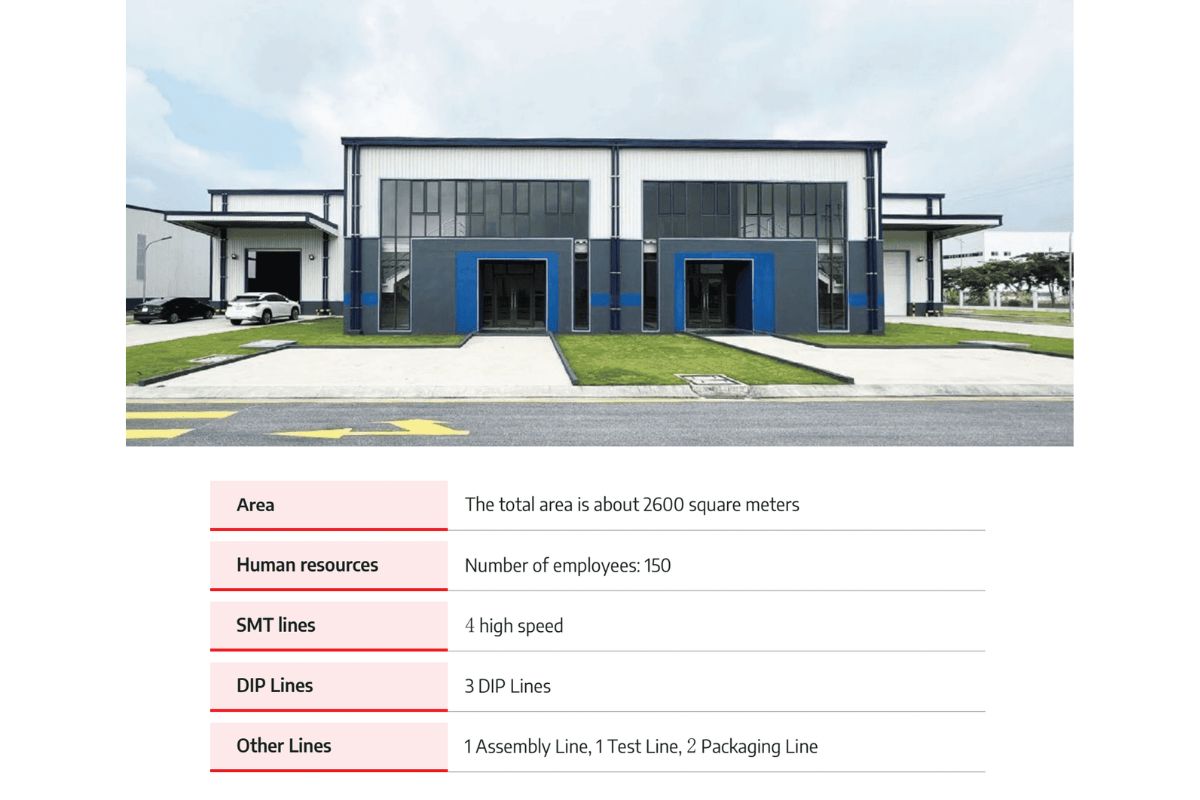
SHDC Electronics Co., Ltd operates a 2,600m² ISO 13485-certified manufacturing facility at the Vietnam Singapore Industrial Park in Hai Duong — purpose-built for medical and industrial electronics production serving international clients, with a growing portfolio of US MedTech partnerships.
Here’s how SHDC maps against each criterion in this guide:
| Criterion | SHDC Capability | Verification |
|---|---|---|
| ISO 13485:2016 | Certified — third-party audited | Certificate available on request |
| IPC-A-610 Class III | Certified operators on staff | CIS/CIT certifications available |
| MES Traceability | AIT Tracer Server + MES/ERP/QMS integrated | Live demonstration available |
| SPI | 3D Solder Paste Inspection in-line | Equipment list available |
| 3D AOI | Yamaha YSI-V 3D AOI system | Equipment list available |
| X-ray Inspection | In-house X-ray capability | Equipment list available |
| FDA Documentation | DHR, CAPA, FAI, IQ/OQ/PQ support | Sample outputs available on request |
| Component Sourcing | Authorized distributors + BOM audit | Sourcing policy available |
| US Communication | Dedicated AM, technical English, 24h response | References available |
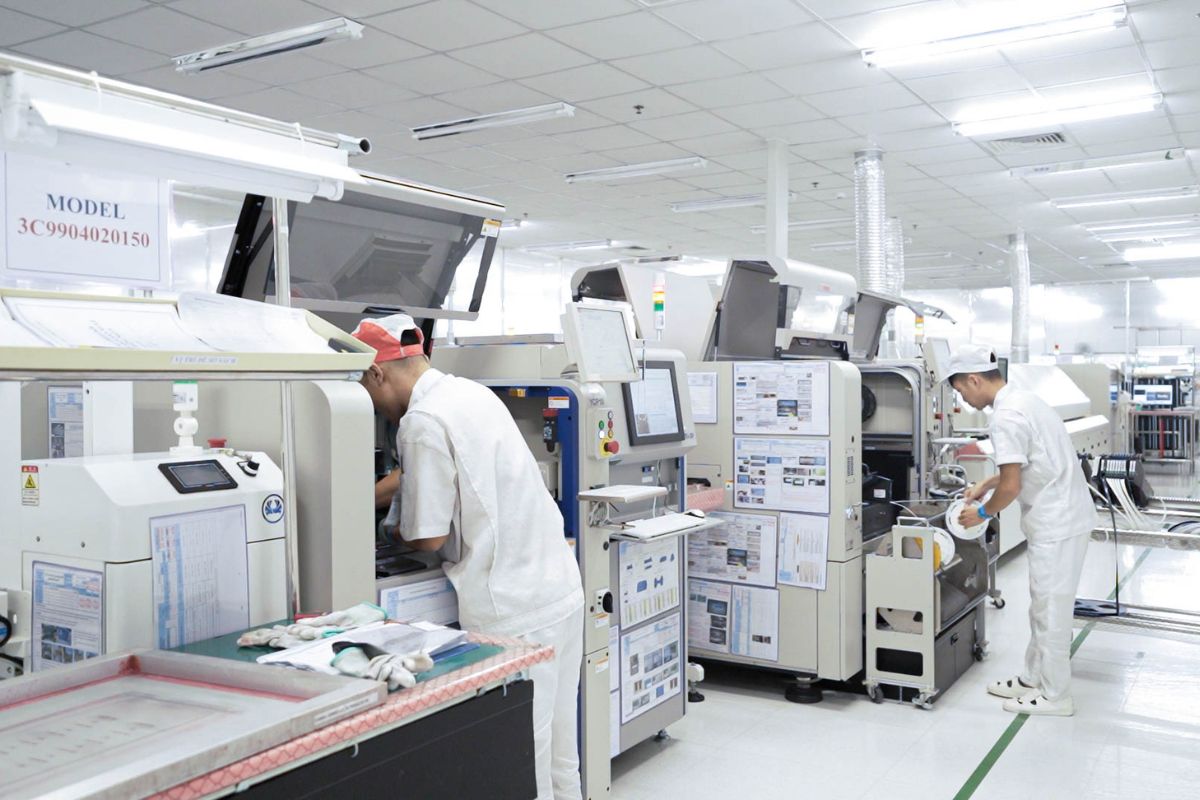
SHDC’s integrated digital infrastructure — connecting AIT Tracer Server, MES, QMS, and ERP into a single networked environment — provides US customers with real-time production visibility and audit-ready documentation at every production stage. This is not a feature list. It is the operational infrastructure that makes FDA-compliant medical PCBA manufacturing achievable at scale in Vietnam.
For US MedTech companies evaluating prototype PCB assembly through to high-volume SMT assembly services, SHDC offers a single-partner solution that eliminates the supplier fragmentation and documentation inconsistency that derail medical device programs.
FAQs
Q1: What certifications should a medical PCBA supplier in Vietnam have?
At minimum: ISO 13485:2016 (current, third-party audited by an accredited body), IPC-A-610 Class III workmanship capability with certified operators, and RoHS compliance. For US market specifically: the supplier’s processes must align with FDA 21 CFR Part 820 quality system requirements — meaning they must be capable of generating DHR, CAPA, and FAI documentation that supports your regulatory submission.
Q2: How do I verify if a Vietnam PCBA supplier is truly ISO 13485 certified?
Ask for the certificate number and the name of the certifying body (TÜV, SGS, Bureau Veritas, BSI, or equivalent). Then verify directly on the certifying body’s public certificate registry — most major certification bodies maintain searchable online databases. A legitimate ISO 13485 certificate is publicly verifiable within minutes. Any supplier who cannot provide a certificate number for independent verification is not ISO 13485 certified.
Q3: What is IPC-A-610 Class III and why does it matter for medical devices?
IPC-A-610 is the global standard for acceptability of electronic assemblies, defining three workmanship classes. Class III — the highest — applies to high-performance electronics where continued performance is critical and equipment downtime cannot be tolerated. Medical devices are Class III by definition. Class III requires tighter solder joint acceptance criteria, stricter inspection protocols, and certified operators. A supplier without Class III-certified operators cannot reliably produce medical-grade assemblies.
Q4: Can a Vietnam PCBA supplier support FDA 510(k) documentation?
Yes — a properly equipped Vietnam medical PCBA supplier can generate all manufacturing documentation required for a 510(k) submission: FAI reports, Device History Records, IQ/OQ/PQ validation packages, and CAPA records. The device manufacturer remains the 510(k) submitter and FDA registrant. The contract manufacturer’s documentation is a direct input to the submission package — which is why documentation capability is a non-negotiable evaluation criterion.
Q5: What is the difference between a medical PCBA supplier and a standard PCB assembler?
The technical production steps overlap significantly. The difference is in the quality management infrastructure surrounding those steps: ISO 13485 certification, IPC Class III workmanship standards, MES-driven traceability, validated inspection processes, and FDA-aligned documentation systems. A standard PCB assembler may produce technically identical boards — but without the QMS infrastructure, those boards cannot support a US FDA regulatory submission.
Q6: How much does medical PCBA manufacturing cost in Vietnam compared to the US?
Vietnam-based medical PCBA manufacturing typically runs 40–65% lower than equivalent US-based production, depending on board complexity, component cost, and volume. The cost advantage is most pronounced at commercial production volumes. At prototype and pilot stages, the differential is smaller but still significant. The more relevant metric is total cost of market entry — factoring in rework rates, documentation quality, and regulatory timeline impact.
Conclusions
Choosing the right medical PCBA supplier in Vietnam is not primarily a cost decision. It is a regulatory timeline decision. The supplier you choose will generate the manufacturing documentation that either supports or complicates your FDA submission — and that documentation quality is determined entirely by the QMS infrastructure, inspection capability, and traceability systems they have in place before you send your first BOM.
The seven criteria in this guide are designed to make that evaluation systematic and verifiable. A supplier who can answer every question in this framework — with documentation to back each answer — is a supplier equipped to support your device program from prototype through commercial scale.
If you’re also evaluating full-cycle manufacturing beyond PCBA, read our guide on medical device contract manufacturing in Vietnam — covering the full journey from NPI and design validation through pilot production and commercial launch.
