
 Tiếng Việt
 日本語
日本語
In 2025, the US imposed 145% Section 301 tariffs on Chinese electronics — including chargers classified under HTS 8504.40. For a US brand sourcing a $8.00 GaN fast charger from China, the landed cost jumped to $20.60 overnight. Vietnam, carrying a 0% MFN tariff rate, became the most strategically consequential charger manufacturing destination for US OEMs in a single policy cycle. But tariff arbitrage alone does not make a manufacturing destination viable. The real question is whether Vietnam has the production capability, engineering depth, and certification support to handle the complexity of modern GaN and USB-C charger programs — not just the labor cost advantage. This guide answers that question with specifics: cost models, capability benchmarks, certification requirements, and a six-step supplier qualification framework built for Hardware Engineers and Sourcing Managers evaluating charger manufacturing in Vietnam for the first time in 2026. For SHDC’s technical approach to power electronics assembly, see our Power PCB Assembly for Fast Chargers guide.
Why Vietnam for Charger Manufacturing in 2026
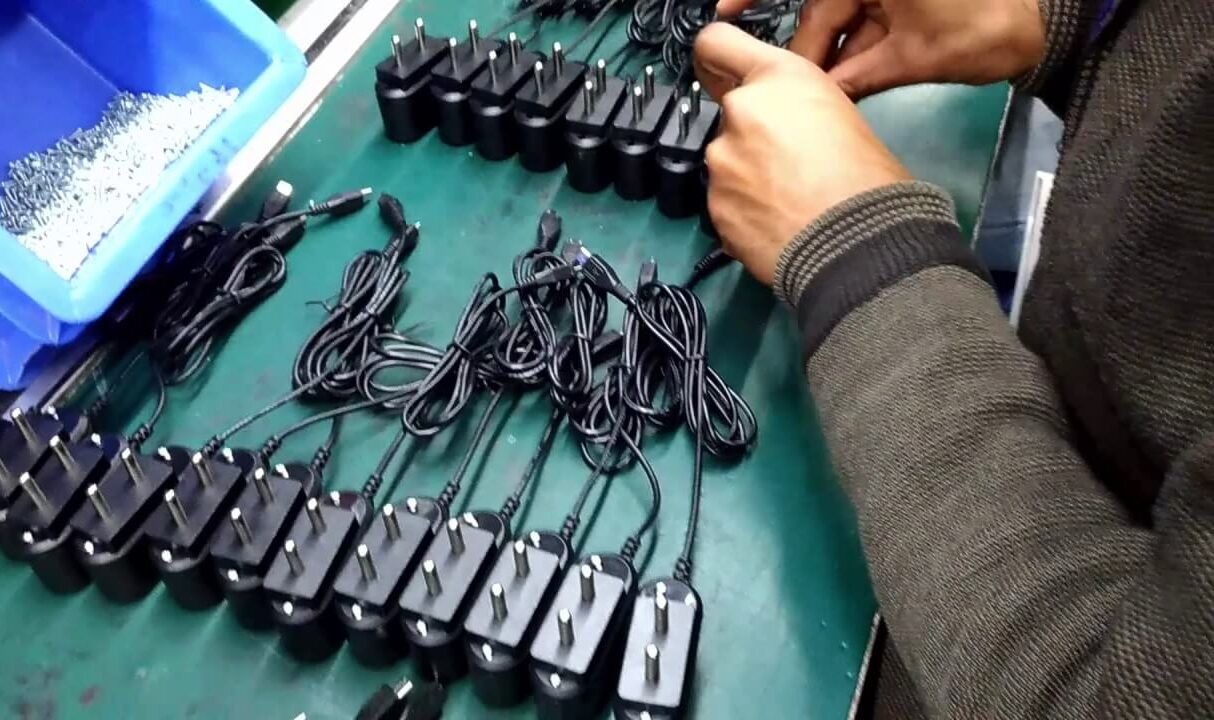
The shift from China to Vietnam for charger manufacturing is not a trend driven by preference — it is driven by arithmetic. Three structural forces converged in 2025–2026 to make Vietnam the default evaluation for any US brand with a charger program: tariff policy, supply chain compliance requirements, and a maturing electronics manufacturing ecosystem that can now support GaN-complexity programs at volume.
The Tariff Inflection Point
Chargers and power supplies classify under HTS 8504.40 — static converters. Under the current Section 301 tariff schedule, goods in this category imported from China carry a 145% ad valorem tariff. Vietnam, as a non-Section 301 country, carries the standard MFN rate of 0% for most electronics categories.
The landed cost impact is not marginal:
| Cost Element | China-Sourced | Vietnam-Sourced |
|---|---|---|
| Factory unit cost — 65W GaN charger | $8.00 | $8.40 |
| Tariff (145% vs 0%) | $11.60 | $0.00 |
| Ocean freight (per unit, sea) | $0.80 | $0.90 |
| Compliance & documentation | $0.20 | $0.30 |
| Total landed cost | $20.60 | $9.60 |
| Saving per unit | — | $11.00 |
At 50,000 units per month, the tariff differential alone represents $550,000 in monthly savings — $6.6M annually on a single SKU. The Vietnam factory unit cost premium of $0.40 is economically irrelevant at any meaningful volume. For a full tariff analysis across electronics categories, see SHDC’s China vs Vietnam tariff impact guide. The official Section 301 tariff schedule is maintained by the USTR.
Even at lower volumes — 5,000 units/month — the monthly saving of $55,000 covers NRE costs within the first production month. The break-even calculation for transitioning charger manufacturing to Vietnam is, in most cases, measured in weeks, not quarters.
Vietnam’s Electronics Manufacturing Ecosystem in 2026
Vietnam’s electronics manufacturing base has been building for fifteen years — but the ecosystem maturity relevant to charger programs has accelerated significantly since 2022. The presence of Samsung (responsible for approximately 20% of Vietnam’s total export value), LG, Intel, and Foxconn has created a supplier ecosystem — PCB fabricators, passive component distributors, connector manufacturers, and test equipment service networks — that did not exist at meaningful scale before 2018.
Key ecosystem indicators relevant to charger manufacturing in Vietnam:
- PCB fabrication: Multiple IPC-certified 4-layer and 6-layer PCB fabricators operating in Hanoi, Hai Duong, and Binh Duong — capable of High-Tg halogen-free FR4 with ENIG finish, which is the standard specification for GaN charger boards
- Component distribution: Authorized distributors for Navitas, GaN Systems, Infineon, TDK, Murata, and Yageo maintain Vietnam inventory — reducing component lead time versus pure import programs
- Engineering workforce: Hanoi University of Science and Technology and Ho Chi Minh City University of Technology graduate approximately 25,000 electrical and electronics engineers annually — the talent pipeline supporting technical EMS operations is real and growing
According to Vietnam’s Ministry of Planning and Investment, electronics and electrical equipment accounted for over $120B of Vietnam’s export value in 2024 — making it the country’s largest export category by a significant margin. This is not an emerging manufacturing destination — it is an established one.
UFLPA & Supply Chain Compliance
The Uyghur Forced Labor Prevention Act (UFLPA), enforced by US Customs and Border Protection since June 2022, creates a rebuttable presumption that goods manufactured in Xinjiang or by entities on the UFLPA Entity List are made with forced labor and are therefore inadmissible to the US market.
Vietnam carries zero UFLPA geographic risk — it is not a designated region under the Act. For US brands whose China supply chain includes components or subassemblies sourced from Xinjiang-region suppliers, Vietnam-based charger manufacturing provides a clean compliance posture with full traceability documentation:
- Certificate of Origin Form AV: Vietnam-ASEAN origin certification
- Full BOM traceability: Component origin records to tier-2 supplier level
- No China entity in the manufacturing chain: 100% Vietnamese-owned manufacturers like SHDC carry zero China-entity exposure
CBP enforcement of UFLPA has intensified through 2025 — detentions of electronics shipments with insufficient origin documentation have increased by over 300% since the Act’s enforcement began. Supply chain compliance is no longer a legal department concern — it is a procurement requirement.
Charger Manufacturing Capability — What Vietnam Can Actually Produce
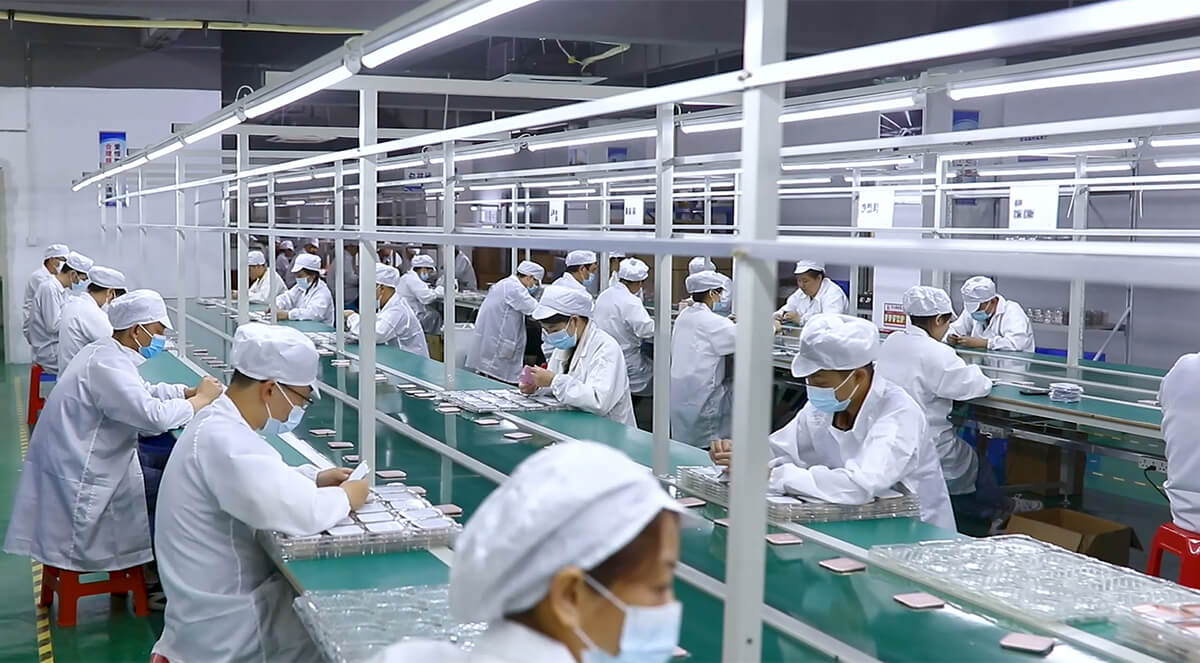
The most important question for any Sourcing Manager evaluating charger manufacturing in Vietnam is not “can they do it?” — it is “have they done it, and can they prove it?” Vietnam has a wide range of EMS providers, from high-volume commodity assemblers to technically capable manufacturers with GaN production experience. Understanding the capability spectrum is essential to avoid qualifying the wrong supplier.
Product Types Vietnam Manufacturers Handle
| Product Type | Complexity | Vietnam Capability | Key Requirement |
|---|---|---|---|
| GaN Fast Charger 45–140W | High | Full production | GaN QFN, X-ray, nitrogen reflow |
| USB-C PD Charger 18–65W | Medium-High | Full production | PD controller, hi-pot test |
| Travel Adapter / Universal | Medium | High volume | Mechanical + PCBA combined |
| Laptop Power Adapter 45–140W | Medium | Full production | THT + SMT mixed assembly |
| Wireless Charger 5–15W | Medium | Full production | Coil placement, Qi certification |
| Multi-port Desktop Charger | Medium-High | Full production | Multi-IC coordination, thermal |
| Industrial Power Supply | High | Selective | IPC Class 3, extended burn-in |
| EV Onboard Charger | Very High | Limited | Automotive grade capability rare |
The full product range of modern charger manufacturing — from 18W USB-C adapters to 140W GaN desktop chargers — is within Vietnam’s production capability. The differentiator between suppliers is not product type but process depth: specifically, whether the manufacturer has the equipment and process knowledge to handle GaN-topology boards reliably.
GaN Charger Manufacturing: The Capability Differentiator
GaN fast charger production is the benchmark capability test for any charger manufacturing supplier in Vietnam. If a manufacturer can produce GaN chargers reliably — with documented X-ray void data, hi-pot pass rates, and EMC pre-compliance results — they can produce anything in the charger category. If they cannot, no amount of ISO certification or factory floor size compensates.
The specific equipment and process capabilities required for GaN charger production:
- Nitrogen reflow oven: Reduces GaN QFN thermal pad void formation by 15–25% versus air atmosphere reflow — not optional for reliable GaN assembly
- 3D X-ray inspection: IPC-7093 requires void area below 25% of thermal pad — only X-ray can verify this. 2D X-ray is minimum; 3D CT X-ray is preferred for high-volume programs
- Hi-pot tester: 3000VAC primary-to-secondary isolation test — mandatory per IEC 62368-1. In-line 100% testing, not sampling
- Automated functional test: Load test at 100% rated power, output voltage accuracy measurement, efficiency measurement — automated to eliminate operator variability
- 3D SPI and AOI: 100% solder paste inspection and post-reflow automated optical inspection — standard for GaN programs
SHDC manufactures the Winsler GaN charger series — 65W, 70W, and 102W GaN fast chargers — under its own brand, sold in the US and EU markets. This is not a capability claim. It is documented production history with UL 62368-1, CE, FCC Part 15, and USB-IF TID certification. For the full technical breakdown of GaN charger PCB assembly, see Power PCB Assembly for Fast Chargers: GaN & USB-C Guide.
Production Volume & Scalability
Vietnam charger manufacturing operations scale across three volume tiers:
- Prototype / NPI: 50–500 units, 1–2 week lead time — for first article builds, certification samples, and engineering validation
- Mid-volume production: 1,000–50,000 units/month — standard for US brand programs in growth phase
- High-volume production: 50,000–500,000 units/month — Vietnam capacity at this tier is growing but requires 8–12 week advance capacity reservation, particularly for Q3–Q4 holiday season ramps
For NPI programs, see SHDC’s prototype PCBA manufacturing capabilities.
Component Sourcing from Vietnam
Component availability is the most frequently underestimated risk in transitioning charger manufacturing to Vietnam. The ecosystem has improved significantly — but program managers must plan accordingly:
- Passive components: Yageo and Walsin maintain Vietnam distribution inventory — resistors and capacitors for standard values are available with 1–2 week lead time
- GaN FETs: Navitas Semiconductor, GaN Systems (now Infineon), and Infineon GaN FETs are available through authorized Vietnam distributors — but allocation risk exists for popular devices. Buffer stock of 8–10 weeks is recommended
- Magnetic components (transformer, inductor): Custom transformer winding capability exists in Vietnam — but complex GaN transformer designs may require Taiwan or Japan sourcing with 10–14 week lead time
- USB-C PD controllers: Cypress (Infineon), Texas Instruments, and Richtek PD controllers are available through regional distributors with 4–6 week lead time for standard devices
Recommendation: For new charger manufacturing programs in Vietnam, plan a 10–12 week component buffer for GaN FETs and custom magnetics. Do not assume China-equivalent component availability on day one.
Cost Structure — What Charger Manufacturing in Vietnam Actually Costs
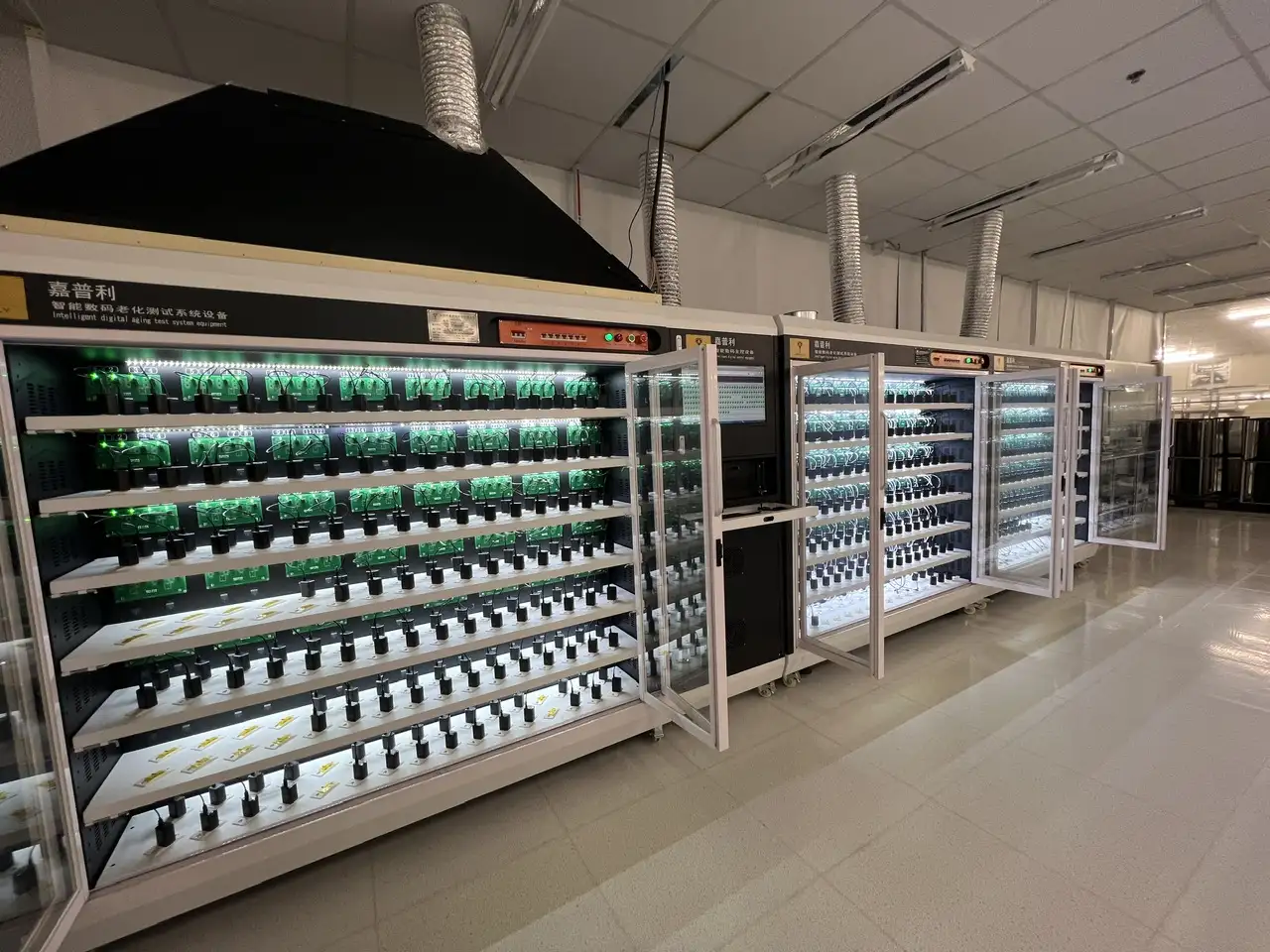
Transparency about cost is rare in EMS sales conversations — but it is exactly what Sourcing Managers need to build internal business cases. Here is the actual cost structure for charger manufacturing in Vietnam, based on production programs, not estimates.
Factory Cost Breakdown
| Cost Component | % of Total Unit Cost | Notes |
|---|---|---|
| Components (BOM) | 55–65% | GaN FET and transformer are dominant cost drivers |
| PCB fabrication | 8–12% | 4-layer, ENIG, High-Tg halogen-free |
| Assembly labor | 10–15% | SMT + selective solder + manual assembly |
| Test & inspection | 5–8% | X-ray, hi-pot, functional load test |
| Overhead & margin | 10–15% | Factory overhead, NRE amortized over volume |
For a 65W GaN charger, the total factory unit cost in Vietnam runs $8.00–$9.50 depending on GaN FET selection, transformer complexity, and certification requirements. This is 5–15% higher than equivalent China factory cost — and approximately 55% lower than total landed cost from China after tariffs.
NRE Costs for New Programs
Non-recurring engineering costs for a new charger manufacturing program in Vietnam:
| NRE Item | Cost Range | Notes |
|---|---|---|
| SMT stencil | $150–$300 | Per board design |
| Test fixtures (ICT) | $500–$2,000 | Depends on net count |
| Functional test jig | $2,000–$8,000 | Automated preferred |
| DFM engineering review | $500–$1,500 | Per design iteration |
| Certification samples | $800–$2,000 | 10–20 units for UL/CE submission |
| Total NRE estimate | $4,000–$14,000 | Typical GaN charger program |
NRE costs are typically amortized over the first 5,000–10,000 production units — at $9.00/unit factory cost and $10,000 NRE, the per-unit NRE adder is $1.00–$2.00 for the first production run, declining to zero thereafter.
Total Landed Cost Model — Vietnam vs China vs Mexico
| Cost Element | China | Vietnam | Mexico |
|---|---|---|---|
| Factory unit cost (65W GaN) | $8.00 | $8.40 | $11.50 |
| Tariff | $11.60 (145%) | $0.00 (0%) | $0.00 (USMCA) |
| Ocean/land freight | $0.80 | $0.90 | $1.20 |
| Compliance documentation | $0.20 | $0.30 | $0.20 |
| Total landed cost | $20.60 | $9.60 | $12.90 |
| vs China saving | — | $11.00 | $7.70 |
Vietnam outperforms Mexico on landed cost for charger programs primarily because Mexico’s higher labor cost partially offsets the tariff saving. Vietnam’s combination of competitive factory cost and zero tariff creates the largest absolute landed cost advantage of any alternative manufacturing destination for US OEMs.
Certifications — What Your Vietnam Charger Supplier Must Support
Certification is the most common program-killing gap in Vietnam charger manufacturing supplier qualification. A supplier who cannot support UL 62368-1 and FCC Part 15 is not a viable partner for US market programs — regardless of their production capability or price. Evaluate certification support as a hard go/no-go criterion, not a nice-to-have.
Required Certifications by Market
| Certification | Market | Standard Body | Key PCB-Level Requirement |
|---|---|---|---|
| UL 62368-1 | USA / Canada | UL Solutions | Creepage ≥6.4mm, UL94 V-0 PCB |
| CE (LVD + EMC) | European Union | Notified Body | Isolation barriers, EMC layout |
| FCC Part 15 | USA | FCC | Conducted + radiated emissions |
| USB-IF TID | Global | USB-IF | USB PD protocol compliance |
| PSE (J-mark) | Japan | METI | Creepage stricter than UL |
| KC | South Korea | KATS | Equivalent to UL 62368-1 |
| RCM | Australia / NZ | ACMA | Combined safety + EMC mark |
| BIS | India | BIS | Mandatory for India market entry |
Critical note for Japan programs: PSE requires stricter creepage distances than UL 62368-1. If your program targets Japan, design to PSE requirements from the first PCB layout — retrofitting a UL-designed board for PSE typically requires a board respin.
What “Certification Support” Actually Means
Not all Vietnam charger manufacturing suppliers offer the same level of certification support. There are three distinct tiers:
- Tier 1 — Sample supply only: Supplier ships samples, customer handles all certification coordination, lab submission, and corrective actions independently. Common with low-cost commodity suppliers
- Tier 2 — Documentation support: Supplier provides test reports, hi-pot data, component compliance documentation (RoHS, REACH, flammability ratings). Customer still manages lab relationship
- Tier 3 — Full certification partnership: Supplier conducts pre-compliance EMC scanning in-house before lab submission, provides engineering support during certification testing, manages corrective actions on layout or component issues, and has prior certification history with the same product type
For US brand programs targeting UL + FCC + USB-IF certification, Tier 3 support is the minimum viable standard. A single EMC failure at the certification lab — caused by a GaN switching harmonic that a pre-compliance scan would have caught — adds 6–10 weeks and $15,000–$30,000 in re-test costs to your program timeline.
SHDC operates at Tier 3 — with in-house pre-compliance EMC scanning, 100% in-line hi-pot testing, and documented certification history on Winsler GaN chargers across UL, CE, FCC, and USB-IF. For quality and certification process details, see SHDC PCB assembly quality control.
Common Certification Failures in Vietnam-Made Chargers
Understanding the most common failure modes helps Hardware Engineers design them out before certification submission:
- Creepage violation (UL 62368-1): Primary-to-secondary surface distance below 6.4mm reinforced insulation requirement — the single most common UL failure. Caused by layout decisions made without certification awareness
- FCC Part 15 EMI failure: GaN switching harmonics at 1MHz+ exceed Class B conducted emission limits — caused by oversized power loop area or inadequate input filter design
- USB-IF PD non-compliance: CC pin ESD protection placement too far from port, or voltage transition timing outside USB PD 3.1 specification
- Flammability failure: PCB material specified as standard FR4 (UL94 V-1 or HB) instead of UL94 V-0 — a fabrication specification error, not a design error, but equally fatal to certification
How to Qualify a Vietnam Charger Manufacturer — 6-Step Framework
This framework is designed for Hardware Engineers and Sourcing Managers conducting their first charger manufacturing Vietnam supplier qualification. It is structured to identify capability gaps before they become program delays — not after first article inspection fails.
Step 1: Capability Audit (Week 1–2)
Before requesting a quote, conduct a structured capability audit. The goal is to verify that the supplier has the specific equipment and process knowledge required for GaN charger production — not just general SMT capability.
Equipment checklist — minimum requirements for GaN charger programs:
| Equipment | Minimum Requirement | Why It Matters |
|---|---|---|
| Reflow oven | Nitrogen atmosphere capable | GaN thermal pad void reduction |
| X-ray inspection | 2D minimum, 3D CT preferred | IPC-7093 void inspection |
| Hi-pot tester | 3000VAC, in-line 100% | IEC 62368-1 isolation verification |
| 3D AOI | Post-reflow, 100% coverage | Solder joint quality |
| 3D SPI | Post-print, 100% coverage | Paste volume on GaN thermal pad |
| Functional test | Automated load test | Output accuracy, efficiency |
| EMC pre-scan | In-house preferred | Pre-compliance screening |
Process certifications: ISO 9001:2015 is the minimum. ISO 14001 (environmental management) is increasingly required by US brand CSR programs. IPC-A-610 Class 2 or 3 certification for inspection personnel is mandatory.
Reference product requirement: Ask to see actual GaN charger boards they have produced — not renders, not capability statements. Request X-ray images showing thermal pad void percentage, hi-pot test records, and functional test data. A supplier who cannot produce this documentation has not done GaN production at meaningful volume.
Step 2: DFM Review Quality Test (Week 2–3)
Submit your Gerber files and BOM to the shortlisted suppliers and evaluate the quality of their DFM feedback. This is the single most revealing test of a supplier’s technical depth — and it costs nothing.
Red flags in DFM response:
- Report returned in under 4 hours with no issues identified
- Generic feedback not specific to your design
- No comment on creepage distances, GaN loop area, or thermal via specification
- No mention of primary-to-secondary isolation barrier
Green flags in DFM response:
- Specific creepage measurement with reference to IEC 62368-1 requirement
- GaN power loop area comment with recommended improvement
- Thermal via array specification recommendation
- Stencil aperture reduction recommendation for GaN QFN packages
- Question about target certification markets — indicating awareness that layout must satisfy specific standards
Benchmark: A thorough DFM review for a GaN charger board takes 3–5 business days. Any supplier returning a complete DFM report faster than this has not reviewed your files with the required depth.
Step 3: Prototype Build & First Article Inspection (Week 4–8)
First article quantity: 10–20 units — sufficient for electrical validation, thermal characterization, and certification sample submission.
First Article Inspection (FAI) checklist:
| Inspection Item | Method | Accept Criterion |
|---|---|---|
| GaN thermal pad void | X-ray | <25% void area (IPC-7093) |
| Primary-secondary isolation | Hi-pot 3000VAC | No breakdown, 1 second |
| Output voltage accuracy | Functional test | ±1% across all PD profiles |
| Efficiency at full load | Power analyzer | >92% for GaN 65W+ |
| GaN FET temperature | IR thermal camera | <85°C junction at 85°C ambient |
| Solder joint quality | Visual + AOI | IPC-A-610 Class 2 minimum |
| Creepage measurement | Physical measurement | ≥6.4mm primary-to-secondary |
Any failure at FAI stage is a program gate — do not proceed to reliability testing until all FAI items pass. Proceeding with known FAI failures to “save time” is the most common cause of certification failures and field returns in charger manufacturing programs.
Step 4: Reliability Testing (Week 8–12)
Reliability testing for consumer fast chargers covers four standard test protocols:
- Thermal cycling: -20°C to +85°C, 100 cycles minimum per JEDEC JESD22-A104 — verifies solder joint integrity under thermal stress
- Temperature-humidity: 85°C / 85% RH, 96 hours per JEDEC JESD22-A101 — verifies PCB surface insulation resistance under humidity
- Drop test: IEC 60068-2-32, 1 meter onto concrete, 6 faces — consumer charger standard for mechanical robustness
- Continuous operation: 1,000 hours at 100% rated load, 85°C ambient — accelerated life test for electrolytic capacitor and GaN FET wear-out
Reliability testing is typically conducted at an independent lab — SGS, Intertek, or Bureau Veritas all operate in Vietnam and can conduct these protocols locally, reducing sample shipping cost and time.
Step 5: Certification Submission (Week 10–16)
Certification submission runs in parallel with reliability testing for programs on aggressive timelines. Key timing benchmarks:
| Certification | Typical Timeline | Cost Range | Lab Options |
|---|---|---|---|
| UL 62368-1 | 8–12 weeks | $8,000–$15,000 | UL Solutions |
| CE (LVD + EMC) | 6–10 weeks | $5,000–$10,000 | TÜV, SGS, Intertek |
| FCC Part 15 | 4–6 weeks | $3,000–$6,000 | FCC-accredited labs |
| USB-IF TID | 6–8 weeks | $4,000–$8,000 | USB-IF authorized labs |
Pre-compliance EMC scan: Conduct before formal lab submission — this single step catches the majority of FCC and CE EMC failures before they become costly re-test events. A supplier with in-house pre-compliance capability saves 6–10 weeks of iteration time on average.
Step 6: Production Qualification & Ramp (Week 16–20)
Production qualification for charger manufacturing programs follows a structured ramp protocol:
- PPAP-lite documentation: Process capability study (Cpk ≥1.33 for critical dimensions), control plan, FMEA for key process steps
- First production run: 500–1,000 units with enhanced inspection — 100% X-ray, 100% hi-pot, 100% functional test, AQL 0 for critical defects
- Golden sample library: Retain 5 units per production lot in temperature-controlled storage — reference standard for ongoing production comparison
- Ongoing quality cadence: Quarterly process audit, annual supplier re-qualification, monthly quality KPI reporting (DPPM, hi-pot pass rate, functional test yield)
SHDC — Vietnam Charger Manufacturer with Documented GaN Experience
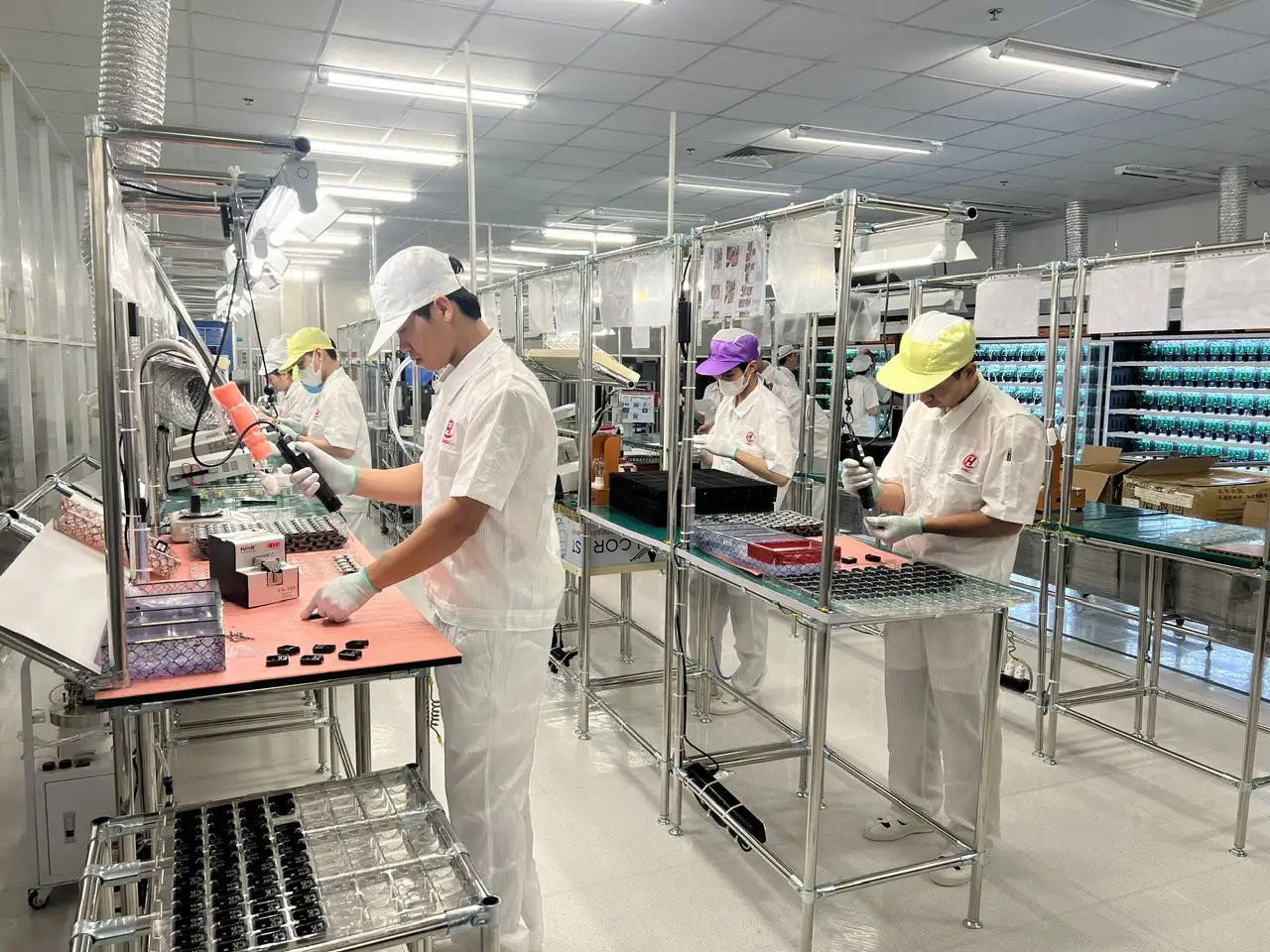
SHDC Electronics Co., Ltd. manufactures chargers in Vietnam from VSIP Hai Duong Industrial Zone — 55km from Hai Phong deep-water port, with 18–22 day transit time to US West Coast ports. 100% Vietnamese-owned, member of NAHACO Group. Zero China entity in the manufacturing chain. Zero UFLPA geographic exposure.
Production Credentials
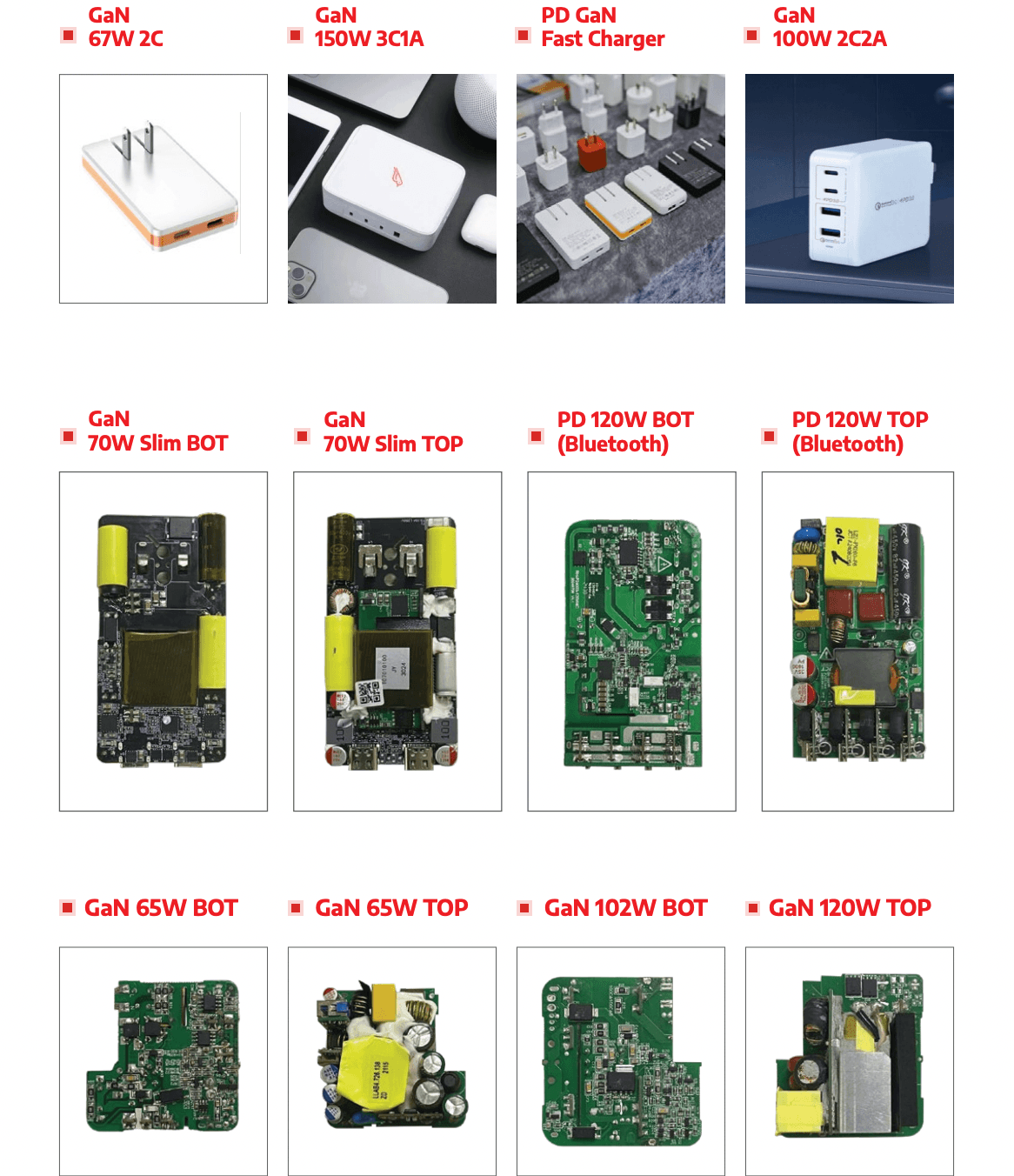
The most important credential for a charger manufacturing supplier is not a certificate — it is a product. SHDC’s Winsler GaN charger series — 65W, 70W, and 102W — is in active production and sold in the US and EU markets under SHDC’s own brand. Every certification, process protocol, and test procedure described in this guide is drawn from active Winsler production programs, not theoretical capability.
Winsler GaN chargers carry: UL 62368-1, CE (LVD + EMC), FCC Part 15 Class B, and USB-IF TID certification. These certifications were obtained through SHDC’s own engineering and certification process — not through a third-party brand owner’s program. This means SHDC has navigated every certification failure mode described in this guide on its own programs, not on a customer’s.
Technical Capabilities Summary
| Capability | SHDC Status | Evidence |
|---|---|---|
| GaN QFN assembly | Active production | Winsler 65W–150W |
| Nitrogen reflow | In-house | Production line equipment |
| 3D X-ray void inspection | In-house | IPC-7093 compliant |
| Hi-pot test 3000VAC | 100% in-line | IEC 62368-1 compliant |
| Pre-compliance EMC scan | In-house | Pre-submission screening |
| USB-C PD functional test | Automated | All PD profiles |
| IPC-A-610 Class 2 / Class 3 | Certified inspectors | |
| ISO 9001:2015 | Certified | |
| UFLPA compliant origin | Full documentation | C/O Form AV, BOM traceability |
For full capability details, see GaN charger manufacturing at SHDC and SHDC quality and certifications.
>>>Read more: Profile’s SHDC Electronics Company
FAQs
Is Vietnam capable of manufacturing GaN fast chargers at volume?
Yes — qualified Vietnam EMS providers with GaN production experience manufacture GaN fast chargers at volumes from 1,000 to 500,000+ units per month. The capability differentiator is not geography but process depth: nitrogen reflow, 3D X-ray void inspection, in-line hi-pot testing, and GaN-specific DFM knowledge. SHDC’s Winsler GaN charger production (65W–150W, UL + CE + FCC certified) is direct evidence of this capability in Vietnam.
What certifications do Vietnam charger manufacturers support?
Qualified Vietnam charger manufacturing suppliers support the full range of market certifications: UL 62368-1 (USA/Canada), CE LVD + EMC (EU), FCC Part 15 (USA), USB-IF TID (global), PSE (Japan), KC (Korea), and RCM (Australia). The critical differentiator is whether the supplier provides Tier 3 certification support — including pre-compliance EMC scanning — or only ships samples and leaves certification coordination to the customer.
How much cheaper is charger manufacturing in Vietnam vs China in 2026?
On a total landed cost basis for a 65W GaN charger, Vietnam is approximately 53% cheaper than China — $9.60 vs $20.60 per unit. The factory unit cost difference is minimal ($0.40/unit). The entire advantage comes from the 145% vs 0% tariff differential under HTS 8504.40. At 50,000 units/month, this represents $550,000 in monthly savings on a single SKU.
What is the minimum order quantity for charger manufacturing in Vietnam?
MOQ for production programs at SHDC is 500–1,000 units depending on component availability and program complexity. NPI and prototype builds start from 50–100 units with 1–2 week lead time. For prototype PCBA programs, SHDC supports full DFM iteration from first Gerber submission through production release.
How long does it take to qualify a new charger manufacturer in Vietnam?
A complete supplier qualification — from capability audit through production ramp — takes 16–20 weeks following the six-step framework in this guide. The longest single phase is certification (8–12 weeks for UL 62368-1). Programs that conduct DFM review and prototype build in parallel with certification submission can compress total timeline to 14–16 weeks.
Does Vietnam have UFLPA supply chain risks for charger manufacturing?
No. Vietnam is not a designated region under the UFLPA and carries zero geographic forced labor risk. 100% Vietnamese-owned manufacturers like SHDC — with no China entity in the manufacturing chain — provide the cleanest possible UFLPA compliance posture. Full origin documentation (C/O Form AV, tier-2 BOM traceability) is available on demand for all SHDC programs.
Conclusion
Charger manufacturing in Vietnam in 2026 offers US brands a combination that no other manufacturing destination matches: zero tariff exposure on HTS 8504.40, documented GaN production capability, full certification support through UL/CE/FCC/USB-IF, and a supply chain compliance posture that satisfies UFLPA requirements without documentation risk. The qualification framework in this guide is designed to help you identify the suppliers who can actually deliver on this combination — and avoid the ones who cannot. SHDC’s Winsler production history is the clearest evidence of what qualified charger manufacturing in Vietnam looks like in practice.
