Tiếng Việt
 日本語
日本語
When a medical device batch triggers an FDA warning letter or a market recall, the investigation almost always leads back to the same question: did the manufacturer truly operate under a compliant Quality Management System? For the global medical device industry, that system has one name — ISO 13485. Whether you are an OEM sourcing a contract manufacturer, a quality engineer evaluating a supplier’s credentials, or a regulatory affairs manager preparing for an audit, understanding what ISO 13485 actually requires — not just what the certificate says — is non-negotiable. This guide breaks it down from a manufacturer’s perspective: what the standard demands, how it aligns with the FDA’s latest 2026 regulations, and what genuine compliance looks like on the production floor.
What Is ISO 13485? The Official Definition
ISO 13485 is the internationally recognized Quality Management System (QMS) standard specifically designed for organizations involved in the design, development, production, installation, and servicing of medical devices and related services.
Published by the International Organization for Standardization (ISO) and currently in its third edition — ISO 13485:2016 — the standard establishes a comprehensive framework that helps manufacturers consistently produce medical devices that are safe, effective, and compliant with applicable regulatory requirements across global markets including the United States, European Union, Canada, Australia, and Japan.
Unlike general quality standards, ISO 13485 is built around one non-negotiable priority: patient safety. Every clause, every documentation requirement, and every process control in the standard ultimately traces back to ensuring that the end user — the patient — is protected from harm caused by a defective or non-conforming device.
Who Needs ISO 13485?
ISO 13485 applies to any organization participating in one or more stages of the medical device lifecycle:
- OEM Manufacturers — companies that design and bring medical devices to market
- EMS / Contract Manufacturers — companies that produce devices on behalf of OEMs
- Component & Sub-assembly Suppliers — vendors supplying parts used in medical devices
- Importers and Distributors — entities placing devices on regulated markets
- Service Providers — organizations providing post-market servicing or maintenance
Key insight for OEMs: When you outsource manufacturing to a contract manufacturer, their QMS becomes part of your regulatory responsibility. A gap in their system is a gap in yours.
ISO 13485 vs. ISO 9001 — Why They Are Not the Same
A common misconception is that ISO 9001 certification is sufficient for medical device manufacturing. It is not. Here is a direct comparison:
| Criteria | ISO 9001:2015 | ISO 13485:2016 |
|---|---|---|
| Industry scope | All industries | Medical devices only |
| Primary focus | Customer satisfaction | Patient safety |
| Risk management | Recommended | Mandatory |
| Regulatory alignment | None specific | FDA QMSR, EU MDR, Health Canada |
| Design controls | Optional | Mandatory |
| Sterile product controls | Not addressed | Specific requirements |
| Post-market surveillance | Not addressed | Required |
| Continual improvement | Required | Replaced by maintaining effectiveness |
The critical distinction: ISO 9001 asks “are customers satisfied?” ISO 13485 asks “is the patient safe?” — and backs that question with legally binding regulatory requirements in most major markets.
🔗 For a deeper comparison, read our guide: ISO 13485 vs ISO 9001: Which Standard Does Your Medical Device Manufacturer Need? →
Breaking Down the 8 Clauses of ISO 13485:2016
ISO 13485:2016 is structured around 8 clauses. Clauses 1–3 cover scope, normative references, and definitions. The operational requirements that manufacturers must implement live in Clauses 4 through 8 — and this is where compliance is won or lost.
Clause 4 — Quality Management System (General Requirements)
This clause establishes the foundation of the entire QMS. It requires organizations to:
- Document the scope of their QMS, including any justified exclusions
- Establish, implement, and maintain a Quality Manual
- Control all documents and records with strict version management
- Define processes, their sequence, and their interactions across the organization
What this looks like in practice: Every procedure, work instruction, and form used on the production floor must be version-controlled. Outdated documents must be removed from use immediately. A manufacturer still using a superseded work instruction during production is in direct violation of Clause 4 — regardless of what their certificate says.
Clause 5 — Management Responsibility
ISO 13485 places explicit accountability on top management, not just the quality department. Leadership must:
- Establish and communicate a Quality Policy with measurable Quality Objectives
- Conduct regular Management Reviews with documented outputs covering CAPA trends, audit results, and customer feedback
- Ensure regulatory requirements are understood and communicated throughout the organization
Why this matters for OEMs: When auditing a contract manufacturer, ask to see their most recent Management Review minutes. If leadership is not actively engaged with quality metrics and CAPA trends, the QMS exists on paper only.
Clause 6 — Resource Management
This clause ensures the organization has the right people, infrastructure, and environment to produce safe devices:
- Personnel must be competent — training records must demonstrate qualification, not just attendance
- Work environment must be controlled — including cleanroom conditions, ESD protection, and contamination control where applicable
- Equipment must be calibrated and maintained with documented records traceable to national or international standards
Clause 7 — Product Realization (The Most Critical Clause for Manufacturers)

Clause 7 is where manufacturing actually happens — and where most compliance failures originate. It covers the entire production lifecycle from planning through delivery.
7.1 — Planning of Product Realization Defining quality plans for each product, including acceptance criteria, required records, and verification/validation activities.
7.2 — Customer-Related Processes Capturing and reviewing customer requirements, including applicable regulatory requirements for each target market.
7.3 — Design and Development For manufacturers with design responsibility, this requires a fully documented Design History File (DHF) covering design inputs, outputs, reviews, verification, validation, transfer to manufacturing, and change controls.
⚠️ Note for EMS manufacturers: If your scope excludes design (manufacturing only), Clause 7.3 may be excluded — but this must be explicitly stated in your QMS scope and on your certificate. An OEM should always verify this exclusion before assuming their EMS partner covers design controls.
7.4 — Purchasing All suppliers must be evaluated, selected, and monitored based on their ability to meet requirements. This includes:
- An approved supplier list with documented qualification criteria
- Incoming inspection or supplier verification procedures
- Periodic re-evaluation of suppliers at defined intervals
7.5 — Production and Service Provision The operational heart of manufacturing compliance:
- Controlled production conditions with documented work instructions
- Full traceability — every device traceable to its components, materials, and production records
- Validation of processes that cannot be fully verified by inspection (sterilization, welding, conformal coating)
- Identification and control of product status throughout all production stages
7.6 — Control of Monitoring and Measuring Equipment All measurement equipment used in production or inspection must be calibrated against traceable standards with documented calibration records and defined calibration intervals.
Clause 8 — Measurement, Analysis, and Improvement (The Backbone of Compliance)
Clause 8 closes the quality loop and is the most scrutinized section during regulatory audits.
8.2 — Monitoring and Measurement
- Internal audits conducted at planned intervals with documented findings
- Monitoring of product characteristics at appropriate production stages
- Customer feedback and complaint handling systems with defined response timelines
8.3 — Control of Nonconforming Product Every nonconforming product must be identified, segregated, and dispositioned through a documented process. Unauthorized use or release of nonconforming product is one of the most common FDA 483 observations issued to medical device manufacturers.
8.5 — Corrective and Preventive Action (CAPA) CAPA is the single most scrutinized element of any ISO 13485 audit — and the most common source of regulatory citations. A functioning CAPA system requires:
- Investigation of root cause supported by data — fishbone analysis, 5-Why, or equivalent methodology
- Implementation of corrective actions with defined timelines and responsible owners
- Effectiveness verification — documented evidence that the action actually resolved the root cause
- Proactive preventive actions initiated from trend data, not just reactive to failures
⚠️ Critical data point: CAPA deficiencies consistently rank as the #1 most cited issue in FDA device inspections. Inadequate CAPA management accounts for the vast majority of FDA Form 483 observations — making it the single highest-risk area for any manufacturer seeking to maintain compliance.
ISO 13485 in 2026: What Changed with FDA’s QMSR?
This is the most significant regulatory development in medical device quality management in over two decades — and every OEM sourcing from a contract manufacturer needs to understand its implications.
What Is the FDA QMSR?
On February 2, 2026, the U.S. Food and Drug Administration officially retired 21 CFR Part 820 — the Quality System Regulation (QSR) that had governed U.S. medical device manufacturing for nearly 30 years. In its place, the FDA introduced the Quality Management System Regulation (QMSR), which incorporates ISO 13485:2016 by reference as the foundational standard for all U.S. medical device manufacturers.
This means ISO 13485:2016 is now legally binding for any manufacturer seeking to market medical devices in the United States — not merely best practice.
What Changed for Manufacturers?
| Before February 2, 2026 | After February 2, 2026 |
|---|---|
| Two parallel systems: FDA QSR + ISO 13485 | One unified system: QMSR = ISO 13485:2016 |
| FDA used QSIT inspection technique | FDA now uses Compliance Program 7382.850 |
| Redundant documentation for US vs. global markets | Single QMS satisfies both FDA and international requirements |
| ISO 13485 certificate ≠ FDA compliance | ISO 13485 compliance is now the legal baseline for FDA |
ISO 13485 and EU MDR — The European Dimension
While the EU Medical Device Regulation (EU MDR 2017/745) does not explicitly mandate ISO 13485 certification, it is the de facto standard used by all EU Notified Bodies when auditing manufacturers’ QMS. In practice:
- ISO 13485 certification significantly accelerates the CE marking process
- Notified Body audits are structured around ISO 13485 clause requirements
- Manufacturers without ISO 13485 face substantially higher audit burden and documentation overhead under EU MDR
🔗 Learn more about how FDA QMSR and EU MDR intersect: ISO 13485 Medical Devices: What Every OEM Must Know Before Choosing a Manufacturer →
What ISO 13485 Looks Like on the Production Floor
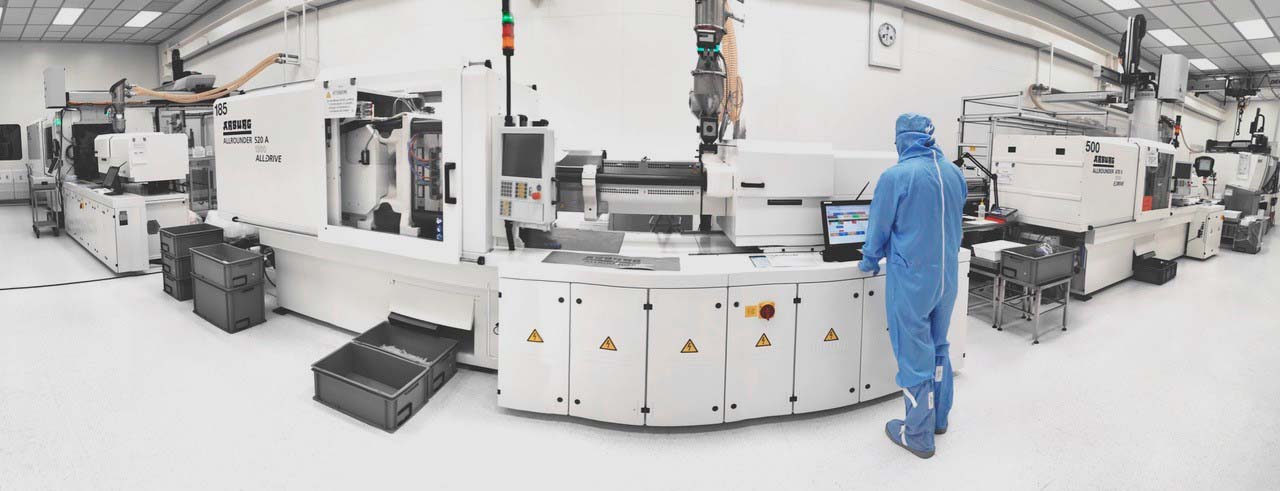
Theory and practice are two very different things. Here is what genuine ISO 13485 compliance looks like when implemented by an experienced manufacturer — not just documented in a quality manual.
Device History Records (DHR) — Traceability in Action
For every production lot, a compliant manufacturer maintains a Device History Record (DHR) that captures:
- Lot or batch numbers for all components used
- Equipment used and calibration status at time of production
- Environmental conditions — temperature, humidity, cleanroom classification
- Inspection results and acceptance criteria outcomes at each stage
- Operator identification and sign-off at critical process steps
- Any nonconformances identified and their documented disposition
If a field complaint is received six months after shipment, a manufacturer with a functioning DHR system can trace the exact component lot, the operator who assembled it, the equipment used, and the inspection results — within hours. A manufacturer without this system cannot.
Risk Management — Embedded, Not Documented
ISO 13485 requires integration with ISO 14971:2019 — the international standard for Risk Management for Medical Devices. In a genuinely compliant manufacturer, risk management is not a standalone document produced at project start and never revisited. It is:
- Embedded in design transfer — risk controls translated directly into production specifications
- Linked to CAPA — new production nonconformances trigger risk file updates
- Reviewed at management review — risk trends reported to leadership at defined intervals
- Updated at design changes — any change to materials, processes, or suppliers triggers re-evaluation
CAPA — The True Measure of a Living QMS
A mature CAPA system is the clearest indicator of whether a manufacturer’s QMS is genuinely functioning or merely maintained for audit purposes. In a high-performing manufacturing environment:
- Every CAPA has a defined root cause supported by objective data
- Effectiveness checks are scheduled, conducted, and documented — not assumed
- CAPA trends are analyzed at management review to identify systemic patterns
- Preventive actions are proactively initiated from trend data — not just reactive to failures
⚠️ Red Flag for OEMs: If a contract manufacturer cannot provide CAPA records, shows a system with suspiciously few open items, or cannot demonstrate effectiveness verification — these are serious indicators of a non-functioning QMS, regardless of what their certificate states.
ISO 13485 Certification vs. ISO 13485 Compliance: Why the Difference Matters
This is the distinction that separates experienced OEMs from those who discover quality failures after production has started.
Certification means a third-party auditor reviewed the manufacturer’s documented QMS and found it to meet ISO 13485 requirements at the time of the audit — typically a 2–3 day snapshot of a complex, ongoing operation.
Compliance means the QMS is actively functioning every single day — that CAPA investigations are thorough, DHRs are complete, suppliers are monitored, and nonconforming products are never shipped.
3 Questions Every OEM Should Ask Before Signing a Manufacturing Agreement
Before committing to a contract manufacturer, ask these three questions — and evaluate the quality of the answers, not just whether an answer is given:
1. “Can you show me your last three CAPA records, including root cause analysis and effectiveness verification?” A confident, compliant manufacturer will provide these without hesitation. Reluctance or vague answers is a red flag.
2. “What is your process for notifying customers when a supplier change affects a component in their device?” This tests Clause 7.4 (Purchasing) and Clause 4.2 (Document Control) simultaneously — two of the most commonly deficient areas in contract manufacturer audits.
3. “How does your QMS scope define design responsibility — and what does that mean for my DHF?” This clarifies whether the manufacturer’s Clause 7.3 exclusion creates a gap in your regulatory documentation that your team must fill.
🔗 For the complete 6-point evaluation checklist, read: ISO 13485 Medical Devices: What Every OEM Must Know Before Choosing a Manufacturer →
The Bottom Line for Medical Device OEMs
ISO 13485 is not a procurement checkbox. It is the operational framework that determines whether a medical device reaches patients safely, consistently, and in compliance with the regulatory requirements of every major global market. Three things every OEM must internalize:
- ISO 13485 is now the FDA standard — the QMSR effective February 2026 makes ISO 13485:2016 the legal baseline for all US medical device manufacturing
- Certification is a starting point, not an endpoint — a certificate confirms a QMS was documented correctly at audit time; only active, functioning systems prevent recalls and warning letters
- Your manufacturer’s QMS is your QMS — when you outsource production, you inherit the quality risks of your partner; due diligence on their CAPA, traceability, and supplier control systems is not optional
Your Manufacturer’s QMS Is Your QMS
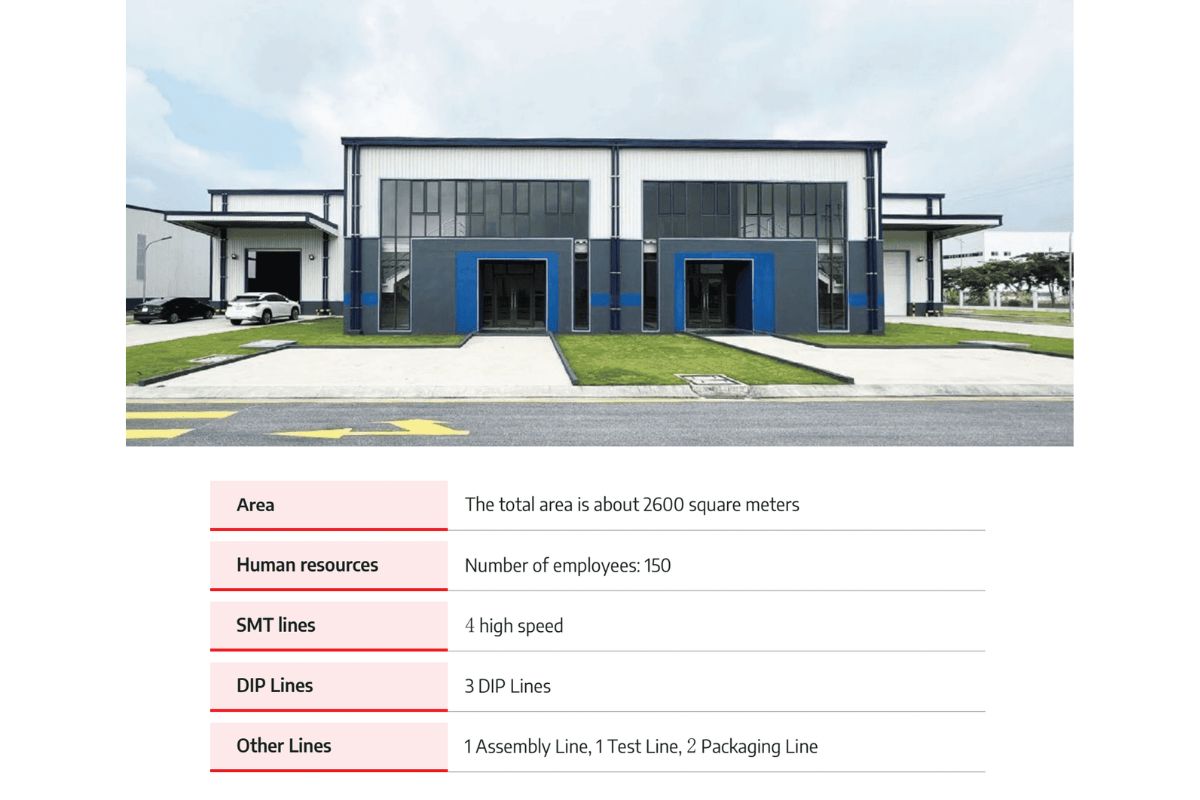
That principle cuts both ways. A manufacturing partner with robust process controls, complete Device History Records, and a functioning CAPA system protects your regulatory standing. A partner without them puts your market access — and your patients — at risk.
SHDC is a Vietnam-based EMS manufacturer that works with medical device OEMs who take compliance seriously. Our production processes are designed around traceability, controlled environments, and documentation standards that align with FDA QMSR 2026 and EU MDR requirements. We bring production discipline, documentation rigor, and supply chain transparency to every engagement — because we understand what is at stake when a device reaches a patient.
Start a conversation with SHDC’s engineering team →
Frequently Asked Questions
Q: Is ISO 13485 certification mandatory?
While ISO 13485 certification is technically voluntary in most jurisdictions, it is a de facto requirement for market access. The EU MDR requires a certified QMS for CE marking, and the FDA’s QMSR (effective February 2026) incorporates ISO 13485:2016 by reference — making compliance legally required for the US market.
Q: How long does ISO 13485 certification take?
For a manufacturer building a QMS from scratch, the process typically takes 12–18 months — covering gap analysis, documentation development, implementation, internal audits, and the certification audit itself. Manufacturers with an existing ISO 9001 system can often achieve certification faster.
Q: What is the difference between ISO 13485 and FDA 21 CFR Part 820?
As of February 2, 2026, this distinction is largely historical. The FDA’s QMSR retired 21 CFR Part 820 and replaced it with a regulation that incorporates ISO 13485:2016 by reference. Compliance with ISO 13485 now satisfies the FDA’s CGMP requirements for medical device manufacturers.
Q: Can an EMS manufacturer be ISO 13485 certified without design controls?
Yes. Clause 7.3 (Design and Development) can be excluded from an EMS manufacturer’s QMS scope if they have no design responsibility. However, this exclusion must be explicitly documented in the QMS scope and reflected on the certificate — and OEMs must understand that design documentation responsibility then falls entirely on them.