Tiếng Việt
 日本語
日本語
A low-cost electronics manufacturer is not necessarily a low-risk manufacturing partner. For U.S. OEMs, effective quality control in electronics manufacturing must go beyond final product inspection. Quality needs to be controlled throughout the entire production process—from incoming components and SMT assembly to electrical testing, traceability, final inspection, and shipment. A strong quality control system can help reduce defects, rework, field failures, production delays, and warranty costs while improving manufacturing consistency. This guide explains 10 essential quality control checks U.S. OEMs should evaluate when assessing an electronics manufacturing partner.
What Is Quality Control in Electronics Manufacturing?
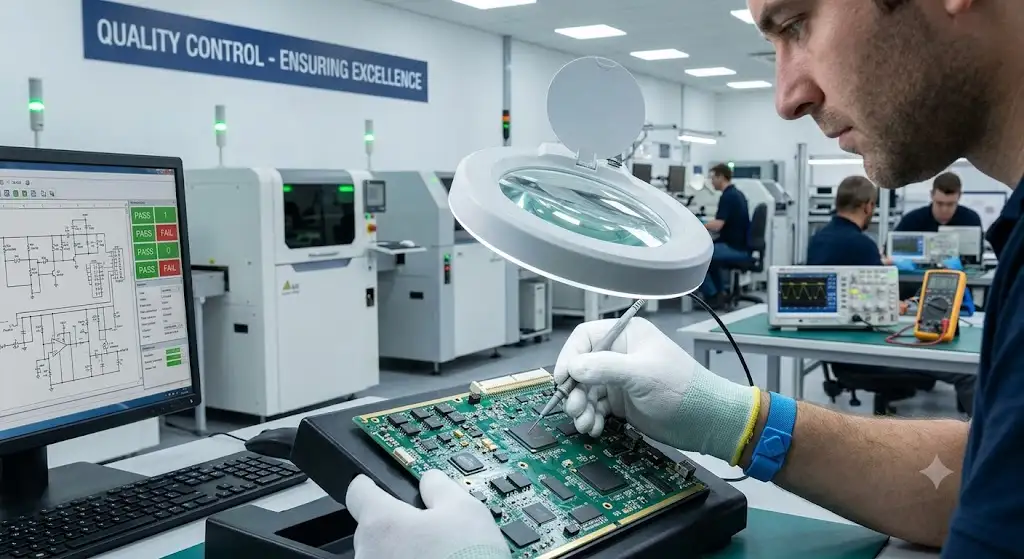
Quality control in electronics manufacturing refers to the inspection, testing, monitoring, and corrective actions used to verify that materials, processes, assemblies, and finished products meet defined requirements.
In practice, quality control can cover:
- Incoming components and materials
- PCB and BOM verification
- SMT and THT processes
- Soldering quality
- Automated inspection
- Electrical testing
- Functional testing
- Final inspection
- Traceability
- Quality data and corrective actions
The key principle is simple:
Quality should be controlled throughout production, not inspected only at the end.
Quality Control vs. Quality Assurance
Although the terms are often used interchangeably, they have different roles.
- Quality Control (QC) focuses on detecting and controlling defects through inspections, measurements, tests, and process monitoring.
- Quality Assurance (QA) focuses on the systems and procedures designed to prevent quality problems from occurring in the first place.
For an electronics manufacturer, a robust quality system needs both.
For example, AOI can identify a component placement problem during production—that is QC. A controlled manufacturing process designed to prevent repeated placement errors is part of QA.
Why Quality Control Matters for U.S. OEMs
Quality problems in electronics manufacturing can become expensive very quickly.
A defective PCBA discovered during production may require rework. The same defect discovered after shipment could result in:
- Field returns
- Warranty claims
- Customer complaints
- Product recalls
- Production interruptions
- Lost revenue
- Brand damage
The financial impact also goes beyond the defective unit itself. OEMs may have to pay for additional inspection, logistics, engineering investigation, replacement products, and customer support.
This is why U.S. OEMs should evaluate a manufacturer’s quality control system, not simply ask whether the factory has ISO certification.
A useful starting point is to understand the complete PCBA manufacturing process and identify where quality risks can occur at each stage.
10 Essential Quality Control Checks in Electronics Manufacturing
1. Incoming Material and Component Inspection
Quality control begins before a PCB enters the SMT line.
Incoming inspection should verify that components and materials match the approved specifications.
Typical checks include:
- Part number
- Manufacturer
- Quantity
- Component value
- Package type
- PCB specification
- Lot or batch information
- Supplier documentation
- Moisture-sensitive component status
- ESD-sensitive component handling
For high-risk components, OEMs should also consider additional measures for counterfeit or unauthorized parts.
What U.S. OEMs Should Ask
When qualifying an electronics manufacturer, ask:
- How are incoming components verified?
- How are incorrect or damaged components controlled?
- How are component lots identified?
- Can material information be traced to a production batch?
- What happens when incoming material fails inspection?
A supplier with strong incoming quality control can prevent material-related problems from entering the production process.
2. PCB and Component Verification
Even when components pass incoming inspection, the manufacturer needs to ensure that the correct materials are used for the correct product revision.
This is especially important when OEMs frequently release engineering changes.
Before production, verify:
- PCB revision
- BOM revision
- Component part numbers
- Component values
- Polarity
- Package types
- Approved alternative components
- Engineering change status
A simple revision mismatch can result in an entire production batch being built incorrectly.
This is where manufacturing engineering and change control become important. For products with complex assemblies, OEMs should also consider a supplier’s ability to provide DFM feedback before production. See SHDC’s DFM guide for electronics manufacturing for more information.
3. SMT Process Control and SPI
For surface-mount electronics, solder paste printing is one of the earliest critical process steps.
The typical SMT sequence includes:
Solder paste printing → SPI → Component placement → Reflow soldering → AOI
Solder paste quality can directly affect solder joint reliability and overall production yield.
What Does SPI Check?
Solder Paste Inspection (SPI) can evaluate characteristics such as:
- Paste volume
- Paste height
- Paste area
- Position or offset
- Printing consistency
The purpose is not simply to identify bad boards. SPI provides process information that can help manufacturers identify printing problems before they propagate further down the line.
For U.S. OEMs evaluating a supplier, it is useful to ask whether SPI data is actually used for process control and improvement, rather than simply collected.
For a deeper look at the production environment, see SMT Assembly Process Explained.
4. Automated Optical Inspection (AOI)
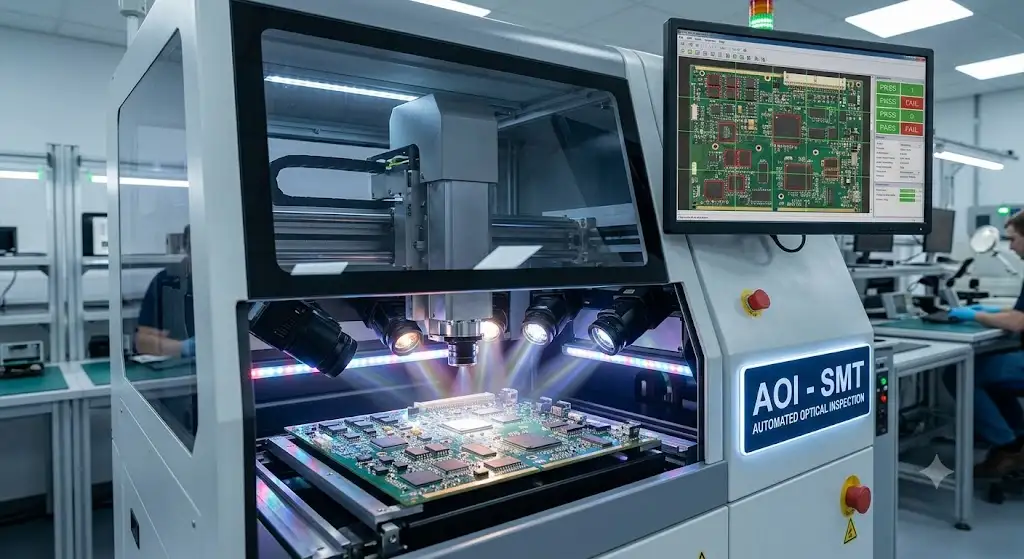
AOI is widely used to inspect assembled electronic boards after component placement and soldering.
Depending on the system and programmed inspection criteria, AOI can identify issues such as:
- Missing components
- Incorrect components
- Component misalignment
- Polarity errors
- Solder bridges
- Insufficient solder
- Other visible assembly defects
However, AOI should not be treated as a complete quality-control system.
AOI primarily evaluates visual characteristics. It does not replace electrical or functional testing.
This distinction is important when comparing electronics manufacturers. A supplier may have advanced AOI equipment but still require ICT, FCT, or other testing methods depending on the product.
For more detail, see What Is Automated Optical Inspection (AOI) in PCB Assembly.
5. Soldering and Assembly Quality Control
Soldering quality has a direct impact on electrical performance and long-term reliability.
For SMT assemblies, manufacturers should control the reflow process and monitor solder joints for potential defects.
For THT/DIP assemblies, quality control may include:
- Component insertion
- Lead positioning
- Solder coverage
- Solder joint quality
- Component orientation
Manual assembly should also be controlled for:
- Connector installation
- Wiring
- Polarity
- Mechanical integration
- Labeling
Common soldering problems can include bridging, insufficient solder, poor wetting, tombstoning, and other process-related defects.
For further technical reference, see Soldering Defects in SMT and Wave Soldering and Wave Soldering vs. Reflow Soldering.
6. In-Circuit Testing (ICT)
Visual inspection can identify many assembly problems, but it cannot verify every electrical characteristic.
In-Circuit Testing (ICT) is used to evaluate electrical characteristics and identify certain circuit-level problems, depending on the product design and test strategy.
Potential checks include:
- Opens
- Shorts
- Component values
- Electrical connections
- Circuit-level faults
ICT can be particularly useful for products with a stable design and appropriate test access.
However, ICT is not automatically necessary for every electronics project. The right test strategy depends on factors such as product complexity, volume, design stability, test-point availability, and required coverage.
For a detailed comparison, see In-Circuit Testing (ICT) vs Functional Testing.
7. Functional Testing (FCT)
A board can pass visual inspection and some electrical checks while still failing to perform its intended function.
This is where Functional Testing (FCT) becomes important.
Depending on the product, functional testing may evaluate:
- Voltage
- Current
- Communication interfaces
- Sensors
- Outputs
- User interfaces
- Connectivity
- Product-specific operating conditions
The difference is straightforward:
ICT asks:
Are the circuit and components electrically correct?
FCT asks:
Does the assembled product actually perform its intended function?
For U.S. OEMs, this distinction matters because the testing strategy should reflect the actual failure modes and functional requirements of the product.
A manufacturer that can integrate ICT and FCT into its quality process gives OEMs greater flexibility when developing production test coverage.
8. Final Inspection and Workmanship Verification
Final inspection is still important—even when extensive in-process inspection and testing have already been completed.
Before shipment, manufacturers may verify:
- Component placement
- Solder workmanship
- Connectors
- Labels
- Product configuration
- Mechanical assembly
- Cosmetic requirements
- Packaging
- Product identification
For electronics assembly, OEMs may reference applicable IPC standards when defining workmanship and acceptance requirements.
IPC-A-610: Acceptability of Electronic Assemblies is widely used to establish visual acceptance criteria for electronic assemblies. IPC explains that IPC-A-610 addresses acceptance requirements for the manufacture of electrical and electronic assemblies and is commonly used alongside IPC J-STD-001.
However, OEMs should clearly define which revision, class, and acceptance criteria apply to a specific project rather than assuming every electronics product uses identical requirements.
9. Traceability and Production Records
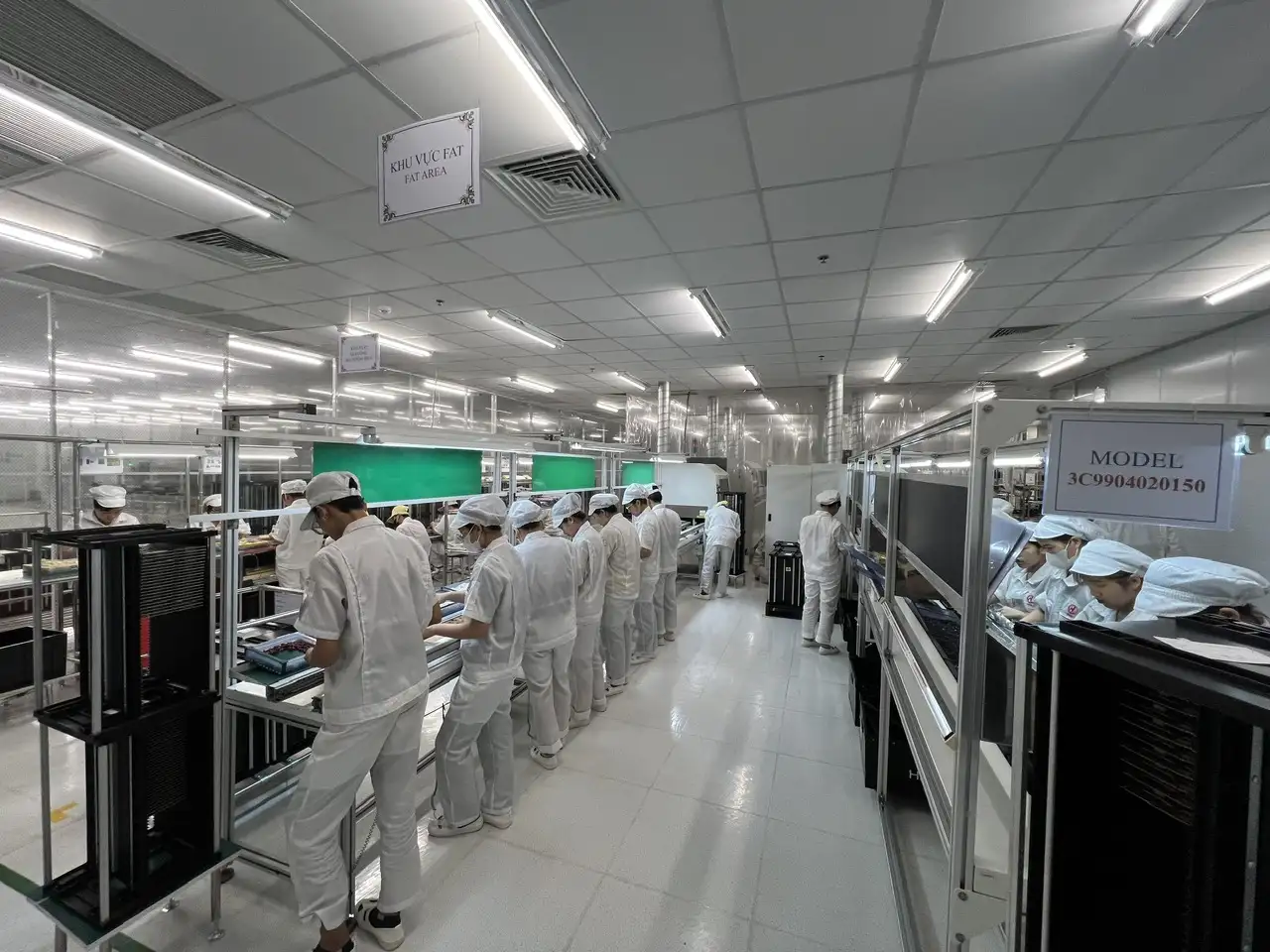
Traceability is one of the most important elements of quality control for electronics manufacturing.
A strong traceability system should allow an OEM and manufacturer to connect production information across the manufacturing process.
For example:
Component lot → PCB → SMT process → Production batch → Inspection → Testing → Finished product
Relevant data may include:
- Component lot
- PCB lot
- Production date
- Manufacturing line
- Inspection results
- Test results
- Rework history
- Production records
Traceability becomes especially valuable when a quality problem occurs.
Instead of investigating an entire production population, the manufacturer may be able to identify the affected batch, component lot, process window, or production period and contain the problem more efficiently.
For a deeper discussion, see Traceability in Electronics Manufacturing.
10. Quality Data, CAPA, and Continuous Improvement
Quality control should not end when an inspector finds a defect.
The manufacturer should also understand why the defect happened and how to prevent recurrence.
Useful quality metrics include:
- Defect rate
- PPM
- First Pass Yield (FPY)
- Overall yield
- Rework rate
- Scrap rate
- Customer complaints
- On-time delivery
CAPA
- Corrective Action addresses the cause of an existing problem.
- Preventive Action aims to reduce the likelihood of similar problems occurring in the future.
For example:
AOI identifies repeated solder bridges → root-cause analysis identifies a solder-paste printing or process issue → manufacturing adjusts the process → subsequent production data confirms whether the defect rate decreases.
This creates a continuous improvement loop rather than treating inspection as a simple pass/fail gate.
How to Evaluate an Electronics Manufacturer’s Quality Control System
U.S. OEMs should evaluate more than inspection equipment when auditing an electronics manufacturer.
Review Process Documentation
Ask to understand how the supplier controls:
- Incoming inspection
- Production processes
- Inspection criteria
- Test procedures
- Non-conforming products
- Rework
- Corrective actions
- Engineering changes
Documentation should be consistent with actual factory operations.
Verify Quality Equipment
Don’t just ask whether a manufacturer has AOI, SPI, ICT, or FCT.
Check:
- What equipment is actually installed?
- Is it maintained?
- Is calibration controlled where applicable?
- Is the equipment used at the relevant production stage?
- Are inspection and test results recorded?
Review Quality KPIs
Ask potential suppliers which quality metrics they monitor and how they respond when performance falls outside target levels.
This can reveal more about manufacturing maturity than a list of machines.
Conduct a Factory Audit
An on-site audit can help validate whether the supplier’s documented processes match actual production practices.
Use a structured Electronics Factory Audit Checklist for U.S. OEMs when assessing production, quality, material handling, traceability, and factory management.
Quality Control During NPI and Mass Production
Quality requirements should evolve as an electronics product moves from prototype to mass production.
Prototype Stage
At the prototype stage, the focus is often on:
- Design verification
- Component selection
- DFM feedback
- Initial assembly quality
- Early functional testing
A good manufacturing partner should identify potential manufacturing issues before volume production.
See NPI in Electronics Manufacturing for more on the transition from prototype to scalable production.
Pilot Production
During pilot production, the OEM should focus on:
- Process stability
- Yield
- Defect patterns
- Test coverage
- Rework
- Repeatability
Pilot production is where a manufacturer begins demonstrating that the process can produce consistent results rather than simply producing a successful prototype.
Mass Production
Once production scales, quality control should focus on:
- Process consistency
- Yield trends
- Defect rates
- Test results
- Traceability
- Capacity
- Quality KPIs
- Continuous improvement
The objective is to maintain stable quality as production volume increases.
Quality Control Standards for Electronics Manufacturing
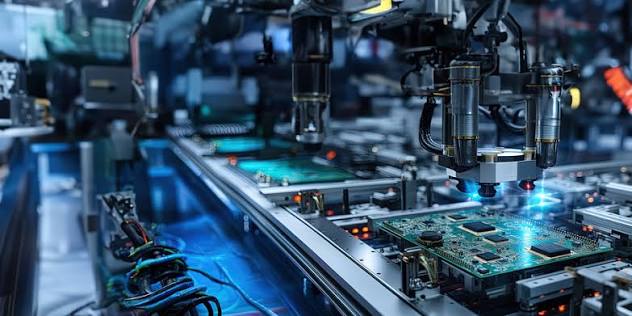
Standards provide a framework for defining and managing quality, but OEMs should choose requirements based on their product, industry, customer requirements, and applicable regulations.
ISO 9001
ISO 9001 establishes requirements for a quality management system and focuses on areas including process management, customer requirements, planning, leadership, performance evaluation, and continual improvement.
ISO 9001 — Quality Management Systems
For U.S. OEMs, an ISO 9001 certification can be an important part of supplier evaluation, but it should not replace an assessment of the supplier’s actual manufacturing processes.
IPC Standards
IPC standards are widely used across electronics manufacturing to establish requirements and acceptance criteria.
For example, IPC J-STD-001 focuses on requirements for soldered electrical and electronic assemblies, while IPC-A-610 addresses acceptability of electronic assemblies. IPC states that the two standards are commonly used together for electronics assembly.
See SHDC’s What Are IPC Standards? for a broader explanation.
For projects where soldering quality is particularly important, OEMs can also review IPC J-STD-001 vs IPC-A-610.
Industry-Specific Requirements
Additional requirements may apply to:
- Automotive electronics
- Medical devices
- Industrial electronics
- Aerospace
- Defense
- Consumer products
Therefore, OEMs should define quality requirements in the manufacturing agreement and product documentation rather than relying on generic certification claims.
Quality Control Checklist for U.S. OEMs
Before approving an electronics manufacturer, procurement, engineering, and quality teams can use this checklist:
Incoming Quality
- Component verification
- PCB inspection
- Lot tracking
- BOM verification
- Material documentation
SMT and Assembly
- SPI
- AOI
- Reflow process control
- THT/DIP inspection
- Workmanship inspection
- Rework control
Testing
- ICT where applicable
- FCT where applicable
- Functional validation
- Test records
- Test coverage review
Final Quality
- Final inspection
- Label verification
- Configuration verification
- Packaging inspection
- Shipment release
Quality System
- Traceability
- CAPA
- Equipment calibration
- Quality KPIs
- Continuous improvement
- Factory audit
Red Flags in Electronics Manufacturing Quality Control
U.S. OEMs should investigate further if a potential supplier:
1. Relies only on final inspection
A strong quality system should identify defects as early as possible.
2. Cannot provide meaningful quality KPIs
A manufacturer should have measurable indicators for monitoring production performance.
3. Has limited traceability
If a supplier cannot trace components and production records, root-cause analysis becomes more difficult.
4. Treats AOI as the only inspection method
Visual inspection cannot replace electrical and functional testing when those tests are required.
5. Has weak calibration and equipment-maintenance records
Inspection and testing equipment must remain suitable for its intended purpose.
6. Has no structured CAPA process
Repeated defects without documented root-cause analysis indicate a weak continuous-improvement system.
7. Cannot explain its test strategy
The manufacturer should be able to explain why specific tests are used and what failure modes they address.
8. Cannot provide production quality data
Quality performance should be measurable rather than based entirely on subjective claims.
9. Has unclear quality requirements
Acceptance criteria should be agreed before production.
10. Shows a gap between factory claims and actual operations
This is one of the strongest reasons to conduct a supplier audit before approving production.
How SHDC Approaches Quality Control in Electronics Manufacturing
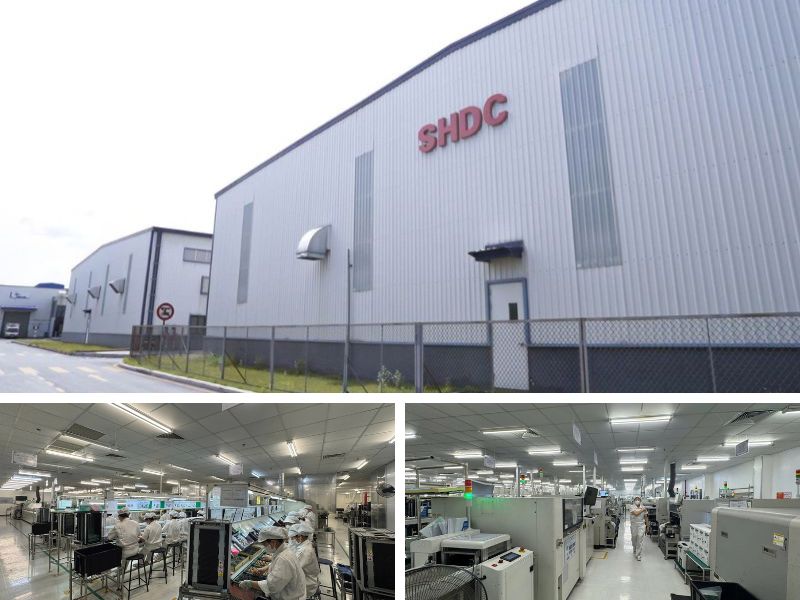
SHDC’s manufacturing process incorporates quality control across multiple stages rather than relying solely on final inspection.
According to the company’s current profile, SHDC operates SMT and DIP production, along with assembly, testing, and packaging capabilities. Its documented production flow includes IQC, AOI, ICT, FCT, visual inspection, OQC, and packaging.
The factory profile also identifies equipment including 3D SPI, 3D AOI, ICT, functional testing, high-voltage testing, A/V testing, and aging testing.
For production management, SHDC documents the use of ERP, PLM, SCM, MES/QMS, and traceability-related production systems, supporting process data and production management.
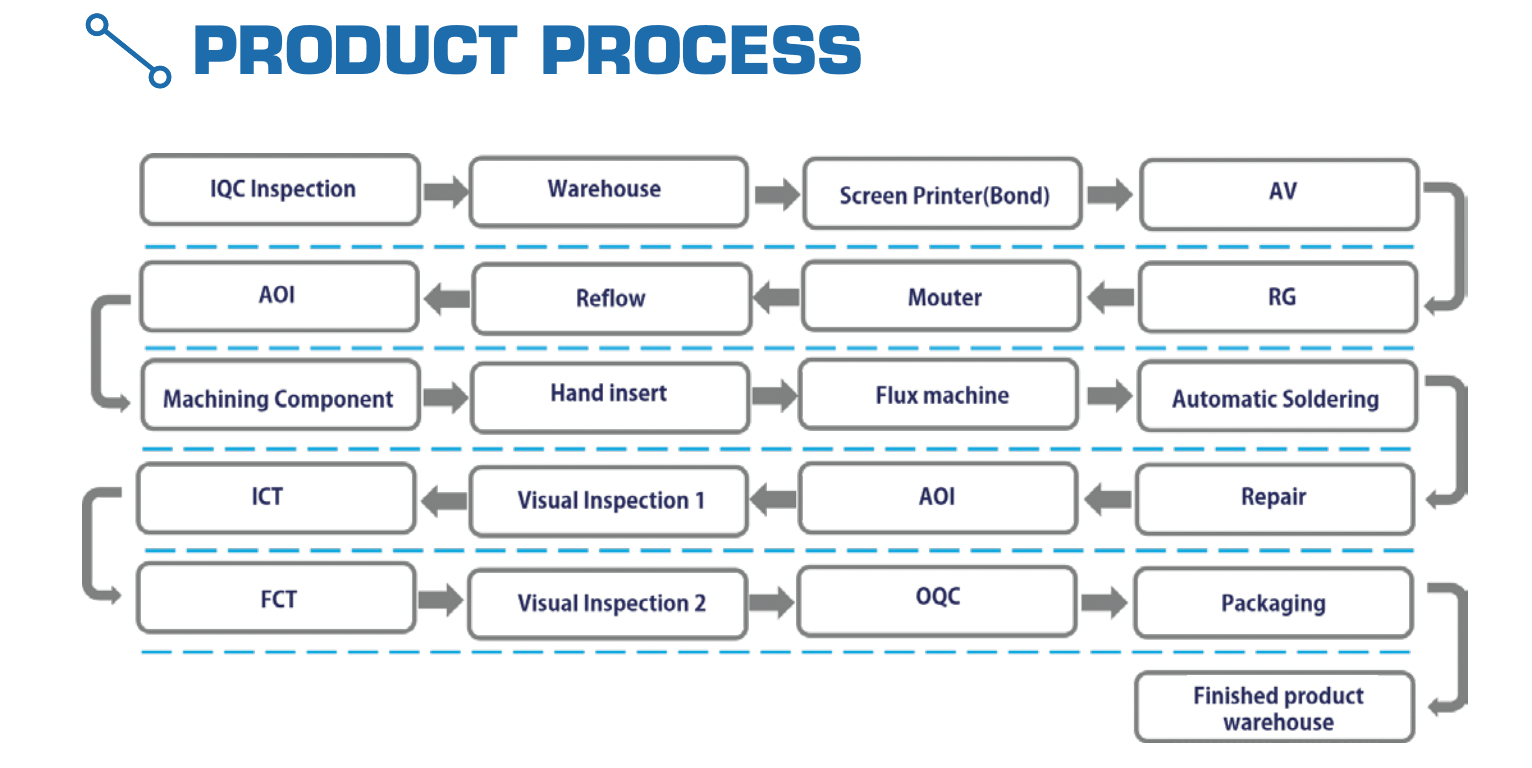
For U.S. OEMs evaluating SHDC, the more useful approach is therefore to assess these capabilities against the specific product requirements:
- What level of incoming inspection is required?
- Which AOI/SPI criteria should be applied?
- Is ICT required?
- What should FCT cover?
- What traceability level is necessary?
- What acceptance criteria apply?
- What quality KPIs should be reported?
- What documentation is required for production release?
This project-specific approach is more meaningful than simply asking whether a supplier “has quality control.”
>>>Read more: SHDC – Reliable PCBA Assembly Vietnam for Global Electronics Brands
Final Takeaway: Quality Control Should Start Before Production
Effective quality control in electronics manufacturing is not a single inspection step at the end of the production line.
It is a connected system covering:
Incoming materials → PCB/BOM verification → SMT → soldering → AOI → electrical testing → functional testing → final inspection → traceability → continuous improvement
For U.S. OEMs, the best electronics manufacturing partner is not necessarily the one with the lowest quotation. The stronger choice is the supplier that can demonstrate repeatable processes, measurable quality performance, appropriate testing, traceability, engineering support, and a disciplined approach to continuous improvement.
Before approving an electronics manufacturer, evaluate what happens inside the production process, not just what appears on the supplier’s website or quotation.
Frequently Asked Questions
What is quality control in electronics manufacturing?
Quality control in electronics manufacturing is the process of inspecting, testing, monitoring, and controlling materials, production processes, assemblies, and finished products to ensure they meet defined requirements.
What are the main quality control steps in electronics manufacturing?
Common steps include incoming material inspection, PCB and BOM verification, SMT process control, SPI, AOI, soldering inspection, ICT, functional testing, final inspection, traceability, and corrective actions.
How do electronics manufacturers inspect PCBs and PCBAs?
Depending on product requirements, manufacturers can use visual inspection, SPI, AOI, ICT, FCT, electrical testing, and other inspection or reliability methods. The appropriate combination depends on product design, volume, risk, and customer requirements.
What is the difference between AOI, ICT, and FCT?
AOI primarily checks visual and assembly characteristics. ICT evaluates certain electrical characteristics at the circuit level. FCT evaluates whether the assembled product performs its intended function.
Why is traceability important in electronics manufacturing?
Traceability connects materials, production records, inspection results, and testing data to specific production batches or products. It helps manufacturers investigate defects, identify affected units, and perform more effective root-cause analysis.
How can U.S. OEMs evaluate an electronics manufacturer’s quality system?
OEMs should review the supplier’s quality processes, inspection and testing capabilities, traceability, quality KPIs, certifications, corrective-action system, production records, and factory operations. An on-site factory audit and pilot production can provide additional evidence before production approval.
>>>Read more: PCBA Vietnam: High-Reliability PCB Assembly Partner for US OEMs