Tiếng Việt
 日本語
日本語
For US OEMs, electronics manufacturing is rarely just about assembling a PCB or completing a final product enclosure. In many cases, the real challenge lies in coordinating sourcing, board assembly, box build, inspection, and delivery across multiple suppliers without losing control over quality, timelines, or communication. That is why full turnkey electronics manufacturing has become an increasingly attractive model for OEM brands that want a more streamlined and reliable production workflow. In Vietnam, SHDC provides full turnkey electronics manufacturing support for OEM programs, helping customers move from material coordination to PCB assembly, final product integration, inspection, and shipment preparation within a more structured manufacturing environment.
What Is Full Turnkey Electronics Manufacturing?
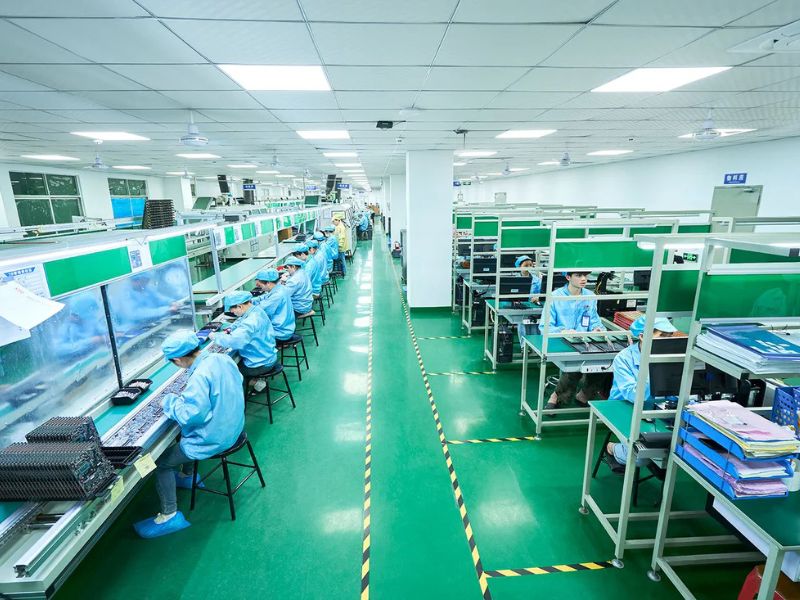
Full turnkey electronics manufacturing refers to a production model in which a manufacturing partner supports most or all of the key steps required to build an electronic product. Instead of splitting the work across separate sourcing teams, PCB assemblers, and final assembly vendors, OEMs can rely on one coordinated manufacturing workflow.
Definition of full turnkey electronics manufacturing
In a typical turnkey model, the manufacturing partner helps manage the process from early production preparation through final assembly and delivery readiness. The term full turnkey electronics manufacturing is used when the supplier’s role covers a broad manufacturing scope rather than only isolated production tasks.
This usually means support for:
- material sourcing or sourcing coordination
- supply chain planning
- PCB assembly
- subassembly work
- box build assembly
- inspection and testing
- packaging and shipment preparation
Compared with a more limited manufacturing arrangement, turnkey manufacturing gives OEMs a more integrated production model.
What is typically included in a turnkey manufacturing program
Although the exact scope varies by product and customer requirements, full turnkey electronics manufacturing services often include the following:
- review of product requirements and manufacturing scope
- BOM and material planning
- sourcing and supply chain coordination
- PCB assembly and board-level production
- integration of cables, connectors, and subassemblies
- box build or final product assembly
- in-process inspection and final quality checks
- packaging and export delivery preparation
This is why turnkey manufacturing is often described as an end-to-end electronics manufacturing solution.
Why OEMs choose turnkey manufacturing
For OEMs, the appeal of turnkey manufacturing is straightforward. It reduces operational complexity.
Instead of managing multiple suppliers for each production stage, a turnkey model can help with:
- fewer vendor handoffs
- simpler procurement coordination
- better alignment between sourcing and production
- more consistent quality control
- smoother communication
- easier scale-up from pilot to repeat production
For US OEMs in particular, this model is useful when production programs require both supply chain coordination and stable assembly execution.
SHDC’s Full Turnkey Electronics Manufacturing Services
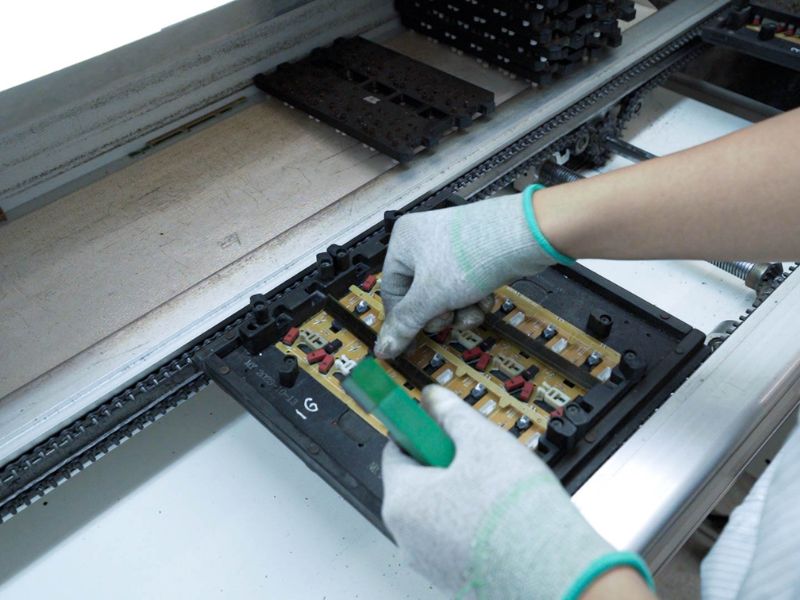
SHDC positions its manufacturing support around the needs of OEM customers that require more than standalone PCB assembly. As a Vietnam-based electronics manufacturing company, SHDC supports turnkey manufacturing workflows that connect sourcing, assembly, integration, quality control, and shipment preparation in a practical production environment.
>>>Read more: Profile’s SHDC Electronic Company
Material sourcing and supply chain coordination
One of the key advantages of turnkey electronics manufacturing is reducing the sourcing burden on the customer side. Instead of requiring the OEM to coordinate every material and supplier relationship independently, SHDC can support broader material planning and supply chain coordination for production programs.
This helps OEM customers by:
- reducing procurement complexity
- improving material readiness for scheduled builds
- aligning sourcing with actual manufacturing requirements
- supporting smoother production planning
For buyers managing international supply chains, this kind of coordination can make a meaningful difference in production efficiency.
PCB assembly as the production foundation
PCB assembly remains a core part of any electronics manufacturing workflow. In a turnkey model, it forms the technical foundation on which the rest of the product build depends.
SHDC’s broader electronics manufacturing profile supports board-level assembly as part of a more complete production process. This matters because PCB quality, assembly consistency, and process control directly affect the success of later stages such as box build and final integration.
For OEMs, the benefit is clear: when PCB assembly is connected to downstream manufacturing under a coordinated workflow, production tends to be more stable and easier to manage.
Box build and final product assembly support
Turnkey manufacturing becomes especially valuable when the supplier can move beyond board assembly into final product build support. SHDC’s capabilities are relevant here because the company’s manufacturing model extends into box build assembly and related final integration processes.
This may include:
- installing PCB assemblies into enclosures
- integrating cables and connectors
- assembling submodules and mechanical parts
- mounting switches, ports, and functional accessories
- applying product labels
- preparing units for final packaging
This integrated scope supports OEMs that want a manufacturing partner capable of helping convert assembled boards into finished or near-finished products.
Inspection, testing, and shipment readiness
Reliable full turnkey electronics manufacturing depends on quality control throughout the production process. A product is not ready simply because all parts have been assembled. It also needs proper inspection, verification, and shipment preparation.
SHDC’s manufacturing approach supports:
- in-process inspection during assembly
- final inspection before release
- product verification steps where applicable
- packaging and shipment preparation
- export-oriented manufacturing delivery support
For OEMs, this improves confidence that production output is being managed with a more complete operational view.
Manufacturing support for OEM production programs
Turnkey manufacturing is especially useful for OEM customers that need a repeatable production partner rather than a task-based contractor. SHDC’s service positioning aligns with this need by supporting structured manufacturing programs that can move from early production stages toward more scalable output.
This is relevant for OEMs seeking:
- a coordinated production workflow
- better alignment between sourcing and assembly
- more stable quality management
- a manufacturing partner in Vietnam that can support export programs
>>>Read more: Trusted Electronics Manufacturing Services Company for US OEMs
What a Turnkey Electronics Manufacturing Workflow Looks Like
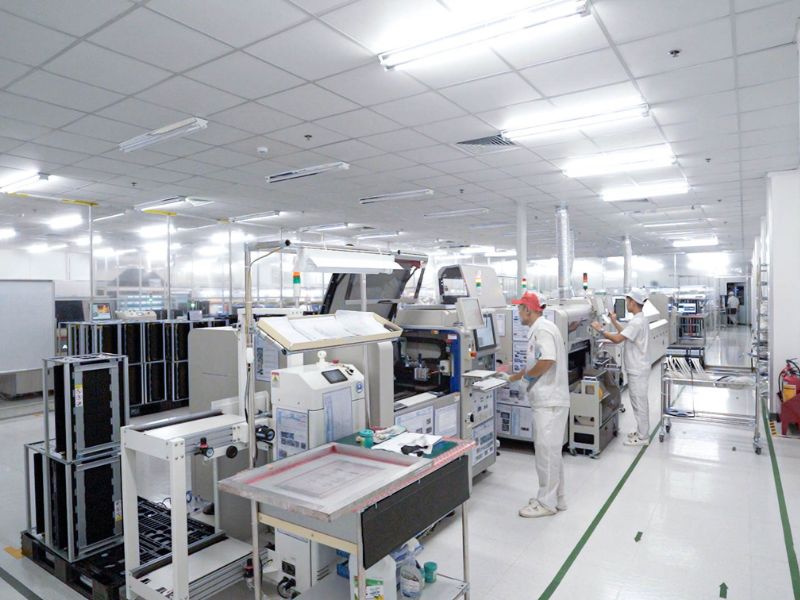
For many buyers, the value of turnkey manufacturing becomes easier to understand when viewed as a workflow rather than a broad service label. In practice, reliable turnkey electronics manufacturing is a sequence of coordinated production steps that reduce fragmentation and improve control.
1. Product requirement review
The process begins with a review of the product’s technical and manufacturing requirements. At this stage, the goal is to clarify the production scope and confirm what the program will require.
This typically includes:
- product drawing and specification review
- BOM assessment
- assembly scope confirmation
- identification of manufacturing and integration needs
This first step helps ensure that production planning starts from the right baseline.
2. Material planning and sourcing coordination
After project requirements are aligned, the next step is preparing the material side of the program. This is one of the defining features of a turnkey model.
Activities may include:
- material requirement planning
- supplier coordination
- sourcing support
- production scheduling alignment
- preparation of materials for assembly readiness
For OEMs, this stage reduces pressure on internal procurement teams and supports more efficient build preparation.
3. PCB assembly and subassembly execution
Once materials are ready, PCB assembly and related subassembly work move into execution. This is where the core electronics manufacturing process takes place.
Typical activities include:
- board-level assembly
- handling of electronic components
- subassembly integration
- assembly process execution based on production instructions
This stage creates the core electronic structure that will later be integrated into the final product.
4. Box build and final integration
At this point, production moves beyond the board and into the physical product. This is where turnkey electronics manufacturing becomes much more than a PCBA service.
Typical work may include:
- installation of PCB units into housings
- connector and cable integration
- mounting of modules and product parts
- enclosure assembly
- final mechanical fastening
This step transforms the assembled electronics into a completed or near-completed product configuration.
5. Inspection, testing, and quality verification
Each stage of production must be supported by inspection and quality checks. In turnkey manufacturing, that matters because issues in one stage can affect all downstream output.
Quality verification may include:
- in-process inspection
- visual checks
- assembly completion review
- testing steps where appropriate
- final quality verification before packing
This supports more reliable delivery and reduces the risk of shipping defects to the customer.
>>>Read more: SHDC – Turnkey PCBA Manufacturer in Vietnam
6. Packaging and delivery preparation
The last stage is preparing the completed product for shipment. This part of the workflow is often overlooked, but it matters for product protection, customer presentation, and export readiness.
This may include:
- labeling
- packaging
- shipment preparation
- export delivery coordination
A turnkey manufacturing partner that supports this final stage provides a more complete production solution for OEM customers.
Why US OEMs Use Full Turnkey Electronics Manufacturing
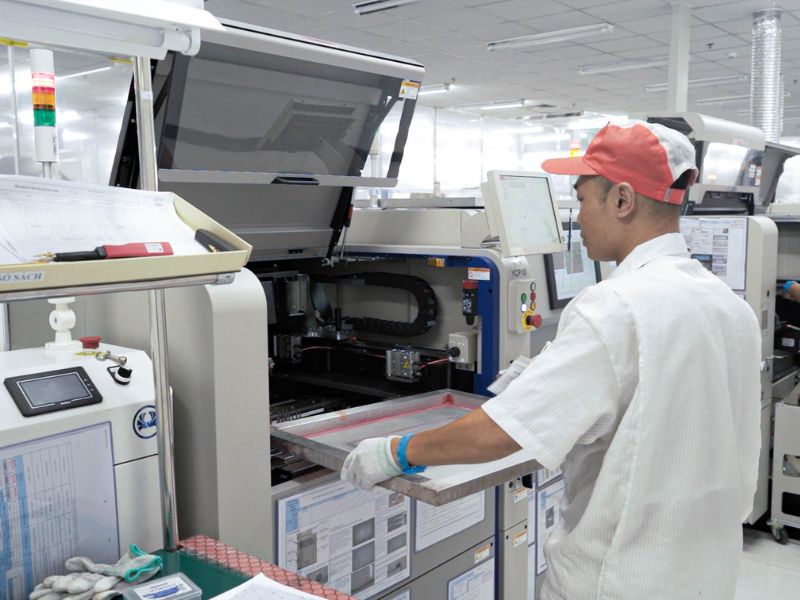
For US OEMs, the value of turnkey manufacturing is not only about cost. It is also about reducing complexity and improving control in an increasingly demanding supply chain environment.
Fewer suppliers and simpler coordination
When manufacturing is divided across multiple vendors, the OEM often has to manage too many moving parts. Materials come from one source, PCB assembly from another, and final integration from a third. That setup creates more communication overhead and more room for delay.
A turnkey model simplifies this by reducing the number of supplier interfaces the OEM team has to manage.
Better alignment between sourcing and assembly
One of the most common production problems in electronics manufacturing is the gap between what is sourced and what is actually needed at assembly. Material mismatches, timing issues, or incomplete coordination can create unnecessary delays.
Turnkey manufacturing improves this by aligning sourcing and production within a more coordinated workflow.
Improved visibility into quality and production flow
A reliable turnkey supplier should not just build products. It should also manage the production flow with greater structure.
For OEMs, this can mean:
- clearer production stages
- more defined quality checkpoints
- better issue visibility
- easier coordination during execution
That kind of visibility is particularly important when products require both electronic and mechanical assembly.
More efficient scaling from prototype to volume production
Many OEM programs start small and grow later. A fragmented supplier structure can make that transition harder. A turnkey manufacturing model, by contrast, often makes it easier to move from early production runs to repeat builds with fewer operational disruptions.
This is especially useful for OEMs that need a manufacturing partner capable of supporting longer-term production development.
Why Vietnam Is a Strategic Choice for Turnkey Electronics Manufacturing
Location plays a major role in electronics manufacturing decisions. For US OEMs, Vietnam has become an increasingly strategic choice for turnkey production programs.
Supply chain diversification for US brands
Many companies are looking to diversify sourcing and manufacturing beyond a single country strategy. Vietnam has benefited from this shift by becoming a more prominent destination for electronics manufacturing.
For US brands, this provides:
- broader sourcing flexibility
- reduced concentration risk
- more options for regional manufacturing strategy
Competitive manufacturing environment
Vietnam offers a competitive manufacturing base supported by a growing industrial ecosystem. For electronics production, this matters because turnkey manufacturing depends on both cost efficiency and operational readiness.
OEMs often view Vietnam positively for:
- competitive labor and operating costs
- expanding electronics manufacturing activity
- improving supplier ecosystem
- increasing technical manufacturing capability
>>>Read more: China Alternative Electronics Manufacturing: Why Vietnam Is the Top Choice in 2026
Export-oriented production infrastructure
Turnkey manufacturing is most useful when the production environment supports international delivery. Vietnam’s industrial development model, including export-focused zones and industrial parks, helps support this requirement.
This makes the country attractive for OEMs that need manufacturing output prepared for export markets.
SHDC’s location advantage in VSIP Hai Duong
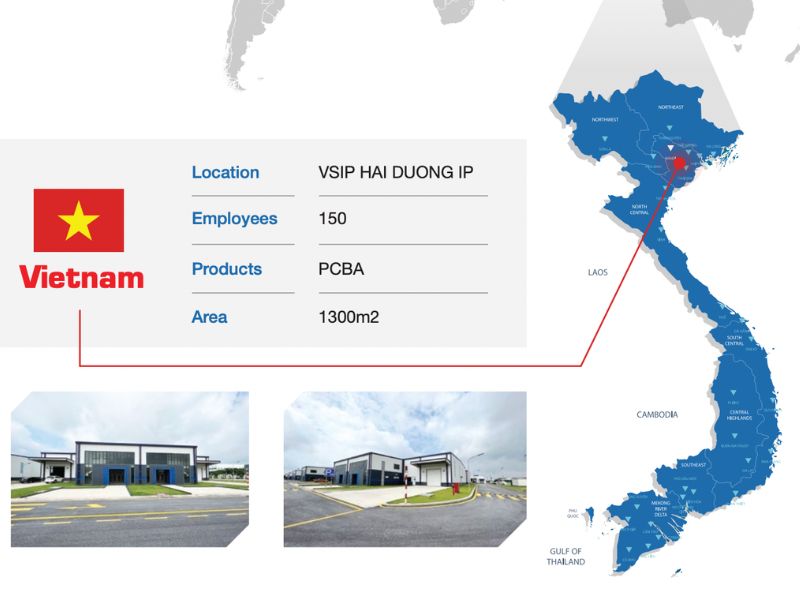
SHDC is located in VSIP Hai Duong Industrial Park, a setting that supports organized industrial production and export-oriented manufacturing operations. This location strengthens SHDC’s relevance for OEM customers that are evaluating Vietnam as part of their manufacturing strategy.
Quality Systems That Support Reliable Turnkey Manufacturing
Reliable full turnkey electronics manufacturing depends on execution discipline. Without process control, even a broad service offering can become inconsistent. SHDC’s operational model is supported by management systems and quality-focused practices intended to strengthen manufacturing reliability.
In-process quality control throughout production
Quality in electronics manufacturing should not be treated as a final checkpoint only. In turnkey production, inspection needs to be embedded throughout the workflow.
This means focusing on:
- assembly-stage quality checks
- process monitoring
- final inspection before shipment
- defect prevention through better execution control
For OEMs, this helps improve output consistency and reduces avoidable quality problems.
Management systems used in operations
SHDC’s company information highlights the use of integrated operational systems, including:
Together, these systems help support:
- planning and coordination
- inventory and supply chain management
- product data and process control
- production execution visibility
- quality management discipline
For a turnkey manufacturing partner, these systems are important because they indicate a more structured operating environment.
>>>Xem thêm: SHDC – Turnkey PCBA Manufacturer in Vietnam
Workforce training and continuous improvement
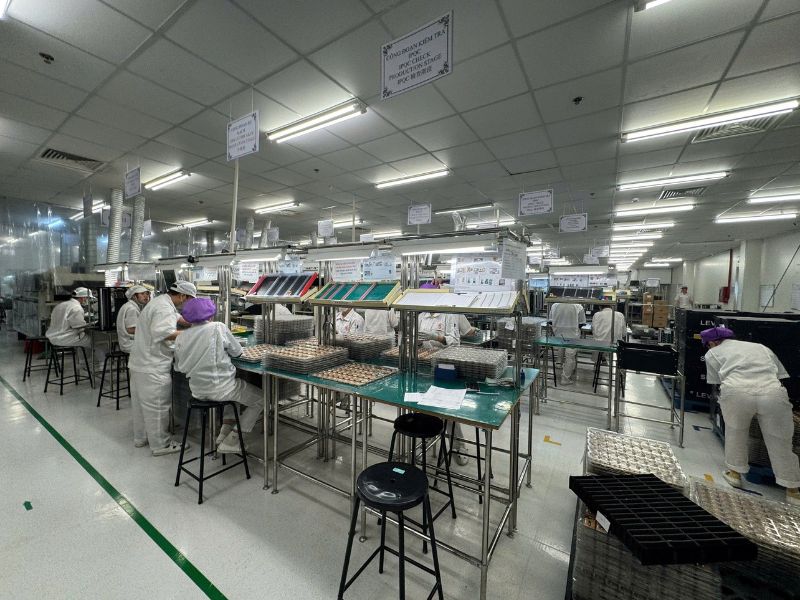
A reliable manufacturing operation also depends on people. SHDC’s quality orientation includes improving technical capability through training, equipment upgrades, and process refinement.
This kind of continuous improvement focus supports:
- more consistent operator performance
- stronger technical understanding
- ongoing process optimization
- better long-term manufacturing reliability
Customer-oriented quality mindset
For OEM manufacturing, quality is not only about inspection. It is also about whether the supplier understands the customer’s expectations for delivery, consistency, and responsiveness.
SHDC’s quality direction emphasizes customer needs, product quality improvement, and sustained operational development. That is exactly the kind of mindset OEM buyers tend to look for in a long-term manufacturing partner.
Turnkey Electronics Manufacturing vs Consigned Manufacturing
OEM buyers often compare turnkey manufacturing with consigned manufacturing before selecting a production model. Understanding the difference helps clarify when each option makes sense.
What consigned manufacturing means
In a consigned manufacturing model, the customer typically provides most or all of the materials and components, while the factory focuses mainly on assembly execution.
This can work well when the OEM wants to maintain strict control over:
- approved suppliers
- component sourcing
- material purchasing
- inventory ownership
How turnkey manufacturing is different
In turnkey manufacturing, the supplier takes on a broader role. Instead of only assembling customer-provided parts, the supplier also helps coordinate sourcing, materials, and production planning.
This reduces the operational burden on the customer and can simplify the manufacturing workflow.
Which model is better for OEMs
The right model depends on the customer’s supply chain strategy.
Below is a simple comparison:
| Model | Who Handles Materials? | Best Fit |
|---|---|---|
| Consigned Manufacturing | Customer provides most materials | OEMs that want direct sourcing control |
| Turnkey Manufacturing | Supplier coordinates sourcing and production | OEMs that want simpler, integrated manufacturing |
For many US OEMs, turnkey manufacturing is the better fit when the goal is to reduce complexity and work with a partner that can support a broader production scope.
Industries and Products Suitable for Turnkey Electronics Manufacturing
Turnkey electronics manufacturing is relevant across a wide range of product categories, especially where OEMs need both electronic assembly and final product integration.
- Consumer electronics: Consumer devices often require compact product builds, coordinated material planning, and consistent final assembly quality. Turnkey support can simplify that process.
- Computer and office-related products: Office and computer-related products often combine PCB assembly, connectors, housings, and final assembly steps that benefit from integrated manufacturing coordination.
- Home appliance electronics: Products in this category often involve both electronic controls and mechanical integration, making them suitable for a turnkey workflow.
- Chargers and power accessories: Chargers, adapters, and compact power-related devices are strong examples of products that benefit from a coordinated sourcing-plus-assembly model.
- Selected automotive-related electronics: For selected automotive-related electronic applications, turnkey support can also be relevant, provided the project requirements match the supplier’s technical and quality scope.
Why Choose SHDC as Your Turnkey Electronics Manufacturing Partner
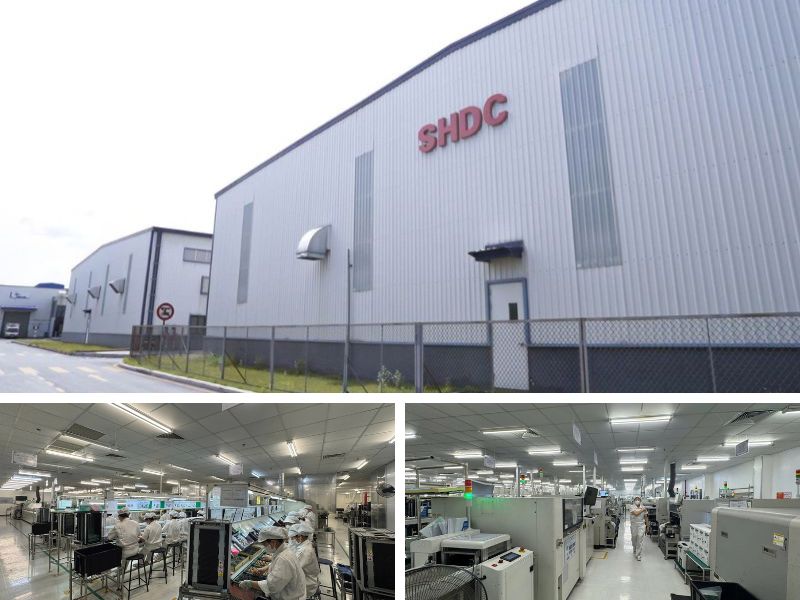
For OEMs looking for a reliable manufacturing partner in Vietnam, SHDC offers a combination of relevant capability, structured production support, and quality-oriented operations.
Vietnam-based electronics manufacturing partner: SHDC operates in Vietnam, which is increasingly important for US OEMs looking to diversify their supply chain and build more resilient manufacturing programs.
Integrated support from PCB assembly to final product build: SHDC’s value lies in its ability to support a manufacturing path that connects PCB assembly with box build and final integration, rather than treating each stage as an isolated process.
Structured production management systems: With systems such as ERP, SCM, PLM, MES, and QMS, SHDC demonstrates a more organized manufacturing model that supports planning, execution, and quality control.
Quality-driven operations for OEM manufacturing: SHDC’s focus on training, process improvement, and customer-oriented quality supports the kind of manufacturing reliability OEM programs require.
Scalable support for export-oriented OEM programs: For OEM customers targeting international markets, SHDC’s Vietnam manufacturing base and export-oriented production setup make it a practical partner for scalable production support.
Frequently Asked Questions
Below are some of the most common questions OEM buyers ask when evaluating turnkey electronics manufacturing services.
What is full turnkey electronics manufacturing?
It is a manufacturing model in which one supplier supports most or all of the major production stages, including material coordination, PCB assembly, box build, inspection, and shipment preparation.
What is included in turnkey electronics manufacturing services?
Typical services include sourcing coordination, production planning, PCB assembly, subassembly work, final product assembly, inspection, testing where applicable, and packaging.
What is the difference between turnkey and consigned manufacturing?
In consigned manufacturing, the customer supplies most materials. In turnkey manufacturing, the supplier manages both materials coordination and production execution.
Can SHDC support PCB assembly and box build in one program?
Yes. SHDC’s manufacturing profile supports both PCB assembly and broader final product integration workflows, making it relevant for OEMs seeking a more complete manufacturing partner.
Why do US OEMs choose Vietnam for turnkey electronics manufacturing?
Vietnam offers supply chain diversification, competitive manufacturing conditions, export-oriented infrastructure, and a growing electronics production ecosystem.
What types of products are suitable for full turnkey manufacturing?
Turnkey manufacturing is suitable for many products, including consumer electronics, office equipment, home appliance electronics, chargers, accessories, and selected automotive-related electronics.
Is turnkey electronics manufacturing suitable for scalable OEM production?
Yes. One of the main advantages of turnkey manufacturing is that it can make scaling easier by reducing supplier fragmentation and improving coordination across production stages.
Contact SHDC for Reliable Full Turnkey Electronics Manufacturing

For US OEMs looking to simplify supply chain coordination and work with a more integrated electronics manufacturing partner, full turnkey electronics manufacturing offers a practical path forward. SHDC supports turnkey electronics manufacturing in Vietnam with capabilities that connect sourcing coordination, PCB assembly, box build, quality control, and shipment preparation in a more structured production model.
By combining electronics manufacturing support with quality-oriented operations and export-ready execution, SHDC is positioned to help OEM customers move from board-level production to final product delivery with greater consistency and less operational friction.
SHDC Electronics Co., Ltd
- Factory A1-2, Lot 5, VSIP Hai Duong Industrial Park, Cam Dien Commune, Cam Giang District, Hai Duong Province, Vietnam
- Website: www.shdc.com.vn
- Email: hao@shdc.com.vn / cuongvd@shdc.com.vn
- Hotline: 022 0356 6686 / 0903 443 300 / 0906 166 997