Tiếng Việt
 日本語
日本語
For OEMs developing electronic products, one of the most common—and costly—sources of confusion is the difference between PCB board fabrication and PCB assembly. At first glance, the terms seem interchangeable. In practice, they represent two fundamentally different stages of the manufacturing process, often handled by different vendors, with different cost structures, timelines, and risks. Understanding how these two processes interact is critical—not just for engineering clarity, but for controlling cost, reducing delays, and selecting the right manufacturing partner. This guide breaks down the real differences between PCB board fabrication and PCB assembly, and more importantly, what OEMs should consider before moving into production.
What Is PCB Board Fabrication?
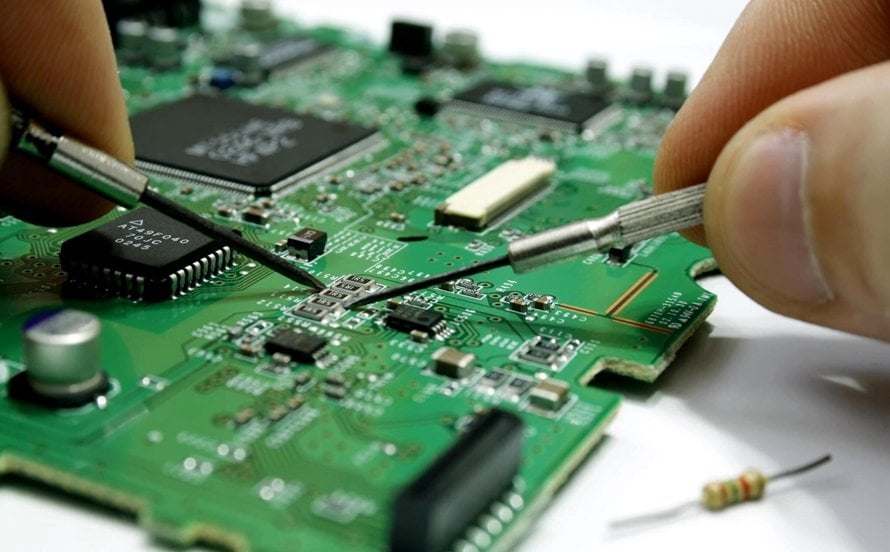
PCB board fabrication refers to the process of manufacturing the bare printed circuit board, without any electronic components attached.
This process typically includes:
- Material selection (FR4, high-frequency materials, etc.)
- Layer stack-up design
- Imaging and etching of copper traces
- Drilling and via formation
- Plating and surface finishing
The output of fabrication is a bare PCB that defines the electrical pathways of the circuit.
While fabrication is highly technical, it is also relatively standardized compared to assembly. Most variability comes from board complexity—such as layer count, tolerances, and materials.
What Is PCB Assembly?
PCB assembly is the process of placing and soldering electronic components onto the fabricated board to create a functional electronic unit.
This stage includes:
- Surface Mount Technology (SMT) placement
- Through-hole assembly (DIP)
- Soldering processes (reflow, wave soldering)
- Inspection (AOI) and testing (ICT, functional testing)
Unlike fabrication, PCB assembly involves:
- Component sourcing
- Process control
- Yield management
As a result, it is typically the more complex and variable stage of production.
PCB Board Fabrication vs PCB Assembly: Key Differences
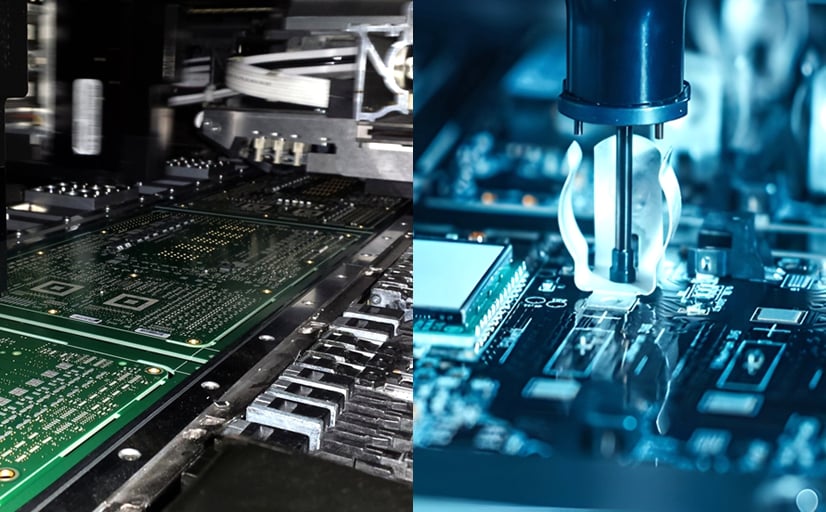
While both processes are essential, they differ significantly in scope and execution.
Scope of Work:
+ Fabrication focuses on building the physical board.
+ Assembly focuses on turning that board into a working electronic product.
Cost Structure:
+ Fabrication costs are driven by materials, board complexity, and volume.
+ Assembly costs depend on component pricing, labor, yield, and testing requirements.
Lead Time
+ Fabrication lead time is relatively predictable once design files are finalized.
+ Assembly lead time is heavily influenced by component availability and production scheduling.
Quality Control
+ Fabrication quality is tied to dimensional accuracy and material integrity.
+ Assembly quality depends on process stability, inspection systems, and defect control.
For OEMs, the key takeaway is simple:
Fabrication defines the platform. Assembly determines performance.
Why OEMs Often Confuse Fabrication and Assembly
In many projects, the distinction between fabrication and assembly is not clearly defined—especially during early sourcing and quoting stages.
Common causes of confusion include:
- Vendors offering both services without clearly separating them
- Incomplete documentation (e.g., missing BOM or unclear Gerber files)
- Assumptions that one supplier will “handle everything”
This lack of clarity often leads to:
- Inaccurate quotes
- Misaligned expectations
- Delays during production handoff
From experience, these issues rarely appear at the beginning of a project—they emerge later, when changes become expensive.
>>>Read more: SMT vs Through-Hole: A Complete Comparison for PCB Design
How Fabrication and Assembly Impact Total Cost
Many OEMs evaluate fabrication and assembly costs separately. In reality, the total cost of production depends on how well these two stages are aligned.
Fabrication cost drivers:
- Board material
- Layer count
- Surface finish
- Panelization efficiency
Assembly cost drivers:
- Component cost and availability
- Placement complexity
- Yield and defect rate
- Testing requirements
A design optimized for fabrication does not automatically translate to efficient assembly. Misalignment between the two can lead to:
- Increased rework
- Lower yield
- Higher overall cost
Key insight: Total cost is not the sum of fabrication and assembly—it is the result of how well they work together.
Lead Time Differences: Fabrication vs Assembly
Lead time is another area where OEMs often underestimate complexity.
Fabrication lead times are typically stable and predictable, assuming:
- Design files are complete
- No major revisions are required
Assembly, however, introduces additional variables:
- Component sourcing delays
- Production scheduling constraints
- Testing and quality assurance processes
In most real-world scenarios, assembly—not fabrication—is the primary driver of lead time variability.
This is especially true in global supply chains where component availability can fluctuate.
Common Risks When Fabrication and Assembly Are Separated
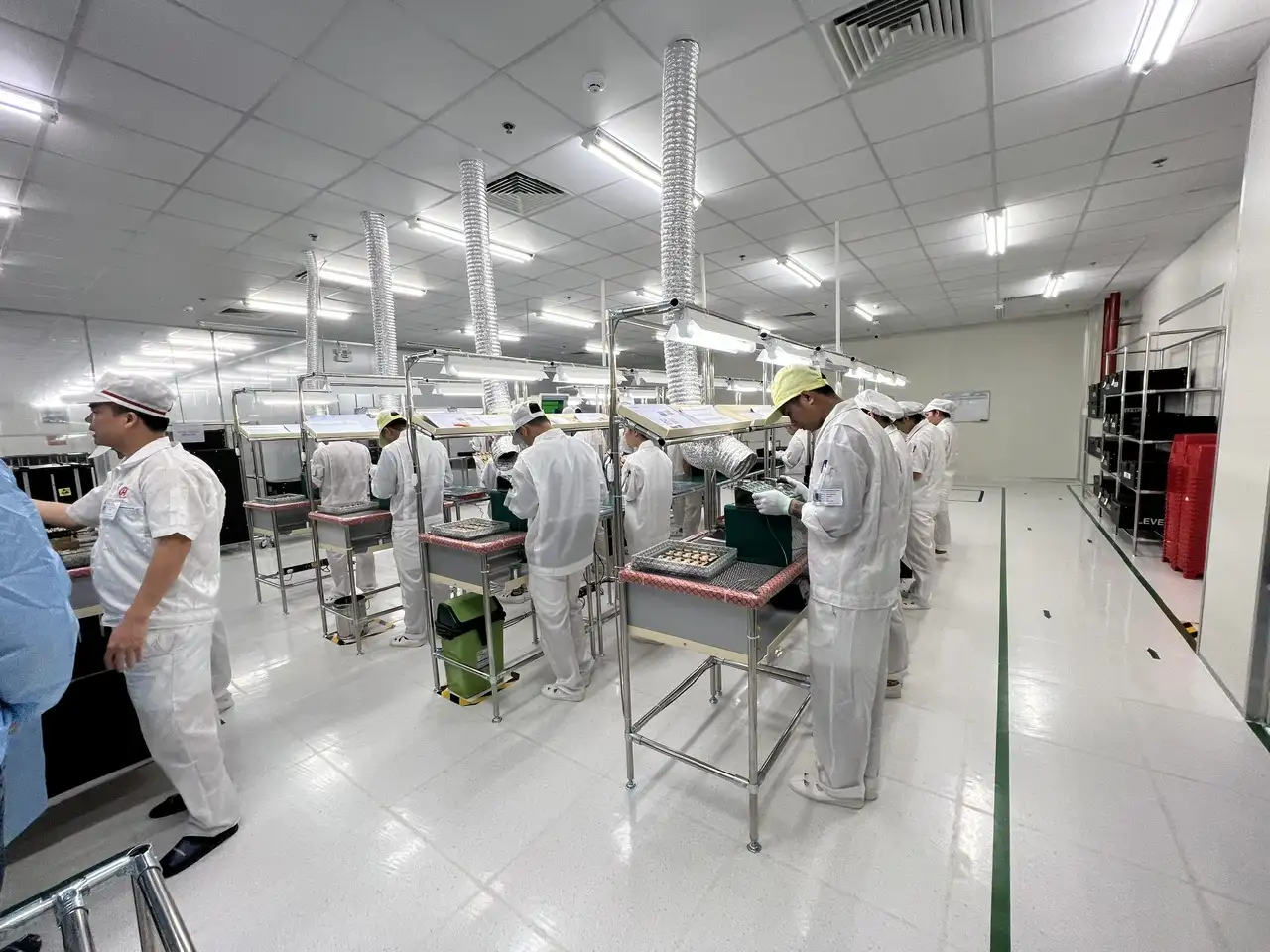
Many OEMs choose separate vendors for fabrication and assembly. While this can offer flexibility, it also introduces significant risks.
- Miscommunication between vendors: Fabrication and assembly teams may interpret design data differently, leading to compatibility issues.
- Design-to-process mismatches: A board fabricated without assembly considerations can create challenges during component placement.
- Increased lead time: Coordinating multiple vendors adds delays at each handoff stage.
- Higher hidden costs: Issues discovered during assembly often require redesign or re-fabrication—both costly and time-consuming.
These risks are not theoretical—they are among the most common causes of production delays in outsourced manufacturing.
>>>Read more: PCB Prototyping Services Cost: What Affects Your Prototype Price?
When to Work with Separate Vendors vs a Turnkey EMS Provider
There is no one-size-fits-all answer. The right approach depends on the stage and complexity of your project.
Choose separate vendors when:
- You are in early prototyping stages
- Flexibility is more important than efficiency
- You need specialized fabrication capabilities
Choose a turnkey EMS provider when:
- You are scaling to production
- Cost control becomes critical
- You want to reduce coordination complexity
- Time-to-market is a priority
For most OEMs, the transition from prototype to production is the point where integrated manufacturing becomes more valuable.
Why Turnkey PCB Assembly Reduces Risk and Cost
A turnkey EMS model integrates fabrication and assembly into a single workflow.
This provides several advantages:
- Single point of contact for the entire project
- Better alignment between design and manufacturing
- Reduced communication gaps
- Faster production cycles
More importantly, it allows manufacturers to optimize the entire process—not just individual steps.
>>>Read more: Reliable Full Turnkey Electronics Manufacturing for US OEMs
A Practical Manufacturing Approach for OEM Production
In practice, reducing risk and cost requires more than choosing the right model. It depends on how manufacturing is executed.
A structured approach includes:
- Early Design for Manufacturability (DFM) analysis
- Alignment between fabrication and assembly requirements
- Process optimization to improve yield
- Continuous quality control throughout production
This approach shifts problem-solving from reactive to proactive—preventing issues before they impact cost or timelines.
Integrated PCB Fabrication and Assembly for Scalable Production
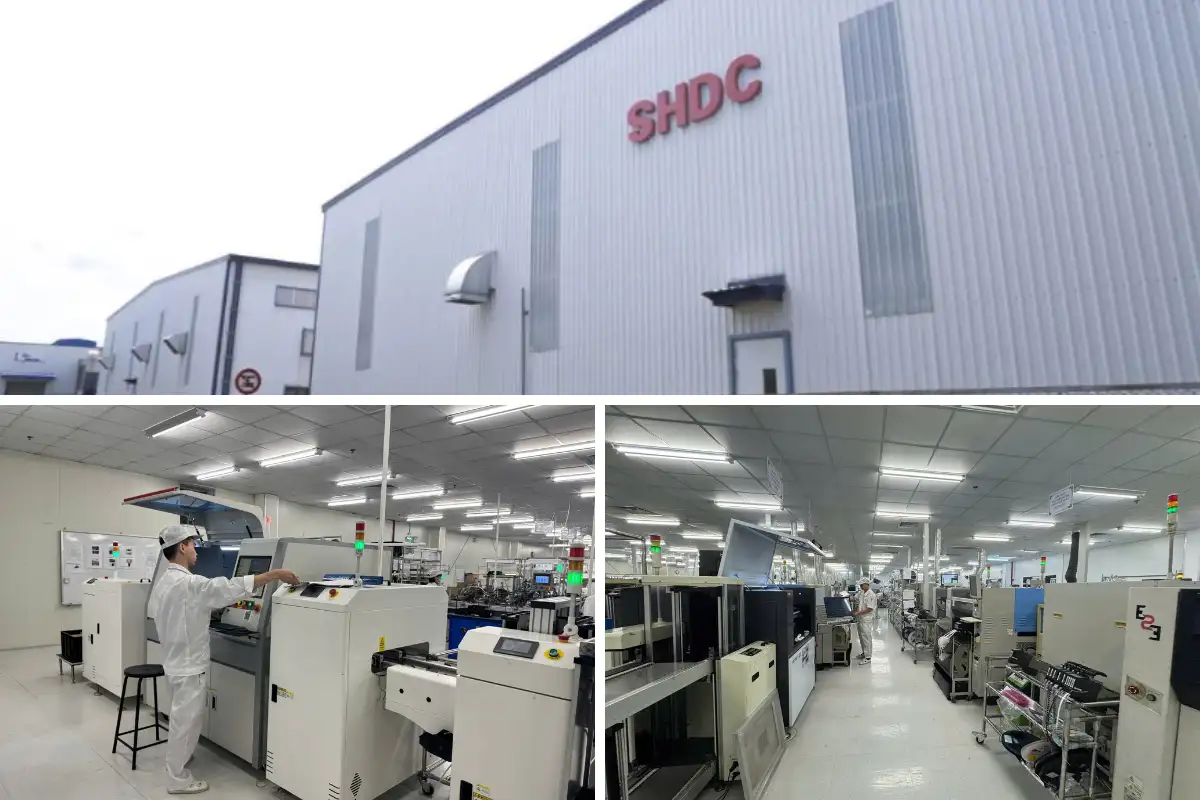
For OEMs moving from prototyping to production, integration between fabrication and assembly becomes a key factor in cost control and scalability.
At SHDC, manufacturing programs are structured to align both stages from the beginning, rather than treating them as separate processes.
This includes:
- Early DFM support to ensure fabrication and assembly compatibility
- Coordination between PCB fabrication specifications and SMT process requirements
- Optimization of panel design and layout for efficient production
- Stable SMT and DIP assembly systems to support both low and high-volume builds
With multiple SMT lines, dedicated assembly and testing processes, and integrated quality control systems, this approach allows production to scale without introducing the common issues associated with fragmented manufacturing workflows.
For OEMs transitioning from prototype builds to volume production, this level of integration helps reduce:
- Yield-related losses
- Rework and redesign cycles
- Lead time uncertainty
More importantly, it provides a consistent framework for managing cost and quality across the entire product lifecycle.
>>>Read more: SHDC Contract Electronics Manufacturing Services for OEM Companies in Vietnam
FAQs
What is the difference between PCB fabrication and assembly?
Fabrication creates the bare circuit board, while assembly installs components to make it functional.
Do I need separate vendors for fabrication and assembly?
Not necessarily. While separate vendors offer flexibility, integrated EMS providers can reduce risk and improve efficiency.
Which costs more: fabrication or assembly?
Assembly typically accounts for a larger portion of total cost due to components, labor, and testing.
How can I reduce PCB production cost?
By optimizing design for manufacturability, aligning fabrication and assembly, and choosing the right manufacturing partner.
What is turnkey PCB assembly?
It is a full-service model where a single provider handles both fabrication and assembly, along with component sourcing and testing.
Final Thoughts
PCB board fabrication and PCB assembly are distinct processes—but their success depends on how well they are integrated. Separating them can work in early stages. But as production scales, the cost of misalignment becomes increasingly significant. For OEMs, the goal is not just to understand the difference. It’s to build a manufacturing strategy where fabrication and assembly work together—efficiently, predictably, and at scale. That’s where real cost savings—and competitive advantage—are created.
>>>Read more: SHDC SMT Vietnam: A Leading SMT Assembly Partner for Global OEM Electronics