Tiếng Việt
 日本語
日本語
Leading circuit board manufacturing companies are defined not simply by size or output volume, but by engineering depth, process control, certification standards, and long-term production reliability. For U.S. OEMs, hardware startups, and procurement leaders, selecting the right PCB partner directly impacts product performance, regulatory compliance, scalability, and total cost of ownership. This guide explains what distinguishes industry-leading PCB manufacturers and how to evaluate the right partner using objective, engineering-driven criteria.
What Do Circuit Board Manufacturing Companies Provide?
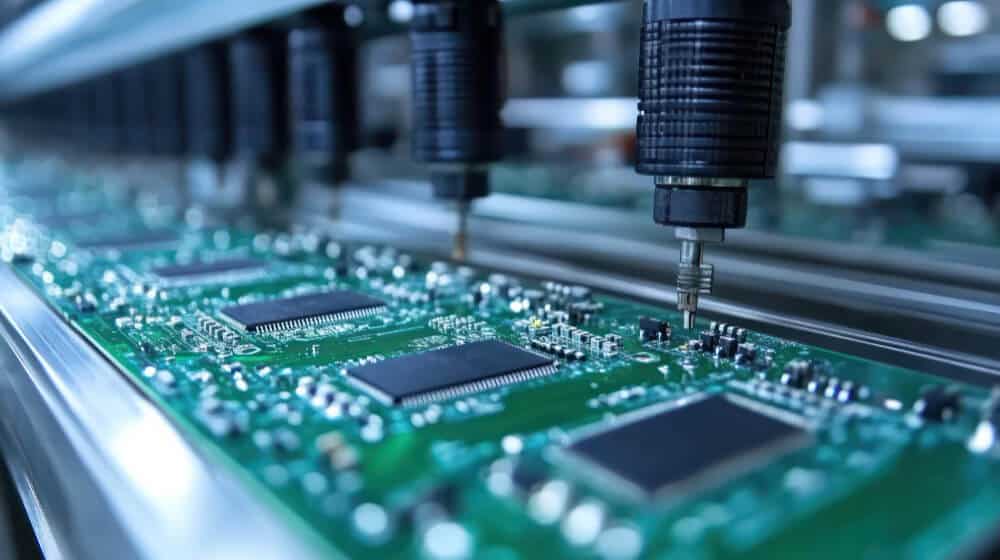
Before evaluating suppliers, it is important to clarify scope. Not all circuit board manufacturing companies offer the same level of integration.
PCB Fabrication (Bare Board Manufacturing)
Fabrication includes:
-
Multilayer lamination
-
Copper imaging and etching
-
Via drilling (mechanical or laser)
-
Copper plating
-
Surface finishing
-
Electrical testing
Fabrication precision determines structural integrity, signal performance, and thermal reliability.
>>>Read more: Circuit Board Fabrication: Process, Materials, and Industry Standards
PCB Assembly (PCBA)
Assembly involves component placement and soldering:
-
Surface Mount Technology (SMT)
-
Through-hole insertion
-
Fine-pitch and BGA handling
-
Reflow soldering
-
Inspection and testing
Assembly quality directly influences field reliability.
Integrated EMS (Electronics Manufacturing Services)
Some leading manufacturers provide turnkey solutions:
-
Component sourcing
-
Supply chain management
-
In-Circuit Testing (ICT)
-
Functional Testing (FCT)
-
Box build and final integration
Integrated EMS providers reduce coordination risks across global supply chains.
What Defines a Leading PCB Manufacturer?

Not every PCB supplier qualifies as “leading.” Industry-leading circuit board manufacturing companies demonstrate measurable capability across five core dimensions.
1. Engineering-Driven DFM Support
Leading manufacturers provide structured Design for Manufacturability (DFM) analysis before production begins.
Key indicators include:
-
Stack-up optimization
-
Controlled impedance validation
-
Trace width and spacing review
-
Via aspect ratio analysis
-
Early risk identification
Engineering engagement before tooling significantly improves yield and reduces costly field failures.
2. Advanced Fabrication Capabilities
Technical capability should be clearly documented:
-
Multilayer support (2–16+ layers)
-
Minimum trace/space tolerance
-
Blind and buried via capability
-
HDI manufacturing
-
Controlled impedance production
-
Material flexibility (FR-4, high-Tg, RF laminates)
Capability range reflects adaptability to evolving product requirements.
3. High-Precision Assembly Infrastructure
Modern electronics demand high-density assembly.
Look for:
-
Multiple SMT production lines
-
0201 component placement capability
-
BGA expertise
-
3D Automated Optical Inspection (AOI)
-
X-ray inspection for hidden solder joints
Infrastructure investment often separates basic contract manufacturers from industry leaders.
4. Integrated Quality and Traceability Systems
Quality control is not a final inspection step — it is a system.
Leading circuit board manufacturing companies typically operate:
-
AOI inspection
-
In-Circuit Testing (ICT)
-
Functional Testing (FCT)
-
Flying probe testing
-
Burn-in capability
-
MES-based traceability systems
-
ERP integration for production transparency
Data-driven process control improves consistency and compliance.
5. Certifications and Regulatory Compliance
For U.S. OEMs, certifications are essential.
Industry-leading manufacturers maintain:
-
ISO 9001 certification
-
IPC-A-600 and IPC-6012 compliance
-
UL certification
-
RoHS compliance
These standards ensure repeatable quality across global production runs.
>>>Read more: Circuit Board Fabrication: Process, Materials, and Industry Standards
Global Landscape of Leading PCB Manufacturers
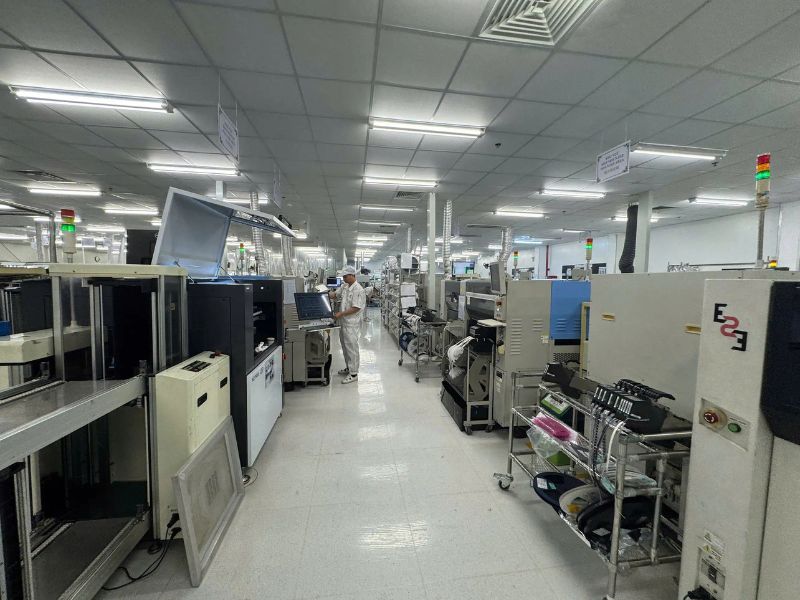
The PCB industry operates within a highly globalized manufacturing ecosystem.
United States
Advantages:
-
Geographic proximity
-
Regulatory familiarity
-
Faster domestic logistics
Limitations:
-
Higher operating costs
-
Capacity constraints for large-scale production
Asia (China, Vietnam, Taiwan, Malaysia)
Advantages:
-
Competitive cost structure
-
Strong electronics ecosystem
-
High scalability
-
Mature export infrastructure
Challenges:
-
Longer lead times
-
Logistics coordination
-
Supplier vetting complexity
For many U.S. companies, the priority is not geography alone, but engineering discipline and quality infrastructure.
Cost vs Reliability: Why Total Cost of Ownership Matters
Lowest unit price rarely equals lowest lifecycle cost.
Risks of price-driven sourcing:
-
Higher defect rates
-
Rework expenses
-
Field failures
-
Warranty claims
-
Brand reputation damage
Leading circuit board manufacturing companies focus on long-term reliability, not short-term pricing advantages. U.S. OEMs increasingly evaluate partners based on Total Cost of Ownership (TCO).
Red Flags When Evaluating PCB Suppliers
Warning signs include:
-
No structured DFM review
-
Limited testing capability
-
Absence of traceability systems
-
Lack of quality certification
-
Overemphasis on pricing
-
Poor engineering communication
Transparent technical dialogue is a strong indicator of supplier maturity.
Characteristics of a Reliable PCB Manufacturing Partner
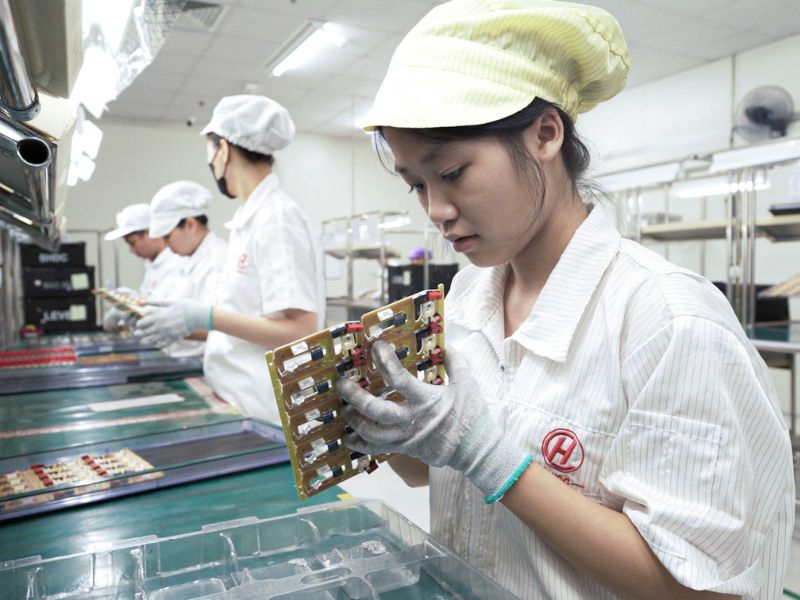
Across the industry, reliable PCB partners share common characteristics:
-
Integrated fabrication and assembly capability
-
Advanced SMT production lines
-
Certified quality management systems
-
3D AOI and X-ray inspection
-
ICT and FCT testing infrastructure
-
ERP and MES production management
-
Engineering-focused collaboration
For example, SHDC Electronics Company Limited, located in VSIP Hai Duong Industrial Park, operates multiple SMT lines supported by ERP, MES, PLM, and QMS systems. With ISO-certified management, 3D AOI inspection, ICT and FCT testing, and fine-pitch assembly capability down to 0201 components, SHDC reflects the engineering-driven model increasingly adopted by leading Southeast Asian manufacturers serving global OEM clients.
This illustrates how integrated infrastructure and disciplined quality systems define modern PCB manufacturing leadership.
>>>Read more: Profile’s SHDC ELECTRONICS COMPANY LIMITED
Practical Checklist: How to Choose the Right PCB Partner
Before committing to a supplier, consider the following evaluation steps:
-
Request a sample DFM review
-
Review documented fabrication capabilities
-
Examine inspection and testing reports
-
Verify certification documentation
-
Assess engineering response time
-
Conduct a factory audit (remote or on-site)
-
Confirm production traceability systems
A structured selection process significantly reduces sourcing risk.
Frequently Asked Questions
How do I identify a leading PCB manufacturer?
Evaluate engineering support, fabrication capability, assembly precision, testing systems, certifications, and scalability.
Is overseas PCB manufacturing reliable?
Yes — when supported by certified quality systems, advanced inspection capability, and transparent communication.
What certifications are essential?
ISO 9001, IPC compliance, UL certification, and RoHS compliance.
What distinguishes leading manufacturers from standard suppliers?
Engineering involvement, process discipline, integrated testing systems, and traceability infrastructure.
Conclusion
Leading circuit board manufacturing companies distinguish themselves through engineering depth, disciplined quality systems, advanced production infrastructure, and scalable global capability. For U.S. OEMs, selecting the right PCB partner requires evaluating technical maturity and long-term reliability — not just price competitiveness.
In today’s global electronics environment, manufacturers that combine fabrication expertise, precision assembly, certified quality systems, and integrated traceability infrastructure are best positioned to support reliable, scalable product development from prototype through full production.