Tiếng Việt
 日本語
日本語
Modern electronic products—from consumer devices to industrial equipment—depend on reliable circuit boards to operate. However, a printed circuit board only becomes functional after electronic components are properly mounted and soldered.
This is where PCB assembly services play a critical role. PCB assembly transforms a bare circuit board into a fully operational electronic module through processes such as component placement, soldering, inspection, and testing.
Today, companies across industries rely on professional PCB assembly manufacturers to support product development, prototype production, and high-volume electronics manufacturing. This guide explains the key aspects of PCB assembly services, including service models, production options, manufacturing processes, and how to choose a reliable assembly partner.
What Is PCB Assembly?
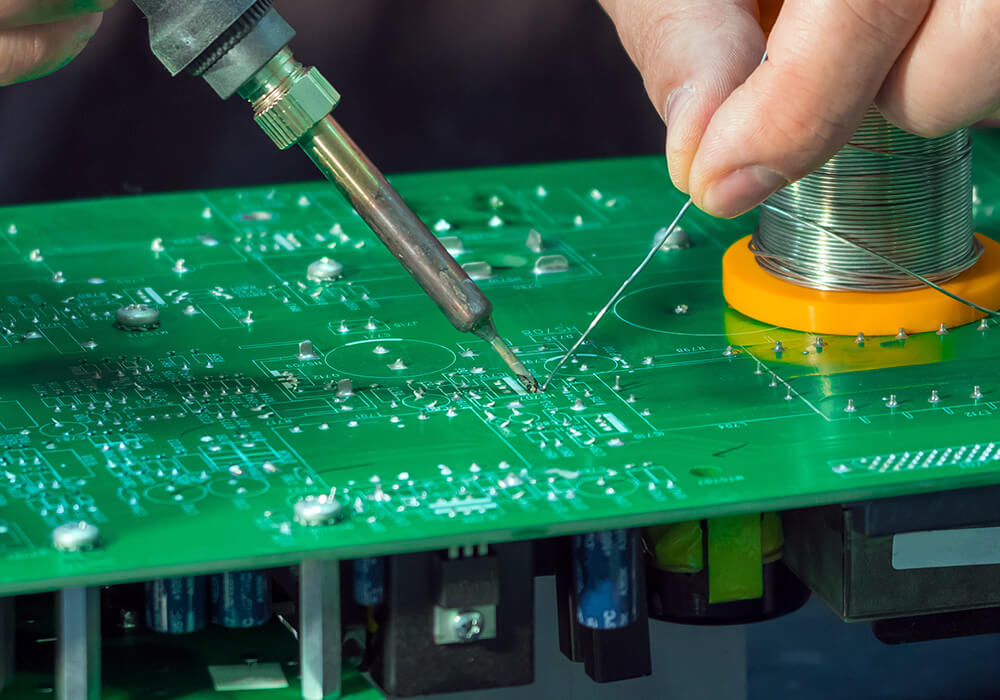
PCB assembly (PCBA) is the manufacturing process of mounting electronic components onto a printed circuit board to create a functional electronic circuit. Once assembled, the board becomes the core electronic module used in various devices such as communication equipment, industrial machines, and consumer electronics.
Although PCB fabrication and PCB assembly are closely related, they represent two different stages of electronics manufacturing.
PCB fabrication refers to producing the bare printed circuit board, including copper layers, drilling holes, and applying surface finishes.
PCB assembly, on the other hand, involves placing electronic components onto the board and soldering them to create electrical connections.
Modern PCB assembly typically relies on automated manufacturing equipment to achieve high precision and consistent quality.
Key PCB Assembly Technologies
Surface Mount Technology (SMT)
Surface Mount Technology is the most widely used method in modern electronics manufacturing. Components are placed directly onto the surface of the PCB using automated pick-and-place machines.
Advantages include:
-
Higher component density
-
Faster production speed
-
Improved electrical performance
-
Lower manufacturing costs
SMT is commonly used in smartphones, IoT devices, communication equipment, and compact electronics.
>>>Read more: SMT Assembly Process Explained: Step-by-Step Guide to Electronics Assembly 2026
Through-Hole Assembly
Through-hole assembly involves inserting component leads through holes drilled in the PCB and soldering them on the opposite side.
Although less common in modern electronics, this technology remains useful for components requiring stronger mechanical support, such as connectors, transformers, and large capacitors.
Mixed Technology Assembly
Many circuit boards use a combination of SMT and through-hole components. Mixed assembly techniques allow manufacturers to balance electrical performance, structural durability, and cost efficiency.
Types of PCB Assembly Services
PCB assembly services are typically delivered through several manufacturing models depending on project requirements.
Contract PCB Assembly
Contract PCB assembly refers to outsourcing circuit board manufacturing to a specialized electronics manufacturing service provider.
In this arrangement, customers usually provide:
-
PCB design files
-
bill of materials (BOM)
-
engineering documentation
The contract manufacturer handles:
-
component placement
-
soldering processes
-
inspection and testing
-
final assembly delivery
Contract manufacturing helps companies reduce operational complexity and focus on product design and market development.
Turnkey PCB Assembly Services
Turnkey PCB assembly offers a complete manufacturing solution where the assembly provider manages the entire production process.
Typical turnkey services include:
-
PCB fabrication sourcing
-
electronic component procurement
-
SMT and through-hole assembly
-
inspection and testing
-
packaging and logistics
Turnkey manufacturing simplifies supply chain management and is particularly beneficial for startups or companies launching new electronic products.
Custom PCB Assembly
Some electronic products require specialized manufacturing due to unique design specifications. Custom PCB assembly services address these requirements by adapting manufacturing processes to specific project needs.
Custom assembly projects may involve:
-
specialized component packages
-
multilayer PCB structures
-
high-frequency electronics
-
precision soldering requirements
Experienced manufacturers often provide design-for-manufacturing (DFM) support to optimize product designs for efficient production.
>>> Read more: How to Evaluate a PCB Fabrication Factory
PCB Assembly Production Options
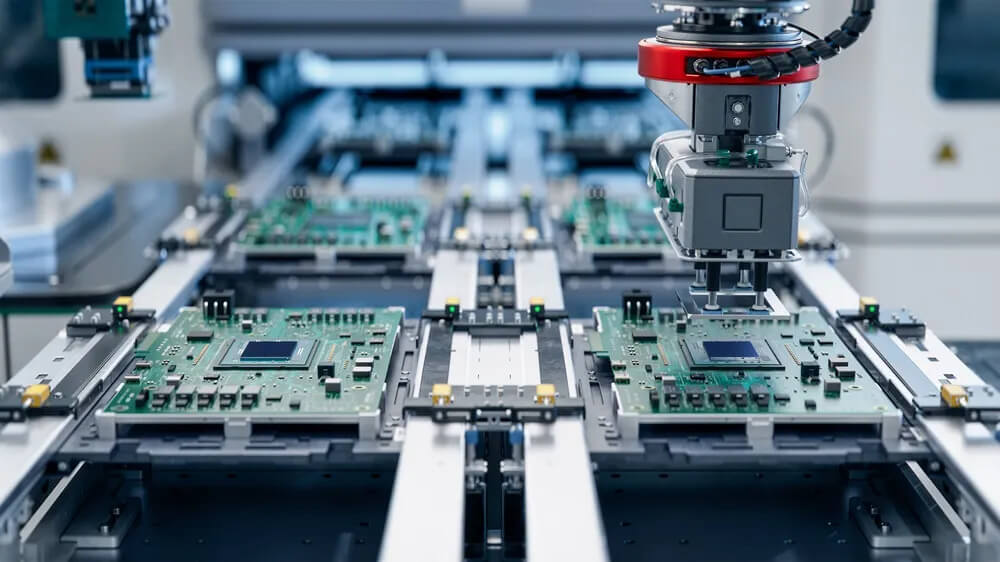
Different stages of product development require different production volumes. PCB assembly manufacturers typically provide flexible production options to accommodate these needs.
Low Volume PCB Assembly
Low volume assembly is commonly used for:
-
prototype development
-
engineering validation
-
pilot production
This stage allows companies to test product performance, verify circuit functionality, and identify design improvements before moving into mass production.
Low volume manufacturing reduces financial risk while enabling faster design iteration.
High Volume PCB Assembly
High volume PCB assembly is designed for mass production once a product is ready for commercial distribution.
Large-scale production relies on automated SMT lines capable of assembling thousands of circuit boards per day.
Benefits include:
-
lower unit production cost
-
consistent product quality
-
efficient supply chain management
High volume production is common in consumer electronics, networking devices, and smart home products.
Quick Turn PCB Assembly
In industries where rapid innovation is essential, quick turn PCB assembly services help companies accelerate product development.
These services prioritize fast production timelines while maintaining strict quality control.
Quick turn assembly is often used for:
-
prototype testing
-
engineering revisions
-
urgent manufacturing schedules
Reducing manufacturing lead time helps companies shorten their product development cycles and reach the market faster.
PCB Assembly Process
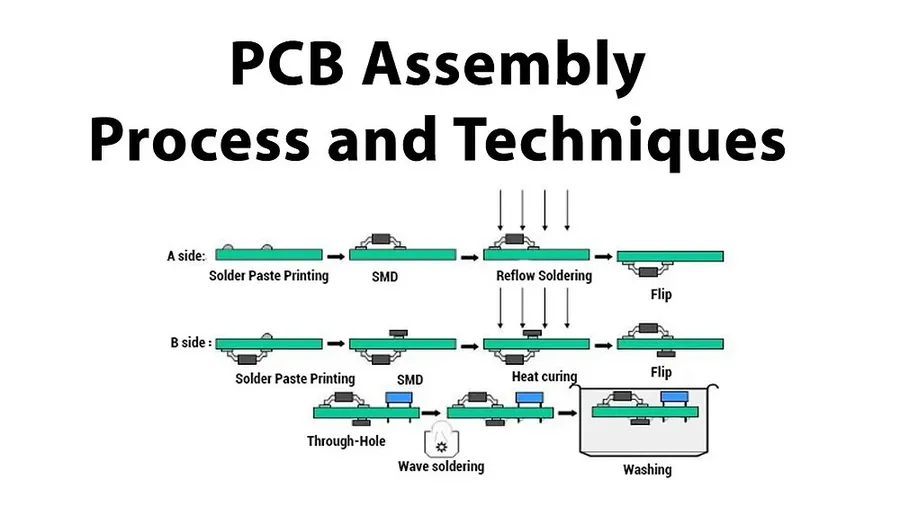
Although production facilities may differ in equipment and workflow, most PCB assembly operations follow a similar manufacturing process.
Step 1 – PCB Fabrication
The process begins with producing the printed circuit board itself. Fabrication involves forming copper layers, drilling component holes, and applying protective coatings.
Modern electronic devices often require multilayer PCBs capable of supporting dense component layouts.
Step 2 – Component Procurement
Electronic components must be sourced from reliable suppliers to ensure long-term product reliability.
Typical components include:
-
integrated circuits
-
resistors
-
capacitors
-
connectors
-
sensors
Manufacturers often implement strict incoming quality control procedures to verify component authenticity and quality.
Step 3 – Solder Paste Printing
Before components are mounted, solder paste is applied to the PCB pads using precision stencil printing equipment. The paste ensures proper solder joints during the reflow process.
Step 4 – Component Placement
Automated pick-and-place machines mount electronic components onto the board according to the circuit design.
Modern SMT machines can place tens of thousands of components per hour with extremely high accuracy.
Step 5 – Reflow Soldering
The PCB passes through a reflow oven where controlled heating melts the solder paste and permanently bonds components to the board.
Carefully controlled temperature profiles ensure strong and reliable solder joints.
Step 6 – Inspection and Testing
Quality inspection is essential to ensure manufacturing accuracy.
Common inspection technologies include:
-
automated optical inspection (AOI)
-
X-ray inspection
-
manual visual inspection
Functional testing is also performed to confirm that the assembled board operates according to design specifications.
PCB Assembly for Startups and Product Development
Startups and technology innovators often rely on PCB assembly partners to help transform product ideas into manufacturable designs.
Professional PCB assembly providers can support product development through services such as:
-
prototype PCB assembly
-
design-for-manufacturing consultation
-
small-batch production
-
engineering testing support
These services help companies validate their products before committing to full-scale manufacturing.
Offshore PCB Assembly
Many technology companies use offshore manufacturing to optimize costs and improve supply chain flexibility.
Offshore PCB assembly refers to producing circuit boards in international manufacturing hubs that offer competitive production costs and strong electronics manufacturing infrastructure.
Advantages may include:
-
lower production expenses
-
access to specialized manufacturing capabilities
-
scalable production capacity
-
integrated global supply chains
However, selecting the right manufacturing partner remains essential to ensure product quality and reliable logistics.
PCB Assembly in Vietnam
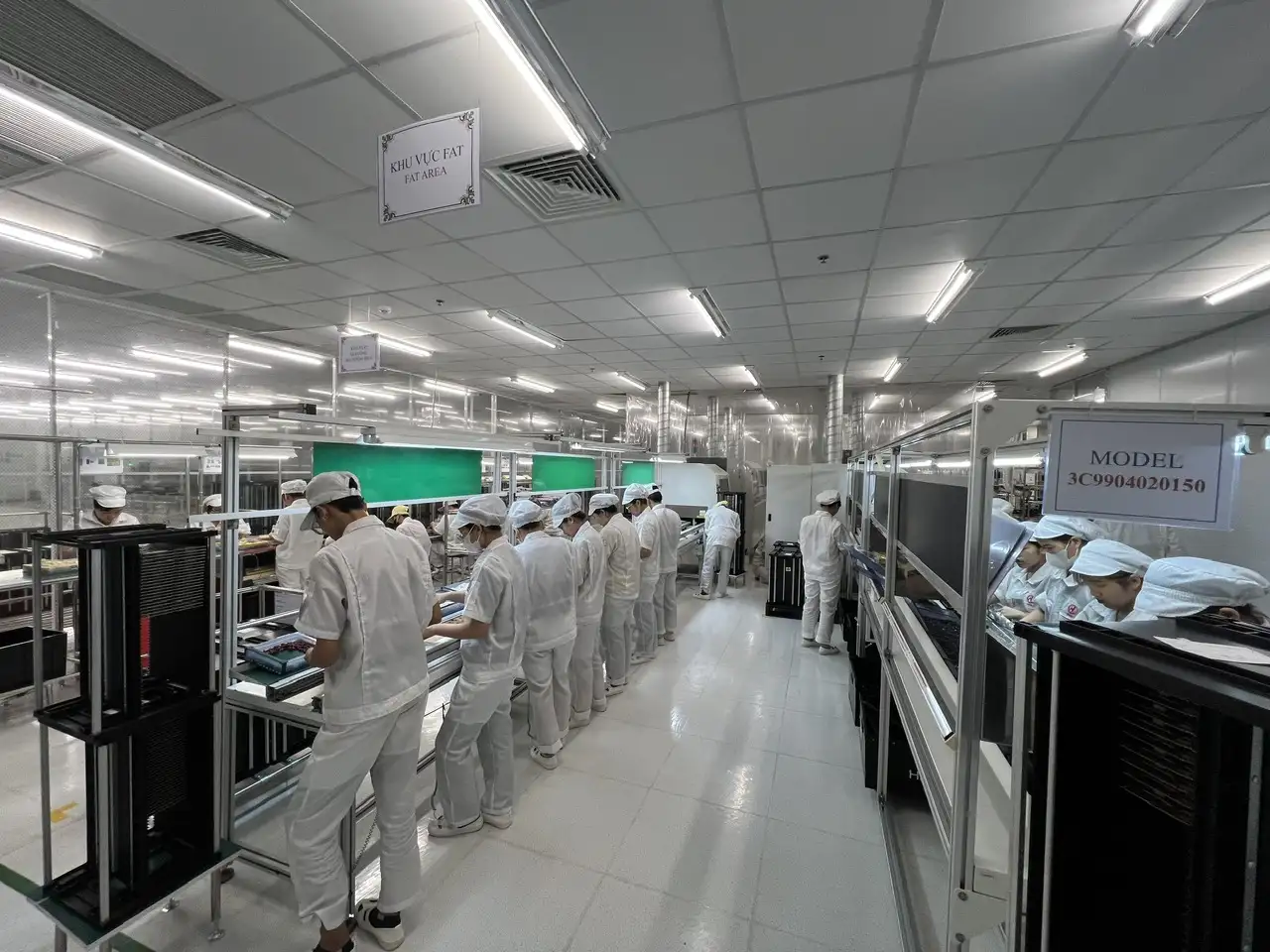
Vietnam has emerged as an increasingly important hub for electronics manufacturing in Asia. Over the past decade, the country has attracted significant investment from global technology companies and supply chain partners.
Several factors contribute to Vietnam’s growing role in PCB assembly manufacturing:
-
skilled electronics workforce
-
stable business environment
-
modern industrial infrastructure
-
expanding export logistics networks
These advantages make Vietnam an attractive destination for companies seeking reliable and cost-effective PCB assembly services.
How to Choose a PCB Assembly Manufacturer
Selecting the right PCB assembly manufacturer is essential for ensuring product quality and production efficiency.
Companies should evaluate potential manufacturing partners based on several key factors.
Manufacturing Capability
Manufacturers should have modern SMT production lines and the technical ability to handle complex circuit board designs.
Production scalability is also important to support both prototype and mass manufacturing.
Quality Management
Quality management systems help ensure consistent production results. Certifications such as ISO quality standards demonstrate that a manufacturer follows structured manufacturing procedures.
Engineering Support
Experienced engineering teams can assist with design-for-manufacturing analysis and process optimization.
This support helps improve product reliability and reduce production costs.
Supply Chain Management
Reliable procurement systems and supplier networks help prevent component shortages and production delays.
Manufacturers with strong supply chain capabilities can maintain stable production schedules.
Why Choose SHDC for PCB Assembly Services
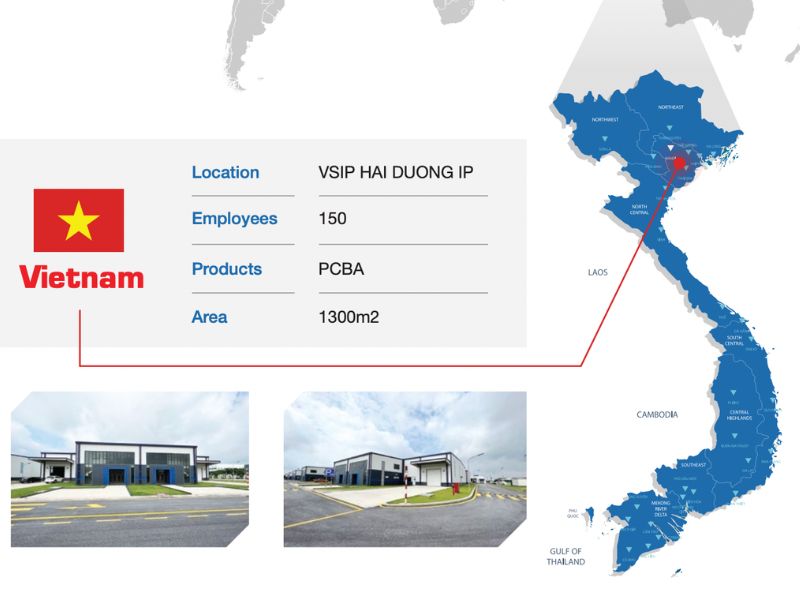
SHDC Electronics is a Vietnamese electronics manufacturing company specializing in PCB assembly and electronic component production. The company operates as a member of the NAHACO Group and is located in the VSIP Industrial Park in Hai Duong Province.
Since its establishment in 2022, SHDC has focused on developing advanced capabilities in electronic manufacturing, including circuit board assembly and precision electronics production.
The company’s manufacturing facilities are equipped with modern SMT production lines designed to support accurate component placement and high-efficiency assembly operations. These systems allow SHDC to handle complex PCB designs while maintaining consistent manufacturing quality.
SHDC places strong emphasis on quality control throughout the production process. Structured inspection procedures and manufacturing standards help ensure that assembled circuit boards meet strict performance and reliability requirements.
In addition to manufacturing capabilities, SHDC continues to invest in engineering development and production technology. The company supports customers across multiple stages of electronics manufacturing, from prototype assembly to scalable production.
Through its combination of technical expertise, modern production infrastructure, and commitment to quality improvement, SHDC aims to provide reliable PCB assembly services for global electronics partners.
>>>Read more: SHDC – Turnkey PCBA Manufacturer in Vietnam
Applications of PCB Assembly
PCB assemblies are used across a wide range of electronic industries.
Common applications include:
Consumer electronics
Smartphones, smart home devices, wearable technology, and entertainment systems all rely on advanced circuit boards.
Industrial equipment
Automation systems, robotics, and monitoring devices require durable and reliable circuit boards.
Telecommunications
Communication infrastructure and networking equipment depend on high-performance circuit boards.
Automotive electronics
Modern vehicles contain multiple electronic control units that rely on complex PCB assemblies.
Medical devices
Medical electronics require extremely reliable circuit boards to meet strict safety standards.
FAQs
What are PCB assembly services?
PCB assembly services involve mounting electronic components onto a printed circuit board to create a functional electronic circuit used in electronic devices.
What is the difference between PCB and PCBA?
PCB refers to the bare printed circuit board, while PCBA refers to the assembled board with electronic components installed.
What is turnkey PCB assembly?
Turnkey PCB assembly is a complete service where the manufacturer handles PCB fabrication, component sourcing, assembly, testing, and delivery.
How long does PCB assembly take?
Production time depends on project complexity and production volume. Prototype assemblies may take several days, while large-scale production may take several weeks.
Conclusion
PCB assembly services are essential to modern electronics manufacturing, enabling companies to transform circuit board designs into reliable electronic products. From prototype development to large-scale production, professional assembly providers deliver the technology, engineering expertise, and manufacturing capacity required for efficient product realization.
As global electronics supply chains continue to evolve, working with an experienced PCB assembly manufacturer helps companies ensure product quality, production stability, and faster time-to-market.
With growing manufacturing capabilities and modern production infrastructure, companies like SHDC are helping position Vietnam as a competitive destination for global PCB assembly services.