Tiếng Việt
 日本語
日本語
For many companies, building and maintaining in-house production capabilities is no longer the most efficient option. Instead, businesses are increasingly turning to contract PCB assembly—a manufacturing model that allows them to outsource PCB production to specialized partners.
Contract PCB assembly enables electronics brands to reduce costs, accelerate product development, and scale production more efficiently. In this article, we explore why contract PCB assembly has become the preferred model for modern electronics manufacturing and how companies benefit from working with specialized manufacturing partners.
What Is Contract PCB Assembly?

Definition of Contract PCB Assembly
Contract PCB assembly refers to the outsourcing of printed circuit board assembly to a specialized electronics manufacturing partner. Instead of assembling circuit boards internally, a company contracts an external manufacturer to handle the entire PCB assembly process.
The contract manufacturer typically provides services such as:
-
Component sourcing and procurement
-
Surface-mount technology (SMT) assembly
-
Through-hole assembly
-
Testing and quality control
-
Packaging and logistics
This model is widely used by companies that design electronic products but prefer not to manage the complexities of production.
Contract PCB assembly is often provided by Electronics Manufacturing Services (EMS) companies that specialize in large-scale production and supply chain management.
How Contract PCB Assembly Works
A typical contract PCB assembly workflow follows several stages.
Design Submission
The product company provides the necessary manufacturing files, including:
-
PCB design files (Gerber files)
-
Bill of Materials (BOM)
-
Assembly drawings
-
Testing requirements
These documents enable the manufacturer to prepare the production process.
Component Procurement
The contract manufacturer sources electronic components through its supplier network. Experienced manufacturers maintain relationships with reliable suppliers to ensure consistent component availability and pricing.
PCB Assembly
The boards are assembled using automated manufacturing processes such as:
-
SMT assembly
-
Through-hole insertion
-
Reflow soldering
-
Wave soldering
Modern assembly lines use high-speed placement machines capable of placing thousands of components per hour.
Inspection and Testing
To ensure product reliability, the boards undergo multiple inspection stages, including:
-
Automated Optical Inspection (AOI)
-
X-ray inspection for complex components
-
Functional testing
Quality testing ensures that every board meets electrical and mechanical requirements.
Delivery and Logistics
After passing inspection, the finished PCB assemblies are packaged and shipped to the customer or integrated into the final product assembly.
>>>Read more: PCB Assembly Services: Complete guide to turnkey, contract & custom PCB assembly
In-House Assembly vs Contract PCB Assembly
Many electronics companies initially consider building their own production facilities. However, the cost and complexity of in-house manufacturing often make outsourcing more attractive.
| In-House Assembly | Contract PCB Assembly |
|---|---|
| High equipment investment | No capital investment |
| Limited production capacity | Scalable production |
| Complex supply chain management | Managed by manufacturer |
| Requires technical workforce | Provided by EMS partner |
As a result, outsourcing PCB assembly allows companies to focus on product innovation while leaving manufacturing operations to specialized partners.
Why Electronics Companies Choose Contract PCB Assembly

Lower Manufacturing Costs
Building a modern PCB assembly facility requires significant investment.
High-end SMT machines, reflow ovens, inspection equipment, and cleanroom environments can cost millions of dollars. In addition, companies must hire experienced technicians, engineers, and supply chain specialists.
By outsourcing production, companies avoid these upfront costs and instead pay for manufacturing services as needed.
This cost efficiency is particularly valuable for:
-
Startups launching new hardware products
-
Companies with fluctuating production volumes
-
Businesses entering new markets
Contract manufacturing converts fixed costs into variable costs, making operations more financially flexible.
Access to Advanced Manufacturing Technology
Electronics manufacturing technologies continue to evolve rapidly. Modern production lines require advanced equipment to handle increasingly compact and complex circuit boards.
Professional PCB assembly providers invest heavily in equipment such as:
-
High-speed SMT placement machines
-
Automated Optical Inspection systems
-
X-ray inspection technology
-
Precision soldering equipment
These technologies ensure consistent production quality and high manufacturing accuracy.
For many product companies, accessing such advanced equipment would be prohibitively expensive without working with a contract manufacturer.
Faster Time to Market
Speed is a critical competitive advantage in the electronics industry.
Companies that can bring products to market faster often gain a significant edge over competitors. Contract PCB assembly helps accelerate product development by providing established manufacturing processes and experienced engineering teams.
A typical development timeline may involve:
-
PCB prototype assembly
-
Engineering validation testing
-
Pilot production
-
Mass production
Contract manufacturers can manage this transition efficiently, reducing delays between development stages.
Focus on Core Business Activities
Most electronics companies specialize in areas such as:
-
Product design
-
Software development
-
System integration
-
Marketing and sales
Manufacturing, while essential, is not always a company’s core strength.
By outsourcing PCB assembly, businesses can focus their internal resources on innovation and product development rather than managing production infrastructure.
This strategic focus helps companies remain competitive in fast-moving technology markets.
>>>Read more: PCB Manufacturing Process: Step-by-Step Guide
Key Advantages of Contract PCB Assembly

Production Scalability
One of the biggest advantages of contract PCB assembly is production flexibility.
Manufacturers can support different production volumes, including:
-
Prototype assembly
-
Low-volume production
-
High-volume mass manufacturing
This scalability allows companies to increase production as demand grows without needing to expand internal facilities.
Improved Supply Chain Management
Electronic component sourcing can be challenging due to supply shortages, pricing fluctuations, and logistics issues.
Experienced contract manufacturers maintain global supplier networks and procurement expertise, allowing them to:
-
Source components efficiently
-
Manage inventory levels
-
Reduce supply chain risks
By leveraging the manufacturer’s supply chain capabilities, companies can improve production reliability.
Higher Manufacturing Quality
Professional PCB assembly facilities operate under strict quality control systems.
Typical quality measures include:
-
Standardized manufacturing procedures
-
Continuous process monitoring
-
Multiple inspection stages
These processes help reduce defects and improve product reliability.
Quality certifications such as ISO standards further ensure that manufacturers follow internationally recognized quality management systems.
Global Manufacturing Flexibility
Contract manufacturing allows companies to choose production locations based on cost, logistics, and supply chain considerations.
Electronics manufacturing hubs exist in several regions, including:
-
East Asia
-
Southeast Asia
-
Europe
-
North America
Outsourcing enables companies to optimize production locations without building their own factories.
Industries That Rely on Contract PCB Assembly
Contract PCB assembly plays a critical role in many technology sectors.
Consumer Electronics
Consumer electronics products rely heavily on compact and efficient PCB assemblies.
Examples include:
-
Smart home devices
-
Wireless chargers
-
Audio equipment
-
Wearable devices
Large-scale production and rapid product cycles make contract manufacturing particularly valuable in this industry.
Industrial Electronics
Industrial equipment often requires highly reliable electronic systems designed to operate in demanding environments.
Applications include:
-
Factory automation systems
-
Industrial sensors
-
Power management devices
Contract manufacturers with specialized testing capabilities help ensure durability and performance.
IoT Devices
The Internet of Things (IoT) has created a rapidly expanding market for connected devices.
IoT products require compact PCBs that integrate sensors, wireless communication modules, and microcontrollers.
Contract manufacturers support IoT startups and technology companies by providing scalable assembly solutions.
Telecommunications Equipment
Telecommunications infrastructure relies on complex electronic systems that require precise manufacturing.
Examples include:
-
Networking hardware
-
Communication modules
-
Signal processing equipment
High manufacturing accuracy and strict testing are essential for these applications.
Medical Electronics
Medical devices demand extremely high quality standards.
Examples include:
-
diagnostic equipment
-
monitoring devices
-
healthcare electronics
Contract PCB assembly providers must follow strict quality control procedures to meet regulatory requirements.
Why Vietnam Is Emerging as a Contract PCB Assembly Hub
Over the past decade, Vietnam has become an important manufacturing destination for global electronics companies.
Several factors contribute to this trend.
Competitive Manufacturing Costs
Vietnam offers competitive labor and operational costs compared with many traditional manufacturing regions.
This cost advantage helps companies reduce production expenses without compromising quality.
Expanding Electronics Supply Chain
Vietnam’s electronics ecosystem has grown significantly in recent years.
Many global technology companies have established manufacturing operations in the country, contributing to the development of local supply chains and engineering talent.
Strategic Geographic Location
Vietnam is located in a key manufacturing region of Asia, allowing convenient access to component suppliers and international logistics networks.
This strategic location supports efficient global distribution.
Increasing Manufacturing Capabilities
Vietnamese electronics manufacturers have continued to invest in modern equipment and advanced production technologies.
As a result, the country is now capable of supporting high-quality PCB assembly for international markets.
SHDC Contract PCB Assembly Capabilities
For companies seeking a reliable contract PCB assembly partner in Vietnam, SHDC Electronics Co., Ltd. has rapidly emerged as a capable manufacturer supporting global electronics production.
Located in the VSIP Industrial Park in Hai Duong, SHDC is part of the NAHACO Group, a technology-oriented industrial group involved in electronics materials, SMT equipment distribution, and precision manufacturing. The company focuses on PCB design, PCB assembly, and electronic manufacturing services for both domestic and international customers.
Through a combination of experienced engineering teams, advanced SMT equipment, and a structured manufacturing management system, SHDC provides scalable contract PCB assembly services for a wide range of electronic products.
Strong Engineering and Industry Experience
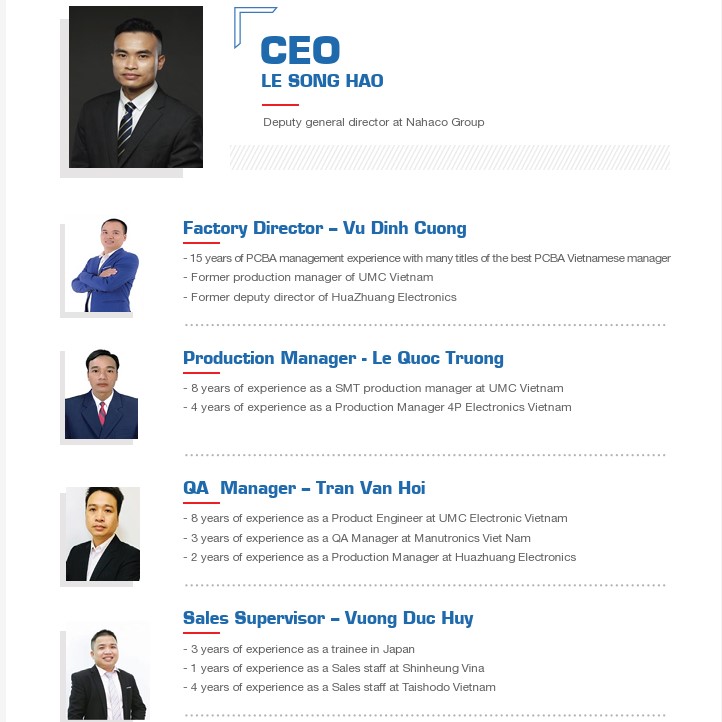
One of SHDC’s key strengths lies in its leadership and technical team.
Many members of the management and engineering teams previously held senior positions in major electronics companies and bring extensive experience in PCB manufacturing and SMT production management. This expertise enables SHDC to handle complex assembly projects and maintain stable production processes.
The company also continuously trains its technical workforce to maintain high manufacturing standards and adapt to new electronics technologies.
This combination of experienced leadership and well-trained technicians allows SHDC to support customers throughout the entire manufacturing lifecycle—from prototype validation to large-scale production.
>>>Read more: SHDC – Reliable PCBA Assembly Vietnam for Global Electronics Brands
Advanced SMT Manufacturing Technology
SHDC operates modern SMT production lines equipped with high-speed placement machines and precision inspection systems.
Key equipment includes advanced Yamaha SMT machines capable of high placement accuracy and high-speed component mounting. These systems allow the factory to handle complex PCB assemblies with extremely small components while maintaining consistent production quality.
The factory supports a wide range of component sizes and PCB formats, including:
-
Component sizes from 0201 to large electronic modules
-
PCB sizes ranging from 50 × 50 mm to 460 × 550 mm
-
Support for both rigid PCBs and flexible PCBs (FPC) used in high-tech devices
This flexibility enables SHDC to assemble circuit boards for diverse electronic applications.
Integrated Manufacturing Management System
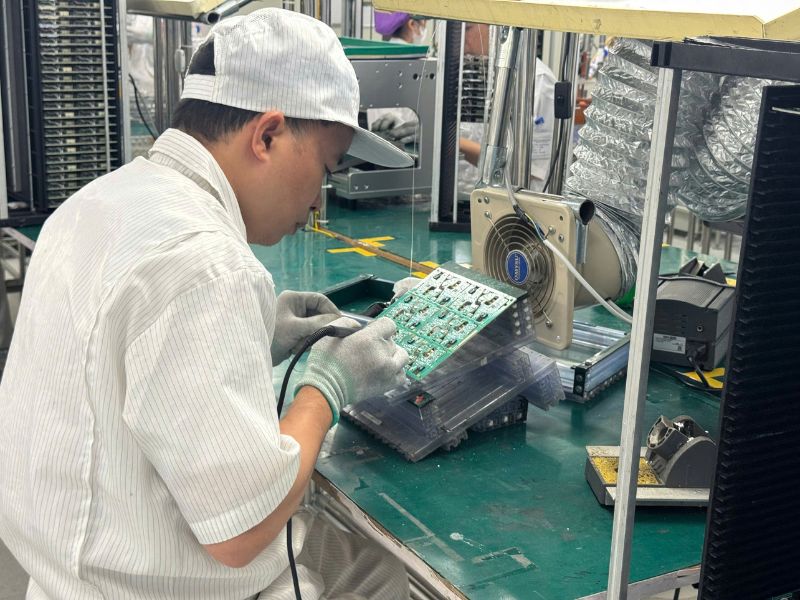
To improve production efficiency and traceability, SHDC has implemented an integrated manufacturing management system that combines multiple enterprise technologies, including:
-
ERP (Enterprise Resource Planning)
-
PLM (Product Lifecycle Management)
-
SCM (Supply Chain Management)
-
MES (Manufacturing Execution System)
-
QMS (Quality Management System)
These systems help standardize production processes, improve decision-making speed, and optimize supply chain management.
According to the company’s internal data, these digital systems significantly improve operational efficiency and inventory management, helping ensure stable manufacturing performance for customers.
Strict Quality Control Process
Quality assurance is a critical component of SHDC’s contract PCB assembly operations.
The factory follows a structured inspection process covering every stage of production, including:
-
Incoming material inspection (IQC)
-
Automated optical inspection (AOI)
-
ICT functional testing
-
FCT circuit testing
-
Final outgoing inspection (OQC)
This multi-layered quality control system helps detect potential defects early and ensures that assembled circuit boards meet strict reliability requirements
By maintaining standardized production and testing procedures, SHDC ensures consistent manufacturing quality across different product lines.
Wide Range of Electronic Applications
SHDC’s PCB assembly services support a variety of electronic products, including:
-
Office equipment such as printers and fax machines
-
Computer hardware and USB devices
-
Consumer electronics and household appliances
-
Various other industrial electronic systems
The ability to manufacture PCBs for different industries allows the company to serve a broad range of global customers.
Participation in Global Electronics Supply Chains
Vietnamese electronics manufacturers are increasingly participating in global technology supply chains, and SHDC is among the companies contributing to this trend.
According to industry reports, SHDC has been involved in manufacturing electronic components related to the well-known charging accessory PlugBug, a device widely used with laptops produced by Apple Inc..
PlugBug gained international recognition thanks to its innovative design and functionality, demonstrating the type of high-quality electronic products supported by modern PCB assembly manufacturing in Vietnam.
Participation in such global projects highlights SHDC’s capability to meet demanding engineering standards and production requirements.
Strategic Location in Vietnam’s Electronics Manufacturing Ecosystem
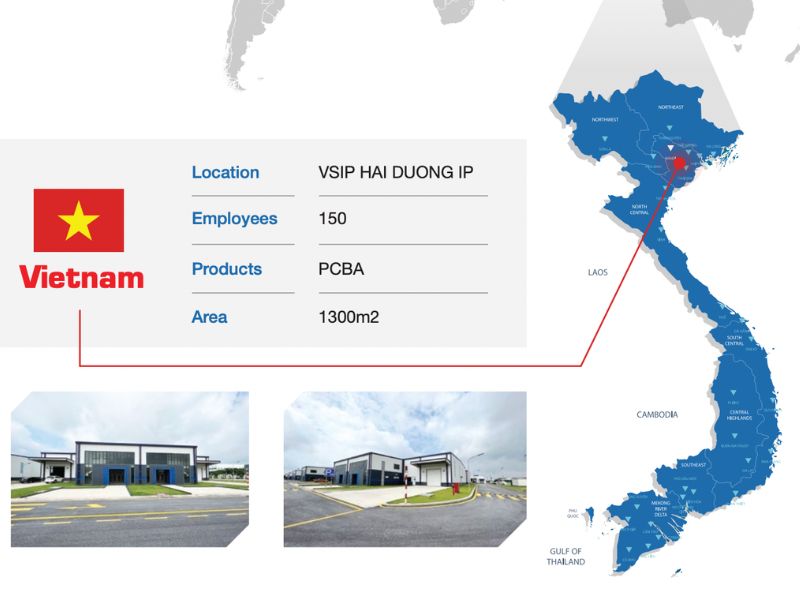
SHDC’s factory is located in the VSIP Hai Duong Industrial Park, an industrial zone that supports electronics manufacturing with developed infrastructure and logistics connectivity.
The company benefits from Vietnam’s rapidly growing electronics ecosystem, which includes suppliers, logistics providers, and engineering talent. This environment allows manufacturers like SHDC to offer competitive production costs while maintaining international manufacturing standards.
As global electronics companies diversify their supply chains, Vietnam continues to gain importance as a reliable manufacturing destination.
>>>Read more: SHDC – EMS electronics manufacturing services in Vietnam for US companies
Commitment to Quality and Long-Term Partnerships
SHDC’s long-term vision is to become a leading high-tech electronics manufacturing company in Vietnam by continuously improving technology, manufacturing capability, and product quality.
The company focuses on building long-term partnerships with customers by providing:
-
high-quality PCB assembly services
-
competitive manufacturing costs
-
responsive engineering support
Through continuous investment in technology and workforce development, SHDC aims to support international electronics companies seeking reliable contract PCB assembly solutions in Southeast Asia.
Conclusion
Contract PCB assembly has become a critical strategy for modern electronics companies seeking efficient, scalable manufacturing solutions. By outsourcing PCB production to specialized partners, businesses can reduce costs, accelerate product development, and access advanced manufacturing technologies.
As the electronics industry continues to evolve, contract PCB assembly will remain a preferred manufacturing model for companies aiming to build reliable products while maintaining operational flexibility.