Tiếng Việt
 日本語
日本語
In modern PCB assembly, testing is critical to ensuring product quality, reliability, and performance. Two of the most widely used methods are In-Circuit Testing (ICT) and Functional Testing (FCT). While both play essential roles in quality control, they serve different purposes. Understanding the differences between these methods helps OEMs choose the right testing strategy—and avoid costly defects in production.
What Is In-Circuit Testing (ICT)?

Definition of ICT
In-Circuit Testing (ICT) is a method used to verify individual components on a printed circuit board (PCB). It checks resistors, capacitors, integrated circuits, and other components directly on the board without powering the entire system.
How ICT Works
ICT uses a bed-of-nails fixture, which makes contact with test points on the PCB. The system performs electrical measurements such as:
- Voltage and current checks
- Resistance and capacitance validation
- Detection of shorts, opens, and incorrect component placement
This allows manufacturers to identify faults at the component level before the board moves further down the production line.
Key Advantages of ICT
- High fault detection accuracy at the component level
- Fast testing speed, ideal for high-volume production
- Early defect detection, reducing downstream failures
Limitations of ICT
- High initial setup cost due to custom fixtures
- Requires test point access in PCB design
- Cannot verify full product functionality
What Is Functional Testing?
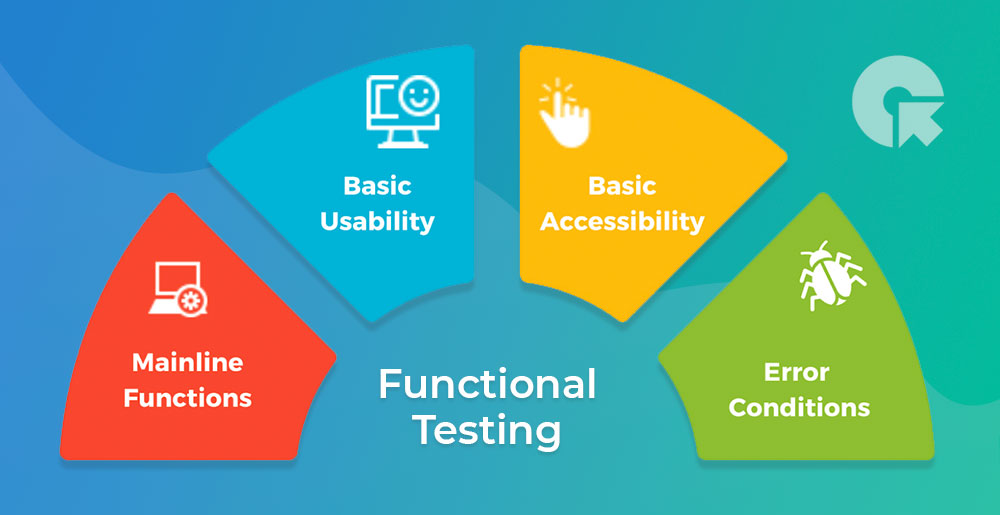
Definition of Functional Testing
Functional Testing evaluates whether a PCB operates as intended in real-world conditions. Instead of checking individual components, it tests the complete system.
How Functional Testing Works
During Functional Testing, the PCB is powered on and subjected to simulated operating conditions. This includes:
- Applying input signals
- Monitoring outputs
- Verifying system behavior against design specifications
Key Advantages
- Validates real-world performance
- Ensures the final product meets design requirements
- Detects system-level and integration issues
Limitations
- Slower testing process compared to ICT
- Difficult to pinpoint the exact faulty component
- May require complex test setups
>>>Read more: What Is Automated Optical Inspection (AOI) in PCB Assembly
In-Circuit Testing (ICT) vs Functional Testing: Key Differences
| Criteria | In-Circuit Testing (ICT) | Functional Testing (FCT) |
|---|---|---|
| Testing Level | Component-level | System-level |
| Purpose | Detect manufacturing defects | Validate product functionality |
| Speed | Fast | Slower |
| Accuracy | High (specific faults) | Moderate (general faults) |
| Setup Cost | High (fixtures required) | Lower (but flexible setups) |
| Best Use Case | High-volume production | Final product validation |
When Should You Use ICT?
ICT is best suited for:
- High-volume PCB production
- Complex boards with many components
- Industries requiring high reliability, such as automotive, medical, and industrial electronics
For OEMs, ICT is especially valuable in reducing defect rates early in the manufacturing process, which helps improve yield and lower rework costs.
When Should You Use Functional Testing?
Functional Testing is ideal for:
- Low-to-medium production volumes
- Products that require real-world performance validation
- Applications such as consumer electronics and embedded systems
It ensures that the PCB not only passes electrical checks but also performs correctly under actual operating conditions.
ICT vs Functional Testing: Which Is Better for PCB Assembly?
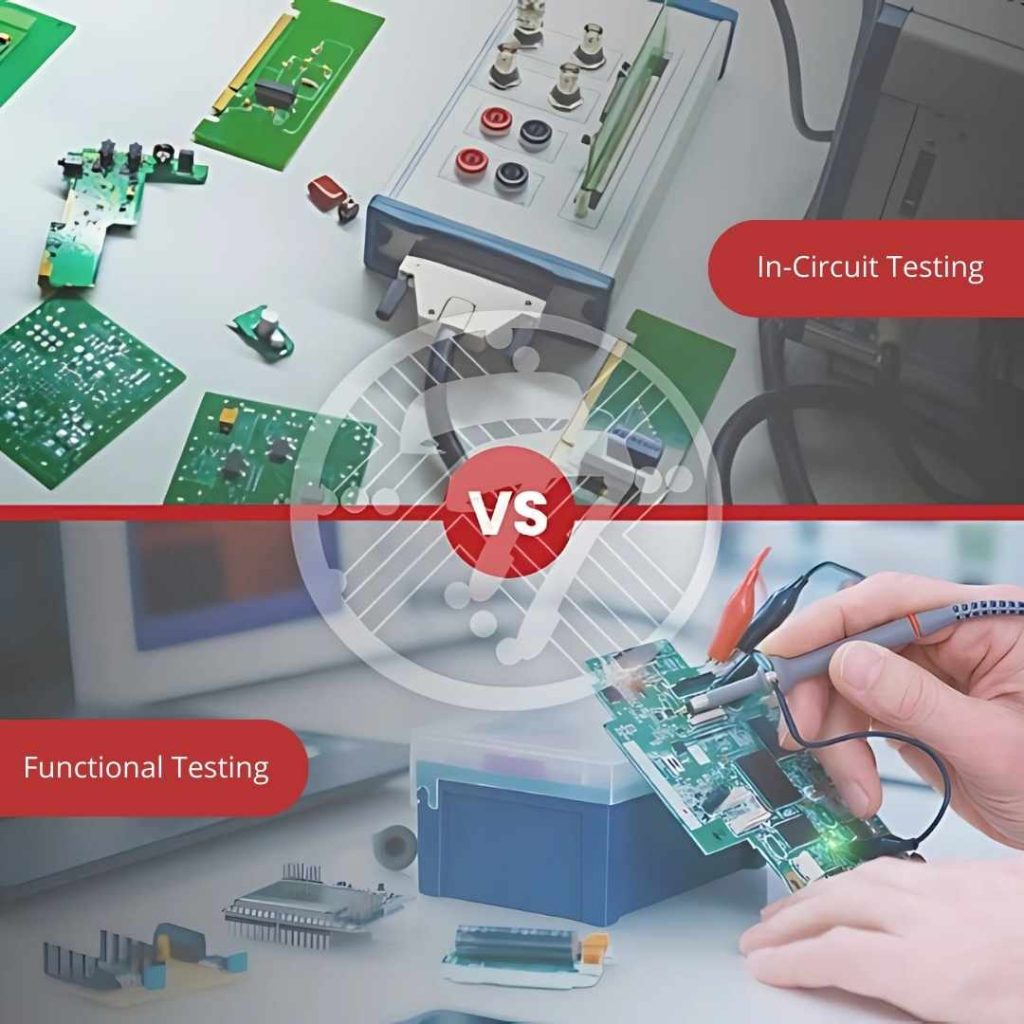
The answer depends on your production goals and product requirements.
- ICT is better when:
- You need fast, precise detection of manufacturing defects
- You are running high-volume production
- Early fault detection is critical
- Functional Testing is better when:
- You need to validate real-world performance
- System-level behavior is more important than individual components
=> In most professional PCB assembly environments, the best approach is not choosing one over the other—but combining both.
Why Combining ICT and Functional Testing Delivers the Best Results
Using ICT and Functional Testing together provides a comprehensive quality control strategy:
- ICT identifies defects early in the production process
- Functional Testing validates final product performance
- Reduces costly rework and field failures
- Improves overall product reliability and customer satisfaction
For OEMs targeting the US market, this dual-testing strategy is often considered a best practice in electronics manufacturing.
PCB Testing Trends in Modern Electronics Manufacturing
As the electronics industry evolves, PCB testing is becoming more advanced and data-driven:
- Integration with Automated Optical Inspection (AOI) systems
- Adoption of Industry 4.0 and smart manufacturing
- Use of data analytics to improve yield and quality control
Manufacturers are increasingly combining multiple testing methods to achieve higher efficiency and reliability.
FAQs
Is In-Circuit Testing necessary for all PCBs?
No. ICT is most beneficial for high-volume production and complex boards. Simpler designs may not require it.
Can Functional Testing replace ICT?
Not entirely. Functional Testing checks system performance but cannot detect all component-level defects.
Which testing method is more cost-effective?
ICT has higher upfront costs but becomes cost-effective in large production runs. Functional Testing is more flexible but slower.
What industries rely heavily on ICT?
Industries such as automotive, aerospace, and medical devices depend heavily on ICT due to strict quality requirements.
Conclusion
In-Circuit Testing (ICT) and Functional Testing are both essential in PCB assembly, but they serve different purposes. ICT focuses on identifying component-level defects early, while Functional Testing ensures the final product operates correctly. Rather than choosing one over the other, the most effective strategy is to combine both methods. This approach minimizes defects, improves product reliability, and ensures your PCB assemblies meet the highest quality standards. For OEMs looking to optimize manufacturing performance and reduce risk, investing in a comprehensive testing strategy is not optional—it’s essential.
>>>Read more: What Is IPC J Standard 001? Why It Matters for PCB Assembly Quality