Tiếng Việt
 日本語
日本語
The question US consumer electronics brands were asking in 2023 was “should we consider Vietnam?” The question in 2026 is “how do we execute the transition without losing 18 months and blowing the budget?”
Vietnam has moved well past the “emerging option” stage. The country’s electronics manufacturing services market is valued at $11.15 billion in 2026, growing at an 11.11% CAGR — driven in large part by US and European brands actively relocating consumer electronics assembly away from China. Apple, Google, and Samsung have already made the move at scale. The more pressing story is what mid-size US brands — the $20M to $500M revenue companies that don’t have Foxconn on speed dial — need to know to execute the same transition effectively.
This playbook covers exactly that. From the structural case for Vietnam to a five-step transition framework, total cost of ownership analysis, and the specific questions to ask any EMS partner before you send your first BOM — this is the operational guide that most China+1 articles skip entirely.
1. Why Vietnam — The Structural Case for Consumer Electronics Assembly
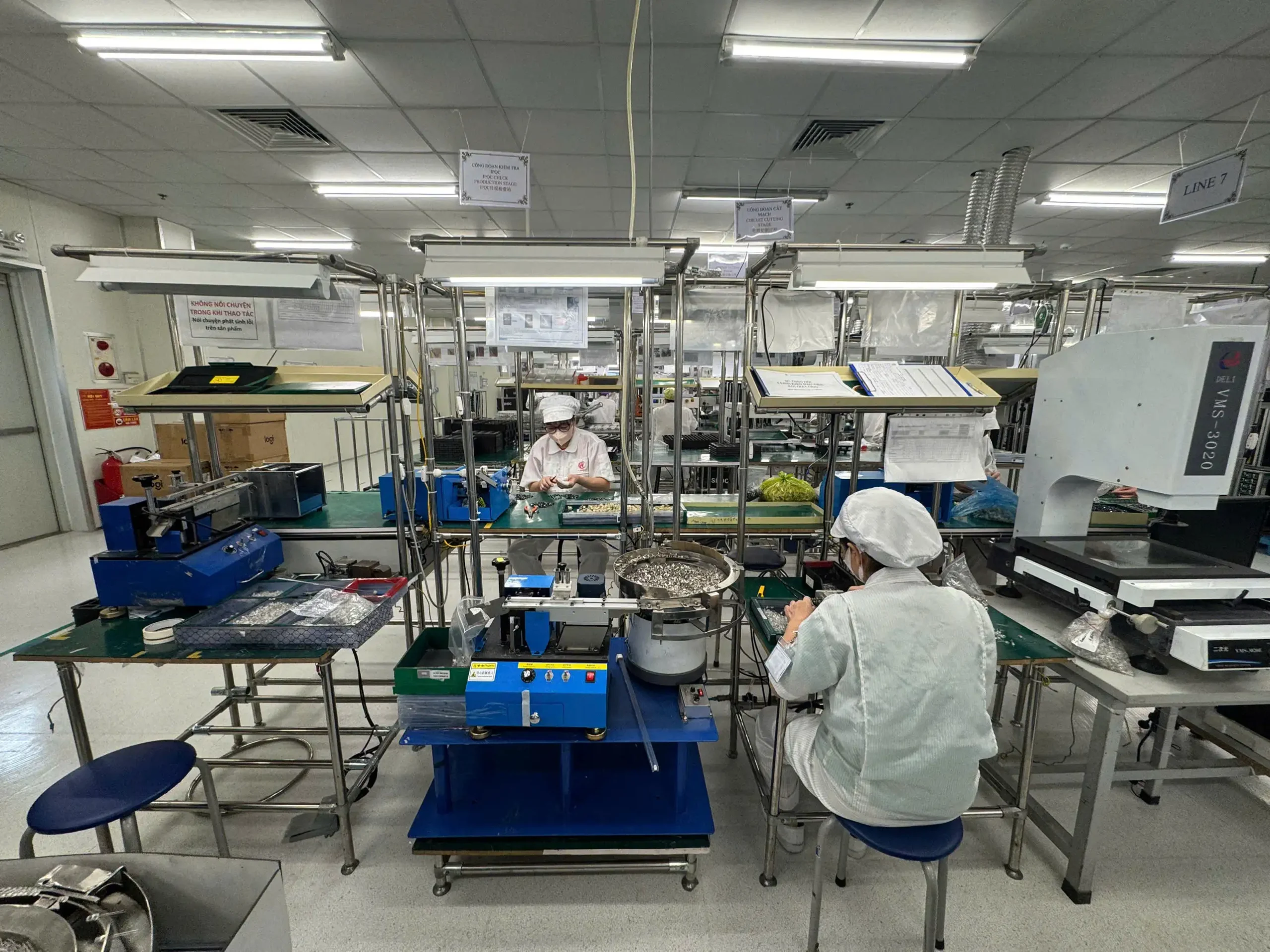
The Tariff Math Has Changed Everything
Labor cost arbitrage used to be the primary argument for offshore electronics assembly. In 2026, it is a secondary consideration. The primary driver is tariffs — and the math is not subtle.
Section 301 tariffs on Chinese-origin consumer electronics currently range from 25% to 145% depending on product category. Vietnamese-origin electronics entering the US market face 0% to 10% under existing trade frameworks. On a product with a $50 FOB China manufacturing cost, that tariff differential translates to $12–$70 in additional landed cost per unit — before freight, duties, or any other variable.
That differential is not temporary. Section 301 tariffs have been reviewed, extended, and in several categories expanded across multiple administrations. US brands building a sourcing strategy around tariff normalization are building on an assumption that the data does not support.
The structural shift is real, and Vietnam is the primary beneficiary. US companies are not moving assembly to Vietnam because it is fashionable — they are moving because the total landed cost math demands it.
Vietnam vs. Other China+1 Options — Why Electronics Brands Choose Vietnam
India and Mexico are the most frequently cited alternatives to Vietnam in China+1 discussions. For consumer electronics assembly specifically, Vietnam holds structural advantages that are difficult to replicate.
| Factor | Vietnam | India | Mexico |
|---|---|---|---|
| Electronics ecosystem maturity | ⭐⭐⭐⭐⭐ | ⭐⭐⭐ | ⭐⭐⭐ |
| Component supply chain proximity to China | ⭐⭐⭐⭐⭐ | ⭐⭐ | ⭐⭐ |
| SMT / EMS workforce depth | ⭐⭐⭐⭐ | ⭐⭐⭐ | ⭐⭐⭐ |
| US tariff advantage | ⭐⭐⭐⭐⭐ | ⭐⭐⭐⭐ | ⭐⭐⭐⭐⭐ |
| Logistics to US West Coast | ⭐⭐⭐⭐ | ⭐⭐⭐ | ⭐⭐⭐⭐⭐ |
| Labor cost competitiveness | ⭐⭐⭐⭐⭐ | ⭐⭐⭐⭐⭐ | ⭐⭐⭐ |
The single most underappreciated advantage in this table is component supply chain proximity. Consumer electronics BOMs routinely carry 200 to 500 line items. Vietnam’s geographic position — sharing a land border with China and sitting within a two-day ocean freight corridor from Shenzhen — means component lead times and logistics costs remain manageable even as final assembly shifts. India and Mexico cannot offer that.
The Ecosystem Is Now Deep Enough for Mid-Size Brands
The narrative that Vietnam’s electronics manufacturing sector is only accessible to Fortune 500 companies with Tier 1 EMS partners is outdated. The VSIP (Vietnam Singapore Industrial Park) network, DEEP C Industrial Zones, and Amata City have attracted a substantial tier of mid-size EMS providers — companies with 500 to 5,000 employees, modern SMT equipment, and the operational sophistication to serve US brands at $10M to $500M revenue scale.
This matters because mid-size brands have different requirements than Apple or Samsung. They need EMS partners who will treat a 10,000-unit run as a priority, not a rounding error. That partner exists in Vietnam — in growing numbers.
What Consumer Electronics Assembly in Vietnam Actually Covers — The Capability Landscape
The Full-Cycle Assembly Stack
“Consumer electronics assembly” is not a single service — it is a stack of capabilities that a qualified EMS partner should be able to deliver end-to-end. Understanding what each layer covers helps US brands identify whether a prospective Vietnam partner can handle their complete product, or only part of it.
| Service Layer | What It Covers | Vietnam Availability |
|---|---|---|
| SMT Assembly | Surface mount component placement and reflow soldering | Widely available |
| Through-Hole Assembly | Manual and automated THT insertion | Available at mid-tier and above |
| Box Build / System Integration | Full product assembly including enclosures, cables, firmware flash | Available at select providers |
| Turnkey PCBA | Component sourcing + assembly + testing | Available at mid-tier and above |
| NPI / Prototype | Engineering samples, DFM feedback, first article inspection | Available at select providers |
| Value-Added Services | Conformal coating, labeling, retail packaging | Available at select providers |
The critical insight here: not all Vietnam EMS providers offer the full stack. A supplier capable of high-volume SMT assembly may have no box build capability — which creates a fragmented supply chain that adds cost, lead time, and quality risk. For US brands transitioning a complete consumer product, a single-partner full-cycle solution is significantly more efficient than managing multiple specialized suppliers.
Consumer Electronics vs. Industrial vs. Medical — Why the Distinction Matters for Supplier Selection
Consumer electronics assembly operates under a different set of constraints than industrial or medical electronics. Volume is higher, cycle times are faster, cost targets are tighter, and cosmetic quality standards add an inspection dimension that industrial work does not require.
Key capability requirements specific to consumer electronics assembly:
- High-speed SMT lines: Placement machines rated at 20,000+ components per hour — necessary for production economics at consumer volumes
- Line-speed inspection: AOI and functional test integrated into the production line, not batched offline
- Cosmetic inspection standards: Consumer-grade appearance requirements — scratch, mark, and color consistency standards that go beyond electrical functionality
- Retail-ready packaging output: Finished goods packaged to retail specification, ready for distribution center receiving
- Rapid NPI turnaround: Consumer electronics product refresh cycles run 12 to 18 months — an EMS partner who takes six months to complete NPI is structurally incompatible with that cadence
An EMS provider who primarily serves industrial or medical customers may have excellent quality systems but lack the throughput infrastructure and cosmetic inspection capability that consumer electronics demands.
The 5-Step China+1 Transition Playbook for Consumer Electronics Brands
This is the framework that most China+1 articles do not provide — the operational sequence that takes a US brand from “we’ve decided to move” to “first commercial shipment from Vietnam” without the 18-month timeline and budget overruns that characterize failed transitions.
Step 1 — Audit Your BOM for Vietnam Sourcability
Before selecting an EMS partner, US brands need to understand what percentage of their bill of materials can be sourced from Vietnam or the regional supply chain. This analysis determines transition feasibility, lead time risk, and total cost structure — and it should happen before any EMS contract is signed.
A practical breakdown of how consumer electronics BOMs typically source from Vietnam:
- Standard passives and commodity ICs: 80–90% sourceable from Vietnam-based authorized distributors or regional hubs in Singapore and Hong Kong
- Custom ICs and proprietary modules: May require continued China-origin sourcing — this is acceptable and manageable with the right EMS partner
- Long-lead components: Identify 6 to 12-month lead time items early and establish buffer stock strategy before production start — this is the single most common cause of first-production delays
Request a BOM Sourcability Audit from any EMS partner you are seriously evaluating. A qualified provider will complete this analysis at no charge as part of the pre-qualification process. The output tells you exactly which components require China-origin sourcing, which can be regionalized, and where supply risk is concentrated.
Question to ask your EMS partner: “Can you run a full BOM sourcability analysis and identify which components require China-origin sourcing versus regional sourcing — before we sign anything?”
Step 2 — Qualify Your EMS Partner Against 6 Non-Negotiables
Not every consumer electronics assembly provider in Vietnam is equipped to serve US brands. The six criteria below are the minimum threshold — not a wish list.
1. High-speed SMT capability Placement machines rated at 20,000+ CPH. For consumer electronics at production volume, throughput is a cost driver. Verify equipment make, model, and rated speed — not just the claim.
2. Automated inspection stack SPI (Solder Paste Inspection) + AOI (Automated Optical Inspection) + functional test, integrated into the production line. Visual inspection alone is not acceptable for consumer electronics at volume.
3. Formal NPI process A documented new product introduction process with DFM review, first article inspection, and engineering change order management. An EMS partner without a formal NPI process will figure out your product launch during production — not before it.
4. MES-driven traceability Manufacturing Execution System-driven lot traceability — not spreadsheet-based. This is critical for warranty analysis, recall management, and quality root cause investigation. Consumer electronics brands face product liability exposure without it.
5. Quality certifications ISO 9001:2015 minimum. ISO 14001 environmental management certification if your brand has sustainability commitments or retail customer requirements.
6. US-facing communication infrastructure A dedicated account manager, technical English proficiency for DFM feedback and quality reporting, and a documented ≤24-hour response SLA for technical queries. The GMT+7 time zone is manageable — but only if the EMS partner has structured their operations to bridge it.
Red flag to walk away from: Any EMS provider who cannot describe their NPI process in specific, documented terms. “We work closely with customers during launch” is not an NPI process.
Step 3 — Structure the Transition in Three Phases, Not One
The most common mistake US brands make when transitioning consumer electronics assembly to Vietnam is attempting a full production migration in a single move. This approach concentrates all transition risk into one event and leaves no room for the process optimization that always occurs during the first production runs at a new facility.
The correct approach is a phased transition:
Phase 1 — Pilot (Months 1–4)
Select one SKU or one product line and move it to your Vietnam EMS partner at reduced volume — 500 to 2,000 units. The objective is not production efficiency. The objective is process validation: quality output, documentation accuracy, logistics reliability, and communication cadence. At this volume, a quality issue is a learning event. At full production volume, it is a business crisis.
Phase 2 — Ramp (Months 5–9)
Scale the pilot SKU to commercial volume. Introduce two to three additional SKUs. During this phase, maintain your China EMS relationship at reduced volume — not as a permanent dual-source, but as a risk buffer while Vietnam production is being proven. This is also the phase to optimize BOM sourcing for regional supply chains.
Phase 3 — Full Transition (Months 10–18)
Migrate remaining SKUs. Optimize component sourcing for Vietnam-based supply chain. Establish Vietnam as your primary manufacturing hub with a defined secondary source strategy for resilience.
Step 4 — Manage the Logistics Transition Proactively
Logistics is the most underplanned element of most China+1 transitions. Key parameters to establish before pilot production begins:
- Ocean freight transit time: Vietnam to US West Coast runs 18 to 22 days, versus 14 to 18 days from China. The difference is marginal but requires adjusting safety stock calculations and replenishment order lead times
- Air freight: Vietnam to US runs 2 to 3 days — comparable to China, and the right mode for initial pilot shipments and expedite situations
- Certificate of Origin: Ensure your EMS partner understands US Customs requirements for Vietnamese-origin goods and can generate compliant C/O documentation. Incorrect origin documentation creates customs delays that can disrupt retail replenishment cycles
- Incoterms: Negotiate FOB Ho Chi Minh City or FOB Hai Phong — this gives your brand control over freight and insurance from the Vietnam port, which is the standard approach for US importers managing their own logistics relationships
- Freight forwarder: Engage a freight forwarder with documented Vietnam-US electronics experience before your pilot shipment, not after
Question to ask your EMS partner: “Can you provide a sample commercial invoice, packing list, and Certificate of Origin from a previous US customer shipment so we can verify documentation format before our first shipment?”
Step 5 — Build Dual-Source Resilience, Not Single-Source Dependency
The supply chain disruptions of 2020 through 2022 demonstrated that single-source manufacturing dependency — regardless of geography — is a business risk that boards and investors no longer accept. A China+1 strategy that simply replaces China single-source with Vietnam single-source has not solved the underlying problem.
Best practice for US consumer electronics brands post-transition:
- Primary source: Vietnam EMS partner handling 70–80% of production volume
- Secondary source: Either maintain a China EMS relationship at 20–30% volume, or qualify a second Vietnam provider for critical SKUs
- Trigger criteria: Define in advance — in writing, in your supply agreement — what conditions activate the secondary source. Quality failure rate thresholds, capacity constraint events, and geopolitical triggers should all be specified
- Documentation parity: Both sources must have access to identical, current production documentation — same BOM revision, same test specifications, same quality acceptance criteria. Documentation divergence between sources is the most common cause of quality inconsistency in dual-source programs
Total Cost of Ownership — Vietnam vs. China for Consumer Electronics Assembly
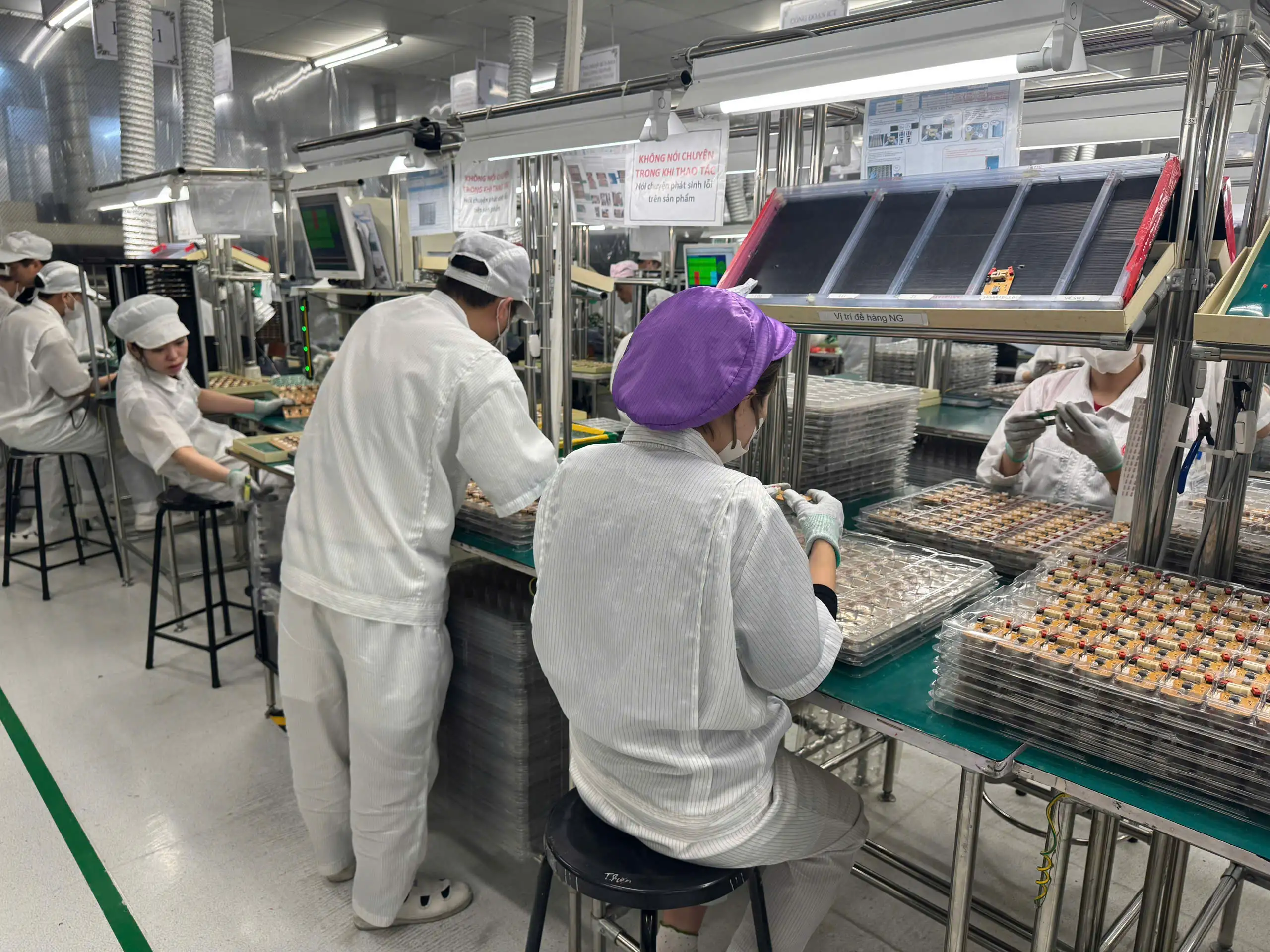
The Full TCO Calculation
Most sourcing comparisons that circulate in procurement teams compare manufacturing unit cost only. That comparison systematically understates Vietnam’s cost advantage because it ignores the variable that matters most in 2026: tariffs.
| Cost Category | China | Vietnam | Notes |
|---|---|---|---|
| Manufacturing unit cost | Baseline | +5–15% | Vietnam slightly higher on labor-intensive assembly |
| US import tariff (Section 301) | +25–145% | +0–10% | Primary cost driver — Vietnam wins decisively |
| Ocean freight to US West Coast | Baseline | +3–5 days transit | Marginal impact on landed cost |
| Component sourcing premium | Baseline | +2–5% | Regional sourcing vs. China domestic |
| Transition / NPI cost (one-time) | — | $15K–$50K | Amortized over production volume |
| Net landed cost advantage | Baseline | 15–40% lower | Varies by product category and tariff rate |
For most consumer electronics categories, the tariff differential alone — not labor cost, not logistics, not any other variable — is sufficient to justify the transition. A 15% to 40% reduction in total landed cost is a margin transformation, not an incremental improvement.
Hidden Costs to Factor Into Your Business Case
Four cost categories that are consistently underestimated in China+1 business cases:
Tooling re-qualification: If switching EMS partners, production fixtures, test fixtures, and custom tooling may need to be rebuilt at the new facility. Budget $5,000 to $30,000 depending on product complexity — and factor this into your payback period calculation.
First article inspection cycles: Plan for two to three FAI cycles before production approval at a new EMS partner. Each cycle adds two to four weeks. Build this into your launch timeline, not your contingency.
Dual-inventory carrying cost: During the transition phase, your brand carries inventory from both China and Vietnam simultaneously. This working capital impact — typically four to eight weeks of additional inventory — needs to be modeled in your cash flow projection.
Engineering support hours: DFM review, process optimization, and production documentation development at a new EMS partner typically requires 40 to 80 engineering hours. Some EMS providers include this in their NPI service. Others bill it separately. Clarify this before signing.
Why SHDC Is Built for US Consumer Electronics Brands Making This Transition
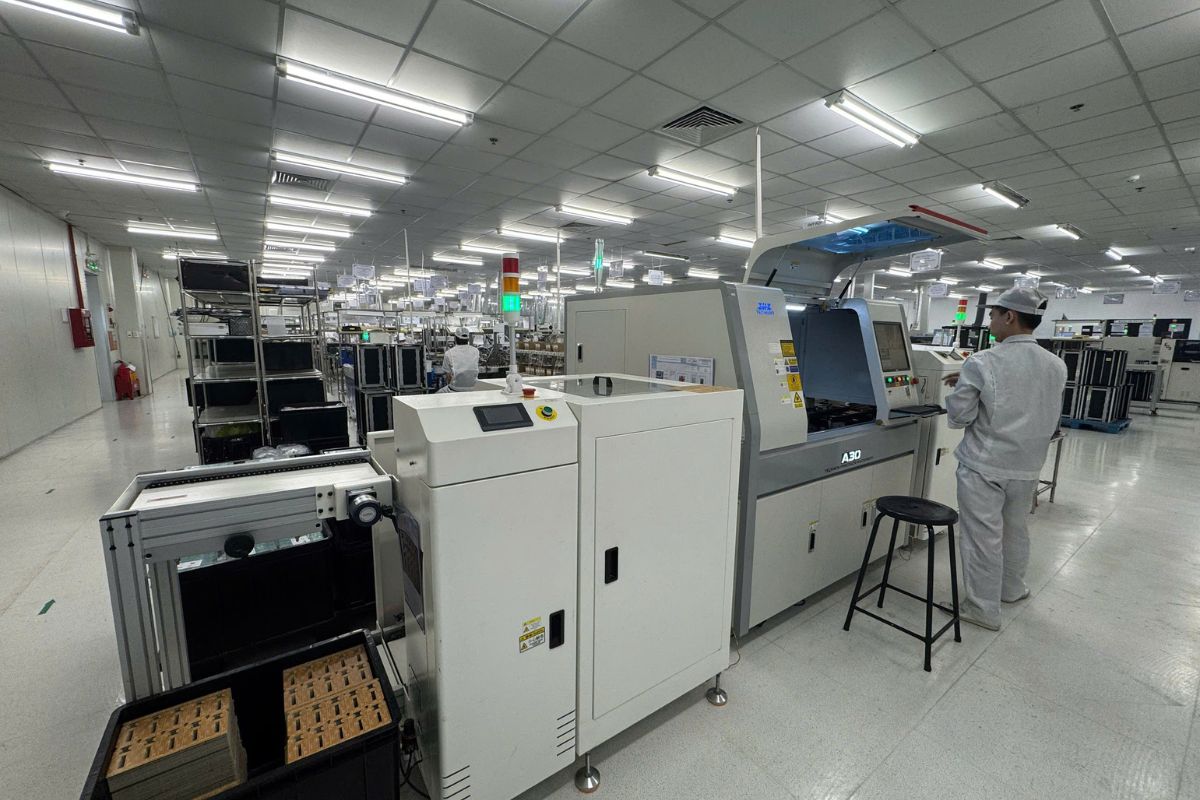
SHDC Electronics Co., Ltd operates a 2,600m² manufacturing facility at the Vietnam Singapore Industrial Park in Hai Duong — purpose-built for international electronics brands requiring full-cycle assembly capability with US-facing operational infrastructure.
SHDC’s capability maps directly against the six non-negotiables outlined in Step 2 of this playbook:
| US Brand Requirement | SHDC Capability |
|---|---|
| High-speed SMT assembly | Yamaha SMT lines, high-CPH placement — production-rated |
| Full inspection stack | SPI + 3D AOI (Yamaha YSI-V) + X-ray + functional test |
| Box build / system integration | Full box build assembly capability |
| NPI / prototype support | DFM review, FAI, engineering support — prototype PCB assembly |
| MES traceability | AIT Tracer Server + MES/ERP/QMS integrated — real-time, lot-level |
| BOM sourcability audit | Complimentary pre-contract analysis |
| Turnkey PCBA | Component sourcing + assembly + test — turnkey PCB assembly |
| US communication | Dedicated account manager, technical English, 24h response SLA |
For US brands beginning their China+1 transition, SHDC offers a structured Pilot Program — starting with a single SKU at reduced minimum order quantity to validate quality, documentation, and logistics before committing full production volume. This is the Phase 1 approach described in Step 3 of this playbook, operationalized as a formal engagement model.
SHDC’s SMT assembly services support the full range of consumer electronics assembly requirements — from compact IoT devices and wearables to home electronics and connected appliances — with the throughput infrastructure and quality systems that US brand requirements demand.
>>> Profile’s SHDC Electronics Company
FAQs
Q1: How long does it take to transition consumer electronics assembly from China to Vietnam?
A structured three-phase transition typically takes 10 to 18 months: Pilot phase (months 1–4), Ramp phase (months 5–9), and Full transition (months 10–18). The timeline compresses significantly when starting with a single SKU pilot, which reduces process validation complexity and allows quality systems to be proven before full production volume is committed.
Q2: What is the minimum order quantity for consumer electronics assembly in Vietnam?
MOQ varies by EMS provider and product complexity. Mid-tier Vietnam EMS providers typically work with pilot runs of 500 to 2,000 units for new customers, scaling to commercial volumes of 10,000 to 100,000+ units per run. Some providers offer structured pilot programs with reduced MOQ specifically for brands transitioning from China.
Q3: Can Vietnam EMS providers handle complex consumer electronics with 300+ BOM line items?
Yes — qualified mid-tier and tier-1 EMS providers in Vietnam routinely manage BOMs of 300 to 500+ line items. The key is the provider’s component sourcing infrastructure: authorized distributor relationships, BOM audit capability, and long-lead item management. Request a BOM sourcability audit before committing to any provider.
Q4: How do US brands ensure quality consistency when switching to a Vietnam assembly partner?
Quality consistency is established through three mechanisms: a formal NPI process with documented first article inspection before production approval; MES-driven traceability that creates an auditable record of every production parameter; and a structured pilot phase at reduced volume before full production commitment. Brands that skip the pilot phase and go directly to full production volume consistently report the most quality issues during transition.
Q5: What certifications should a consumer electronics EMS provider in Vietnam have?
ISO 9001:2015 is the minimum quality management certification for consumer electronics assembly. ISO 14001:2015 environmental management certification is increasingly required by US retail customers and brand sustainability commitments. For products with medical or industrial electronics components, ISO 13485:2016 may also be relevant — read our guide on medical PCBA supplier Vietnam for that specific requirement set.
Q6: Is consumer electronics assembly in Vietnam cheaper than China in 2026?
On a total landed cost basis, yes — by 15 to 40% for most categories. Vietnam manufacturing unit costs may run 5 to 15% higher than equivalent China production. But the Section 301 tariff differential — 25% to 145% on Chinese-origin electronics versus 0% to 10% on Vietnamese-origin — creates a net cost advantage that significantly exceeds any manufacturing cost premium. The tariff math, not labor cost, is the primary driver of Vietnam’s TCO advantage in 2026.
Q7: How does the China+1 strategy affect US import tariffs for consumer electronics?
Products manufactured in Vietnam with sufficient Vietnamese origin content qualify for Vietnamese country of origin under US Customs rules, and are therefore not subject to Section 301 China tariffs. The key requirement is that substantial transformation occurs in Vietnam — meaning the assembly process must genuinely add value, not simply repackage Chinese-origin finished goods. A qualified EMS partner will be familiar with US Customs substantial transformation requirements and can advise on origin qualification for your specific product.
Conclusion
Vietnam is not a future option for US consumer electronics brands. It is the present reality for brands that have run the total landed cost math and understand what Section 301 tariffs are doing to their margins.
The five-step playbook in this guide — BOM sourcability audit, EMS partner qualification, phased transition, logistics setup, and dual-source resilience — is the operational framework that separates brands who execute this transition successfully from those who spend 18 months and significant budget discovering the same lessons the hard way.
The transition window is open. The EMS ecosystem in Vietnam is mature enough to support mid-size US brands today — not in two years. The brands moving now are locking in supply chain relationships, production processes, and cost structures that will compound as a competitive advantage over the next five to ten years.
If your product line includes medical-grade electronics in addition to consumer electronics, read our guide on medical device contract manufacturing in Vietnam — the regulatory and quality requirements are distinct, and the supplier evaluation framework is different.
Ready to start your pilot? Send your BOM to SHDC for a complimentary sourcability audit and DFM review — response within 48 hours.