Tiếng Việt
 日本語
日本語
For years, China was the default answer for PCB assembly. That is no longer the case. Today, many U.S. OEMs are actively evaluating alternatives to China PCB assembly as they rethink supply chain concentration, cost exposure, and long-term sourcing flexibility. The question is not simply where to move. It is how to compare the options in a way that reflects real production needs, not just assumptions. Vietnam is often near the top of that list, but it is not the only option. The real decision comes down to program fit, supplier capability, and risk tolerance.
Why U.S. OEMs Are Looking for Alternatives to China PCB Assembly
The shift away from a China-only sourcing model did not happen for one reason. It happened because too many risks started stacking up at the same time.
Supply chain concentration has become a board-level concern
A decade ago, many OEMs were comfortable keeping most of their electronics manufacturing in one country as long as the supplier was stable and the cost model worked. That looks different now.
Several factors have pushed sourcing teams to reconsider that approach:
- Tariff and trade policy uncertainty
- Geopolitical tension
- Longer-term concerns about supply chain resilience
- Customer pressure to diversify sourcing
- The need for more flexibility across regions
In practice, most companies are not asking, “Should we leave China entirely?”
They are asking, “Where else can we build PCB assemblies without adding too much cost or operational friction?”
That distinction matters. For many U.S. OEMs, this is not a dramatic exit story. It is a risk management exercise.
>>>Read more: The Hidden Risks of Manufacturing Electronics in China: A 2026 Guide for U.S. Businesses
Price is only part of the picture
The search for alternatives to China PCB assembly is often framed as a cost issue, but that is only half true. Buyers do care about price. They also care about:
- response time,
- engineering support,
- line discipline,
- yield stability,
- documentation,
- test coverage,
- and the ability to scale without surprises.
That is why the lowest quoted assembly price rarely wins on its own. A cheaper line item can become a more expensive program once delays, quality issues, or poor communication enter the picture.
What U.S. OEMs Compare Before Moving PCB Assembly Out of China
This is where real supplier evaluation starts. Most experienced OEM teams do not compare countries first. They compare what those countries can realistically deliver for a specific program.
Cost beyond the quoted assembly price
A quote may look attractive, but experienced buyers tend to look at total landed cost, not assembly cost alone.
That usually includes:
- PCB assembly labor
- tooling or NRE charges
- test fixture cost
- yield loss and rework exposure
- logistics and freight
- duties or tariff impact
- inventory carrying cost
- communication and management overhead
A supplier can be cheaper on paper and still cost more in production.
Process maturity and manufacturing discipline
A country may have a growing electronics sector, but OEMs still need to know whether an individual supplier has the process control to support stable output.
Typical questions include:
- Can the supplier handle mixed-technology boards?
- Are they comfortable with SMT, DIP, and final assembly?
- Do they support AOI, ICT, FCT, and repair workflows?
- Can they move cleanly from prototype to volume production?
- Do they have strong incoming inspection and traceability?
These questions sound operational because they are operational. PCB assembly performance is won or lost on execution, not country branding.
Engineering support and NPI readiness
This factor is often underestimated. If the supplier cannot flag DFM issues early, clarify BOM risks, or support a clean NPI handoff, the program starts with friction.
U.S. OEMs usually want a partner that can:
- review Gerbers and assembly drawings,
- identify manufacturability risks,
- confirm test strategy,
- communicate clearly on substitutions,
- and support controlled scale-up after prototype approval.
Communication and program management
This part never looks exciting in a sourcing spreadsheet, but it can make or break a transfer project.
A capable PCB assembly partner should be able to:
- respond in a reasonable time,
- document issues clearly,
- manage ECOs properly,
- report production status consistently,
- and avoid letting small misunderstandings become expensive production problems.
For many buyers, that operational discipline matters just as much as equipment lists.
>>>Read more: PCB Prototyping Services: How OEM Companies Evaluate Cost, Risk, and Scalability
Top Alternatives to China PCB Assembly
There is no single perfect replacement for China. Different countries solve different problems. Some are stronger on cost. Some are stronger on technical maturity. Some are attractive because of geography. The right choice depends on what kind of OEM program you are running.
Vietnam: A Strong Balance of Cost, Capability, and Diversification
Vietnam is one of the most commonly evaluated alternatives to China PCB assembly, and for good reason. For many U.S. OEMs, it offers a practical middle ground: cost-competitive manufacturing in Asia without the concentration risk of staying China-only.
Why Vietnam is gaining attention
Vietnam stands out because it checks several important boxes at once:
- Competitive assembly cost for many product categories
- A growing EMS and PCB assembly ecosystem
- Strong relevance for China+1 sourcing strategies
- Export-oriented manufacturing growth
- Good fit for OEMs that still want Asia-based production
Vietnam is not always the cheapest option in every scenario. That is not really the point. Its advantage is that it performs well across multiple categories that matter at the same time: cost, scalability, export practicality, and diversification.
Where Vietnam tends to fit best
Vietnam is often a strong fit for:
- consumer electronics,
- power-related electronics,
- industrial assemblies,
- OEM programs moving from prototype to volume,
- and buyers who want to diversify while staying connected to Asian supply networks.
The main consideration is that ecosystem depth can still vary by supplier, product type, and component category. That means supplier qualification still matters a lot.
>>>Read more: Prototype PCBA Vietnam: Fast, Cost-Effective PCB Assembly for OEM Projects
Thailand: Mature in Some Segments, Often at a Higher Cost
Thailand is often considered when the OEM program sits closer to automotive, industrial, or more structured manufacturing environments.
Where Thailand performs well
Thailand can be attractive for:
- industrial electronics,
- certain regulated manufacturing environments,
- and programs that benefit from a more established production ecosystem in specific sectors.
Trade-offs to keep in mind
The main issue is cost. For some PCB assembly programs, Thailand may not be as cost-competitive as Vietnam. It can still be the right choice, but usually for reasons tied to program requirements rather than pure price.
Malaysia: Strong Technical Base, but Not Always the Lowest-Cost Option

Malaysia has long held a respected position in electronics manufacturing. It is often shortlisted for more technically demanding work or where buyers value ecosystem maturity.
Why buyers consider Malaysia
Malaysia tends to appeal to OEMs looking for:
- more established electronics infrastructure,
- technically capable suppliers,
- and better fit for higher-spec manufacturing in certain categories.
Where it may not fit
Cost sensitivity is the main trade-off. If a program is heavily price-driven, Malaysia may not be the first option. It often makes more sense where technical requirements are heavier and the cost model can support that.
India: High Strategic Interest, Mixed Supplier Readiness
India gets a lot of attention in diversification conversations, and that interest is not misplaced. It has huge long-term potential, a large domestic base, and strong policy momentum.
Why India is on the radar
India matters because of:
- scale potential,
- policy support for manufacturing,
- and long-term strategic interest from global companies.
Where the caution comes in
For PCB assembly, supplier readiness can vary a lot. Some suppliers are well-positioned. Others are still developing the consistency, process control, or export-oriented maturity that OEMs expect.
That does not make India a weak option. It just means buyers need to qualify very carefully and avoid broad assumptions.
Mexico: Attractive for Nearshoring, but Not a Universal Answer
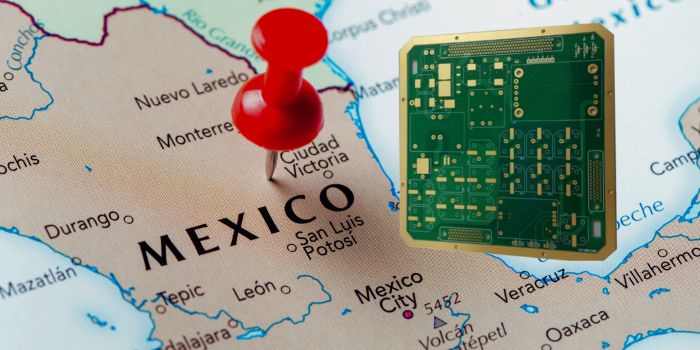
Mexico is often part of the same discussion, especially for U.S. companies prioritizing proximity and easier logistics.
Why Mexico gets shortlisted
Mexico offers a different kind of advantage:
- closer physical access to the U.S.
- shorter transit times
- easier coordination in overlapping time zones
- strong relevance for nearshoring strategies
Why it is not automatically the best fit
Mexico is not always the lowest-cost option. It also may not offer the same supplier range for every PCB assembly profile that an Asia-based sourcing strategy can provide. For some programs, it is ideal. For others, it is not the cleanest economic fit.
How Vietnam Compares with Other PCB Assembly Alternatives
A country-level comparison is never the whole story, but it helps clarify what each option tends to offer.
| Country | Main Strength | Main Trade-Off | Best Fit For |
|---|---|---|---|
| Vietnam | Strong balance of cost, capability, and diversification | Supply chain depth still varies by supplier and category | U.S. OEMs pursuing China+1 PCB assembly |
| Thailand | Mature in selected industrial segments | Often higher cost | Automotive and industrial-focused programs |
| Malaysia | Strong technical ecosystem | Cost may be higher | Higher-spec or technically demanding electronics |
| India | Long-term strategic scale potential | Supplier consistency varies widely | Companies building long-range diversification strategies |
| Mexico | Nearshoring and proximity to the U.S. | Not always the lowest-cost or widest-fit option | Programs that prioritize logistics and regional coordination |
The key takeaway from this comparison is simple: no country wins every category. In many cases, Vietnam stands out because it offers a more balanced answer than a specialized one.
Why Vietnam Is Often Shortlisted First
Vietnam tends to come up early in PCB assembly sourcing discussions because it solves a very specific problem well. It gives OEMs an Asia-based option that can reduce China concentration without forcing a complete shift in sourcing logic.
Vietnam’s appeal is practical, not theoretical
For many OEMs, Vietnam is not selected because it is the absolute best in one category. It is selected because it performs well across the categories that matter most:
- competitive total cost
- growing supplier capability
- strong diversification value
- good export relevance
- manageable transition risk
That is a powerful combination. Especially for buyers who are not trying to redesign their entire supply chain from scratch.
Vietnam works well for China+1, not just anti-China positioning
This is an important distinction. The strongest sourcing strategies are usually not built around headlines. They are built around flexibility.
Vietnam fits well when a company wants:
- a second manufacturing base in Asia,
- a cleaner risk profile,
- a scalable PCB assembly partner,
- and a more balanced sourcing structure.
That is different from making an emotional move away from China. It is a structured diversification decision.
>>>Read more: Why US Companies Choose Full Service EMS in Vietnam for Scalable Electronics Manufacturing
When Vietnam Is the Right Choice — and When It May Not Be
Good sourcing decisions depend on program fit. Vietnam is a strong option, but not a universal answer.
Vietnam may be the right fit if you need:
- a non-China assembly base in Asia
- a strong China+1 PCB assembly strategy
- competitive production for consumer, power, or industrial electronics
- a supplier that can support prototype-to-volume scaling
- a better balance between cost, quality, and diversification
Vietnam may not be the best fit if you need:
- highly specialized local ecosystems for a narrow product category,
- immediate regional manufacturing close to North America,
- or supplier networks optimized for a specific regulated niche that is stronger elsewhere.
That does not weaken Vietnam’s case. It strengthens the credibility of the evaluation. The goal is not to force one answer. The goal is to choose the right one.
How U.S. OEMs Should Evaluate PCB Assembly Alternatives in Practice
Once the country shortlist is in place, the real work begins. A practical evaluation process usually tells you more than high-level country comparisons.
Start with program requirements, not country assumptions
Before comparing suppliers, define the real production needs:
- board complexity,
- volume profile,
- test requirements,
- documentation expectations,
- certification needs,
- packaging and integration scope,
- and risk tolerance for supply transfer.
A low-complexity consumer board and a higher-reliability industrial assembly should not be sourced the same way.
Compare total landed cost, not labor cost alone
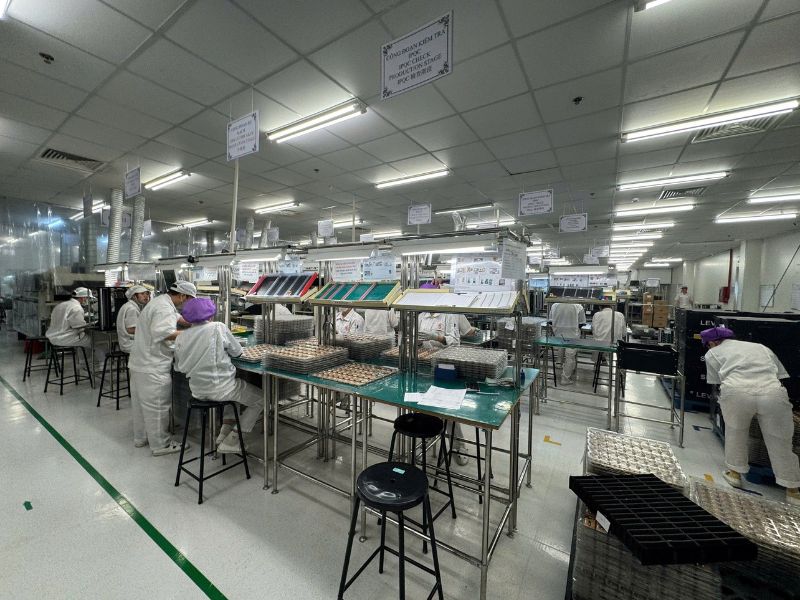
This point deserves repeating because it is where many sourcing mistakes begin.
A realistic comparison should include:
- assembly price,
- test cost,
- yield risk,
- logistics,
- duties,
- communication overhead,
- inventory cost,
- and time-to-launch impact.
A supplier that is slightly more expensive but significantly more stable can still be the better commercial choice.
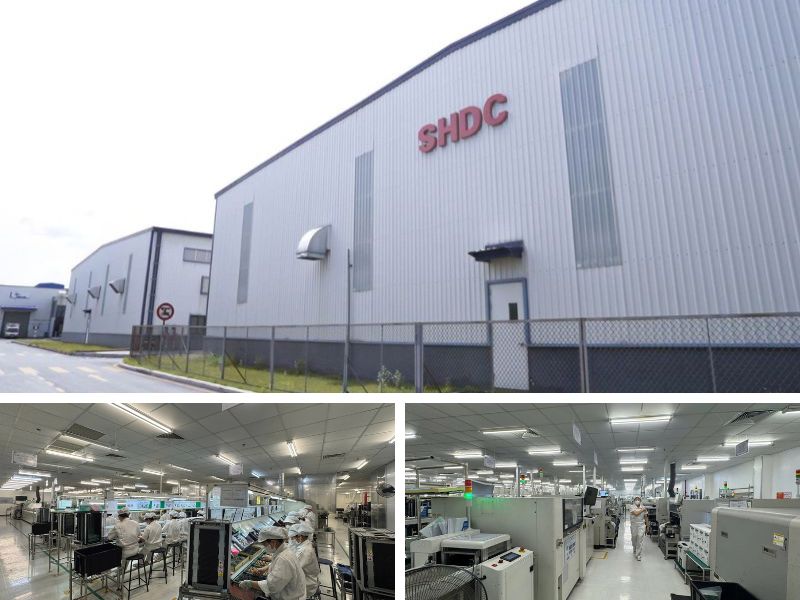
>>>Read more: SHDC – Trusted Non-China PCBA Manufacturer in Vietnam for U.S. OEMs
Audit capability before scaling
Before committing large volumes, OEMs should validate:
- line capability,
- process flow,
- inspection methods,
- defect response,
- engineering communication,
- and NPI support.
A controlled pilot build often reveals more than a polished supplier presentation ever will.
Why Supplier Quality Matters More Than Country Alone
This is where a lot of sourcing conversations become too simplistic.
Country comparisons are useful. They help narrow the field. But production success happens at the supplier level.
A strong supplier in Vietnam can outperform a weak supplier in a more mature market. The reverse is also true. Country reputation may get a supplier onto the shortlist. It does not guarantee execution.
That is why experienced OEM teams usually focus on questions like:
- How disciplined is the factory?
- How do they manage incoming quality?
- Can they support traceability?
- How do they communicate quality issues?
- What happens when a build goes off plan?
Those are the questions that shape long-term manufacturing performance.
The Bottom Line
The market for alternatives to China PCB assembly is more viable now than it was just a few years ago. U.S. OEMs have real options, and those options are no longer limited to theory or emergency backup plans.
Vietnam, Thailand, Malaysia, India, and Mexico all offer valid paths depending on the program. But Vietnam often rises to the top because it provides one of the most balanced combinations of cost competitiveness, manufacturing growth, diversification value, and export practicality.
Still, the smartest sourcing decisions do not stop at the country level. They move from geography to execution. The right PCB assembly strategy is the one that fits the product, the risk model, and the supplier’s actual capability to deliver.
>>>Read more: Top Vietnam PCB Manufacturers for US Buyers in 2026
FAQs
What are the best alternatives to China PCB assembly?
The most commonly considered alternatives include Vietnam, Thailand, Malaysia, India, and Mexico. The best choice depends on your product type, cost target, quality expectations, and logistics strategy.
Is Vietnam a good alternative to China for PCB assembly?
Yes. For many U.S. OEMs, Vietnam is one of the strongest alternatives because it offers a practical mix of cost competitiveness, growing supplier capability, and supply chain diversification value.
Is Mexico better than Vietnam for PCB assembly?
Not always. Mexico may be better for nearshoring and shorter transit times to the U.S. Vietnam may be stronger when cost, Asia-based sourcing continuity, and China+1 diversification are the priority.
Is PCB assembly cheaper in Vietnam than China?
It can be, depending on the product, volume, supplier, and total landed cost model. Labor alone does not tell the full story, so buyers should compare the full cost structure.
What should U.S. OEMs look for in a non-China PCB assembly supplier?
They should evaluate process capability, test coverage, engineering support, communication quality, documentation discipline, and the supplier’s ability to scale from prototype to production.
Is moving PCB assembly out of China always the right decision?
No. In some cases, keeping part of production in China while adding a second source elsewhere is the more effective strategy. Many OEMs pursue diversification rather than full relocation.