Tiếng Việt
 日本語
日本語
If you’re a US MedTech company evaluating contract manufacturing options outside of China, Vietnam has likely already appeared on your shortlist. And for good reason. The combination of competitive labor costs, improving regulatory infrastructure, and a maturing electronics manufacturing ecosystem has made medical device contract manufacturing in Vietnam one of the most strategically sound outsourcing decisions available to US OEMs and startups in 2026.
But here’s where most buyers get stuck: they evaluate contract manufacturers the same way they’d evaluate a PCB assembly shop — focusing on price per unit and lead time. That approach misses the bigger picture entirely.
This guide covers what US MedTech companies actually need from a full-cycle contract manufacturing partner — from NPI and design validation through pilot production and commercial scale — and what to verify before signing any agreement with a Vietnam-based manufacturer.
What Is Medical Device Contract Manufacturing — And Why Vietnam?
Contract Manufacturing vs. PCB Assembly — What’s the Difference?
These two terms are often used interchangeably, but they describe fundamentally different scopes of work — and confusing them leads to costly mid-development vendor changes.
PCB assembly is a single production step: placing and soldering components onto a bare board. It’s a critical step, but it’s one piece of a much larger puzzle.
Medical device contract manufacturing covers the entire production lifecycle:
- New Product Introduction (NPI) and DFM review
- Prototype and design validation builds (EVT/DVT)
- Pilot production and process validation (IQ/OQ/PQ)
- Full-scale commercial production
- Box build and system integration
- Quality documentation supporting FDA submission
For a US MedTech startup preparing a 510(k) submission or scaling toward commercial launch, the difference between a PCB assembler and a true contract manufacturing partner is the difference between managing five vendors and managing one. The documentation consistency, quality continuity, and regulatory alignment that comes from a single full-cycle partner is not a convenience — it’s a competitive advantage.
Why Vietnam Is Winning Medical Device Contract Manufacturing Deals
Vietnam’s rise as a preferred destination for medical device electronics manufacturing is backed by hard data. The Asia Pacific medical device contract manufacturing market was estimated at $31.77 billion in 2024 and is projected to reach $100.90 billion by 2030 — making it the fastest-growing regional market globally. Vietnam is capturing a disproportionate share of that growth.
The structural advantages driving this shift:
- Tariff advantage: Vietnamese-origin electronics face significantly lower US import tariffs compared to Chinese-origin goods — a direct cost benefit for US buyers managing tight margins on Class II and Class III device development
- Workforce quality: Vietnam produces over 100,000 engineering graduates annually, with a growing concentration in electronics, embedded systems, and precision manufacturing
- Trade agreements: Vietnam’s participation in CPTPP and EVFTA provides preferential market access and signals long-term trade stability
- Geopolitical risk reduction: Diversifying away from China is no longer just a cost play — it’s a supply chain resilience strategy that investors and procurement teams now require
| Factor | Vietnam | China | India |
|---|---|---|---|
| Labor cost (per hour) | $3–$6 | $6–$10 | $2–$5 |
| Tariff risk (US imports) | Low | High (Section 301) | Medium |
| ISO 13485 availability | Growing rapidly | Widely available | Limited |
| Electronics ecosystem maturity | High | Very High | Medium |
| Geopolitical risk | Low | High | Low–Medium |
The 5 Non-Negotiables When Choosing a Medical Device Contract Manufacturer in Vietnam
Price matters. Lead time matters. But when you’re manufacturing devices that will be used on — or inside — human beings, these five criteria are non-negotiable. Every contract electronics manufacturer in Vietnam you evaluate should be able to answer each of these clearly and with documentation to back it up.
Non-Negotiable #1 — ISO 13485:2016 Certification
ISO 13485:2016 is the international quality management standard purpose-built for medical device manufacturing. It is not the same as ISO 9001. Where ISO 9001 covers general quality management principles, ISO 13485 requires:
- A QMS specifically structured around medical device risk management
- Documented control of design, production, and post-market surveillance processes
- Strict traceability requirements at the component and lot level
- Formal CAPA (Corrective and Preventive Action) systems with documented effectiveness verification
- Regular third-party audits — not just internal reviews
How to verify: Ask for the certificate number, issuing body (TÜV, SGS, Bureau Veritas, or equivalent), and expiry date. Then verify directly with the certifying body. A legitimate ISO 13485 certificate is publicly verifiable — any hesitation here is a red flag.
Non-Negotiable #2 — FDA 21 CFR Part 820 Alignment
Your Vietnam contract manufacturer does not need to be FDA-registered. But their processes must align with FDA’s Quality System Regulation under 21 CFR Part 820 — because the manufacturing records they generate will become part of your regulatory submission.
Five questions to ask directly:
- Can you generate and maintain Device History Records (DHR) for every production lot?
- Do you have a formal CAPA system with documented root cause analysis?
- Can you support Design History File (DHF) documentation during NPI?
- Are your production processes validated and documented (IQ/OQ/PQ)?
- Have you previously supported a US FDA 510(k) or PMA submission?
A manufacturer who understands these requirements — and can answer confidently — will compress your regulatory timeline. One who doesn’t will create documentation gaps that surface at the worst possible moment: during an FDA audit.
Non-Negotiable #3 — Full Traceability Infrastructure
In medical device manufacturing, traceability is a regulatory requirement, not a feature. Every component, every solder joint, every inspection result must be traceable to a specific production lot, operator ID, machine, and timestamp — and that data must be retrievable on demand for FDA audit purposes.
The minimum infrastructure to look for:
- MES (Manufacturing Execution System): Real-time production tracking at the component level, connected to inspection and test data
- ERP integration: Linking procurement, inventory, and production records into a single data environment
- Lot-level traceability: The ability to trace any finished assembly back to its incoming material lot within hours — not days
If a manufacturer cannot demonstrate MES-driven traceability, they cannot reliably support your FDA submission documentation. This is a hard line.
Non-Negotiable #4 — End-to-End Capability From NPI to Volume Production
One of the most expensive mistakes US MedTech startups make is using one manufacturer for prototyping and a different one for mass production. The reasons this happens are understandable — prototype shops are nimble, volume manufacturers are cost-efficient — but the consequences are serious:
- Design lock inconsistency: Process parameters validated at the prototype stage may not transfer cleanly to the volume manufacturer’s equipment
- Documentation gaps: The DHF and production records generated during prototyping may not align with the volume manufacturer’s QMS format
- Re-validation costs: Moving to a new manufacturer mid-development often triggers a full IQ/OQ/PQ re-validation cycle — adding months and significant cost
The right turnkey PCB assembly partner should be able to support you from first prototype through commercial launch without a handoff. Verify this explicitly — not all manufacturers who claim “full-cycle capability” actually have the NPI infrastructure to back it up.
Non-Negotiable #5 — Communication and Project Management Standards
This is the criterion most US buyers underweight — and the one that causes the most friction in practice. Technical capability means nothing if your manufacturing partner cannot communicate clearly across a 12-hour time zone gap.
What to evaluate:
- English proficiency: Not just conversational — technical English for engineering discussions, DFM feedback, and quality reports
- Dedicated account management: A single point of contact who owns your project, not a rotating support queue
- Response time standards: What is their committed response time for technical queries? 24 hours should be the maximum
- Reporting cadence: Weekly production reports, real-time defect alerts, and milestone updates should be standard, not negotiated
The Full-Cycle Production Journey — Prototype to Commercial Scale
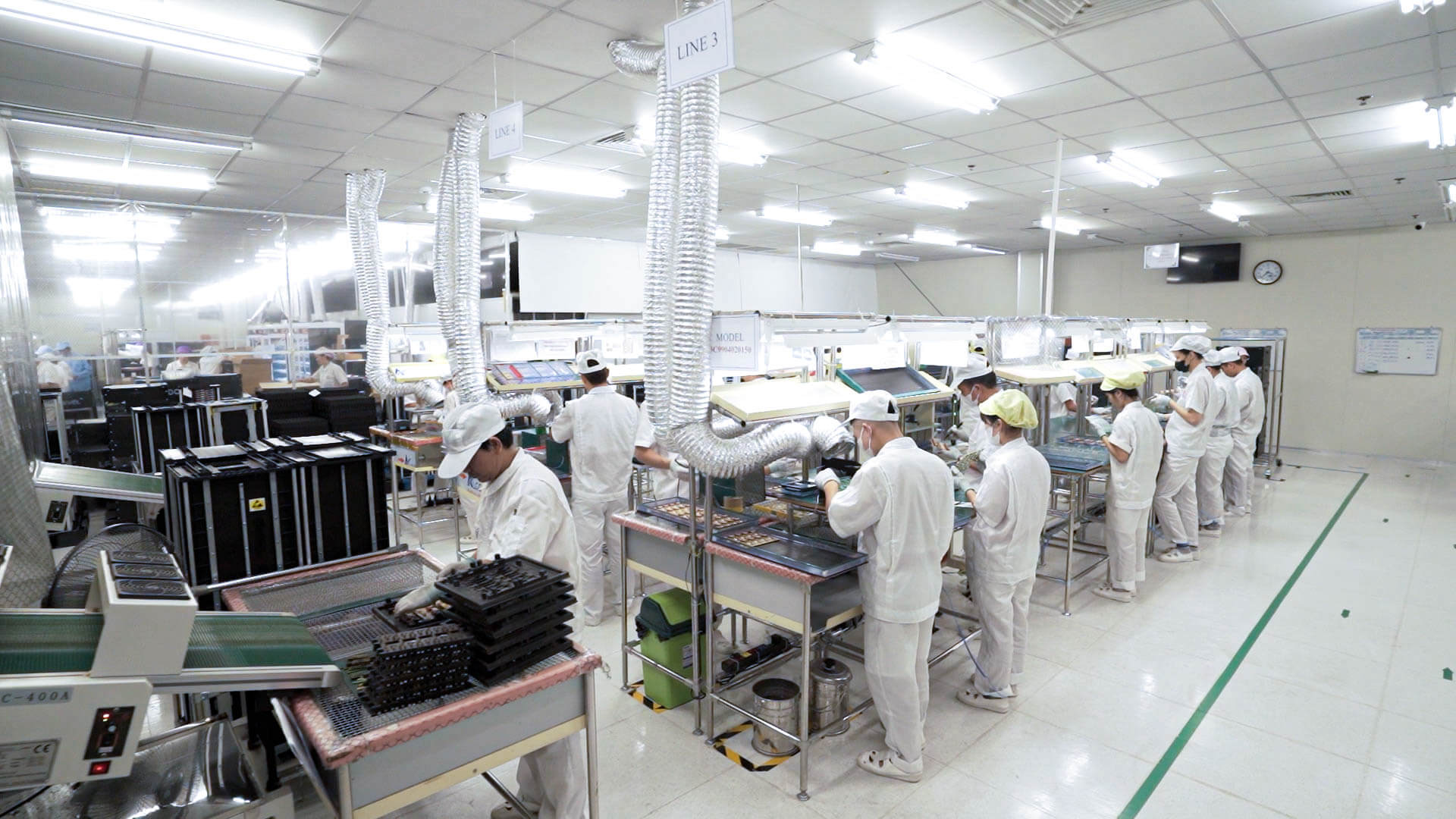
This is where the real value of a full-cycle medical device contract manufacturing partner becomes tangible. Here’s what each stage looks like in practice — and what outputs you should expect at each milestone.
Stage 1 — New Product Introduction (NPI)
Timeline: 2–3 weeks
NPI is where the manufacturing relationship is established and where most downstream problems are either prevented or created. A rigorous NPI process includes:
- DFM (Design for Manufacturability) review: Identifying component placement issues, pad geometry problems, and assembly constraints before a single board is built
- BOM audit: Verifying component availability, identifying long-lead items, and flagging potential counterfeit-risk parts
- Gerber file verification: Confirming PCB layer stack-up, drill files, and assembly drawings are production-ready
- First Article Inspection (FAI): The first completed assembly is inspected against all drawing requirements before the batch proceeds
The FAI report generated at this stage becomes a foundational document in your Design History File — critical for FDA 510(k) submissions.
Stage 2 — Prototype and Design Validation Build
Timeline: 3–4 weeks | Volume: 10–100 units
Prototype builds at a contract manufacturer are not the same as benchtop builds at your engineering team’s desk. At this stage, the manufacturer should be building boards using production-equivalent processes — the same equipment, the same solder paste, the same reflow profile that will be used in commercial production.
This matters because:
- Engineering Validation Testing (EVT) and Design Validation Testing (DVT) results are only meaningful if the boards were built under production-representative conditions
- Any process changes between prototype and production can invalidate your validation data — a problem that surfaces during FDA review
Documentation outputs at this stage: inspection records, test data, and preliminary DHF entries.
Stage 3 — Pilot Production and Process Validation
Timeline: 4–6 weeks | Volume: 500–2,000 units
Pilot production is where the manufacturing process itself is formally validated. For medical devices, this typically involves:
- IQ (Installation Qualification): Verifying that equipment is installed correctly and operating within specification
- OQ (Operational Qualification): Demonstrating that the process produces acceptable output across its defined operating range
- PQ (Performance Qualification): Confirming that the process consistently produces product meeting all specifications under actual production conditions
The IQ/OQ/PQ documentation package generated at this stage is a direct input to your FDA submission. A contract manufacturer who cannot produce this documentation is not equipped for medical device work — regardless of their ISO 13485 status.
Stage 4 — Commercial Scale Production
Timeline: Ongoing | Volume: 2,000+ units
At commercial scale, the focus shifts from validation to consistency. Key performance indicators to track with your contract manufacturer:
- Yield rate: First-pass yield should be consistently above 98% for medical-grade assemblies
- DPPM (Defects Per Million): Track trend over time — improvement indicates a mature quality system
- On-time delivery rate: Critical for managing your downstream distribution commitments
- CAPA closure rate: How quickly are identified defects resolved and verified?
The SMT assembly capacity required for commercial medical device production should include multiple parallel lines, AI-powered inspection systems, and documented process controls — not just high-speed placement equipment.
How SHDC Supports US MedTech Companies Across the Full Production Lifecycle
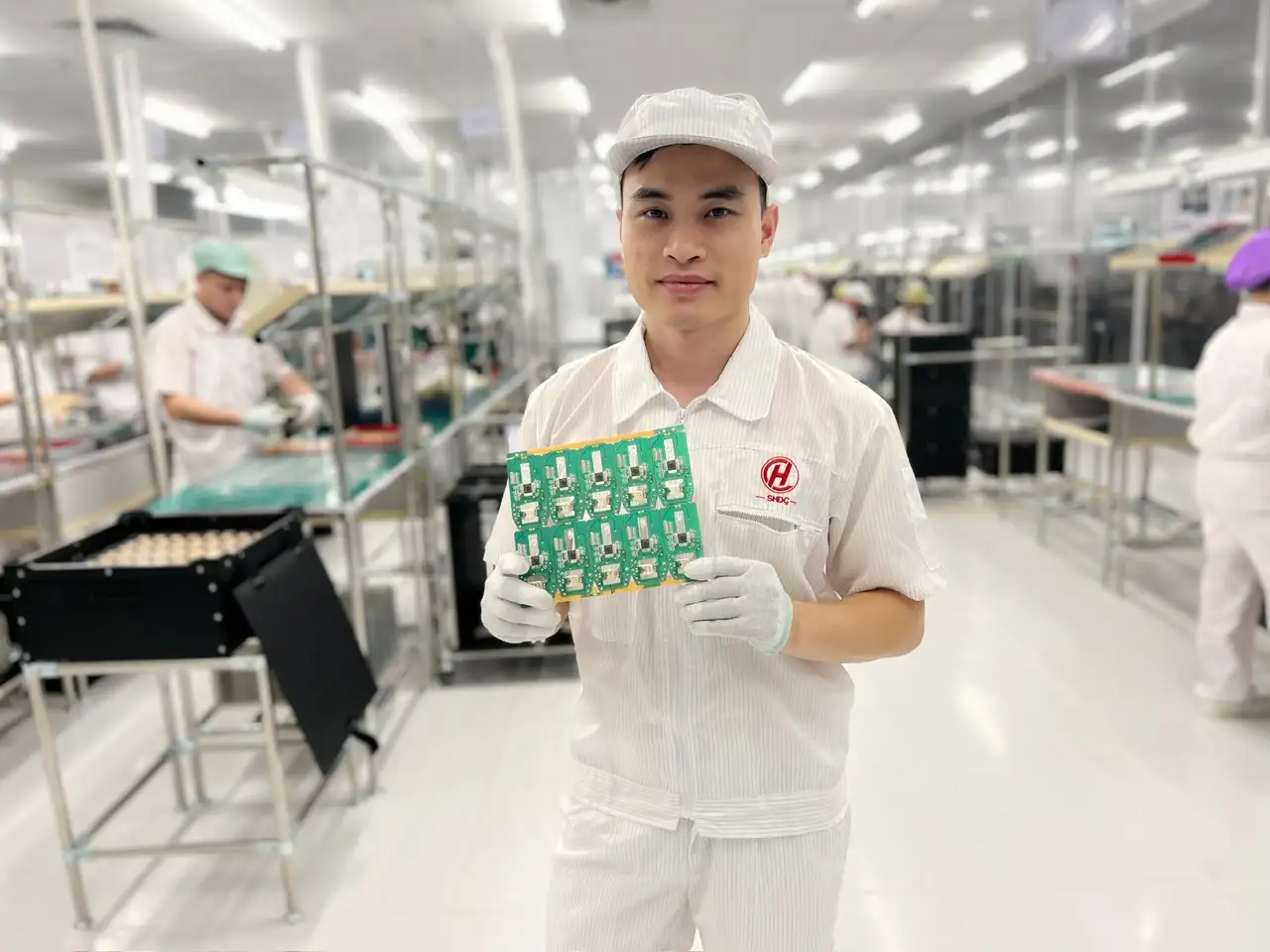
SHDC Electronics Co., Ltd is a Vietnam-based contract electronics manufacturer operating a 2,600m² ISO 13485-certified facility at the Vietnam Singapore Industrial Park in Hai Duong — approximately 40km from Hanoi and 55km from Haiphong Port. The facility is purpose-built for medical and industrial electronics production serving international clients, with a growing portfolio of US MedTech partnerships.
Here’s how SHDC’s capabilities map to each stage of the production journey:
| Production Stage | SHDC Capability | Key Output |
|---|---|---|
| NPI | DFM review, BOM audit, Gerber verification, FAI | FAI report, DHF entries |
| Prototype (EVT/DVT) | 50–500 unit builds, production-equivalent process | Inspection records, test data |
| Pilot (PV) | IQ/OQ/PQ documentation support | Process validation package |
| Commercial Production | 4 SMT lines, 98M solder joints/month | Consistent yield, DPPM tracking |
| Quality Inspection | 3D AOI (Yamaha YSI-V), SPI, IPC-A-610 Class III | Zero-defect shipment standard |
| Traceability | Integrated MES/ERP/QMS | Full DHR, audit-ready records |
| Box Build | System integration, enclosure assembly | Finished device-level output |
SHDC’s integrated digital infrastructure — connecting AIT Tracer Server, MES-QMS, ERP, and production equipment into a single networked environment — provides US customers with real-time production visibility and audit-ready documentation at every stage. This is the infrastructure that makes full-cycle medical device contract manufacturing viable for US regulatory submissions — not just competitive on price.
For US MedTech companies evaluating prototype PCB assembly through to commercial box build assembly, SHDC offers a single-partner solution that eliminates the documentation gaps and re-validation costs that come with multi-vendor approaches.
Cost Breakdown — What to Expect from Medical Device Contract Manufacturing in Vietnam
Cost is always part of the conversation — and it should be. The global medical device contract manufacturing market is growing at 11.4% CAGR precisely because outsourcing to qualified partners delivers real financial leverage for device manufacturers who lack the capital to build proprietary production infrastructure.
Here’s a realistic cost framework for Vietnam-based medical device contract manufacturing:
| Stage | Typical Cost Range (Vietnam) | vs. US Equivalent |
|---|---|---|
| NPI & DFM review | $500–$2,000 | $3,000–$8,000 |
| Prototype build (50 units) | $2,000–$8,000 | $10,000–$30,000 |
| Pilot production (500 units) | $15,000–$40,000 | $60,000–$120,000 |
| Commercial production (per unit) | $8–$35 depending on complexity | $30–$120 |
Note: Ranges vary significantly based on board complexity, component cost, and assembly type.
The total cost of ownership caveat: The lowest quoted price is rarely the lowest actual cost. When evaluating Vietnam contract manufacturers, factor in:
- Rework and scrap costs: A manufacturer with poor first-pass yield will cost more in the long run than one with a higher unit price and 99%+ yield
- Re-audit costs: If your manufacturer’s QMS fails an FDA audit, the cost of remediation — and potential product hold — dwarfs any per-unit savings
- Documentation gap costs: Missing or incomplete DHR documentation can delay your 510(k) submission by months
The right contract manufacturing partner is the one who minimizes your total cost of bringing a device to market — not just your cost per board.
FAQs
Q1: What is medical device contract manufacturing?
Medical device contract manufacturing is the outsourcing of device production — from component procurement and PCB assembly through system integration, quality inspection, and packaging — to a specialized third-party manufacturer. Unlike standard electronics contract manufacturing, medical device CM requires ISO 13485 certification, FDA-aligned quality systems, and full production traceability to support regulatory submissions.
Q2: Is Vietnam a reliable location for medical device contract manufacturing?
Yes — with the right partner. Vietnam’s electronics manufacturing sector has matured significantly, with a growing number of ISO 13485-certified facilities capable of supporting US FDA regulatory requirements. The key is selecting a manufacturer with verified certifications, demonstrated MES-driven traceability, and a track record of supporting US MedTech clients specifically.
Q3: What certifications should a Vietnam contract manufacturer have for medical devices?
At minimum: ISO 13485:2016 (current, third-party audited). Additionally verify IPC-A-610 Class III workmanship capability, RoHS compliance, and evidence of FDA 21 CFR Part 820-aligned documentation practices. For Class III devices, ask specifically about IQ/OQ/PQ process validation capability. The FDA’s quality system guidance provides the definitive checklist.
Q4: How long does it take to go from prototype to commercial production in Vietnam?
A realistic timeline for a moderately complex medical device assembly:
- NPI + prototype: 5–7 weeks
- Pilot production + process validation: 4–6 weeks
- Commercial production ramp: 4–6 weeks
Total: approximately 13–19 weeks from first file submission to first commercial shipment — comparable to US-based timelines at significantly lower cost.
Q5: Can a Vietnam contract manufacturer support FDA 510(k) submissions?
Yes — a properly equipped Vietnam contract manufacturer can generate all manufacturing documentation required for a 510(k) submission: FAI reports, DHR records, IQ/OQ/PQ validation packages, and CAPA records. The device manufacturer remains the 510(k) submitter and FDA registrant, but the contract manufacturer’s documentation is a direct input to the submission package.
Conclusion
Medical device contract manufacturing in Vietnam has moved well past the “low-cost alternative” narrative. For US MedTech companies who choose the right partner, it represents a genuine strategic advantage: faster time-to-market, lower development costs, and a manufacturing foundation that can support regulatory submissions without the documentation gaps that derail so many 510(k) timelines.
The decision framework is straightforward: verify ISO 13485 certification, confirm FDA 21 CFR Part 820 alignment, demand MES-driven traceability, and choose a partner who can take you from first prototype to commercial scale without a handoff.
SHDC checks every box — with a certified facility, AI-powered quality systems, and a team that has navigated the specific documentation requirements US MedTech buyers face. Whether you’re at the NPI stage or ready to scale into commercial production, the right conversation starts with your BOM and Gerber files.