Tiếng Việt
 日本語
日本語
In electronics manufacturing, quality is not just a goal—it’s a requirement. Whether you’re producing consumer devices or mission-critical systems, even minor defects in PCB assembly can lead to costly failures. This is why IPC standards have become the global benchmark for quality, reliability, and consistency in electronics manufacturing. For OEM companies, understanding IPC standards is essential when selecting a PCB assembly partner, managing product quality, and scaling production globally.
What Are IPC Standards?
IPC standards are internationally recognized guidelines that define quality, design, assembly, and inspection requirements for electronic products, ensuring consistent performance and reliability across the manufacturing process.
Developed by the IPC (Association Connecting Electronics Industries), these standards are widely used across the United States and global electronics supply chains.
Why IPC Standards Matter for OEM Companies
1. Consistent Product Quality
IPC standards provide clear acceptance criteria for PCB assembly, ensuring that every product meets defined quality benchmarks regardless of where it is manufactured.
2. Reduced Manufacturing Risk
Without IPC compliance, common PCB assembly defects include:
- Cold solder joints
- Insufficient solder wetting
- Solder bridges
- Voids in BGA components
These issues can lead to early product failure and increased warranty costs.
3. Global Supply Chain Alignment
When working with international partners or outsourcing PCB assembly services, IPC standards act as a common technical language, ensuring consistent quality across different manufacturers.
>>>Read more: Turnkey PCB Assembly Services in Vietnam – Why Choose SHDC?
4. Required for High-Reliability Industries
Industries such as medical, automotive, and aerospace rely heavily on IPC standards to ensure safety and performance. In these sectors, even minor defects are unacceptable.
Key IPC Standards List (Essential Certifications)
Understanding the most important IPC standards helps OEM companies evaluate suppliers more effectively.
| Standard | Purpose | Application |
|---|---|---|
| IPC-A-610 | Acceptability of electronic assemblies | Visual inspection |
| J-STD-001 | Soldering requirements | Process control |
| IPC-2221 | PCB design guidelines | Layout & design |
| IPC-6012 | PCB performance standards | Bare board quality |
| IPC/WHMA-A-620 | Cable & harness standards | Wiring systems |
These certifications are critical when choosing a reliable PCB assembly manufacturer.
Deep Dive: The Most Important IPC Standards
IPC-A-610 – Assembly Acceptability Standard
This is the most widely used inspection standard in the electronics industry. It defines acceptable vs defective conditions for PCB assemblies, including solder joints, component placement, and cleanliness.
J-STD-001 – Soldering Process Standard
J-STD-001 focuses on how soldering should be performed, including:
- Materials
- Methods
- Process control
A product may pass visual inspection but still fail if it does not meet soldering process requirements.
IPC-2221 – PCB Design Standard
This standard ensures that PCB designs are manufacturable and reliable by defining rules for spacing, routing, and thermal management.
IPC Classes Explained: Class 1 vs Class 2 vs Class 3
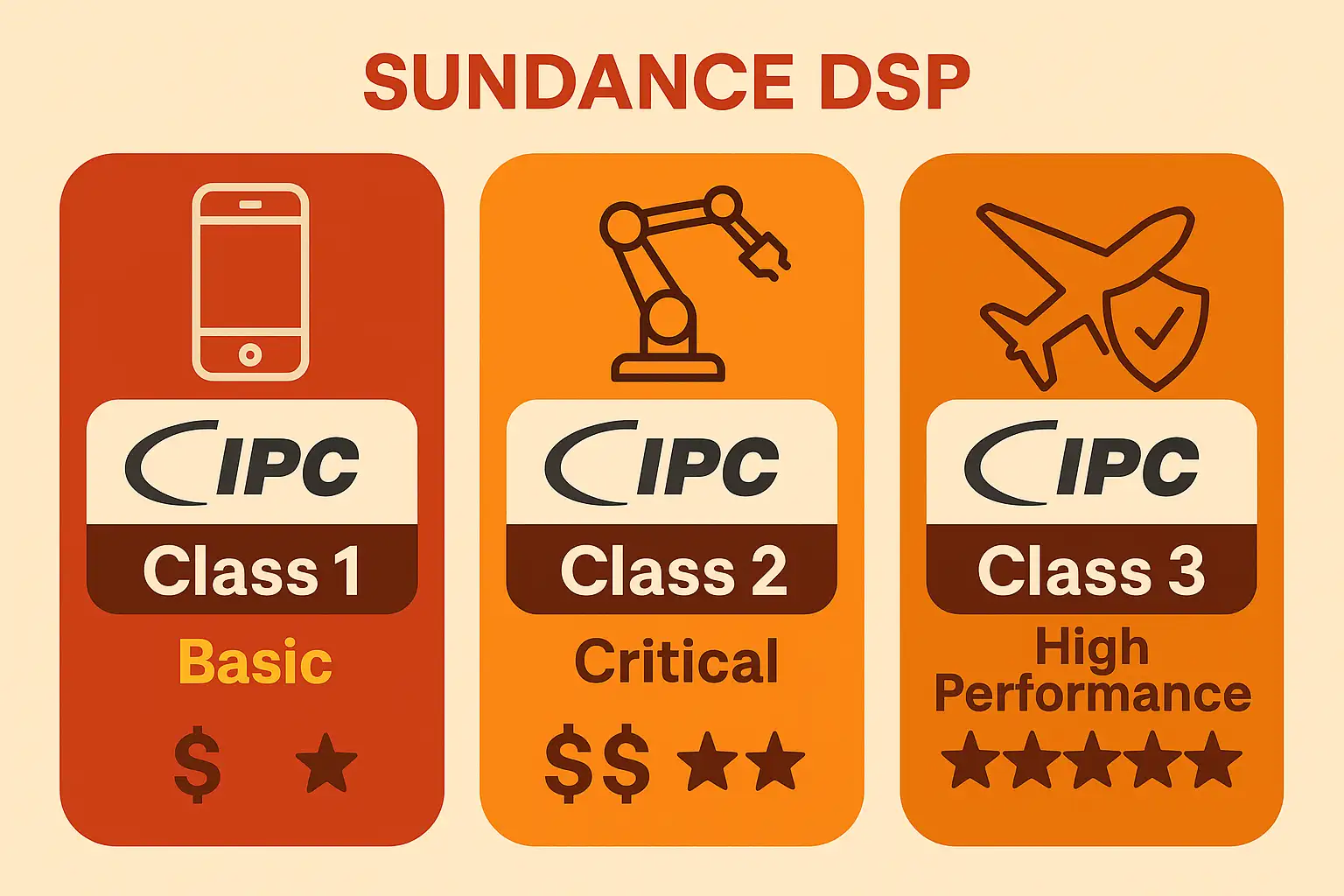
IPC standards classify products into three categories based on reliability requirements:
| Class | Reliability Level | Applications |
|---|---|---|
| Class 1 | Low | Consumer electronics |
| Class 2 | Medium | Industrial equipment |
| Class 3 | High | Medical, aerospace, automotive safety |
Real-World Example
A consumer device like a household gadget (Class 1) may tolerate minor cosmetic defects.
However, a Class 3 medical device must meet strict inspection and soldering criteria, where even minor defects could lead to critical failure.
Choosing the correct IPC class is essential for balancing cost and reliability.
Common PCB Assembly Defects (According to IPC Standards)
Even with advanced manufacturing, defects can occur if IPC standards are not properly followed.
Cold Solder Joints
Occur when solder does not fully bond to the pad or component lead.
Result: weak electrical connection.
Insufficient Solder Wetting
Solder fails to spread properly across the pad surface.
Result: reduced reliability.
Solder Bridges
Excess solder creates unintended connections between pins.
Result: short circuits.
Voids in BGA Solder Joints
Air pockets trapped inside solder joints.
Result: poor thermal and electrical performance.
IPC standards like IPC-A-610 define strict acceptance criteria to detect and eliminate these defects.
How to Choose the Right IPC Class for Your Product
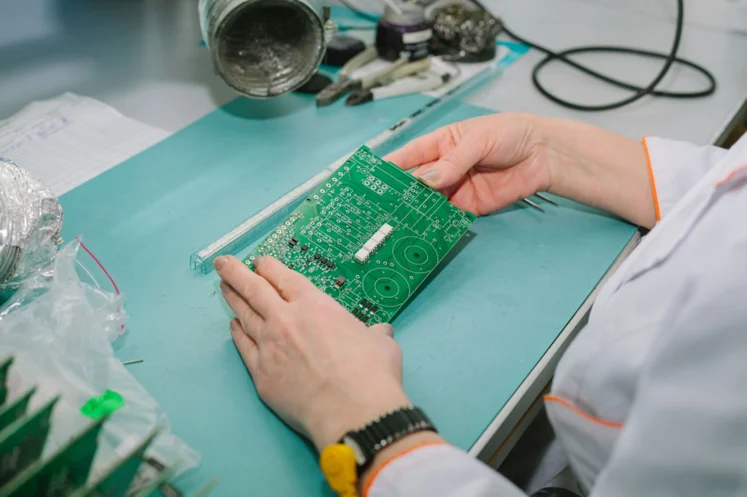
Selecting the appropriate IPC class directly impacts product quality, cost, and manufacturing complexity.
Choose Class 1 if:
- You produce low-cost consumer products
- Reliability requirements are minimal
Choose Class 2 if:
- Your product requires stable long-term performance
- You manufacture industrial or commercial devices
Choose Class 3 if:
- Your product is safety-critical
- Failure is not acceptable
Higher IPC class = higher manufacturing cost, but significantly improved reliability.
How to Ensure IPC Compliance in PCB Assembly
To ensure your product meets IPC standards, follow these best practices:
1. Define IPC Requirements Early
Clearly whether your product requires Class 1, 2, or 3.
2. Choose a Qualified Supplier
Work with a contract PCB assembly provider that:
- Follows IPC-A-610 and J-STD-001
- Employs IPC-certified engineers
- Uses standardized inspection processes
3. Verify Inspection Capabilities
Ensure the manufacturer uses:
- AOI (Automated Optical Inspection)
- X-ray inspection
- Functional testing
4. Conduct DFM Review
A proper Design for Manufacturing review ensures your design meets IPC standards before production.
IPC Standards vs ISO Standards: What’s the Difference?
Many companies confuse IPC standards with ISO certifications, but they serve different roles.
| Criteria | IPC Standards | ISO Standards |
|---|---|---|
| Focus | Technical manufacturing requirements | Quality management systems |
| Scope | PCB design & assembly | Company-wide processes |
| Example | IPC-A-610, J-STD-001 | ISO 9001 |
Key takeaway:
- IPC = how to build correctly
- ISO = how to manage quality
For best results, manufacturers should comply with both.
>>>Read more: ISO Standards for Manufacturing: What OEM Companies Need to Know
IPC Standards in Vietnam Electronics Manufacturing
Vietnam has become a strong alternative for PCB assembly in Vietnam, offering competitive costs and growing technical capabilities.
Why OEM Companies Choose Vietnam
- Skilled engineering workforce
- Modern SMT production lines
- Increasing IPC compliance
- Strong export experience to US markets
For companies considering offshore PCB assembly, Vietnam offers a balance of cost and quality.
>>>Read more: 7 Mistakes to Avoid When Choosing a Custom PCB Assembly Partner
Why Choose SHDC as Your IPC-Compliant PCB Assembly Partner

Advanced SMT Manufacturing
SHDC operates modern SMT lines for both prototype and mass production.
Strict IPC-Based Quality Control
Processes include:
- IPC-A-610 inspection
- J-STD-001 soldering control
- AOI and X-ray inspection
DFM Engineering Support
SHDC provides Design for Manufacturing analysis to:
- Reduce defects early
- Optimize production efficiency
- Lower overall costs
Global OEM Experience
SHDC serves international clients with:
- Reliable quality
- On-time delivery
- Transparent communication
Who Should Care About IPC Standards?
IPC standards are essential for:
- OEM companies outsourcing manufacturing
- Hardware startups
- Engineers designing PCB systems
- Procurement teams sourcing suppliers
Conclusion
IPC standards are the foundation of quality and reliability in electronics manufacturing. They provide a structured framework that ensures products meet global performance expectations.
For OEM companies, applying IPC standards is essential for:
- Selecting the right manufacturing partner
- Reducing production risks
- Ensuring long-term success
FAQs About IPC Standards
1. What are IPC standards in electronics manufacturing?
IPC standards are internationally recognized guidelines that define the requirements for PCB design, fabrication, assembly, and inspection. They ensure consistent quality, reliability, and performance across electronic products.
2. What is the most important IPC standard?
The most widely used IPC standard is IPC-A-610, which defines the acceptability of electronic assemblies. It is commonly used for visual inspection in PCB assembly.
3. What is the difference between IPC-A-610 and J-STD-001?
IPC-A-610 focuses on visual inspection and acceptance criteria, while J-STD-001 defines the requirements for soldering processes, materials, and workmanship.
In simple terms:
- IPC-A-610 = what is acceptable
- J-STD-001 = how to build it correctly
4. What are IPC Class 1, Class 2, and Class 3?
IPC classes define the reliability level of electronic products:
- Class 1: General consumer electronics
- Class 2: Industrial and commercial products
- Class 3: High-reliability products (medical, aerospace)
Higher classes require stricter quality standards.
5. Why are IPC standards important for OEM companies?
IPC standards help OEM companies:
- Ensure product quality and reliability
- Reduce manufacturing defects
- Standardize global supply chains
- Select qualified PCB assembly partners
6. Do all PCB manufacturers follow IPC standards?
No. Not all manufacturers fully comply with IPC standards. That’s why OEM companies should verify:
- IPC certification of engineers
- Inspection processes
- Compliance with IPC-A-610 and J-STD-001
7. How can I ensure my PCB assembly meets IPC standards?
To ensure compliance:
- Define the required IPC class (1, 2, or 3)
- Choose an IPC-compliant manufacturer
- Verify inspection methods (AOI, X-ray)
- Conduct a Design for Manufacturing (DFM) review
8. Are IPC standards required for all electronics products?
IPC standards are not always legally required, but they are considered best practice in the industry. For high-reliability applications, they are often mandatory.
9. What is the difference between IPC and ISO standards?
IPC standards focus on technical manufacturing requirements, while ISO standards (such as ISO 9001) focus on quality management systems.
IPC = how to manufacture
ISO = how to manage processes
10. Why should I choose an IPC-compliant PCB assembly partner?
An IPC-compliant partner ensures:
- Consistent product quality
- Reduced defect rates
- Better reliability
- Compliance with global industry standards