Tiếng Việt
 日本語
日本語
Investing in SMT assembly line equipment is not just a technical decision—it’s a strategic one. The way you build your SMT line will directly impact product quality, production efficiency, and long-term operating costs. In many cases, manufacturers either overinvest in unnecessary machines or underestimate critical equipment, leading to defects, bottlenecks, and wasted capital. A poorly configured SMT line can easily cost tens or even hundreds of thousands of dollars in inefficiencies. So the real question is not “What machines are available?” but rather: What equipment do you actually need for your production goals? This guide provides a practical breakdown of SMT assembly line equipment, including essential machines, real-world brands, setup strategies, and cost considerations—so you can make informed decisions with confidence.
What Is SMT Assembly Line Equipment?
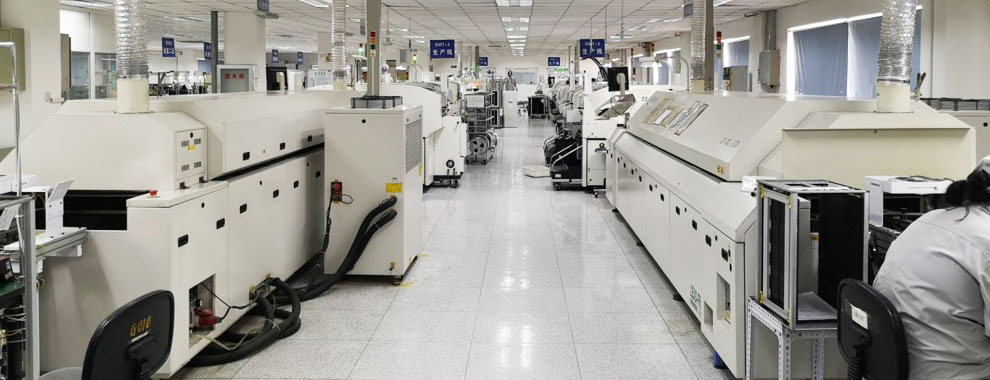
SMT (Surface Mount Technology) assembly line equipment refers to a group of machines used to assemble electronic components onto printed circuit boards (PCBs) in an automated process.
However, it’s more useful to think of an SMT line as a connected workflow rather than a list of machines.
Each piece of equipment performs a specific function—from applying solder paste to placing components and soldering them into place. These steps are interdependent. If one stage is unstable, it affects everything that follows.
The objective of an SMT assembly line is clear: deliver high precision, high speed, and consistent quality at scale.
Top Essential SMT Assembly Line Equipment
Not all equipment in an SMT line carries equal importance. In practice, a small number of machines determine the majority of your production performance.
Solder Paste Printer
The solder paste printer is the starting point of the entire SMT process. It applies solder paste onto the PCB pads, preparing the board for component placement.
Despite its simplicity, this step has a significant impact on final product quality. Inconsistent or inaccurate printing can lead to solder defects that cannot be fully corrected in later stages.
For low-volume production, manual or semi-automatic printers may be sufficient. However, for higher volumes, automatic printers provide the consistency required to maintain stable output.
Pick and Place Machine
The pick and place machine is the core of any SMT assembly line. It is responsible for placing components onto the PCB with speed and precision.
This machine typically represents the largest investment in the line, and for good reason. It determines production speed, placement accuracy, and overall throughput.
When evaluating pick and place machines, key considerations include placement speed (CPH), accuracy, and flexibility in handling different component types.
In most production environments, this machine defines the performance limits of the entire line.
Reflow Oven
After components are placed, the PCB moves through a reflow oven where the solder paste is heated and melted to form permanent connections.
The reflow process is critical to product reliability. An unstable temperature profile can result in defects such as cold joints, tombstoning, or long-term reliability issues.
Unlike earlier stages, errors introduced during reflow are often difficult to correct, making this a key control point in the SMT process.
>>>Read more: SMT Manufacturing Services: PCB Assembly from Prototype to Mass Production
AOI (Automated Optical Inspection)
AOI systems are used to inspect PCBs for defects after placement and soldering. These systems can detect issues such as missing components, misalignment, and soldering defects.
While not strictly required, AOI has become standard in most modern SMT lines due to its ability to improve quality control and reduce rework costs.
SPI (Solder Paste Inspection)
SPI systems inspect solder paste before components are placed. This allows manufacturers to detect issues at an early stage, preventing defects from propagating through the rest of the process.
SPI is particularly valuable in high-reliability industries such as automotive and medical electronics, where defect prevention is critical.
Conveyor System
Conveyors connect all machines in the SMT line, enabling a continuous production flow. Although simple in function, they are essential for maintaining process consistency and efficiency.
Cleaning Equipment
Cleaning systems are used in applications where high levels of cleanliness are required. Residues left on PCBs can affect long-term reliability, especially in industries with strict standards.
While not necessary for all production lines, cleaning equipment becomes critical in sectors such as aerospace, medical, and automotive manufacturing.
Summary of Essential Equipment
At a minimum, a functional SMT assembly line requires three core machines: a solder paste printer, a pick and place machine, and a reflow oven. Additional systems such as AOI and SPI are used to improve quality and reduce risk.
Real-World SMT Machine Brands
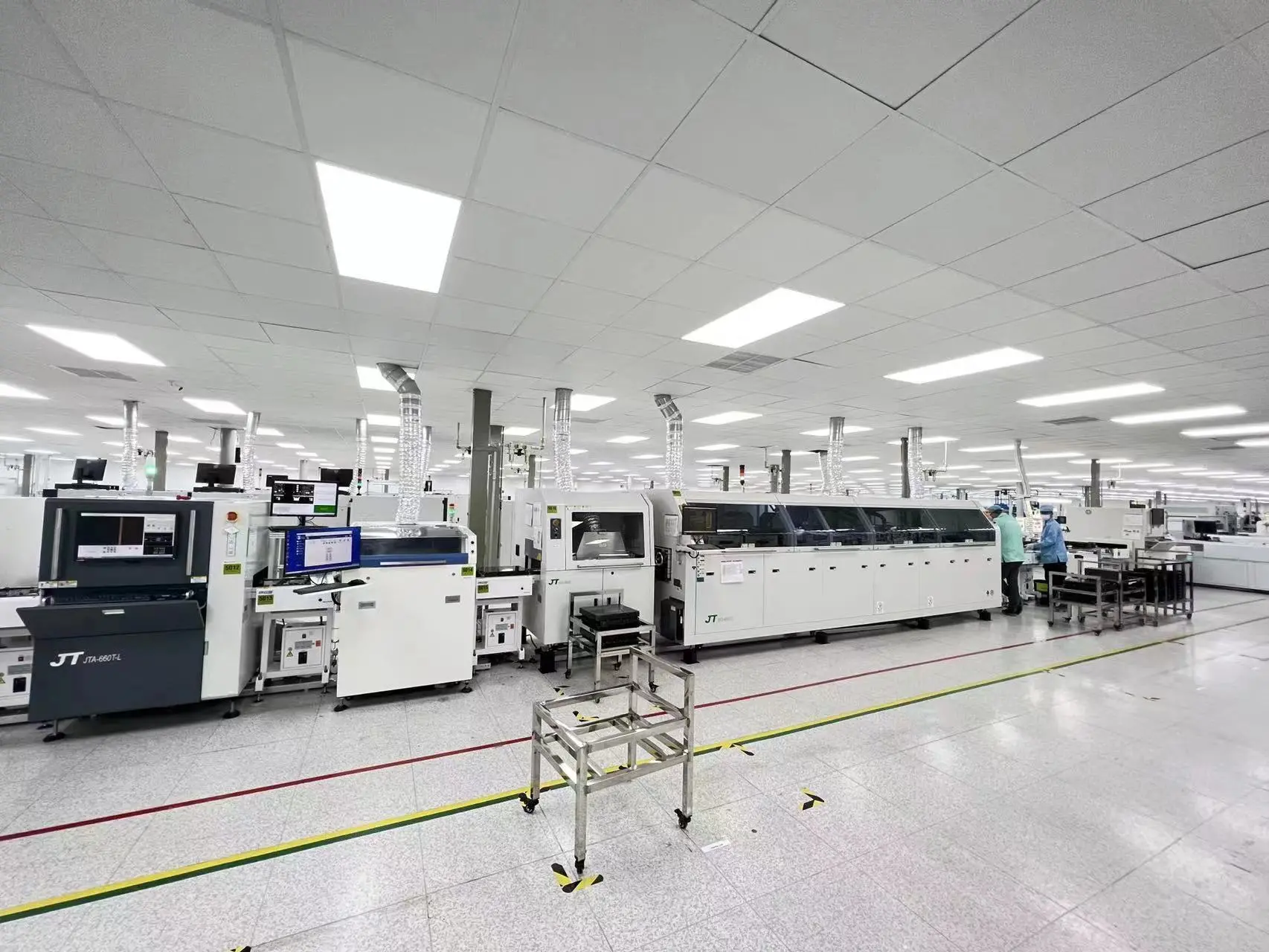
Understanding which equipment is commonly used in production environments can help guide your decision-making process.
In the pick and place category, brands such as Yamaha, Fuji, Panasonic, and Juki are widely used due to their reliability and performance across different production scales.
For solder paste printing, ASM (DEK) and Panasonic are recognized for their accuracy and integration capabilities.
In reflow technology, manufacturers like Heller and BTU are known for stable thermal performance and consistency.
For inspection systems, Koh Young and Omron are commonly used for their advanced inspection capabilities and reliability.
Rather than focusing solely on brand rankings, it is more important to evaluate compatibility, long-term support, and overall system integration.
SMT Assembly Line Process
A typical SMT process follows a sequential flow, where each stage corresponds to a specific machine.
The process begins with solder paste printing, followed by component placement. The board then moves through reflow soldering, after which inspection systems check for defects. Finally, functional testing ensures that the assembled PCB meets performance requirements.
Because each step depends on the previous one, consistency across the entire process is critical.
>>>Read more: Choosing an SMT Manufacturer Vietnam: It’s Not Just About Price
How to Set Up an SMT Assembly Line
There is no single “correct” way to configure an SMT line. The optimal setup depends on production volume, product complexity, and budget.
A basic SMT line typically includes a solder paste printer, a pick and place machine, and a reflow oven. This configuration is suitable for low to moderate production volumes.
For higher-volume or higher-reliability production, additional systems such as AOI and SPI are added to improve quality control.
SMT lines can also be categorized based on automation level, ranging from manual and semi-automatic setups to fully automated production lines.
The key is to align your equipment configuration with your actual production needs, rather than overinvesting in unnecessary capabilities.
SMT Assembly Line Equipment Cost
The cost of SMT assembly line equipment varies widely depending on the level of automation and equipment quality.
A basic SMT line may cost between $50,000 and $150,000, while a fully automated production line can exceed $300,000.
Among all equipment, the pick and place machine typically accounts for the largest portion of the investment.
Other factors that influence cost include equipment brand, whether machines are new or used, and the complexity of the products being manufactured.
Understanding these cost drivers is essential for making informed investment decisions.
How to Choose the Right SMT Equipment
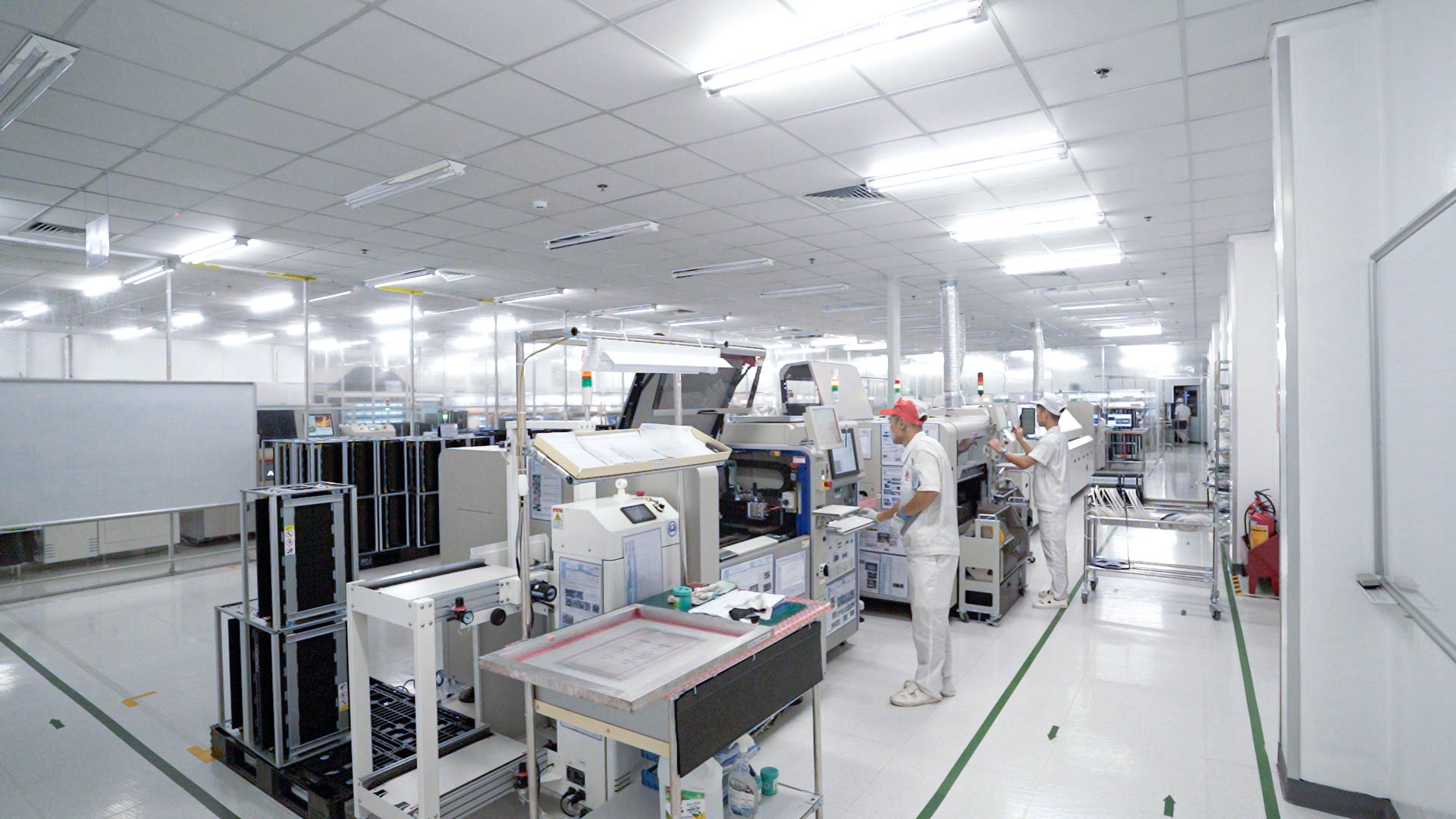
Selecting the right SMT equipment requires a clear understanding of your production requirements.
Production volume determines the level of automation needed. PCB complexity affects the need for advanced inspection systems. Future scalability should also be considered to avoid costly upgrades later.
Rather than focusing solely on technical specifications, it is important to evaluate how well the equipment supports your overall production strategy.
Common Mistakes to Avoid
Many companies encounter similar challenges when investing in SMT equipment.
Common mistakes include overinvesting in machines that are not fully utilized, selecting equipment that lacks compatibility, and prioritizing low cost over long-term reliability.
Another frequent issue is failing to plan for future expansion, which can lead to additional costs and operational disruptions.
Avoiding these mistakes can significantly improve the return on investment.
>>>Read more: Top 4 SMT Assembly Companies in Vietnam in 2026
Should You Buy or Outsource SMT Assembly?
For some manufacturers, building an in-house SMT line is the right choice. However, it requires significant capital investment, technical expertise, and ongoing maintenance.
Outsourcing SMT assembly to an experienced EMS provider offers an alternative approach. It allows companies to reduce upfront costs, access advanced equipment, and focus on core business activities.
The decision ultimately depends on production volume, available resources, and long-term strategy.
Conclusion
SMT assembly line equipment forms the foundation of modern electronics manufacturing. While a complete SMT line may include many machines, only a few are essential to the process.
A solder paste printer, pick and place machine, and reflow oven form the core of any SMT line. Additional equipment such as AOI and SPI enhances quality and reduces risk.
The most important factor is not the number of machines, but how well they are selected and integrated based on your production needs.
Looking for SMT Assembly Services?
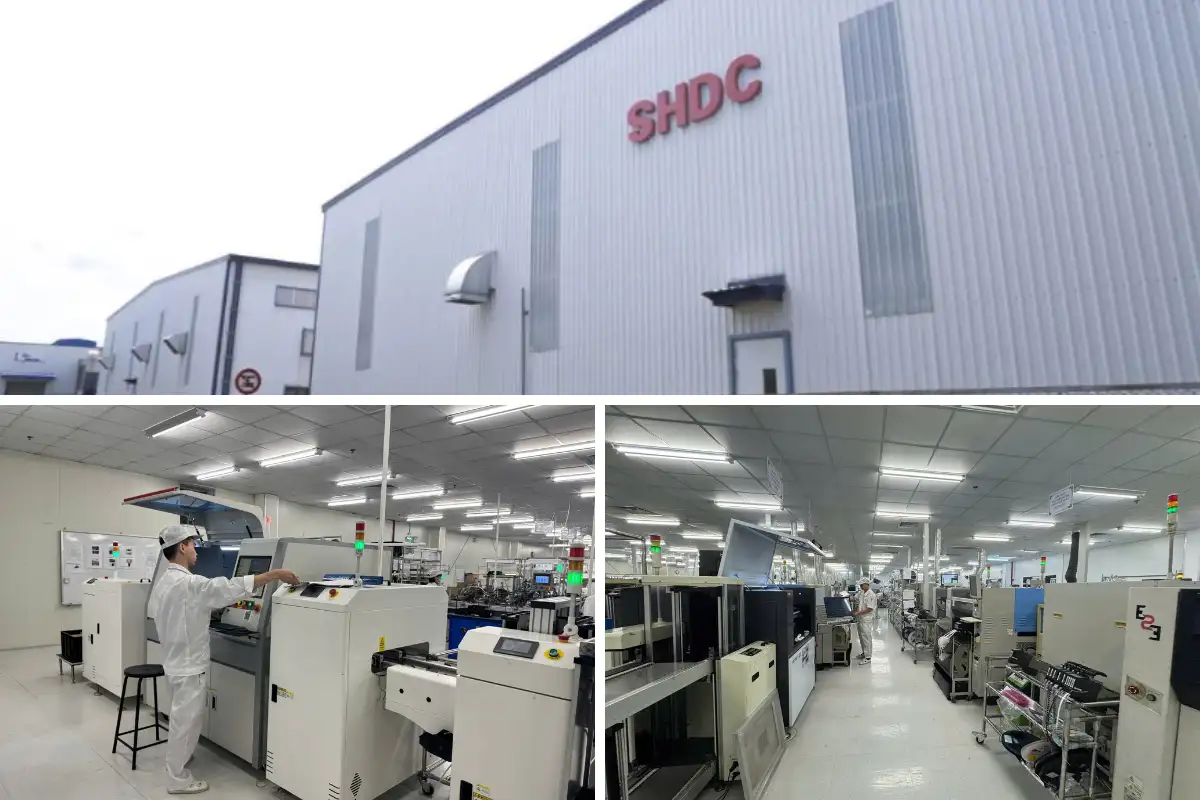
If you are considering outsourcing instead of investing in equipment, working with a reliable contract manufacturer can help reduce costs, improve quality, and accelerate time to market.
Contact SHDC today to explore professional SMT assembly solutions tailored to your requirements.
Address: Factory A1-2, Lot 5, Cam Dien-Luong Dien IP, Cam Giang Commune, Hai Phong City, Vietnam
Tel: 02203566686 – 0903443300 – 0906166997
Email: hao@shdc.com.vn – cuongvd@shdc.com.vn