Tiếng Việt
 日本語
日本語
The consumer electronics supply chain is being redrawn — not in boardrooms, but on factory floors in northern Vietnam. A Bloomberg analysis of shipment-level customs data confirms what supply chain managers have been tracking for months: the manufacturing shift toward Vietnam that began under Trump’s first term has accelerated sharply in 2026, with Vietnam surpassing China as the leading supplier to the U.S. of laptops and game consoles for the first time in recorded trade history.
The catalyst is well understood. In early 2025, the Trump administration introduced sweeping tariffs on Chinese imports — escalating to 145% on electronics manufacturing — fundamentally changing the landed cost equation for every U.S. OEM sourcing from China. Major consumer and computing electronics OEMs including Apple, Dell, HP, and Lenovo are among the hardest hit. The tariff burden on China-sourced electronics is not a temporary policy fluctuation. The November 2025 agreement extended reduced IEEPA tariff rates through November 10, 2026, but the underlying Section 301 tariffs of 25% remain in force — and the policy trajectory beyond November 2026 is unpredictable.
For U.S. OEMs managing consumer electronics supply chains, the question is no longer whether to diversify away from China. It is how to execute the move to Vietnam without disrupting production, losing yield, or creating new compliance exposure. This guide covers the data behind the shift, the landed cost math, the execution framework, and what to look for in a Vietnam EMS partner.
Main content
ToggleThe 2026 Tariff Landscape: What Changed and Why It’s Permanent
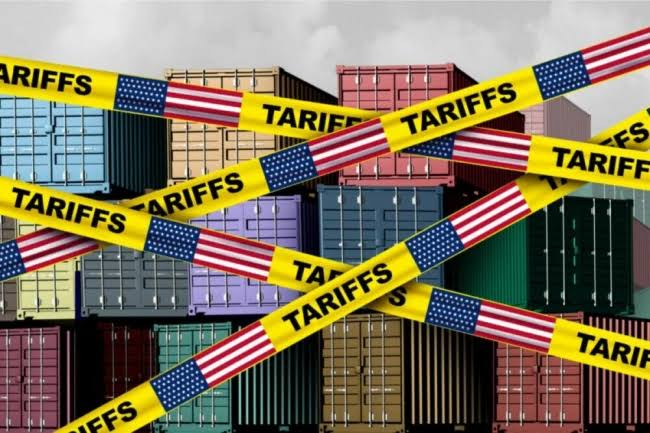
Understanding the tariff structure is the foundation of every consumer electronics supply chain decision in 2026. The numbers are stark — and the structural drivers behind them are not going away.
The Tariff Timeline: From Section 301 to 145%
The current tariff environment did not emerge overnight. It is the result of a seven-year escalation that has fundamentally restructured the economics of China-based electronics manufacturing for U.S.-bound products.
| Year | Tariff Event | Impact on Electronics |
|---|---|---|
| 2018 | Section 301 List 3 | 25% on $200B Chinese goods including PCBs |
| 2019 | Section 301 List 4A | 15–25% on consumer electronics |
| 2025 Q1 | IEEPA escalation | 145% on Chinese electronics manufacturing |
| 2025 Q4 | Temporary agreement | Reduced IEEPA rates — Section 301 remains |
| 2026 | Current baseline | 25–145% depending on product category |
The combined effective rates on Chinese goods remain among the highest for any major trading partner. Section 232 tariffs apply separately to steel, aluminium, and automotive goods. For consumer electronics OEMs, the practical reality is that no China-sourced product can be priced competitively in the U.S. market at 2024 cost structures.
The scale of the shift is measurable: U.S. goods imports from China totalled USD 308.4 billion in 2025, down 29.7% from 2024 — the lowest level since 2009. For North American buyers, the combined share of their top three supplier countries fell from 61% to 54% in a single year.
Landed Cost Reality: What 145% Tariffs Actually Mean for OEM Margins
The tariff impact on consumer electronics supply chain economics is not abstract. Here is what it looks like on a representative consumer electronics product:
| Cost Component | China EMS | Vietnam EMS (SHDC) |
|---|---|---|
| Unit manufacturing cost | $28.00 | $31.00 |
| Tariff (145% vs. ~15%) | +$40.60 | +$4.65 |
| Freight to U.S. | +$2.50 | +$2.80 |
| Total landed cost | $71.10 | $38.45 |
| Retail price ($89.99) | Gross margin: 21% | Gross margin: 57% |
The difference between 21% and 57% gross margin is the difference between a viable product and a product that cannot survive a single promotional discount cycle. For commodity consumer electronics — budget laptops, smart home devices, wireless accessories — the China landed cost structure is no longer commercially viable for U.S. market distribution.
EMS companies like Flex Ltd. and Jabil Inc. that rely heavily on China for U.S.-bound production have been forced to pass extra costs on to OEM customers — or absorb them directly. Larger OEM clients with strong bargaining power push back, forcing EMS firms to shoulder part of the tariff burden themselves. The result is margin compression throughout the consumer electronics supply chain.
Why This Is Structural, Not Cyclical
The drivers of consumer electronics supply chain diversification away from China in 2026 are structural rather than cyclical. They do not disappear when tariff rates fluctuate:
- Tariff unpredictability: U.S. tariffs on Chinese goods moved from 10% to 145% and back to approximately 30% within twelve months. The policy trajectory beyond November 2026 is unpredictable — building a supply chain on a single tariff assumption is a strategic liability.
- UFLPA enforcement: The Uyghur Forced Labor Prevention Act creates a rebuttable presumption that goods produced in Xinjiang are made with forced labour and are inadmissible. For OEMs with China-connected supply chains involving textiles, polysilicon, or aluminium, enforcement burden has increased materially in 2025–2026.
- Rising China production costs: Labour costs in Chinese manufacturing have increased significantly since the period of maximum cost advantage. The wage arbitrage that made China the default sourcing destination for low-complexity manufacturing has largely closed for many consumer electronics categories.
- Geopolitical risk: Electronics supply chains are complex, global, and fragile. A smartphone might depend on silicon wafers from Taiwan, PCBs from China, memory from South Korea, and final assembly in Vietnam — all coordinated just-in-time. Geopolitical fragmentation and U.S.-China tech decoupling create ongoing operational complexity for businesses with China-side manufacturing relationships.
Read more: Tariff impact China vs Vietnam electronics manufacturing
The Consumer Electronics Supply Chain Shift: What the Data Shows
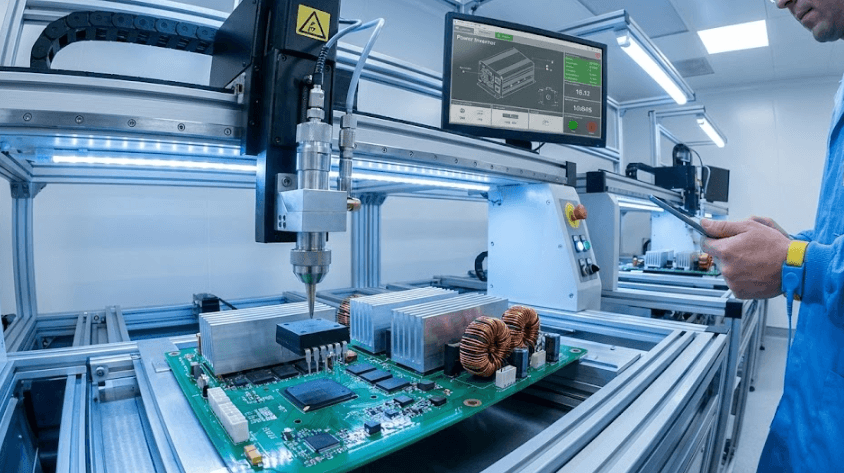
The consumer electronics supply chain shift to Vietnam is not a projection — it is already happening and it is accelerating. The data from multiple independent sources tells a consistent story.
Vietnam’s Rise as Consumer Electronics Manufacturing Hub
Bloomberg’s analysis of 2025 shipment-level customs data is the most granular confirmation of the shift available. Vietnam surpassed China as the leading supplier to the U.S. of laptops and game consoles — a milestone that would have seemed implausible five years ago.
The manufacturing ecosystem driving this shift is substantial:
- Foxconn (Fukang Technology Co.) exported $8.6 billion worth of MacBooks, iPads, and motherboards from Vietnam in 2025 — a hiring surge so intense that first-time factory workers are being bused in from remote villages to fill 1,000 jobs advertised since Lunar New Year.
- BYD Co. — better known for electric vehicles — manufactures iPads for Apple from its factory in Phu Tho, 100km outside Hanoi, exporting $5.1 billion worth of products in 2025.
- Samsung, Intel, LG all have significant Vietnam manufacturing operations — providing the infrastructure, trained workforce, and supplier ecosystem that new entrants can leverage.
- Electronics inspection demand in Vietnam rose 30% year-on-year in 2025, according to the QIMA Q1 2026 Supply Chain Barometer.
Key consumer electronics categories actively moving to Vietnam in 2026:
- Smartphones and accessories
- Power electronics and GaN fast chargers
- Computer peripherals (keyboards, audio, mice)
- IoT and smart home devices
- Wearables and fitness electronics
- Laptop and tablet final assembly
Read more: why Vietnam is the top choice for electronics manufacturing in 2026
Why Vietnam Specifically — Not Mexico, India, or Thailand
With China diversification accelerating, U.S. OEMs are evaluating multiple alternative locations. The consumer electronics supply chain data points consistently to Vietnam as the primary beneficiary — but understanding why requires a clear-eyed comparison.
| Location | U.S. Tariff (approx.) | Electronics Ecosystem | Labor Cost | Key Consideration |
|---|---|---|---|---|
| Vietnam | ~10–20% (negotiated) | Strong, growing rapidly | Low | Capacity tightening fast |
| Mexico | 0% (USMCA qualifying) | Limited electronics depth | Medium | Nearshore premium; 25% non-USMCA |
| India | ~25% reciprocal | Developing | Low | Infrastructure gaps; regulatory complexity |
| Thailand | ~36% reciprocal | Moderate | Medium | Smaller EMS base than Vietnam |
| Malaysia | ~24% reciprocal | Strong semiconductors | Medium | Higher cost than Vietnam |
| Indonesia | ~32% reciprocal | Consumer goods focus | Low | Wireless certification complexity |
Vietnam wins for consumer electronics specifically because of four converging advantages: an established electronics manufacturing workforce, a growing component supply chain within the ASEAN region, government incentives for electronics FDI, and a proven track record with tier-1 brands that validates the ecosystem for new entrants.
One important nuance: Vietnam was assigned a 46% reciprocal tariff rate under the April 2025 Liberation Day order — currently paused at 10% during the negotiation window. The duty advantage over China materialises when Vietnam’s lower production cost more than offsets the tariff differential. For most consumer electronics categories, the math strongly favours Vietnam — but OEMs should model their specific product economics rather than assuming a blanket advantage.
Read more: 10 Reasons to choose contract electronics manufacturing in Vietnam
The “China+1” Strategy in Consumer Electronics
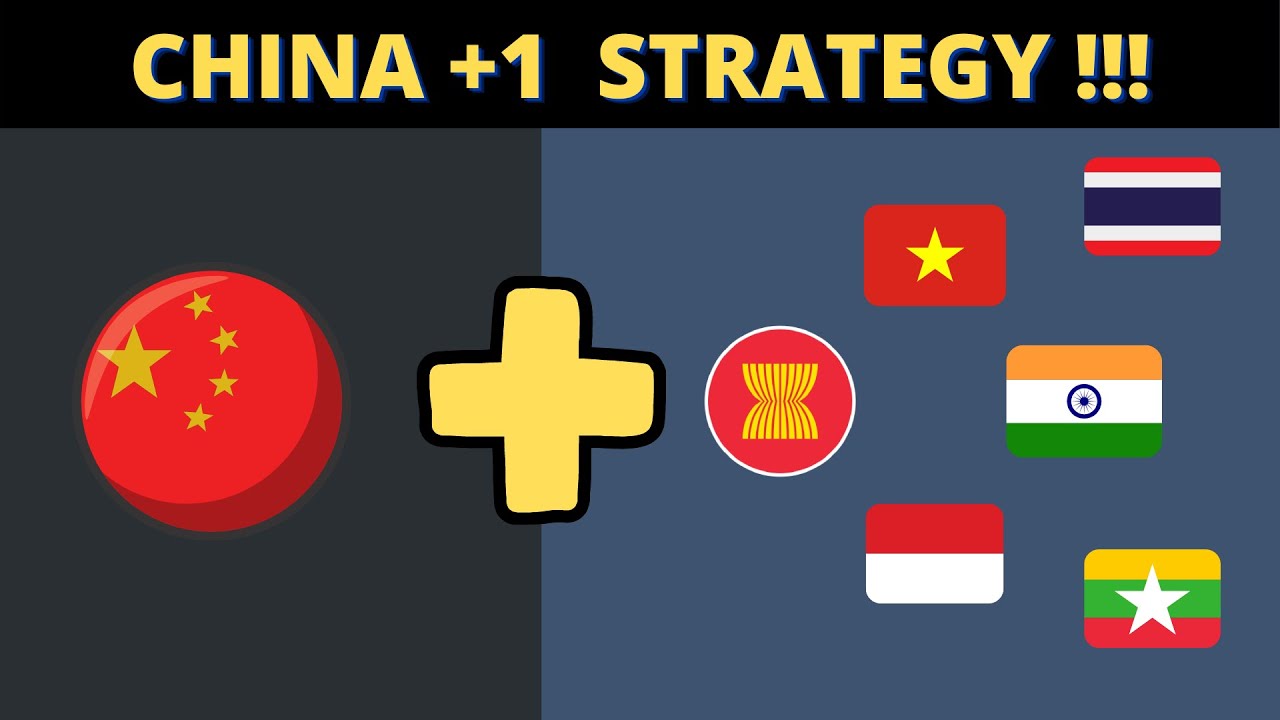
For most U.S. OEMs, a complete and immediate exit from China manufacturing is not practical. The component ecosystem, existing tooling, and supplier relationships built over decades cannot be replicated overnight. The pragmatic path for consumer electronics supply chain diversification is “China+1” — maintaining some China production while adding Vietnam capacity as a risk hedge and growth vehicle.
The China+1 framework in practice:
- New product introductions: launch in Vietnam from day one — no legacy tooling, no transfer cost, full tariff advantage from first shipment
- Existing products: structured transfer with validated process equivalency — gradual volume shift over 2–3 production cycles
- High-volume commodity products: maintain China for now; route growth volume and new SKUs through Vietnam
OEMs that move now have EMS partner selection leverage. Those that wait face capacity constraints — Vietnam’s electronics manufacturing capacity is tightening as the shift accelerates, and the best EMS partners are already at high utilisation.
Consumer Electronics Supply Chain Risks: What OEMs Are Actually Managing
The consumer electronics supply chain disruption of 2025–2026 has exposed multiple risk dimensions simultaneously. Understanding each one is essential for building a resilient sourcing strategy.
Tariff Risk: The Primary Driver
Tariff risk is now the #1 consumer electronics supply chain concern for U.S. OEMs — overtaking component shortages and logistics disruptions as the dominant strategic issue.
Three dimensions of tariff risk that supply chain managers must address:
- Direct tariff cost: the landed cost impact on product economics — quantified in Section 1 above
- Tariff uncertainty: policy changes can happen with 90-day notice — supply chains built on a single tariff assumption are structurally fragile. The volatility of U.S.-China tariff policy in 2025 — moving from 10% to 145% and back within twelve months — is the clearest possible demonstration of this risk.
- Tariff classification risk: incorrect HTS code classification can trigger retroactive tariff liability — a compliance risk that increases as products move through more complex multi-country supply chains
Mitigation strategies: geographic diversification, first sale valuation, bonded warehouse programs, and — most importantly — a Vietnam EMS partner with robust customs documentation capability.
Geopolitical Risk: Concentration and Fragmentation
Today’s electronics supply chains are complex, global, and fragile. Geopolitical fragmentation — U.S.-China tech decoupling, export controls on advanced semiconductors, and the Chip Security Act moving through Congress — creates ongoing operational complexity for businesses with China-side manufacturing relationships involving controlled goods.
OEMs with 100% China manufacturing have zero supply chain redundancy. A single policy change, natural disaster, or factory shutdown halts production with no alternative. The 2020–2022 COVID disruption demonstrated this risk at scale: OEMs with diversified supply chains recovered in weeks; those with single-source China manufacturing took months.
Internal link: offshore manufacturing risks
Component Shortage Risk: The Semiconductor Cycle
Electronics supply chain disruption hits OEMs, EMS providers, and PCB makers differently — and understanding who absorbs the worst impact is critical for consumer electronics supply chain design.
OEMs carry the ultimate strategic risk: if they cannot ship, they cannot earn. Component shortages, long lead times, and abrupt part obsolescence have forced frequent design changes and delayed product launches across the consumer electronics industry.
EMS providers are the “shock absorbers” of the industry — responsible for delivering on aggressive production targets while facing unpredictable part availability and shifting BOMs. Their flexibility depends entirely on supply chain intelligence and execution capability.
Key component risks in consumer electronics:
- Long-lead ICs: power management, RF, and application processors with 20–52 week lead times during shortage cycles
- Single-source components: consumer electronics designs frequently specify components from only one manufacturer — a DFM review can identify and resolve these at design stage
- EOL (End-of-Life) risk: consumer electronics product cycles are 2–4 years; component lifecycles may be shorter — proactive EOL management is a core EMS competency
Internal links: DFM for electronics manufacturing, electronics supply chain diversification
IP and Quality Risk: The Hidden Costs of China Manufacturing
As China labor costs rise and skilled workers migrate to higher-value industries, quality consistency in consumer electronics manufacturing has become less predictable. Broker market component sourcing — more common in China’s gray market — introduces counterfeit components into consumer electronics supply chains at a rate that is difficult to detect without rigorous incoming inspection.
IP risk is harder to quantify but consistently reported: China-based manufacturing exposes product designs, firmware, and manufacturing processes to IP theft. For U.S. OEMs with proprietary product designs, this is a structural risk that does not diminish over time.
How to Execute a Consumer Electronics Supply Chain Transfer to Vietnam
Executing a consumer electronics supply chain transfer successfully requires a structured framework — not just “finding a new factory.” The OEMs that execute transfers smoothly are those that treat the move as a manufacturing engineering project, not a procurement transaction.
The 5-Step Supply Chain Transfer Framework
Step 1 — Supply Chain Audit
Before engaging any Vietnam EMS partner, map your current China supply chain completely:
- Identify every EMS partner, component supplier, tooling location, and test equipment asset
- Classify products by transfer complexity: new products (lowest complexity), existing products with stable BOM (medium), legacy products with obsolete components (highest complexity)
- Quantify transfer priority by tariff exposure: products with highest China tariff burden should transfer first
Step 2 — Vietnam EMS Partner Selection
The EMS partner selection decision is the most consequential step in the transfer. Qualification criteria:
- Certifications: ISO 9001 minimum; ISO 13485 if any medical-adjacent products; IATF 16949 if automotive
- Equipment capability: fine-pitch SMT (0402, 0201), BGA placement, 3D SPI + 3D AOI from prototype stage
- NPI track record: documented prototype-to-MP ramp history with yield data
- English-language engineering communication: DFM reports, BOM reviews, and technical discussions in English — non-negotiable for U.S. OEM programs
- Traceability system: integrated MES/QMS — not paper-based
RFQ package to prepare: Gerber files, complete BOM with manufacturer part numbers, assembly drawings, annual volume forecast, IPC class requirement, and test specification.
Internal links: electronics factory audit checklist, electronics supplier due diligence
Step 3 — DFM Review at Transfer
Every transferred product requires a mandatory DFM review — process assumptions from the China EMS do not automatically transfer to a Vietnam facility.
Key DFM checks at transfer:
- Stencil specification compatibility with Vietnam EMS equipment
- Reflow profile validation for Vietnam facility’s oven configuration
- Component packaging format — tape-and-reel vs. tray specifications
- Test point accessibility for ICT fixture development
- Component single-source risk identification — resolve before transfer, not after
Step 4 — Pilot Build and Process Validation
The pilot build is the technical validation gate for the transfer:
- First Article Inspection (FAI): 100% inspection of first units against drawing and BOM
- Process capability (Cpk) comparison: Vietnam facility Cpk must meet or exceed China baseline before MP transfer
- Yield comparison: target ≥ China baseline yield — yield regression at transfer is a known risk without proper validation
- Test program transfer: ICT and FCT programs must be re-validated at the new facility — do not assume programs transfer directly
Step 5 — Ramp and Parallel Production
- Run parallel production at both China and Vietnam during the transition period
- Gradual volume shift: 20% → 50% → 80% → 100% Vietnam over 2–3 production cycles
- China exit plan: tooling retrieval, component inventory disposition, supplier contract termination
Transfer Timeline and Cost Reality
| Transfer Activity | Timeline | Key Dependency |
|---|---|---|
| EMS partner selection + RFQ | 4–8 weeks | Complete design package ready |
| DFM review + report | 1–2 weeks | Gerber + BOM submitted |
| Tooling transfer (stencil, fixtures) | 2–4 weeks | DFM approval complete |
| ICT/FCT program development | 4–8 weeks | Test spec + schematic |
| Pilot build (FAI) | 2–4 weeks | Components available |
| Process validation + yield comparison | 2–4 weeks | Pilot build complete |
| MP ramp begins | Week 16–28 | All validations passed |
NRE at a new Vietnam facility — stencil, fixtures, DFM review, test program development — typically ranges from $5,000 to $25,000 per product depending on complexity. At the landed cost savings demonstrated in Section 1, this NRE is recovered within 2–4 production runs.
Component Supply Chain: Sourcing in Vietnam
Vietnam does not have China’s depth of domestic component manufacturing — but this is less limiting than it appears for most consumer electronics supply chain programs.
Practical sourcing reality for Vietnam-based production:
- Standard passives and standard ICs: Digi-Key, Mouser, Arrow, and regional distributors serve Vietnam with the same lead times as China
- Custom and specialty components: direct manufacturer engagement; lead times comparable to China
- PCB fabrication: Vietnam has growing PCB fab capability; complex HDI boards may source from Taiwan or established China fabs
- Component buffering: a capable Vietnam EMS partner pre-stocks common components, reducing effective lead time and enabling lower MOQ per production run
Internal links: electronics manufacturing MOQ, PCB assembly lead time
Production Flexibility in the Vietnam Consumer Electronics Supply Chain
Tariff diversification solves the cost problem. Production flexibility solves the demand volatility problem. In 2026, U.S. OEMs need both — simultaneously.
What Production Flexibility Means in 2026
Consumer electronics demand cycles are shortening. Product lifecycles of 18–24 months have replaced the 3–5 year cycles of a decade ago. Tariff policy uncertainty means volume forecasts can change with 90-day notice. Retail channel consolidation means OEMs face more concentrated, more demanding customers with less tolerance for stockouts or excess inventory.
Production flexibility in this context means the ability to adjust volume, product mix, and delivery schedule in response to demand changes — without incurring excessive cost or lead time penalties. It is not a nice-to-have feature of a Vietnam EMS relationship. It is a core operational requirement.
Flexibility Mechanisms: Blanket Orders, Kanban, and Buffer Stock
Three practical mechanisms for building production flexibility into a Vietnam consumer electronics supply chain:
- Blanket order structure: annual volume commitment with monthly or quarterly release — enables the Vietnam EMS to maintain a component buffer while the OEM retains release flexibility. The EMS partner absorbs component lead time risk; the OEM retains demand response capability.
- Kanban replenishment: EMS partner maintains finished goods or WIP buffer; OEM triggers releases based on actual demand — reduces OEM’s inventory carrying cost while maintaining service level
- Safety stock agreement: EMS pre-builds a defined quantity of finished goods or sub-assemblies — enables 1–2 week delivery on demand versus 8–12 week standard lead time for cold-start production
NPI Flexibility: Launching New Products From Vietnam
Vietnam EMS providers with strong NPI capability enable consumer electronics supply chain flexibility at the product development level — not just volume level. For U.S. OEMs launching new consumer electronics products, the ability to go from design to production-ready prototype in Vietnam in 5–7 business days changes the product development economics fundamentally.
Key NPI flexibility requirements for consumer electronics:
- Quick-turn prototype capability: 5–7 business days from Gerber to assembled boards
- DFM review turnaround: 24–48 hours with written report
- Engineering communication in English: critical for U.S. OEM design teams working across time zones
- Ability to scale from 50-unit prototype to 10,000-unit MP within the same facility — no transfer risk, no re-validation
Internal links: NPI in electronics manufacturing, prototype PCBA manufacturing
Evaluating a Vietnam EMS Partner for Consumer Electronics: What to Look For
With Vietnam EMS capacity tightening as the consumer electronics supply chain shift accelerates, partner selection quality matters more than ever. Here is the evaluation framework that separates capable Vietnam EMS providers from those that claim consumer electronics capability without the infrastructure to deliver it.
7 Non-Negotiable Criteria for Consumer Electronics EMS in Vietnam
1. Certifications with correct scope ISO 9001 minimum for consumer electronics. ISO 13485 if any medical-adjacent products are in the pipeline. Verify that the certification scope statement explicitly covers electronics assembly — not just “management services.”
2. SMT capability for fine-pitch consumer electronics Consumer electronics increasingly uses 0402, 0201, and 01005 passives alongside fine-pitch QFN, BGA, and LGA ICs. Verify placement accuracy (±0.03mm or better), component range, and CPH capacity against your product mix.
3. 3D SPI and 3D AOI from prototype stage 2D inspection is insufficient for consumer electronics fine-pitch components. 3D Solder Paste Inspection validates stencil design before the first reflow cycle. 3D AOI detects coplanarity and solder volume issues invisible to 2D systems. Both must be active from the first prototype build — not introduced at pilot stage.
4. Integrated traceability system Board-level traceability linked to component lot numbers, process parameters, and inspection results — captured automatically, not manually. Paper-based traceability is not acceptable for programs that may face customs audit or field failure investigation.
5. English-language engineering team DFM reports, BOM reviews, ECO processing, and technical problem-solving must happen in English. Communication through a sales intermediary with no engineering access creates delays and errors that compound throughout the production lifecycle.
6. Authorized distributor component sourcing No broker market sourcing without explicit disclosure and incoming inspection protocol. Counterfeit component risk in consumer electronics is real — and the consequences (product recall, brand damage, customer safety) are severe.
7. Documented expansion plan Vietnam EMS capacity is tightening. Verify the EMS partner’s current utilization rate and their Phase 2 expansion timeline. A partner at 95% utilization with no expansion plan cannot absorb your volume ramp.
Red Flags When Evaluating Vietnam EMS Providers
- No written DFM report — verbal feedback only
- ISO certification that does not cover electronics assembly in its scope statement
- 2D AOI only — no 3D SPI or 3D AOI capability
- Component sourcing from broker market without disclosure or incoming inspection protocol
- No English-language engineering team — all communication through sales intermediary
- “No MOQ” claims without transparent NRE structure
- Expansion claims without documented facility investment or timeline
Questions to Ask a Vietnam EMS Partner Before Awarding a Consumer Electronics Program
- What is your current SMT line utilization rate and available capacity for new programs?
- Can you provide yield data from comparable consumer electronics programs — specifically fine-pitch SMT?
- How do you handle component EOL and single-source risk identified in the BOM?
- What is your DFM review turnaround time and what does the report format include?
- How do you manage country-of-origin documentation for U.S. customs compliance?
- What is your Phase 2 expansion timeline and what capacity does it add?
SHDC: Your Consumer Electronics Supply Chain Partner in Vietnam
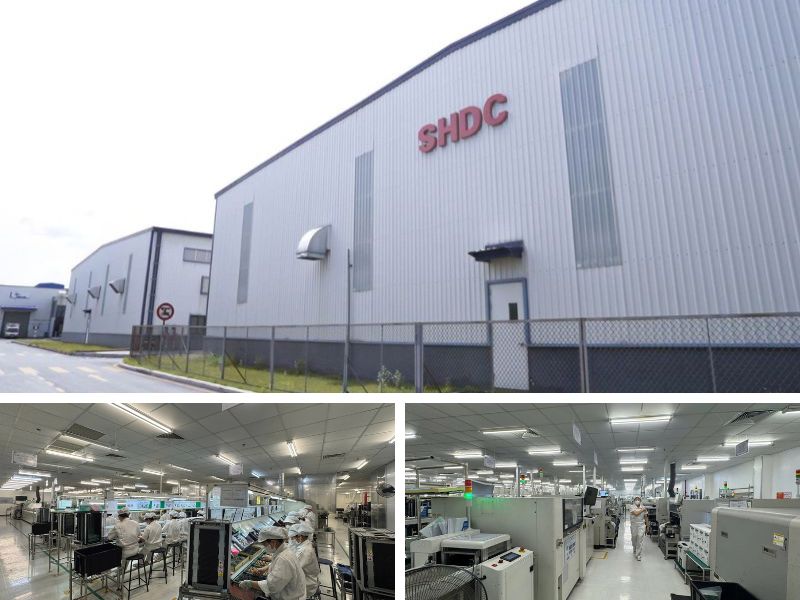
SHDC Electronics is a full-service EMS provider located at Vietnam Singapore Industrial Park — Hai Duong (VSIP Hai Duong), 40km from Hanoi and 55km from Haiphong Port. With a 2,600 m² facility, 150 employees, and a dedicated Engineering Department, SHDC delivers the manufacturing infrastructure, quality systems, and NPI capability that U.S. OEMs need to execute a successful consumer electronics supply chain transfer from China to Vietnam.
SHDC’s Consumer Electronics Manufacturing Infrastructure
SMT Capability
| Equipment | Placement Accuracy | Speed | Component Range |
|---|---|---|---|
| Yamaha YSM20R | ±0.03mm (Cpk ≥ 1.00) | 95,000 CPH | 0402 to 32×32mm |
| Yamaha YSM10 | ±0.035mm | 46,000 CPH | 03015 to 55×100mm |
3D SPI + 3D AOI from Prototype Stage The Yamaha YSI-SP 3D Solder Paste Inspection system validates stencil design before the first reflow cycle. The Yamaha YSI-V 3D AOI system is active from the first prototype build — catching defects that 2D inspection misses, with inspection data linked to board serial numbers automatically.
Integrated ERP/MES/QMS with AIT Tracer SHDC’s digital infrastructure integrates ERP, PLM, SCM, MES, and QMS in a single system. The AIT Tracer system provides board-level traceability from prototype — component lot numbers, process parameters, operator IDs, and inspection results captured automatically. This integration reduces decision-making time by 30% and reduces defective inventory by 30%.
ICT and Functional Testing Kyoritsu ICT F-2000 Plus for parametric in-circuit test. Dedicated FCT stations, aging test, high-voltage test, and AV test infrastructure. ICT fixture development initiated at DVT stage — test infrastructure ready when pilot run completes.
Certifications: ISO 9001, ISO 13485, IPC-A-610 Class 2/3, J-STD-001
Consumer Electronics Programs at SHDC
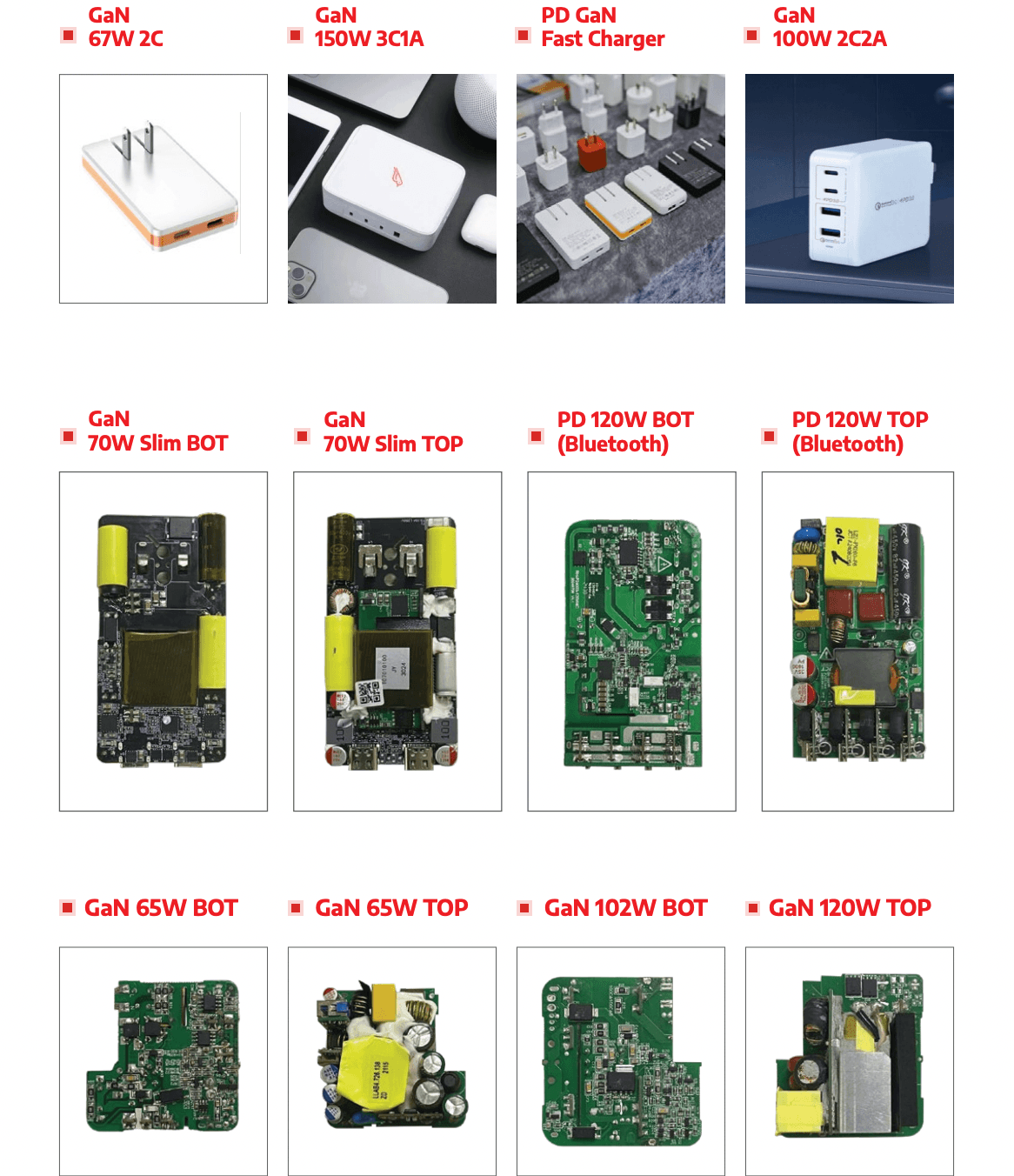
SHDC’s consumer electronics manufacturing track record spans the product categories driving the consumer electronics supply chain shift from China to Vietnam:
- GaN fast chargers (65W–150W): high-density consumer electronics with demanding thermal management — full range from prototype to mass production, with IPC Class 3 processes and full traceability
- Computer peripherals: keyboards, audio devices, IoT controllers — mixed SMT/through-hole, high-volume capability
- Smart home and IoT devices: sensor modules, control boards, wireless connectivity devices
- Power electronics: adapters, power supplies, battery management systems
- Industrial electronics: complex mixed-technology assemblies with controlled process documentation
SHDC’s Tariff Advantage for U.S. OEMs
SHDC’s VSIP Hai Duong location delivers the full tariff advantage of Vietnam manufacturing for U.S.-bound consumer electronics:
- ~10–20% U.S. import tariff versus 145% for China-sourced electronics — structural landed cost advantage on every program
- Haiphong Port access (55km) for ocean freight — established export logistics infrastructure
- Noi Bai Airport access (40km) for air freight — critical for time-sensitive product launches
- Customs documentation support: country of origin documentation, CoC, and U.S. customs compliance support included in program management
Phase 2 Expansion — March 2027: Capacity for Your Volume Ramp
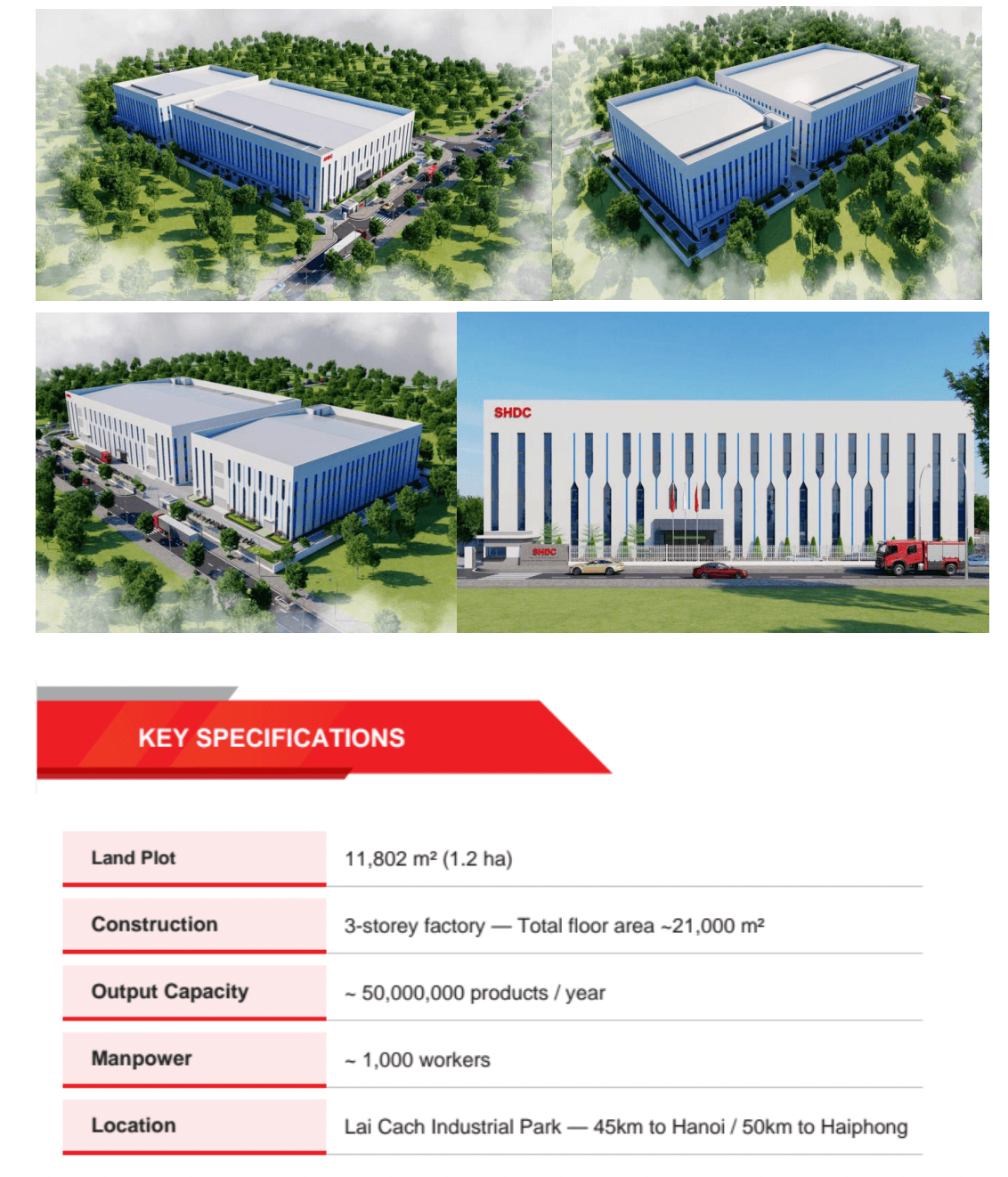
SHDC’s new facility at Lai Cach Industrial Park adds 10 SMT lines, 8 DIP lines, 10 assembly lines, and full inline ICT/FCT/AOI 3D capability — scaling total capacity to 50 million units per year. Consumer electronics programs started today have a clear, validated path to high-volume production within the same manufacturing ecosystem — with no EMS transfer risk, no process re-validation, and no supply chain disruption at ramp.
Frequently Asked Questions
Why are U.S. OEMs moving consumer electronics supply chains from China to Vietnam?
The primary driver is the 145% U.S. tariff on Chinese electronics manufacturing introduced in 2025, which makes China-sourced consumer electronics commercially unviable for U.S. market distribution at most price points. Secondary drivers include geopolitical risk, IP protection concerns, rising China labor costs, and UFLPA forced labor enforcement. Vietnam offers significantly lower tariff rates (~10–20%), an established electronics manufacturing ecosystem, and proven capability with tier-1 brands including Apple, Samsung, and Intel.
What tariffs apply to electronics manufactured in China vs. Vietnam?
China-sourced electronics face a combined effective tariff of 25–145% depending on product category — Section 301 tariffs of 25% remain in force regardless of temporary IEEPA agreements, with additional tariffs applying to many electronics categories. Vietnam-sourced electronics currently face approximately 10–20% U.S. import tariff. The landed cost difference on a representative consumer electronics product can be 46% lower from Vietnam than from China.
How long does it take to transfer consumer electronics production from China to Vietnam?
A structured transfer — including EMS partner selection, DFM review, tooling, pilot build, and process validation — typically takes 16–28 weeks from project initiation to MP ramp. New product introductions launched directly in Vietnam can reach MP in 12–16 weeks. The transfer timeline depends primarily on product complexity, component availability, and test program development requirements.
What is the “China+1” strategy in electronics manufacturing?
“China+1” means maintaining some China production while adding Vietnam (or another alternative) capacity as a risk hedge and growth vehicle. For most U.S. OEMs, a complete and immediate China exit is not practical due to component ecosystem dependencies and existing tooling. The pragmatic path is launching new products in Vietnam from day one while gradually transferring existing products over 2–3 production cycles.
What are the risks of moving consumer electronics manufacturing to Vietnam?
Key risks include: Vietnam EMS capacity constraints as demand accelerates; component sourcing differences (Vietnam lacks China’s domestic component manufacturing depth); process transfer risk if DFM review and pilot validation are skipped; and tariff uncertainty — Vietnam’s reciprocal tariff rate was announced at 46% and is currently paused, creating landed cost uncertainty for long-term planning. Mitigating these risks requires selecting an EMS partner with documented NPI capability, integrated traceability, and a Phase 2 expansion plan.
How does Vietnam compare to Mexico for U.S. consumer electronics manufacturing?
Mexico offers 0% tariff for USMCA-qualifying goods and geographic proximity to the U.S. market. However, Mexico’s electronics manufacturing ecosystem is significantly shallower than Vietnam’s — it is strong in automotive electronics but limited for consumer electronics. Mexico also faces a 25% tariff on non-USMCA-qualifying goods. Vietnam’s electronics ecosystem — built around Samsung, Foxconn, Intel, and LG — provides the supplier infrastructure, trained workforce, and EMS capability that consumer electronics programs require.
What certifications should a Vietnam EMS provider have for consumer electronics?
ISO 9001 is the minimum quality management certification for consumer electronics. IPC-A-610 operator certification (Class 2 or Class 3) is required for assembly quality. J-STD-001 certification is required for soldering. For programs with medical-adjacent products, ISO 13485 is required. Verify that certification scope statements explicitly cover electronics assembly — not just corporate-level management certifications.
How do I find a reliable EMS partner in Vietnam for consumer electronics?
Start with a structured RFQ process: prepare a complete design package (Gerber, BOM, assembly drawings, test spec, volume forecast), issue to 3–5 Vietnam EMS candidates, and evaluate responses against the 7 non-negotiable criteria outlined in Section 6. Follow up with an on-site or virtual factory audit before awarding the program. See electronics factory audit checklist and electronics supplier due diligence.
What is the minimum order quantity (MOQ) for consumer electronics manufacturing in Vietnam?
MOQ varies by EMS provider and product complexity. At SHDC, prototype builds start from 10–50 units with full DFM review. Pilot runs typically start at 200–500 units. Mass production MOQ depends on component packaging minimums — typically 500–2,000 units per production run for most consumer electronics products. Blanket order structures with monthly releases can reduce effective per-run MOQ while maintaining component buffer efficiency.
How does supply chain diversification protect consumer electronics OEMs from tariff risk?
Geographic diversification across multiple manufacturing locations reduces single-point tariff exposure. An OEM with 100% China manufacturing has 100% exposure to China tariff changes. An OEM with 70% Vietnam and 30% China manufacturing has significantly reduced exposure — and the ability to shift volume rapidly if tariff policy changes. The key is establishing Vietnam manufacturing capability before it is urgently needed, not as a crisis response.
What is the landed cost difference between China and Vietnam for consumer electronics?
On a representative consumer electronics product with a $28 China manufacturing cost, the China landed cost (including 145% tariff and freight) is approximately $71.10. The Vietnam landed cost (including ~15% tariff and freight) is approximately $38.45 — a 46% reduction in landed cost. The exact differential depends on product-specific tariff classification, manufacturing cost comparison, and freight routing.
How does DFM affect consumer electronics supply chain performance?
DFM (Design for Manufacturability) directly affects yield, component availability, test coverage, and production flexibility. A DFM review at transfer identifies single-source component risks, stencil compatibility issues, test point accessibility gaps, and process incompatibilities before they become production problems. OEMs that skip DFM review at transfer consistently experience yield regression and extended ramp timelines.
Conclusion: The Window for Proactive Diversification Is Narrowing
The consumer electronics supply chain shift from China to Vietnam is not a future trend — it is the present reality. Bloomberg’s shipment-level data confirms Vietnam has already surpassed China as the leading U.S. supplier of laptops and game consoles. U.S. goods imports from China fell 29.7% in 2025 to their lowest level since 2009. Electronics inspection demand in Vietnam rose 30% year-on-year. The structural drivers — tariff burden, geopolitical risk, rising China costs, UFLPA enforcement — are not cyclical. They are permanent.
For U.S. OEMs managing consumer electronics supply chains, the competitive advantage in 2026 belongs to those who have already diversified — or are actively executing the move now. The landed cost difference between China and Vietnam manufacturing is not a marginal improvement. It is the difference between a product that can compete at retail and one that cannot.
Vietnam’s electronics manufacturing capacity is tightening as the shift accelerates. The best EMS partners — those with ISO certifications, 3D inspection capability, integrated traceability, and documented NPI track records — are already at high utilization. The OEMs that move now secure partner capacity, program priority, and the full tariff advantage of Vietnam manufacturing. Those that wait face capacity constraints, longer lead times, and less leverage in partner selection.
The consumer electronics supply chain decision you make in 2026 will define your product economics for the next 3–5 years. Vietnam is where that decision leads.