Tiếng Việt
 日本語
日本語
The rapid growth of USB-C Power Delivery and GaN charging technology has significantly increased the complexity of charger manufacturing. Modern chargers must deliver higher power, greater efficiency, and reliable thermal performance while remaining compact enough for everyday use. For electronics brands and OEM buyers, the quality of the charger PCB assembly (PCBA) directly determines product reliability, charging performance, and long-term durability. As an Electronics Manufacturing Services (EMS) provider in Vietnam, SHDC manufactures charger PCB assemblies for power electronics applications and applies the same production standards to its own Winsler GaN charger products. This article explains how SHDC approaches Charger PCBA manufacturing in Vietnam, from SMT assembly and inspection to testing and final product integration.
What OEM Buyers Expect from a Charger PCBA Manufacturer
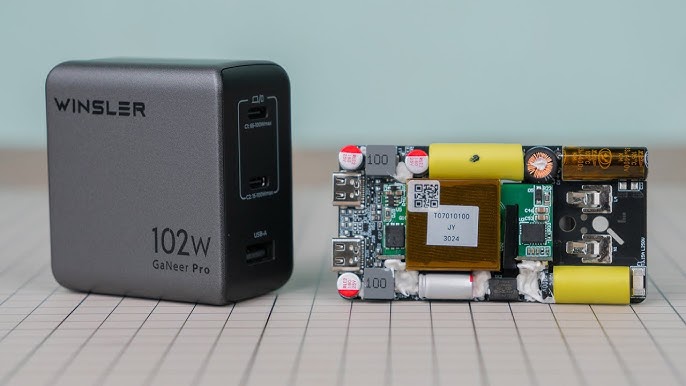
A charger PCBA is more than a populated circuit board. It is the core system responsible for power conversion, charging protocols, thermal control, and safety protection.
When evaluating a Charger PCBA manufacturer in Vietnam, OEM buyers typically focus on four critical areas:
- Manufacturing consistency
- Quality control systems
- Testing capability
- Production scalability
A supplier may be able to assemble a PCB, but manufacturing a high-reliability charger PCBA requires specialized experience in power electronics and process control.
This becomes increasingly important for GaN chargers, where high power density leaves little room for manufacturing variation.
Key Requirements for High-Reliability Charger PCBA
Not all PCB assemblies are created equal. Fast chargers operate under demanding electrical and thermal conditions, making reliability a primary concern.
Thermal Management
Modern GaN chargers pack substantial power into compact enclosures.
Poor thermal performance can result in:
- Reduced efficiency
- Lower product lifespan
- Charging instability
- Safety concerns
Effective Charger PCBA manufacturing begins with proper component placement, optimized PCB layout, and controlled assembly processes.
Power Conversion Efficiency
Fast chargers depend on precise assembly to achieve stable power conversion.
Factors such as solder quality, component placement accuracy, and process consistency directly affect efficiency.
Safety Isolation
High-voltage sections of the charger must be manufactured according to strict design and assembly requirements.
Proper creepage and clearance distances are essential for electrical safety and regulatory compliance.
Reliability Under Continuous Use
A charger may operate for thousands of hours during its lifetime.
Manufacturing quality plays a major role in ensuring long-term performance and reducing field failures.
Charger PCBA Vietnam: Inside SHDC’s SMT Production Process
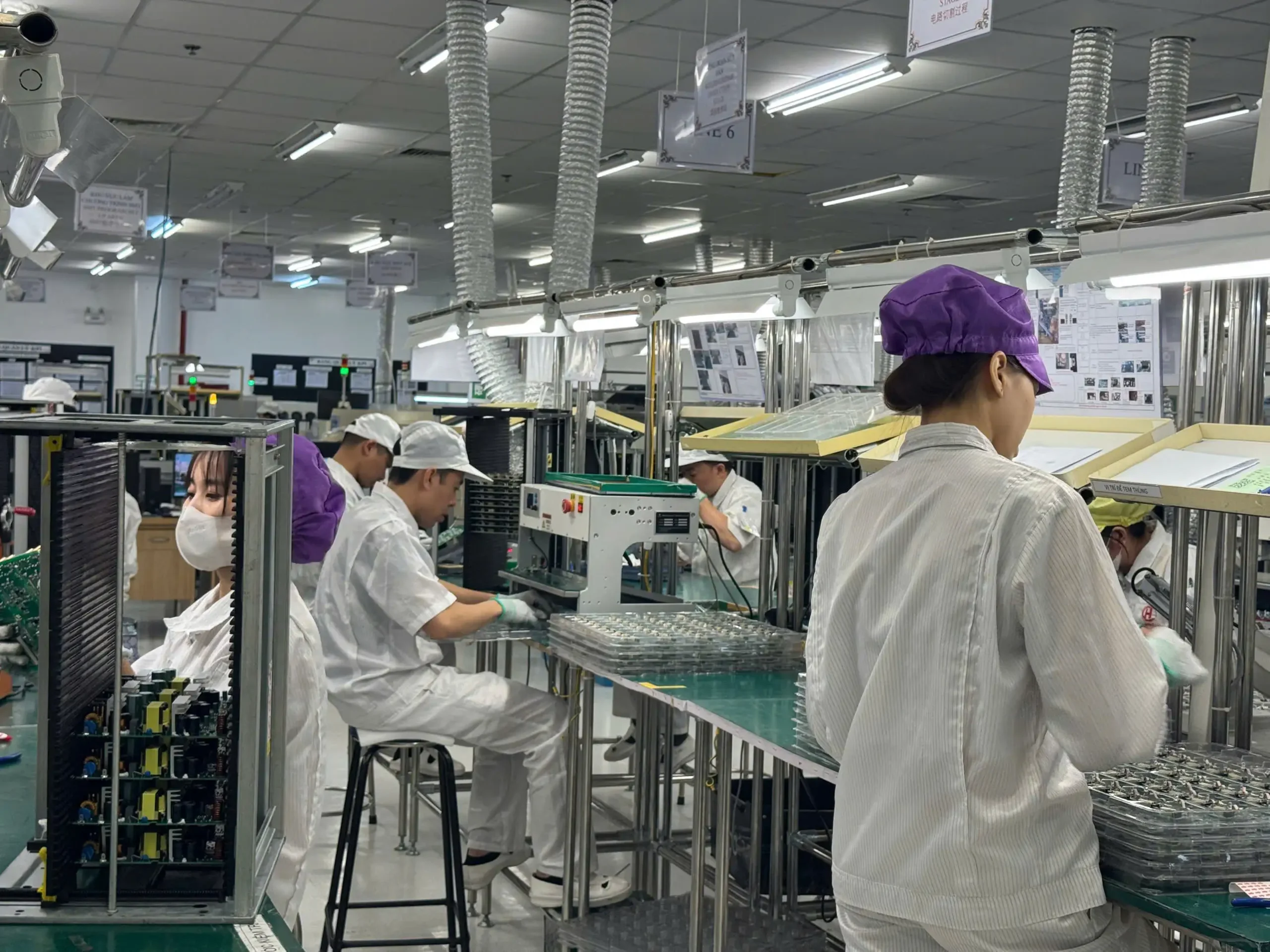
The manufacturing process begins long before a finished charger reaches the customer.
Every Winsler charger starts with a carefully controlled PCB assembly workflow designed to ensure repeatability and product quality.
Incoming Material Inspection (IQC)
Before production begins, incoming materials are inspected to verify conformity with specifications.
Typical inspections include:
- Bare PCB verification
- Integrated circuit inspection
- Connector inspection
- Passive component verification
- Packaging integrity checks
Preventing defective materials from entering production is one of the most effective ways to improve manufacturing quality.
Solder Paste Printing
Accurate solder paste deposition is essential for reliable electrical connections.
Process parameters are monitored to ensure consistent solder volume across the entire PCB.
High-Speed SMT Placement
SHDC utilizes automated SMT production systems capable of placing high-density electronic components with precision.
For GaN charger applications, accurate placement is critical because compact board layouts provide minimal tolerance for manufacturing errors.
Reflow Soldering
Following component placement, boards pass through a controlled reflow process where solder joints are formed.
Temperature profiles are carefully managed to achieve reliable solder connections while protecting sensitive electronic components.
Automated Optical Inspection (AOI)
After SMT assembly, AOI systems inspect each board for manufacturing defects.
Common inspection targets include:
- Missing components
- Misaligned components
- Insufficient solder
- Excess solder
- Solder bridges
Detecting defects at this stage improves production yield and reduces downstream quality risks.
AOI, ICT, Functional Testing, and Aging Tests for Charger PCBA
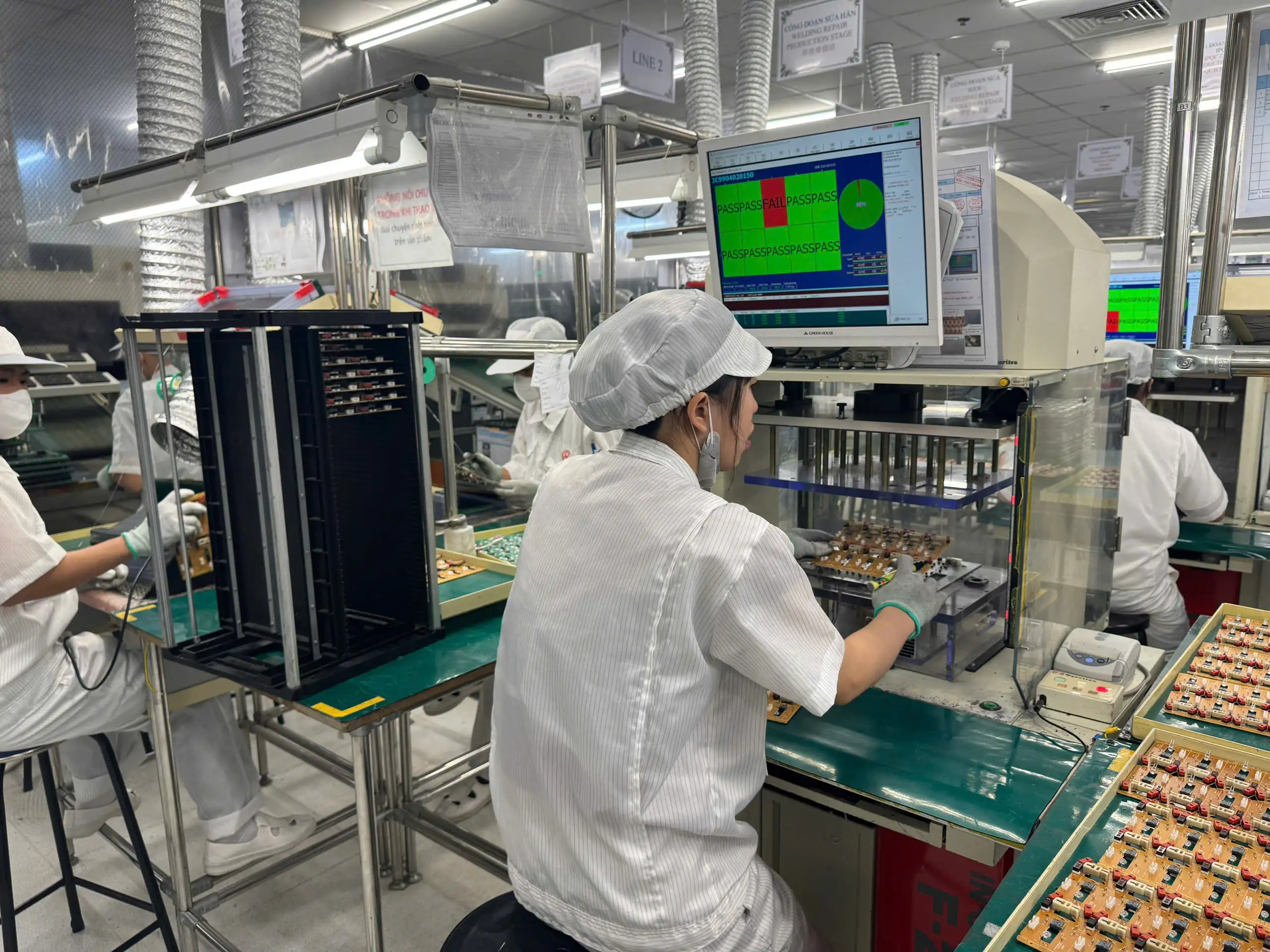
Inspection alone cannot verify electrical performance.
For charger products, comprehensive testing is required to ensure every PCB assembly functions as intended.
In-Circuit Testing (ICT)
ICT verifies the integrity of assembled circuits and helps identify:
- Open circuits
- Short circuits
- Incorrect component values
- Assembly-related defects
Functional Testing (FCT)
Functional testing evaluates real-world charger performance.
Key parameters may include:
- Output voltage
- Output current
- Power delivery behavior
- Protocol compatibility
- Load performance
High Voltage Testing
Electrical insulation and isolation are verified through high-voltage testing procedures.
This process helps ensure product safety before final assembly.
Aging Tests
Aging tests simulate extended product operation under controlled conditions.
The objective is to identify potential early-life failures and improve long-term reliability.
For power electronics products, aging tests are often among the most valuable quality-control procedures.
How SHDC Controls Yield and Quality in Charger Production
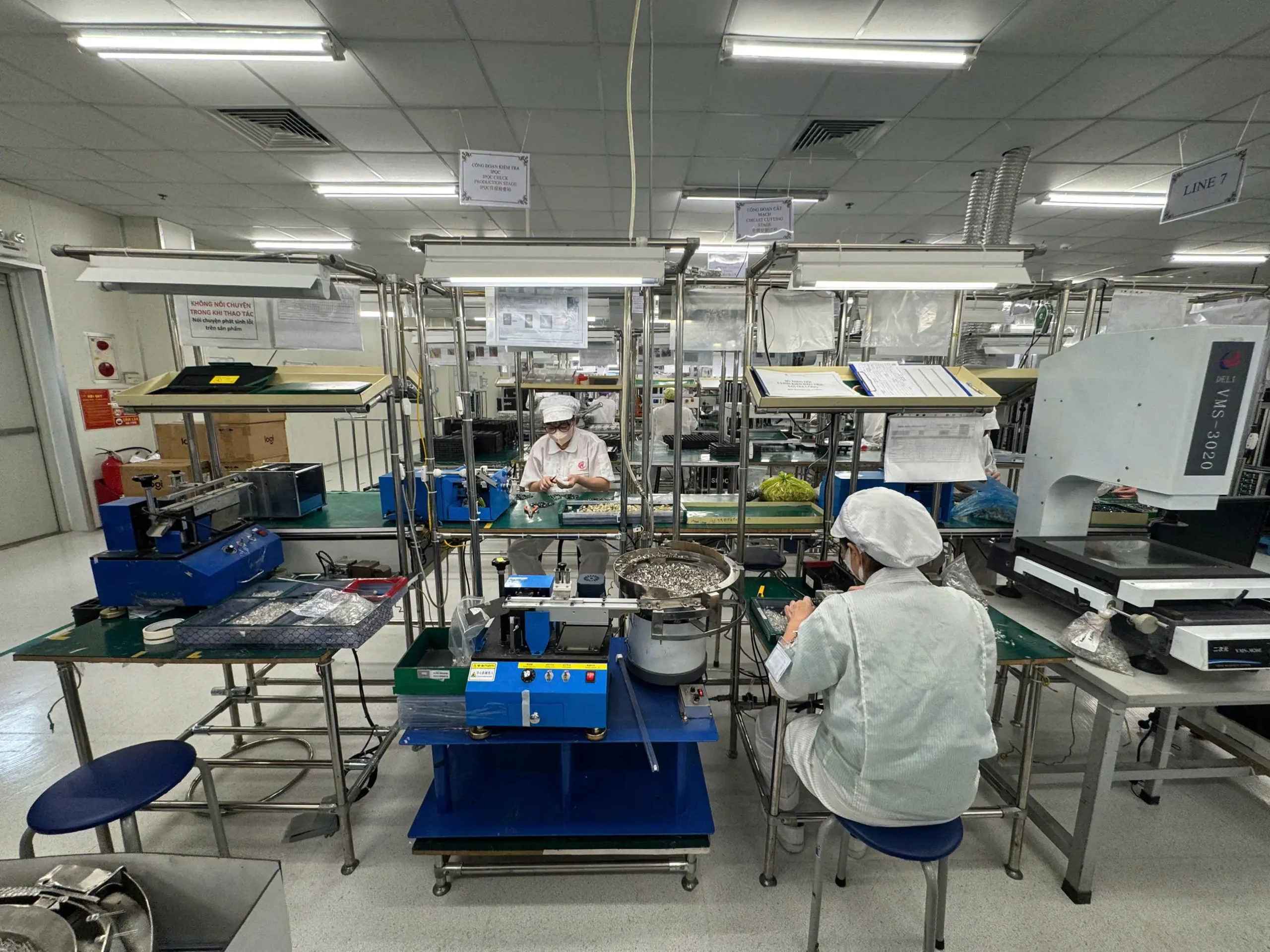
One of the most overlooked factors in Charger PCBA manufacturing is production yield.
A factory that consistently controls yield can deliver:
- More stable quality
- Better manufacturing efficiency
- Faster production cycles
- Lower defect rates
SHDC’s quality system focuses on preventing defects rather than simply detecting them after production.
This approach includes:
Process Standardization
Manufacturing processes are documented and controlled to reduce variation between production batches.
Multi-Stage Inspection
Inspection points are implemented throughout the manufacturing process rather than only at final testing.
Production Traceability
Production data can be tracked throughout manufacturing, supporting quality analysis and continuous improvement.
Continuous Process Optimization
Manufacturing feedback is used to improve quality, efficiency, and product consistency over time.
Winsler GaN Charger: A Real Manufacturing Case Study
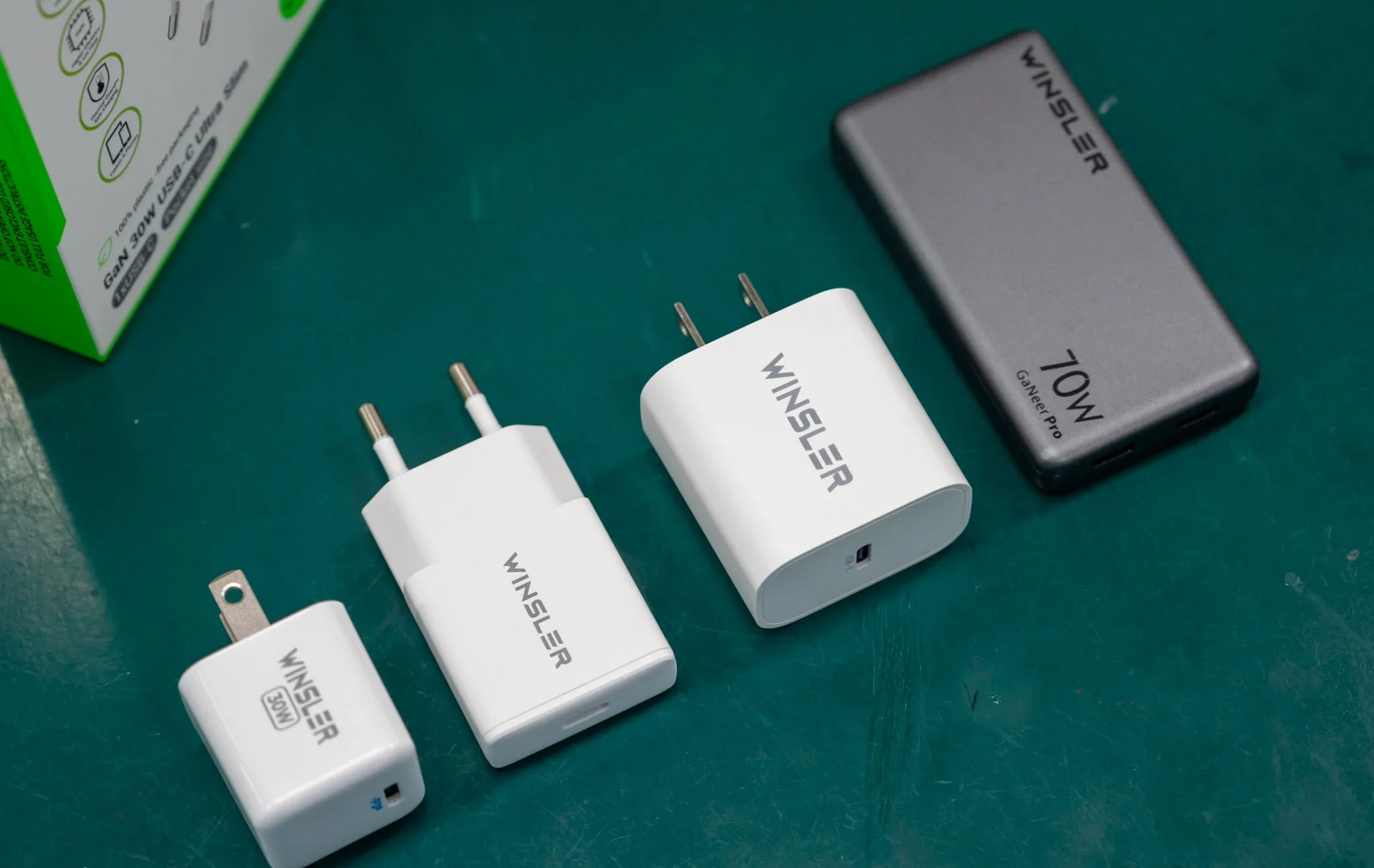
Many electronics manufacturers claim expertise in charger production. Fewer can demonstrate those capabilities through products developed and manufactured within their own ecosystem.
This is where Winsler provides practical evidence of SHDC’s manufacturing capability.
Winsler is SHDC’s proprietary fast charger brand and includes products such as the Winsler 70W Ultra Slim GaN charger, which has been featured by major Vietnamese technology publications for its compact design and high-power charging capability.
For SHDC, Winsler serves as more than a consumer product. It functions as a real-world validation of the company’s engineering, PCBA manufacturing, testing, and assembly processes.
Rather than manufacturing only for external customers, SHDC continuously applies its production systems to products developed under its own brand.
This experience provides valuable insight into:
- Design for Manufacturability (DFM)
- Production scalability
- Quality assurance
- Reliability validation
- Continuous product improvement
Why Global Brands Are Looking at Charger PCBA Vietnam
Vietnam has become one of the world’s fastest-growing electronics manufacturing destinations.
Several factors are driving increased interest in Charger PCBA Vietnam.
Supply Chain Diversification
Many electronics companies are expanding production footprints beyond a single manufacturing region.
Competitive Manufacturing Environment
Vietnam offers an attractive combination of manufacturing capability and cost efficiency.
Skilled Workforce
The country’s growing engineering and technical workforce supports increasingly sophisticated electronics production.
Expanding Electronics Ecosystem
Vietnam continues to strengthen its position within global electronics supply chains, particularly in consumer electronics and power electronics manufacturing.
These advantages make Vietnam an increasingly attractive destination for charger PCBA sourcing and production.
Looking for a Charger PCBA Manufacturer in Vietnam?
Selecting the right manufacturing partner is critical to product quality, reliability, and long-term success.
From SMT assembly and PCB manufacturing to testing, final assembly, and packaging, SHDC provides end-to-end EMS services for charger and power electronics products.
The production of Winsler GaN chargers demonstrates SHDC’s capabilities in Charger PCBA manufacturing, quality control, and scalable electronics production.
Whether you are developing a USB-C PD charger, a GaN charger, or another power electronics product, SHDC offers the manufacturing expertise required to support projects from prototype development to mass production.
Frequently Asked Questions
What is Charger PCBA?
Charger PCBA is the assembled circuit board inside a charger that manages power conversion, charging protocols, and safety functions.
Why is Charger PCBA quality important?
PCBA quality directly affects charging performance, reliability, efficiency, and product safety.
What makes GaN charger PCBA manufacturing more challenging?
GaN chargers have higher power density and tighter thermal requirements, requiring more precise assembly and testing processes.
How does SHDC test charger PCB assemblies?
SHDC uses AOI inspection, ICT, functional testing, high-voltage testing, and aging tests to verify quality and performance.
Can SHDC support OEM charger manufacturing projects?
Yes. SHDC provides EMS services covering PCBA manufacturing, testing, assembly, and mass production for charger products.
Why choose Vietnam for charger PCBA manufacturing?
Vietnam offers a strong electronics manufacturing ecosystem, skilled engineering talent, competitive costs, and growing supply chain capabilities.