
 Tiếng Việt
 日本語
日本語
In PCB design and manufacturing, the choice between dual in-line package (DIP) and surface mount technology (SMT) directly impacts board layout, production efficiency, cost, and long-term reliability. While SMT dominates modern electronics, DIP components continue to play a critical role in specific applications. For OEMs, the real question is not which technology is better—but which one is more suitable for a given design, environment, and production strategy.
What Is a Dual In-Line Package (DIP)?
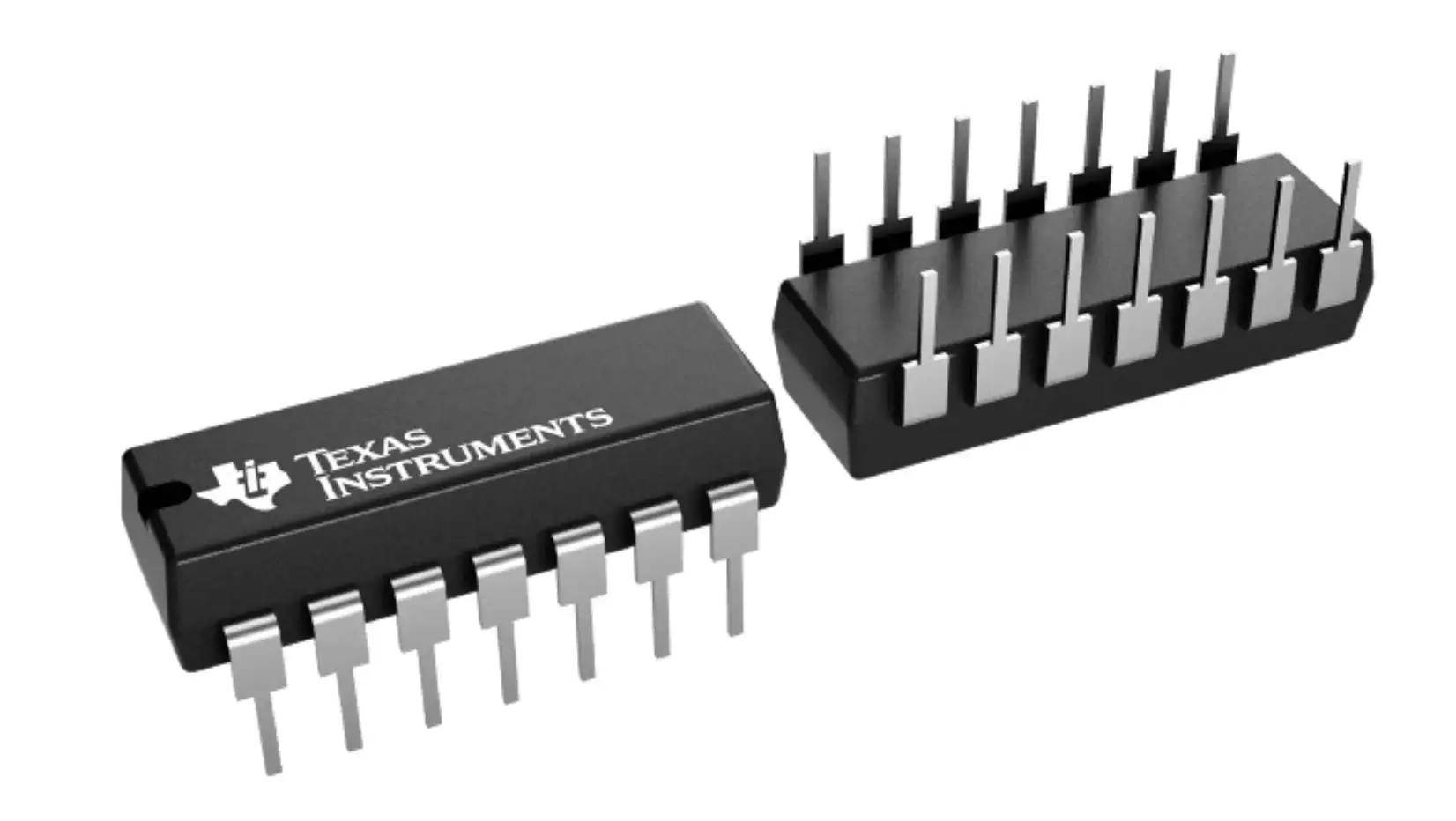
A dual in-line package (DIP) is a traditional electronic component package featuring two parallel rows of pins designed for insertion into drilled holes on a PCB.
Key characteristics:
- Through-hole mounting (THT)
- Strong mechanical attachment
- Reliable solder joints through the board
DIP packages are commonly used in:
- Industrial control systems
- Power electronics
- Applications requiring durability and mechanical stability
Despite being less common in consumer electronics, DIP remains relevant where robustness is more important than miniaturization.
What Is Surface Mount Technology (SMT)?
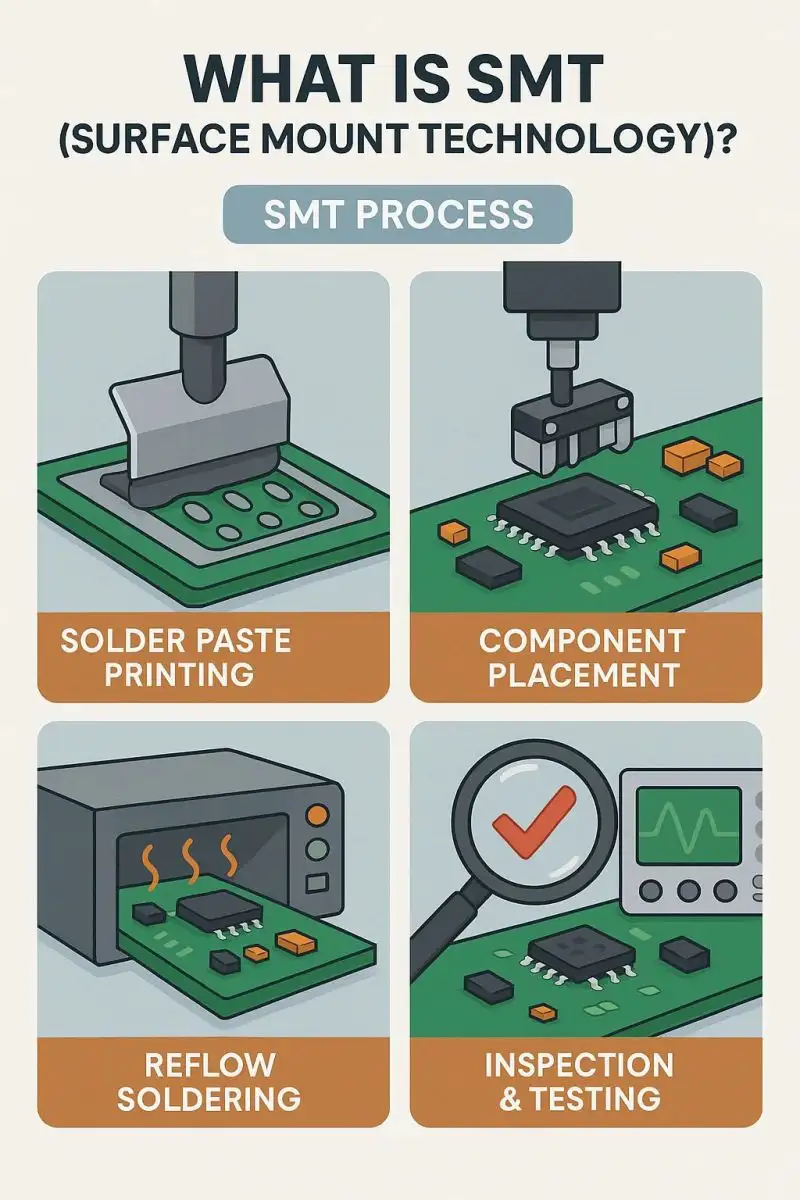
Surface mount technology (SMT) involves placing components directly onto the surface of a PCB without drilling holes.
Key characteristics:
- Compact component size
- High-density board design
- Fully automated assembly capability
SMT is widely used in:
- Consumer electronics
- IoT devices
- High-performance computing systems
It is the dominant technology in modern electronics manufacturing due to its efficiency and scalability.
>>>Read more: SMT vs Through-Hole: A Complete Comparison for PCB Design
Dual In-Line Package vs Surface Mount: Key Differences
| Factor | Dual In-Line Package (DIP) | Surface Mount (SMT) |
|---|---|---|
| Mounting Method | Through-hole | Surface mount |
| PCB Space Usage | Larger footprint | Compact, high density |
| Mechanical Strength | High | Moderate |
| Automation | Limited | Highly automated |
| Production Efficiency | Lower | Higher |
| Typical Use | Industrial, power | Consumer, high-volume |
Key takeaway: DIP and SMT are not competing technologies—they are complementary approaches used based on design and production requirements.
Advantages of Dual In-Line Package (DIP)
Despite the shift toward SMT, DIP components still offer distinct advantages.
- Mechanical strength and durability: Through-hole soldering provides strong physical connections, making DIP suitable for environments with vibration or mechanical stress.
- Ease of inspection and rework: DIP components are easier to manually inspect, replace, and repair—especially useful in prototyping or low-volume production.
- Reliability in harsh environments: DIP is often preferred in applications where long-term stability and robustness are critical.
Advantages of Surface Mount Technology (SMT)
SMT has become the industry standard due to its advantages in modern manufacturing.
- High-density design: SMT allows for smaller components and tighter layouts, enabling compact product designs.
- Automation and scalability: SMT processes are highly automated, reducing labor cost and increasing production speed.
- Cost efficiency at scale: Although initial setup can be complex, SMT becomes significantly more cost-effective in high-volume production.
>>>Read more: SMT Manufacturing Services: PCB Assembly from Prototype to Mass Production
When to Use Dual In-Line Package
DIP remains the better choice in specific scenarios where mechanical and environmental factors matter.
Use DIP when:
- Your design includes through-hole components
- Mechanical strength is critical
- The product operates in harsh or industrial environments
- You require easy maintenance or repair
Typical applications include:
- Industrial control boards
- Power supply units
- Equipment with high vibration or thermal stress
When to Use Surface Mount Technology
SMT is the preferred option for most modern electronic products.
Use SMT when:
- You need compact, high-density PCB designs
- Your product is intended for mass production
- Automation and speed are priorities
- Components require precise placement (e.g., ICs, BGAs)
Typical applications include:
- Consumer electronics
- Communication devices
- Embedded systems
DIP vs SMT in Modern PCB Assembly
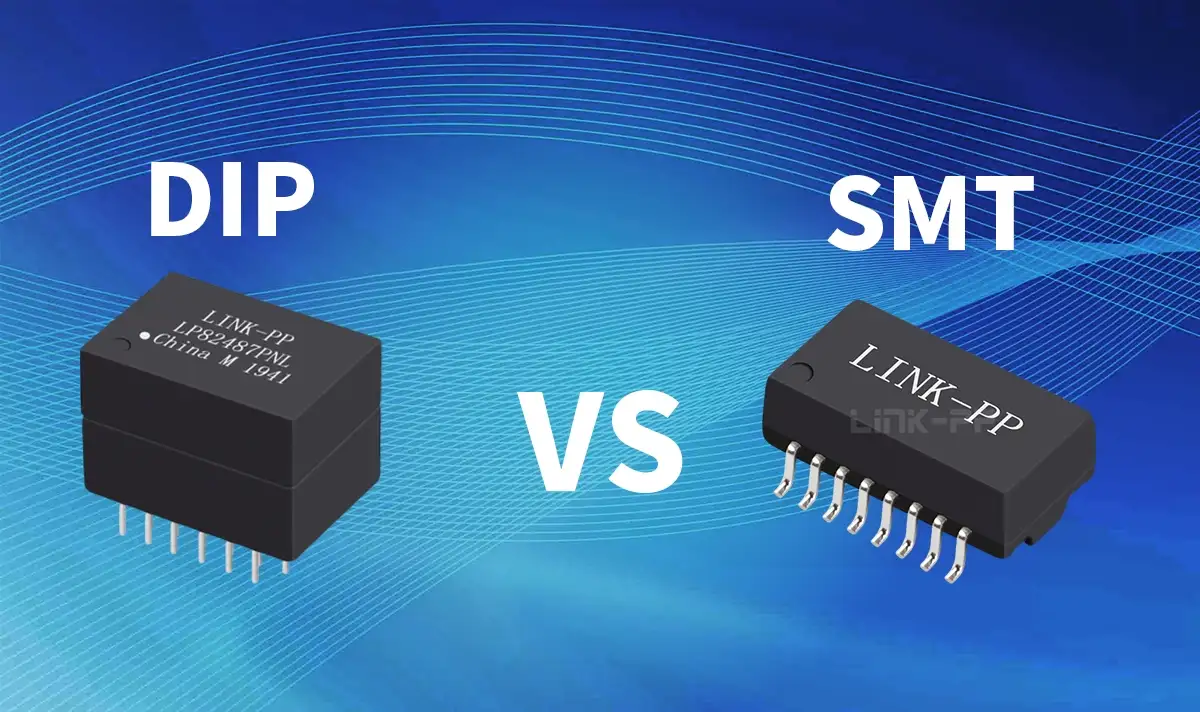
In today’s manufacturing environment, most PCB designs are not purely DIP or SMT—they are hybrid.
Typical approach:
- SMT components are assembled using reflow soldering
- Through-hole components are added afterward
- Wave or selective soldering is used for DIP
Why hybrid designs matter:
- Combine compact design with mechanical strength
- Optimize both performance and durability
- Support a wider range of component types
Insight: SMT is the foundation of modern electronics, while DIP remains essential for specific functional requirements.
Assembly Process Differences: Through-Hole vs Surface Mount
The assembly process differs significantly between DIP and SMT.
DIP (Through-hole):
- Components inserted into holes
- Soldered using wave or selective soldering
- More manual handling required
SMT:
- Solder paste printing
- Automated component placement
- Reflow soldering in controlled ovens
These process differences directly affect:
- production speed
- defect rates
- scalability
>>>Read more: Wave Soldering vs Reflow Soldering: Key Differences in PCB Assembly and When to Use Each
Cost and Production Impact: DIP vs SMT
Cost considerations go beyond unit price—they depend on how each technology performs in production.
SMT:
- Lower labor cost due to automation
- Higher initial setup cost
- Best suited for large-scale production
DIP:
- Higher labor involvement
- Slower production speed
- More cost-effective for low-volume or specialized builds
Yield considerations:
- SMT offers higher consistency
- DIP depends more on manual control and process setup
Key insight: The most cost-effective choice depends on volume, design complexity, and reliability requirements.
Choosing Between DIP and SMT for Your PCB Design
There is no universal answer—only the right fit for your application.
Decision factors:
- PCB design complexity
- Component types
- Production volume
- Environmental conditions
- Maintenance requirements
General guideline:
- Use SMT for efficiency and scalability
- Use DIP for strength and reliability
- Combine both when necessary
How Modern EMS Providers Support Both DIP and SMT Assembly
Efficient PCB assembly requires integrating both technologies within a controlled production system.
A capable EMS provider will:
- Optimize design for manufacturability (DFM)
- Align SMT and DIP processes
- Reduce defects through process control
- Ensure consistent quality across volumes
This integration is critical for minimizing risk and improving production efficiency.
Integrated PCB Assembly for Mixed-Technology Designs
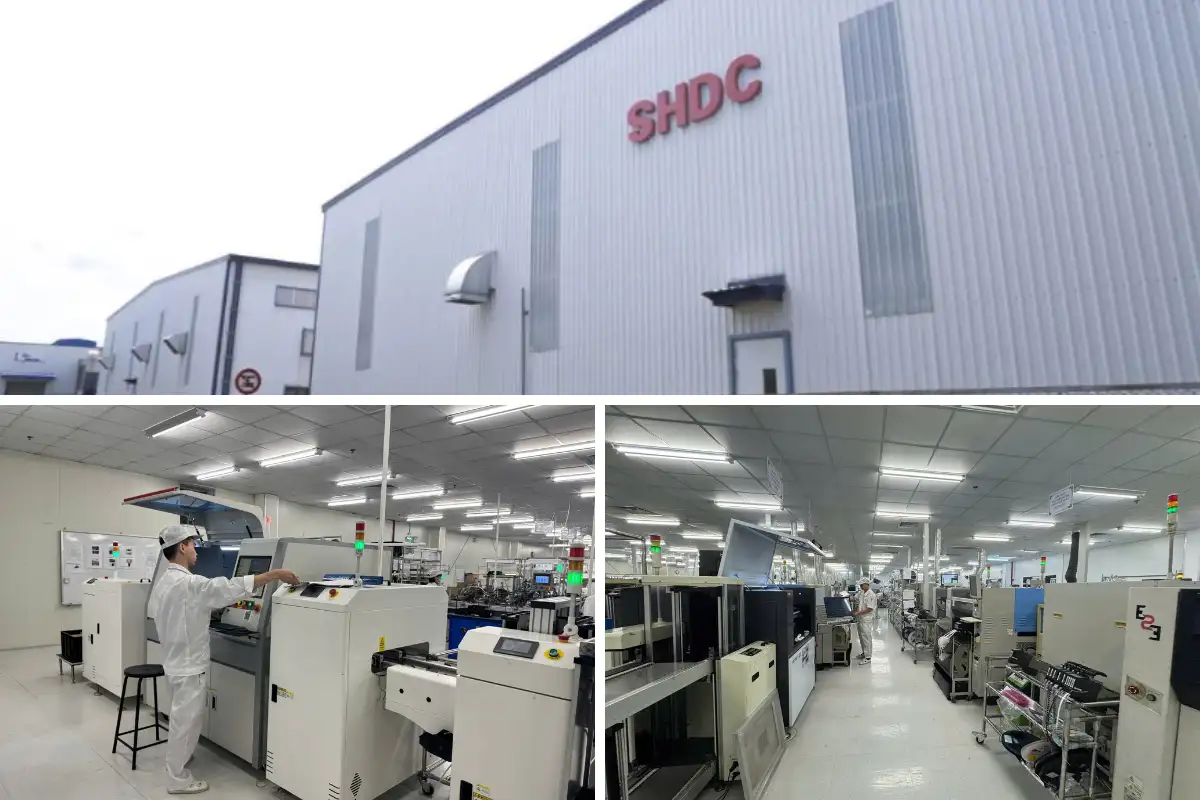
In real-world production, combining SMT and DIP effectively is key to achieving stable output and consistent quality.
At SHDC, PCB assembly programs are structured to support both technologies within a unified manufacturing workflow.
This includes:
- Multiple SMT lines for automated surface mount assembly
- Dedicated DIP processes for through-hole components
- Wave soldering systems for efficient THT production
- Integrated inspection and testing (AOI, ICT, functional testing)
By aligning SMT and DIP processes within a single system, manufacturers can:
- Improve yield consistency
- Reduce rework and defects
- Scale production efficiently
For OEMs, this level of integration helps bridge the gap between design intent and manufacturing reality.
>>>Read more: SHDC SMT Vietnam: A Leading SMT Assembly Partner for Global OEM Electronics
FAQs
What is a dual in-line package?
A dual in-line package is a through-hole component with two rows of pins inserted into a PCB for soldering.
What is the difference between DIP and SMT?
DIP uses through-hole mounting, while SMT places components directly on the PCB surface.
Is DIP obsolete?
No. While less common, DIP is still used in applications requiring durability and mechanical strength.
Why is SMT more common today?
Because it supports high-density designs, automation, and cost efficiency in large-scale production.
When should I use DIP instead of SMT?
When your design requires stronger mechanical connections or operates in demanding environments.
Final Thoughts
Dual in-line package and surface mount technology serve different roles in PCB assembly. SMT enables modern, high-density, scalable electronics. DIP provides durability and reliability where it matters most. For OEMs, the most effective approach is not choosing one over the other—but understanding how to apply both strategically within a well-optimized manufacturing process.
>>>Read more: PCB Board Fabrication vs PCB Assembly: What OEMs Need to Know Before Production
