Tiếng Việt
 日本語
日本語
Manufacturing quality does not begin when a PCB enters the SMT line. It begins with the technical data used to define, source, assemble, program, inspect, test, and release the product. A factory may have modern placement equipment and experienced operators, yet still build the wrong product if it receives an outdated BOM, mismatched Gerber files, an incorrect firmware version, or incomplete test limits.
For US OEMs sourcing a PCBA circuit board in Vietnam, document control becomes especially important because engineering teams, purchasing departments, factories, and component suppliers may be working across different locations and time zones. A controlled manufacturing package ensures that everyone uses the same approved product configuration. It also helps the OEM investigate failures, manage changes, protect intellectual property, and transfer production when required.
Quick answer: US OEMs should control eight documentation areas: the product master record, BOM and AVL, fabrication and assembly files, firmware, test documentation, revision release, ECOs and deviations, and manufacturing-record retention.
For a broader overview of sourcing and production capabilities, review this guide to PCBA Vietnam.
Why Documentation Control Matters in PCBA Manufacturing
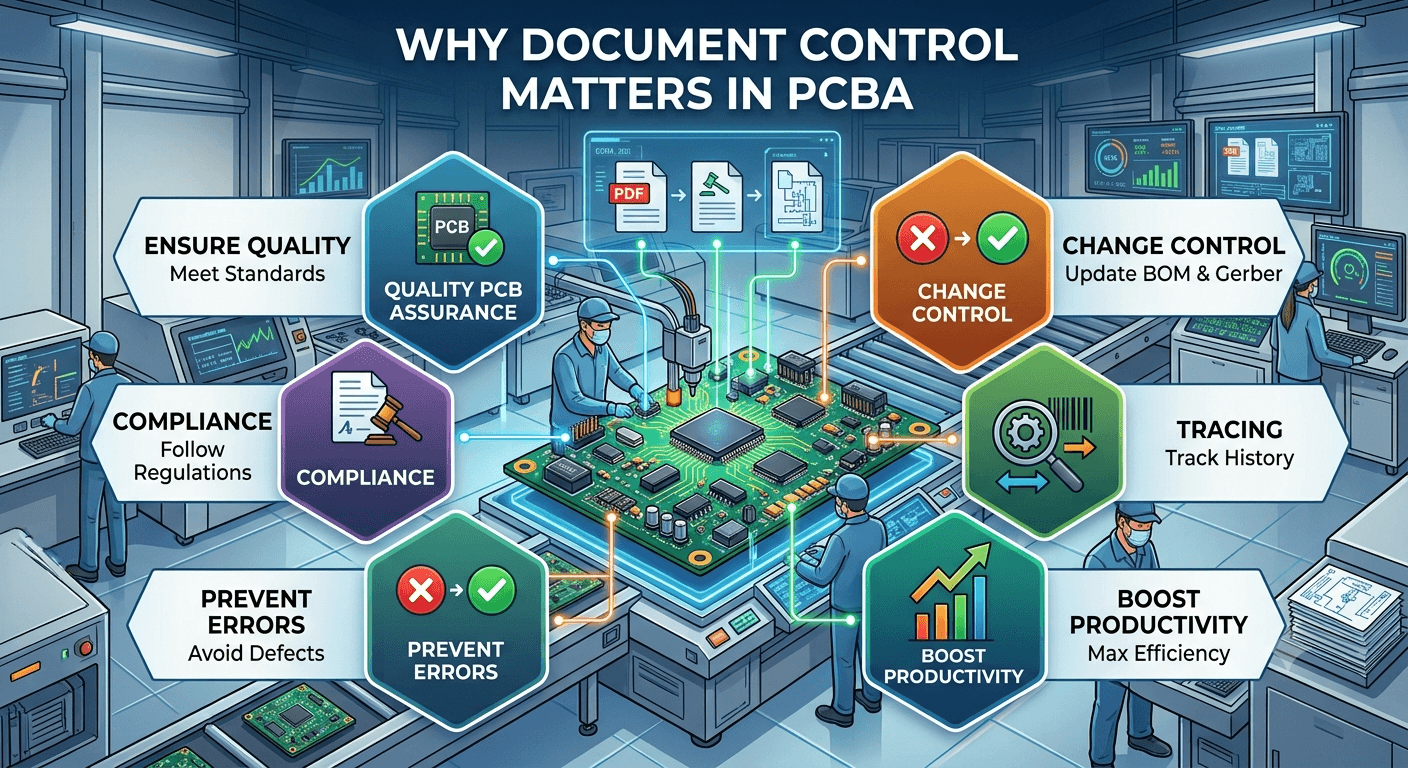
Document availability is not the same as document control.
A manufacturer may possess the BOM, Gerber files, assembly drawings, and firmware, but the project remains exposed if no system identifies which versions are approved for production.
Effective document control answers five questions:
- Which document is currently approved?
- Who approved it?
- When does it become effective?
- Which production lots use it?
- What happens to the previous version?
Without these controls, manufacturers may:
- Purchase an incorrect component revision
- Build boards from obsolete Gerber files
- Place parts using outdated coordinates
- Load the wrong firmware
- Apply incorrect functional-test limits
- Use expired work instructions
- Mix different product configurations in one shipment
- Lose the data required for failure analysis
- Struggle to transfer production to another factory
These risks increase when product data is distributed through multiple emails, cloud folders, messaging applications, and supplier portals.
Configuration management provides a more structured approach. ISO 10007 describes configuration management as a lifecycle discipline that includes configuration identification, change control, status accounting, and configuration audits. NIST similarly defines configuration management around maintaining product and system integrity by controlling how configurations are established, changed, and monitored.
US OEMs do not necessarily need a complex enterprise system for every project. However, they do need a single controlled process that connects product specifications, manufacturing files, software, testing, and production history.
What Should a PCBA Manufacturing Data Package Include?
A complete manufacturing package normally contains several connected document groups.
| Document group | Typical contents | Primary owner |
|---|---|---|
| Product definition | Product number, PCBA number, specifications, revision | OEM |
| Component data | BOM, AVL, approved alternates | OEM and manufacturer |
| PCB fabrication data | Gerber, ODB++, drill files, stack-up, fab drawing | OEM |
| Assembly data | Centroid file, assembly drawings, polarity information | OEM |
| Firmware | Binary files, checksum, programming instructions | OEM |
| Testing | AOI, ICT, FCT procedures, limits and fixture data | Shared |
| Process documents | Work instructions, process flow and control plan | Manufacturer |
| Change records | ECOs, deviations, waivers and PCNs | Shared |
| Production records | Inspection, test, repair and traceability data | Manufacturer |
The individual files must also be synchronized.
For example, a released BOM should correspond to the same PCB revision, placement file, firmware, test specification, and assembly drawing. A correct file used with the wrong configuration can still produce a nonconforming assembly.
IPC-2581C provides an intelligent XML-based format for describing printed boards and printed board assemblies with information for tooling, manufacturing, assembly, and inspection. The standard is intended to improve structured data transfer between designers and manufacturing facilities.
Even when an OEM continues to use Gerber, spreadsheets, PDF drawings, and separate centroid files, the same principle applies: all files must be released, synchronized, and traceable to one approved configuration.
8 Documentation Controls for a PCBA Circuit Board in Vietnam
1. Establish a Controlled Product Master Record
Every product should have one authoritative record that identifies the complete approved manufacturing configuration.
The product master record should include:
- OEM product number
- PCBA part number
- Product description
- Hardware revision
- BOM revision
- PCB fabrication revision
- Assembly-file revision
- Firmware version
- Test-program revision
- Packaging revision
- Approved manufacturing location
- Release date
- Effective production lot
- Approving functions
A simple revision matrix may look like this:
| Data item | Approved revision | Release date | Approved by |
|---|---|---|---|
| BOM | Rev C | YYYY-MM-DD | OEM Engineering |
| Gerber package | Rev B | YYYY-MM-DD | PCB Design |
| Assembly drawing | Rev B | YYYY-MM-DD | Manufacturing Engineering |
| Firmware | v2.4.1 | YYYY-MM-DD | Software Engineering |
| FCT procedure | Rev D | YYYY-MM-DD | Quality Engineering |
The OEM should avoid uncontrolled filenames such as:
final.zipfinal-new.ziplatest-final.zipproduction-use-this.zip
File names should contain a product number, document type, revision, and release status.
A practical structure might be:
ProductNumber_DocumentType_Revision_ReleaseDate
The manufacturer should formally confirm receipt of the package and report any missing or conflicting information before quotation, NPI, or production.
Useful evidence includes:
- Master document list
- Document transmittal record
- Manufacturer receipt confirmation
- Revision matrix
- Production-release checklist
A controlled master record prevents different departments from creating their own interpretation of the current product configuration.
2. Control the BOM, AVL, and Approved Substitutions
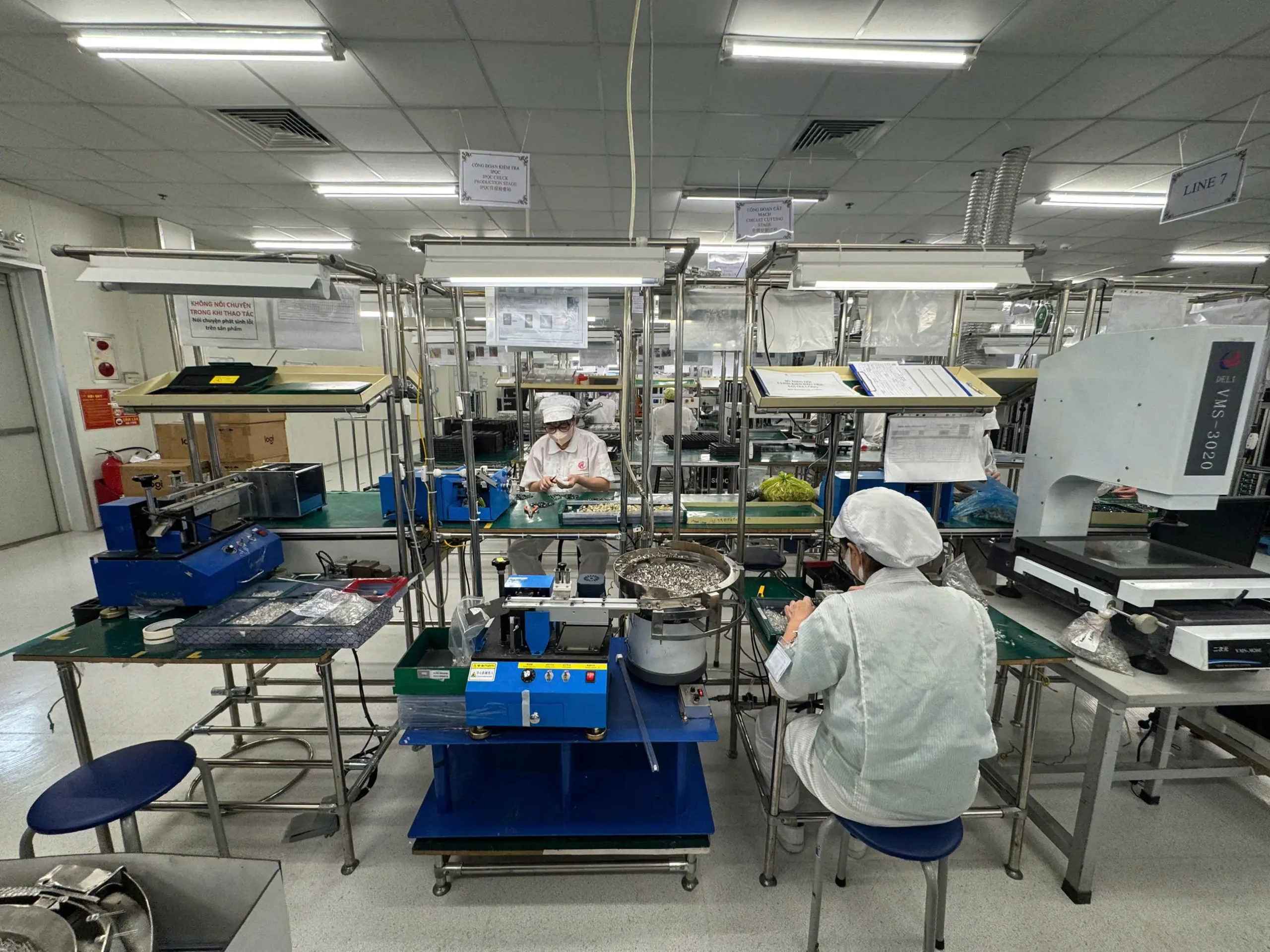
The Bill of Materials determines what the manufacturer purchases and places on the board. It should provide more than component values and reference designators.
A production-ready BOM should include:
- Item number
- Reference designator
- Quantity
- Component description
- Manufacturer name
- Manufacturer Part Number
- Package or footprint
- Electrical value
- Tolerance
- Voltage or power rating
- Lifecycle status
- Approved alternate
- Do-not-substitute status
- Procurement responsibility
- Customer-supplied or manufacturer-supplied status
The Approved Vendor List should distinguish among:
- Approved component manufacturer
- Approved distributor
- Fully interchangeable alternate
- Conditionally approved alternate
- Emergency substitution
- Part requiring validation before use
Two parts with similar electrical values are not automatically interchangeable. Differences in footprint, temperature rating, ESR, timing, materials, firmware compatibility, or regulatory status may affect product performance.
The purchasing agreement should answer:
- Can the manufacturer propose alternates?
- Who approves substitutions?
- Is written approval required before purchasing?
- Does an alternate require a sample build?
- Which test must be repeated?
- Can existing inventory be consumed after a change?
- How will Product Change Notifications be handled?
The OEM should maintain final authority over any component that affects function, safety, reliability, compliance, or product differentiation.
Before requesting a quotation, use a structured PCBA manufacturer Vietnam RFQ checklist to confirm that the BOM and sourcing requirements are complete.
The manufacturer may support sourcing and lifecycle review, but proposed changes should move through a documented approval process rather than informal email consent.
3. Release Complete Fabrication and Assembly Files
The PCB fabrication package defines the bare circuit board. The assembly package tells the manufacturer how to populate it.
PCB fabrication package
A complete fabrication package may include:
- Gerber, ODB++, or IPC-2581 data
- NC drill files
- PCB stack-up
- Material specification
- Copper weight
- Controlled-impedance requirements
- Board dimensions and tolerances
- Surface finish
- Solder-mask requirements
- Silkscreen data
- Routing or V-score requirements
- Fabrication drawing
- Panelization requirements
- Applicable acceptance criteria
Assembly package
The assembly package may include:
- Pick-and-place or centroid file
- Top and bottom assembly drawings
- Component polarity markings
- Component orientation
- DNP designations
- Special soldering requirements
- Mechanical restrictions
- Stencil instructions
- Adhesive requirements
- Conformal-coating notes
- Cleaning requirements
- Critical-to-quality characteristics
Common documentation conflicts include:
- Gerber files and drawings with different revisions
- BOM components missing from the centroid file
- Centroid items missing from the BOM
- Inconsistent metric and imperial units
- Different rotation conventions
- Unclear bottom-side orientation
- Incorrect polarity markings
- DNP parts not identified consistently
- Panel drawings that do not match factory tooling
Before release, the manufacturer should perform a technical completeness check and compare the BOM, centroid file, assembly drawings, and fabrication data.
A formal DFM for electronics manufacturing review can identify conflicting files, unsupported packages, panelization problems, polarity risks, and assembly limitations before they affect production.
The quotation package should also reflect the final intended scope. This guide to preparing a PCB assembly quote explains why incomplete manufacturing data often produces assumptions, exclusions, and later cost adjustments.
4. Manage Firmware, Programming, and Software Revisions
Firmware should be controlled with the same discipline as a physical component.
A board assembled correctly but loaded with the wrong software remains the wrong product.
Firmware documentation should identify:
- Firmware filename
- Version number
- Build number
- Checksum or cryptographic hash
- Release date
- Applicable hardware revision
- Programming interface
- Programming device
- Programming voltage
- Configuration file
- Security keys
- Lock-bit requirements
- Serial-number rules
- MAC-address or device-ID rules
- Verification method
The OEM and manufacturer should define:
- At which production stage programming occurs
- Who has access to the firmware
- How firmware is transferred securely
- Whether the device can be reprogrammed
- Whether programming occurs before or after assembly testing
- How programming success is verified
- How firmware versions are connected to production lots
- How failed programming attempts are recorded
- How obsolete files are withdrawn
A firmware release record should include the approved checksum. The manufacturer can verify the checksum before loading the file into a programming station, reducing the risk of renamed or corrupted files.
Programming logs should preferably connect:
- PCBA serial number
- Firmware version
- Programming station
- Date and time
- Operator or system ID
- Programming result
Common failures include:
- Correct hardware with outdated firmware
- Identical filenames containing different binary data
- Updated firmware with an obsolete test program
- Duplicate serial numbers
- Golden samples using an old release
- Production stations retaining unauthorized files
Security also matters. Firmware, manufacturing processes, drawings, test software, and supplier information may qualify as confidential technical information. WIPO notes that trade secret protection generally depends on the information remaining confidential and the owner taking reasonable measures, including access restrictions and confidentiality agreements.
5. Define Test Specifications, Limits, and Data Ownership

A requirement such as “100% functional test” is incomplete unless it defines what functions are tested and what constitutes a pass.
Test documentation should include:
- Test purpose
- Test sequence
- Input conditions
- Expected outputs
- Upper and lower limits
- Test equipment
- Equipment configuration
- Fixture revision
- Test-software revision
- Calibration requirements
- Pass/fail rules
- Retest rules
- Repair rules
- Data-retention period
- Required report format
Different test systems require separate controlled documentation.
AOI documentation
AOI control may include:
- Inspection program revision
- Component library
- Polarity criteria
- Solder-joint criteria
- False-call review process
- Defect classification
- Program approval
Learn how inspection programs support production through automated optical inspection.
ICT documentation
ICT documentation may include:
- Fixture drawing
- Test-point list
- Test-program revision
- Measured parameters
- Expected limits
- Debugging procedure
- Fixture-maintenance requirements
Functional-test documentation
FCT should define the real product functions being verified, such as:
- Power-up behavior
- Current consumption
- Voltage outputs
- Sensor response
- Communications
- Protection functions
- Firmware behavior
- User-interface response
- Load performance
The relationship between board-level and product-level testing is explained in in-circuit testing and functional testing.
The OEM should also clarify:
- Who owns the test fixture?
- Who owns the test software?
- Can the fixture be transferred?
- Will source files be provided?
- Is data stored by lot or serial number?
- Are original failures preserved after retesting?
- How are repaired products identified?
- How long are test records retained?
Test data should support yield analysis, defect Pareto analysis, customer-complaint investigation, process improvement, and future production transfer.
A design for testability review should be completed before fixture development, particularly when test-point access and circuit isolation affect coverage.
6. Use a Formal Revision Release and Production Freeze Process
Sending a new file does not automatically mean it should be used immediately.
A controlled release workflow should include:
- OEM issues the new revision.
- Manufacturer confirms receipt.
- Engineering reviews technical impact.
- Purchasing reviews material impact.
- Production identifies affected WIP.
- Quality confirms validation requirements.
- Both parties define the effective lot or serial number.
- Machine programs and instructions are updated.
- Obsolete documents are removed.
- First-article approval confirms implementation.
Documents should use clear lifecycle statuses:
- Draft
- Under review
- Approved
- Released
- Obsolete
- Archived
The release must define what happens to:
- Existing component inventory
- Bare PCBs
- Work in progress
- Finished goods
- Repair stock
- Packaging
- Golden samples
- Test fixtures
- Programming stations
The parties should also decide whether different revisions may appear in the same shipment. If mixed revisions are allowed, they should be physically separated, labeled, and traceable.
Production freeze is particularly important near pilot and mass-production builds. Uncontrolled design updates during sourcing or line preparation may cause the factory to purchase materials or create tooling for a configuration that is no longer valid.
A production readiness review can confirm that product files, process documentation, materials, tooling, testing, and approvals are aligned before mass production begins.
7. Control ECOs, Deviations, and Temporary Changes
Not all changes have the same status.
Engineering Change Order
An ECO is a formal, generally permanent change to an approved product or manufacturing configuration.
It should identify:
- Reason for change
- Affected product numbers
- Previous revision
- New revision
- Documents requiring updates
- Material impact
- WIP impact
- Finished-goods impact
- Validation requirements
- Effective date or lot
- Required approvals
Deviation
A deviation authorizes a temporary departure from an approved requirement.
It should define:
- Exact condition being changed
- Reason for the deviation
- Affected quantity or lot
- Validity period
- Risk assessment
- Containment actions
- Customer approval
- Return-to-standard plan
Waiver
A waiver normally accepts a specific nonconforming product or lot after the condition has occurred.
These records should not be treated as interchangeable.
Changes requiring prior approval may include:
- Component substitutions
- PCB supplier changes
- Solder-paste changes
- Reflow-profile changes
- Firmware changes
- Test-limit changes
- Fixture revisions
- Work-instruction revisions
- New subcontractors
- Packaging-material changes
A formal Engineering Change Order process helps ensure that approved changes are implemented consistently across design data, sourcing, machine programs, testing, inspection, and inventory.
ISO 10007 identifies change control and configuration status accounting as central configuration-management activities. That means the organization should not only approve changes but also record where and when each change was implemented.
8. Secure, Retain, and Transfer Manufacturing Records
Document control does not end when the shipment leaves the factory.
Manufacturing records may be required for:
- Customer complaints
- Failure analysis
- Corrective actions
- Warranty investigations
- Compliance reviews
- Supplier changes
- Product redesign
- Production transfer
Records may include:
- Released manufacturing package
- Material receiving records
- IQC results
- Component lot data
- Production traveler
- Machine-program revision
- Solder-paste records
- Reflow-profile data
- SPI and AOI results
- ICT and FCT results
- Repair history
- ECO and deviation approvals
- Final inspection
- Packaging and shipment records
- Calibration records
IPC-1782B establishes risk-based requirements for internal and external traceability across products, processes, assemblies, parts, components, equipment, and supply-chain movements.
The OEM and manufacturer should agree on:
- Record-retention period
- Storage format
- Backup frequency
- Access permissions
- Encryption requirements
- Customer access rights
- Incident-notification process
- Data-deletion rules
- End-of-contract transfer requirements
The difference between documentation and product history is explored further in traceability in electronics manufacturing.
Production transfer package
A complete transfer package may contain:
- Current BOM and AVL
- Gerber or intelligent manufacturing data
- Drill and fabrication files
- Assembly drawings
- Centroid files
- Firmware and programming instructions
- Work instructions
- Control plan
- Inspection criteria
- Test specifications
- Fixture drawings
- Test software
- Golden samples
- Process parameters
- Defect history
- Approved deviations
- Approved supplier information
Contracts should clearly define ownership and transfer rights for fixtures, software, tooling, manufacturing records, and supplier-developed documents.
The PCBA manufacturing contract questions provide a useful framework for discussing these issues before production begins.
PCBA Documentation Control Matrix
| Control | Main documents | Risk prevented |
|---|---|---|
| Product master record | Master list and revision matrix | Mixed or obsolete revisions |
| BOM and AVL | BOM, alternates and approvals | Incorrect or unauthorized parts |
| Fabrication and assembly data | Gerber, drill, centroid and drawings | Incorrect PCB or placement |
| Firmware control | Binary, checksum and programming log | Wrong software configuration |
| Test documentation | Test plans, limits and fixture revisions | Inconsistent acceptance decisions |
| Revision release | Release form and line-clearance record | Uncontrolled implementation |
| ECOs and deviations | ECO, waiver and deviation approval | Undocumented changes |
| Record retention | Production, test and repair history | Lost traceability or transfer data |
Recommended Document Release Workflow
A practical workflow is:
OEM release → Manufacturer receipt confirmation → Completeness review → DFM and DFT review → Conflict resolution → Pilot build → First-article approval → Production release → Record retention
Responsibilities should be assigned clearly.
| Function | Primary responsibility |
|---|---|
| OEM engineering | Product-definition approval |
| OEM quality | Inspection and acceptance requirements |
| Manufacturer engineering | Manufacturability and process review |
| Purchasing | BOM and sourcing control |
| Production | Use of released programs and instructions |
| Factory quality | Revision and inspection verification |
| Program management | Communication, schedule and approval tracking |
The objective is not to create more administration. It is to prevent uncontrolled decisions from reaching the production line.
Common Documentation Mistakes US OEMs Should Avoid

Sending files without a master document list
The factory receives several folders but cannot identify the approved configuration.
Misaligned BOM, Gerber, and assembly revisions
Each file may be technically valid, but the combination does not describe one buildable product.
Allowing informal component substitutions
Procurement decisions alter the product without engineering evaluation.
Controlling firmware only by filename
A file is renamed without changing the version or checksum.
Defining functional testing without limits
Operators know what to measure but not the acceptable range.
Implementing ECOs without an effective lot
The change is approved but the factory cannot determine where the old revision ends.
Using an uncontrolled golden sample
The reference unit has no documented hardware, firmware, or test revision.
Deleting original failure data after retesting
The final pass result hides first-pass yield and recurring defects.
Failing to define fixture ownership
The OEM pays for development but cannot move the fixture or test software later.
Starting production without a transfer package
Critical manufacturing knowledge remains only with individual engineers or the original supplier.
These mistakes can also reduce quotation accuracy. A factory cannot reliably estimate sourcing, tooling, engineering, programming, and testing costs from an incomplete technical package.
Documentation Control vs Traceability vs Configuration Management
These concepts overlap but answer different questions.
| Concept | Main question |
|---|---|
| Document control | Which document version is approved and in use? |
| Traceability | Which materials and processes were used for this product? |
| Configuration management | Which combination of hardware, firmware and testing defines the product? |
| ECO management | How is an approved change implemented? |
Document control ensures correct instructions.
Traceability connects each product or lot to its manufacturing history.
Configuration management keeps all elements of the product aligned.
ECO management controls changes to the approved configuration.
A robust PCBA program integrates all four rather than treating them as separate administrative tasks.
Documentation Requirements Before Requesting a PCBA Quote
For a preliminary budgetary quotation, the OEM may provide:
- Preliminary BOM
- Gerber files
- Estimated quantities
- Target schedule
- Basic test requirements
- Expected assembly scope
For a firm production quotation, provide:
- Released BOM
- Approved Vendor List
- Complete PCB fabrication package
- Centroid file
- Assembly drawings
- Approved alternates
- Firmware and programming instructions
- Test specifications
- Quality requirements
- Packaging requirements
- Forecast volume
- Delivery destination
- Revision matrix
The more complete the package, the fewer assumptions the manufacturer must make.
The PCBA manufacturer Vietnam RFQ checklist can be used to structure the package before sending it to potential suppliers.
Documentation Review When Working With SHDC
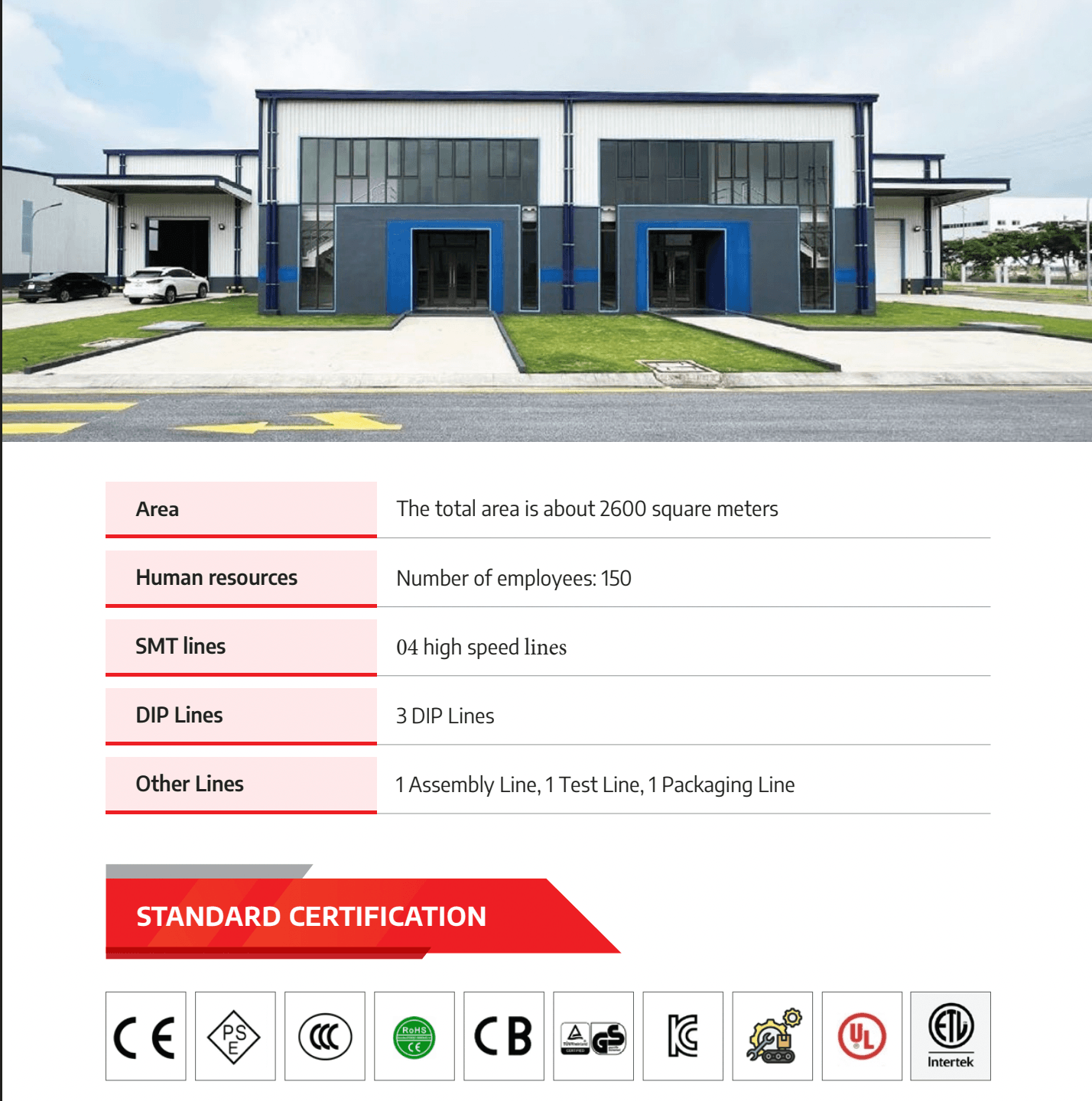
According to its company profile, SHDC Electronics provides EMS covering component soldering, assembly, testing, and final packaging.
The documented production flow includes IQC, warehousing, screen printing, component placement, reflow, AOI, component insertion, automatic soldering, visual inspection, ICT, FCT, OQC, packaging, and finished-product warehousing.
Its organizational structure includes engineering, purchasing, production, quality, PMC, sales, and administrative functions. The profile also depicts a production-management system connecting production equipment and references ERP, PLM, SCM, and MES/QMS.
These documented functions provide a foundation for coordinating technical files, materials, production programs, inspection, and testing. However, the company profile does not by itself prove that every documentation control described in this article is applied identically to every customer project.
US OEMs evaluating SHDC should confirm project-specific procedures for:
- Product master-data release
- BOM and alternate-part approval
- Gerber and assembly-file review
- Firmware access and programming logs
- Test-program ownership
- Revision implementation
- ECO and deviation approval
- Record retention
- Production-data transfer
Prepare Your PCBA Manufacturing Package for Review
Share the following with SHDC for technical review:
- BOM and AVL
- Gerber files
- Centroid data
- Assembly drawings
- Firmware requirements
- Test specifications
- Forecast volume
- Quality requirements
- Target schedule
Suggested CTA: Submit Your PCBA Project
Frequently Asked Questions
What documents are required to manufacture a PCBA circuit board?
The core package normally includes Gerber or intelligent manufacturing data, drill files, BOM, centroid data, assembly drawings, PCB specifications, firmware instructions, test requirements, and quality criteria.
Who should control the PCBA BOM?
The OEM should approve the BOM and AVL. The manufacturer may propose sourcing options and alternate components, but substitutions should follow a documented approval process.
How should firmware revisions be controlled?
Each release should have a version, checksum, applicable hardware revision, approval record, programming instructions, and traceability to the affected production lots or serial numbers.
What is a PCBA master document list?
It is the authoritative list identifying the currently approved revision of every document and file used to manufacture, program, inspect, test, and package a product.
What is the difference between an ECO and a deviation?
An ECO introduces an approved long-term change. A deviation temporarily permits production outside an existing requirement for a defined quantity, lot, or period.
How long should manufacturing records be retained?
The period depends on the contract, product lifecycle, industry, customer requirements, and product risk. The OEM and manufacturer should agree on retention before production.
Should the OEM own test fixtures and test software?
Ownership depends on the commercial agreement. When the OEM funds development and requires production portability, ownership or transfer rights should be documented clearly.
Can production move to another factory without complete documentation?
It may be possible, but missing firmware, test software, fixture data, process instructions, sourcing records, or approved configuration files can significantly increase transfer time and risk.
Why is documentation control important for a PCBA circuit board in Vietnam?
It ensures that the manufacturer uses the correct components, PCB data, firmware, work instructions, and test criteria. It also supports traceability, failure analysis, controlled changes, and future production transfer.
Conclusion
The quality of a PCBA circuit board in Vietnam depends on both manufacturing processes and the technical data that controls those processes.
Modern SMT equipment cannot compensate for an outdated BOM, mismatched Gerber files, incorrect firmware, or undefined test limits. US OEMs should therefore establish controls for the product master record, components, fabrication files, assembly data, software, testing, revision release, engineering changes, and production records.
The most important objective is configuration integrity: the BOM, PCB, firmware, testing, and manufacturing instructions must describe the same approved product.
Clear data ownership and transfer rights also reduce long-term supplier dependence. When documentation is complete, controlled, and retained, the OEM can investigate defects more effectively, manage product changes, and move production with less disruption.
Before placing a production order, both parties should agree on how documents are released, reviewed, approved, implemented, secured, retained, and transferred. This creates a stronger foundation for reliable PCBA manufacturing in Vietnam