Tiếng Việt
 日本語
日本語
For U.S. OEMs developing EVs, ADAS systems, vehicle controllers, battery electronics, and connected-car platforms, the PCB manufacturer is more than a component supplier. PCB technology, assembly quality, testing, traceability, and production scalability can directly affect product reliability and time to market. This guide reviews 10 automotive PCB and PCBA manufacturers worth considering in 2026. The list includes both advanced PCB fabricators and electronics manufacturing providers because many automotive OEMs need not only bare-board technology, but also PCB assembly, testing, engineering support, and scalable production. The companies are evaluated based on automotive experience, manufacturing capabilities, quality systems, testing, engineering support, scalability, and suitability for U.S. OEM sourcing.
What Makes an Automotive PCB Manufacturer Different?
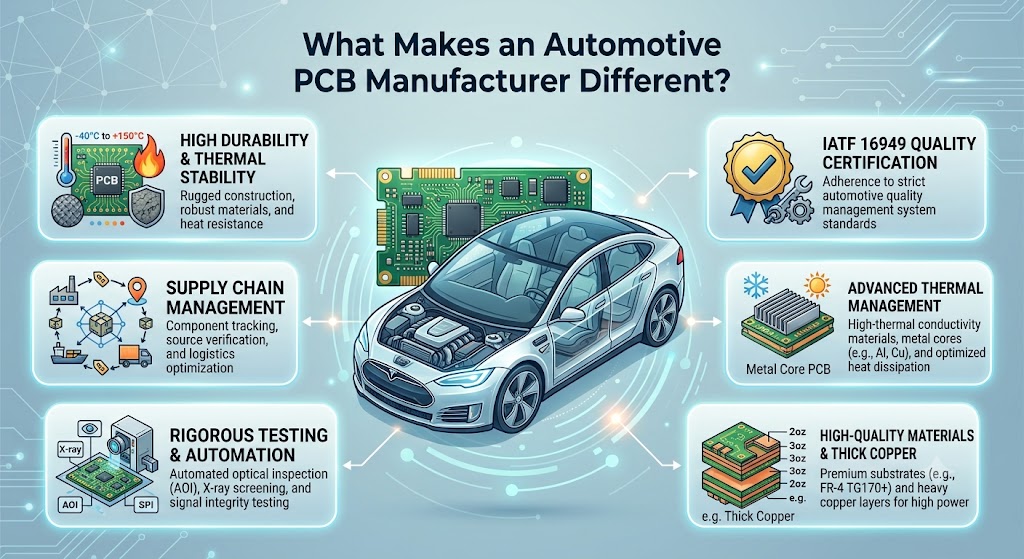
Automotive electronics operate under more demanding conditions than many conventional consumer products. PCBs may be exposed to temperature changes, vibration, moisture, electrical loads, and long operating cycles while supporting safety-critical or performance-critical functions.
For that reason, a capable automotive PCB manufacturer needs more than standard board fabrication or SMT assembly capacity.
Key requirements typically include:
- Consistent PCB and component quality
- Controlled SMT and soldering processes
- High-accuracy component placement
- Automated inspection and electrical testing
- Production traceability
- Process validation and documentation
- Reliability-oriented manufacturing controls
- Engineering and NPI support
- Ability to scale from prototype to volume production
The distinction between PCB fabrication and PCBA manufacturing is also important. A PCB fabricator produces the bare circuit board, while a PCBA manufacturer assembles electronic components onto that board. U.S. OEMs should therefore define whether they need PCB fabrication, PCBA assembly, or a complete electronics manufacturing partner before comparing suppliers.
For a deeper technical explanation, see this guide to the PCB Board Fabrication vs PCB Assembly.
How We Selected the Top 10 Automotive PCB Manufacturers
This list is not intended to represent an absolute ranking by revenue or company size. Instead, it is a practical shortlist for U.S. OEMs evaluating potential manufacturing partners.
The evaluation considers:
| Criteria | Importance |
|---|---|
| Automotive electronics experience | High |
| PCB/PCBA manufacturing capability | High |
| Quality systems and process control | High |
| Inspection and testing | High |
| Reliability capability | High |
| Engineering and NPI support | Medium–High |
| Production scalability | Medium–High |
| Global supply-chain footprint | Medium–High |
| U.S. customer support | Medium |
One important distinction is that not every company below is a traditional bare-PCB fabricator. Some are EMS providers specializing in automotive PCBA and electronics manufacturing. This broader approach reflects how U.S. OEMs actually source electronic assemblies.
Top 10 Automotive PCB Manufacturers for U.S. OEMs in 2026
1. TTM Technologies — United States
TTM Technologies is one of the strongest options for OEMs that require advanced, high-reliability PCB technology. Its automotive portfolio covers applications including ADAS, e-mobility, electrified powertrains, connectivity, radar, and other high-performance vehicle electronics.
TTM supports advanced PCB technologies including HDI, rigid-flex and semi-flex structures, heavy copper, controlled impedance, thermal-management solutions, and RF/mmWave technologies. The company also states that several of its sites have TS 16949 certification and that it supports automotive programs from prototype through volume production.
Best fit: U.S. OEMs and Tier-1 suppliers requiring advanced PCB fabrication, high reliability, thermal management, HDI, or high-frequency technologies.
2. AT&S — Austria / Global

AT&S is a major advanced PCB and interconnect technology manufacturer with a strong automotive focus. Its automotive solutions address increasingly complex vehicle electronics, including sensing, high-speed data communication, autonomous driving, infotainment, and high-performance computing.
AT&S highlights technologies such as high-frequency antenna PCBs for radar, HDI, mSAP, substrate-like PCBs, and advanced interconnect solutions. The company also reports automotive experience dating back to 1961.
Best fit: OEMs developing advanced ADAS, radar, connectivity, high-density, and high-speed automotive electronics.
3. Jabil — United States / Global

Jabil is a large global electronics manufacturing provider with extensive automotive capabilities. Its automotive manufacturing activities cover ADAS, connectivity, electrification, charging, car computing, and software-defined vehicle hardware.
Jabil supports the product lifecycle from design and NPI through supply-chain management and automated high-volume assembly. Its automotive facilities include IATF- and VDA-certified manufacturing environments, making the company relevant for OEMs that require automotive-specific production systems.
Jabil also supports complex electrification products such as battery management systems, inverters, converters, and charging systems.
Best fit: Large automotive programs requiring global manufacturing scale, advanced engineering, and high-volume PCBA production.
4. Sanmina — United States / Global

Sanmina provides end-to-end electronics manufacturing services for the automotive industry, including design engineering, manufacturing, NPI, testing, and supply-chain management.
The company reports more than 30 years of automotive experience and operates automotive production in IATF 16949-certified facilities worldwide. Its automotive quality approach includes lean manufacturing, Six Sigma, zero-defect initiatives, DFx, PPAP, PFMEA, and DFMEA.
This combination is valuable when an OEM needs more than PCB assembly and wants a manufacturing partner involved from engineering through production.
Best fit: Automotive OEMs and Tier-1 suppliers requiring end-to-end EMS, engineering, NPI, testing, and global production.
5. Flex — United States / Global

Flex is a global electronics manufacturing and supply-chain partner serving automotive OEMs. Its capabilities extend across design, engineering, manufacturing, supply chain, and logistics.
For automotive power electronics, Flex has experience with inverter PCBAs, battery management systems, DC/DC converters, onboard chargers, and other electrification technologies. It combines manufacturing scale with design-for-manufacturing and design-for-cost support.
Its global footprint can also be useful for OEMs looking to balance regional manufacturing capacity and supply-chain resilience.
Best fit: Global automotive programs involving EV power electronics, BMS, charging, and complex PCBA production.
6. Zollner Elektronik — Germany / Global
Zollner is an EMS provider offering electronics manufacturing from PCBA production through complete devices and systems. Its capabilities include SMT and THT production, optical inspection, X-ray, ICT, functional testing, and other validation methods.
One notable strength is traceability. Zollner describes an MES-based system designed to provide traceability across the production lifecycle, from receiving through delivery and even later refurbishment or repair.
The company also supports DFM, DFT, DFA, and other engineering analyses during product development.
Best fit: OEMs needing complex PCBA, testing, traceability, engineering support, and global EMS capabilities.
7. Kimball Electronics — United States / Global
Kimball Electronics has a long-standing automotive electronics business focused on high-reliability applications. Its automotive portfolio includes steering, braking, powertrain management, suspension control, body electronics, infotainment, and ADAS-related applications.
The company also provides PCB assembly, testing, engineering support, NPI, process validation, automation, and reliability testing.
For U.S. buyers, Kimball is particularly relevant when product reliability and automotive safety functions are central to supplier selection.
Best fit: Automotive OEMs and Tier-1 suppliers sourcing high-reliability PCB assemblies for safety and vehicle-control applications.
8. Celestica — Canada / Global

Celestica is a global electronics manufacturing services provider with capabilities spanning PCB assembly, engineering, NPI, supply-chain management, testing, and system assembly.
Its PCB assembly capabilities include DFM, PCB layout, packaging, lead-free soldering, test development, and data analytics for flexible, rigid-flex, and hybrid PCB assemblies.
Celestica also maintains engineering and manufacturing capabilities across the Americas, Asia, and Europe, which can be useful for global OEM programs requiring regional production and supply-chain support.
Best fit: OEMs requiring complex PCBA, engineering, testing, and global manufacturing support.
9. TT Electronics — United Kingdom / Global
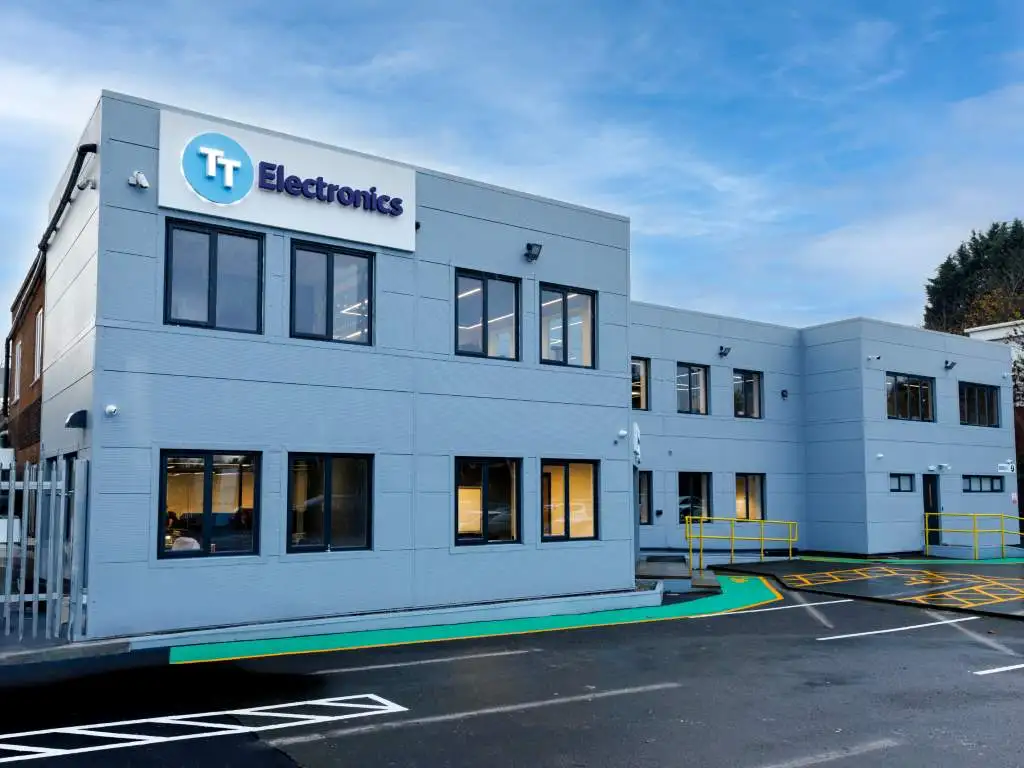
TT Electronics provides high-reliability PCBA and electronics manufacturing services, including SMT, through-hole and mixed-technology assembly, automated inspection, X-ray, and in-circuit testing.
Its Mexicali facility, for example, lists PCBA/SMT assembly, test solutions, and IATF 16949 certification alongside ISO 9001 and other compliance credentials.
For automotive applications, the company’s broader electronics expertise includes components and assemblies designed for harsh environments and demanding reliability requirements.
Best fit: Automotive and industrial OEMs requiring high-reliability electronics, mixed-technology PCBA, testing, and manufacturing in North America.
10. SHDC Electronics — Vietnam
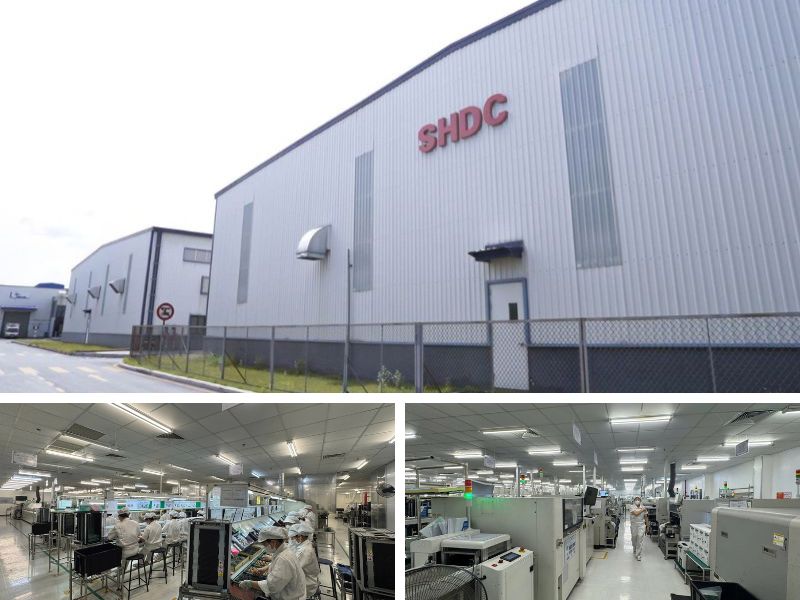
SHDC Electronics is a Vietnam-based EMS manufacturer that provides electronics manufacturing from component soldering and assembly through testing and final packaging. Its current factory is located in Vietnam Singapore Industrial Park in Hai Duong, with approximately 2,600 m² of production area and around 150 employees. The facility includes four high-speed SMT lines, three DIP lines, plus dedicated assembly, testing, and packaging lines.
From a manufacturing standpoint, SHDC has a broad PCBA process flow covering IQC, SMT placement, reflow, AOI, ICT, FCT, visual inspection, OQC, and packaging. Its equipment includes Yamaha YSM20R and YSM10 placement machines, Yamaha 3D SPI, Yamaha 3D AOI, Kyoritsu ICT, and additional functional, high-voltage, A/V, and aging testing capabilities.
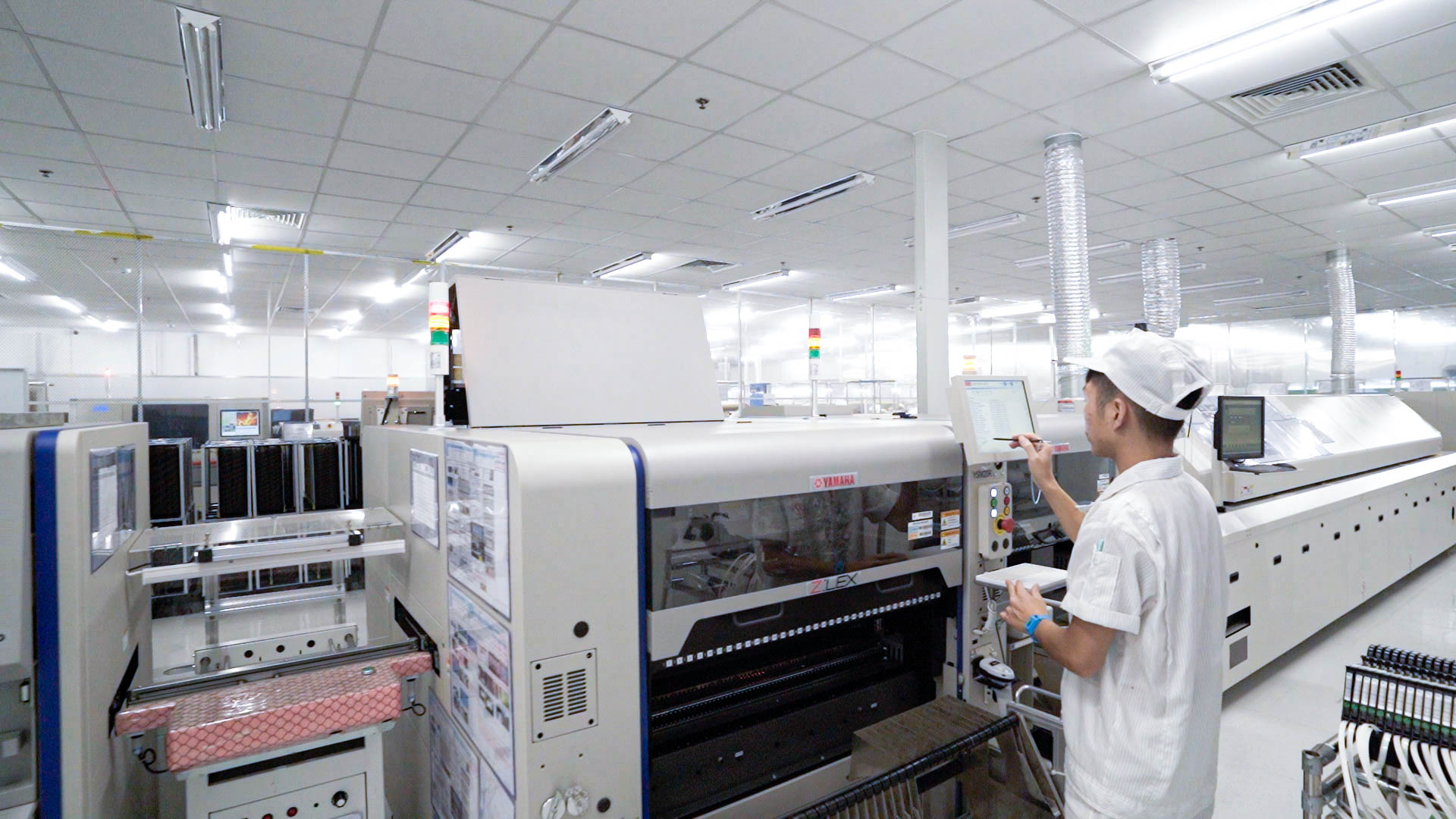
The Yamaha YSM20R supports component sizes from 0402 (01005″) through 32 × 32 mm, with stated placement accuracy of ±0.03 mm and a rated speed of 95,000 CPH. The YSM10 supports components from 03015 through 55 × 100 mm, with stated placement accuracy of ±0.035 mm.
SHDC also uses ERP, PLM, SCM, and MES/QMS systems to support production management and process data.
For U.S. OEMs, the key attraction is not that SHDC is the largest manufacturer on this list. Rather, it is a Vietnam-based EMS option for OEMs evaluating supply-chain diversification, PCBA manufacturing, SMT/DIP production, and scalable electronics production.
Importantly, SHDC’s current company profile does not establish an automotive-specific IATF 16949 certification or automotive-specific production qualification. OEMs should therefore evaluate project-specific requirements, certifications, PPAP expectations, reliability validation, and customer-specific quality requirements during supplier qualification.
For more background, see SHDC’s guide to PCBA manufacturing in Vietnam.
Automotive PCB Manufacturer Comparison
| Manufacturer | Primary strength | PCB / PCBA | Automotive focus | Global footprint |
|---|---|---|---|---|
| TTM Technologies | Advanced PCB technology | PCB + PCBA | Strong | Yes |
| AT&S | HDI, high-frequency PCB | PCB | Strong | Yes |
| Jabil | Automotive EMS at scale | PCBA / EMS | Strong | Yes |
| Sanmina | End-to-end automotive EMS | PCBA / EMS | Strong | Yes |
| Flex | EV and power electronics | PCBA / EMS | Strong | Yes |
| Zollner | Complex PCBA and testing | PCBA / EMS | Strong | Yes |
| Kimball Electronics | Safety-critical automotive electronics | PCBA / EMS | Strong | Yes |
| Celestica | Complex electronics manufacturing | PCBA / EMS | Relevant | Yes |
| TT Electronics | High-reliability PCBA | PCBA / EMS | Relevant | Yes |
| SHDC Electronics | Vietnam-based EMS | PCBA / EMS | Developing | Regional / expanding |
The comparison also illustrates why U.S. OEMs should not treat all “automotive PCB manufacturers” as interchangeable. Some specialize in bare-board technology, while others are better suited to assembled PCBAs, testing, NPI, and full electronics manufacturing.
What Should U.S. OEMs Look for in an Automotive PCB Manufacturer?
Before moving from a shortlist to an RFQ, evaluate the manufacturer against the actual requirements of your product.
1. Automotive experience and quality systems
Ask whether the manufacturer has relevant automotive production experience and which quality systems apply to the specific manufacturing site.
Do not evaluate a corporate certification alone. Confirm that the actual factory and production line supporting your project are covered.
2. PCB and component capability
Check:
- Component package range
- Fine-pitch capability
- PCB dimensions
- Board thickness
- SMT and through-hole capability
- High-current or thermal requirements
- Special materials or PCB structures
For complex programs, a DFM guide for electronics manufacturing can help engineering teams identify manufacturing risks before production.
3. Inspection and testing
A credible supplier should be able to explain its inspection strategy rather than simply saying that every board is “tested.”
Depending on the product, this may include SPI, AOI, X-ray, ICT, functional testing, high-voltage testing, environmental testing, or other customer-specific validation.
SHDC, for example, documents SPI, AOI, ICT and FCT within its manufacturing and test capabilities.
4. Traceability and production data
Traceability becomes especially important when an OEM needs to investigate field failures, manage engineering changes, or identify affected production lots.
U.S. buyers should ask how the supplier records component lots, production parameters, inspection results, test results, and finished-product information.
SHDC’s production-management architecture includes ERP, PLM, SCM and MES/QMS systems.
You can also review this practical guide to traceability in electronics manufacturing.
5. NPI and scalability
A manufacturer should have a clear path from prototype validation to stable production.
Ask:
- Who owns NPI engineering?
- How are DFM issues handled?
- How are first articles approved?
- How is production transferred from pilot to volume?
- What capacity is available after ramp-up?
For more detail, see NPI in electronics manufacturing.
Automotive PCB Manufacturing Trends U.S. OEMs Should Watch in 2026
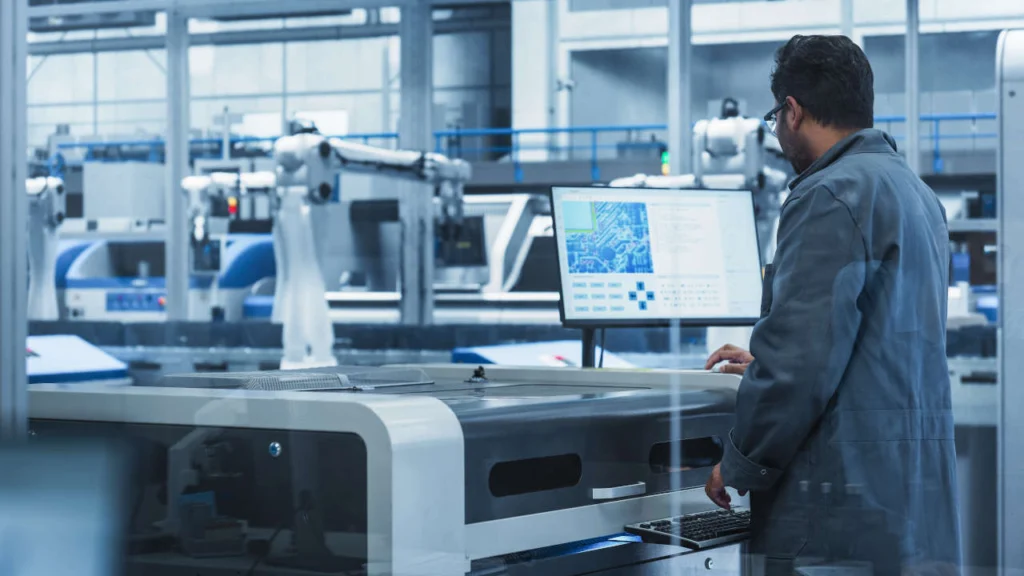
EV and battery electronics
Electrification is increasing demand for high-current, high-voltage, thermal-management, charging, inverter, and BMS electronics. TTM, Jabil, and Flex all highlight electrification and power-management applications within their automotive portfolios.
ADAS and vehicle sensing
Radar, LiDAR, cameras, and centralized computing are increasing requirements for high-density and high-speed PCB technologies. AT&S, for example, highlights radar and ADAS-related PCB solutions, while Jabil identifies ADAS as a core automotive manufacturing area.
Greater supply-chain diversification
U.S. OEMs are also paying more attention to geographic concentration and supply-chain resilience. This makes regional manufacturing alternatives increasingly relevant when evaluating PCB and PCBA suppliers.
For a broader discussion, see Electronics Supply Chain Diversification: Why U.S. OEMs Are Looking Beyond China.
Why Vietnam Is Becoming an Option for Automotive Electronics Manufacturing
Vietnam is increasingly relevant to U.S. OEMs considering additional electronics manufacturing locations in Asia. The opportunity is particularly relevant for companies looking for a combination of electronics manufacturing capability, regional supply-chain access, and manufacturing diversification.
However, Vietnam should not be treated as a universal replacement for every automotive PCB program. The right decision depends on product complexity, required certifications, PCB technology, component sourcing, testing requirements, production volume, and customer-specific automotive qualification.
SHDC’s existing automotive content provides more detail on automotive electronics manufacturing in Vietnam and automotive PCB assembly in Vietnam.
Why U.S. OEMs May Consider SHDC
For U.S. OEMs comparing automotive PCB and PCBA suppliers, SHDC is most relevant where the requirement is electronics manufacturing and PCBA production rather than advanced bare-PCB fabrication.
Its current production profile includes:
- 4 high-speed SMT lines
- 3 DIP lines
- Assembly, test, and packaging lines
- Yamaha SMT equipment
- 3D SPI
- 3D AOI
- ICT
- Functional testing
- High-voltage and aging testing
- ERP, PLM, SCM and MES/QMS production systems
The company also has a planned Phase 2 expansion at Lai Cach Industrial Park, listed in its company profile for March 2027. The planned facility is stated as 1.2 hectares with 28 lines and 1,000 headcount, so these figures should be treated as planned future capacity rather than current production capacity.
For OEMs considering Vietnam as part of a broader China+1 or regional sourcing strategy, the next step should be a site-specific capability review and RFQ rather than relying solely on a supplier ranking.
FAQs
What is an automotive PCB manufacturer?
An automotive PCB manufacturer produces bare PCBs or assembled PCBAs used in vehicle electronics. Depending on the supplier, capabilities may include PCB fabrication, SMT, through-hole assembly, inspection, testing, NPI, and full electronics manufacturing.
What makes automotive PCB manufacturing different?
Automotive electronics generally require stronger process control, reliability, traceability, testing, and production consistency than many standard consumer-electronics applications.
What certifications should an automotive PCB manufacturer have?
The appropriate certifications depend on the product, customer, location, and supply-chain requirements. U.S. OEMs should verify the certifications that apply to the specific production site rather than assuming that a corporate-level certification covers every factory.
Should U.S. OEMs choose a PCB fabricator or PCBA manufacturer?
It depends on the sourcing model. If the OEM already has an established PCB fabrication supplier, a specialized PCBA manufacturer may be sufficient. If the OEM needs assembled boards, testing, NPI, and production support, an EMS/PCBA partner may be a better fit.
Is Vietnam a viable option for automotive PCB manufacturing?
Vietnam can be a viable option for selected automotive electronics programs, particularly where OEMs are seeking supply-chain diversification and electronics manufacturing capacity in Southeast Asia. Qualification should still be based on technology, quality systems, testing, certifications, capacity, and product-specific requirements.
Final Takeaway
The best automotive PCB manufacturer for a U.S. OEM is not necessarily the largest company or the lowest-cost supplier. The right partner depends on the technology and production requirements of the program.
For advanced bare-PCB applications, companies such as TTM Technologies and AT&S stand out for their PCB technology depth. For large-scale automotive PCBA and EMS programs, Jabil, Sanmina, Flex, Zollner, Kimball Electronics, Celestica, and TT Electronics offer broader manufacturing and engineering capabilities.
SHDC represents a different proposition: a Vietnam-based EMS manufacturer with established SMT, DIP, assembly, inspection, and testing infrastructure. For U.S. OEMs exploring manufacturing diversification in Southeast Asia, it can be a supplier worth qualifying based on the specific program requirements.
The strongest sourcing decision comes from comparing actual factory capability, quality systems, testing coverage, traceability, engineering support, and scalable capacity against the requirements of your automotive electronics program—not from a ranking alone.