
 Tiếng Việt
 日本語
日本語
If you’re still sourcing automotive PCB assemblies from China in 2026, you’re paying a 145% import tariff on every board that crosses into the U.S. market. Your Vietnam-sourced competitor is paying 3–8%. That gap doesn’t close — it compounds. This guide covers everything US procurement teams need to evaluate Vietnam as a primary source for automotive PCB assembly: standards, cost models, supplier qualification, and where SHDC fits in your supply chain.
What Makes Automotive PCB Assembly Different From Standard PCBA

Most electronics contract manufacturers can build a PCB. Far fewer can build one that survives a decade in an engine bay, passes PPAP Level 3, and carries zero field failures. Understanding that gap is the first step in evaluating any automotive PCBA supplier — in Vietnam or anywhere else.
The Three Tiers of PCB Assembly Quality
The IPC-A-610 standard defines three acceptability classes for electronic assemblies:
- Class 2 — Consumer and general electronics. Acceptable defect rate ~0.5%. Most Vietnam EMS companies operate here.
- Class 2+ — Industrial electronics. Tighter process controls, longer service life expectations.
- Class 3 — High-reliability applications including automotive, aerospace, and medical. Zero tolerance for safety-critical failures. Full traceability mandatory. This is the standard your automotive supply chain requires.
The gap between Class 2 and Class 3 is not incremental — it is a fundamentally different manufacturing system. Buyers who assume a consumer electronics PCBA supplier can execute automotive work without verification are setting up a costly qualification failure.
Why Automotive Grade Demands a Different Manufacturing System
Component qualification is the first differentiator. Automotive-grade components must be qualified to AEC-Q standards: AEC-Q100 for integrated circuits, AEC-Q200 for passive components, AEC-Q101 for discrete semiconductors. These standards define qualification testing for temperature cycling, humidity, mechanical stress, and electrical parametric stability across automotive operating ranges (-40°C to +150°C). A supplier without a formal AEC-Q incoming inspection process is not ready for automotive work — regardless of their SMT line quality.
Statistical Process Control (SPC) is mandatory at every production stage. Automotive supply chains require documented evidence that processes are in control — not just that finished products passed inspection. Cpk ≥ 1.33 is the automotive standard (vs 1.00 for consumer electronics). This means tighter process windows and more frequent measurement.
PPAP (Production Part Approval Process) is the automotive industry’s qualification language. PPAP Level 3 — the most common Tier-1 requirement — demands 18 documentation elements including design records, process flow diagrams, control plans, measurement system analysis (MSA), and initial process capability studies. A supplier who doesn’t know what PPAP means without explanation is not an automotive supplier.
Testing depth for automotive PCBA goes well beyond standard AOI. The complete stack includes: 3D SPI (solder paste inspection) → 3D AOI (post-reflow) → X-ray for BGA and hidden joints → ICT (In-Circuit Testing) → FCT (Functional Circuit Testing) → High voltage test → Aging/burn-in for reliability screening. Each stage is documented. Each failure is traceable.
The Consumer Electronics Trap
Vietnam has dozens of capable SMT assembly companies that excel at high-volume consumer electronics PCBA. That capability does not automatically transfer to automotive. Before qualifying any Vietnam supplier for automotive work, verify their IATF 16949 certification status directly on the IATF Global Oversight database — not from a certificate copy. Certificate copies can be outdated or misrepresented. The database is the authoritative source.
Vietnam’s Automotive PCB Assembly Ecosystem in 2026
Vietnam’s position in global automotive electronics is no longer speculative. The infrastructure, workforce, and supplier ecosystem are in place. What procurement teams need is an accurate picture of current capability — not marketing language.
The Numbers That Matter
- $8B+ in automotive parts and electronics exports annually (2025 estimate), growing 18–22% per year
- 200+ IATF 16949-certified manufacturers in Vietnam as of 2025 — tripled since 2020
- 60+ global automotive Tier-1 suppliers operating in Vietnam: Bosch, Denso, Sumitomo Electric, Yazaki, TE Connectivity
- Vietnam’s automotive parts export value to the U.S. grew 34% year-over-year in 2023–2024
- Samsung’s Vietnam manufacturing complex — the world’s largest Samsung mobile production facility — has directly upgraded the regional PCB assembly workforce and component supplier ecosystem
These are not projections. They are the current state of the market, documented by World Bank Vietnam investment data and Vietnam’s General Statistics Office.
Why the China+1 Shift Is Structural, Not Cyclical
Procurement teams who are waiting for the tariff situation to normalize are misreading the signal. Section 301 tariffs at 145% on Chinese electronics are not a negotiating tactic — they reflect a structural realignment of US-China trade policy that has bipartisan support and a multi-year implementation history. The hidden risks of manufacturing electronics in China extend beyond tariffs:
- UFLPA compliance overhead: $1–3 per unit for China-sourced supply chains, negligible for Vietnam. The Uyghur Forced Labor Prevention Act creates port-hold risk and compliance documentation burden for any supply chain with Xinjiang exposure — a risk that simply does not exist for Vietnam-origin production.
- China labor cost inflation: Manufacturing labor in Guangdong province has risen over 300% since 2005. The cost advantage that originally justified China sourcing has substantially eroded.
- Geopolitical concentration risk: Single-country sourcing is a single point of failure. COVID-19 supply chain disruptions cost US manufacturers an estimated $1.9 trillion (McKinsey Global Institute, 2021). The China+1 strategy is not risk aversion — it is basic supply chain engineering.
Vietnam captures this shift from multiple angles. Vietnam vs China PCB assembly cost analysis consistently shows Vietnam’s total landed cost advantage at 50–55% for US-destined products when tariffs are properly accounted for. Vietnam holds 15+ Free Trade Agreements including CPTPP and EVFTA, providing preferential tariff access to the US, EU, Japan, and South Korea markets simultaneously.
What Vietnam Can — and Cannot — Deliver Today
Intellectual honesty matters in sourcing decisions. Here is an accurate capability map:
| Product Category | Vietnam Capability | Key Consideration |
|---|---|---|
| Automotive PCBA subassemblies | ✅ Strong & growing | Verify IATF 16949 per supplier |
| Wiring harnesses & connectors | ✅ World-class | 15+ year established ecosystem |
| Infotainment / display PCBA | ✅ Strong | Consumer electronics overlap |
| EV BMS / OBC boards | ⚠️ Emerging fast | Verify capability per supplier |
| Full ECU integration | ⚠️ Tier-1 suppliers only | Bosch, Continental — not contract mfg |
| Advanced radar / LiDAR modules | ❌ Limited | Still primarily Japan/Korea/Germany |
Technical Capabilities Required for Automotive PCB Assembly
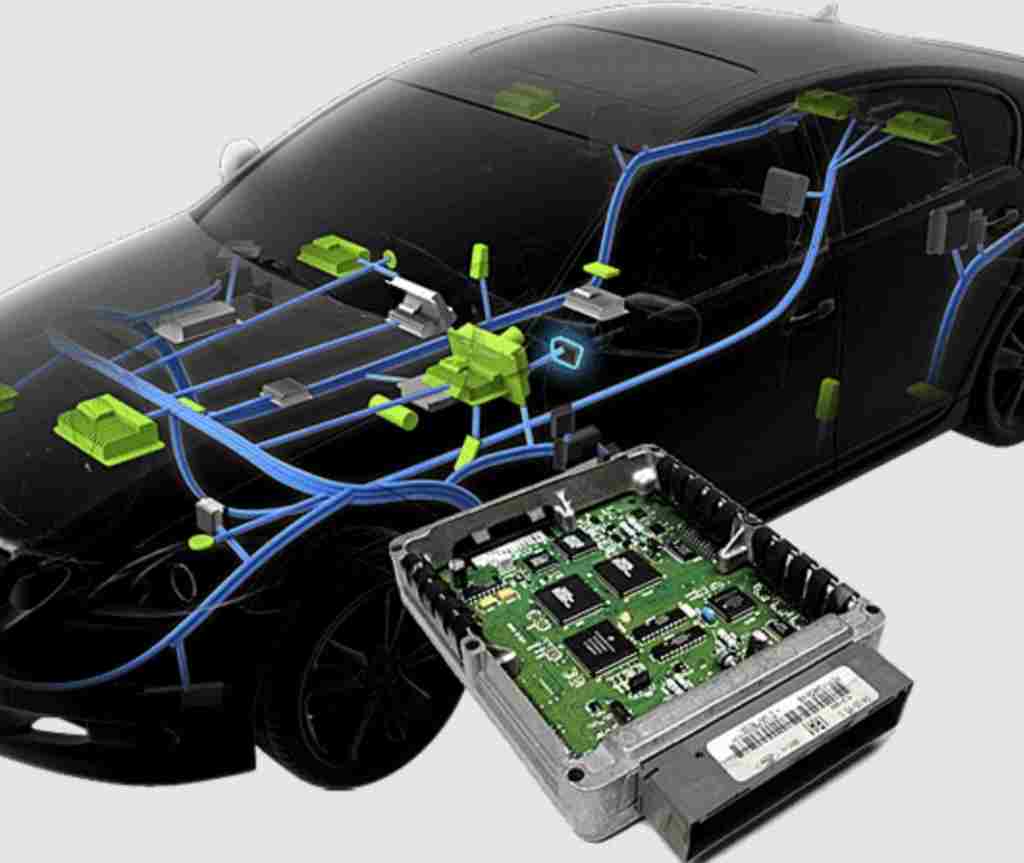
This is where supplier evaluation gets specific. Generic capability statements mean nothing in automotive sourcing. The questions below are the ones your engineering team should be asking.
SMT Line Requirements for Automotive Grade
Placement accuracy is the baseline specification. Automotive-grade SMT assembly requires ±0.03mm or better with Cpk ≥ 1.33 — tighter than the Cpk ≥ 1.00 standard acceptable for consumer electronics. Equipment from Yamaha, Fuji, or Panasonic is the industry benchmark. Lines running generic or aging Chinese-manufactured placement machines cannot reliably hold automotive tolerances at production volume.
Nitrogen atmosphere reflow is not optional for Class 3 work. Nitrogen blanket during reflow eliminates oxidation at the solder joint interface, producing cleaner, more reliable joints with lower void rates. For automotive boards where solder joint reliability over a 10–15 year service life is required, nitrogen reflow is the standard — not a premium option.
Component range matters for automotive work. Fine-pitch automotive ICs (0.4mm pitch QFP, 0.5mm pitch BGA), 01005 passives for high-density designs, and large power connectors must all be handleable on the same line. Verify minimum component size capability and maximum component height/weight before qualification.
Through-Hole and Mixed-Technology Assembly
Most automotive PCBs are mixed-technology — SMT components on one or both sides, through-hole connectors, power components, and sometimes press-fit terminals. A supplier who only runs SMT cannot support the full assembly. SMT vs through-hole assembly capability should be verified together, not separately.
Wave soldering with nitrogen atmosphere is the standard for through-hole automotive assembly. Selective soldering is required for mixed boards where wave soldering would thermally stress nearby SMT components. Verify that the supplier has selective soldering capability in-house — outsourcing this step introduces traceability gaps and quality risk.
The Complete Inspection and Testing Stack
| Test Stage | Method | Automotive Requirement |
|---|---|---|
| Solder paste | 3D SPI | 100% of boards, pre-placement |
| Post-reflow | 3D AOI | 100% of boards, Class 3 criteria |
| Hidden joints | X-ray (BGA/QFN) | 100% for safety-critical assemblies |
| Electrical | ICT | Full net coverage per test spec |
| Functional | FCT custom fixtures | Application-specific pass/fail |
| Safety | High voltage test | Per product specification |
| Reliability | Aging / burn-in | Environmental stress screening |
Automated Optical Inspection (AOI) is the minimum. X-ray capability is non-negotiable for any board with BGA, QFN, or other hidden-joint components — which describes most modern automotive electronics. Suppliers without in-house X-ray are not equipped for automotive PCBA at Class 3 standards.
Traceability and MES — The Non-Negotiable
A single automotive field recall can cost $10M+ in direct costs, not counting brand damage and regulatory exposure. Traceability is how you contain it. Board-level traceability means every production unit is traceable to: the specific component lot numbers used, the machine and operator that processed it, the date and time of each production stage, and the test results at each inspection point.
This requires a Manufacturing Execution System (MES) with barcode or RFID scanning integrated at every production stage — not manual log sheets. Verify that the supplier’s MES can export traceability data in a format compatible with your OEM customer’s reporting requirements. This is a practical engineering question, not a theoretical one.
Total Cost of Ownership: Vietnam vs China for Automotive PCB Assembly
The most common mistake in automotive PCB assembly sourcing is comparing factory unit prices. That comparison systematically underestimates China’s true cost in 2026 and overestimates Vietnam’s.
The Full Cost Model
For a typical automotive PCBA subassembly with a ~$20 factory unit price, here is what the total landed cost actually looks like for a US OEM:
| Cost Component | China | Vietnam (SHDC / VSIP HD) |
|---|---|---|
| Factory unit cost | $20.00 | $21.00–$22.00 |
| US import tariff (145% / 8%) | $29.00 | $1.60–$1.76 |
| Ocean freight (per unit) | $1.20 | $1.30 |
| UFLPA compliance overhead | $2.50 | $0.20 |
| CBP hold risk (amortized) | $1.50 | $0.05 |
| Insurance & logistics | $0.50 | $0.55 |
| Total landed cost (US) | ~$54.70 | ~$24.70–$25.86 |
| Cost advantage | — | ~55% lower |
Figures are industry benchmark estimates. Actual costs depend on HTS classification, volume, product complexity, and logistics routing. Contact SHDC for a program-specific cost model.
Vietnam’s factory unit cost is marginally higher — $1–2 per unit — because Vietnam’s electronics manufacturing ecosystem is less mature than China’s at the component sourcing level. That $1–2 premium is eliminated many times over by the tariff differential alone. At 10,000 units per month, the tariff difference between China and Vietnam represents $274,000 in monthly cost savings on a $20 part. That is not a rounding error — it is a strategic imperative.
Labor Cost in Context
Vietnam assembly labor runs $2.50–$4.00 per hour fully loaded. China (Guangdong province) runs $6–$9 per hour. The labor cost advantage is real but secondary. Even if Vietnam and China had identical labor costs, the tariff differential would still make Vietnam the economically dominant choice for any automotive electronics destined for the US market. Procurement teams who frame this as a “labor arbitrage” decision are underestimating the magnitude of the tariff variable.
The Supply Chain Concentration Risk Premium
No cost model that omits concentration risk is complete. A supply chain with 100% China sourcing carries a risk premium that does not appear on any invoice but materializes catastrophically when disruption occurs. The dual-source Vietnam strategy is not just cost optimization — it is supply chain insurance with a positive expected return. Alternatives to China PCB assembly provides a detailed comparison of available options for US OEMs building resilient supply chains.
SHDC Electronics: Automotive PCB Assembly at VSIP Hai Duong
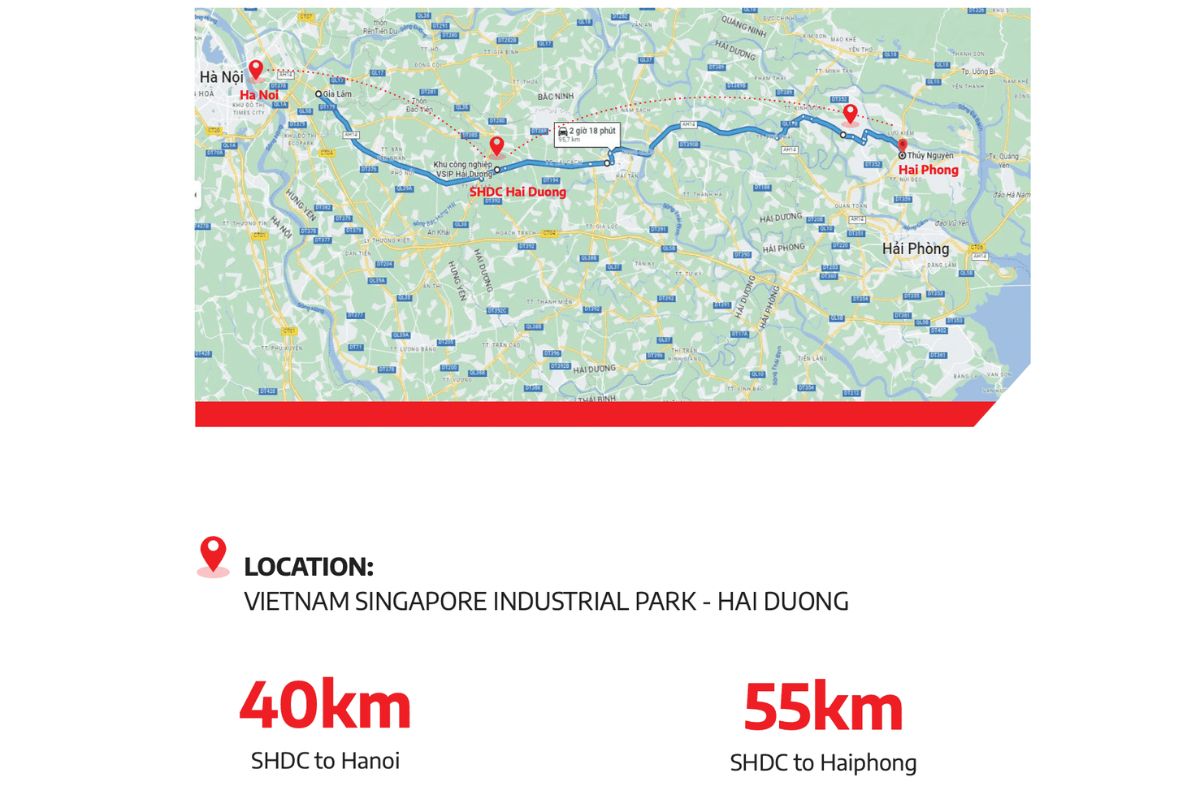
SHDC Electronics (Công ty TNHH Điện tử SHDC) is a 100% Vietnamese-owned EMS provider and member of NAHACO Group, operating from VSIP Hai Duong — 45km from Hanoi, 55km from Hai Phong deep-water port. The facility spans 2,600m² with 150 trained employees across engineering, production, QC, PMC, purchasing, and logistics.
Production Infrastructure
| Capability | Specification | Automotive Relevance |
|---|---|---|
| SMT lines | 4 lines, Yamaha YSM20R/YSM10, ±0.03mm, Cpk ≥ 1.00 | Fine-pitch automotive ICs |
| SMT capacity | 98M component placements/month | High-volume subassembly programs |
| DIP lines | 3 lines, N₂ wave soldering, JT Wave machine | Power connectors, THT components |
| Production output | 1.7M PCS/month | Scalable for Tier-2/3 programs |
| 3D SPI | Yamaha YSI-SP | 100% paste inspection |
| 3D AOI | Yamaha YSI-V | 100% post-reflow inspection |
| ICT | Kyoritsu F-2000 Plus | Full electrical validation |
| Traceability | AIT Tracer + MES/QMS | Board-level production records |
| Digital systems | ERP + PLM + SCM + MES | 30% reduction in decision time, 30% reduction in defective inventory |
Automotive Applications SHDC Currently Supports
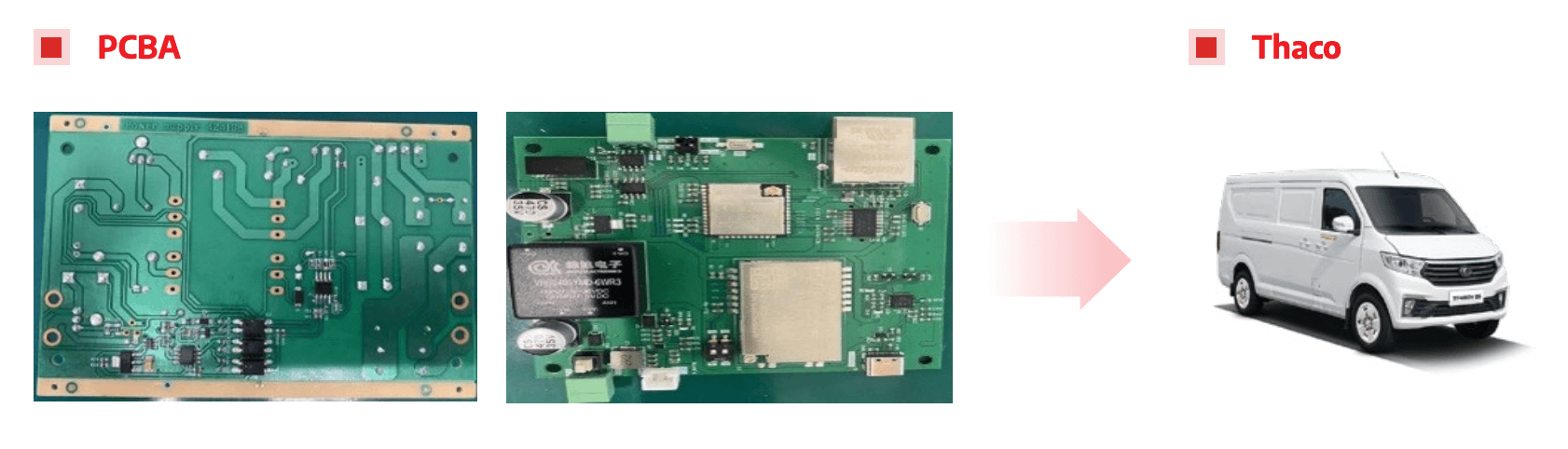
SHDC’s automotive PCBA experience includes production for Thaco — Vietnam’s largest automotive manufacturer — demonstrating real-world execution in automotive supply chain environments, not just claimed capability. Beyond automotive, SHDC’s GaN fast charger manufacturing (65W–150W series) demonstrates direct technical relevance to EV onboard charging electronics, DC-DC converters, and power management subassemblies — the fastest-growing segment of automotive electronics sourcing.
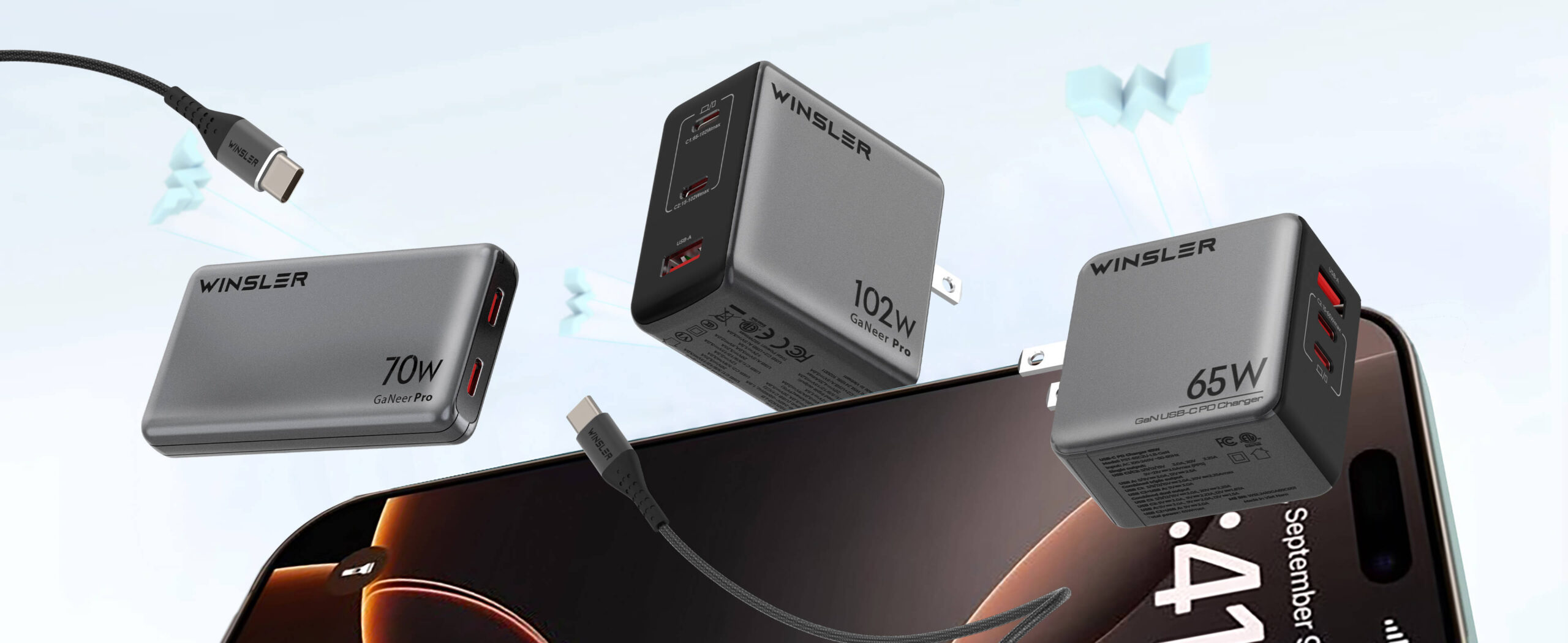
SHDC also develops and manufactures the Winsler consumer electronics brand — evidence of full-stack product development capability from design through certification and manufacturing. For OEM buyers evaluating engineering depth, a proprietary brand is a meaningful signal that the supplier can manage technical complexity independently, not just execute on customer-provided designs.
Where SHDC Fits in Your Automotive Supply Chain
Intellectual honesty about positioning matters. SHDC operates as a Tier-2 or Tier-3 PCBA supplier for automotive supply chains — the right fit for:
- Subassemblies feeding into IATF 16949-certified Tier-1 integrators
- Non-safety-critical automotive electronics: infotainment subassemblies, interior electronics, accessory systems
- EV charging equipment for consumer and commercial use (OBC subassemblies, GaN charging electronics)
- Automotive electronics programs where consumer electronics quality standards are the applicable specification
For safety-critical Tier-1 automotive applications requiring full IATF 16949 certification at the assembly level, SHDC is transparent about its current positioning and can discuss qualification roadmap timelines directly. For the high-reliability PCBA programs that fit SHDC’s current capability profile, the combination of Yamaha SMT infrastructure, AIT Tracer traceability, UFLPA-compliant supply chains, and English-language engineering communication makes SHDC a serious candidate for US OEM evaluation.
How to Qualify a Vietnam Automotive PCB Assembly Partner: 6-Step Framework
This framework reflects the actual qualification process for a PCBA subassembly without complex regulatory certification requirements. Timeline: 3–6 months for straightforward programs, 9–18 months for PPAP Level 3 with full automotive certification testing.
Step 1 — Capability Screening (Weeks 1–2) Build a minimum requirements checklist before issuing any RFQ: SMT placement accuracy spec, minimum component size, in-house X-ray capability, MES/traceability system, English-speaking engineering contact. Verify IATF 16949 status on the IATF Global Oversight database — not from a certificate copy. Eliminate suppliers who cannot meet baseline requirements before investing time in RFQ evaluation.
Step 2 — RFQ with Complete Technical Package (Weeks 2–4) Issue RFQs with complete documentation: Gerber files, BOM with manufacturer part numbers, assembly drawings, test specification, target annual volume, and delivery requirements. Evaluate response quality as carefully as unit price. A supplier who returns a detailed DFM review with specific questions about your design is demonstrating engineering capability. A supplier who quotes without asking technical questions has not read your package. How to evaluate a PCB fabrication factory provides a structured framework for this assessment.
Step 3 — NDA and Factory Audit (Weeks 3–6) On-site audit checklist: ESD controls throughout the production floor, component storage conditions (humidity and temperature controlled), operator IPC certification records, calibration records for all inspection equipment, and MES demonstration with live traceability data. For initial screening, a structured video walkthrough with documentation review is an acceptable alternative to travel — but plan an on-site visit before production qualification.
Step 4 — Prototype / First Article Build (Weeks 6–14) The prototype PCBA build is where paper capability meets physical execution. Conduct a formal First Article Inspection (FAI) against your complete technical specification. Expect 1–3 DFM iteration cycles for complex automotive boards. Document all deviations and corrective actions formally — this documentation becomes part of your PPAP package.
Step 5 — PPAP Submission (Weeks 10–22) PPAP Level 3 requires 18 documentation elements. The most common failure points are MSA (Measurement System Analysis) — which requires dedicated gauge R&R studies that take time to execute properly — and SPC data, which requires a sufficient production run to generate statistically meaningful process capability data. Start both early. Suppliers who begin SPC data collection at the pilot run stage (rather than during PPAP preparation) are demonstrating genuine automotive process discipline.
Step 6 — Pilot Production and Volume Ramp (Month 6+) Run a contained pilot of 100–500 units under full production conditions — not prototype conditions. Go/no-go criteria: yield rate against target, cycle time against quoted lead time, and traceability data completeness. Maintain your China source as backup during the initial ramp period (3–6 months minimum). Progressive volume transfer reduces transition risk while building confidence in the Vietnam supplier’s production consistency.
FAQs
Is Vietnam capable of IATF 16949-certified automotive PCB assembly? Yes — Vietnam has 200+ IATF 16949-certified manufacturers as of 2025, triple the 2020 count. However, many electronics contract manufacturers in Vietnam serve primarily consumer electronics and have not pursued automotive certification. Verify at the facility level, not the country level.
What US tariff rate applies to automotive PCB assemblies from Vietnam? Vietnam-origin automotive electronics generally qualify for US MFN (Most Favored Nation) tariff rates of 0–15% depending on HTS code classification. Confirm the specific rate for your product with a licensed customs broker. The tariff impact comparison between China and Vietnam provides a detailed breakdown by product category.
Can Vietnam suppliers handle AEC-Q qualified components? Capable suppliers maintain approved vendor lists (AVLs) for AEC-Q components and have formal incoming inspection processes for AEC-Q compliance verification. Not all Vietnam EMS companies have this process formalized — it is a specific qualification question to ask during supplier screening.
What is a realistic lead time for automotive PCB assembly in Vietnam? Standard production: 3–5 weeks. Quick-turn PCB assembly for prototypes: 1–2 weeks. Full PPAP Level 3 qualification: 3–9 months for straightforward assemblies, 9–18 months for safety-critical applications with full certification testing.
How does SHDC position itself for automotive PCB assembly programs? SHDC operates as a Tier-2/Tier-3 PCBA supplier — the right fit for automotive subassemblies, non-safety-critical automotive electronics, and EV charging/power electronics. For programs requiring full IATF 16949 certification at the assembly level, SHDC can discuss qualification roadmap options directly with your engineering team.
Conclusion
Vietnam is not the future of automotive PCB assembly for US OEMs — it is the present. The tariff math is unambiguous, the manufacturing infrastructure is in place, and the qualification pathways are established. The manufacturers who complete Vietnam qualifications in 2026 will carry a structural cost advantage over China-only competitors for the next decade.
For Tier-2 and Tier-3 automotive subassemblies, infotainment electronics, and EV charging applications, SHDC Electronics offers a proven, UFLPA-compliant, export-ready manufacturing option at VSIP Hai Duong. Submit your technical package and receive a DFM review and cost comparison within 48 hours.
Request Automotive PCB Assembly Quote from SHDC →
