
 Tiếng Việt
 日本語
日本語
US companies evaluating Vietnam as an electronics manufacturing location must decide more than where production will take place. They also need the right manufacturing model for their product and supply-chain strategy. Buyers must select an approach that fits their engineering resources, intellectual property strategy, product requirements, and launch schedule. Two terms appear frequently during supplier research: EMS & ODM. Both models can include component sourcing, electronics assembly, testing, box build, and packaging. The key difference is who owns and controls the product design.
An EMS provider normally manufactures from technical files supplied or controlled by the customer. An ODM typically provides an existing product design or reference platform that the buyer can customize and sell under its own brand. This choice affects development cost, time to market, product differentiation, IP control, and the ability to move production later.
Quick answer: Choose EMS when your company owns the design and needs control over the BOM, firmware, testing, and manufacturing data. Choose ODM when you want to launch from an existing platform with less internal engineering work.
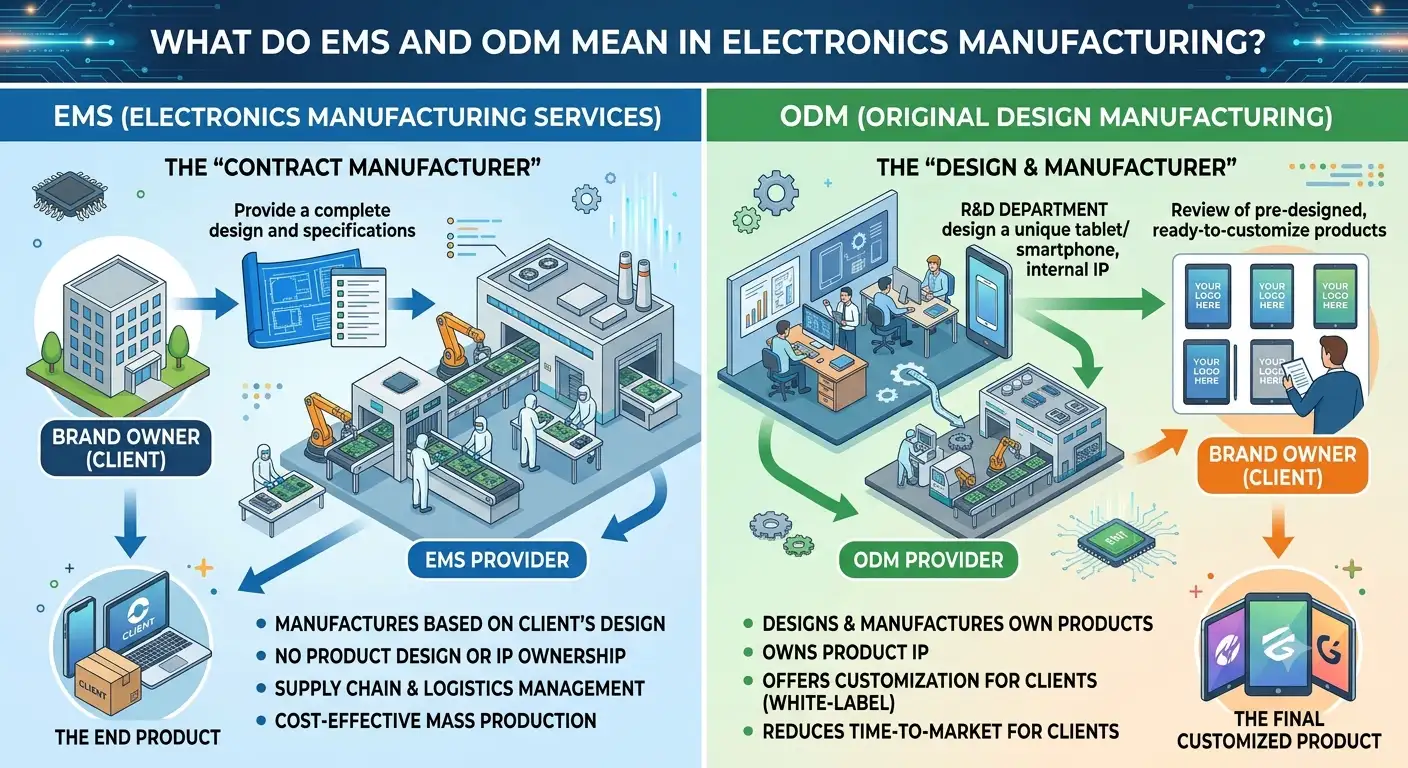
What Do EMS and ODM Mean in Electronics Manufacturing?
What Is EMS Manufacturing?
EMS stands for Electronics Manufacturing Services. An EMS provider builds electronic products or assemblies for another company, usually according to customer-controlled specifications.
Depending on the project, electronics manufacturing services in Vietnam may include technical review, component procurement, PCB assembly, programming, testing, box build, labeling, packaging, and logistics support.
In a typical EMS program, the OEM supplies or approves the schematic, Gerber files, BOM, mechanical drawings, firmware, test requirements, and quality criteria. The supplier may suggest improvements through DFM, DFT, value engineering, or component lifecycle review, but the customer normally retains control of the product definition.
What Is ODM Manufacturing?
ODM stands for Original Design Manufacturer. An ODM develops or owns a product design or technology platform and manufactures products based on that platform for other brands.
The buyer may customize elements such as:
- Logo and product name
- Enclosure, color, or external appearance
- Packaging
- Firmware configuration
- User interface
- Connectors
- Selected components
- Performance options supported by the platform
Some ODM projects are close to private-label production, while others involve substantial joint engineering.
ODM can reduce the work required before launch, but it may create greater supplier dependence when the buyer does not own the source design, firmware, tooling, or complete manufacturing package.
How Are OEM, EMS, and ODM Related?
- OEM: Owns the brand, market strategy, and product requirements.
- EMS: Builds mainly from the OEM’s design.
- ODM: Provides a design platform and manufacturing capability.
A US OEM can use either model. Some companies also use a hybrid approach: the supplier provides a reference design, while the OEM owns the firmware, enclosure, application layer, or other differentiating features.
EMS vs ODM Manufacturing: Key Differences
| Factor | EMS Manufacturing | ODM Manufacturing |
|---|---|---|
| Product design | Supplied or controlled by the OEM | Supplied or developed by the ODM |
| Design ownership | Usually retained by the OEM | Depends on the contract |
| Engineering responsibility | OEM-led with supplier support | ODM-led or shared |
| Customization | High | Usually limited by the platform |
| Time to market | Depends on design readiness | Often shorter with a mature platform |
| BOM control | Usually customer-approved | Often ODM-controlled |
| Product differentiation | Greater control | May be more limited |
| Supplier switching | Easier with complete customer-owned files | Harder without full design access |
| Best fit | Proprietary products | Faster launch from existing concepts |
Product Design and Engineering Responsibility
In an EMS project, the customer usually owns the product architecture. The supplier reviews manufacturability, component risk, process capability, and test coverage.
A capable partner may support DFM for electronics manufacturing, but that support does not automatically transfer ownership of the product design.
In an ODM project, the supplier normally owns the original platform. Both parties must distinguish pre-existing ODM technology from new engineering funded specifically for the buyer.
For example, an ODM may retain ownership of the original PCB architecture while the customer owns a newly developed enclosure, customized firmware module, or brand-specific interface.
Intellectual Property and Design Ownership
IP is one of the most important EMS & ODM differences.
In an EMS relationship, the customer should normally control the files required to reproduce the product, including:
- Schematic
- PCB layout
- Gerber and manufacturing files
- Firmware and source code
- Mechanical drawings
- Approved BOM
- Test requirements
- Engineering change records
In an ODM relationship, the buyer may receive only selected documentation. The contract should clarify ownership and access rights for source code, CAD files, Gerber files, test software, fixtures, molds, tooling, and new features.
The WIPO guidance on technology transfer agreements emphasizes defining ownership, access rights, benefits, and risks in collaborative technology arrangements. Confidential information should also be protected through suitable NDAs and trade-secret controls; WIPO provides additional guidance on trade secret protection.
Component Sourcing and BOM Control
In EMS manufacturing, the OEM usually provides or approves the BOM and Approved Vendor List. The supplier may source components, propose alternates, and manage lifecycle risks, but substitutions should follow a documented approval process.
In ODM manufacturing, the supplier often controls more of the BOM because the component choices are part of its platform.
Buyers should confirm:
- Which components are fixed
- Which parts may be substituted
- Whether substitutions require written approval
- How component obsolescence is managed
- How Product Change Notifications are communicated
- Whether second sources have been qualified
- Who carries excess or obsolete inventory risk
The NIST supply-chain risk management resources provide a useful framework for identifying supplier, component, logistics, and operational risks.
Customization, NPI, and Tooling
EMS generally supports deeper customization because the product is based on the OEM’s own design. ODM customization is constrained by the existing platform. Major changes can add engineering fees, tooling, validation work, and schedule risk.
In an EMS program, both parties usually collaborate through NPI in electronics manufacturing, covering prototype builds, DFM and DFT review, fixture development, pilot production, validation, and ramp-up.
In an ODM program, part of the NPI work may already be completed. However, new firmware, enclosures, components, or market-specific requirements can trigger additional validation.
Tooling ownership and transfer rights must be stated explicitly in the agreement. Paying for a mold, fixture, programming device, or test system does not automatically guarantee unrestricted ownership unless the contract says so.
How EMS Manufacturing Works in Vietnam
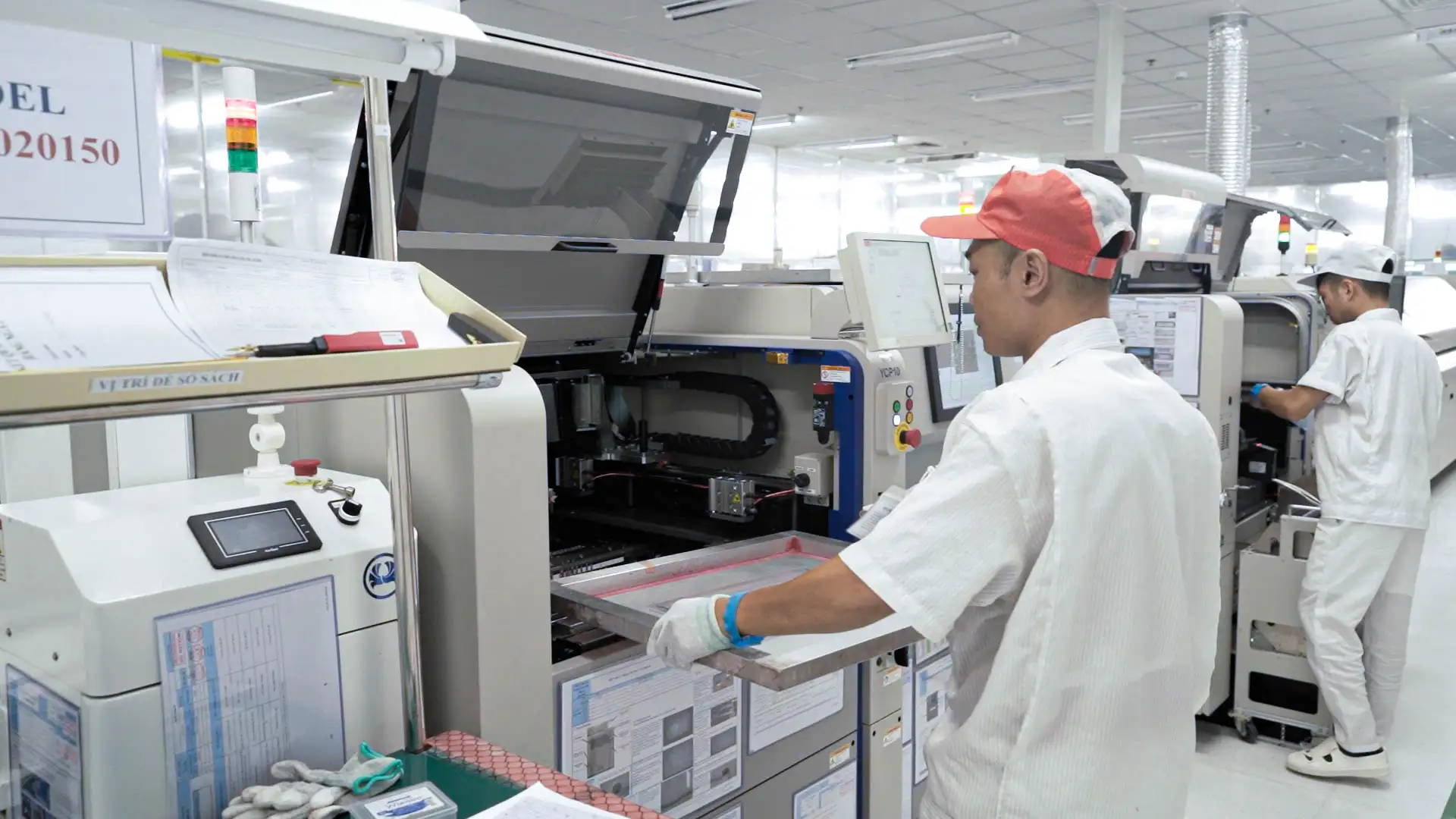
1. Technical File and RFQ Review
The OEM provides available manufacturing files, such as:
- Gerber and fabrication files
- BOM and Approved Vendor List
- Pick-and-place data
- Assembly drawings
- Firmware and programming instructions
- Test requirements
- Order quantities
- Production forecast
- Packaging requirements
- Target schedule
A complete package improves quotation accuracy and helps the manufacturer identify missing information before production begins.
US buyers can use a structured PCBA manufacturer RFQ checklist before requesting pricing.
2. DFM, DFT, and Supply-Chain Review
The supplier reviews:
- PCB panelization
- Component placement
- Soldering risks
- Test-point access
- Component lifecycle status
- Supplier lead times
- Potential alternative components
- Fixture and programming requirements
DFM asks whether the design can be manufactured consistently. DFT asks whether production defects can be detected efficiently.
This is why DFT and DFM should be reviewed together before mass production.
A design may be easy to assemble but difficult to test. Conversely, a board with many test points may still create manufacturing problems if component spacing, thermal management, or solder-joint accessibility has not been considered.
3. Prototype and Pilot Production
The supplier builds prototypes or an engineering lot, records defects, verifies programming and testing, and confirms process parameters.
Complex programs may move through:
- Engineering Validation Testing
- Design Validation Testing
- Production Validation Testing
- Pilot production
- Mass-production release
The exact process depends on the product, industry, customer requirements, and level of production risk.
4. Mass Production and Quality Control
The production flow may include:
- Incoming material inspection
- Solder-paste printing
- Component placement
- Reflow soldering
- Automated Optical Inspection
- Through-hole assembly
- In-Circuit Testing
- Functional testing
- Visual inspection
- Final quality checks
- Packaging
IPC describes J-STD-001 as an industry-consensus standard for soldering processes and materials in electrical and electronic assemblies. Buyers can review the current IPC J-STD-001 information when defining workmanship requirements.
The testing strategy should be defined according to product risk. AOI can identify many placement and soldering defects, but it does not replace electrical or functional testing.
5. Box Build and Delivery
A broader EMS scope may include:
- Cable and wire-harness integration
- Mechanical assembly
- Firmware loading
- Product configuration
- Final functional testing
- Labeling
- Packaging
- Finished-goods delivery
Buyers needing end-to-end support should assess full turnkey electronics manufacturing, not only PCB assembly capability.
How ODM Manufacturing Works in Vietnam
An ODM project usually starts with platform selection rather than a customer-owned manufacturing package.
Select a Suitable Platform
The buyer reviews the existing:
- Hardware architecture
- Firmware
- Product performance
- Component status
- Production maturity
- Testing process
- Compliance history
- Customization options
The selected platform should already meet most of the product requirements. If extensive redesign is necessary, the project may lose the speed and cost advantages normally associated with ODM.
Define the Customization Scope
Both parties should document:
- Mandatory specifications
- Optional features
- Target cost
- Forecast volume
- Target market
- Branding
- Packaging
- Enclosure requirements
- Firmware changes
- Launch schedule
The specification should clearly separate required features from preferences. This helps prevent uncontrolled engineering changes during development.
Confirm Ownership and Access Rights
Before paying development or tooling fees, the buyer should confirm what documentation will be delivered.
Important questions include:
- Will the buyer receive source code?
- Will PCB and mechanical CAD files be provided?
- Is the BOM locked?
- Can the design be manufactured elsewhere?
- Who owns new engineering work?
- Who owns paid tooling?
- Can the supplier sell the same platform to competitors?
- What happens when the agreement ends?
Validate the Customized Product
Even a proven platform must be validated after modification.
A new enclosure can affect thermal behavior. Firmware changes can affect performance. New connectors can affect mechanical reliability. Component substitutions can affect test results, regulatory compliance, or product lifespan.
The agreement must therefore define engineering-change control and customer approval requirements.
When Should a US OEM Choose EMS Manufacturing?
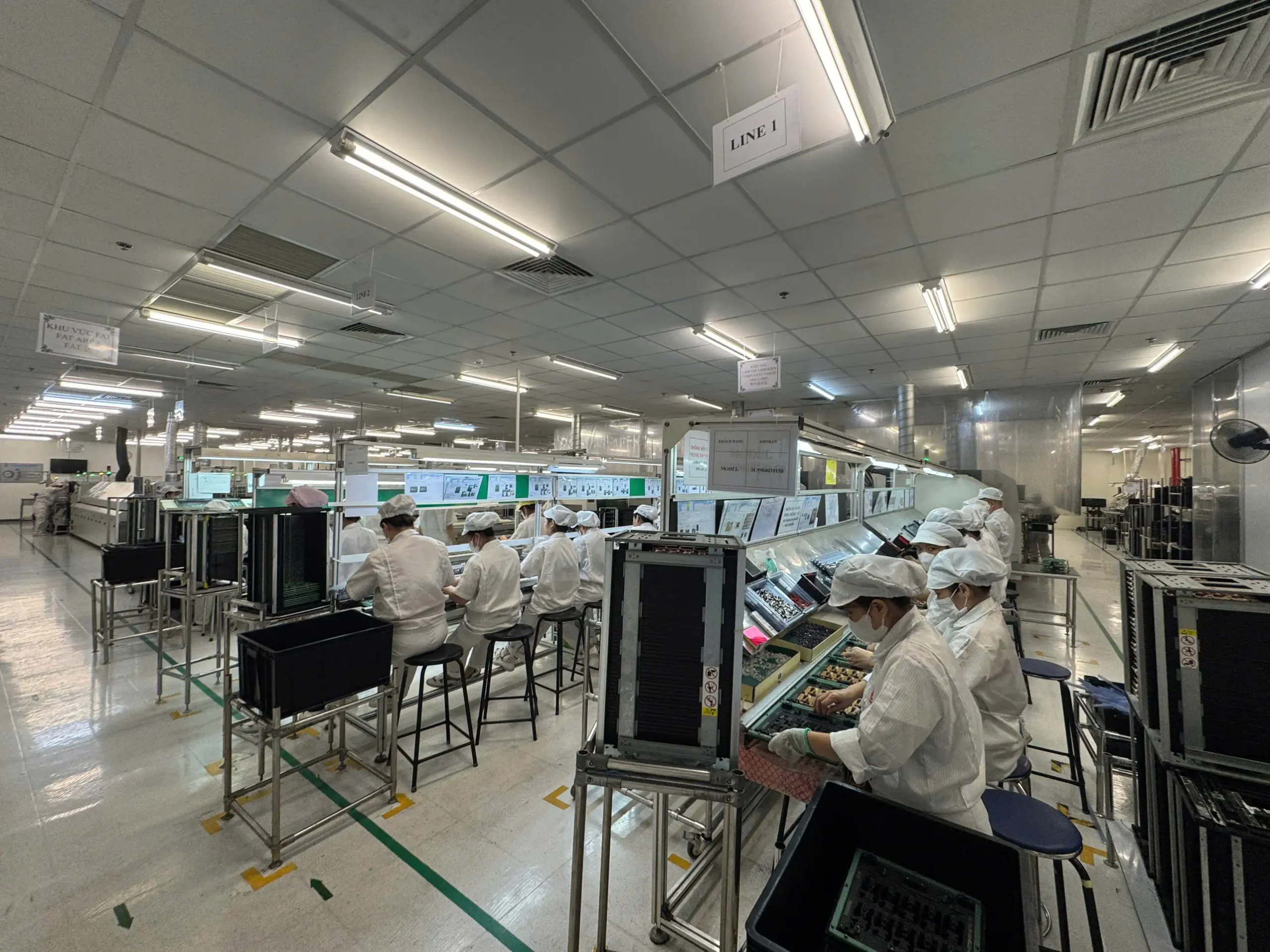
EMS is usually the stronger option in the following situations.
The OEM Already Owns a Complete Design
The company has a mature schematic, PCB layout, firmware, mechanical design, BOM, and test specifications.
In this case, the OEM needs a production partner rather than an external product platform.
Product IP Is a Core Competitive Advantage
Unique circuitry, firmware, algorithms, or system architecture may create the product’s value. These assets should remain under customer control.
An EMS relationship allows the OEM to use the supplier’s manufacturing infrastructure without giving up ownership of the product definition.
The Product Requires Extensive Customization
EMS is often more appropriate for:
- Industrial controls
- Power electronics
- Automotive modules
- Medical electronics
- Proprietary IoT products
- Specialized consumer electronics
These programs frequently require product-specific materials, interfaces, validation procedures, traceability, and testing.
Long-Term Production Control Matters
A customer-controlled EMS model supports:
- Approved supplier management
- Engineering Change Order approval
- Manufacturing record retention
- Quality requirement control
- Test-coverage management
- Future production transfer
When Should a US OEM Choose ODM Manufacturing?
ODM may be more practical when speed and reduced internal development work are more important than full design control.
Faster Time to Market Is the Priority
A mature platform can reduce initial hardware design, prototype development, sourcing, and production setup work.
This advantage is greatest when the buyer accepts the platform with limited changes.
Internal Engineering Resources Are Limited
Startups, distributors, retailers, and established brands entering a new product category may use ODM to test demand without first building a complete hardware development team.
The Product Uses a Common Architecture
ODM is suitable when standard hardware already exists and differentiation comes mainly from:
- Branding
- Packaging
- Software configuration
- User experience
- Distribution channels
- Customer service
Limited Customization Is Acceptable
ODM works best when the buyer can use the platform with controlled changes.
Excessive customization may remove the original cost and speed advantages while leaving the customer dependent on technology it does not fully own.
Can US OEMs Use a Hybrid EMS-ODM Model?
Yes. A hybrid model can combine a supplier’s reference design with customer-owned differentiation.
Examples include:
- Supplier-owned hardware with customer-owned firmware
- A reference PCB with an OEM-designed enclosure
- An existing power platform with a customer-specific control board
- Joint development with ownership divided by workstream
- An ODM reference design later managed as a customer-controlled EMS program
The contract should define:
- Background IP
- Newly created IP
- License scope
- Product exclusivity
- Development fees
- Tooling ownership
- Source-code access
- Manufacturing rights
- Exit conditions
Hybrid EMS & ODM projects can work well, but unclear ownership creates long-term risk.
Key Contract and IP Questions for US OEMs
Before selecting an EMS & ODM partner, ask:
- Who owns the schematic, PCB layout, firmware, mechanical files, and test software?
- Which files will be delivered to the customer?
- Can the supplier use the same design for other buyers?
- Can components be changed without written approval?
- Who owns molds, fixtures, programming tools, and golden samples?
- Can production be transferred to another factory?
- What documentation must be provided during a transfer?
- How are subcontractors controlled?
- How is confidential data stored and accessed?
- What happens to inventory and tooling when the agreement ends?
The PCBA manufacturing contract questions provide a practical starting point for procurement and legal review.
How to Evaluate an EMS or ODM Partner in Vietnam
Technical and Engineering Capability
Assess the supplier’s capabilities in:
- DFM
- DFT
- NPI
- Prototype support
- Programming
- Fixture development
- Failure analysis
- Process engineering
- Production scaling
Equipment alone does not guarantee project success. The supplier must also have engineering processes for reviewing technical files, controlling changes, documenting production, and resolving defects.
Quality Management and Traceability
Review:
- Incoming inspection
- In-process controls
- Test capability
- Nonconformance handling
- Corrective actions
- Revision control
- Lot control
- Serial-number control
- Traceability in electronics manufacturing
A mature system combines prevention and verification. The article on QA/QI in EMS explains how quality assurance and inspection support each other.
Component Sourcing and Capacity
Ask about:
- Authorized sourcing channels
- Counterfeit prevention
- Second-source qualification
- Component lifecycle monitoring
- Current line utilization
- Bottleneck processes
- Capacity reservation
- Ramp-up planning
- Inventory ownership
A low quotation may not represent the true project cost if it depends on unverified suppliers, unstable component availability, or unrealistic capacity assumptions.
Communication and Program Management
For US OEMs, communication quality can be as important as production equipment.
Evaluate:
- English-language support
- Response times
- Project reporting
- Document control
- Schedule management
- Issue escalation
- Engineering-change handling
- Time-zone coordination
Factory Audit and Due Diligence
Use an electronics factory audit checklist and complete electronics supplier due diligence before awarding a critical program.
Verify documents, processes, equipment, capacity, and actual production practices rather than relying only on a sales presentation.
EMS vs ODM Decision Matrix for US OEMs
| Business condition | Recommended model |
|---|---|
| Complete proprietary design is available | EMS |
| Maximum control over IP and BOM is required | EMS |
| Extensive customization is required | EMS |
| Long-term production portability is important | EMS |
| Existing platform meets most requirements | ODM |
| Fast launch is more important than full design control | ODM |
| Internal hardware resources are limited | ODM |
| Reference design plus proprietary features is required | Hybrid |
| OEM wants customer-owned firmware on supplier hardware | Hybrid |
There is no universally better model. The correct EMS & ODM decision depends on what the company must own, what it can develop internally, and how much supplier dependence is acceptable.
Information to Include in an EMS or ODM RFQ
For an EMS RFQ, provide:
- Gerber and fabrication files
- BOM and Approved Vendor List
- Pick-and-place data
- Assembly drawings
- Firmware and test instructions
- Forecast and order quantities
- Quality requirements
- Packaging requirements
- Delivery location
- Target schedule
For an ODM inquiry, provide:
- Product application
- Target specifications
- Required customization
- Target market
- Compliance requirements
- Forecast volume
- Target launch date
- Branding and packaging requirements
- Expected design and IP ownership
Buyers should also clarify:
- Non-Recurring Engineering fees
- Minimum Order Quantity
- Tooling costs
- Testing scope
- Sample approval
- Lead time
- Payment terms
- Change-control requirements
The guide to electronics manufacturing MOQ explains why minimum quantities depend on procurement, setup, testing, and production economics rather than one universal number.
Working With an EMS Manufacturing Partner in Vietnam
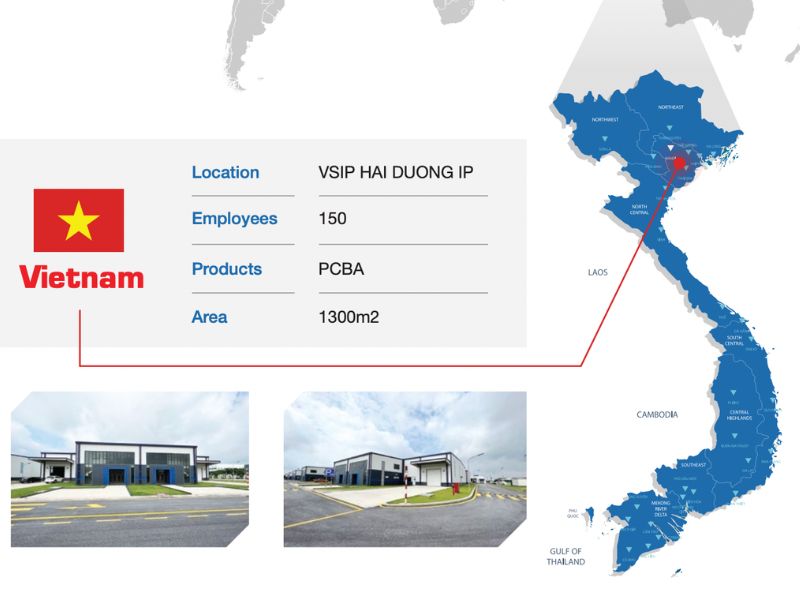
According to its company profile, SHDC Electronics provides EMS covering component soldering, assembly, testing, and final packaging, while also investing in automation and process improvement.
The profile lists four high-speed SMT lines, three DIP lines, and dedicated assembly, test, and packaging lines. Its documented production flow includes IQC, AOI, ICT, FCT, OQC, repair, packaging, and finished-goods warehousing.
This documented scope aligns most directly with an EMS engagement. US OEMs considering SHDC should provide their technical package, forecast, testing requirements, quality expectations, and desired production scope so the company can assess project fit and prepare an RFQ.
>>>Read more: SHDC – A Trusted Vietnam Electronics Manufacturing Company for Global Brands
Looking for an EMS Manufacturing Partner in Vietnam?
Share your BOM, Gerber files, forecast volume, test requirements, and target schedule with SHDC for technical and manufacturing review.
Frequently Asked Questions About EMS & ODM
What is the main difference between EMS and ODM?
EMS manufactures mainly from a customer-controlled design. ODM provides an existing design or platform and manufactures a customized version for the buyer.
Who owns the design in an ODM project?
Ownership depends on the contract. The ODM may retain its original platform, while the buyer may own funded custom features, tooling, branding, or other agreed deliverables.
Is EMS better for proprietary electronics?
Usually, yes. EMS is more suitable when the OEM needs control over the design, BOM, firmware, test strategy, and manufacturing data.
Can an ODM product be customized?
Yes, but the scope depends on platform architecture, budget, order volume, tooling, validation requirements, and commercial terms.
How can US OEMs protect IP?
Use clear contracts, NDAs, access controls, ownership clauses, tooling terms, source-code provisions, subcontractor controls, and defined transfer rights.
What files are needed for an EMS quotation?
Typical files include Gerber data, BOM, pick-and-place files, assembly drawings, firmware instructions, test requirements, forecast volume, and quality expectations.
Can a company switch from ODM to EMS later?
Potentially, but only if it has sufficient rights and access to the design, firmware, BOM, tooling, test systems, and manufacturing documentation.
Conclusion
The central EMS & ODM difference is design control. EMS is generally suited to US OEMs that already own a product and need a partner to source, assemble, test, package, and scale it. ODM is generally suited to companies that want to launch from an existing platform with less initial engineering work.
The choice should not be based only on unit price or speed. Buyers must evaluate IP ownership, BOM control, customization, tooling, testing, supplier-switching rights, quality systems, and long-term product strategy.
For proprietary products, a customer-controlled EMS relationship often provides stronger differentiation and manufacturing portability. For standardized products, ODM may reduce development effort. A hybrid model can work when ownership boundaries are documented clearly.
By defining requirements before requesting a quote and completing technical, quality, and commercial due diligence, US OEMs can select an EMS & ODM manufacturing in Vietnam model that supports both the immediate launch and the product’s long-term lifecycle.
>>>Read more: QA/QI in EMS: Quality Assurance and Inspection for Electronics Manufacturing
