
 Tiếng Việt
 日本語
日本語
In this article, QA/QI in EMS refers to Quality Assurance and Quality Inspection in electronics manufacturing. QA focuses on preventing defects through process control, documentation, supplier management, and production standards. QI focuses on inspecting materials, PCB assemblies, solder joints, test results, labels, packaging, and finished products against defined acceptance criteria.
This guide explains how QA/QI works in EMS manufacturing, what OEMs should expect from an electronics manufacturing partner, and which quality checkpoints matter most in PCB assembly and PCBA production.
What Does QA/QI in EMS Mean?
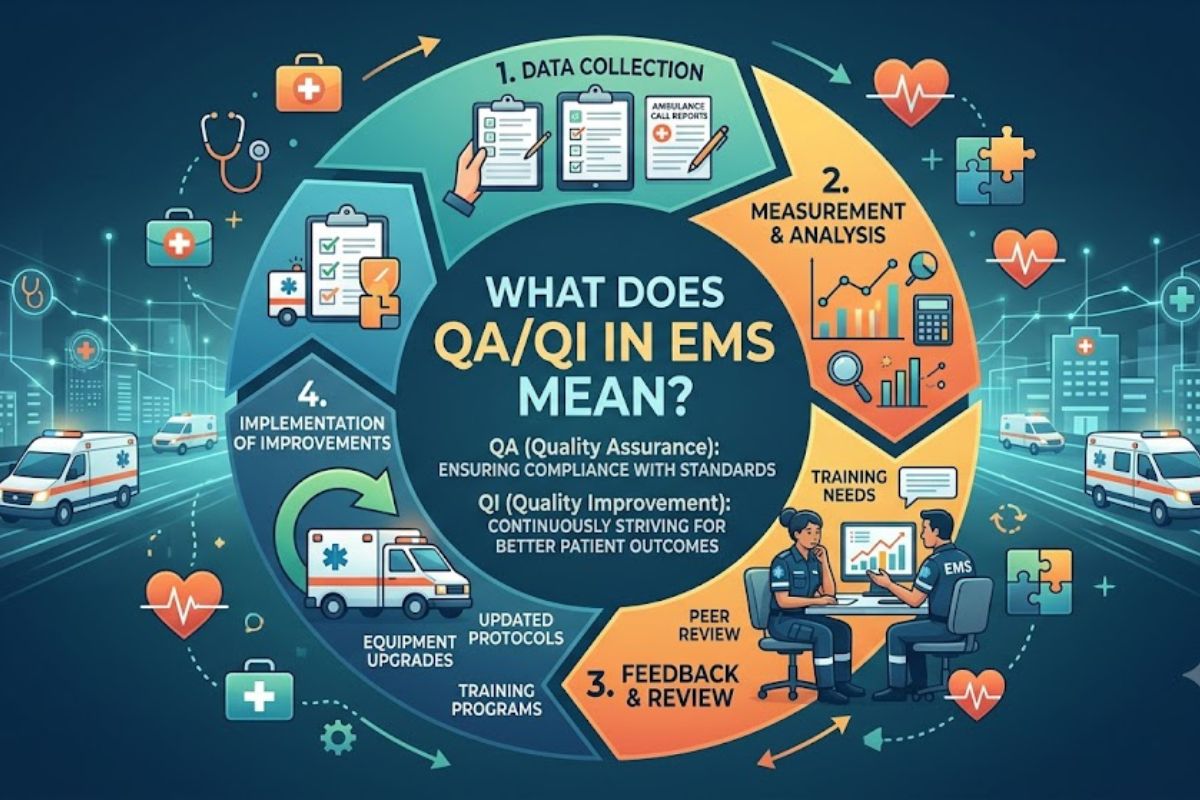
QA/QI in EMS is a structured approach to managing production risk. It combines preventive quality systems with inspection checkpoints to help OEMs reduce defects, improve process stability, and verify that finished electronic assemblies meet defined requirements.
QA — Quality Assurance in EMS Manufacturing
Quality Assurance is the preventive side of EMS quality management. It focuses on building a reliable manufacturing process before defects happen.
In an EMS environment, QA may include:
- Process planning and production standards
- Work instructions and standard operating procedures
- BOM and Gerber revision control
- Supplier qualification
- Production training
- Preventive quality control
- Engineering change control
- Corrective and preventive action process
For OEMs working with an EMS Vietnam partner, QA helps ensure that the supplier does not simply inspect finished products, but controls the manufacturing process from the beginning.
QI — Quality Inspection in EMS Manufacturing
Quality Inspection is the verification side of EMS quality. It checks whether materials, assemblies, solder joints, test results, packaging, and finished units meet project requirements.
QI in EMS manufacturing may include:
- Incoming Quality Control — IQC
- SMT inspection
- AOI inspection
- DIP and through-hole inspection
- ICT and FCT testing
- Visual inspection
- Outgoing Quality Control — OQC
- Packaging and label inspection
For OEMs sourcing PCBA manufacturer Vietnam services, QI provides the evidence needed to confirm that each production stage is checked before products move forward.
QA vs QC vs QI: What Is the Difference?
| Term | Meaning | Main Purpose | Example in EMS |
|---|---|---|---|
| QA | Quality Assurance | Prevent defects | Process control, work instructions, revision management |
| QC | Quality Control | Control production quality | Inspection checkpoints and defect tracking |
| QI | Quality Inspection | Detect and verify issues | IQC, AOI, ICT, FCT, OQC |
| Testing | Functional verification | Confirm product performance | Power-on test, firmware test, functional test |
In simple terms, QA prevents defects, QI detects defects, and testing verifies that the PCBA performs as intended.
Why QA/QI Matters in EMS Manufacturing
Electronics manufacturing has many potential failure points. A single PCBA may include hundreds of solder joints, fine-pitch components, polarity-sensitive parts, connectors, firmware, functional outputs, labels, and packaging requirements.
Common production risks include:
- Incorrect components
- Wrong polarity
- Solder bridges
- Insufficient solder
- Tombstoning
- Open circuits
- Short circuits
- Firmware mismatch
- Connector misalignment
- Functional failure
- Packaging or labeling error
Final inspection alone is not enough. If quality issues are found only at the final stage, rework cost increases and delivery schedules may be delayed. A stronger approach is to control quality at each production stage: material input, SMT, reflow, AOI, DIP, ICT, FCT, OQC, and shipment preparation.
This is especially important for OEMs sourcing PCB assembly Vietnam, where supplier evaluation should focus not only on assembly capability but also on inspection, testing, traceability, and documentation.
The QA/QI Process in EMS Manufacturing
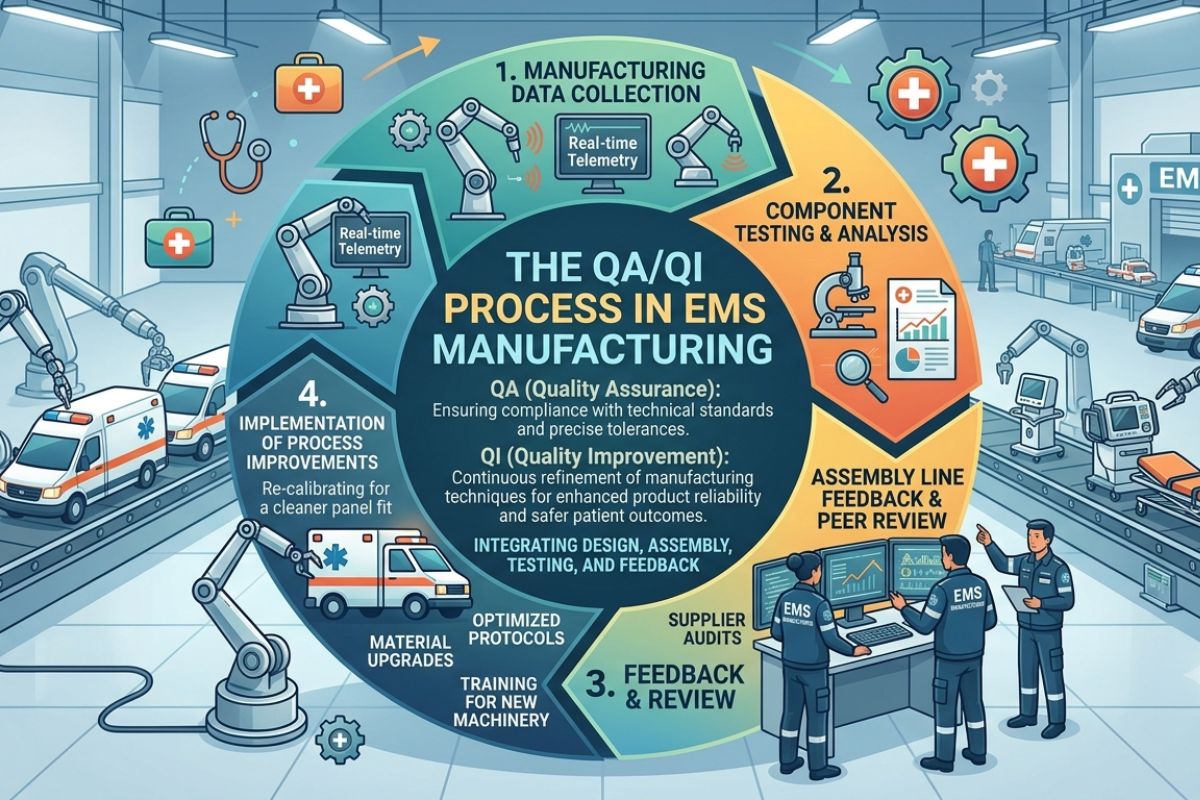
Step 1 — Incoming Quality Control: IQC
IQC verifies that incoming PCBs, components, materials, and packaging items meet project requirements before production starts. This is the first major quality checkpoint in EMS manufacturing.
IQC may check:
- PCB quality and surface condition
- Component part numbers
- Quantity and packaging condition
- Moisture-sensitive components
- Date code if required
- Supplier documentation
- Material damage
- Label and lot information
Expert Tip: For critical components, OEMs should define approved manufacturer part numbers and substitution rules before procurement. If substitutions are allowed, written approval and datasheet review should be required.
Step 2 — SMT Process Quality Control
SMT assembly quality depends on stencil printing, solder paste control, pick-and-place accuracy, reflow profile, and post-reflow inspection. A strong EMS partner should control the SMT process instead of relying only on final board inspection.
Important SMT quality checkpoints include:
- Solder paste printing
- Stencil alignment
- Component placement
- Polarity verification
- Reflow profile control
- First article inspection
- AOI after reflow
For OEMs evaluating SMT assembly Vietnam, it is useful to ask how the EMS partner controls placement accuracy, reflow profiles, fine-pitch components, and inspection after SMT.
Step 3 — SPI and AOI Inspection
SPI and AOI are important inspection steps in PCBA manufacturing. SPI checks solder paste quality before reflow, while Automated Optical Inspection checks visible placement and solder defects after SMT assembly.
AOI can help detect:
- Missing components
- Wrong orientation
- Component shift
- Solder bridges
- Insufficient solder
- Tombstoning
- Visible solder joint defects
However, AOI does not replace electrical or functional testing. Dense PCBAs, power products, and functional systems still need electrical verification through ICT, FCT, or customer-specific testing.
Step 4 — DIP and Through-Hole Inspection
DIP and through-hole assembly require careful inspection for inserted components, connector orientation, solder quality, and mechanical stability. This step is important for products that include connectors, terminal blocks, relays, switches, transformers, large capacitors, or power components.
Common DIP inspection points include:
- Correct component insertion
- Connector alignment
- Polarity and orientation
- Cold solder joints
- Insufficient solder
- Solder bridges
- Lead trimming quality
- Manual soldering defects
For mixed-technology boards, QA/QI in EMS should connect SMT inspection, DIP inspection, soldering control, and final testing into one documented process.
Step 5 — ICT Testing
In-Circuit Testing checks electrical connections and component-level issues on the assembled board. It can help detect shorts, opens, wrong component values, incorrect placement, and basic electrical path problems.
ICT is useful when a board has enough test access and the production volume justifies fixture development. It also requires design-for-testability planning, because the PCB layout must provide suitable test points and fixture contact areas.
OEMs should clarify:
- Whether ICT is required
- Who owns the fixture
- What pass/fail criteria apply
- Whether test records will be provided
- How failed units will be handled
Step 6 — FCT and Functional Testing
Functional Circuit Testing verifies whether the PCBA performs according to the product’s intended operation. While ICT checks component-level and circuit-level issues, FCT checks whether the board works as a system.
Functional testing may check:
- Power-on behavior
- Voltage output
- Current consumption
- Communication interface
- Button or sensor response
- LED or display behavior
- Firmware version
- Load condition
- System-level function
Expert Tip: OEMs should provide clear pass/fail criteria for functional testing. Without measurable limits, supplier and customer expectations may differ.
Step 7 — Aging Test, Burn-In, or Stress Screening
Some products require aging test or burn-in to identify early-life failures before shipment. This may be relevant for power supply products, chargers, industrial electronics, high-reliability electronics, or products exposed to continuous operation.
Aging test requirements should be defined in the RFQ because they affect equipment time, labor, lead time, and cost. If the requirement is added after quotation, the manufacturing price and delivery schedule may change.
Step 8 — OQC: Outgoing Quality Control
OQC verifies finished products before shipment. This final checkpoint confirms that units meet visual, functional, packaging, labeling, and shipping requirements.
OQC may include:
- Visual inspection
- Functional test confirmation
- Label verification
- Barcode check
- Serial number check
- Packaging inspection
- Carton label check
- Shipping quantity verification
For export-oriented EMS projects, packaging and label verification should be treated as part of quality control, not as a secondary warehouse task.
QA/QI Documentation OEMs Should Request

Documentation is one of the most important parts of QA/QI in EMS. Without records, it is difficult to confirm what was inspected, what failed, how failures were repaired, and which revision was produced.
Inspection Records
OEMs may request:
- IQC records
- AOI results
- ICT results
- FCT results
- OQC reports
- Nonconformance reports
- Rework records
- Shipment inspection reports
Revision Control Documents
Revision control is critical in PCBA manufacturing. The EMS partner should know which BOM, Gerber, pick-and-place file, firmware version, test procedure, assembly drawing, and packaging specification are approved for production.
For projects with frequent changes, OEMs should define an Engineering Change Order process. A structured Engineering Change Orders process reduces the risk of building the wrong version.
Corrective Action Reports
When defects occur, the EMS partner should document root cause, containment action, corrective action, and preventive action. This helps prevent repeated failures instead of only repairing defective units.
Corrective action documentation may include root cause analysis, 8D reports, rework records, and process improvement actions.
Key Quality Metrics in EMS Manufacturing
First Pass Yield
First Pass Yield measures how many units pass production or testing without rework. High FPY often indicates stable process control. Low FPY may show design, sourcing, process, or test issues.
Defect Rate
Defect rate can be measured by board, lot, process stage, or failure mode. Tracking defect types helps the EMS partner identify whether the issue comes from components, SMT, soldering, testing, or design.
Rework Rate
A high rework rate may increase cost, delay delivery, and create reliability risk. OEMs should review rework causes, not only the final pass quantity.
Customer Return or Field Failure Rate
Field failures are more expensive than factory defects because they affect customers, warranty cost, and brand reputation. Strong QA/QI reduces the risk of shipping units with hidden defects.
QA/QI Checklist for EMS Supplier Evaluation
| QA/QI Area | What OEMs Should Check | Why It Matters |
|---|---|---|
| IQC | Material and component inspection | Prevents wrong or defective materials entering production |
| SMT control | Stencil, placement, reflow, AOI | Reduces solder and placement defects |
| DIP inspection | Inserted components and solder quality | Important for connectors and power components |
| ICT | Electrical-level testing | Detects shorts, opens, and component-level issues |
| FCT | Product function verification | Confirms board-level performance |
| Aging test | Early-life failure screening | Useful for power or continuous-use products |
| OQC | Final product inspection | Reduces shipment defects |
| Documentation | Reports, records, revision control | Supports traceability |
| CAPA | Root cause and corrective action | Prevents repeated failures |
| Traceability | Lot, batch, or serial number records | Supports failure analysis |
Before selecting an EMS supplier, OEMs should also complete electronics supplier due diligence to evaluate factory capability, quality systems, documentation, and communication process.
Common QA/QI Mistakes in EMS Manufacturing
Relying Only on Final Inspection
Final inspection may catch visible problems, but it cannot replace process control, AOI, ICT, FCT, incoming material verification, or revision control.
Not Defining Acceptance Criteria
If acceptance criteria are unclear, the supplier may judge units as acceptable while the OEM expects stricter quality. OEMs should define solder criteria, cosmetic criteria, functional criteria, labeling criteria, and packaging criteria.
Sending Incomplete Test Requirements
If the test plan is missing, the EMS partner may quote assembly only and exclude fixture cost, functional testing, firmware loading, or aging test.
No Component Substitution Control
Equivalent components may affect performance, reliability, firmware compatibility, or compliance requirements. OEMs should define approved alternatives and require written approval for critical substitutions.
Poor Revision Control
Poor revision control can lead to wrong BOM versions, old Gerber files, incorrect firmware, outdated test procedures, or wrong packaging instructions.
A Production Readiness Checklist helps OEMs confirm that all production files, quality criteria, test procedures, and packaging requirements are locked before scaling.
>>>Read more: EMS in Vietnam: How OEMs Should Choose the Right Manufacturing Partner
How OEMs Can Improve QA/QI Before Production Starts
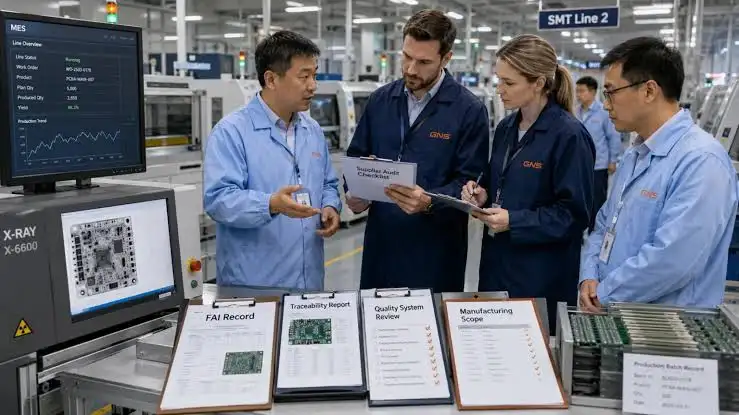
Provide a Complete RFQ Package
A complete RFQ package helps the EMS partner quote and plan production accurately. It should include Gerber files, BOM with manufacturer part numbers, pick-and-place files, assembly drawings, test procedures, quality requirements, packaging specifications, and target quantities.
A structured PCBA manufacturer Vietnam RFQ checklist can help OEMs prepare the right files before requesting pricing.
Request DFM and DFT Review
DFM reduces manufacturability risk, while DFT improves test coverage and fixture design. OEMs should request DFM for electronics manufacturing and design for testability review before production starts.
For a structured review, OEMs can also use a DFM checklist to identify risks related to component spacing, pad design, panelization, solderability, and test access.
Run a Pilot Build Before Mass Production
A pilot build helps verify process stability, yield, AOI findings, ICT/FCT results, failure modes, packaging, communication, and documentation quality before full production.
External Standards and References for QA/QI in EMS
OEMs can use external standards as references when defining quality requirements. However, they should not assume that a supplier follows or is certified to any standard unless documentation is verified.
IPC-A-610 for Electronic Assembly Acceptance
The IPC-A-610 standard is commonly used as a reference for the acceptability of electronic assemblies. OEMs should define the required acceptance class and any customer-specific criteria before production.
SHDC also has an internal article on the IPC-A-610 Standard for OEMs that want a practical explanation of how it applies to PCB assembly quality.
IPC J-STD-001 for Soldering Requirements
IPC J-STD-001 is relevant to soldered electrical and electronic assemblies. It can be used when OEMs need to define soldering process expectations and workmanship requirements.
For a comparison of assembly standards, OEMs can review IPC J-STD-001 vs IPC-A-610.
ISO 9001 as a Quality Management Reference
ISO 9001 quality management can be used as a general reference for quality management system principles. However, OEMs should verify supplier certificates directly instead of assuming certification.
How SHDC Supports QA/QI in EMS Manufacturing
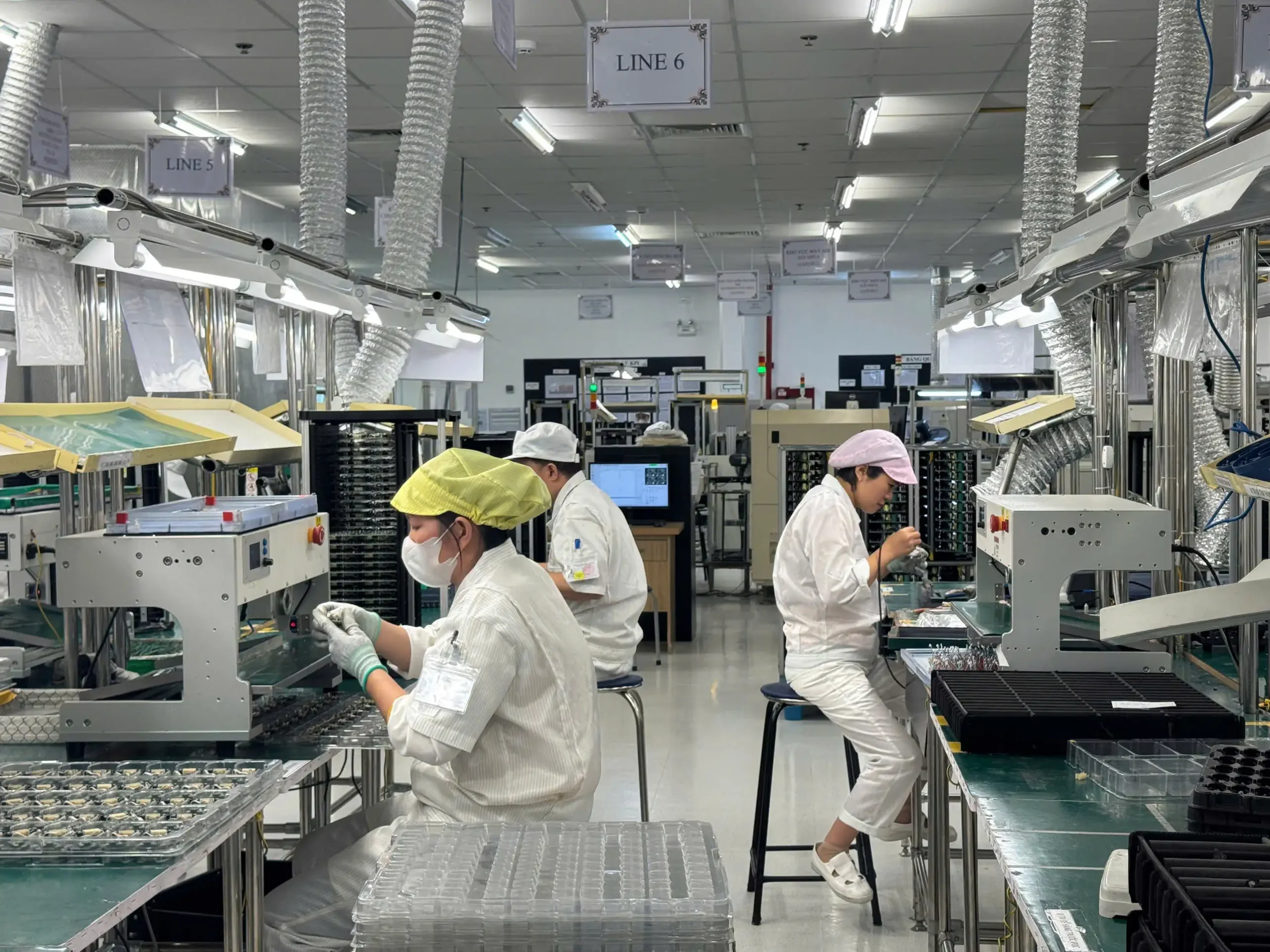
For OEMs evaluating QA/QI in EMS manufacturing, SHDC Electronics Co., Ltd. can be reviewed as a Vietnam EMS partner for projects involving component soldering, assembly, testing, and final packaging.
According to the SHDC company profile, SHDC provides Electronics Manufacturing Services from component soldering, assembly, and testing to final packaging. The profile lists a current factory service scope of about 2,600 square meters, 150 employees, 4 high-speed SMT lines, 3 DIP lines, 1 assembly line, 1 test line, and 1 packaging line.
The documented production process includes IQC inspection, warehouse, screen printing, mounting, reflow, AOI, component insertion, automatic soldering, ICT, FCT, visual inspection, OQC, packaging, and finished product warehouse.
The profile also lists production facilities including Yamaha SMT equipment, 3D SPI, 3D AOI, Kyoritsu ICT, wave soldering, reflow oven, component insert machine, high-voltage test, functional testing, aging test, and laser marking equipment.
For OEMs comparing full turnkey electronics manufacturing partners, SHDC can be evaluated based on project-specific requirements such as BOM maturity, SMT complexity, DIP needs, inspection coverage, testing process, packaging scope, and production volume.
QA/QI Questions OEMs Should Ask an EMS Partner
- What incoming inspection process do you use?
- How do you verify component part numbers?
- Do you perform AOI after SMT assembly?
- Can you support ICT or FCT?
- Can you follow customer test procedures?
- Do you provide test records?
- How do you manage failed units?
- How do you control rework?
- How do you manage BOM and Gerber revisions?
- How do you handle component substitutions?
- Do you provide OQC reports before shipment?
- Can you support traceability by lot or serial number?
Conclusion: QA/QI in EMS Is a Production Risk Control System
QA/QI in EMS is not just inspection at the end of production. It is a structured quality system that connects incoming inspection, SMT process control, DIP inspection, AOI, ICT, FCT, OQC, documentation, traceability, and corrective action.
For OEMs, the best EMS partner is not only the supplier with available capacity or a competitive quote. It is the supplier that can control process quality, document inspection results, follow approved revisions, detect defects early, and support production readiness before scaling.
Send your BOM, Gerber files, assembly drawings, testing requirements, and quality criteria to SHDC for a Vietnam EMS manufacturing review.
FAQ About QA/QI in EMS
What does QA/QI in EMS mean?
QA/QI in EMS refers to quality assurance and quality inspection practices used in electronics manufacturing to prevent defects, inspect production quality, verify test results, and control shipment quality.
What is the difference between QA and QI in EMS?
QA focuses on preventing defects through process control, documentation, supplier control, and quality planning. QI focuses on inspecting materials, assemblies, test results, and finished products to detect issues.
What are the main inspection steps in EMS manufacturing?
Common inspection steps include IQC, solder paste inspection, AOI after SMT, DIP inspection, ICT, FCT, visual inspection, OQC, and packaging inspection.
Why is AOI important in PCBA manufacturing?
AOI helps detect visible assembly defects such as missing components, wrong orientation, solder bridges, insufficient solder, component shift, and tombstoning after SMT assembly.
What quality documents should OEMs request from an EMS partner?
OEMs should request IQC records, AOI results, ICT/FCT reports, OQC reports, rework records, nonconformance reports, revision control records, and corrective action reports when applicable.
How can OEMs reduce quality risk before mass production?
OEMs can reduce quality risk by providing complete files, defining acceptance criteria, requesting DFM and DFT review, controlling component substitutions, running a pilot build, and reviewing production readiness before scaling.
