Tiếng Việt
 日本語
日本語
Getting a GaN charger manufacturing quote in Vietnam is not as simple as asking for a unit price. For USB-C PD and GaN chargers, pricing depends on wattage, PCB complexity, GaN chipset selection, certification requirements, testing scope, packaging, MOQ, and production volume. Many U.S. OEM brands contact manufacturers with only a product photo or a target wattage. However, without clear technical files and commercial requirements, suppliers can only provide rough estimates. A reliable quote should explain what is included, what is excluded, and what assumptions were used.
This guide explains the key cost factors, MOQ expectations, lead time considerations, and RFQ details U.S. buyers should prepare before requesting a GaN charger quote from a Vietnam-based manufacturer.
Why GaN Charger Quotes Vary So Much Between Manufacturers
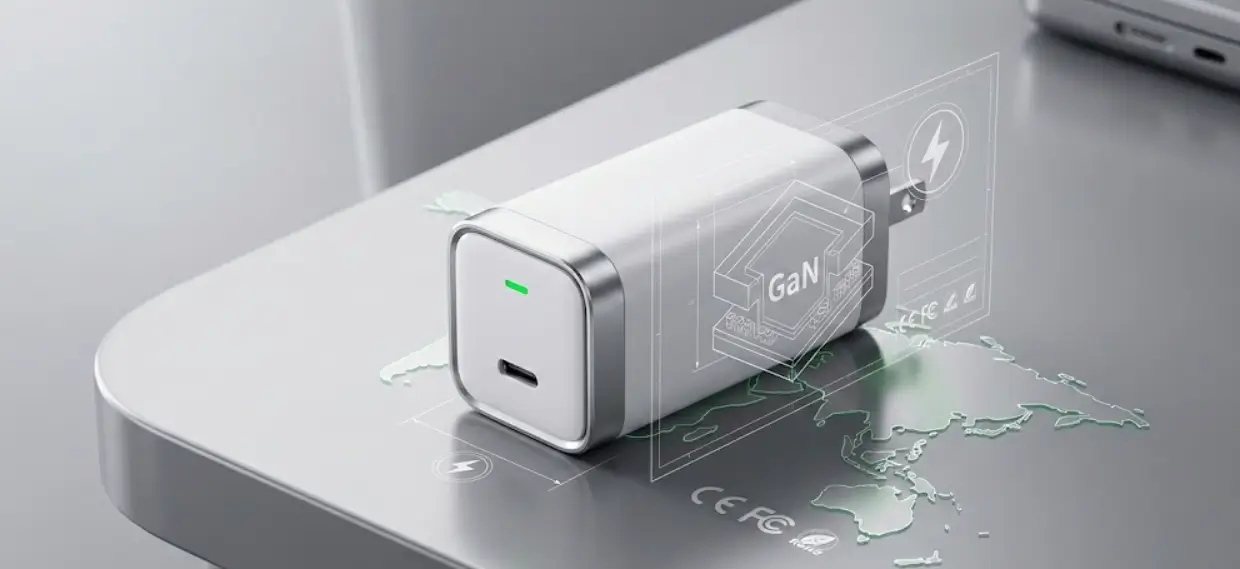
A GaN Charger Is Not a Generic Power Adapter
GaN chargers are more complex than traditional silicon-based power adapters. They are smaller, more power-dense, and more sensitive to thermal, electrical, and EMI performance.
A modern USB-C GaN charger may require:
- high-density PCB layout
- USB-C PD and PPS support
- GaN power ICs
- custom magnetics and transformers
- thermal optimization
- EMI suppression
- firmware validation
- functional and aging tests
This is why a quote for a 65W USB-C GaN charger can vary significantly between suppliers. One manufacturer may quote only the PCBA assembly cost, while another may include enclosure, testing, packaging, certification support, and box-build services.
OEM buyers should understand the difference between a simple PCB assembly quote and a complete charger manufacturing quote. For broader context, see this guide on PCB assembly quote requirements.
Quote Accuracy Depends on Technical Input Quality
The more complete your RFQ package is, the more accurate your quotation will be.
A manufacturer typically needs the following information to estimate cost correctly:
- charger wattage
- number of USB-C and USB-A ports
- USB-C PD and PPS requirements
- target market
- required certifications
- BOM
- Gerber files
- schematic
- mechanical drawings
- enclosure design
- packaging requirements
- target production quantity
If these details are missing, the supplier may provide a low initial estimate that later changes after engineering review.
Low Quote vs. Accurate Quote
For U.S. OEM buyers, the lowest quote is not always the safest quote.
Some suppliers may quote aggressively to win the inquiry, but hidden costs may appear later, including:
- tooling cost
- testing fixture cost
- engineering support cost
- certification support cost
- packaging cost
- firmware adjustment cost
- component substitution cost
- rework cost
A reliable Vietnam manufacturer should provide transparent quotation scope and clearly explain whether the quote covers PCBA only, finished charger assembly, or full turnkey production.
For OEMs comparing supplier models, it is useful to review how GaN charger PCB assembly differs from complete charger manufacturing.
Key Cost Factors in a GaN Charger Manufacturing Quote
Wattage and Power Architecture
Wattage is one of the first cost drivers in a GaN charger quote.
Common charger categories include:
- 30W USB-C GaN charger
- 45W USB-C GaN charger
- 65W USB-C GaN charger
- 100W USB-C PD charger
- 140W USB-C PD charger
- 150W multi-port GaN charger
Higher wattage typically increases cost because it requires more advanced thermal design, higher-performance components, stronger transformers, better PCB layout, and more demanding testing.
For example, a 30W charger may use a simpler power architecture, while a 100W or 150W multi-port charger may require advanced power distribution, load sharing, thermal control, and more complex firmware validation.
For more technical context, see this guide on power PCB assembly for fast chargers.
USB-C Port Configuration
Port configuration also affects the quote.
A charger may be designed as:
- single USB-C
- dual USB-C
- 1C1A
- 2C1A
- 2C2A
- 3C1A
- multi-port USB-C PD charger
Multi-port chargers are more complex because they require load-sharing logic, additional controller ICs, more PCB space, more testing, and stronger thermal management.
For U.S. brands launching Amazon or retail products, the cost difference between a single-port and multi-port charger can be significant because compatibility testing becomes more demanding.
GaN Chipset and Component Selection
GaN chipset selection has a direct impact on both cost and reliability.
Key components that affect pricing include:
- GaN power ICs
- USB-C PD controllers
- PPS control ICs
- transformers
- capacitors
- MOSFETs
- current sensors
- thermal protection components
- safety components
Component brand requirements can also affect cost. Some OEM brands require specific approved vendors or higher-grade components for reliability, certification, or retailer compliance.
Lower-cost components may reduce the unit price, but they can increase the risk of overheating, EMI instability, shorter lifespan, or certification failure.
PCB Complexity and Assembly Difficulty
PCB complexity is another major cost driver.
Manufacturers evaluate:
- PCB layer count
- PCB size
- copper thickness
- thermal vias
- fine-pitch components
- component density
- creepage and clearance requirements
- SMT placement accuracy
- reflow process requirements
High-density GaN charger boards require strong SMT capability and process control. Manufacturers with advanced SMT manufacturing services are usually better positioned to support compact, high-power charger designs.
Enclosure and Mechanical Design
The enclosure can significantly affect the final quote, especially for OEM or ODM projects.
Cost factors include:
- plastic material
- mold/tooling cost
- foldable plug mechanism
- U.S. plug design
- EU/UK/AU plug options
- surface finish
- logo printing
- heat dissipation design
- drop test requirements
If the buyer uses an existing enclosure design, the MOQ and development cost may be lower. If the project requires a custom mold, the quotation will include tooling, design validation, and sample approval costs.
Testing and Quality Control Requirements
Testing scope has a major impact on both cost and reliability.
A complete GaN charger manufacturing quote may include:
- AOI inspection
- ICT testing
- functional testing
- USB-C PD testing
- PPS validation
- high-voltage test
- aging test
- burn-in test
- OQC inspection
Advanced inspection processes such as AOI inspection and ICT testing help reduce defect risk during production.
For high-power chargers, aging and functional testing are especially important because thermal instability may not appear during a short basic power-on test.
Packaging and Labeling
Packaging requirements can also change the final quote.
Common packaging cost factors include:
- retail box design
- manual
- warranty card
- barcode
- FNSKU label
- warning labels
- country of origin marking
- Amazon packaging requirements
- outer carton design
For U.S. Amazon brands, packaging and labeling errors can create listing delays, warehouse issues, or compliance problems. Buyers should include packaging requirements in the RFQ instead of treating them as a later detail.
MOQ: What Minimum Order Quantity Should U.S. Buyers Expect?
Why MOQ Varies by Product Maturity
MOQ depends heavily on whether the project uses an existing design, a semi-custom model, or a fully custom OEM/ODM charger.
In general:
- existing private-label models usually have lower MOQ
- semi-custom projects usually require medium MOQ
- fully custom designs usually require higher MOQ
The more customization required, the more the manufacturer must invest in engineering, sourcing, tooling, testing, and production preparation.
Typical MOQ Scenarios
Although exact MOQ depends on the supplier and project, OEM buyers can think in three practical scenarios:
- Existing model: suitable for private-label brands that need faster launch and lower development cost.
- Semi-custom model: suitable for brands that need custom branding, packaging, plug type, or minor feature adjustments.
- Fully custom OEM/ODM project: suitable for brands that need unique enclosure, PCB design, firmware, certification, and product positioning.
Startups and early-stage brands should be clear about forecast, launch schedule, and target quantity when negotiating MOQ.
How MOQ Affects Unit Cost
MOQ directly affects unit cost because setup costs are spread across production volume.
Lower quantity usually means higher unit cost due to:
- component sourcing minimums
- SMT line setup
- test fixture cost
- packaging MOQ
- engineering review
- production scheduling
Higher volume usually improves pricing because material purchasing, line efficiency, and packaging production become more cost-effective.
Buyers planning phased production may first use prototype PCBA Vietnam services before moving into high-volume PCB assembly.
How Startups Can Approach MOQ Negotiation
Hardware startups and new charger brands can improve MOQ discussions by preparing:
- pilot run quantity
- six-month forecast
- target launch date
- retail channel plan
- certification plan
- expected reorder volume
A phased approach may include engineering samples, pilot production, and then mass production. This reduces risk for both the buyer and manufacturer.
Lead Time: How Long Does a GaN Charger Manufacturing Quote and Production Take?
RFQ Review and Initial Quotation Timeline
The quotation process usually begins with technical and commercial review.
A manufacturer may need to review:
- BOM
- Gerber files
- schematic
- mechanical drawings
- certification requirements
- packaging requirements
- target quantity
- component availability
If the RFQ package is complete, the supplier can usually provide a more accurate quote faster. If key files are missing, the process may require multiple clarification rounds.
Prototype and Sample Lead Time
Prototype lead time depends on product complexity and material availability.
The sample stage may include:
- PCB fabrication
- component procurement
- SMT assembly
- firmware loading
- functional testing
- enclosure sample preparation
- thermal review
- USB-C PD validation
For more detail on prototype cost and timing, see this article on PCB prototyping services cost.
Mass Production Lead Time
Mass production lead time typically depends on procurement, production scheduling, SMT assembly, testing, packaging, and export preparation.
Key production steps include:
- material purchasing
- incoming quality inspection
- SMT assembly
- DIP or secondary assembly if required
- AOI/ICT/FCT
- aging test
- final assembly
- packaging
- OQC
- shipment preparation
For a broader understanding of timing variables, see this guide on PCB assembly lead time.
Factors That Delay Lead Time
Common causes of delay include:
- incomplete RFQ documents
- component shortages
- BOM changes
- certification revisions
- enclosure tooling changes
- packaging approval delays
- firmware instability
- failed validation tests
To avoid delays, buyers should finalize specifications before requesting production quotes.
Certification and Compliance Costs to Consider
U.S. Market Compliance Requirements
For U.S. market entry, GaN charger programs may need to consider safety, EMI, efficiency, and USB-C interoperability requirements.
Common compliance references include:
- UL 62368-1 safety standard
- FCC Part 15 regulations
- DOE external power supply requirements
- USB-IF USB Charger PD specifications
Retailers and marketplaces may also request test reports, safety documentation, energy compliance documents, and product labeling records.
Why Certification Affects Quotation
Certification affects cost because it may require:
- pre-compliance testing
- engineering modifications
- sample preparation
- technical documentation
- third-party lab testing
- retesting after design changes
- production control documentation
If a project uses an existing certified platform, cost and lead time may be lower. A fully custom charger design usually requires more validation and certification work.
USB-C PD and PPS Validation
USB-C PD and PPS validation are important for modern fast chargers.
Testing may include:
- PD handshake verification
- PPS voltage control
- multi-device compatibility
- cable compatibility
- thermal behavior during fast charging
- firmware stability
Without proper validation, chargers may pass basic power tests but still fail in real customer use.
Who Pays for Certification?
Certification cost depends on the business model and project scope.
Common models include:
- buyer pays third-party lab costs directly
- manufacturer supports sample preparation and documentation
- existing certified platform reduces certification burden
- custom OEM/ODM project requires new certification investment
Buyers should clarify certification responsibility before approving the quote.
What U.S. OEMs Should Include in a GaN Charger RFQ
Product Specification
Your RFQ should clearly describe the charger you want to build.
Include:
- wattage
- number of ports
- USB-C/USB-A configuration
- PD/PPS requirements
- input voltage
- output voltage profiles
- target devices
- plug type
- charger size constraints
- thermal requirements
Technical Files
For an accurate quote, provide as many technical files as possible.
Useful files include:
- Gerber files
- BOM
- schematic
- PCB layout
- mechanical drawings
- enclosure files
- firmware requirements
- test plan
If you do not yet have complete technical files, explain whether you need OEM customization, ODM development, or reference design support.
Commercial Details
The commercial side of the RFQ should include:
- prototype quantity
- mass production quantity
- annual forecast
- target price
- destination market
- requested lead time
- Incoterms
- shipping destination
These details help manufacturers estimate procurement, production planning, packaging, and logistics cost more accurately.
Compliance Requirements
U.S. OEM buyers should specify required compliance documentation early.
Common requirements may include:
- UL or ETL
- FCC
- DOE Level VI
- USB-IF
- Prop 65 if applicable
- Amazon or retailer documentation
If compliance is not clarified upfront, the quotation may exclude important testing and certification-related costs.
Quality and Testing Requirements
Buyers should also define expected quality control requirements.
Include whether you require:
- AOI
- ICT
- functional testing
- aging test
- high-voltage test
- OQC report
- inspection report format
- sampling standard
These requirements may affect the quote, but they also reduce production risk.
RFQ Checklist for a GaN Charger Manufacturer in Vietnam
Before contacting a supplier, U.S. OEM buyers can use the following RFQ checklist.
Product Information
- Product type
- Wattage
- Number of ports
- Plug type
- PD/PPS requirements
- Target devices
- Target market
Engineering Files
- Gerber files
- BOM
- Schematic
- Mechanical drawings
- Enclosure design
- Firmware requirements
- Test plan
Production Requirements
- Prototype quantity
- Mass production quantity
- Annual forecast
- MOQ expectation
- Target unit price
- Requested lead time
Quality Requirements
- AOI
- ICT
- Functional testing
- Aging test
- High-voltage test
- OQC
- Inspection reports
Compliance Requirements
- UL/ETL
- FCC
- DOE
- USB-IF
- Amazon requirements
- Retailer documentation
Packaging and Logistics
- Retail box
- Manual
- Barcode
- FNSKU
- Shipping mark
- Carton specification
- Incoterms
- Destination country
How to Compare Quotes From Different Vietnam Manufacturers

Compare Quote Scope, Not Just Unit Price
When comparing manufacturers, do not focus only on unit price.
Ask whether the quote includes:
- PCBA assembly
- component sourcing
- charger final assembly
- enclosure
- testing
- aging
- packaging
- certification support
- engineering support
- tooling
- test fixtures
Two quotes may look similar on the surface but include very different scopes.
Check Whether the Quote Is for PCBA Only or Finished Charger
This is one of the most common RFQ misunderstandings.
A quote may cover:
- PCBA assembly only
- box build assembly
- finished charger assembly
- full turnkey EMS production
If your project requires complete finished goods, you should confirm whether the supplier supports full turnkey electronics manufacturing or box build assembly services.
Evaluate Hidden Costs
Hidden costs can significantly affect total project cost.
Common hidden costs include:
- NRE
- tooling
- test fixtures
- certification
- firmware modification
- packaging design
- engineering support
- rework
- shipping
Many of these issues are discussed in this guide on electronics manufacturing outsourcing hidden costs.
Ask About Assumptions and Exclusions
Before approving a quote, ask the manufacturer:
- Which BOM version was used?
- Are components original and approved?
- What tests are included?
- Is aging included?
- Is packaging included?
- Are certification costs included?
- What Incoterms apply?
- What happens if certification fails?
- What costs are excluded?
This helps prevent price changes later in the project.
Common Mistakes When Requesting a GaN Charger Quote
Sending Only a Product Photo
A photo is not enough for an accurate manufacturing quote.
Manufacturers need technical files, BOM, specifications, quantity, compliance requirements, and packaging details to calculate pricing correctly.
Asking for a Unit Price Without Specifications
Wattage alone does not define a charger project.
A 100W charger can vary significantly depending on port configuration, PD/PPS support, GaN chipset, enclosure, thermal design, certification, and testing requirements.
Ignoring Compliance Requirements
For U.S. market entry, ignoring compliance can create major problems later.
Potential risks include:
- failed market entry
- Amazon listing problems
- retailer rejection
- customs delays
- retesting cost
- product recall risk
Comparing Suppliers Without Matching Quote Scope
One supplier may include testing, packaging, and certification support, while another may only quote assembly.
Without matching scope, buyers may choose a quote that looks cheaper but becomes more expensive later.
Choosing the Cheapest Quote
The cheapest quote can create long-term risk if the supplier lacks engineering support, testing capability, or production discipline.
Potential consequences include:
- quality problems
- launch delays
- certification failure
- customer returns
- brand reputation damage
SHDC’s Support for GaN Charger RFQ and Manufacturing Programs
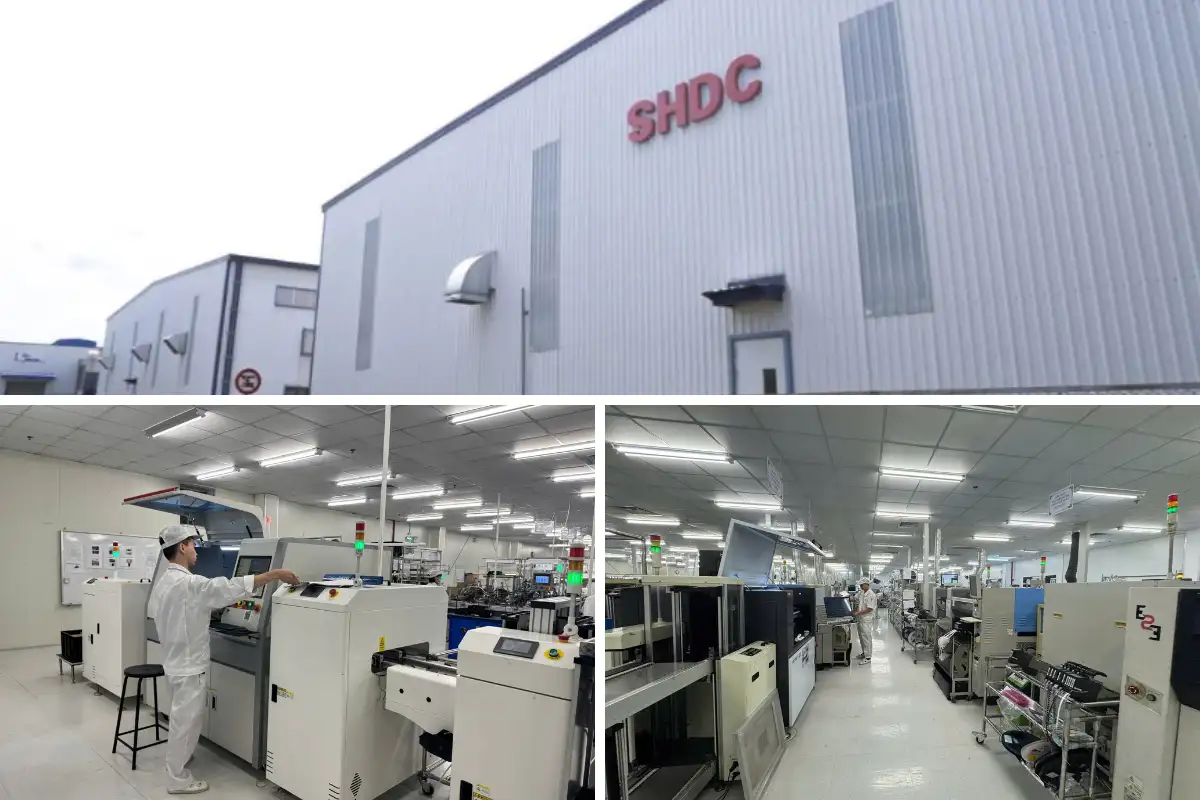
SHDC is a Vietnam-based EMS and power electronics manufacturing company supporting OEM programs from SMT assembly and testing to charger production and packaging.
SHDC’s manufacturing infrastructure includes SMT lines, Yamaha equipment, AOI inspection, ICT testing, functional testing, aging test systems, high-voltage testing equipment, and MES/QMS process management.
The company also has experience with multiple GaN charger platforms, including 65W, 67W, 100W, and 150W GaN charger products.
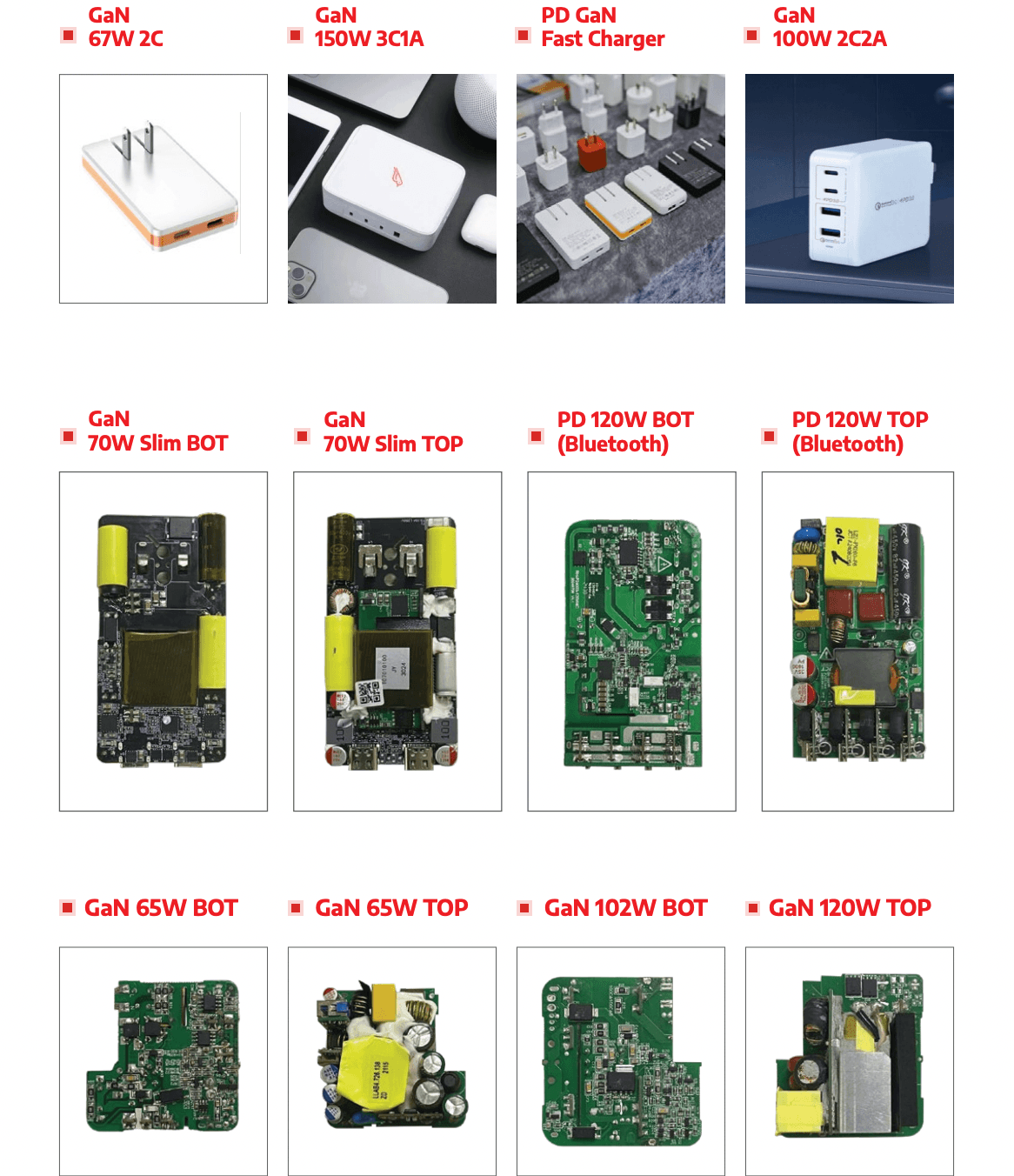
For U.S. OEM brands seeking Vietnam manufacturing, SHDC can support RFQ review, prototype development, PCBA assembly, charger production, testing, packaging, and scalable EMS execution.
Relevant SHDC resources include SHDC contract electronics manufacturing services, SHDC full service EMS in Vietnam, GaN charger manufacturing in Vietnam, and PCBA manufacturer Vietnam.
Final Thoughts
Getting a GaN charger manufacturing quote in Vietnam requires more than asking for a unit price.
A useful quotation depends on complete technical files, product specifications, target certifications, testing requirements, packaging details, production quantity, and lead time expectations.
For U.S. OEM brands, the best manufacturer is not always the lowest-cost supplier. It is the partner that can provide transparent pricing, clear quote scope, engineering support, testing capability, compliance awareness, and scalable production execution.
Before sending your next RFQ, prepare your technical files, define your compliance requirements, clarify your target quantity, and compare quotes based on total project scope rather than price alone.
FAQs
How do I get a GaN charger manufacturing quote in Vietnam?
To get an accurate quote, prepare product specifications, wattage, port configuration, BOM, Gerber files, schematic, target quantity, certification requirements, packaging details, and destination market. The more complete your RFQ package is, the more accurate the quotation will be.
What affects the cost of a GaN charger quote?
Key cost factors include wattage, USB-C port configuration, GaN chipset, PCB complexity, enclosure design, tooling, certification, testing requirements, packaging, MOQ, and production volume.
What is the MOQ for GaN charger manufacturing in Vietnam?
MOQ depends on whether the project uses an existing model, a semi-custom design, or a fully custom OEM/ODM design. Existing models usually have lower MOQ, while fully custom projects often require higher MOQ due to tooling, engineering, and certification investment.
How long does GaN charger production take?
Lead time depends on RFQ review, component availability, prototype development, certification requirements, SMT assembly, functional testing, aging tests, packaging, and export preparation. Complete technical files help reduce quotation and production delays.
What files are needed for an accurate RFQ?
Useful files include Gerber files, BOM, schematic, PCB layout, mechanical drawings, enclosure files, firmware requirements, test plans, packaging requirements, and compliance requirements.
Can Vietnam manufacturers support U.S. charger compliance?
Qualified Vietnam manufacturers can support preparation for U.S. market requirements such as UL/ETL, FCC, DOE, USB-C PD validation, and retailer or Amazon documentation, depending on the project scope and certification strategy.
Is a GaN charger quote for PCBA only or a finished product?
It depends on the quote scope. Some quotes cover only PCBA assembly, while others include box build assembly, finished charger manufacturing, testing, packaging, and turnkey EMS services. Buyers should clarify this before comparing suppliers.
>>>Read more: Choosing a GaN Charger Manufacturer in Southeast Asia: Vietnam, Thailand, and Malaysia Compared