Tiếng Việt
 日本語
日本語
Before sending a BOM, Gerber files, tooling investment, or production forecast to an overseas electronics manufacturer, U.S. OEMs need to verify what the factory can actually do. A supplier may present itself as a full-service EMS provider, but the real question is whether the factory has the production capability, quality control systems, testing discipline, traceability, and communication needed to support your project from prototype to mass production. That is why an electronics factory audit checklist is essential.
For U.S. OEMs sourcing in Vietnam, a factory audit helps reduce supplier risk before committing to production. It allows procurement, engineering, and quality teams to confirm whether an electronics factory can support SMT assembly, DIP assembly, PCBA manufacturing, functional testing, final assembly, packaging, and export readiness.
Vietnam has become an important electronics sourcing destination for companies exploring China+1 supply chain strategies. However, supplier capability can vary significantly. Choosing the right factory requires more than comparing unit price. It requires a structured audit process that reviews the production floor, equipment, quality records, testing procedures, warehouse control, ESD protection, traceability, engineering support, and compliance documentation.
This guide provides a practical electronics factory audit checklist for U.S. OEMs sourcing in Vietnam, with specific areas to review before selecting an EMS, PCBA, or electronics manufacturing partner.
Why an Electronics Factory Audit Matters Before Production
Electronics manufacturing carries more process risk than many general assembly industries. A finished electronic product may include printed circuit boards, semiconductors, passive components, connectors, cables, firmware, enclosures, labels, packaging, and market-specific compliance requirements.
A small issue in solder paste control, component placement, reflow profile, functional testing, or component traceability can lead to production failures, field returns, warranty claims, delayed product launches, or costly rework.
For U.S. OEMs working with overseas suppliers, these risks become more serious because distance, time zones, communication gaps, and logistics make it harder to correct problems after production begins.
A factory audit helps verify:
- Whether the supplier is a real electronics manufacturer or only a trading intermediary
- Whether SMT, DIP, PCBA, testing, assembly, and packaging processes are performed in-house
- Whether quality control is built into each production stage
- Whether testing is documented and repeatable
- Whether materials and finished products are traceable
- Whether the factory can scale from prototype to pilot run and mass production
- Whether engineering and quality teams can communicate clearly with U.S. customers
If your team is still in the supplier screening stage, you may also want to read our related guide: Electronics Supplier Due Diligence Checklist for U.S. OEMs Sourcing in Vietnam.
Factory Audit vs. Supplier Due Diligence: What Is the Difference?
Supplier due diligence and factory audits are closely related, but they are not the same.
Supplier due diligence is broader. It may include legal status, export history, commercial terms, IP protection, financial background, business references, and long-term supplier fit.
A factory audit is more production-focused. It verifies actual factory conditions, equipment, production processes, quality systems, testing methods, warehouse control, traceability, ESD control, and production documentation.
| Area | Supplier Due Diligence | Factory Audit |
|---|---|---|
| Business registration | Yes | Sometimes |
| Export experience | Yes | Sometimes |
| Factory floor review | Sometimes | Yes |
| SMT/DIP line inspection | Sometimes | Yes |
| QC process review | Yes | Yes |
| Equipment verification | Sometimes | Yes |
| Warehouse and material control | Sometimes | Yes |
| Testing process | Yes | Yes |
| Traceability records | Yes | Yes |
| Commercial terms | Yes | Limited |
| On-site verification | Optional | Core focus |
For electronics OEMs, both are important. Due diligence helps determine whether the supplier is a suitable business partner. The factory audit confirms whether the supplier can actually manufacture your product with the required quality, testing, and process control.
Pre-Audit Preparation: What U.S. OEMs Should Request First
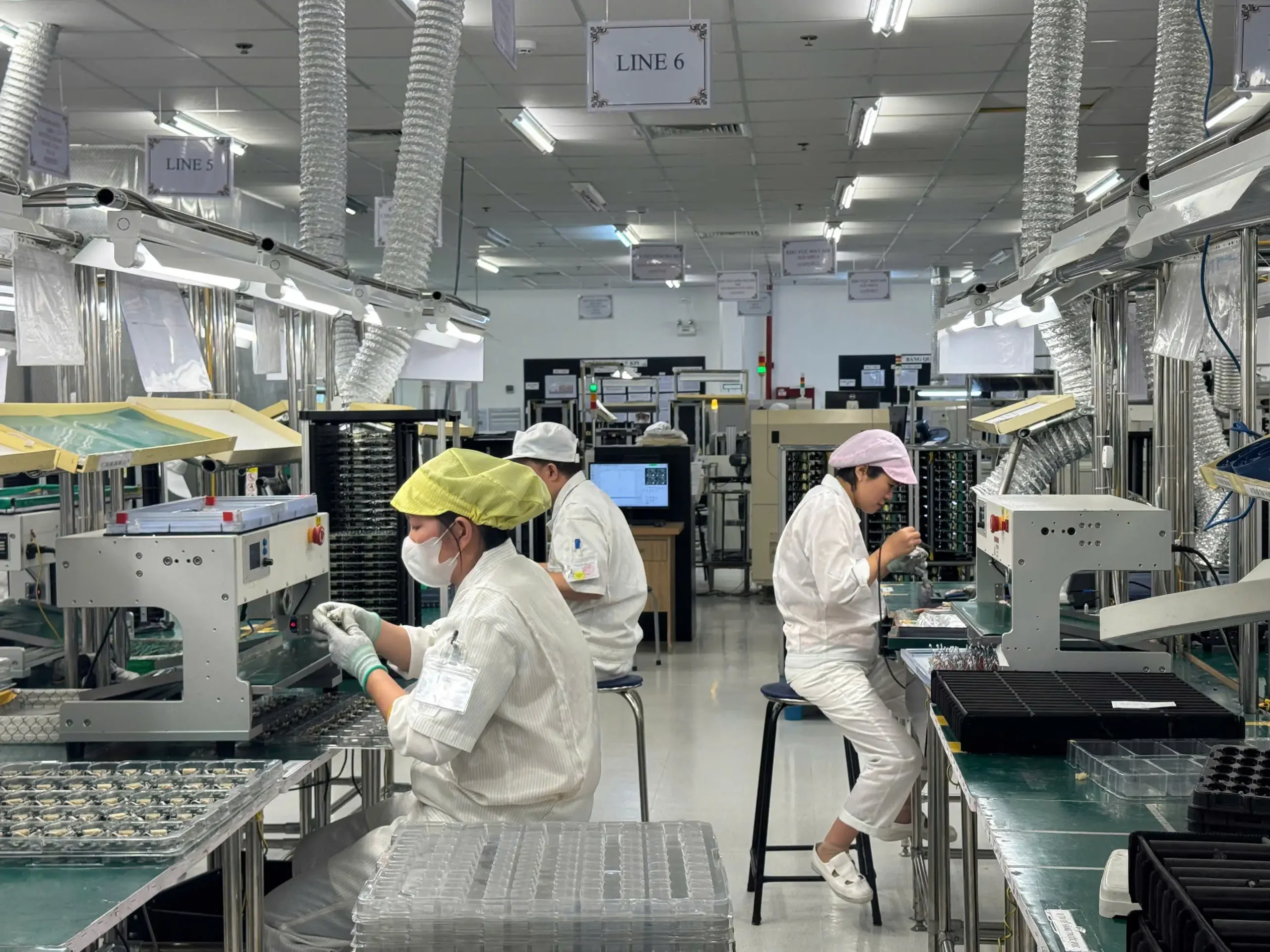
A successful electronics factory audit starts before the factory visit or video call. U.S. OEMs should request key documents and prepare technical files so the audit can focus on real production capability instead of general sales claims.
Documents to Request Before the Audit
Before auditing a Vietnam electronics factory, ask for:
- Company profile
- Factory address and production scope
- Business registration
- Organization chart
- Equipment list
- Process flow chart
- Quality manual or quality procedure overview
- Certifications, if applicable
- Sample inspection report
- Sample test report
- Sample traceability record
- Product portfolio or case studies
- Customer references, if available
- Photos or videos of production lines
- ESD control procedure
- Non-conformance and CAPA example
The goal is to understand what the factory claims before checking what is actually happening on the production floor.
Technical Files the OEM Should Prepare
OEMs should also prepare project-related information before the audit, especially if the supplier will review a real RFQ.
Useful documents include:
- BOM
- Gerber files
- Assembly drawings
- Product specifications
- Testing requirements
- Annual volume estimate
- Prototype and mass production quantities
- Target market
- Packaging requirements
- Compliance requirements
- Critical quality points
- Approved vendor list, if available
For a more detailed RFQ preparation guide, see PCB Assembly Quote: What Manufacturers Need From You to Price Your Project Accurately.
Electronics Factory Audit Checklist Overview
The table below summarizes the main areas U.S. OEMs should review when auditing an electronics manufacturing factory.
| Audit Area | What to Check |
|---|---|
| Business and factory identity | Factory address, production scope, direct manufacturer status |
| Production capability | SMT, DIP, PCBA, assembly, testing, packaging |
| SMT line | Printer, mounter, SPI, reflow, AOI, process control |
| DIP and manual assembly | Component insertion, soldering, visual inspection, rework |
| Quality control | IQC, IPQC, FQC, OQC, CAPA, quality records |
| Testing | ICT, FCT, functional testing, aging test, high-voltage test |
| Warehouse | Material storage, labeling, FIFO, ESD, moisture control |
| Traceability | Component lots, PCB batches, test records, serial numbers |
| ESD control | ESD flooring, wrist straps, workstations, audits |
| Engineering support | DFM, BOM review, ECO, revision control |
| Compliance support | Documentation, labeling, material records |
| Packaging and shipping | Final inspection, carton control, export readiness |
| Communication | English support, response time, technical clarity |
| Red flags | No records, vague answers, uncontrolled substitutions |
Audit Area 1: Verify Factory Identity and Production Scope
The first audit step is confirming that the supplier is a real production site, not only a sales office or trading company.
Confirm Factory Identity
Review the following:
- Registered company name
- Actual factory name
- Factory address
- Business license
- Production area
- Number of employees
- Department structure
- Production processes performed in-house
- Processes outsourced to third parties
If the supplier says it provides EMS or PCBA manufacturing, ask to see the actual production lines, warehouse, quality control areas, and testing stations.
Confirm In-House Capabilities
Ask which processes are performed directly by the factory:
- SMT assembly
- DIP assembly
- PCBA manufacturing
- Box build assembly
- Functional testing
- Aging or burn-in testing
- Labeling
- Packaging
- Finished goods warehousing
This matters because outsourced processes may introduce additional quality, lead time, and communication risks.
SHDC Electronics Co., Ltd. provides electronics manufacturing services in Vietnam, including component soldering, assembly, testing, and final packaging. The company’s factory service scope includes SMT lines, DIP lines, assembly, testing, and packaging operations, making it relevant for OEMs looking for EMS support in Vietnam. For broader sourcing context, read EMS Vietnam and Electronics Manufacturing Vietnam: A Complete Guide for Global OEM Companies.
Audit Area 2: Inspect SMT Assembly Capability
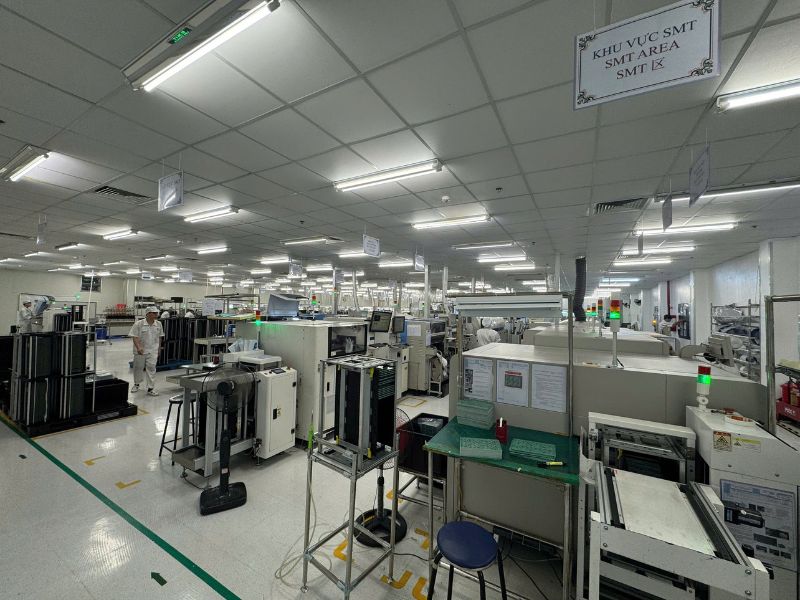
SMT capability is one of the most important areas in an electronics factory audit. Most modern electronic products rely heavily on surface mount technology, and poor SMT process control can create defects that are difficult to detect later.
SMT Equipment to Verify
During the audit, review whether the factory has:
- Solder paste printer
- Pick-and-place machines
- SPI equipment
- Reflow oven
- AOI machine
- Conveyor systems
- Feeder management system
- Maintenance records
- Line control documentation
A factory should be able to explain not only what equipment it has, but how each process is controlled.
SMT Process Control Points
Check how the factory manages:
- Solder paste storage and handling
- Stencil management and cleaning
- Printer setup
- Placement program control
- Feeder verification
- First article inspection
- Reflow profile management
- AOI program setup
- Defect review and repair process
- Machine maintenance
- Operator training
Ask whether the factory uses SPI before placement and AOI after reflow. These inspection steps help detect solder paste and placement defects earlier in the process.
SMT Audit Questions
Useful questions include:
- How many SMT lines do you operate?
- What is your monthly placement capacity?
- What is your minimum component size capability?
- What PCB size range can your SMT lines handle?
- How do you control solder paste storage?
- How do you verify feeders before production?
- How often do you validate reflow profiles?
- How are AOI defects reviewed and recorded?
- How do you prevent wrong component placement?
For more detail, see SMT Manufacturing Services, SMT Assembly Process Explained, SMT Line Process Explained, and What Is Automated Optical Inspection AOI in PCB Assembly?.
Audit Area 3: Review DIP, Wave Soldering, and Manual Assembly
Many electronics products require more than SMT assembly. Connectors, transformers, relays, terminals, switches, and large components often require DIP or through-hole assembly.
DIP and Through-Hole Process Checklist
During the audit, review:
- Manual component insertion process
- Component polarity control
- Wave soldering or selective soldering process
- Flux control
- Solder temperature control
- Fixture use
- Visual inspection
- Rework station
- Work instructions
- Operator training
Common Risks in DIP Assembly
Common through-hole assembly risks include:
- Wrong component orientation
- Insufficient solder
- Excessive solder
- Cold solder joints
- Flux residue
- Lead trimming issues
- Manual handling damage
- ESD risk
- Inconsistent operator workmanship
A qualified factory should have clear work instructions, inspection criteria, and defect control methods for these risks.
For related technical comparisons, see SMT vs Through-Hole Assembly and Wave Soldering vs Reflow Soldering.
Audit Area 4: Evaluate Quality Control at Each Production Stage
Quality control should not happen only at the end of production. In electronics manufacturing, quality must be controlled at incoming materials, in-process checkpoints, final testing, and outgoing inspection.
Incoming Quality Control
Incoming quality control helps prevent defective materials from entering production. During the audit, check whether the factory controls:
- Component inspection
- PCB inspection
- Supplier certificates
- Material labeling
- Quantity verification
- Visual inspection
- Special handling for sensitive components
- Rejected material control
- Approved and rejected material separation
In-Process Quality Control
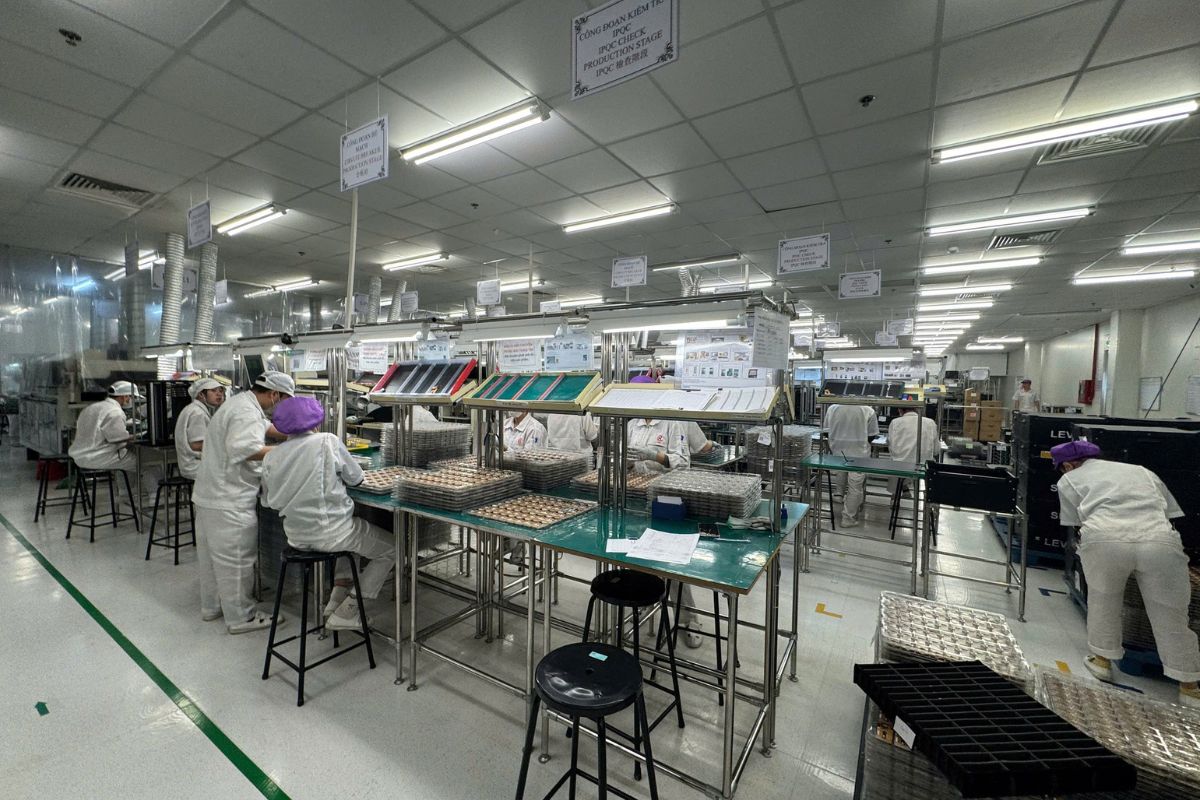
In-process quality control should cover key production stages such as SMT, DIP, soldering, assembly, and testing.
Review whether the factory uses:
- First article inspection
- SMT inspection
- DIP inspection
- AOI review
- Process parameter records
- Defect tracking
- Rework approval
- Line quality checkpoints
- Operator self-checks
- Quality engineer review
Final Quality Control and OQC
Before shipment, the factory should perform final quality checks. These may include:
- Final visual inspection
- Functional testing
- Cosmetic inspection
- Label verification
- Packaging inspection
- Shipment inspection
- OQC records
SHDC’s production process includes IQC inspection, warehouse control, AOI, reflow, mounting, component insertion, automatic soldering, ICT, visual inspection, FCT, OQC, packaging, and finished product warehousing. This type of staged process flow is important for OEMs that need better control from incoming material to finished goods.
For more background, read Quality Control in Electronics Manufacturing, What Are IPC Standards?, and Common PCB Assembly Defects and How to Prevent Them.
Audit Area 5: Check Testing Capability and Test Documentation
Testing is one of the most important differences between a basic assembler and a qualified electronics manufacturing partner. For PCBA and finished electronics products, visual inspection alone is not enough.
Testing Equipment to Review
Depending on your product, review whether the factory supports:
- ICT
- Flying probe test
- Functional testing
- High-voltage test
- A/V test
- Aging test
- Burn-in test
- Custom test fixtures
- Programming tools
- Final test stations
Test Process Checklist
A good test process should include:
- Test procedure availability
- Test fixture control
- Test software revision control
- Test result recording
- Failure isolation
- Retest process
- Golden sample control
- Operator training
- Calibration status
Ask to see real examples of test reports and failure records. A supplier that cannot provide test documentation may not have the process discipline needed for OEM production.
Test Documentation to Request
Request samples of:
- ICT report
- FCT report
- Functional test report
- Aging test record
- Calibration record
- Failure analysis report
- Retest record
- Test fixture maintenance record
SHDC’s production facilities include equipment and processes related to ICT, high-voltage testing, A/V testing, functional testing, aging testing, laser marking, AOI, wave soldering, and reflow. These capabilities are relevant for OEMs that need PCBA testing and finished product verification.
For related reading, see In-Circuit Testing ICT vs Functional Testing and PCBA Testing: Key Methods for Reliable Electronics Manufacturing.
Audit Area 6: Inspect Warehouse, Material Control, and Component Traceability
Many electronics manufacturing problems begin before assembly. Poor material control can lead to wrong components, expired materials, counterfeit risk, moisture damage, and production delays.
Warehouse Checklist
During the audit, check:
- Incoming material labeling
- FIFO control
- Lot number management
- Approved and rejected material separation
- ESD-safe storage
- Moisture-sensitive device handling
- Temperature and humidity control, if applicable
- Component shelf-life control
- PCB storage conditions
- High-value component control
Component Traceability Checklist
Traceability helps link finished products to the materials, production batches, and test results used to build them.
Verify whether the factory can track:
- Component lot numbers
- PCB batch numbers
- Production batch numbers
- Work order numbers
- Test result records
- Operator or line records
- Rework records
- Finished goods batch records
Questions to Ask
- Can you trace a finished product back to component lots?
- How do you manage customer-supplied materials?
- How do you prevent unauthorized component substitution?
- How do you separate defective materials?
- How do you manage obsolete or EOL parts?
- How do you control moisture-sensitive components?
- How do you handle high-value components?
Traceability becomes especially important when investigating field failures or isolating affected production batches.
Audit Area 7: Review ESD Control and Production Environment
Electrostatic discharge can damage sensitive electronic components even when no visible defect appears during assembly. Because of this, ESD control should always be part of an electronics factory audit.
ESD Control Checklist
Check whether the factory has:
- ESD flooring
- ESD wrist straps
- ESD workstations
- ESD-safe packaging
- Grounding points
- Ionizers, if applicable
- ESD testing records
- ESD training
- Visitor ESD controls
- Material handling procedures
Do not only check whether ESD equipment exists. Ask whether the factory regularly verifies and documents ESD controls.
Production Environment Checklist
Review the overall production environment:
- Cleanliness
- Lighting
- Workstation organization
- Line layout
- Material flow
- Rework area separation
- Defective product area
- Safety controls
- Clear labeling
- Work instructions displayed at workstations
A clean, organized, and well-labeled factory floor usually reflects stronger production discipline.
Audit Area 8: Assess Engineering Support and Revision Control
A qualified EMS factory should do more than assemble boards. It should help identify manufacturability risks, review engineering files, and control product revisions.
DFM and BOM Review
Ask whether the engineering team can review:
- Gerber files
- BOM completeness
- Component availability
- Test point design
- PCB panelization
- Solderability
- Assembly risk
- Mechanical assembly risk
- Alternative components
- Cost-down opportunities
DFM review is especially valuable before pilot run or mass production because it can reduce defects, improve yield, and prevent redesign delays.
For deeper context, read Why PCBA Fabrication Fails Without Proper DFM and DFA.
ECO and Revision Control Checklist
Poor revision control can cause serious production failures. During the audit, verify how the factory manages:
- BOM revision control
- Gerber revision control
- Firmware revision control, if applicable
- Assembly drawing revision control
- Customer approval before changes
- Old revision isolation
- Production document updates
- Change history records
Engineering Communication Questions
Ask:
- Who reviews engineering files?
- Can your engineering team provide DFM feedback?
- How do you manage ECO requests?
- How do you prevent old files from being used in production?
- How do you communicate technical risks to overseas customers?
- Who will be the technical contact for U.S. OEM customers?
For projects that require full production support, see Reliable Full Turnkey Electronics Manufacturing for U.S. OEMs.
Audit Area 9: Review Compliance and Certification Support
U.S. OEMs must understand what documentation may be required for the target market. The factory may not be responsible for all product-level certifications, but it should be able to support manufacturing records, material documentation, labeling, and compliance-related production control.
Factory-Level Certifications
Depending on your product category, ask whether the factory can provide valid documentation for applicable standards such as:
- ISO 9001
- ISO 13485, if applicable
- IATF 16949, if applicable
- IPC workmanship standards
- Product-related certificates, if applicable
Only rely on certifications that are verified and relevant to the actual production site. Ask for certificate scope, issuing body, and expiration date.
For official quality management reference, see ISO 9001 quality management.
Product Compliance Support
Depending on the product, U.S. OEMs may need to consider:
- FCC requirements
- UL or ETL safety requirements
- CE marking, if selling into relevant markets
- RoHS documentation
- REACH documentation
- Battery-related documentation, if applicable
- Country of origin labeling
- Packaging and warning labels
Useful official resources include FCC equipment authorization, U.S. country of origin marking requirements, and IPC standards.
Documentation Readiness
Ask whether the factory can provide:
- BOM documentation
- Material declarations
- Supplier certificates
- Production records
- Test reports
- Inspection reports
- Label files
- Packaging specifications
- Traceability records
A good supplier should be transparent about what it can and cannot support.
Audit Area 10: Evaluate Packaging, Labeling, and Shipment Readiness
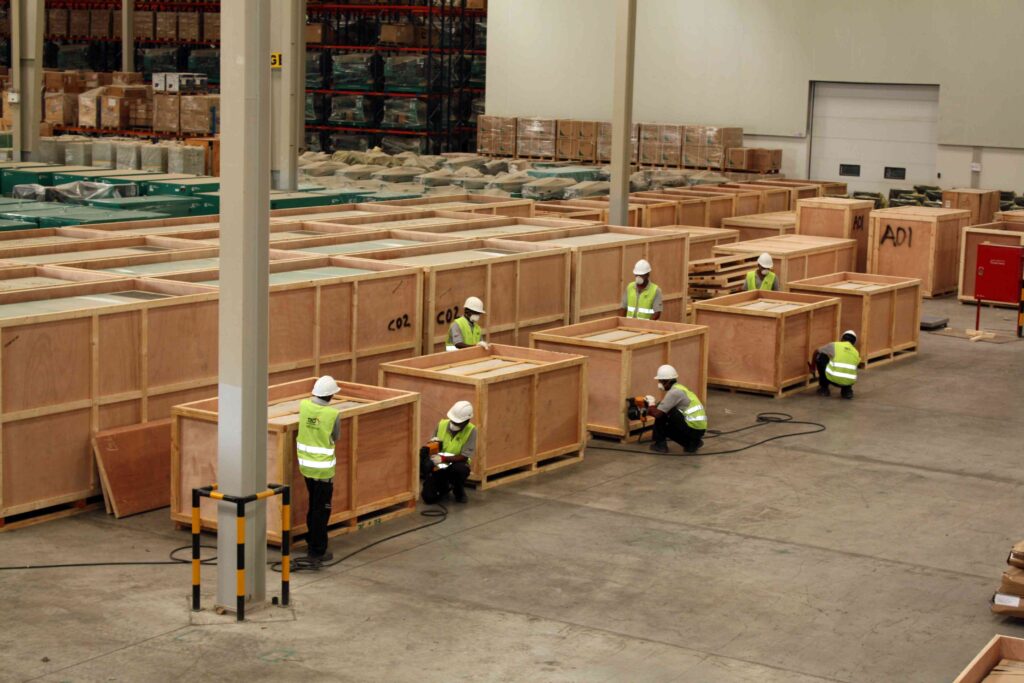
Production is not complete until the finished goods are packed, labeled, inspected, and ready for shipment. Packaging mistakes can cause damage, compliance issues, inventory errors, and customer complaints.
Packaging Checklist
Check:
- Packaging line capacity
- Product protection
- Carton labeling
- Barcode labeling
- Customer-specific packaging requirements
- Instruction manuals
- Warning labels
- Drop protection, if applicable
- Palletization
- Finished goods warehouse
Export Readiness Checklist
Review whether the factory can support:
- Commercial invoice
- Packing list
- Country of origin information
- Incoterms coordination
- Logistics communication
- Shipment inspection
- Finished goods storage conditions
For U.S. OEMs comparing overseas production options, Contract Manufacturers Vietnam Electronics: 9 Criteria U.S. Buyers Use to Qualify Suppliers is a useful companion article.
On-Site Factory Audit Checklist for Electronics Manufacturing
The following checklist can be used during an on-site electronics factory audit.
| Audit Section | Questions to Ask | Notes |
|---|---|---|
| Factory identity | Is this the actual production site? | |
| Production scope | Which processes are performed in-house? | |
| SMT line | Are SMT machines active, maintained, and documented? | |
| DIP line | Is through-hole assembly controlled by work instructions? | |
| Quality control | Are IQC, IPQC, FQC, and OQC records available? | |
| Testing | Are ICT, FCT, or functional test records available? | |
| Warehouse | Are materials labeled, controlled, and traceable? | |
| ESD | Are ESD controls used and documented? | |
| Engineering | Is DFM, BOM review, and ECO support available? | |
| Traceability | Can finished goods be traced to component lots? | |
| Compliance | Can the factory support required documentation? | |
| Packaging | Are final goods packed and labeled correctly? | |
| Communication | Can the team explain technical issues clearly? |
This checklist should be adapted based on product complexity, production volume, compliance requirements, and risk level.
Remote Electronics Factory Audit Checklist
A remote audit can help U.S. OEMs screen a supplier before traveling or before starting a pilot project. While it does not fully replace an on-site audit, it is useful for early qualification.
What to Request During a Remote Audit
Ask for:
- Live video walkthrough
- Production line video
- Warehouse video
- Testing area video
- Equipment list with photos
- Quality records
- Test report samples
- ESD control evidence
- Organization chart
- Process flow
- Sample production records
- Third-party audit option
Limitations of Remote Audits
Remote audits are useful, but they have limitations:
- Video may not reveal all process issues
- Some areas may be skipped
- Documents still need verification
- Equipment may be shown without proving process control
- Factory organization may appear better during scheduled calls than during normal production
For high-volume, high-risk, or long-term projects, an on-site audit or third-party audit is usually recommended before mass production.
Red Flags During an Electronics Factory Audit
A factory audit is not only about confirming strengths. It is also about identifying risks early.
Watch for these red flags:
- Supplier refuses to show production areas
- Factory floor does not match claimed capabilities
- SMT machines are idle, poorly maintained, or not clearly identified
- No clear process flow
- No quality records
- No test records
- No traceability system
- Materials are not labeled
- Rejected materials are mixed with approved materials
- No visible ESD control
- Operators lack work instructions
- Rework process is uncontrolled
- Supplier cannot explain defect handling
- Component substitution is not controlled
- Engineering team cannot answer technical questions
- Supplier competes only on price
A qualified electronics manufacturer should welcome technical questions and be able to support its claims with real process evidence.
Sample Questions U.S. OEMs Should Ask During an Electronics Factory Audit
Use these questions during supplier qualification:
- Which production processes are performed in-house?
- How many SMT lines do you operate?
- What is your monthly SMT placement capacity?
- What is your minimum component size capability?
- Do you use SPI and AOI?
- How do you control solder paste storage and stencil cleaning?
- How do you manage reflow profiles?
- Do you support ICT, FCT, or custom functional testing?
- Can you show recent test records?
- Can you trace a finished unit back to component lots?
- How do you control component substitutions?
- How do you manage engineering changes?
- What happens when a defect is found during production?
- Can you provide a CAPA example?
- How do you manage ESD control?
- What processes are outsourced?
- How do you handle customer-supplied materials?
- Can you support pilot run before mass production?
- What packaging and labeling support do you provide?
- Who will be the technical contact for U.S. customers?
The answers to these questions can reveal whether the factory has real production maturity or only basic assembly capability.
Why Vietnam Factory Audits Are Important for China+1 Electronics Sourcing
Many U.S. OEMs are exploring Vietnam as part of a China+1 strategy. Vietnam offers potential advantages in electronics manufacturing, including competitive production costs, growing EMS capability, regional supply chain access, and export-oriented manufacturing.
However, a Vietnam location alone does not guarantee supplier quality. Factory capability, process control, engineering support, documentation, communication, and scalability still need to be verified.
A factory audit helps U.S. OEMs confirm whether a Vietnam electronics manufacturer can meet expectations for:
- PCBA manufacturing
- SMT assembly
- DIP assembly
- Testing
- Traceability
- Quality documentation
- Packaging
- Export readiness
- Long-term production support
For more Vietnam sourcing insights, read China+1 Strategy: Why OEMs Are Moving Electronics Manufacturing from China to Vietnam, Electronics Manufacturing Cost in Vietnam vs China, and Electronics Contract Manufacturing in Vietnam vs China.
How SHDC Supports U.S. OEMs with EMS and PCBA Manufacturing in Vietnam
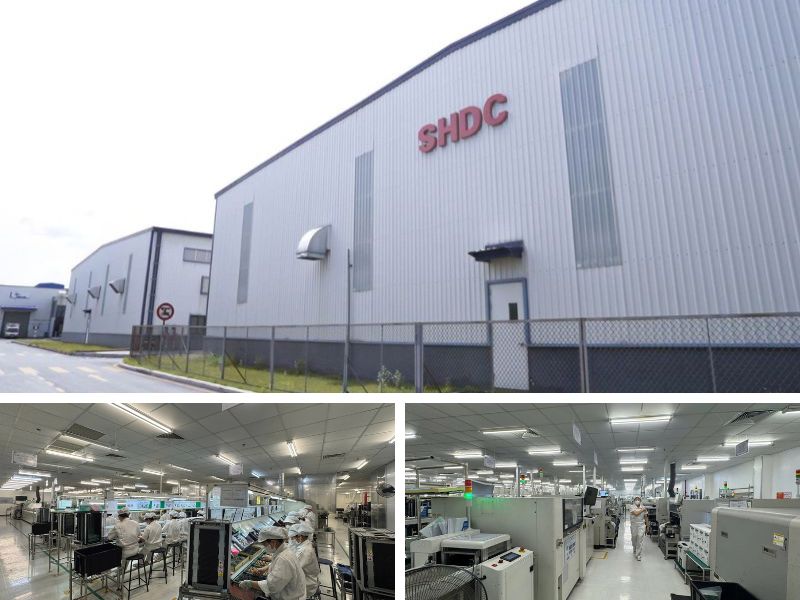
SHDC Electronics Co., Ltd. provides electronics manufacturing services in Vietnam for OEM customers that need PCBA, SMT assembly, DIP assembly, testing, assembly, and packaging support.
SHDC’s production scope includes SMT lines, DIP lines, assembly, testing, and packaging operations. Its production process includes IQC inspection, warehouse control, SMT-related processes, AOI, reflow, mounting, screen printing, component insertion, automatic soldering, ICT, visual inspection, FCT, OQC, packaging, and finished product warehousing.
SHDC’s production facilities include SMT equipment, SPI, AOI, ICT, wave soldering, reflow, high-voltage testing, A/V testing, functional testing, aging testing, and laser marking. These capabilities support OEM customers that need structured electronics manufacturing, process control, and product verification.
For U.S. OEMs sourcing in Vietnam, SHDC can review BOM files, Gerber files, drawings, testing requirements, target volumes, and production timelines to support RFQ evaluation and supplier qualification.
Planning to audit or qualify an electronics manufacturing partner in Vietnam? Contact SHDC to discuss your EMS, PCBA, SMT assembly, testing, packaging, and mass production requirements.
FAQ: Electronics Factory Audit Checklist
What is an electronics factory audit checklist?
An electronics factory audit checklist is a structured list used to evaluate a factory’s manufacturing capability, quality control, SMT and DIP processes, testing, traceability, warehouse management, ESD control, compliance support, and production readiness before starting production.
What should U.S. OEMs check during an electronics factory audit?
U.S. OEMs should check production scope, SMT lines, DIP assembly, quality records, testing capability, traceability, warehouse control, ESD protection, engineering support, revision control, packaging, and communication.
Is a remote factory audit enough for electronics manufacturing?
A remote audit can help with early supplier screening, but for high-volume or high-risk electronics projects, an on-site audit or third-party audit is usually recommended before pilot run or mass production.
What documents should I request before auditing an electronics factory?
You should request the company profile, equipment list, process flow, certifications, inspection reports, test reports, quality procedures, traceability records, organization chart, ESD procedure, and sample production documents.
How do I audit an SMT factory?
To audit an SMT factory, review SMT equipment, solder paste control, stencil management, pick-and-place setup, feeder verification, reflow profile control, SPI, AOI, first article inspection, defect records, maintenance records, and operator training.
Why is traceability important in electronics factory audits?
Traceability helps link finished products to component lots, PCB batches, production records, test results, and rework history. This makes it easier to investigate defects, isolate affected batches, and improve future production quality.
Why should U.S. OEMs audit electronics factories in Vietnam?
Vietnam can be a strong sourcing destination for U.S. OEMs, but supplier capability varies. Factory audits help verify real production capability, quality systems, testing processes, documentation, communication, and export readiness before production begins.
What are the biggest red flags during an electronics factory audit?
Major red flags include no quality records, no test documentation, poor ESD control, unclear process flow, uncontrolled rework, weak traceability, unlabeled materials, refusal to show production areas, and vague answers to technical questions.
When should an OEM conduct a factory audit?
An OEM should conduct a factory audit before selecting a new supplier, before pilot run, before mass production, after major quality issues, or when moving production from another country to Vietnam.
How does a factory audit reduce sourcing risk?
A factory audit reduces sourcing risk by verifying whether the supplier’s actual production capability, quality control, testing process, traceability, and documentation match the project’s technical and commercial requirements.