Tiếng Việt
 日本語
日本語
UL 62368-1 is the safety standard that now governs every charger, USB power adapter, and power supply legally sold in the United States. Since December 2022, UL 60950-1 — the previous standard — has been retired. Any brand still selling chargers certified only to UL 60950-1 is operating on borrowed time. Any new charger entering the U.S. market must be tested and certified to UL 62368-1. For brands evaluating UL 62368-1 charger compliance Vietnam as a sourcing strategy, the timing is compelling. Vietnam’s charger manufacturing ecosystem has matured to the point where UL 62368-1 compliant production is achievable — at labor costs 40–55% below China and with U.S. import tariffs of ~3% versus 145% for China-origin products. This guide covers the standard in full technical detail, what Vietnam manufacturers must be able to do to support certification, and the complete sourcing process from RFQ to compliant first shipment.
UL 62368-1 — The Standard That Now Governs Every U.S. Charger
What UL 62368-1 Is and Where It Comes From
UL 62368-1 is the American National Standard for Audio/Video, Information and Communication Technology Equipment safety, adopted by ANSI/UL from the international IEC 62368-1 standard developed by the International Electrotechnical Commission (IEC). It covers all equipment that converts AC mains power to low-voltage DC output — which includes every USB charger, power adapter, and power supply sold in the United States.
The standard is administered by OSHA-recognized Nationally Recognized Testing Laboratories (NRTLs) — primarily Intertek (ETL mark) and UL Solutions (UL mark). For any UL 62368-1 charger compliance Vietnam sourcing program, the brand submits the product to one of these NRTLs for testing and factory audit. Passing both results in an ETL Listed or UL Listed certification — the marks that unlock Amazon, Walmart, Target, and every compliant U.S. retail channel.
Why UL 60950-1 Was Retired — And What Changed
UL 60950-1 took a prescriptive approach to charger safety: it specified exact voltage limits, clearance distances, and component ratings as fixed rules. UL 62368-1 replaces this with Hazard-Based Safety Engineering (HBSE) — a framework that identifies the types and levels of hazard a product can produce, then requires appropriate safeguards for each hazard level. This approach is more technically rigorous and better suited to modern charger architectures (USB-C PD, GaN, high-density designs) that the old standard never anticipated.
The practical consequence for brands: a charger that passed UL 60950-1 testing in 2019 is not automatically compliant with UL 62368-1. The standards share many requirements, but UL 62368-1 adds fault condition testing, revised temperature limits, and updated component qualification requirements that require a full retest. Any charger still relying on a UL 60950-1 certificate for U.S. market access needs to be recertified. Understanding UL 62368-1 charger compliance Vietnam manufacturing options is the logical next step for any brand in this position.
Which Products Must Comply with UL 62368-1
- USB-A wall chargers (5W–18W, all QuickCharge variants)
- USB-C Power Delivery chargers (18W–240W, all PD/PPS variants)
- GaN chargers (any wattage)
- Multi-port charging stations and desktop charging hubs
- Wireless chargers (Qi, MagSafe-compatible) — in combination with FCC authorization
- Portable power banks with AC input (combined with additional standards)
- EV Level 1 home chargers (EVSE) — under UL 2594, which references UL 62368-1 for certain subsystems
The Technical Core of UL 62368-1 — What Every Charger Must Pass
Hazard-Based Safety Engineering: The Framework Behind the Standard
UL 62368-1’s HBSE framework classifies energy sources into three levels of severity and requires that safeguards prevent persons from being exposed to hazards above defined thresholds:
- Electrical energy (ES1/ES2/ES3): ES1 is safe under all conditions; ES2 can cause pain but not injury; ES3 can cause injury or death. Charger outputs accessible to users must be ES1 or ES2 under normal and single-fault conditions.
- Thermal energy (TS1/TS2/TS3): TS1 causes no discomfort; TS2 can cause pain; TS3 can cause burns. Accessible surfaces of chargers must stay within TS1 or TS2 limits under normal operation and during fault conditions.
- Mechanical energy: Applies primarily to physical hazards from enclosures, connectors, and venting.
For UL 62368-1 charger compliance Vietnam manufacturing, this means the manufacturer’s engineering team must understand not just “does the output stay within limits” but “what happens to every accessible energy level when any single component fails.” This is categorically more demanding than UL 60950-1’s pass/fail component checklist.
Key Test Clauses for Charger Products
| Clause | Test Content | Common Failure Mode |
|---|---|---|
| Clause 5 | Electrical energy source levels (ES1/ES2/ES3 classification) | Output exceeds ES2 limit under single fault |
| Clause 6 | Thermal energy source levels (TS1/TS2 surface temperature) | Component or surface temperature exceeds TS2 limit |
| Clause 5.4 | Dielectric withstand (hi-pot) — 3,000V AC (Class I) or 4,000V AC (Class II) | Creepage/clearance insufficient on PCB |
| Clause 8 | Electrical insulation — primary to secondary isolation | Transformer insulation system insufficient |
| Clause 10 | Protective bonding and ground integrity | Ground path resistance too high |
| Clause 4.4 | Abnormal operation — OVP, OCP, short-circuit protection | Protection circuit doesn’t trigger within limits |
| Annex M | USB charging port safety (USB-A, USB-C) | Over-current on port under fault condition |
Additional Requirements for USB-C Power Delivery Chargers
UL 62368-1 charger compliance for USB-C PD products goes beyond the base standard. USB Power Delivery negotiation means the charger output voltage is dynamic — it changes based on device requests (5V, 9V, 12V, 15V, 20V, or PPS ranges). UL 62368-1 requires that the charger remain within ES and TS limits at every possible negotiated output, and that protection circuits operate correctly if PD negotiation fails mid-session.
Additional requirements for USB-C PD compliance:
- USB-IF certification for PD protocol compliance (separate from ETL/UL)
- E-Marker cable verification for cables rated above 60W
- PPS (Programmable Power Supply) testing if the charger supports PPS output
- FCC Part 15 authorization for conducted and radiated emissions
UL 62368-1 Requirements for GaN Chargers
Gallium Nitride chargers present specific UL 62368-1 compliance challenges that any GaN charger contract manufacturer must be prepared to address:
- High-frequency switching emissions: GaN transistors switch at 1–10 MHz — orders of magnitude faster than silicon MOSFETs. This generates conducted and radiated emissions that must be controlled to pass FCC Part 15. EMI filter design is critical and must be validated through pre-compliance testing before formal submission.
- Thermal derating: GaN’s higher efficiency means lower thermal loss, but the compact form factor concentrates heat. UL 62368-1 temperature testing at maximum rated ambient (typically 40°C) must confirm all component and surface temperatures stay within TS limits.
- GaN IC qualification: GaN power ICs used in chargers must have appropriate voltage and temperature ratings documented in the technical file. The datasheet of the specific GaN IC used is reviewed during Intertek’s documentation evaluation.
- Transformer core qualification: High-frequency GaN designs use specialized ferrite cores. The core material must be rated for the operating frequency and flux density used in the design.
For brands evaluating a GaN charger manufacturer outside China that can support UL 62368-1 compliance, Vietnam is the most technically capable option in Southeast Asia. The technical guide to power PCB assembly for GaN and USB-C fast chargers covers the design requirements in detail.
Safety-Critical Components — The UL 62368-1 Compliance Bottleneck
UL 62368-1 certification is product-specific and BOM-specific. The following components must have documented safety ratings as part of the certification file — and any post-certification substitution without Intertek notification voids the certificate:
| Component | Required Safety Standard | What Intertek Checks |
|---|---|---|
| Y capacitors (primary-secondary) | IEC 60384-14 Class Y1 or Y2 | Safety rating on part number; voltage derating |
| Primary fuse | IEC 60127 / UL 248 | Interrupting rating, time-current characteristic |
| Optocoupler (isolation) | IEC 60747-5-5 (Reinforced isolation) | CTR stability, isolation voltage, creepage |
| Transformer | IEC 61558-1 / UL 5085 | Insulation class, creepage/clearance, hi-pot rating |
| Primary switch (MOSFET/GaN) | Voltage rating ≥ 2× Vmax; temp rating | Datasheet VDS, RDS(on), Tj max |
| Output capacitors | Voltage derating ≥ 80% rule | Rated voltage vs. operating voltage |
Any UL 62368-1 charger compliance Vietnam manufacturing program must verify these component requirements at the design stage — not after submitting to Intertek. Fixing component issues after submission adds 4–8 weeks to the certification timeline. See common PCB assembly defects and ISO quality standards for manufacturing for broader quality system context.
The UL 62368-1 Certification Process for Vietnam Manufacturing
Who Holds the Certificate — Brand or Manufacturer?
This is a question that creates confusion in most first-time UL 62368-1 charger compliance Vietnam sourcing programs. The standard model:
- The brand owner (U.S. company) is typically the certificate applicant — the entity whose name appears on the ETL/UL certificate as the “listee.” This gives the brand control over the certification and prevents a scenario where the manufacturer holds the certificate and uses it as leverage.
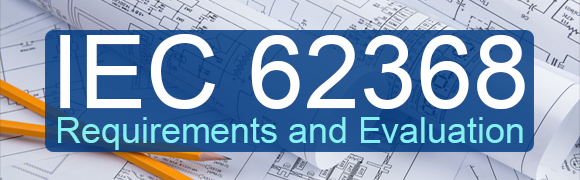
- The Vietnam manufacturer is the “production location” listed on the certificate. Intertek conducts the factory audit at the Vietnam facility. The manufacturer must pass the audit independently of the product test — both must pass for the certificate to be issued.
- The brand’s ETL or UL mark then appears on the product under the brand’s own identity.
Documentation Package — What Must Be Prepared
Submitting an incomplete documentation package is the most common source of certification delay. A complete UL 62368-1 submission requires:
- Full electrical schematics (not block diagrams — complete circuit schematics with component values)
- Bill of Materials with manufacturer part numbers for all safety-critical components
- PCB layout files or dimensioned drawings showing creepage and clearance distances
- Component safety certificates and datasheets (Y capacitors, fuse, optocoupler, transformer)
- Construction drawings and final label artwork
- Test reports from any pre-testing conducted (reduces back-and-forth during Intertek review)
- Description of protective circuits: how OVP, OCP, and short-circuit protection operate
Vietnam manufacturers with genuine UL 62368-1 experience will have documentation templates and know exactly what Intertek expects. First-time manufacturers generate multiple documentation revision cycles that extend timelines by weeks.
Certification Timeline — Realistic Estimates
| Stage | Duration | Notes |
|---|---|---|
| Documentation review | 1–2 weeks | Completeness check; requests for missing data |
| ES/TS level classification | 1–2 weeks | Establish hazard levels for the specific design |
| Electrical safety testing | 2–3 weeks | Dielectric withstand, leakage current, insulation |
| Temperature rise testing | 2–3 weeks | Full load, elevated ambient; longest single test |
| Abnormal / fault condition | 1–2 weeks | OVP, OCP, component failure simulation |
| Factory audit (Vietnam) | 1–2 days on-site + scheduling | Typically 2–4 weeks after product tests pass |
| Total (no failures) | 8–14 weeks | Express service available at higher cost |
| Total (with 1 major failure) | 14–22 weeks | Redesign + resample + retest adds 6–8 weeks |
What Intertek Inspects at the Vietnam Factory
The factory audit component of UL 62368-1 charger compliance Vietnam is not a paperwork review — it is a physical inspection of the production facility. Intertek’s auditor verifies:
- Hi-pot tester operation: Is it calibrated? Are operators running it at the correct voltage for every unit? Are records maintained?
- Incoming component inspection: Is there a process to verify that Y capacitors, fuses, and other safety-critical components match the certified BOM before they enter production?
- Production traceability: Can the manufacturer trace any finished unit back to its component lot, production date, and operator? PCBA testing and traceability records are audited directly.
- BOM change control: Is there a documented approval process for component changes? Can the auditor verify that no unauthorized substitutions have occurred since certification?
- Label compliance: Is the ETL mark applied to both product and packaging per Intertek’s marking requirements?
Annual follow-up factory audits are a standing requirement of the ETL/UL program. Any UL 62368-1 charger compliance Vietnam manufacturing program must include ongoing Intertek audit management as a program component, not a one-time event.
Why Vietnam Manufacturers Are Positioned for UL 62368-1 Compliance
Technical Workforce and SMT Capability
Vietnam’s northern electronics manufacturing corridor — anchored by Samsung’s massive Hanoi-area complex and the VSIP industrial zone network — has produced a generation of electronics engineers and production supervisors with international quality management experience. The SMT assembly capability available in Vietnam’s premium industrial zones meets the precision requirements of UL 62368-1 charger production: controlled solder paste deposition, accurate component placement, and validated reflow profiles for safety-critical assemblies.
Automated optical inspection (AOI) for 100% post-solder verification — a production requirement for any UL 62368-1 charger compliance Vietnam operation — is standard equipment at qualified manufacturers in VSIP Hai Dương, Thang Long, and other major zones.
Safety Component Supply Chain in Vietnam
A concern brands frequently raise about UL 62368-1 charger compliance Vietnam is whether safety-critical components — the Y capacitors, fuses, optocouplers, and transformer cores that must be certified parts — are available through Vietnam. The answer is yes, through established international distributor networks:
- Y capacitors: Murata (DE series), TDK, KEMET — available through Arrow, Avnet, and local Vietnam distributors
- Safety fuses: Littelfuse, Bel Fuse, Schurter — available through regional distributors
- Optocouplers (reinforced isolation): Broadcom ACPL series, Toshiba TLP series — distributor stock in Vietnam
- GaN power ICs: Navitas Semiconductor, Innoscience, GaN Systems — distributor-supported import into Vietnam
- Transformer cores: Local Vietnam winding shops using TDK, Magnetics, and Ferroxcube cores
The power electronics manufacturing ecosystem in Vietnam is not yet as deep as Guangdong province for the most specialized components, but is fully capable of supporting UL 62368-1 compliant charger production for all mainstream product categories.
The Tariff Arithmetic for UL 62368-1 Compliant Chargers
UL 62368-1 charger compliance Vietnam versus China involves identical compliance capability at dramatically different total landed costs. The tariff impact on electronics manufacturing is decisive:
| Factor | China UL 62368-1 Mfr. | Vietnam UL 62368-1 Mfr. |
|---|---|---|
| U.S. import tariff (Section 301) | 145% | ~3% (MFN) |
| UFLPA compliance risk | High (safety components) | None |
| Labor cost (assembly) | $6.50–$9.00/hr | $2.50–$4.00/hr |
| Total landed cost advantage | — | 50–55% lower |
| CBP hold risk | Elevated | Low |
The conclusion is straightforward: for any charger product destined for U.S. sale, achieving UL 62368-1 charger compliance Vietnam is not only technically feasible — it is the economically rational decision. See the full electronics manufacturing cost comparison between Vietnam and China for a detailed breakdown, and review the risks of manufacturing electronics in China for the full compliance risk picture.
Pre-Qualification Checklist — Evaluating a Vietnam Manufacturer for UL 62368-1 Compliance
Use this checklist when evaluating any UL 62368-1 charger compliance Vietnam manufacturer candidate. Every item marked ❌ is a risk that needs resolution before proceeding to sample order:
| # | Verification Point | How to Verify |
|---|---|---|
| 1 | Prior ETL/UL certificate for a charger product (UL 62368-1 or UL 60950-1) | Request certificate number; verify at Intertek directory |
| 2 | In-house hi-pot tester with calibration records | Request photo + calibration certificate |
| 3 | Hi-pot test run on 100% of units at production line | Request sample production test records |
| 4 | Functional test fixture for output voltage, OVP, OCP, short-circuit | Request fixture description and test spec |
| 5 | Y capacitor sourcing from IEC 60384-14 certified vendors only | Request current Y cap part number + datasheet |
| 6 | Optocoupler with reinforced isolation rating (IEC 60747-5-5) | Request part number + datasheet isolation voltage |
| 7 | Transformer: documented insulation class, hi-pot rating, creepage | Request transformer specification sheet |
| 8 | BOM change control: documented approval required for any component change | Request SOP or production change control document |
| 9 | AOI for 100% post-solder inspection | Request equipment list + AOI inspection records |
| 10 | Production traceability: lot code from component to finished unit | Request sample traceability record |
| 11 | PCB layout review for creepage/clearance per UL 62368-1 Table 30 | Ask if DFM review includes creepage/clearance check |
| 12 | EMC pre-compliance test access (in-house or local lab) | Request most recent pre-compliance test report |
| 13 | English-language engineer available for Intertek communication | Engineering-level call in English before shortlisting |
| 14 | Prior Intertek or UL factory audit experience | Request last audit date and result |
| 15 | Willingness to hold brand owner as certificate listee | Confirm in writing during NDA/commercial discussion |
6 Common UL 62368-1 Compliance Mistakes — And How to Avoid Them
Mistake 1: Submitting Prototype Samples Instead of Production-Representative Units
Intertek tests samples as representatives of what will be produced at scale. If your Vietnam manufacturer submits hand-built prototypes with manually selected components, the certified configuration will not match what comes off the production line. Always freeze the BOM and PCB layout before ordering samples for UL 62368-1 submission — and verify with the manufacturer that the samples were built using normal production processes, not manually assembled in the engineering lab.
Mistake 2: Y Capacitors Without IEC 60384-14 Safety Certification
This is the single most common immediate failure mode in UL 62368-1 charger compliance reviews. Y capacitors bridge the primary-secondary isolation barrier and are safety-critical — they must carry an IEC 60384-14 Class Y1 or Y2 safety rating. Generic capacitors with the correct capacitance value but no safety rating certificate will fail Intertek documentation review before testing even begins. Verify the Y cap part number in the BOM includes a safety-rated part — look for designations like Murata DE series, TDK CY series, or KEMET AY series in the BOM.
Mistake 3: Insufficient Creepage and Clearance on the PCB
UL 62368-1 Table 30 specifies minimum creepage and clearance distances between primary-side and secondary-side conductors based on working voltage, pollution degree, and insulation class. For a 265V working voltage (global AC input) at Pollution Degree 2 with Basic insulation, the required creepage is typically 3.2–4.0mm. PCB layouts that don’t account for this distance — particularly around the transformer footprint and optocoupler area — fail the dielectric withstand test. DFM review for creepage/clearance compliance before finalizing Gerber files is a non-negotiable step in any UL 62368-1 charger compliance Vietnam design program.
Mistake 4: Unauthorized Component Substitution After Certification
This is not an engineering mistake — it is a process failure, and it is disturbingly common in contract manufacturing. Once UL 62368-1 certification is issued, any change to a safety-critical component (Y capacitor, fuse, optocoupler, transformer, primary switch) requires notification to Intertek and a formal engineering change evaluation. Manufacturers that substitute components without notification — often to manage supply chain shortages or reduce cost — void the ETL/UL certificate. The contractual protections against unauthorized substitution must be explicit in your manufacturing agreement with any UL 62368-1 charger compliance Vietnam partner.
Mistake 5: Assuming CE Test Data Transfers to UL 62368-1
IEC 62368-1 (the international version) and UL 62368-1 (the ANSI version) are closely aligned but not identical. Temperature limits, abnormal operation test procedures, and certain component requirements differ between the editions used in Europe versus the U.S. CE test data from a European IEC 62368-1 test may satisfy many clauses but will typically not satisfy all UL-specific requirements. Brands that assume CE compliance transfers directly to UL/ETL compliance frequently discover gaps during formal Intertek review that require additional testing.
Mistake 6: Treating Certification as One-Time, Not Ongoing
ETL and UL certification includes annual follow-up factory audits as a program requirement. Vietnam manufacturers operating as production locations on your UL 62368-1 certificate must be prepared for — and pass — annual Intertek audits indefinitely. Manufacturers who view certification as a one-time achievement and relax production controls afterward create program compliance risk. Any UL 62368-1 charger compliance Vietnam sourcing program needs to include ongoing audit management as a standing operational responsibility.
SHDC Electronics — UL 62368-1 Compliant Charger Manufacturing at VSIP Hai Duong
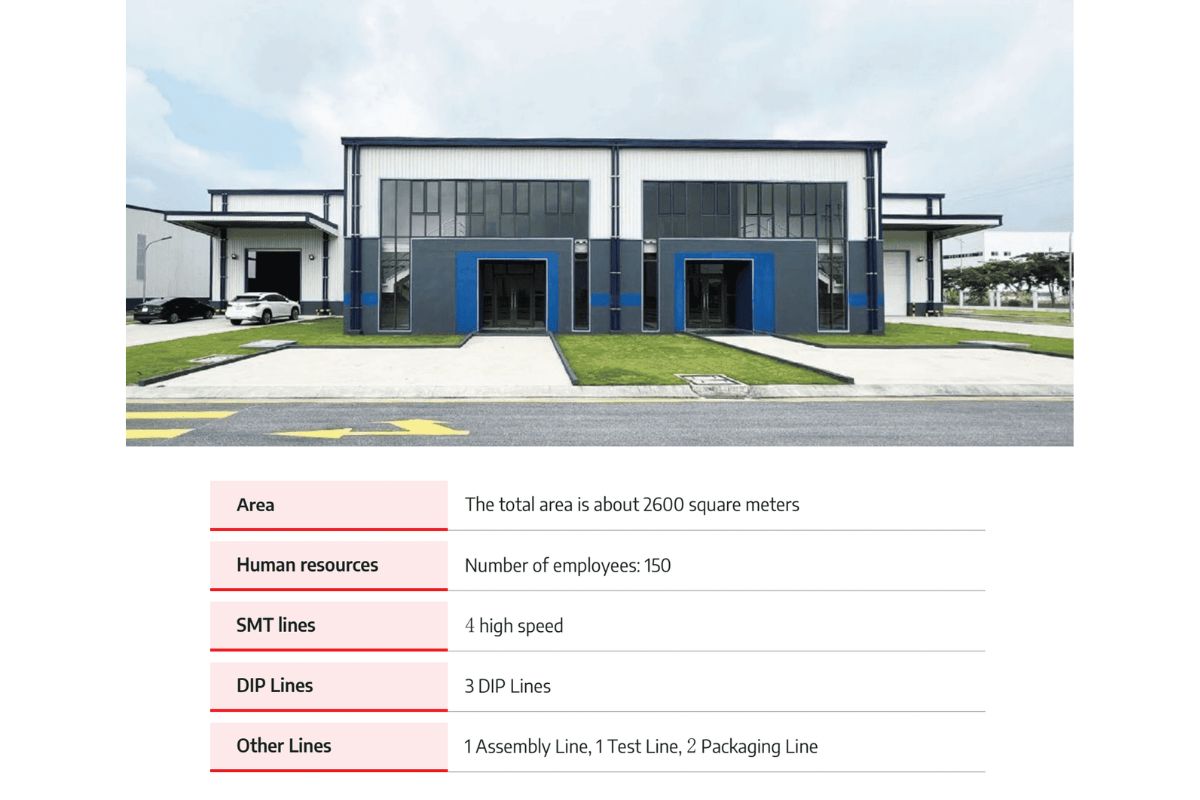
SHDC Electronics (Công ty TNHH Điện tử SHDC) is a 100% Vietnamese-owned manufacturer and member of NAHACO Group, operating at Nhà xưởng A1-2, Lô 5, KCN VSIP Hai Dương — one of Vietnam’s most advanced international industrial zones, 45km from Hanoi with direct highway access to Hai Phong deep-water port.
Charger Manufacturing as a Core Specialization
SHDC’s manufacturing focus is power electronics and charger production — not a general-purpose EMS operation that treats chargers as one product type among many. This specialization means SHDC’s production equipment, quality processes, and engineering knowledge are specifically oriented toward the compliance requirements of charger manufacturing for international markets, including UL 62368-1 charger compliance Vietnam programs.
SHDC’s charger production capabilities include:
- USB-A chargers (5W–18W, including QuickCharge): OEM production with full component traceability
- USB-C PD chargers (20W–65W): single and multi-port, PD 3.0/PPS support
- GaN charger PCB assembly: high-efficiency gallium nitride designs for premium USB-C applications
- Multi-port charging stations: desktop and travel hubs with mixed USB-A/USB-C configurations
OEM and ODM — Two Paths for UL 62368-1 Compliance
SHDC supports two engagement models for brands pursuing UL 62368-1 charger compliance Vietnam:
- OEM production: You provide the design, BOM, and schematic — SHDC manufactures to specification and supports the Intertek factory audit process. Best for brands with in-house hardware engineering capability.
- ODM development: SHDC co-develops the product design with your requirements and handles component selection with UL 62368-1 compliance built in from the design stage. Best for brands that want to launch a new charger SKU without building hardware engineering capability. Available for USB-C GaN charger development and standard USB-A/USB-C PD products.
The Winsler Brand — Evidence of Full Certification Execution

SHDC’s own Winsler consumer electronics brand — which includes chargers and power accessories for domestic and international markets — provides direct evidence of SHDC’s ability to take a charger product from design through component qualification, manufacturing, and market compliance. For brands evaluating any UL 62368-1 charger compliance Vietnam partner, a manufacturer with a compliance-ready proprietary product line has demonstrated capabilities that purely contract-only manufacturers cannot claim.
Request a Quote
To evaluate SHDC for your UL 62368-1 charger compliance Vietnam program: request a manufacturing quote with your product specification, target output power, annual volume, and certification timeline. For a broader overview of SHDC’s contract electronics manufacturing services, the full capability overview is on the SHDC website.
Frequently Asked Questions: UL 62368-1 Charger Compliance Vietnam
What is the difference between UL 62368-1 Edition 1 and Edition 2?
Edition 2 (2019) is the current version required for all new certifications. Edition 1 (2014) is no longer accepted for new submissions. The key changes in Edition 2 include revised temperature limits for components, updated requirements for USB Power Delivery, and clarified fault condition test procedures. If your product was certified to Edition 1, verify with Intertek whether a transition review is required — many Edition 1 certificates have already been transitioned.
If my charger already has a UL 60950-1 certificate, does it need to be recertified to UL 62368-1?
Yes — UL 60950-1 certification is no longer valid for U.S. market access as of December 20, 2022. Products with only UL 60950-1 certification must be recertified to UL 62368-1. The good news: products that passed UL 60950-1 typically have a relatively straightforward path to UL 62368-1 certification, since many requirements are shared. The incremental testing typically adds 4–8 weeks versus a full new product submission. This recertification can be done through any UL 62368-1 charger compliance Vietnam manufacturer by submitting the original technical file along with a gap analysis.
Does UL 62368-1 cover wireless (Qi) chargers?
UL 62368-1 covers the AC-DC power conversion section of a wireless charger. The wireless charging coil and Qi protocol compliance are covered by additional standards: FCC Part 15 (for electromagnetic emissions) and the Wireless Power Consortium’s Qi certification program (for interoperability). A compliant wireless charger for the U.S. market typically requires all three: UL 62368-1, FCC authorization, and Qi certification. This triple-track requirement makes wireless charger certification longer and more expensive than wired charger certification.
What are creepage and clearance, and why do they keep failing in Intertek testing?
Creepage is the shortest path along a surface between two conductors; clearance is the shortest path through air. UL 62368-1 Table 30 specifies minimum distances for both, based on working voltage, pollution degree, and insulation class. These distances exist to prevent arcing and tracking failures that could cause electric shock or fire. Charger PCBs fail this requirement when the layout places primary-side and secondary-side traces too close together — typically around the transformer footprint, optocoupler, and Y capacitor mounting pads. A PCB design review specifically checking UL 62368-1 Table 30 compliance before Gerber finalization is far less expensive than redesigning after a test failure.
Can a Vietnam factory participate in the Intertek audit process directly?
Yes — and they must. The Intertek factory audit is conducted at the production facility. The Vietnam manufacturer’s quality manager, production supervisor, and engineering representative typically participate. The auditor verifies production controls, tests equipment, and records against the requirements described above. Experienced UL 62368-1 charger compliance Vietnam manufacturers will have participated in multiple Intertek audits and understand exactly what documentation and demonstrations the auditor requires.
What is the annual cost of maintaining UL 62368-1 certification through a Vietnam manufacturer?
Intertek charges annual listing fees typically in the range of $500–$2,000 per certificate, plus the cost of the annual factory follow-up audit (typically $1,500–$3,000 including travel to Vietnam). Total annual maintenance cost per ETL certificate: approximately $2,000–$5,000 per year. At any meaningful production volume, this represents a negligible per-unit cost — and is a mandatory program requirement, not optional, for any UL 62368-1 charger compliance Vietnam sourcing program.
Conclusion: UL 62368-1 Charger Compliance Vietnam Is the Standard Sourcing Strategy for 2026
UL 62368-1 is not a compliance option — it is the mandatory safety standard for every charger sold in the U.S. market. The question for procurement teams is not whether to comply, but where to manufacture compliantly at the lowest total cost. The answer in 2026 is Vietnam.
UL 62368-1 charger compliance Vietnam delivers: technically capable manufacturers with growing certification track records, safety-critical component supply chains sufficient for all mainstream charger product types, and a tariff structure that produces 50–55% lower total landed costs compared to equivalent China-sourced ETL/UL certified products. The brands that qualify Vietnam-based UL 62368-1 compliant manufacturers now will have a durable cost advantage — not just for the duration of current tariffs, but structurally, as China’s manufacturing costs continue to rise.
For broader context on Vietnam’s electronics manufacturing advantages, see our guide on 10 reasons to choose contract electronics manufacturing in Vietnam. For the complete guide to ETL certification for chargers sourced from Vietnam, see our ETL certified charger manufacturer Vietnam guide — the pillar resource this article supports.
➡ Contact SHDC Electronics to discuss UL 62368-1 compliant charger manufacturing at VSIP Hai Duong →