
 Tiếng Việt
 日本語
日本語
Vietnam has become an important manufacturing option for US electronics companies seeking to diversify production, reduce dependence on a single country, or establish an additional supply base in Asia. However, finding a supplier online is not the same as verifying a factory. A website may display modern equipment, production statistics, certifications, and factory images, but these materials do not automatically prove that the supplier can manufacture a specific printed circuit board assembly reliably. Some suppliers operate their own facilities, while others subcontract critical processes or function primarily as trading and sourcing companies. Before selecting a PCBA factory in Vietnam, US OEMs should verify the supplier’s physical operations, equipment, process controls, testing capabilities, material management, traceability, engineering support, available capacity, and pilot-build performance.
This guide provides ten practical checks that procurement, engineering, and quality teams can use before transferring a PCBA project to Vietnam.
Quick answer: To verify a PCBA factory in Vietnam, check its legal and physical identity, in-house manufacturing scope, SMT capability, soldering controls, inspection and testing, material management, traceability, NPI engineering, available capacity, subcontracting, and pilot-build results.
For a broader overview of the country’s PCB assembly ecosystem, see this guide to PCBA Vietnam.
What Should a Real PCBA Factory in Vietnam Be Able to Prove?
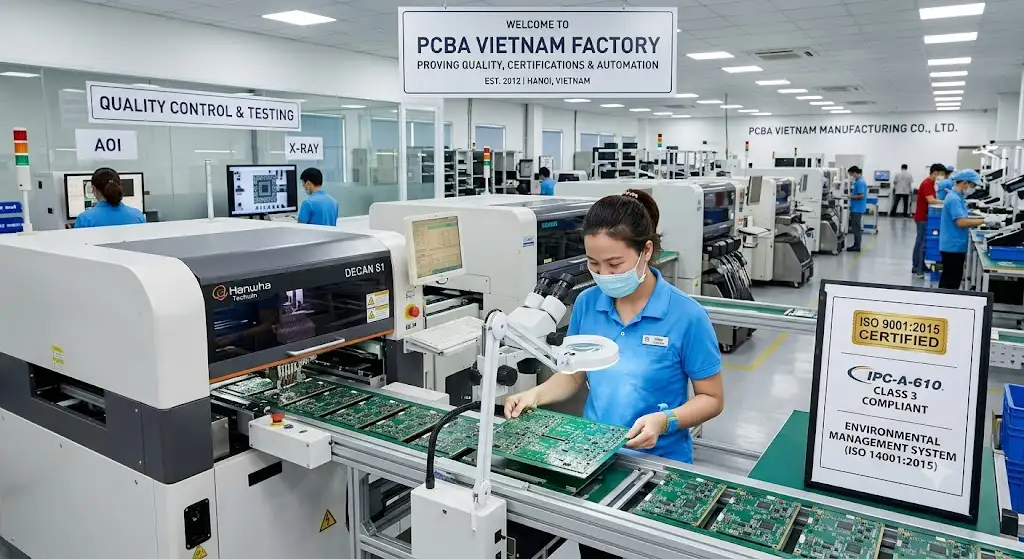
A real PCBA manufacturing operation should be able to provide evidence that connects its sales claims to actual production activities.
That evidence may include:
- A verifiable factory location and legal entity
- Equipment records and machine identification
- Production-line layouts
- Work instructions
- Process-control records
- Inspection and test reports
- Material traceability records
- Engineering-change documentation
- Capacity and line-loading information
- Results from an actual pilot build
It is also important to distinguish among several types of suppliers.
A bare PCB manufacturer produces unpopulated circuit boards. A PCBA factory mounts and solders electronic components onto those boards. An SMT factory may focus mainly on surface-mount assembly, while a full-service EMS provider may also handle through-hole assembly, testing, box build, programming, packaging, and finished-product delivery.
Subcontracting is not automatically a problem. Many qualified manufacturers outsource specialized processes such as X-ray inspection, conformal coating, environmental testing, or component analysis.
The critical issue is transparency. The supplier should disclose which processes are performed in-house, identify approved subcontractors, and explain how outsourced operations are controlled.
10 Checks Before Selecting a PCBA Factory in Vietnam
Check 1: Verify the Factory Identity, Location, and In-House Scope
The first step is confirming that the company issuing the quotation is directly connected to the factory presented during supplier evaluation.
Ask the supplier to clarify:
- The legal name of the contracting entity
- The address of the production facility
- Who owns or operates the equipment
- Which processes are completed at that location
- Which processes are performed at another facility
- Which operations are subcontracted
- Who is responsible for final product quality
A live video tour can provide more useful evidence than a collection of promotional photographs. During the tour, ask the supplier to move through the receiving area, warehouse, SMT lines, inspection stations, test area, repair area, and finished-goods warehouse.
Compare the equipment visible during the tour with the supplier’s machine list. Machine model numbers, production labels, control screens, and line layouts should be consistent with the documentation provided.
You can also request anonymized examples of:
- Production travelers
- Work orders
- Inspection reports
- Test records
- Maintenance records
- Calibration labels
- Material receiving records
Supplier identity verification should be part of a wider electronics supplier due diligence process. NIST’s finalized Due Diligence Assessment Quick-Start Guide also provides a structured framework for evaluating supplier provenance, resilience, ownership, supply-chain tiers, and foundational risk factors.
Warning signs requiring further investigation
Look more closely when:
- The supplier refuses a live factory tour.
- Contract and factory addresses do not match.
- Equipment photographs appear at multiple unrelated suppliers.
- Sales staff cannot identify which processes are subcontracted.
- Production records cannot be connected to the equipment being shown.
- Technical questions are answered only with general marketing statements.
These signs do not prove that the supplier is unqualified, but they indicate that additional verification is necessary.
Check 2: Match the SMT Line to Your PCB Requirements
The number of SMT lines does not show whether a factory can build your product.
US OEMs should compare the line’s actual technical range with the design requirements of their PCB assembly.
Important factors include:
- Minimum and maximum PCB dimensions
- Supported PCB thickness
- Panel handling limitations
- Minimum component size
- Fine-pitch placement capability
- Maximum component dimensions and height
- Placement accuracy
- BGA, QFN, LGA, and bottom-terminated component capability
- Tray, tube, and feeder capacity
- Double-sided assembly capability
- High-mix and changeover performance
- Production-volume suitability
A machine may advertise a high components-per-hour rating, but nominal machine speed is not the same as actual line output. Product mix, feeder changes, program setup, component replenishment, inspection, maintenance, and operator availability all affect real production capacity.
For example, a high-speed line optimized for small passive components may still require additional equipment or process changes for large connectors, transformers, shields, odd-form components, or heavy power devices.
During qualification, provide the factory with representative data from your design:
- PCB dimensions
- Panel drawing
- Component package list
- Smallest passive size
- Fine-pitch components
- Largest and tallest components
- BGA or hidden-joint devices
- Expected monthly volume
- Product mix
- Planned change frequency
The supplier should then explain which line it would use and why. This is more valuable than asking only how many SMT lines the factory operates.
For a deeper explanation of machine sequence and line configuration, review this guide to the SMT production line.
Check 3: Review Solder Paste Printing, SPI, and Reflow Control
Component placement receives much of the attention during a factory visit, but printing and reflow often have a greater effect on solder-joint quality.
A capable PCBA factory in Vietnam should demonstrate control over the entire solder-paste process.
Review the factory’s procedures for:
- Stencil identification and storage
- Stencil tension and condition
- Aperture cleaning
- Solder-paste lot control
- Refrigerated storage
- Thawing and exposure time
- Paste mixing
- Printer setup
- Print alignment
- Cleaning frequency
- Solder Paste Inspection
- Reflow-profile development
- Oven temperature monitoring
- Conveyor-speed control
- Product-specific profile approval
- Nitrogen use where required
Ask to see sample records rather than accepting verbal confirmation.
Useful evidence includes:
- Solder-paste logs
- Refrigerator temperature records
- Stencil-cleaning logs
- SPI results
- First-piece approval reports
- Reflow profiles
- Oven-monitoring records
- Nonconformance reports
A factory should not rely on one generic reflow profile for every assembly. Board thickness, copper distribution, component mass, package type, and thermal sensitivity can change the heating requirements.
Where the customer specifies an IPC workmanship standard, the supplier and buyer should agree on the applicable product class and acceptance criteria. IPC identifies J-STD-001J as the industry-consensus standard for soldering processes and materials, while IPC-A-610J addresses post-assembly acceptance requirements.
Related SHDC resources include:
Check 4: Confirm Through-Hole, Wave Soldering, and Backend Assembly Capabilities
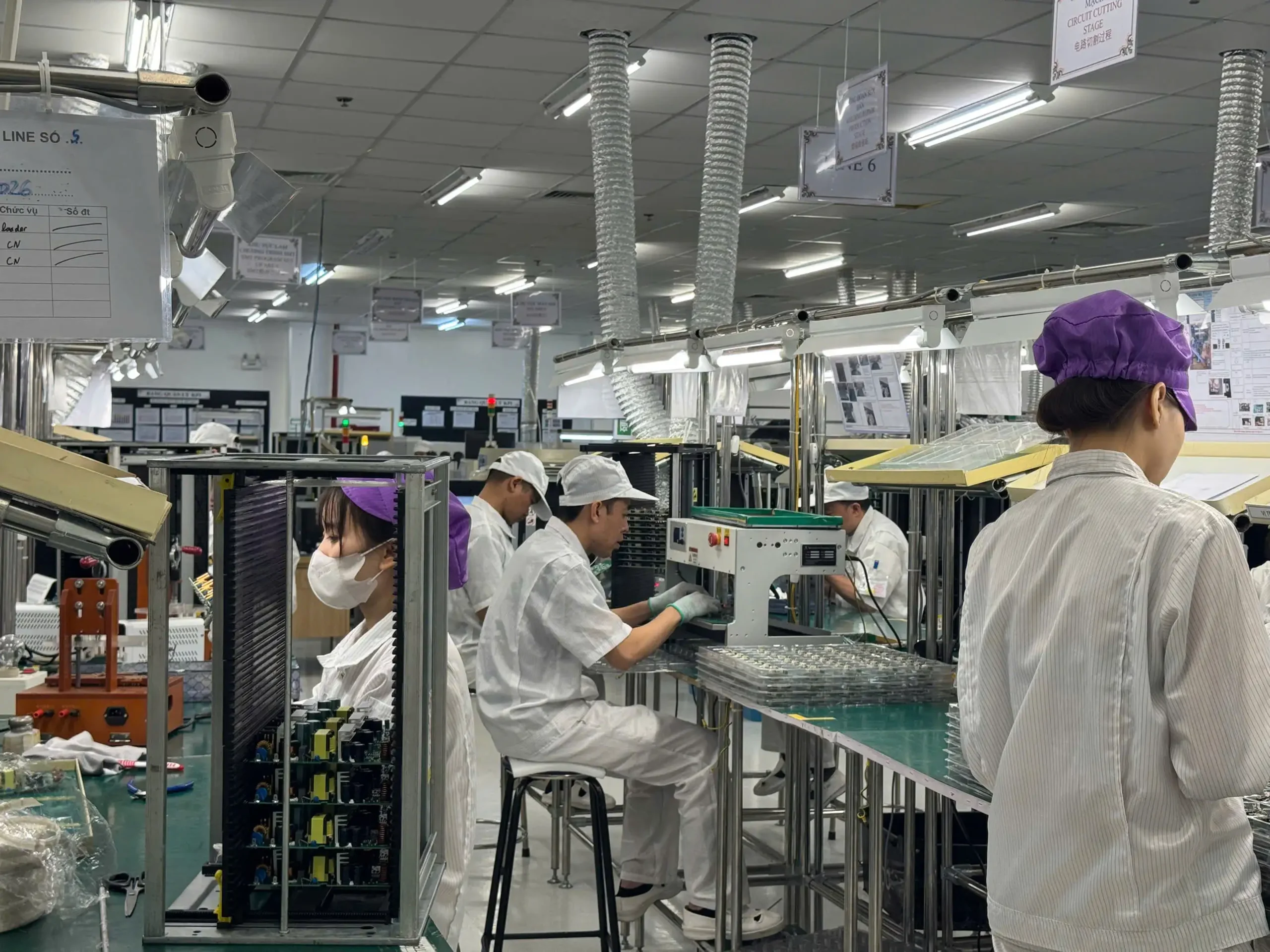
Many PCB assemblies contain components that cannot be processed entirely through standard SMT equipment.
Examples include:
- Connectors
- Transformers
- Relays
- Large capacitors
- Terminal blocks
- Heat sinks
- Displays
- Switches
- Cables
- Mechanical brackets
The factory may need hand insertion, automatic insertion, wave soldering, selective soldering, manual soldering, or a combination of processes.
Evaluate:
- Component insertion methods
- Wave-soldering equipment
- Selective-soldering capability
- Solder-pot maintenance
- Flux application and control
- Preheat settings
- Conveyor settings
- Pallet and fixture design
- Manual soldering procedures
- Operator qualification
- Post-solder inspection
- Cleaning requirements
- Repair and rework controls
The factory should explain how it prevents damage to temperature-sensitive SMT components when a mixed-technology assembly passes through wave soldering.
It should also show how manual operations are standardized. Work instructions, visual aids, fixture use, soldering parameters, operator training, and inspection criteria are important because manual processes can introduce variation.
The distinction between these assembly methods is discussed further in SMT vs through-hole assembly.
If your project includes box build, also verify whether the same facility can manage cable installation, enclosure assembly, firmware loading, labeling, final testing, and packaging.
Check 5: Evaluate AOI, ICT, FCT, and Actual Test Coverage
A supplier may list AOI, ICT, and FCT in its capability presentation, but equipment ownership does not prove adequate test coverage.
The test plan must be developed for the specific product.
Automated Optical Inspection
AOI can inspect component presence, position, polarity, markings, and visible solder conditions. However, it cannot fully verify electrical functionality or every solder joint hidden beneath a component.
Ask how the factory:
- Develops the AOI program
- Creates the component library
- Approves inspection criteria
- Controls false calls
- Reviews defects
- Stores inspection results
- Updates programs after engineering changes
More information is available in this guide to automated optical inspection.
In-Circuit Testing
ICT can identify many assembly-level electrical problems, depending on test-point access and fixture design.
Potential checks include:
- Shorts and opens
- Resistance
- Capacitance
- Diode orientation
- Component presence
- Selected device programming
- Basic circuit-node behavior
Ask who designs the fixture, who owns it, how revisions are controlled, and how test results are stored.
The differences between ICT and product-level testing are explained in in-circuit testing and functional testing.
Functional Testing
FCT evaluates whether the board performs its intended function. Depending on the product, it may include:
- Power-up behavior
- Voltage and current checks
- Communication interfaces
- Sensor inputs
- Output signals
- Firmware response
- Load conditions
- Protection functions
- User-interface behavior
The OEM should define the expected functions, limits, test sequence, and pass/fail criteria. The factory should explain how test equipment is calibrated, fixtures are maintained, and software revisions are controlled.
Where solder conditions are not visible, additional inspection methods may be necessary. IPC’s current J-STD-001 material includes guidance on using X-ray to inspect solder conditions that cannot be evaluated through normal visual methods.
The final test strategy should combine methods based on product risk. AOI, ICT, FCT, high-voltage testing, aging, and X-ray do not replace one another; each identifies different potential failures.
Check 6: Review Material Sourcing, IQC, ESD, and Moisture Controls
PCBA quality begins before components reach the SMT line.
The factory should demonstrate how materials are purchased, received, stored, issued, returned, and traced.
Review:
- Approved Vendor List management
- Authorized and independent sourcing controls
- Purchase-order traceability
- Manufacturer and date-code verification
- Incoming inspection
- Counterfeit-part prevention
- Quarantine procedures
- Nonconforming material control
- FIFO or FEFO practices
- Reel and lot segregation
- Dry-storage capability
- Baking procedures
- Moisture-sensitive component controls
- ESD-protected areas
- Personnel grounding
- ESD equipment verification
- Temperature and humidity monitoring
Component substitution must follow a written approval process. The manufacturer should not replace a specified component solely because an alternative is easier to obtain.
Ask the supplier:
- Does every substitution require written OEM approval?
- How are component lifecycle risks reported?
- Can parts be traced to the purchase order and receiving lot?
- How are partial reels controlled?
- How are moisture-sensitive components identified?
- Are dry-cabinet and baking records retained?
- How are rejected components physically segregated?
- Who assumes responsibility for excess and obsolete inventory?
ANSI/ESD S20.20 provides a framework for developing an ESD control program covering areas such as personnel grounding, workstations, packaging, and other controls for ESD-sensitive products.
A credible supplier should show that its ESD program is implemented through procedures, qualification, verification, training, and records—not only through wrist straps and warning signs.
Check 7: Confirm Traceability and Engineering Change Control
Traceability should allow the manufacturer and customer to reconstruct what happened during production.
Depending on the product’s risk level, records may connect each lot or serial number to:
- Component manufacturer
- Component lot
- Reel or batch number
- Date code
- Purchase order
- Incoming inspection result
- Solder-paste lot
- Stencil revision
- SMT program revision
- Production line
- Operator
- Reflow profile
- AOI result
- ICT result
- FCT result
- Repair history
- Final inspection
- Packaging lot
IPC-1782B establishes risk-based requirements for manufacturing and supply-chain traceability covering electronic assemblies, components, processes, equipment, mechanical assembly, and printed board fabrication.
During factory qualification, select a sample finished board and ask the supplier to trace it backward.
The factory should be able to identify:
- When and where it was manufactured
- Which material lots were used
- Which program revisions were active
- Which inspection and test results belong to it
- Whether the product was repaired or reworked
This demonstration is more informative than viewing an MES dashboard without testing its data.
For further background, see traceability in electronics manufacturing.
Engineering change control
The supplier should also maintain revision control for:
- Gerber files
- BOMs
- Approved Vendor Lists
- Firmware
- Placement files
- Test software
- Work instructions
- Inspection programs
- Packaging specifications
An Engineering Change Order should define the requested change, affected products, implementation date, inventory disposition, required validation, approval history, and new revision.
Learn more about controlling changes through engineering change orders.
Check 8: Evaluate NPI, DFM, DFT, and Failure Analysis Support
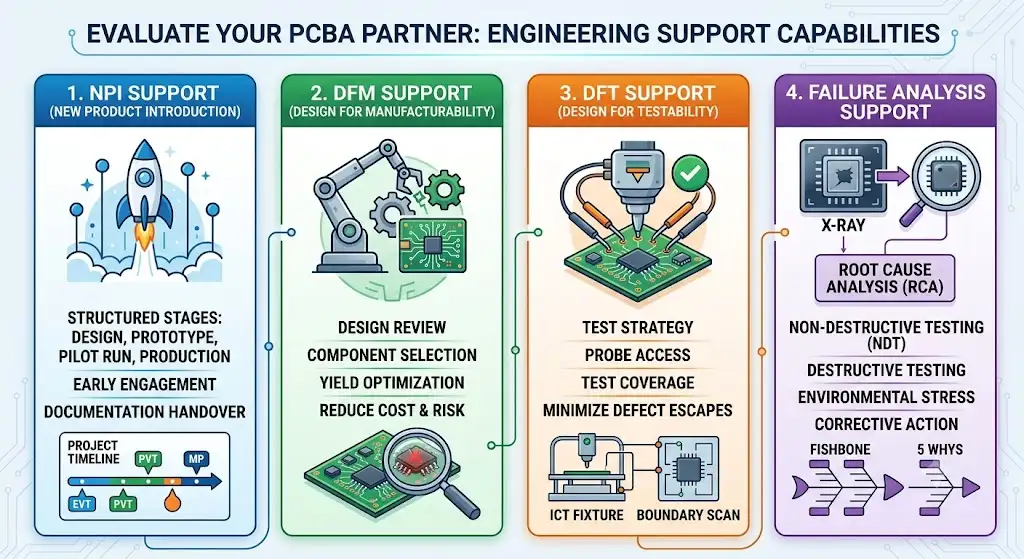
A capable PCBA manufacturer should not send customer files directly to production without technical review.
Its New Product Introduction process should normally include:
- Technical-file completeness review
- BOM and component-risk review
- PCB panelization review
- DFM analysis
- DFT analysis
- Stencil and tooling planning
- Programming review
- Fixture planning
- Prototype or sample build
- Defect and yield analysis
- Corrective action
- Production release
Ask who participates in NPI. The team may include manufacturing engineers, SMT programmers, quality engineers, test engineers, sourcing staff, production planners, and customer program managers.
The manufacturer should provide structured feedback rather than a list of disconnected questions.
A useful DFM report may identify:
- Component-spacing risks
- Fiducial issues
- Panelization limitations
- Thermal imbalance
- Solderability concerns
- Unsupported packages
- Incorrect footprints
- Polarity inconsistencies
- Assembly-access problems
- Rework limitations
A DFT review should evaluate test-point access, fixture feasibility, programming access, circuit isolation, functional-test requirements, and test-data storage.
Related guides include:
- NPI in electronics manufacturing
- DFM for electronics manufacturing
- Design for testability
- DFT and DFM
Failure-analysis capability is equally important. Ask how the factory distinguishes among design defects, component failures, process defects, test errors, and handling damage.
A supplier should be able to document root cause, containment, corrective action, verification, and recurrence prevention.
Check 9: Validate Real Capacity, Utilization, and Scalability
Factory presentations often describe theoretical equipment capacity. OEMs need to understand available project capacity.
These are not the same.
Theoretical output assumes ideal operating conditions. Actual production is affected by:
- Product mix
- Setup and changeover time
- Component replenishment
- Program verification
- Maintenance
- Material shortages
- Operator availability
- Inspection speed
- Test time
- Repair volume
- Packaging capacity
Ask the supplier for evidence such as:
- Current line-loading information
- Number of shifts
- Recent monthly output
- Machine uptime
- First-pass yield
- Changeover time
- Preventive-maintenance schedule
- Available test-fixture capacity
- Backend assembly capacity
- Ramp-up plan
Differentiate among:
- Placement capacity
- SMT line capacity
- Soldering capacity
- Test capacity
- Finished-product capacity
A factory may have available SMT placement time but insufficient ICT fixtures, FCT stations, repair technicians, or final-assembly resources.
For that reason, production scaling should be evaluated from material receipt through finished-goods release—not only at the pick-and-place machine.
The supplier should explain how it would support increases in volume, including:
- Additional shifts
- Dedicated fixtures
- Capacity reservation
- Operator training
- Equipment duplication
- Material buffering
- Alternate sourcing
- Preventive-maintenance planning
Check 10: Confirm Subcontracting and Validate Capability Through a Pilot Build
The most reliable way to evaluate a factory is to run a controlled pilot build.
Before the build, define:
- Gerber revision
- BOM revision
- Approved substitutions
- Assembly drawing revision
- Firmware revision
- Sample quantity
- Test requirements
- Acceptance criteria
- Required production records
- Delivery schedule
- Reporting format
- Rework rules
The pilot build should use the intended production process whenever practical. A sample manually assembled by a special engineering team may not accurately represent the mass-production line.
After completion, review:
- Material issues
- Production deviations
- First-pass yield
- AOI defects
- ICT failures
- Functional-test failures
- Rework rate
- Defect Pareto
- Cycle time
- Documentation accuracy
- Schedule performance
- Corrective actions
The factory should explain not only what failed but why it failed and what will change before the next build.
A complete RFQ package helps ensure that quotations and pilot plans are based on consistent information. Use this PCBA manufacturer Vietnam RFQ checklist before releasing project data.
Document subcontracted processes
Ask the manufacturer to complete a process-responsibility matrix:
| Process | In-house | Subcontracted | Evidence required |
|---|---|---|---|
| SMT assembly | Yes/No | Yes/No | Equipment and process records |
| Through-hole assembly | Yes/No | Yes/No | Line tour and work instructions |
| Wave/selective soldering | Yes/No | Yes/No | Process profiles and maintenance |
| X-ray inspection | Yes/No | Yes/No | Inspection reports |
| ICT | Yes/No | Yes/No | Fixture and result records |
| Functional testing | Yes/No | Yes/No | Test plan and data |
| Conformal coating | Yes/No | Yes/No | Process specification |
| Box build | Yes/No | Yes/No | Assembly and test records |
| Packaging | Yes/No | Yes/No | Packaging specification |
The primary supplier should remain responsible for quality, traceability, revision control, and corrective action even when an approved process is outsourced.
PCBA Factory Verification Checklist
The following table summarizes the ten checks.
| Check | What the OEM should verify | Evidence to request |
|---|---|---|
| Factory identity | Legal entity, location, and operating scope | Live tour, legal records, equipment list |
| SMT capability | Equipment fit with PCB and component requirements | Machine specifications and sample review |
| Process control | Printing, SPI, and reflow controls | SPI data, paste logs, reflow profiles |
| Backend assembly | Through-hole, soldering, and mechanical processes | Work instructions and process records |
| Inspection and testing | Actual test strategy and coverage | AOI, ICT, FCT, and fixture records |
| Material control | Sourcing, IQC, ESD, and moisture controls | Receiving, warehouse, and ESD records |
| Traceability | Product-to-material and process tracking | Traceability demonstration |
| Engineering | NPI, DFM, DFT, and failure analysis | Engineering reports and corrective actions |
| Capacity | Available capacity rather than theoretical output | Line loading, actual output, ramp-up plan |
| Pilot build | Real execution and problem-solving capability | Yield, defect, test, and corrective-action reports |
Red Flags When Evaluating a PCBA Factory in Vietnam
The following conditions should lead to further investigation:
- The supplier cannot organize a live factory tour.
- Equipment shown online does not match equipment at the facility.
- The supplier provides only theoretical machine capacity.
- No anonymized production or test records are available.
- Sales staff cannot explain test coverage.
- Subcontracted operations are not disclosed.
- Revision management is informal.
- Engineering staff do not participate in technical discussions.
- A quotation is issued despite major gaps in the manufacturing package.
- The factory is unwilling to complete a controlled pilot build.
- Component changes can be made without customer approval.
- Quality records cannot be connected to a production lot or serial number.
A single issue does not automatically disqualify a supplier. The factory may have legitimate confidentiality or security restrictions. However, it should offer alternative evidence that allows the OEM to verify the relevant capability.
Factory Verification vs Factory Audit vs Supplier Due Diligence
These activities are related but have different purposes.
| Activity | Primary focus |
|---|---|
| PCBA factory verification | Whether the factory can manufacture a specific assembly |
| Factory audit | Whether factory systems and processes meet defined requirements |
| Supplier due diligence | Legal, ownership, financial, operational, and supply-chain risks |
PCBA factory verification is product-specific. It asks whether the equipment, processes, engineering team, and testing systems are suitable for the OEM’s board.
A formal electronics factory audit checklist evaluates broader quality-management and manufacturing systems.
Supplier due diligence expands the assessment to areas such as ownership, legal status, financial stability, sanctions exposure, business continuity, and multi-tier supply-chain risk.
US OEMs sourcing a critical product should normally use all three approaches, with the depth of assessment matched to the product’s technical and commercial risk.
SHDC as a PCBA Factory in Vietnam

According to its company profile, SHDC Electronics provides EMS services covering component soldering, assembly, testing, and final packaging. The current factory scope listed in the profile includes an approximately 2,600-square-meter facility, 150 employees, four high-speed SMT lines, three DIP lines, one assembly line, one test line, and one packaging line.
The documented production process includes:
- IQC inspection
- Material warehousing
- Screen printing
- Component placement
- Reflow
- AOI
- Component insertion
- Automatic soldering
- Visual inspection
- Repair
- ICT
- FCT
- OQC
- Packaging
- Finished-product warehousing
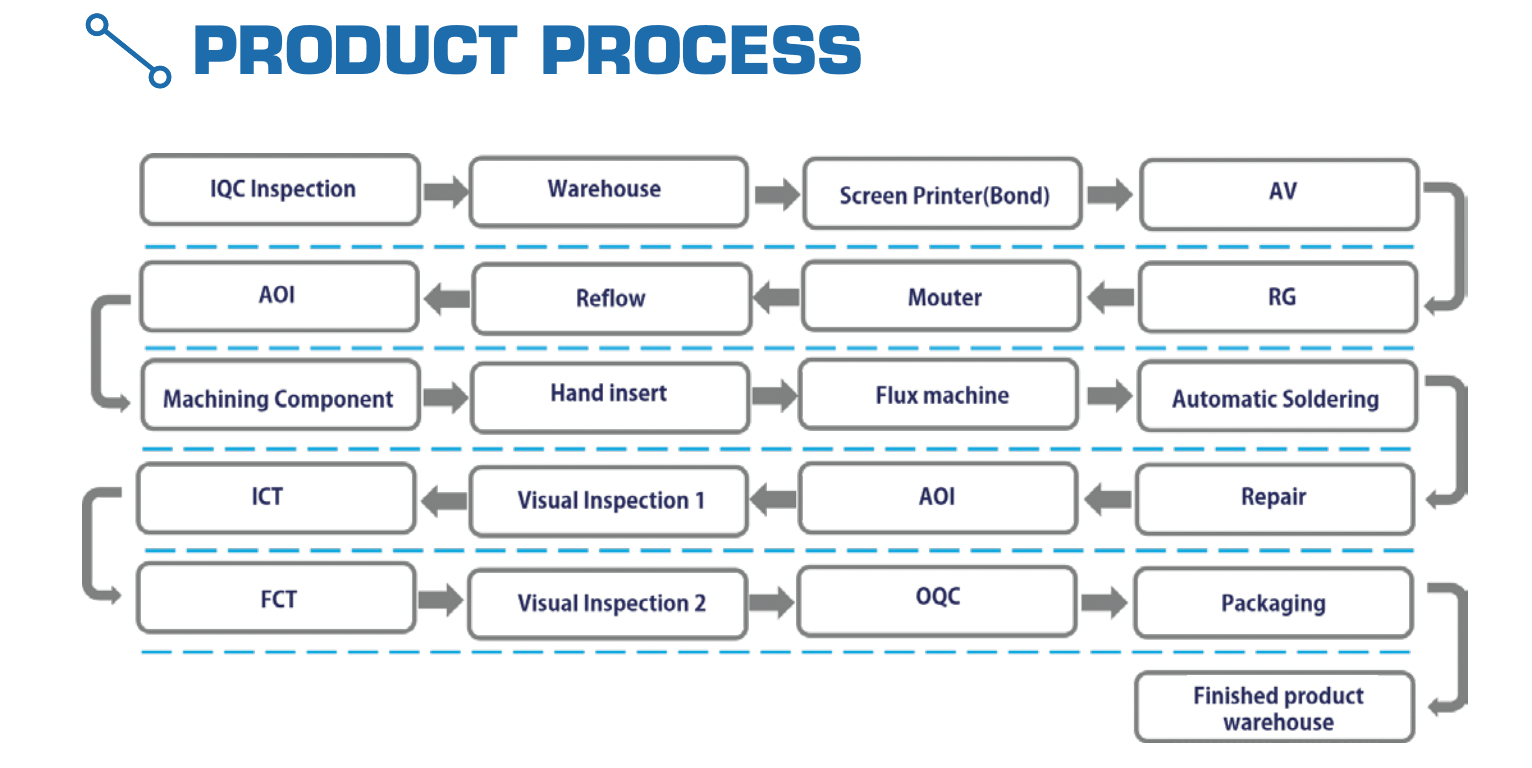
The profile also shows Yamaha YSM20R and YSM10 placement equipment, a Yamaha YCP10 printer, 3D SPI, 3D AOI, wave soldering, ICT, nitrogen reflow, functional testing, high-voltage testing, aging equipment, and laser marking.
These documented capabilities align with PCBA and broader EMS programs requiring SMT, through-hole assembly, inspection, electrical testing, functional verification, assembly, and packaging.
The company profile also describes a second factory phase planned for March 2027. Figures associated with that phase—including the planned site area, production lines, workforce, and annual output—should be treated as future planned capacity, not current operating capacity.
US OEMs evaluating SHDC should provide their BOM, Gerber files, placement data, forecast volume, test requirements, quality criteria, and target schedule for project-specific review.
For more information, visit the overview of SHDC as a PCBA manufacturer in Vietnam.
Looking for a PCBA Factory in Vietnam?
Share your technical package with SHDC for manufacturing review, including:
- Gerber files
- BOM
- Pick-and-place data
- Assembly drawings
- Firmware requirements
- Testing requirements
- Forecast volume
- Target production schedule
CTA button: Request a PCBA Quote
Frequently Asked Questions
How can US OEMs verify a PCBA factory in Vietnam?
US OEMs should verify the factory’s identity, in-house process scope, SMT equipment, soldering controls, testing, material management, traceability, NPI engineering, available capacity, subcontracting, and pilot-build performance.
Claims should be supported by factory tours, machine records, process documents, inspection data, test results, traceability demonstrations, and pilot-build reports.
What is the difference between a PCBA factory and a PCBA supplier?
A PCBA factory directly performs one or more assembly processes. A PCBA supplier may be a factory, an EMS provider integrating multiple facilities, a sourcing company, or a trading business.
The buyer should determine who physically performs each process and who holds responsibility for product quality.
Is subcontracting acceptable in PCBA manufacturing?
Yes. Subcontracting can be acceptable when the scope is disclosed, subcontractors are qualified, technical requirements are transferred correctly, records are maintained, and the primary supplier remains responsible for quality.
What testing should a PCBA factory provide?
Testing depends on the design and product risk. Possible methods include SPI, AOI, X-ray, ICT, flying probe, functional testing, high-voltage testing, programming verification, and aging tests.
The OEM and manufacturer should define test coverage and acceptance criteria before production.
Is AOI enough for PCBA testing?
Generally, AOI should not be treated as a complete test strategy. It examines visible assembly conditions but does not prove full electrical or functional performance.
Many products require a combination of AOI, ICT, FCT, and other product-specific tests.
How do OEMs verify real production capacity?
Review current line loading, number of shifts, product mix, changeover time, uptime, actual monthly output, test capacity, backend assembly capacity, staffing, and material availability.
Theoretical placement speed should not be treated as finished-product capacity.
Should an OEM complete a pilot build before mass production?
Yes. A pilot build helps verify process suitability, documentation, test coverage, traceability, yield, communication, and corrective-action capability before the OEM commits to higher volume.
What files are required for a PCBA quotation?
A typical quotation package includes:
- Gerber files
- BOM
- Pick-and-place file
- Assembly drawings
- Test requirements
- Firmware instructions
- Order quantities
- Production forecast
- Quality requirements
- Packaging requirements
- Delivery destination
Incomplete information can produce inaccurate pricing or assumptions that later become engineering charges, material costs, or schedule delays.
Conclusion
Selecting a PCBA factory in Vietnam requires more than comparing quotations, equipment lists, and factory photographs.
US OEMs should verify whether the supplier’s processes fit the actual product. The most important evidence includes SMT compatibility, soldering control, test coverage, material management, traceability, engineering support, available capacity, and pilot-build performance.
Factory visits are valuable, but they should be supported by records and project-specific evidence. A modern SMT machine does not guarantee effective test coverage. A large theoretical capacity does not prove available capacity. A certification does not replace process data. A low unit price does not show the cost of quality failures or production disruption.
The strongest supplier qualification process combines technical-file review, due diligence, factory verification, a formal audit where appropriate, and a controlled pilot build.
By using these ten checks, US OEMs can identify a PCBA factory in Vietnam that supports the immediate production requirement while also providing the process control, scalability, traceability, and engineering discipline needed for long-term manufacturing.
