Tiếng Việt
 日本語
日本語
The demand for cost-efficient, high-quality medical device electronics manufacturing in Vietnam has never been stronger among US MedTech startups. With AI now deeply embedded in Vietnamese EMS facilities — from 3D automated optical inspection to FDA-ready traceability systems — Vietnam has become far more than a low-cost alternative. It is a technologically advanced manufacturing destination that can match Western quality standards at a fraction of the price. This guide breaks down exactly how AI is reshaping medical device electronics manufacturing in Vietnam, what US MedTech startups need to verify before partnering, and how to get started.
Why US MedTech Companies Are Turning to Vietnam for Electronics Manufacturing
Vietnam’s Electronics Industry: A Hub in Full Bloom
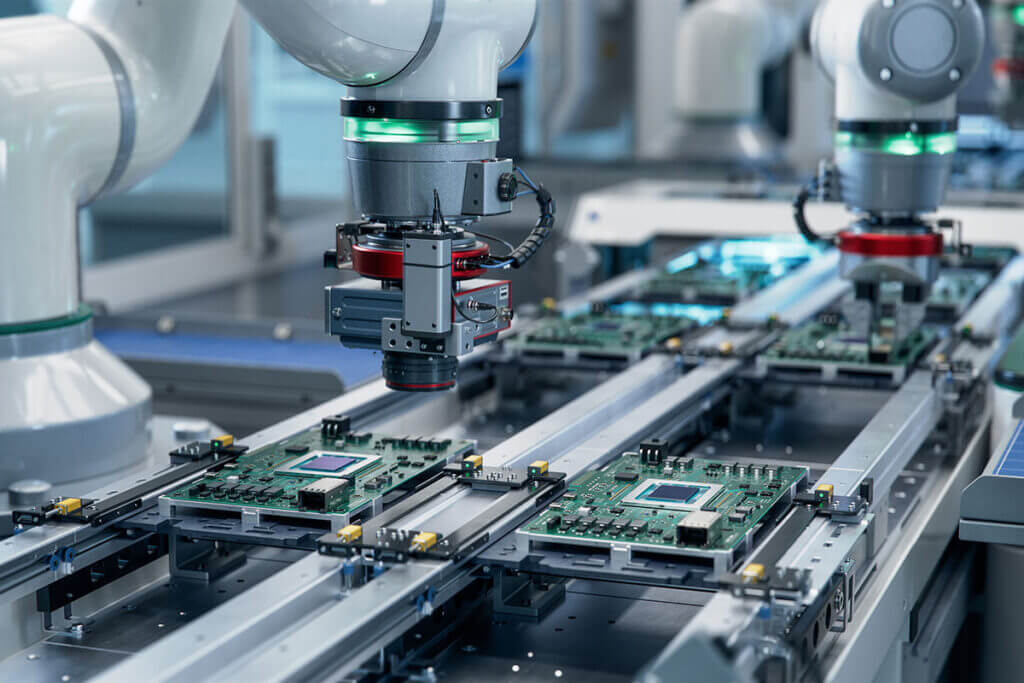
Vietnam’s electronics sector has grown into the country’s largest export industry, attracting sustained FDI from US, Japanese, and Korean technology companies seeking to diversify away from China. Industrial parks in Hai Duong, Bac Ninh, and Hai Phong have become dense clusters of high-tech EMS providers in Vietnam equipped with modern SMT lines, automated testing infrastructure, and AI-integrated production systems.
For US companies evaluating alternatives to China PCB assembly, Vietnam consistently ranks as the top destination — offering a mature supply chain ecosystem, a technically skilled workforce, and significantly lower geopolitical risk compared to Chinese manufacturing. According to Vietnam Briefing, Vietnam solidified its position as a rising manufacturing hub in Asia heading into 2026, with electronics remaining the dominant export sector.
The US–Vietnam Trade Advantage
Electronics and high-technology components rank among the top export categories from Vietnam to the United States. US companies benefit from competitive tariff structures compared to Chinese-origin goods — a critical cost advantage when managing tight margins on Class II and Class III medical device development. A detailed breakdown of tariff impact: China vs. Vietnam electronics manufacturing illustrates why this trade dynamic is accelerating the shift toward Vietnam-based production.
Why Medical Devices Specifically?
The global medical device contract manufacturing market was valued at over $83 billion in 2025 and is projected to reach $140 billion by 2030 — a CAGR of 10.9%, according to MarketsandMarkets. US MedTech startups, which typically lack capital to build proprietary manufacturing infrastructure, are among the fastest-growing segments driving outsourced production demand. Vietnam’s combination of cost efficiency, technical capability, and improving regulatory alignment makes it their destination of choice for medical device electronics manufacturing.
5 Ways AI Is Transforming Medical Device Electronics Manufacturing in Vietnam
Artificial intelligence is not replacing human expertise in Vietnam’s medical device factories — it is amplifying it. Here are the five most impactful applications reshaping production quality, speed, and compliance across medical device electronics manufacturing in Vietnam.
AI-Powered Visual Quality Inspection (3D AOI)
Traditional manual PCB inspection is slow, inconsistent, and ill-suited for the zero-defect standards required in medical device production. AI-powered Automated Optical Inspection (AOI) systems have fundamentally changed this equation.
At SHDC Electronics Co., Ltd — located at the Vietnam Singapore Industrial Park in Hai Duong, approximately 40km from Hanoi and 55km from Haiphong Port — Yamaha AOI 3D YSI-V systems are deployed inline on SMT production lines. These systems use AI-driven image analysis to detect:
- Solder joint defects including bridging, insufficient solder, and cold joints
- Component misplacement or missing components
- Polarity errors on capacitors and diodes
- PCB surface contamination
The result is defect detection accuracy exceeding 99.9% — a standard that directly supports FDA 21 CFR Part 820 quality system requirements. SHDC’s SMT assembly process includes both 3D SPI (Yamaha YSI-SP) for solder paste inspection before reflow and 3D AOI (YSI-V) post-reflow, creating a dual AI inspection gate that virtually eliminates defective boards from advancing in the production flow.
According to MarketsandMarkets’ research on 3D Machine Vision, the industrial 3D machine vision market is expanding rapidly across manufacturing applications — with medical device electronics being one of the highest-growth segments as of mid-2026.
Smart Manufacturing Execution Systems (MES)
For US MedTech companies, traceability is not optional — it is a regulatory requirement. FDA 21 CFR Part 820 mandates complete Device History Records (DHR) for every manufactured unit. AI-integrated MES platforms make this achievable at scale, and they are now a standard feature of leading contract electronics manufacturing in Vietnam.
SHDC operates an integrated ERP / PLM / SCM / MES-QMS digital infrastructure that connects every stage of production — from IQC incoming inspection through SMT manufacturing, DIP, functional testing, and final OQC — into a unified data environment. Key outcomes include:
- 30% reduction in decision-making time through real-time production dashboards
- 30% reduction in defective inventory through AI-driven early defect detection
- Full lot traceability — every component, every process step, every operator — recorded and retrievable for FDA audit purposes
- Improved work efficiency across all production departments
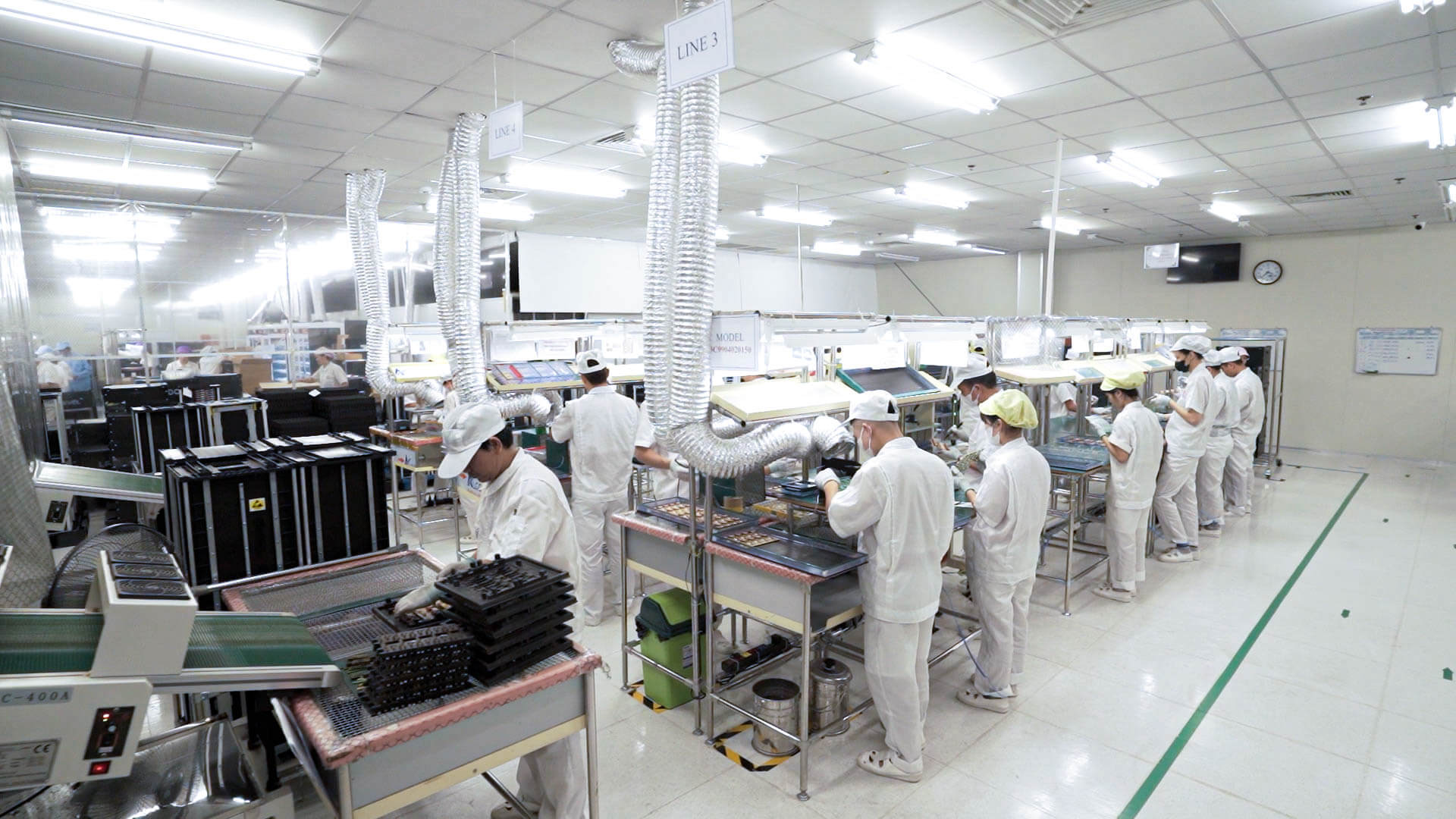
The production management system at SHDC connects AIT Tracer Server, IT-System Server, JTR-1000, YSI-V, YCP10, YSI-SP, YSM2, YSM1, and repair stations into a single networked quality management architecture — a level of digital integration that directly supports US regulatory submission requirements. This is precisely the kind of infrastructure US buyers should look for when evaluating PCBA manufacturers in Vietnam for medical applications.
Predictive Maintenance & Production Continuity
For US MedTech startups with product launch timelines tied to FDA 510(k) clearance dates, unexpected production downtime can be commercially catastrophic. AI-powered predictive maintenance addresses this risk directly.
By continuously monitoring equipment performance data — vibration patterns, temperature profiles, cycle counts, and error rates — AI systems identify early warning signs of equipment degradation before failure occurs. In a facility operating 4 high-speed SMT lines, 3 DIP lines, 1 assembly line, 1 test line, and 2 packaging lines across SHDC’s 2,600 sqm Hai Duong facility, predictive maintenance translates into:
- Consistent lead times — critical for US startup product launch schedules. See how PCB assembly lead time is managed in a modern Vietnam EMS facility
- Reduced maintenance costs in the range of 20–35% versus reactive maintenance models
- Higher equipment utilization across high-volume SMT capacity of 98,000,000 points per month
The Smart Machines Market forecast toward 2035 highlights that AI-driven automation and predictive systems are becoming a baseline expectation — not a premium feature — in high-reliability electronics manufacturing environments.
AI-Assisted Regulatory Compliance Documentation
One of the most time-consuming aspects of medical device electronics manufacturing in Vietnam — or anywhere — is the generation and maintenance of regulatory documentation: Design History Files (DHF), Device Master Records (DMR), and Corrective and Preventive Action (CAPA) records. AI is dramatically accelerating this process.
Modern AI-integrated QMS platforms automatically populate production records from MES data, flag non-conformances in real time, and generate audit-ready documentation packages. For a US MedTech startup preparing a 510(k) submission or De Novo request, this capability can compress regulatory documentation preparation from several months to a matter of weeks.
Understanding ISO standards for manufacturing is essential before selecting a Vietnam EMS partner — AI-assisted documentation is only valuable when it is built on a properly structured quality management foundation.Intelligent Supply Chain & Component Sourcing
The global component shortage crisis of 2021–2023 exposed the fragility of traditional supply chain management in electronics manufacturing. AI-driven supply chain platforms have since become a critical risk management tool for medical device EMS providers across Southeast Asia.
AI systems now enable:
- Demand forecasting 12–16 weeks in advance based on production schedules and historical consumption data
- Continuous supplier risk scoring based on reliability, lead time performance, and quality history
- Automated reorder triggers to maintain optimal safety stock without over-investing in inventory
- AI-assisted cross-referencing of approved substitute components when primary parts face supply disruption
SHDC’s integrated SCM system, connected to its ERP and MES infrastructure, provides US customers with real-time visibility into component availability and production status. This level of supply chain transparency is one of the key reasons US companies are choosing PCBA Vietnam high-reliability assembly partners over traditional offshore options. For a broader perspective on supply chain risk, the risks of manufacturing electronics in China provides a useful comparison framework.
AI and Regulatory Compliance: What US MedTech Startups Must Verify

AI enhances compliance — but it does not replace the foundational quality systems that FDA and ISO standards require. US MedTech startups must know exactly what to look for when evaluating a Vietnam-based manufacturer’s regulatory readiness.
FDA 21 CFR Part 820 & AI Integration
FDA’s Quality System Regulation requires manufacturers to maintain documented procedures covering design control, document control, purchasing controls, production and process controls, CAPA, and records management. AI systems properly integrated into a factory’s QMS can support compliance across all of these domains.
5-point compliance checklist for US buyers:
- Does the manufacturer have a documented, FDA-aligned Quality Management System?
- Can they provide full lot traceability records for every production run?
- Is their AOI and inspection data stored and retrievable for audit purposes?
- Do they have a documented CAPA process with AI-assisted non-conformance tracking?
- Can they support your FDA submission with production records and process validation data?
ISO 13485 — The Non-Negotiable Standard
ISO 13485:2016 is the international standard for quality management systems specific to medical device manufacturing. For US MedTech companies, partnering with an ISO 13485-certified manufacturer is a prerequisite for FDA regulatory submissions and US market access. According to FDA’s guidance on quality system regulations, compliance with a recognized QMS standard is foundational to any medical device manufacturing relationship.
SHDC Electronics holds recognized standard certifications and operates under a quality management framework encompassing IQC (Incoming Quality Control), in-process QC, and OQC (Outgoing Quality Control) — with a dedicated QC Department structured across IQC, QC, and QA functions. When evaluating top Vietnam PCB manufacturers for US buyers, ISO 13485 certification should be the first filter applied.
Red Flags to Watch Out For
Not every Vietnam EMS provider claiming AI capabilities has the documentation to back it up. Watch for these warning signs:
- Claims of AI quality control with no system documentation or data export capability
- No ISO 13485 certificate or an expired certification
- Inability to provide sample Device History Records or traceability reports from previous production runs
- No dedicated QA function separate from production management
The Real Cost Savings: Medical Device Electronics Manufacturing in Vietnam vs. US Domestic Production
Cost efficiency is one of the primary drivers for US MedTech startups considering medical device electronics manufacturing in Vietnam. A detailed electronics manufacturing cost comparison: Vietnam vs. China reveals the full picture — but here is a direct comparison against US domestic production:
| Cost Category | US Domestic | Vietnam + AI (e.g., SHDC) | Advantage |
|---|---|---|---|
| Labor cost per unit | High ($$$) | Low–Medium ($) | 40–60% lower |
| Quality inspection | Manual / labor-intensive | AI 3D AOI / automated | Higher accuracy, lower cost |
| Compliance documentation | 3–6 months | 4–8 weeks (AI-assisted) | 60–70% faster |
| Production lead time | 12–16 weeks | 6–10 weeks | 30–40% faster |
| PCB defect rate | ~0.3–0.5% | <0.1% with AI AOI | 3–5x lower defect rate |
| SMT capacity | Variable | 98M points/month (SHDC) | High-volume scalability |
For a US MedTech startup producing 10,000–50,000 units annually of a Class II electronic medical device, outsourcing to a Vietnam AI-integrated EMS provider typically delivers 30–50% total cost of production savings compared to US domestic contract manufacturing — while maintaining equivalent or superior quality standards.
For startups at the early stage, low-volume PCB assembly and prototype PCBA services in Vietnam offer an accessible entry point before scaling to high-volume PCB assembly.
How US MedTech Startups Can Start Working with an AI-Powered Vietnam Manufacturer
The process of engaging a partner for medical device electronics manufacturing in Vietnam is more straightforward than many US startups expect. Here is a practical step-by-step framework:
Step 1 — Define your device category and regulatory pathway
Determine your FDA device classification (Class I, II, or III) and identify the applicable regulatory pathway — 510(k), De Novo, or PMA. This determines the level of documentation and quality system rigor required from your manufacturing partner.
Step 2 — Shortlist Vietnam EMS partners with ISO 13485 certification
Prioritize manufacturers with verified ISO 13485:2016 certification, documented AI-integrated inspection systems, and experience in your specific device category. The top PCBA manufacturers in Vietnam guide provides a useful starting framework for shortlisting.
Step 3 — Request AI capability documentation
Ask specifically for MES system architecture details, AOI inspection data samples, traceability record examples, and CAPA documentation. A credible manufacturer will provide these without hesitation. Understanding what is PCBA manufacturing and the full PCBA manufacturing process helps frame the right questions.
Step 4 — Conduct a factory audit
Whether on-site or virtual, a structured factory audit should cover production line capabilities, quality system documentation, equipment calibration records, and workforce technical qualifications. SHDC Electronics operates a 2,600 sqm facility with 150 skilled employees, 4 high-speed SMT lines, 3 DIP lines, and a dedicated engineering team — all fully auditable against ISO 13485 requirements. The guide on how to evaluate a PCB fabrication factory provides a practical audit checklist.
Step 5 — Run a pilot production batch
Before committing to full-scale production, run a quick-turn PCB assembly pilot batch of 50–200 units. Evaluate yield rates, documentation quality, communication responsiveness, and on-time delivery performance.
What to Prepare Before Reaching Out
- Gerber files and PCB design documentation
- Bill of Materials (BOM) with approved component specifications
- Assembly drawings and test specifications
- Quality acceptance criteria (AQL levels, test pass/fail parameters)
- Target production volume and delivery timeline
- Applicable FDA classification and ISO compliance requirements
For a PCB assembly quote or to discuss your specific medical device requirements, SHDC Electronics Co., Ltd provides full-service EMS in Vietnam — from component sourcing and SMT assembly through in-circuit testing (ICT), functional testing, aging tests, high voltage testing, and final packaging.
📍 Factory: A1-2, Lot 5, Cam Dien–Luong Dien IP, Cam Giang Commune, Hai Phong City, Vietnam
🌐 shdc.com.vn | 📞 090 344 3300 | ✉️ hao@shdc.com.vn
Final Thoughts: The AI + Vietnam Advantage Is Real — and Available Now
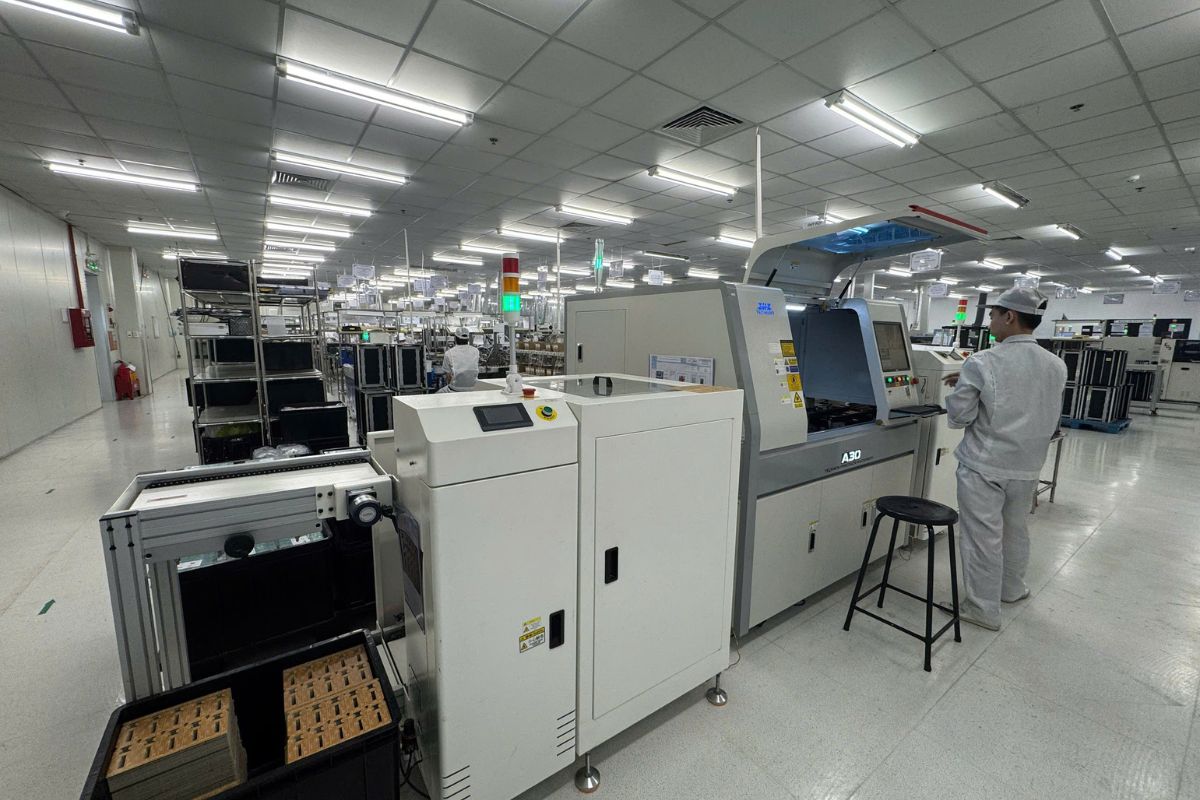
The convergence of three powerful forces — Vietnam’s maturing electronics manufacturing ecosystem, AI-driven production intelligence, and the US MedTech industry’s growing need for cost-efficient and compliant outsourcing — has created a genuine strategic opportunity for startups willing to look beyond domestic borders.
Medical device electronics manufacturing in Vietnam has moved well beyond simple assembly. Today’s leading Vietnamese EMS facilities are intelligent production environments where AI inspects every solder joint, MES systems generate FDA-ready records automatically, and predictive algorithms keep production running on schedule. For US MedTech startups, this is not a compromise on quality — it is an upgrade in capability at a fraction of domestic cost.
The question is no longer “Can Vietnam manufacture our medical device electronics to standard?” — it is “How quickly can we get started?”
Explore 10 reasons to choose contract electronics manufacturing in Vietnam or learn more about SHDC as a trusted non-China PCBA manufacturer to take the next step.
Frequently Asked Questions
Is Vietnam FDA-compliant for medical device electronics manufacturing?
Yes. Leading Vietnam EMS providers operate under internationally recognized quality standards. US companies should verify ISO 13485 certification and FDA 21 CFR Part 820-aligned quality management systems before partnering. Always request documentation and conduct an audit — virtual or on-site.
How does AI improve quality control in medical device production in Vietnam?
AI-powered 3D AOI systems detect PCB defects with over 99.9% accuracy, replacing inconsistent manual inspection. Combined with AI-driven MES traceability, manufacturers can generate complete Device History Records automatically — directly supporting FDA submission requirements.
What certifications should I look for in a Vietnam medical device electronics manufacturer?
Essential certifications include ISO 13485:2016 for medical device quality management, ISO 9001 for general quality management, and evidence of FDA 21 CFR Part 820-aligned procedures. AI system documentation, traceability capability, and CAPA records are equally important indicators of genuine compliance readiness. Review ISO standards for manufacturing for a full breakdown.
How long does it take to start medical device electronics production in Vietnam?
With complete design files and clear quality specifications, pilot production typically begins within 4–6 weeks. Full-scale production ramp-up follows within 8–12 weeks — significantly faster than establishing new domestic manufacturing capacity. PCB assembly lead time factors are explained in detail on the SHDC resource page.
What types of medical devices can be manufactured at SHDC Vietnam?
SMT capacity of 98 million points per month and multi-line DIP production supports IVD diagnostic device PCBAs, wearable health monitors, patient monitoring systems, portable therapeutic devices, and medical imaging electronic assemblies — across both low-volume prototype runs and high-volume commercial production.
>>>Read more: Medical Device PCB Assembly in Vietnam — The Reliable Choice for US MedTech Companies